
CAD $80–$150 is the usual range for a single chip repair in the GTA, with many standard repairs landing around CAD $60–$100 per chip. A full windshield replacement usually sits at CAD $300–$1,500+, so the wrong decision gets expensive fast.
You're probably staring at that little starburst right now and doing the math in your head. Good instinct. A tiny chip can be a cheap nuisance or the first step toward a much uglier bill, and modern windshields don't make that choice any friendlier.
Table of Contents
- Why That Tiny Chip Suddenly Feels Expensive
- What Actually Happens During a Chip Repair
- Cost Drivers Behind the Quote
- DIY Repair Kits vs Calling a Pro
- Insurance, Deductibles, and When to File
- What to Ask a GTA Glass Provider Before Booking
- Practical Tips to Keep the Bill Down
- Chipped Windshield Questions GTA Drivers Actually Ask
Why That Tiny Chip Suddenly Feels Expensive
You're cruising home on the 401, a rock taps the glass, and suddenly there's a bright little chip staring back at you like it wants to stay forever. That is the moment every GTA driver has to make a call, fix it now, push for a claim, or keep driving and hope the crack fairy stays asleep.
The blunt answer is that repair is the cheap option and replacement is the expensive one. In Canada, a single windshield chip repair is typically priced at CAD $80–$150, while a full windshield replacement runs CAD $300–$1,500, with the spread driven by vehicle make, model, and features like camera sensors or heated glass AllBrite Glass.

Why the gap is so wide
Modern windshields are not just glass anymore. They can carry cameras, sensors, heated layers, rain-sensing hardware, and other embedded features, which is why replacement pricing has moved far beyond what drivers used to expect.
Practical rule: if the chip is still small and the glass hasn't started to split, repair is usually the move. Waiting turns a manageable annoyance into a bigger structural job.
That is why early chip repair matters so much in the GTA. Urban labour and materials already push pricing higher than in rural areas, so there is no prize for procrastination. The chip does not care that you are busy, and the road salt certainly will not negotiate.
A good way to think about it is simple. Repair preserves the original windshield. Replacement means more parts, more labour, and more things that can snowball on a modern car.
What Actually Happens During a Chip Repair
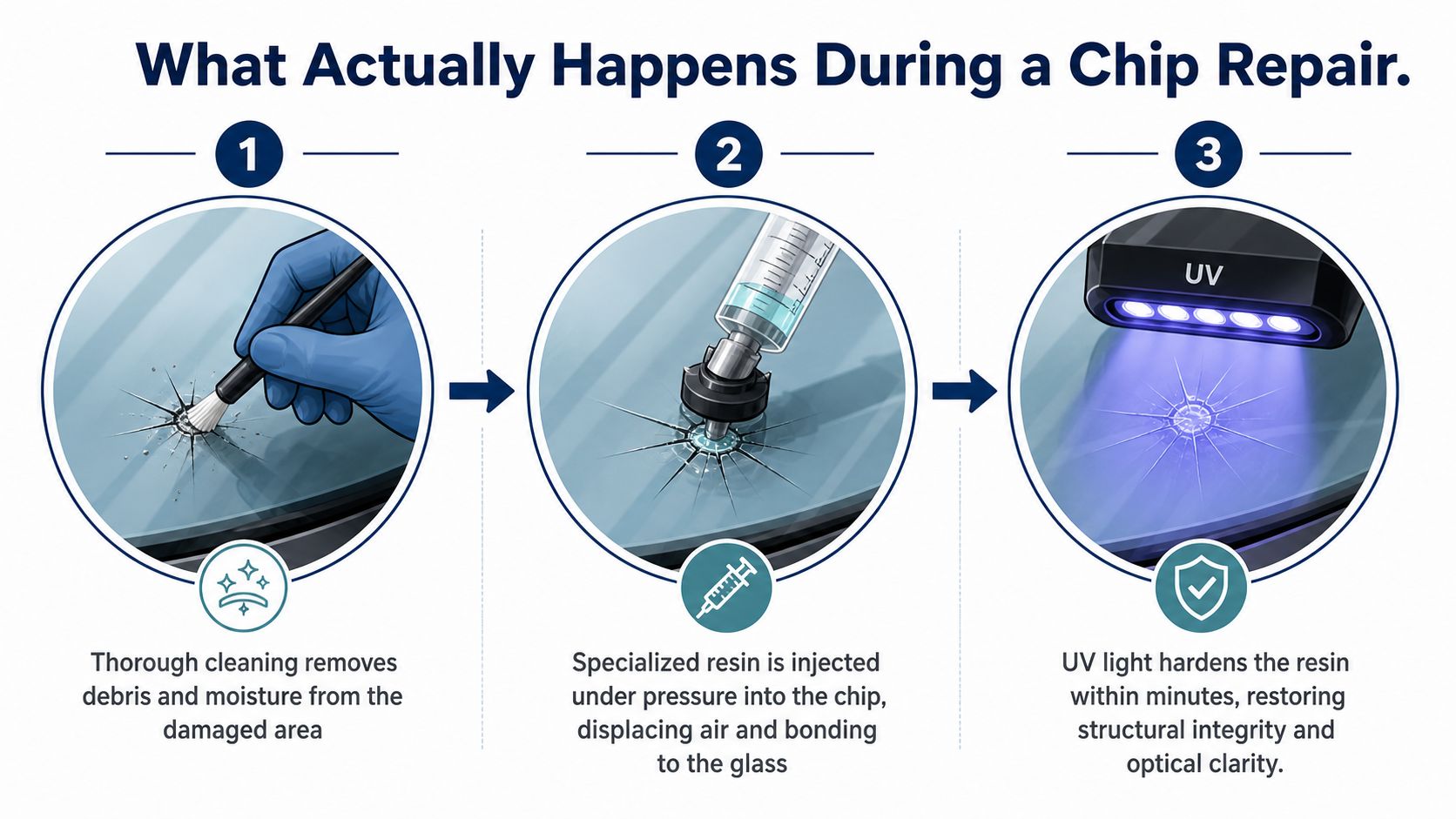
A proper chip repair is basically a precision cleanup job. The technician clears out dirt and moisture, then injects resin into the damaged cavity so the glass is bonded back together instead of left weak and open.
The price makes sense once you see the steps. A shop-level benchmark for chip repair pricing is roughly CAD $60–$100 per chip for standard damage, with higher pricing when the chip is larger, there are multiple impacts, or the damage sits in a structurally sensitive spot Expert Auto Glass.
Why repair is fast and replacement is not
Chip repair is localized. The tech works on the damaged point, uses resin, then cures it. Replacement is a different animal entirely.
A full replacement means removing the bonded glass, prepping the body opening, applying adhesive, waiting for safe-drive time, and often dealing with calibration on newer vehicles. That's why repair feels like a tidy medical procedure and replacement feels like booking surgery for your car.
Short version: repair fixes the wound. Replacement replaces the body part.
That difference matters because the damage type changes the labour. A clean little bullseye is easier to stabilise than a messy impact with spread, contamination, or edge damage. The cleaner and more contained the chip, the better your odds of staying in the cheaper lane.
The cheapest quote isn't always the best one, though. If a provider sounds like they're racing the clock instead of protecting the glass, that's not value, that's a gamble with nicer branding.
Cost Drivers Behind the Quote
The quote usually looks simple until the provider starts asking questions. Then the price stops behaving like a menu and starts behaving like a diagnosis.
The main things that move the price
Chip size is the first big one. Bigger damage needs more resin work and usually more time, so the bill climbs.
Chip type matters too. A clean bullseye is not the same job as a star break or a combination break. California pricing benchmarks show single small chip repairs at $60–$100 and rock chips with star breaks at $80–$150, with the spread tied to chip size, location, and repair complexity Airtasker. GTA shops tend to tier pricing in a similar way.
Location on the glass can make or break the job. Chips near the edge are more annoying because the glass flexes more there, and that usually means more care, more time, and a higher quote.
The hidden add-ons that deserve attention
Glass features can complicate things. Heated glass, acoustic layers, rain sensors, heads-up display areas, and camera mounting zones all make the technician's job more delicate.
ADAS hardware is the other elephant in the garage. If the windshield sits in the path of camera-based safety systems, the work gets more sensitive because the vehicle may need proper recalibration after replacement. That is one reason a quote that looks cheap at first can turn into a very different number once the vehicle details come out.
Mobile versus in-shop service also changes the experience. Mobile is convenient, but not every job is equally easy to do curbside in a driveway with blowing slush and a distracted neighbour asking why the hood is open.
| Chip type | Typical CAD price | When to expect the high end |
|---|---|---|
| Small bullseye | Around the lower end of the normal repair band | Clean, contained chip, easy access |
| Star break | Higher within the repair band | Fractures spreading outward, more careful resin work |
| Combination break | Near the top of repair pricing | Multiple impact patterns or more complex cleanup |
| Edge-adjacent damage | Often priced higher | Harder access, more structural sensitivity |
The most negotiable part is usually service format, not physics. The least negotiable part is damage complexity. If a quote is oddly low, ask what they are excluding, because glass shops do not usually lose money out of kindness.
DIY Repair Kits vs Calling a Pro
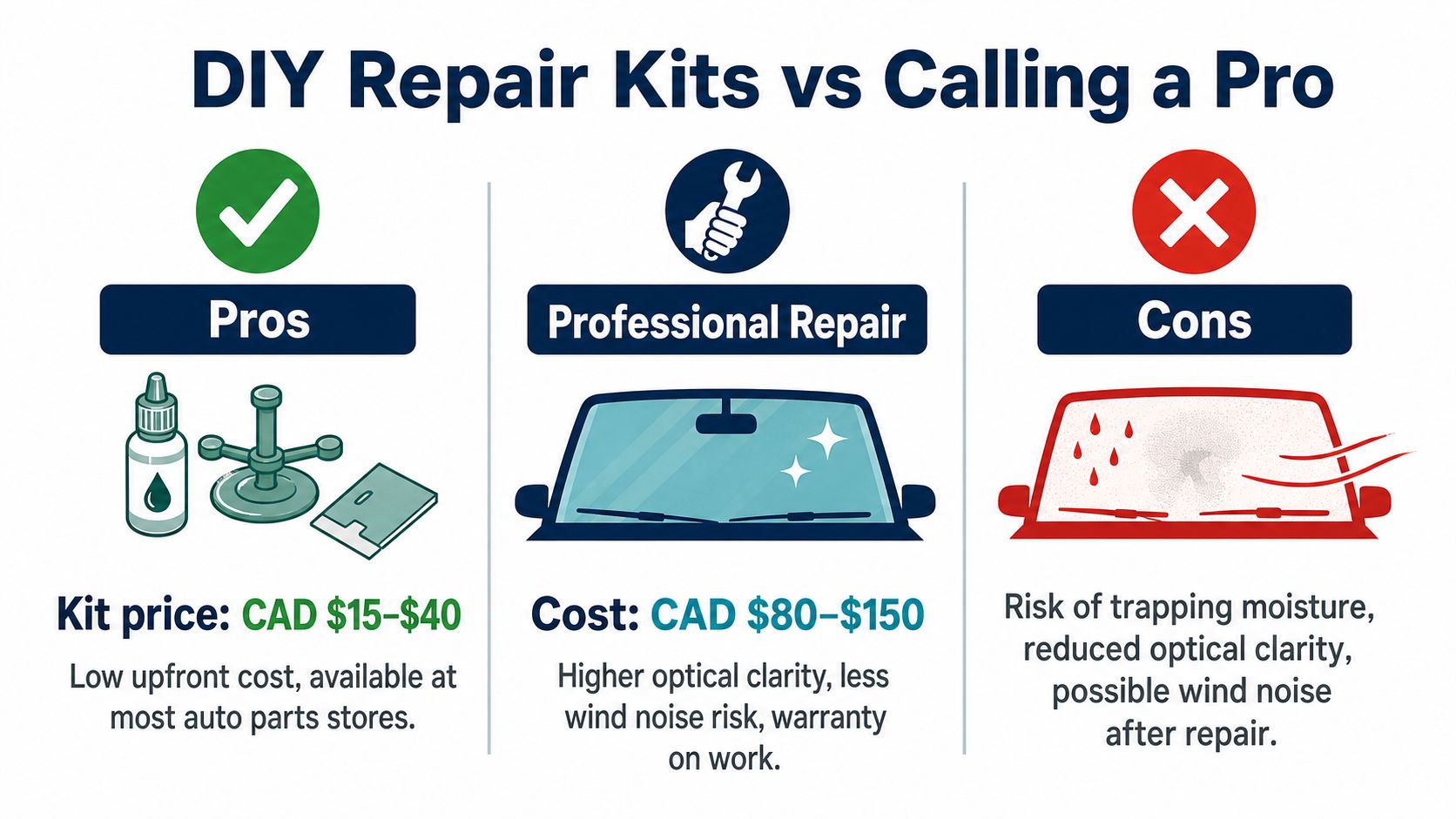
A DIY kit is tempting because it looks cheap and fast. That's the whole sales pitch, and for a tiny, clean chip outside your sightline, it can be enough for a temporary fix.
The problem is that cheap resin work can turn into a cloudy little regret stain if you trap moisture or dirt in the break. Once contamination is sealed inside, the repair can look worse, not better.
Where DIY makes sense and where it doesn't
A DIY kit is best reserved for a small, clean bullseye that's far from the edge and nowhere near the driver's line of sight. It's not the move for a crack, a star break, or anything sitting in the camera's view.
Professional repair costs more because you're paying for better optical results and lower risk. That extra spend usually buys you cleaner resin flow, better clarity, and less chance of a noisy or ugly outcome.
The risk you don't see on the box
DIY kits are sold like a five-minute victory. Real life is less cooperative.
If the chip has dust, moisture, or tiny fracture legs, the bargain kit can become an expensive lesson in why technicians get paid.
There's also a practical insurance angle. A messy DIY attempt can make a future claim harder to defend, especially if the damage spreads after the fact. If you're staring at a chip in the driver's field of view, don't get brave with a squeeze bottle and optimism.
My opinion is simple. If the damage is tiny and clean, a DIY kit is a maybe. If there's any doubt, pay the pro and stop gambling with your visibility.
Insurance, Deductibles, and When to File
People either save money or make the whole thing more annoying than it needs to be. The right move depends on whether you're dealing with a repairable chip or a replacement-level problem.
Policies often waive deductibles for chip repair, while replacement can run far higher once ADAS-equipped windshields are involved, with AAA noting chip repair is typically $50–$150 and full replacement can reach $1,500+ Glass.net. That's the basic reason a repair often feels painless and a replacement can suddenly become a claims conversation.
The decision tree that actually matters
If the chip is repairable and your policy waives the deductible, filing a claim can be the sensible route. If the repair cost is low enough that you'd basically be filing paperwork for sport, skip the claim and just pay the shop.
If the glass needs replacement, the math changes fast. That's when you compare the out-of-pocket hit against what your policy covers and whether the claim process is worth the hassle.
Simple rule: repair often doesn't need a heroic insurance strategy. Replacement usually does.
For drivers trying to keep the process tidy, practical auto claim automation is useful reading because it shows how claims workflows can be less chaotic when the paperwork is handled well. That matters when the goal is to get the glass fixed without spending your lunch break on hold.
If your insurer has a preferred glass network, use it unless there's a strong reason not to. The point is to get the windshield sorted, not to turn a stone chip into a week-long administrative hobby.
What to Ask a GTA Glass Provider Before Booking
A decent quote should survive a few direct questions. If it doesn't, walk away. Glass work is one of those trades where vagueness usually means someone's padding, guessing, or hoping you won't notice the fine print.
Questions that separate the real quotes from the nonsense
Ask whether the price is per chip or a flat service fee. A quote that sounds low can become less charming once “per additional chip” starts appearing like a tax nobody mentioned.
Ask whether mobile service costs extra. Also ask who handles ADAS-related responsibility if the repair turns into a replacement later.
Here's a quick provider checklist that keeps the conversation honest.
| Question to ask | Why it matters | Good answer |
|---|---|---|
| Is this price per chip or for the whole visit? | Prevents surprise add-ons | Clear, written breakdown |
| How many chips are included? | Stops hidden labour charges | Exact number stated up front |
| Is mobile service extra? | Keeps the quote real | Yes or no, in writing |
| What's the warranty on the repair? | Tells you how confident they are | Written warranty terms |
| What resin do you use? | Helps judge quality | Specific product or resin type |
| How long before I can drive? | Affects scheduling | Clear cure-time guidance |
Red flags worth taking seriously
“Starting from” quotes are fine if they're followed by a real explanation. If they stay fuzzy, that's a bad sign.
Pushy replacement upsells are another red flag. A good shop explains why replacement is needed. A bad one treats every chip like a full windshield emergency.
No written warranty is the final eyebrow raise. If they won't stand behind the work, don't hand them your keys and hope for the best.
A straight provider will tell you what's included, what isn't, and what might change if the glass damage is worse than it first looked. That's the kind of quote worth booking.
Practical Tips to Keep the Bill Down
The cheapest move is still the fastest one. A chip that sits there collecting dirt, moisture, and temperature swings can turn into a crack, or push you into a replacement you did not want to buy. Fix it while it is still small, and you keep the bill from climbing for no good reason.
GTA weather does not help. Salt, slush, potholes, and freeze-thaw swings are hard on a weak spot in the windshield, so waiting around is a bad bet.
What saves money
Book early. Letting a chip sit is how a small repair starts acting expensive.
Choose a dry day if you can. Resin bonds better when the glass is clean and dry, and wet weather just makes the job fussier than it needs to be.
Ask about pricing for more than one chip before you book. If the windshield has a few marks, a shop may handle them more efficiently than if you treat each one like a separate errand.
Check your coverage before you hand over cash. If your glass repair is covered or waived, paying out of pocket out of habit is just donating money to the universe.
If a quote looks weirdly low, slow down. Ask what is included, what happens if the chip is larger than it first looked, and whether the shop is planning to turn a simple repair into a bigger sale. A suspiciously cheap price usually means the fine print wants a turn in the spotlight.
Fixing the chip early is dull. It also protects resale value, and that matters even if it never shows up as a neat little line on the invoice. Buyers notice windshield damage fast, and sellers usually pretend they do not.
Chipped Windshield Questions GTA Drivers Actually Ask
Can a chip still be repaired if it's already started to crack? Sometimes, but not reliably. Once the damage spreads, you're moving out of the easy-repair zone and into a situation where replacement becomes more likely.
How long does a repair last? A proper professional repair is meant to be permanent for that damage spot, not a temporary patch you'll revisit next month. If the chip was cleaned properly and the resin bonded well, the goal is stability and clarity.
Will the repaired spot disappear completely? Usually not. Good repairs become far less noticeable, but a faint mark can remain. If someone promises invisible glass every time, they're selling fairy tales with a polish cloth.
Do you have to wait around while the work is done? Not necessarily. Many drivers drop the car off, grab a coffee, and come back after the repair and cure window. If the provider can't tell you how long that takes, ask again until they do.
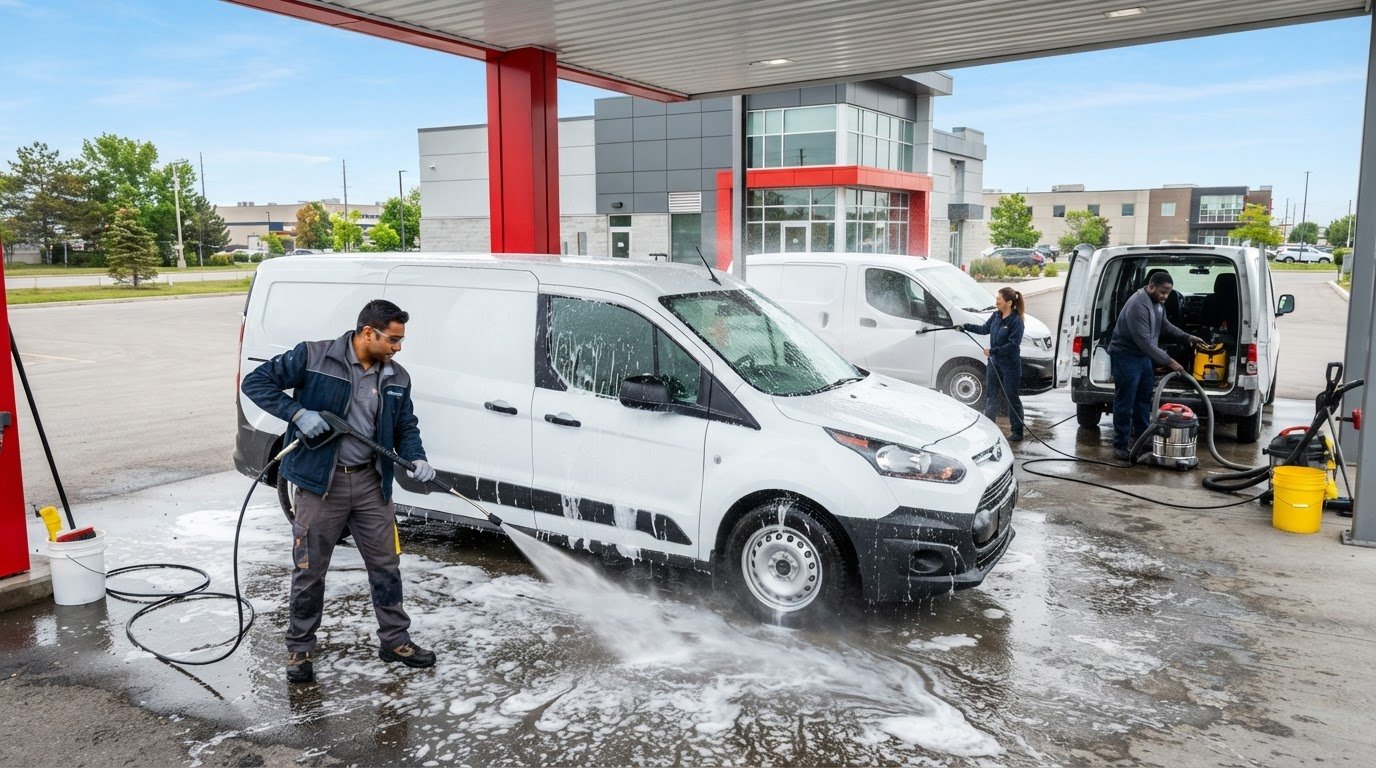
If you want the windshield cleaned, polished, and ready for a repair quote without the usual garage-day chaos, visit Nanak Car Wash. They handle car care across the GTA, so it's a practical stop when you want the rest of the vehicle looking as sorted as the glass.




 6600 Finch Ave W, Etobicoke, ON M9V 3Z6
 647-703-8515
 MON – SUN 8 AM to 7 PM