
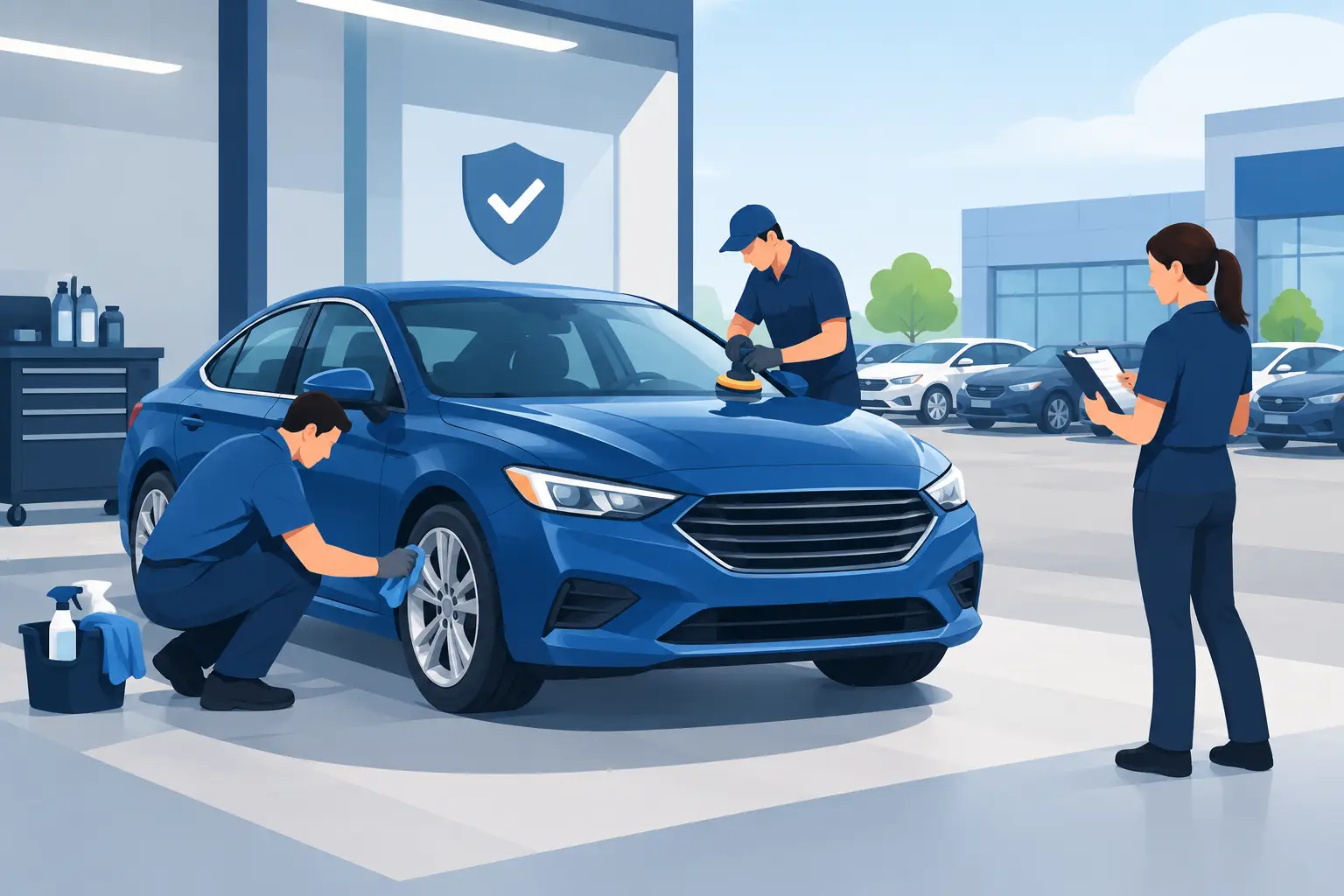
A used vehicle can be mechanically sound and still sit too long if it looks neglected. This dealership reconditioning guide focuses on the work that helps a vehicle show better, photograph better, and give buyers confidence from the first walk-around. The goal is not to overspend on every trade-in. It is to put the right work into the right vehicle, move it through the shop quickly, and protect your front-end gross.
Start With a Consistent Intake Inspection
Reconditioning gets expensive when decisions are made one problem at a time. Build a simple intake process for every trade, lease return, auction purchase, and fleet vehicle. The vehicle should be inspected before it is washed, detailed, photographed, or listed for sale.
Start with the basics: mileage, warning lights, tire condition, brakes, windshield damage, body damage, odors, stains, key count, service records, and visible interior wear. Take clear photos of concerns before work begins. This protects the dealership from confusion later and gives the used-car manager a complete picture of the expected cost.
Separate each issue into three categories: safety and mechanical needs, appearance needs, and optional upgrades. Safety items come first. A dirty vehicle can wait a day. Bald tires, brake concerns, damaged lights, or an active warning light should not.
The right scope depends on the vehicle. A late-model low-mileage SUV may only need a wash, interior detail, minor touch-up, and windshield chip repair. An older high-mileage vehicle may need deeper cleaning, odor treatment, wheel refinishing, paint correction, and a more careful decision about whether repairs make financial sense.
Build a Reconditioning Workflow That Does Not Stall
The biggest enemy of used-car profit is often not the repair bill. It is delay. A vehicle waiting three days for approval, another two days for parts, and a week for detailing ties up inventory and reduces the chance of a fast sale.
Assign one person to own the recon status from intake to front line. That person does not need to perform every repair, but they should know exactly where every vehicle stands. Use a shared tracker that shows the stock number, approved work, vendor or department, parts status, promised completion date, and photo-ready date.
A practical flow looks like this:
- Intake inspection and recon estimate
- Manager approval with a clear spending limit
- Mechanical and safety repairs
- Body, glass, wheels, or paint correction
- Wash, detailing, odor removal, and final finishing
- Quality-control check, photos, merchandising, and listing
Some tasks can happen at the same time. For example, parts can be ordered while the vehicle is at a body shop, and an interior detail can be scheduled around repair completion. What should not happen is sending a vehicle for a full detail before technicians have finished greasy repairs, paintless dent work, or body work.
Set realistic turnaround targets by vehicle type. A clean trade that needs only basic recon may be ready in one or two days. A vehicle with mechanical repairs or cosmetic damage may need longer. The key is to identify the likely delay at intake, not after the car has already missed a weekend of online exposure.
Approve Work Based on Retail Value, Not Habit
Not every scratch deserves paint work, and not every stained seat needs replacement. Reconditioning should support the retail price, vehicle class, age, and local market demand.
Ask three questions before approving cosmetic work. Will the buyer notice it immediately? Will it hurt the appraisal, online photos, or test-drive experience? Will the repair help the dealership sell the vehicle at a stronger price or faster pace?
A small dent in a popular, newer vehicle may be worth fixing because shoppers expect a clean presentation. A minor bumper scuff on an older value vehicle may be acceptable if it is disclosed, priced fairly, and the rest of the car is clean. There is no single recon number that works for every unit.
Avoid the opposite mistake too: trying to save money by skipping visible work that makes the entire vehicle feel cheap. A stained headliner, cloudy headlights, dirty wheels, smoke odor, or neglected cargo area can make a buyer question everything else about the vehicle, including work they cannot see.
Put Cleaning and Detailing at the Center of the Process
A clean vehicle is easier to inspect, easier to photograph, and easier to sell. It also makes completed repairs visible. Dirt hides scratches, but it also hides the difference between a vehicle that has been cared for and one that has been rushed to the lot.
Start with a proper exterior wash using fresh water and attention to the areas customers notice up close: wheels, tires, wheel wells, door jambs, glass, grille, mirrors, and lower panels. Remove old stickers, tape residue, and dealership markings unless they are needed for compliance. Finish tires evenly, not overly glossy, and make sure no product is left on brake components or paint.
Inside, focus on touch points and odor sources. Vacuum under seats and in seat tracks. Clean cupholders, console storage, vents, door pockets, seat belts, pedals, and trunk or cargo areas. Shampooing may be worthwhile for fabric seats and carpets, but only when there is enough dry time before photography and delivery.
Odor control requires more than a fragrance spray. Smoke, pet odor, food spills, and moisture must be treated at the source. That can mean deep extraction, disinfecting hard surfaces, replacing a cabin air filter, cleaning drainage areas, or using a professional odor treatment. If an odor returns after the vehicle sits closed overnight, the job is not finished.
For dealer groups and independent lots, a dependable outside wash and detail partner can keep recon moving when internal bays are full. Nanak Car Wash provides dealer-friendly vehicle cleaning, hand-finished detailing, and practical service options for units that need to get clean and presentation-ready without tying up your staff.
Know When Paint Correction Is Worth It
Polishing and paint correction can dramatically improve dark paint, neglected clear coat, and vehicles with heavy swirl marks. It can also consume time and money quickly. Reserve more intensive correction for vehicles where paint condition directly affects perceived value.
A light polish may be enough to add gloss before photos. Deeper correction makes more sense for premium vehicles, specialty vehicles, or units where paint defects are obvious in bright daylight. Do not promise perfection on an older vehicle if the budget supports only improvement. Clear expectations prevent rework and help your sales team present the unit honestly.
Quality Control Before Photos and Front-Line Placement
The final check should be done by someone other than the person who completed the work. A fresh set of eyes catches missed debris, streaked glass, warning lights, empty fuel, loose trim, forgotten service stickers, and odors that may have become less noticeable to the detailer.
Walk around the vehicle in daylight if possible. Open every door, sit in the driver’s seat, start the engine, test basic features, and inspect the trunk or cargo area. Check that floor mats are dry and properly positioned. Confirm that keys, manuals, charging cords, wheel-lock keys, and accessories are accounted for.
Then prepare the vehicle for photos. Photograph it while it is actually clean, not after rain, dust, or another test drive. Clean windows and a tidy interior make a major difference on listing pages, where buyers are comparing dozens of similar vehicles in minutes.
Measure the Numbers That Reveal Bottlenecks
Track average recon days, average recon cost, days from arrival to online listing, and the percentage of vehicles that need rework after final inspection. These numbers show whether your real problem is cost, vendor speed, approval delays, parts availability, or inconsistent quality.
Review aged units separately. If a vehicle is sitting, determine whether the issue is price, condition, merchandising, market demand, or incomplete reconditioning. Sometimes another small investment, such as a deeper interior detail, better photos, a polish, or wheel repair, is more effective than another price reduction.
A clean, well-finished unit does not need to look over-restored. It needs to feel honest, cared for, and ready for its next owner. Keep the process moving, spend where customers can see the value, and make every vehicle on the lot easy to show with confidence.

 6600 Finch Ave W, Etobicoke, ON M9V 3Z6
 647-703-8515
 MON – SUN 8 AM to 7 PM