
An undercarriage wash helps slow new rust by flushing salt off exposed metal, but it can't reverse rust that has already started. In Ontario's salt-heavy winter conditions, guidance recommends washing the underside every one to two weeks, or within about 24 to 48 hours after heavy salt exposure, to reduce the buildup that keeps corrosion active (Ontario-focused rust guidance).
You notice the problem on a Monday morning. An ice storm has passed through Mississauga, the QEW is coated in grey slush, and every trip leaves another wet layer clinging underneath your car. A few weeks later, brown bubbling appears around a wheel arch. The exhaust hangers look flaky. Somewhere behind the plastic liners, a subframe seam is losing its protective coating.
That's why the question “does undercarriage wash prevent rust” needs a precise answer. A rinse can remove the salt and grime that keep corrosion moving, but it can't rebuild metal that has already disappeared. The useful distinction is between preventing fresh corrosion and repairing existing damage.
An undercarriage wash is a pressurized rinse directed at the chassis, suspension links, brake components, wheel wells, and exhaust routing. A regular tunnel wash may clean the painted body beautifully while giving these hidden areas only limited attention. In the GTA, where winter road treatments create a long, recurring corrosion season, underbody care is maintenance, not decoration. Ontario guidance says frequent undercarriage washing is one of the main ways to slow vehicle rust because salt spray accelerates corrosion on exposed metal (Ontario corrosion guidance).
Table of Contents
- Why GTA Drivers Care About Undercarriage Rust
- The Science of Rust in Plain English
- Where Salt Hides and How It Attacks Your Vehicle
- What an Undercarriage Wash Actually Does and Does Not Do
- How Often and When to Schedule Undercarriage Washes
- Beyond the Wash, Wax Sealants and Rust Proofing Compared
- Building a Complete Rust Prevention Routine with Nanak Car Wash
Why GTA Drivers Care About Undercarriage Rust
A Monday commute through Mississauga can leave more than dirty paint behind. Grey slush from the QEW reaches wheel wells, suspension parts, and frame seams, then stays trapped after the road appears dry. Weeks later, bubbling paint or a flaky exhaust hanger may reveal corrosion that began out of sight.
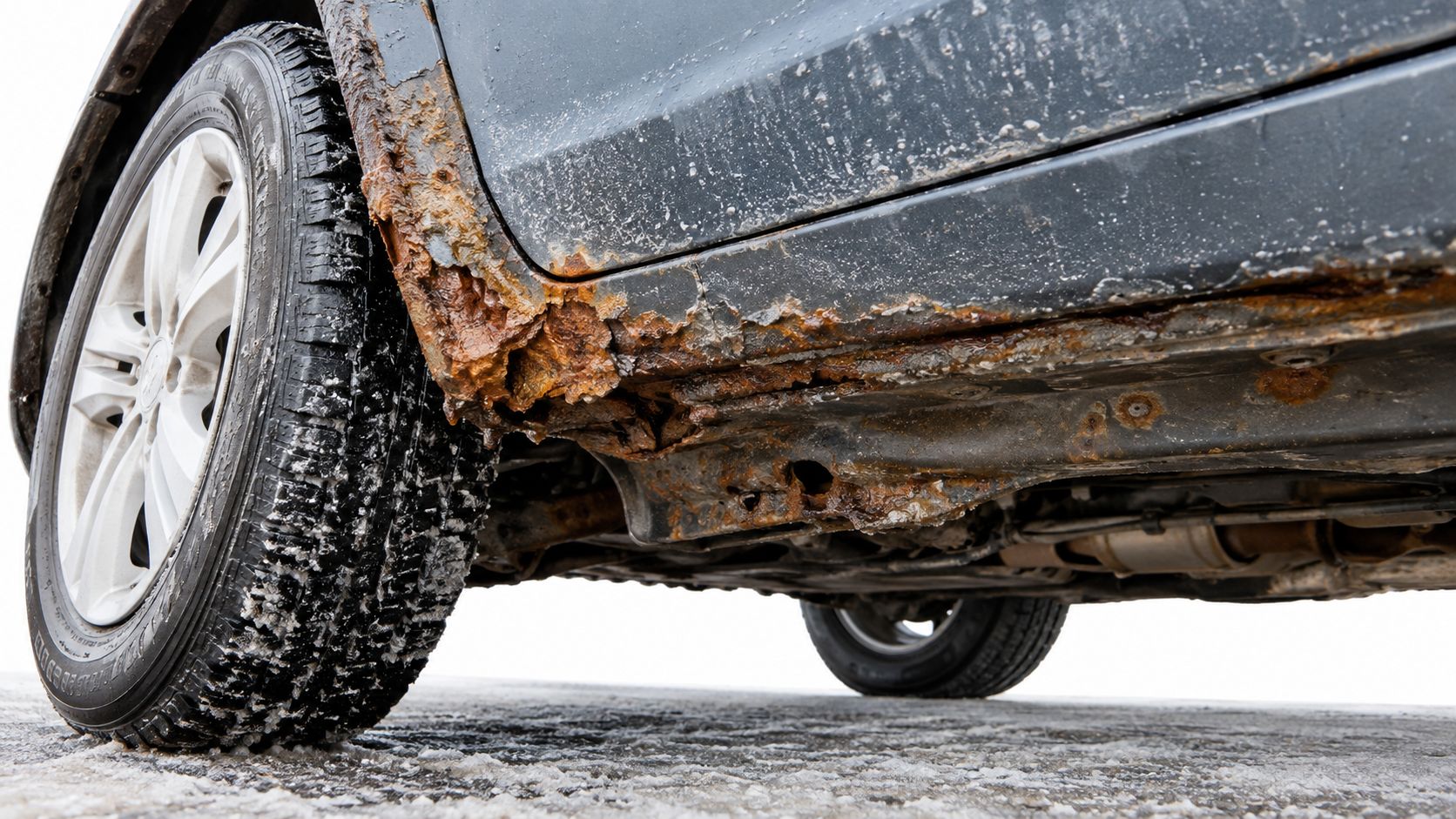
GTA drivers can check several areas for early clues:
- Wheel arches: Look for bubbling paint, brown staining, or loose liner edges.
- Exhaust hardware: Flaky hangers, rusty heat shields, and crust around clamps deserve attention.
- Subframe seams: Surface scaling can hide along joints and may require a lift for proper inspection.
- Fasteners: Swollen heads or crusted threads can make future service more difficult.
Spinning tyres spray salty water into inner fenders, suspension components, and frame areas. Grime then holds that moisture against exposed metal, much like a damp sponge pressed to a steel surface. The vehicle can sit overnight with residue still active inside seams, pockets, and behind plastic liners.
The question “does undercarriage wash prevent rust” needs a clear distinction. Washing removes salt and grime before they keep the corrosion process active. It cannot restore metal that has already rusted away, repair a weakened seam, or replace damaged hardware.
Practical rule: If salty slush reaches the underside, rinse it away before it dries into a hard, concentrated crust.
An undercarriage wash is maintenance for the parts a normal body wash may barely reach. Its purpose is to reduce fresh corrosion risk, while existing rust may call for inspection, mechanical repair, sealing, or professional rust proofing. That separation helps Ontario drivers judge what a wash can protect and what requires a different solution.
The Science of Rust in Plain English
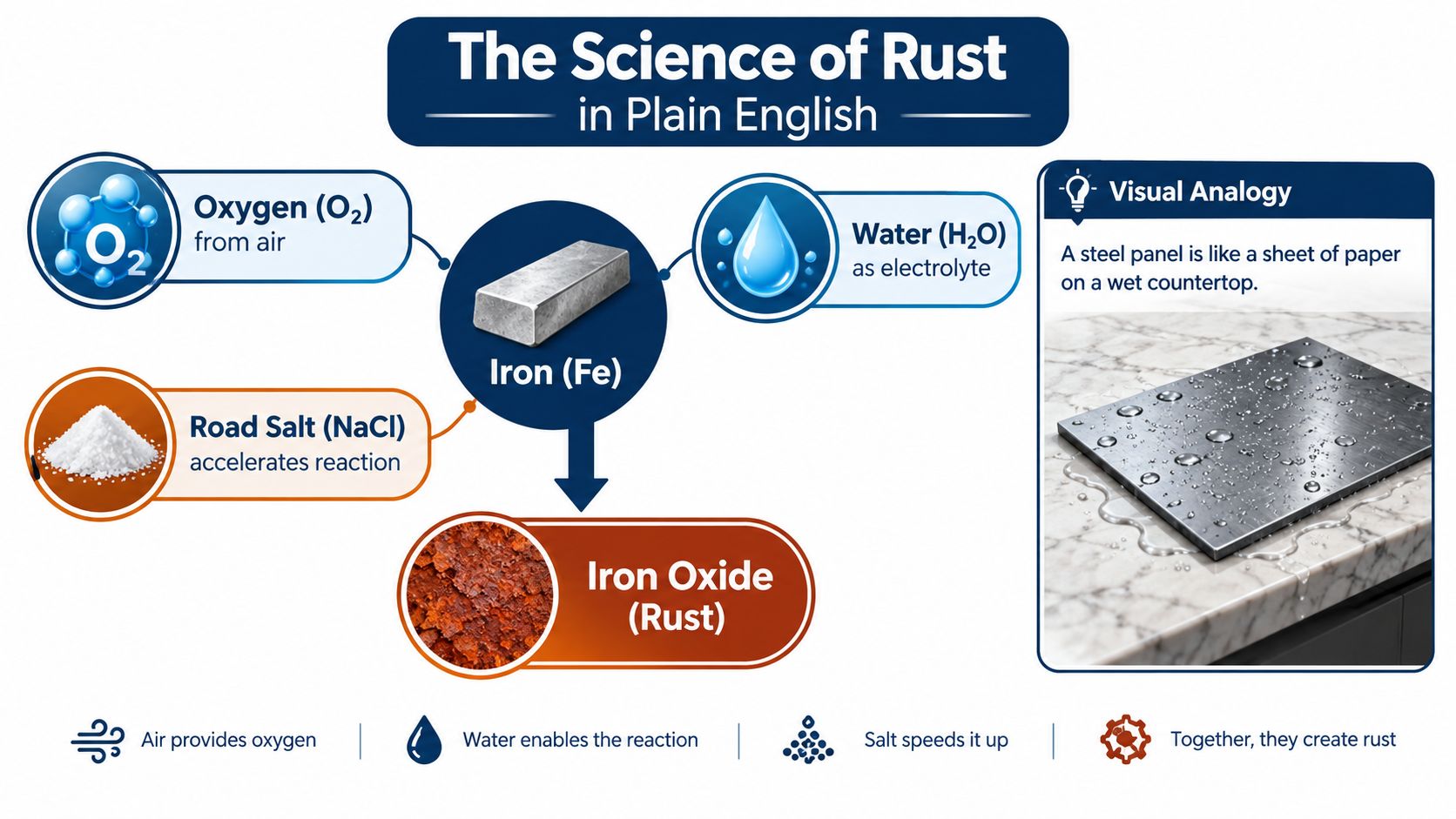
Think of a steel panel as a sheet of paper lying on a wet countertop. The paper absorbs moisture and stays damp where it touches the surface. Steel doesn't absorb water in quite the same way, but a wet salty film gives corrosion the environment it needs to start and continue.
Rust is an electrochemical reaction. Iron atoms in steel give up electrons and become iron ions. Oxygen and water then take part in reactions that produce iron oxide, the flaky material we call rust. Road salt doesn't have to be the material that becomes rust. Instead, dissolved salt helps water conduct electricity, allowing the corrosion reaction to move more easily across the metal.
Four conditions make vehicle corrosion more likely:
- Steel or exposed metal: Factory coatings, paint and galvanizing provide a barrier, but stone chips, weld seams, scratches and damaged coatings create weak points.
- Oxygen: Air reaches the underside through wheel wells, gaps, drain openings and exposed components.
- Water: Rain, melted snow and slush provide the moisture needed for the reaction.
- An electrolyte: Salt dissolved in water makes the film more conductive and helps the reaction continue.
Temperature affects the situation, too. Corrosion is especially active when salt residue remains wet rather than frozen solid. A vehicle can collect brine during a commute, sit in a heated garage, and keep the reaction going while the owner assumes the underside is just damp.
A wash interrupts the process by removing the salty film. It doesn't make steel immune to corrosion, and it can't restore a coating that has already failed. It reduces the amount of electrolyte sitting against exposed metal, especially in areas that receive direct spray.
That's the important mechanism behind rust prevention. The rinse helps because it lowers the salt load, not because water somehow removes rust that has bonded to the metal. For vehicles exposed to coastal spray, treated mountain roads or brine-contaminated routes, technical guidance also supports washing soon after exposure and using an undercarriage spray to remove contaminants a standard exterior wash can't reach (California transportation corrosion research).
Where Salt Hides and How It Attacks Your Vehicle
Salt rarely spreads evenly across the underside. It follows the spray pattern created by the tyres, airflow and road shape, then settles in places that dry slowly.
Wheel wells and inner fenders
Wheel wells receive the first blast from rotating tyres. Salt slurry lands on inner fender panels, plastic liners and seams, then stays trapped where sunlight and airflow are limited. Early damage often appears as bubbling paint around the arch or rust at the edge of a liner.
Suspension components
Control arms, coil springs, ball-joint housings and brackets may have paint or another protective finish. Mud and salt can wear that protection away over time, leaving rough orange scaling or crust around joints and fasteners. A rinse reaches exposed surfaces, although it won't remove bonded corrosion or repair a weakened component.
Subframes and engine cradles
Subframes and cradles deserve particular attention because some sections are boxed or partially enclosed. Salt-laden moisture can enter through openings and remain against internal surfaces. The first visible sign may be a rusty seam, but hidden thinning can be more serious than the outside appearance suggests.
Exhaust components
Exhaust systems face corrosion from two directions. Condensation forms inside the exhaust during operation, while salt spray attacks the outside. Hangers, heat shields, clamps and muffler seams often show flaky rust before a larger failure becomes obvious.
Fasteners and drain areas
Tow-hook mounts, underbody plugs and exposed bolts collect residue around edges and threads. Crusty threads make service work difficult, while blocked or dirty drain areas can hold moisture against bare steel.
| Undercarriage Zone | First Sign of Rust | Inspection Difficulty |
|---|---|---|
| Wheel wells and inner fenders | Bubbling paint or brown edges | Moderate |
| Suspension links and springs | Orange scaling or crusty hardware | Moderate |
| Subframe seams | Flaking coating or rusty seams | High |
| Exhaust hangers and shields | Flaking metal or loose hardware | Low to moderate |
| Tow-hook mounts and plugs | Corroded threads or staining | Moderate to high |
The most effective rinse is targeted rather than decorative. Guidance for salt-impacted driving environments identifies wheel wells, frame rails, brake lines, exhaust and suspension components as important areas for undercarriage rinsing because chloride residue holds moisture against bare metal longer than rainwater alone (Caltrans salt and corrosion context).
What an Undercarriage Wash Actually Does and Does Not Do
An undercarriage wash is a maintenance step with a clear job. It removes loose salt, brine, mud and road film from surfaces that a body wash may miss. It isn't a rust repair service.
What the water can reach
A properly directed spray can clean exposed frame rails, suspension links, wheel wells, brake lines, backing plates and exhaust hangers. It can also rinse salt from the lower edges of panels and other open areas where residue has dried.
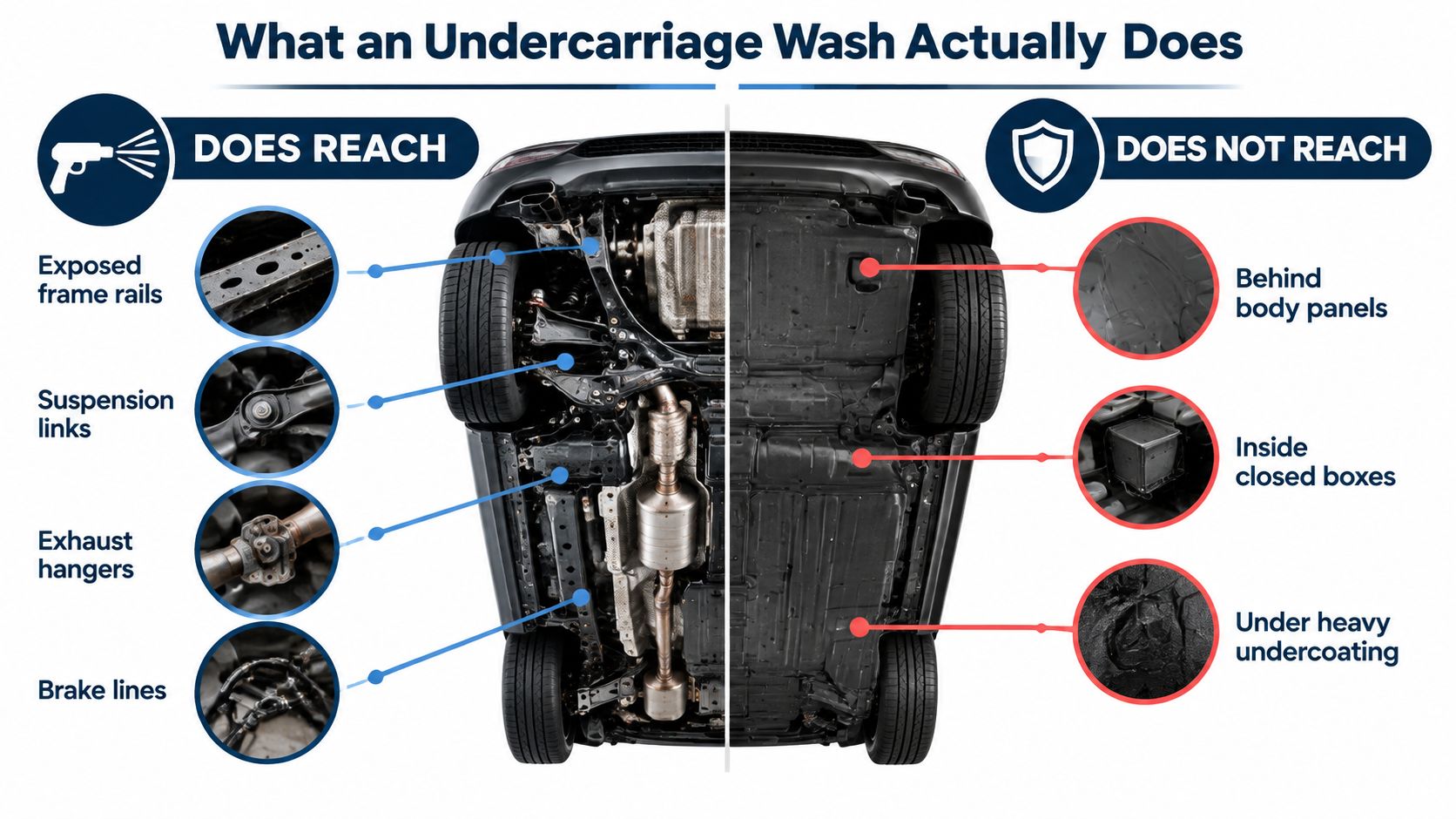
That is where washing helps. If the metal is still protected and the contamination is recent, flushing away salt reduces the conditions that support new corrosion. It also leaves the underside cleaner for a technician to inspect.
What the water can't do
A rinse has practical limits:
- It can't reverse oxidation: Existing rust remains rust. Bubbling paint, scaling and perforation need assessment and, often, mechanical repair.
- It can't clean every enclosed cavity: Closed boxes, sealed body panels and the inside of rockers may receive little or no direct spray.
- It may not remove hardened mud: Caked material often needs soaking, agitation or a more deliberate cleaning process.
- It can't replace rust proofing: Protective compounds provide a barrier in areas ordinary water can't coat.
- It can't replace inspection: A clean surface makes problems easier to see, but only a proper examination can judge structural condition.
Factory underbody coatings remain useful where they're intact. Washing helps preserve the surrounding protection by removing abrasive grime and corrosive residue, but a pressure nozzle shouldn't be treated as a tool for stripping sound coatings or forcing water into every opening.
Ontario winter guidance makes the central distinction clear. Washing is prevention, not repair, and it works best when followed by drying and timed before overnight freezing (winter rust prevention guidance). If you find scaly rust, a soft section, bubbling paint or a damaged panel, book an inspection instead of assuming more washing will solve it.
How Often and When to Schedule Undercarriage Washes
A salt-covered car can look clean from above while brine sits underneath. Timing matters because residue is easier to remove before it dries, concentrates and settles into seams, wheel wells and frame areas.
Use a trigger-based routine during active Ontario salting:
- After slushy driving: Rinse the underside once the vehicle has collected visible spray. Aim to clean it within about 24 to 48 hours after heavy exposure.
- During regular winter driving: Keep a one to two week wash cadence, then add another visit after a major salt event.
- After repeated short trips: Wash sooner if the car makes brief urban journeys and remains damp between drives. Moisture gives salt more time to sit against metal.
- After highway travel: Check the wheel wells and lower body. Sustained spray can carry residue farther into seams and liners.
- Before a freeze: Choose a warm-bay or heated facility when possible, giving trapped water time to drain and dry before temperatures fall.
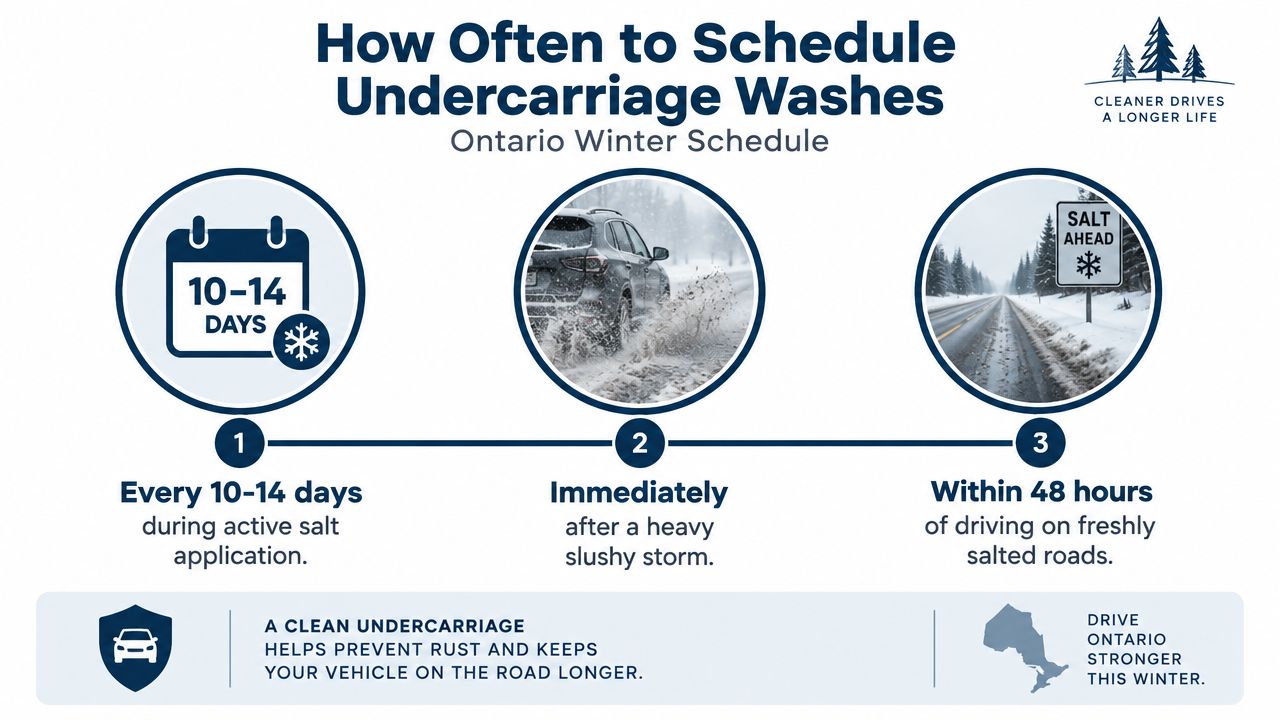
A highway commuter and an urban driver will not collect contamination in the same pattern. Short stop-and-go trips may leave the underside wet for longer, while mostly dry highway driving may require less attention between salt events. Road conditions should guide the choice more than the calendar alone.
Wash before the salt dries whenever practical, then give the vehicle enough time and warmth to dry properly.
Seasonal cleaning completes the routine. A late-fall rinse removes existing residue before winter storage or the first major treatment. A spring deep clean clears the film left after municipalities stop salting. Regular washing helps prevent fresh contamination from supporting corrosion, but it cannot restore metal that has already deteriorated. A repeatable schedule protects better than a single appointment after rust becomes visible.
Beyond the Wash, Wax Sealants and Rust Proofing Compared
Undercarriage washing removes contamination. It doesn't provide the same barrier as a protective coating, and a paint sealant doesn't reach the same places as an underbody treatment. Each method has a different job.
Washing is the baseline. It deals with salt, mud and brine sitting on exposed surfaces. It's most useful as a frequent maintenance action, especially during the Ontario corrosion season. A wash can't protect a closed cavity once the water has dried, and it can't repair a coating that has already failed.
Spray wax and polymer sealants protect visible painted surfaces. They help water bead on the exterior and can support the finish on lower panels, but they're not a substitute for an underbody rinse. They also wear away and need reapplication, particularly on areas exposed to road film and repeated cleaning.
Professional rust proofing adds a barrier where rinsing has limited reach. Depending on the product and application, technicians may use waxy, oil-based or bituminous compounds inside frame rails, boxed sections, wheel wells and other vulnerable areas. Rust proofing can slow future corrosion on suitable surfaces, but it won't turn scaly metal into sound metal or seal over active damage without proper assessment.
| Method | What It Protects | Typical Lifespan | Best For |
|---|---|---|---|
| Undercarriage wash | Exposed metal from salt and road film | Frequent maintenance | Removing fresh contamination |
| Spray wax | Painted exterior panels | Short term | Water beading and finish care |
| Polymer sealant | Painted body surfaces | Short term to recurring maintenance | Extra surface protection |
| Professional rust proofing | Accessible underbody and cavity surfaces | Longer term, depending on product and conditions | Added barrier against moisture and salt |
A layered routine makes sense for GTA vehicles. Wash away the salt, protect painted surfaces with a suitable sealant, and use rust proofing when the vehicle's condition and application areas justify it. None of these steps cancels the need for inspection, especially where paint bubbles, metal scales or seams deform.
The right question isn't which service wins. It's which threat you're addressing. Washing removes the electrolyte, sealants protect paint, and rust proofing covers selected areas water can't reliably reach.
Building a Complete Rust Prevention Routine with Nanak Car Wash
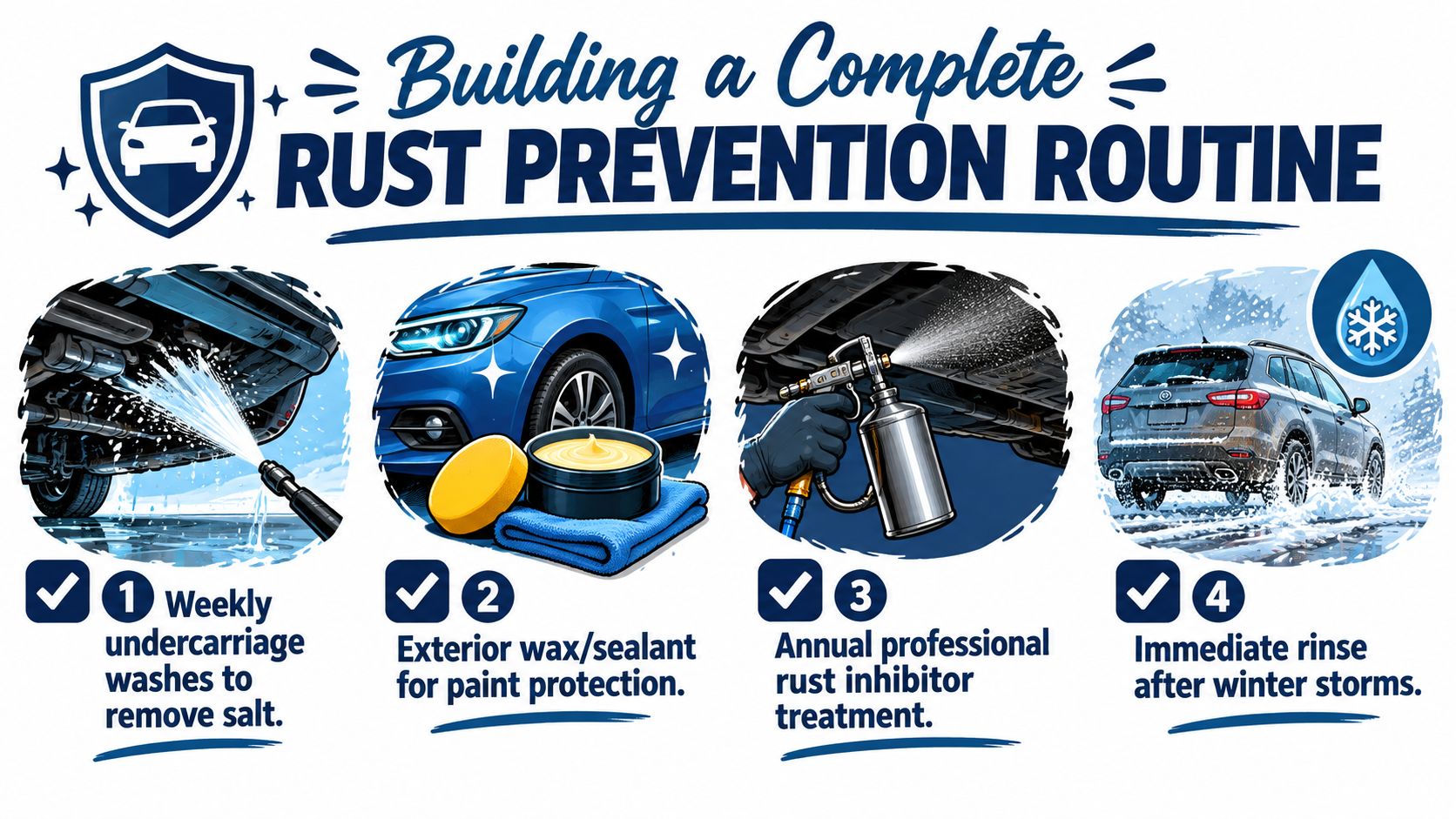
No single service can protect every surface underneath a vehicle. A workable routine combines immediate salt removal, regular exterior care, seasonal cleaning and professional treatment where appropriate.
Start with the event that creates the risk. After a major salt or slush event, use an underbody rinse to remove residue from wheel wells, frame areas, suspension and exhaust components. During winter, pair that rinse with a full exterior wash and a wax or sealant option on a recurring schedule, so the lower painted panels aren't left coated in road film.
A simple rhythm looks like this:
- After major winter storms: Rinse the undercarriage before residue dries and settles into seams.
- During active salt use: Keep the one-to-two-week washing interval in mind, adjusting for road conditions and vehicle use.
- In spring: Arrange a deeper undercarriage clean after regular salting ends.
- In fall: Inspect vulnerable areas and consider rust proofing before the next winter cycle.
Nanak Car Wash offers wash packages with an underbody rinse option, exterior wax and sealing upgrades, detailing services and automotive rust proofing. Its rust proofing service uses a dedicated chemical compound, with vehicle-size pricing displayed by the business, while wash options include express and full-service formats. That combination lets an owner handle regular salt removal and arrange a separate protective treatment without coordinating entirely unrelated providers.
The consistency matters more than buying the most elaborate package once. A clean underbody after salt exposure, a protected exterior, a spring reset and a sensible fall inspection give you more useful protection than waiting until rust is obvious. If you see perforation, severe scaling or bubbling paint, get the metal assessed before applying a coating.
Visit Nanak Car Wash for an underbody rinse, exterior wash and available rust proofing options suited to GTA winter driving. Ask the team to help you choose a practical combination for your vehicle's condition, then make salt removal part of your regular maintenance routine.

 6600 Finch Ave W, Etobicoke, ON M9V 3Z6
 647-703-8515
 MON – SUN 8 AM to 7 PM