
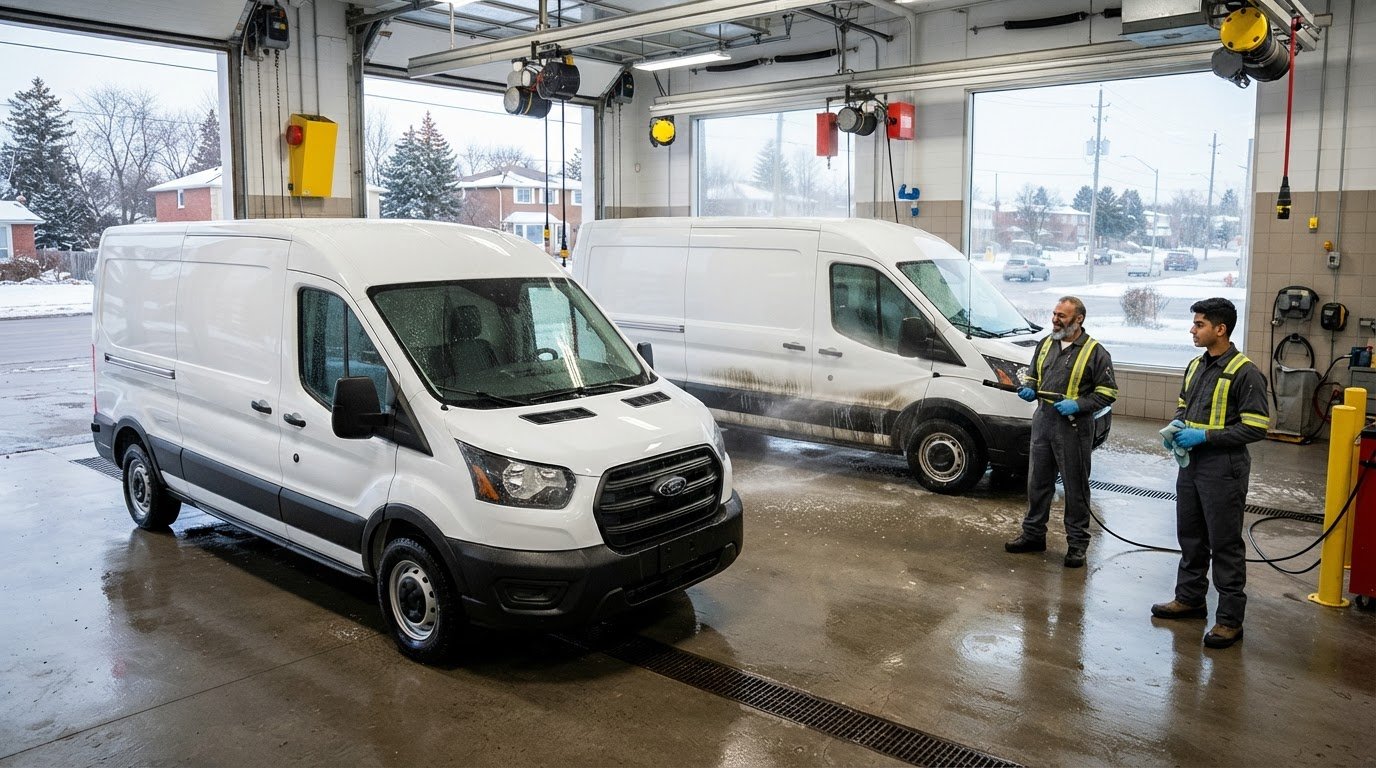
For fleet cleaning for plumbing and HVAC vans in Brampton, washing every two to four weeks is a practical starting point. Wash more often when vans encounter heavy mud, grease, road grime, or winter salt; lighter use may require less frequent cleaning. Set the schedule according to the conditions your vehicles face, not just the calendar.
It makes sense to want clean, professional-looking vans without taking vehicles out of service more often than needed. This guide explains what affects wash frequency, what exterior and interior cleaning can cover, and when a recurring schedule may be more useful than a one-time wash. You’ll also learn how to weigh the level of dirt, the type of work your vans do, and the cleaning required to keep them presentable and easier to inspect. Use those details to choose a practical plan for your fleet.
Key Takeaways
- Use a two-to-four-week wash rhythm as a starting point for commercial vehicles, then adjust for mud, grease, road grime, and winter salt.
- Pay attention to buildup on exterior surfaces, where dirt can make vehicle inspections and repairs harder.
- Choose a one-time wash for an immediate cleanup or a recurring schedule when your vans collect grime regularly.
- Match the cleaning scope to the vehicle’s condition and needs, from an exterior wash to more detailed cleaning.
- For a practical cleaning option in Brampton, compare Nanak Car Wash’s detailing packages, full-service wash, express wash, and Unlimited Wash Club.
Road film, salt, grease, mud, and grime removal
Commercial vehicle washing in Ontario must follow applicable local sewer-use requirements for wastewater disposal. Keep wash water containing detergent, oil, grease, and grit out of storm drains, and use an appropriate contained or approved discharge route. The washing location and discharge method determine how wastewater must be managed.
A plumbing or HVAC van can pick up grease, asphalt, oil, mud, and other debris during a day on the road. Road film clings to doors, wheel arches, bumpers, and lower panels. Winter salt adds to the buildup, particularly around the body and undercarriage. Regular washing removes dirt, grease, and salt that can damage paint and contribute to corrosion over time.
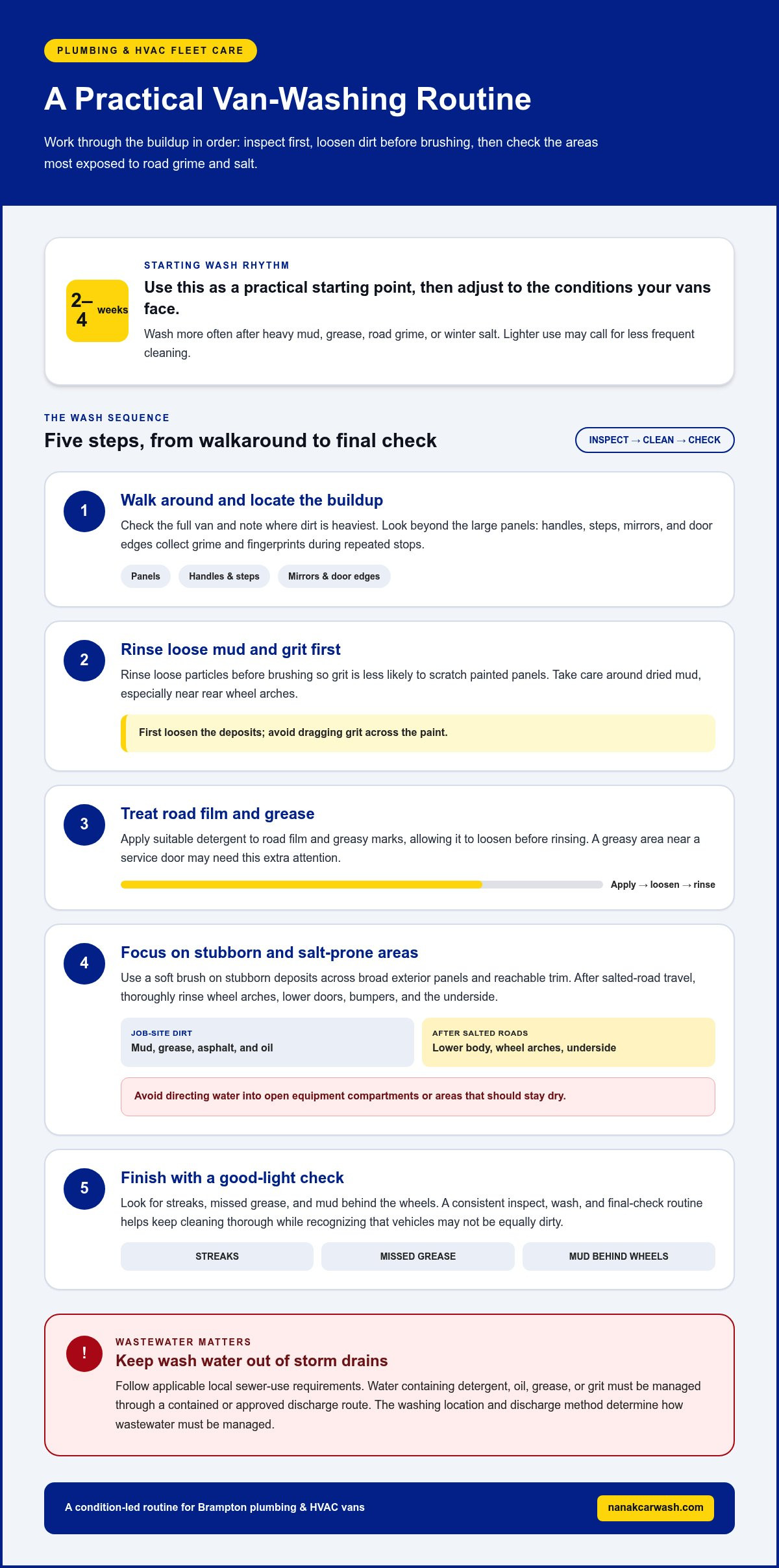
Start with a quick walkaround. Note where buildup is heaviest, then match the cleaning method to the surface and type of soil:
- Rinse loose mud and grit before brushing, so particles are less likely to scratch painted panels.
- Apply suitable detergent to road film and grease, allowing it to loosen before rinsing.
- Use a soft brush for stubborn deposits on broad exterior panels and reachable trim.
- Give wheel arches, lower doors, and bumpers a thorough rinse after salted-road travel.
Common fleet-washing tools include high-pressure washers, foam applicators, soft brushes, and specialized detergents. Loosen deposits before rinsing them away to avoid dragging grit across the paint. For example, rinse dried mud around a rear wheel arch carefully before brushing. A greasy mark near a service door may need detergent to help lift it.
Plumbing and HVAC jobs involving heating equipment, pipework, or outdoor access can leave vans dusty or marked. Check handles, steps, mirrors, and door edges as well as the larger panels. These touchpoints collect fingerprints and grime during repeated stops. Cleaning them also makes a visual check before the next call easier.
After driving on slushy or salted roads, check the underside and lower body areas. Salt and wet debris can remain there even when the upper panels look clean. A rinse focused on these areas helps remove residue before it sits on the vehicle. Avoid directing water into open equipment compartments or areas that should stay dry.
Finish by checking the van in good light for streaks, missed grease, and mud behind the wheels. A consistent inspect, wash, and final-check routine makes cleaning more thorough without treating every vehicle as equally dirty. In Brampton, adjust the focus as road conditions change, especially when salt, wet grit, or construction mud builds up.
Local sewer-use requirements govern wastewater disposal. Keep wash water containing detergent, oil, grease, or grit out of storm drains, and manage it through a contained or approved discharge route.
Commercial wash water must be managed according to local sewer-use requirements, kept out of storm drains, and directed to a contained or approved discharge route. The section does not establish whether Brampton mobile cleaners offer waterless washing.
Cleaning for businesses
Commercial van cleaning affects vehicle presentation, staff schedules, and operating costs. Compare the cleaning scope, wash location, and frequency with the way your Brampton fleet operates.
Comparing Brampton Fleet Cleaning Providers
Compare the actual tasks included, not just the label attached to a wash. One service may focus on the exterior, while a more thorough clean can address interior surfaces too. Consider whether vehicles must travel to the wash location or can be cleaned on-site. Also compare how the provider handles visible buildup, service steps, and repeat appointments around your operating schedule.
A plumbing van returning from a muddy job may need more attention than a lightly soiled vehicle. List your fleet’s needs, including vehicle type, typical dirt, preferred wash location, and desired schedule. These details make it easier to compare suitable options than choosing by a headline offer alone.
Commercial Van Fleet Cleaning Costs
Commercial van fleet cleaning costs in Brampton depend on the vehicle’s size, condition, cleaning scope, and service frequency. The price depends on the case and is given after a quote request, with factors including buildup, interior work, and the number of vehicles.
To compare costs fairly, define the same work for each option. Specify whether you need an exterior wash or a more thorough clean. Vans with heavy job-site mud may need more attention than vehicles with light road dust. Consider whether you need a one-time wash or regular cleaning.
Services for Plumbing and HVAC Vans
Plumbing and HVAC vans may need exterior cleaning, interior attention, or both. Road grime can build up during service calls, while tools and work materials may leave marks inside. Match the service to each vehicle’s condition rather than paying for steps it does not need.
Use a quick vehicle-by-vehicle review before booking. Note stained seats, dusty floors, muddy lower panels, and grime around door handles. For a broader clean at a Brampton wash location, Nanak Car Wash’s Full-Service Car Wash is a practical option to consider for fleet vehicles needing more than a basic exterior rinse.
On-Site Mobile Van Washing
Mobile fleet washing companies clean vehicles at a business site, which can save travel time and reduce vehicle downtime. The specific companies serving a Brampton business depend on its location and scheduling needs. On-site washing suits fleets that can park together while cleaning takes place.
Waterless methods and compliant wastewater management are separate considerations. Waterless cleaning reduces or avoids rinse water, while compliance depends on the washing method and wastewater handling. Consider the location and cleaning scope as well, particularly if your fleet is parked at its own premises.
Fleet appearance and employee pride
A plumbing or HVAC van represents the business during every customer visit. For established service teams like A&V Drain Corp., a clean vehicle with visible lettering looks far more prepared outside a home or job site. Road film can dull decals, while grime around handles and doors makes a poor first impression. In Brampton, use the same simple presentation standard across the fleet, from the front grille to the rear doors. Clean vehicles also support a consistent brand image wherever technicians park.
Good presentation comes from repeatable details, not just a glossy finish. Before a van leaves the yard, check its windows, mirrors, door handles, and visible company markings. Dried splash marks on a white side panel, for example, stand out beside clear lettering. A quick review helps catch missed areas before a customer appointment.
- Check that company lettering is clear and free from visible grime.
- Look at windows, mirrors, and lights for streaks or splash marks.
- Inspect door handles and entry steps for dirt from daily use.
- Keep the same presentation standard across vans and replacement vehicles.
Employees interact with their vehicles throughout the workday. A tidy cab, clear windows, and clean touchpoints help a van feel ready for its next call. A technician heading to a heating repair, for example, can start with a presentable driver’s seat and controls. Consistent cleaning also sets a shared expectation that employees return vehicles in good order.
A camera can help with a straightforward visual review. Check the van’s side panels and rear doors before it leaves, then look at the same areas after cleaning, especially around logos and other customer-facing details. This can help supervisors review vehicles parked in different parts of a yard. The aim is a clear, consistent standard, not elaborate documentation.
Visible upkeep can help managers notice emerging issues. A clean panel makes a new scrape or loose trim easier to spot during a walkaround, while dirt around a door seam may hide a mark until the area is wiped. Record the location through your usual vehicle process and arrange appropriate follow-up. Cleaning supports visual checks but does not replace maintenance inspections.
Set cleaning standards around the work vehicles actually do. A van returning from a muddy outdoor job may need more attention than one used for indoor appointments. Review the fleet after completed jobs, seasonal work, or a customer-facing event. This practical routine supports consistent presentation and shared pride in company vehicles.
Recurring and one-time fleet wash schedules
For fleet cleaning for plumbing and HVAC vans in Brampton, washing every two to four weeks is a useful starting point for general commercial vehicles. Adjust the interval for dirt, grime, snow, and road salt. A van used on muddy construction sites may need attention sooner than one making mainly indoor service calls. Let the vehicle’s condition guide the schedule.
A recurring plan makes cleaning part of normal fleet operations. Choose a regular interval, then review the vans before each visit. If a vehicle returns heavily soiled after outdoor work, clean it sooner rather than waiting for its next planned wash. Keep the baseline consistent while allowing dirtier vehicles to receive attention as needed.
A one-time wash suits a specific need. Clean vans before a customer event, after a muddy project, or ahead of seasonal work. It can also help when service calls leave visible buildup across the fleet. Afterward, decide whether normal working conditions call for recurring cleaning.
To schedule cleaning at a Brampton shop or job site, choose a location where the vans can park together and identify a time when they’re available. Grouping vehicles can simplify coordination, while a clear list of units helps staff prepare the right vehicles for cleaning. Set a fleet-cleaning schedule for plumbing and HVAC vans in Brampton around dispatch times, job completion, or planned downtime.
- List the vans and note which ones need attention first.
- Choose a date that fits work schedules and vehicle availability.
- Make sure vehicles can arrive and park in the designated cleaning area.
- Record the next recurring date, then adjust as weather or work conditions change.
Seasonal conditions can change the best cleaning schedule. After exposure to snow and salt, inspect lower body areas and decide whether the usual interval still works. Construction mud and dust may build up faster during active work. Calendar reminders help manage regular washes, while condition checks keep the schedule practical.
Use a simple fleet log to identify patterns. Record each wash date, vehicle, and main reason, such as salt, job-site mud, or a customer-facing event. Compare the entries with routes and work types. If vans regularly look dirty well before their next wash, shorten the interval; if they stay clean, reassess it.
What fleet cleaning services are available for plumbing and HVAC vans in Brampton, Ontario?
Commercial fleet washing can cover the exterior and, where needed, the interior. Choose the scope according to each van’s condition, work environment, and cleaning needs. A plumbing van returning from a muddy site may need different attention from one used for indoor appointments.
Exterior washing may use high-pressure washers, foam applicators, soft brushes, and specialized detergents. Each tool suits different soils and surfaces. Rinsing removes loose dirt, foam helps loosen road film, and a soft brush can target stubborn marks. Choose a method suited to the area rather than treating every surface the same way.
Interior cleaning can help when technicians track dust, mud, or job-site debris into the cab. The scope can range from accessible surfaces to a more detailed clean. For example, a van used for plumbing calls may need attention to the floor and entry points after wet work. Cleaning addresses the cabin, not equipment repair or servicing.
Some detailed fleet-cleaning services may also include engine-bay cleaning, undercarriage washing, interior detailing, and polishing or waxing. These are distinct tasks, so identify the need before choosing a scope. A vehicle with salt residue underneath presents a different cleaning need from one with dull exterior paint. Protective coatings or undercarriage treatments are also offered by some fleet-washing services to help prevent corrosion.
- Exterior wash: removes surface soil from body panels, windows, and other exterior areas.
- Interior cleaning: addresses cabin surfaces and debris based on the requested scope.
- Undercarriage wash: targets residue beneath the vehicle, including seasonal road deposits.
- Polishing or waxing: adds a finishing step for exterior presentation.
Before booking, group vehicles by condition and priority. Note whether each van needs an exterior wash, interior attention, or more detailed cleaning. This simple review avoids treating every vehicle as if it has identical needs and makes it easier to plan fleet cleaning in Brampton.
For a vehicle that needs a more complete wash, explore full-service wash options. Choose the cleaning scope around the van’s condition, then keep the job focused on the surfaces that need attention.
Nanak Car Wash: Car Detailing Packages
Nanak Car Wash gives Brampton fleet owners practical options for keeping work vehicles clean. Choose Car Detailing Packages when a van needs more detailed attention than a routine wash. A Full-Service Car Wash suits vehicles needing a broader wash, while an Express Car Wash is a straightforward option for regular upkeep. The Unlimited Wash Club may suit frequent customers who wash often.
Match the option to each vehicle’s condition and your preferred routine. Choose a detailing package when the interior or exterior needs extra attention, or an express wash for lighter, routine cleaning. These services clean vehicles; they do not provide mechanical or body repairs.
Choose a wash option that fits your fleet’s needs with Nanak Car Wash.
Make fleet cleaning part of your routine
Assign one person to review vehicle condition and plan the next cleaning visit. A simple fleet note can record which vans need attention, the type of cleaning required, and which vehicles to prioritize. This keeps decisions clear as routes, job sites, and weather change.
For fleet cleaning for plumbing and HVAC vans in Brampton, build a plan around how your team uses its vehicles. Keep it flexible: schedule routine upkeep, but clean unusually dirty vans sooner. A practical plan helps prevent cleaning from becoming a last-minute task before a customer visit.
Nanak Car Wash offers Car Detailing Packages, Full-Service Car Wash, and Express Car Wash options for vehicle cleaning. Choose the level that fits your fleet’s needs, then set a routine your team can maintain. Contact Nanak Car Wash to discuss fleet cleaning and take the next step toward a cleaner, more consistent fleet.
Frequently Asked Questions
How often should fleet vehicles be washed?
General commercial vehicles are commonly washed every two to four weeks, with frequency adjusted for dirt, grime, snow, and salt exposure. Plumbing and HVAC vans used on muddy sites may need cleaning sooner than vehicles travelling mainly between indoor appointments. Use visible soil and work conditions to guide timing. A fleet log can show which routes or jobs leave vehicles dirty fastest.
What is a fleet wash service?
Fleet washing cleans commercial vehicles such as vans and trucks, focusing on the exterior and, where applicable, the interior. Businesses can organize cleaning for several work vehicles rather than treating each wash as a separate household-car visit. For example, group vans by condition and arrange exterior washing for some and interior cleaning for others.
Why is regular fleet washing important?
Regular washing removes dirt, grease, and road salt that can damage paint and contribute to corrosion over time. Clean vehicles also make visible marks easier to spot during a walkaround. Staff can notice a new scrape or loose trim while checking a van instead of mistaking it for old grime.
Do fleet cleaning providers offer recurring plans or volume discounts for multiple vans?
For fleet washing, compare the vehicle types, condition, and cleaning scope against the package prices. Nanak Car Wash offers Express Car Wash Packages, Full-Service Car Wash Packages, Car Detailing Packages, and an Unlimited Wash Club. Special prices for car dealers, fleet cars, rental cars, and other car-related companies.
Can Brampton fleet cleaners remove grease, sealant, road salt, and construction residue from service vans?
Fleet washing can remove surface grease, road salt, and loose construction dirt with suitable detergents, rinsing, and brushes. Hardened sealant or residue bonded to paint may need a different approach from ordinary road film. Identify the affected area and material before cleaning, since both the surface and residue determine the appropriate method. Let the vehicle’s finish guide the cleaning technique.
How often should plumbing and HVAC vans be cleaned during Brampton winters?
Use the two-to-four-week commercial washing interval as a starting point, then shorten it when winter driving leaves visible salt or slush. Check lower panels and wheel areas after repeated trips on treated roads. A van with regular wet salt buildup needs attention sooner than one with limited exposure. Keep the schedule flexible as weather and routes change.


 6600 Finch Ave W, Etobicoke, ON M9V 3Z6

 647-703-8515
 MON – SUN 8 AM to 7 PM