
Everyone loves to sell graphene coating for cars as if it's a cheat code for Ontario winters. It isn't. In the GTA, the coating matters, but prep, application quality, and winter maintenance do the heavy lifting, because road salt, slush, tunnel washes, and sloppy wash habits can wear down even a good product.
If you want the honest version, treat graphene as a high-performance additive, not a miracle shield. Canadian automotive materials literature backs that up, with lab gains tied to very small graphene additions rather than magic. The right question isn't, “Is graphene the best thing ever?” It's, “Will this coating stay clean, resist corrosion, and survive a Toronto winter with realistic upkeep?”
Table of Contents
- Why Graphene Coating Hype Needs a Reality Check
- What Graphene Coating Does to Your Paint
- Graphene vs Ceramic Coating for GTA Drivers
- What Really Determines Coating Lifespan in Ontario
- DIY vs Professional Application and What to Expect
- Maintaining Your Coating Through GTA Seasons
- Common Questions About Graphene Coatings Answered
Why Graphene Coating Hype Needs a Reality Check
The loudest graphene marketing starts at the finish line and skips the middle. You'll hear promises about 5-year, 7-year, or even better protection, but that language leaves out what matters most in the GTA, what happens after the first salt-heavy week of winter. Independent literature still shows many consumer graphene and ceramic spray products landing in the 6 to 20 month range, depending on product type and application method, and that is a lot closer to shop reality than the bottle copy review.
The real problem is neglect, not chemistry
Graphene does not rescue a rushed job. If the paint was not properly decontaminated, corrected, and prepped, the coating has less to grip, and that hits real-world longevity harder than most buyers expect. The same review also puts modern coating systems in a 5 to 10 year service-life range depending on formulation and application quality, which is useful context, but that is controlled-testing context, not a promise for a daily driver in Toronto slush table in the review.
Practical rule: if a shop talks about the coating before it talks about the paint, you are already hearing the wrong pitch.
GTA drivers also deal with contaminants that generic product pages barely mention. Road salt, winter grime, frequent tunnel washes, and freeze-thaw cycles create the kind of abuse that exposes weak prep and lazy maintenance fast. That is why a coating sold as premium still fails fast in real Ontario use if nobody keeps up with washing and decontamination. If you want a no-nonsense checklist from people who work around these cars every day, the SkipCalls guide for detailers is a useful starting point because it keeps the focus on process, not hype.
The honest takeaway is simple. Graphene coating for cars can help, but the chemistry gets overrated fast if the maintenance is sloppy. In Ontario, the coating only lasts as long as the wash routine that follows it.
What Graphene Coating Does to Your Paint
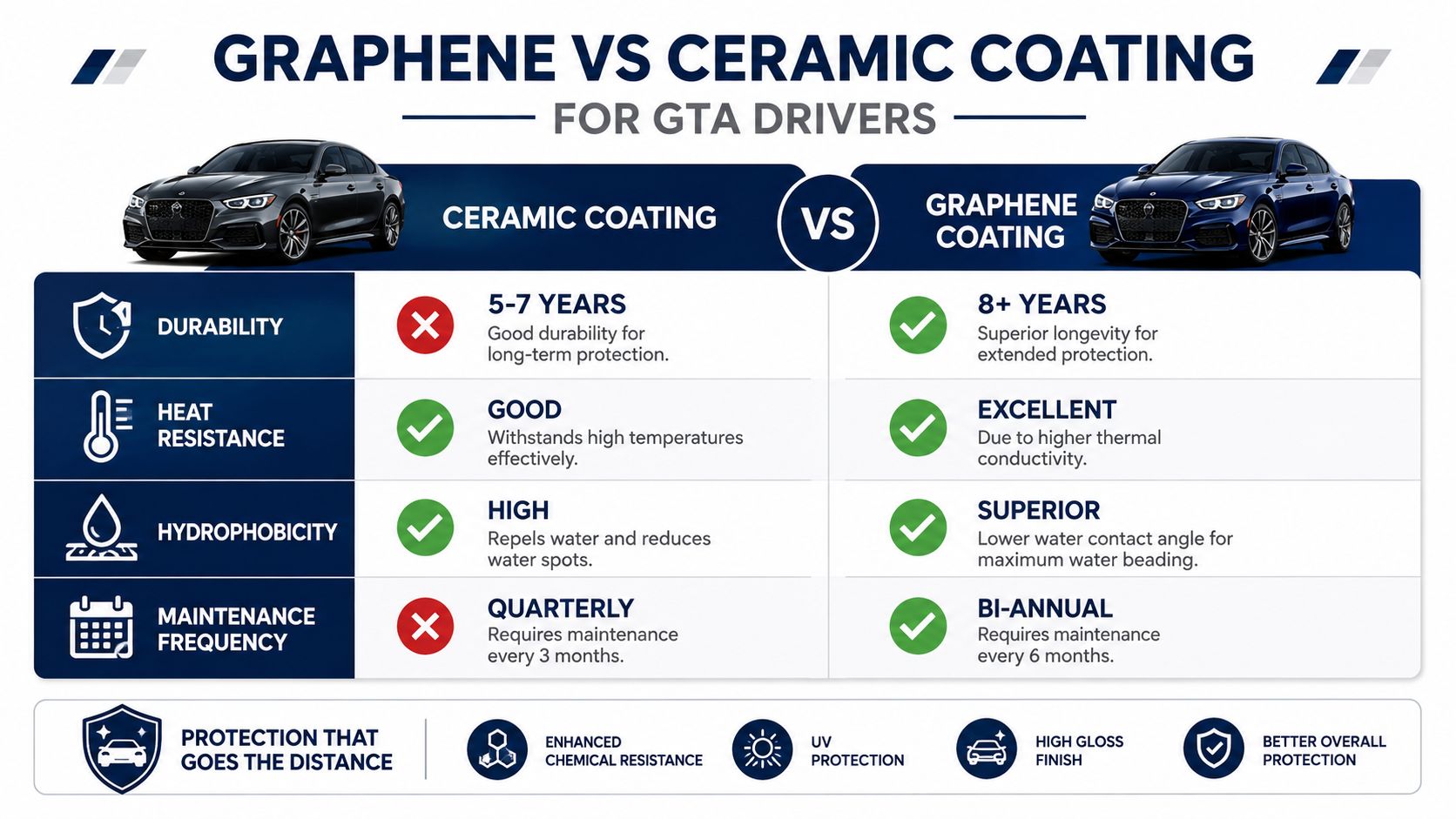
Graphene is not some mysterious black paint potion. Ceramic coating forms a smooth glass sheet bonded to the surface. Graphene-enhanced coating adds a microscopic chain-link fence inside that protective layer, which helps it move heat and resist chemical abuse better than a basic film. The value is in how the material behaves under heat, water, and contamination.
Why heat dissipation matters in the GTA
Graphene's intrinsic thermal conductivity is often cited around 5,000 W/m·K, and automotive graphene materials are also represented in the 4,000 W/m·K range in automotive white papers graphene automotive material reference. That matters because hot panels do not just look tired, they stress coatings faster. If a coating can shed localized heat faster on a sun-baked hood or roof, it has a better shot at resisting fading, cracking, and the small failures that start with one hot afternoon and end with a dull panel.
Barrier strength matters too. Graphene's tensile strength is listed above 130 GPa, and its Young's modulus sits near 1 TPa, which explains why it is treated as more than a cosmetic additive. In automotive coating literature, graphene is also used to improve chemical resistance and thermal stability compared with conventional silica-based coatings, which is the kind of benefit a GTA driver wants when winter filth and UV exposure take turns beating up the paint.
What the lab data shows
Canadian-relevant automotive materials literature treats graphene as a performance additive with measurable but limited gains. A 2024 review reported that adding just 0.05% graphene to an inorganic polymer paint increased heat resistance by 5% and corrosion resistance by 20% versus the control sample without graphene review. That is useful because it shows a real effect, but it also shows the effect is formulation-specific and measured under controlled testing.
Shop-floor translation: graphene helps the coating behave better under stress, but the improvement shows up as lab-style gains, not fairy-tale durability.
That is the frame to keep in mind. If someone sells you graphene coating for cars as a magic solution to every paint problem, they are overselling it. If they describe it as a smarter coating system that still needs proper prep and maintenance, they are closer to reality.
Graphene vs Ceramic Coating for GTA Drivers
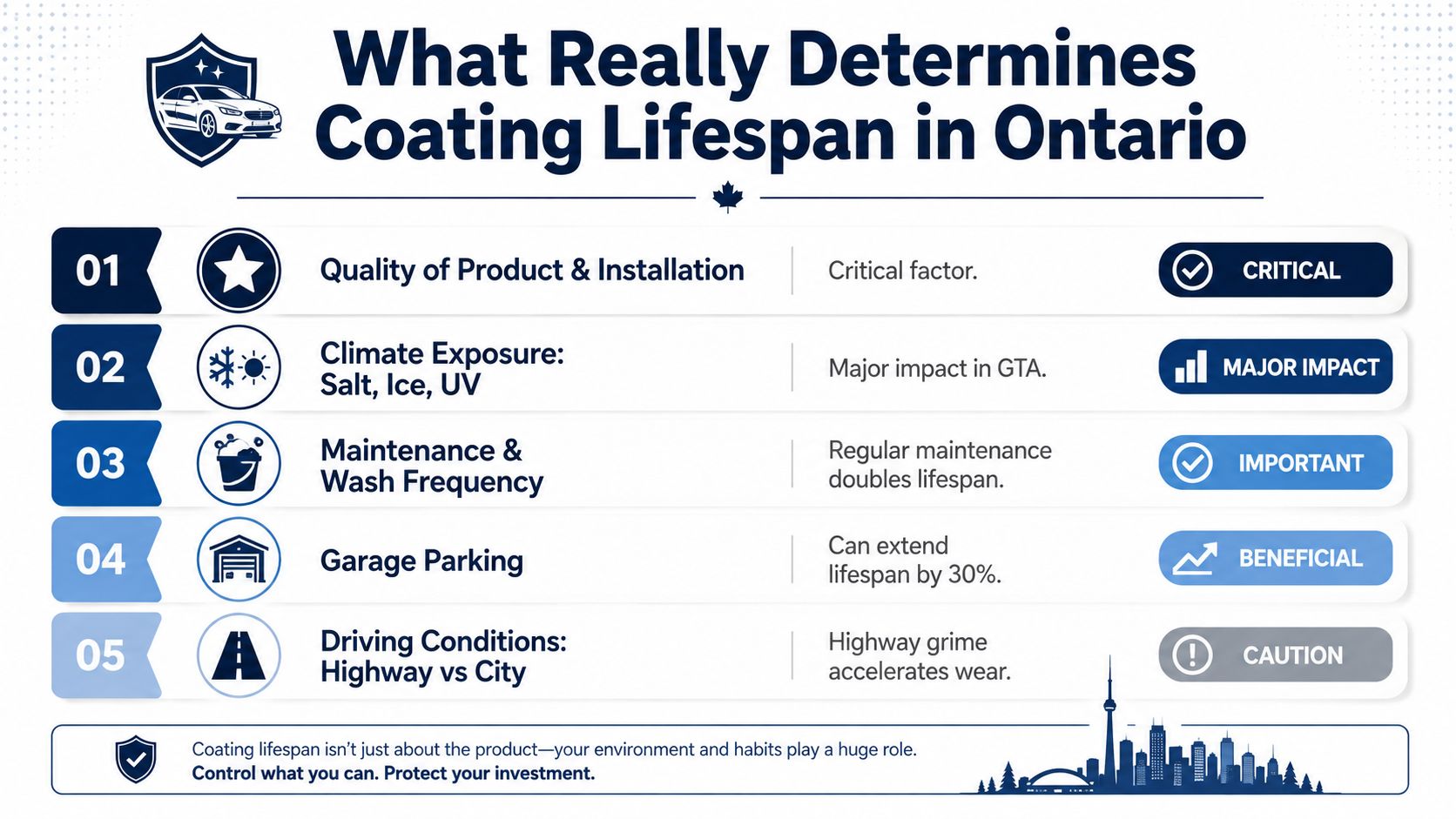
Graphene versus ceramic gets muddled fast because shoppers hear slogans instead of comparing how the coating will live on a GTA car. Strip away the marketing, and the test is simple: heat handling, contamination resistance, wash behaviour, and how much maintenance you are willing to do. Graphene can offer a modest edge in thermal and chemical performance, while ceramic gives you a familiar coating with a long track record and clearer expectations.
Core issue of neglect, not chemistry
Graphene makes sense on vehicles that see sun, frequent washing, and repeated heat and grime cycles. Its thermal behaviour gives it an advantage on paper, and its barrier properties can help the film hold up against contamination and moisture. The catch is that the product formula matters more than the label, because plenty of bottles use the graphene name loosely.
A coating does not care about the badge on the bottle. It cares about prep, application, and what happens after the install.
Where the gap gets exaggerated
Some comparison content cited in the brief found no significant performance difference in certain oven or heat tests between graphene and ceramic. That matters because it knocks down the fantasy that graphene automatically solves water spotting or dirt bonding. If the wash process is sloppy, the finish still suffers.
A GTA driver who wants real-world protection should pay more attention to the shop's process than to the buzzword on the package. Nanak Car Wash is the practical example here, because coating work only holds up when prep, winter maintenance, and regular wash support are treated as part of the same system.
| Criteria | Graphene Coating | Ceramic Coating |
|---|---|---|
| Hydrophobic behaviour | Strong, with marketing often leaning on easier water shedding | Strong and familiar, usually easier to evaluate honestly |
| Heat handling | Better theoretical advantage because of graphene's thermal properties | Good, but usually positioned as the baseline |
| Road salt and chemical resistance | Measurable upside in controlled tests | Solid protection, especially when maintained well |
| Wash maintenance | Still needs disciplined washing and drying | Still needs disciplined washing and drying |
| Realistic buyer profile | Drivers who will actually maintain it | Drivers who want a dependable coating without premium hype |
The choice comes down to whether the owner will keep up the maintenance. A garage-kept car with a careful owner can make good use of graphene. A daily-driven GTA car that sees weather, brine, and quick washes usually gets better value from ceramic, because the day-to-day discipline matters more than the label.
What Really Determines Coating Lifespan in Ontario
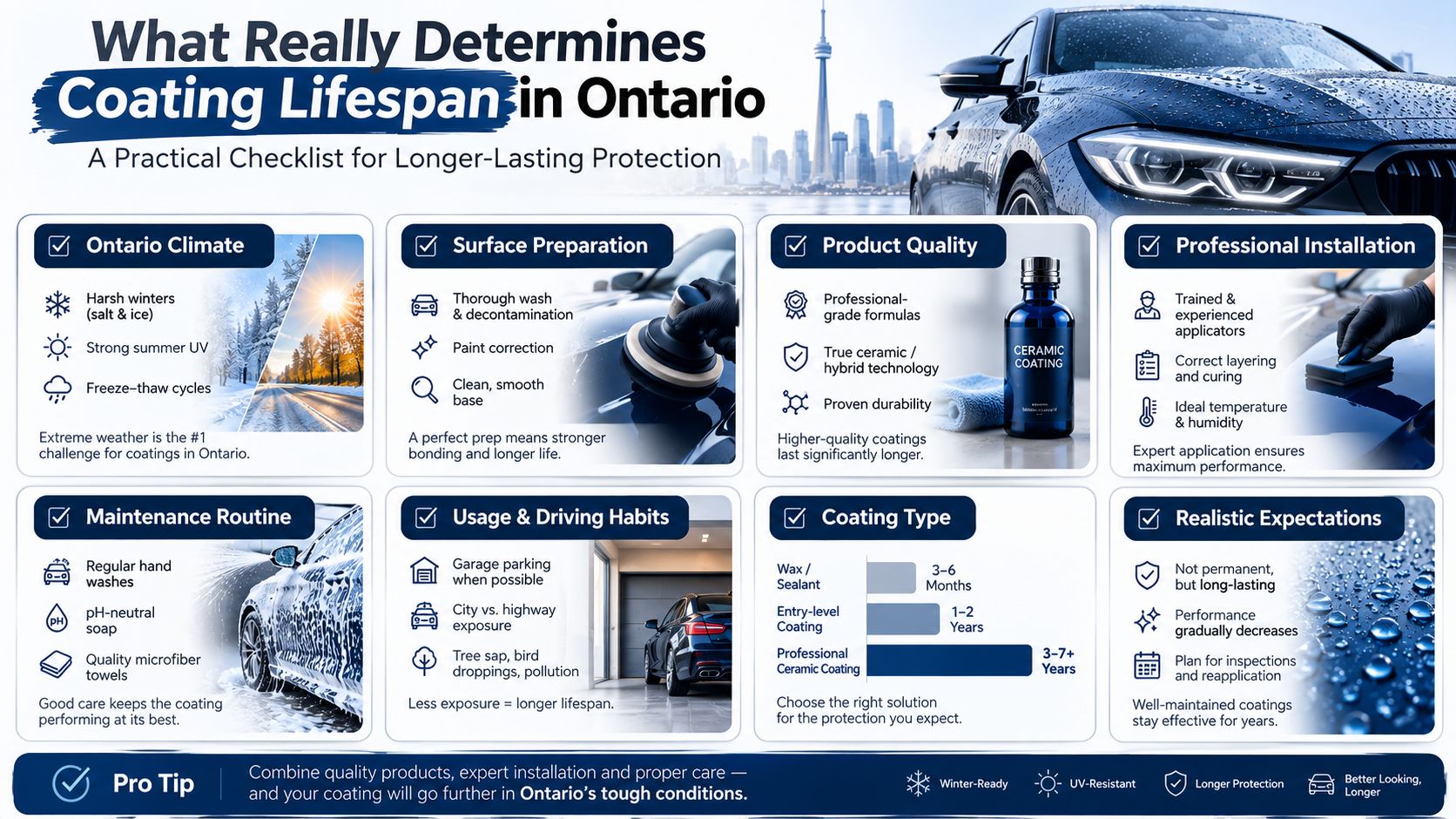
Ontario drivers pay for winter, and the coating pays for it too. The bottle matters less than what happens on the road. In the GTA, salt, freeze-thaw stress, prep quality, and wash discipline decide how long a finish stays worth having. That is the part shop brochures gloss over.
Salt and freeze-thaw do the damage
Ontario winter driving is hard on any protective layer because road grime keeps building up, moisture gets involved, and temperatures keep swinging. That cycle beats up the surface fast. A coated car can look excellent right after install, then lose a lot of its edge if it spends weeks collecting brine, slush, and film without proper rinsing.
Nanak Car Wash fits into the picture. A coating lasts longer when the wash routine is treated as part of the protection plan, not as an afterthought. Tunnel washes that strip winter residue, careful pre-rinse work, and regular drying do more for longevity than fancy chemistry alone. Their direct mail for car dealers focus is a reminder that every serious automotive business lives or dies by repeat attention, not one-time promises.
Prep beats branding
The literature points to wide variation in service life, with results depending on formulation and application quality review. That matters because a careful install on corrected paint is a different job from a quick spray over tired panels. If the surface was not decontaminated and polished first, the coating is bonding to residue, swirls, and old problems.
The table in that review shows the same basic issue from another angle. Better results come from better surface prep and controlled application, not from the label on the bottle table in the review. A coating can only protect what it adheres to.
Maintenance is the hidden lever
Consumer products can fall short of the marketing copy when application and upkeep are inconsistent. That does not make coatings useless. It means the owner's habits decide whether the finish holds up or turns into a short-lived expense.
The difference shows up in the routine. A driver who keeps winter salt off the paint, uses the right wash process, and dries the car properly gets more out of the coating than someone who lets grime sit for weeks. Every skipped rinse, every dirty mitt, and every neglected wash cycle shortens the useful life of the finish.
My view: in Ontario, a coating wears down in small steps. Each dirty wash, each salted commute, and each week of residue left on the car chips away at the result.
The plain-English answer for graphene coating for cars is simple. The coating chemistry matters, but the bigger factor is how the car is cleaned through the GTA season, especially when winter roads keep throwing salt and slush at the paint.
DIY vs Professional Application and What to Expect
DIY graphene sprays are popular because they feel approachable. They're also where a lot of people waste money. A spray product can improve gloss and slickness, but it sits at the lower end of the performance spectrum unless the surface is properly prepped and the user applies it with patience, clean towels, and real surface control.
What a proper pro job includes
A professional application starts before the coating ever touches the paint. The surface needs a thorough wash, chemical decontamination, correction if the paint is swirled or dulled, and a clean final wipe so the coating bonds to the actual clear coat instead of residue. That's why detailers who skip prep are cutting the legs out from under the entire job.
What DIY buyers usually miss
Most home garages don't have controlled lighting, dust control, or the space to correct paint properly. That doesn't make DIY impossible, it just means expectations should be realistic. If your car has soft paint, heavy contamination, or winter wear, a DIY spray is maintenance support, not a replacement for a true coating install.
The biggest clue is the salesperson's focus. If they spend all their time on the bottle and barely mention decontamination, machine polishing, and curing conditions, walk away. If they talk about the product as one step in a larger process, they probably understand how coatings behave.
For businesses that move a lot of inventory or client vehicles, the workflow matters just as much as the product. A practical resource like direct mail for car dealers may help a dealer group organise services and customer touchpoints, but the coating itself still comes down to prep and maintenance, not promotion.
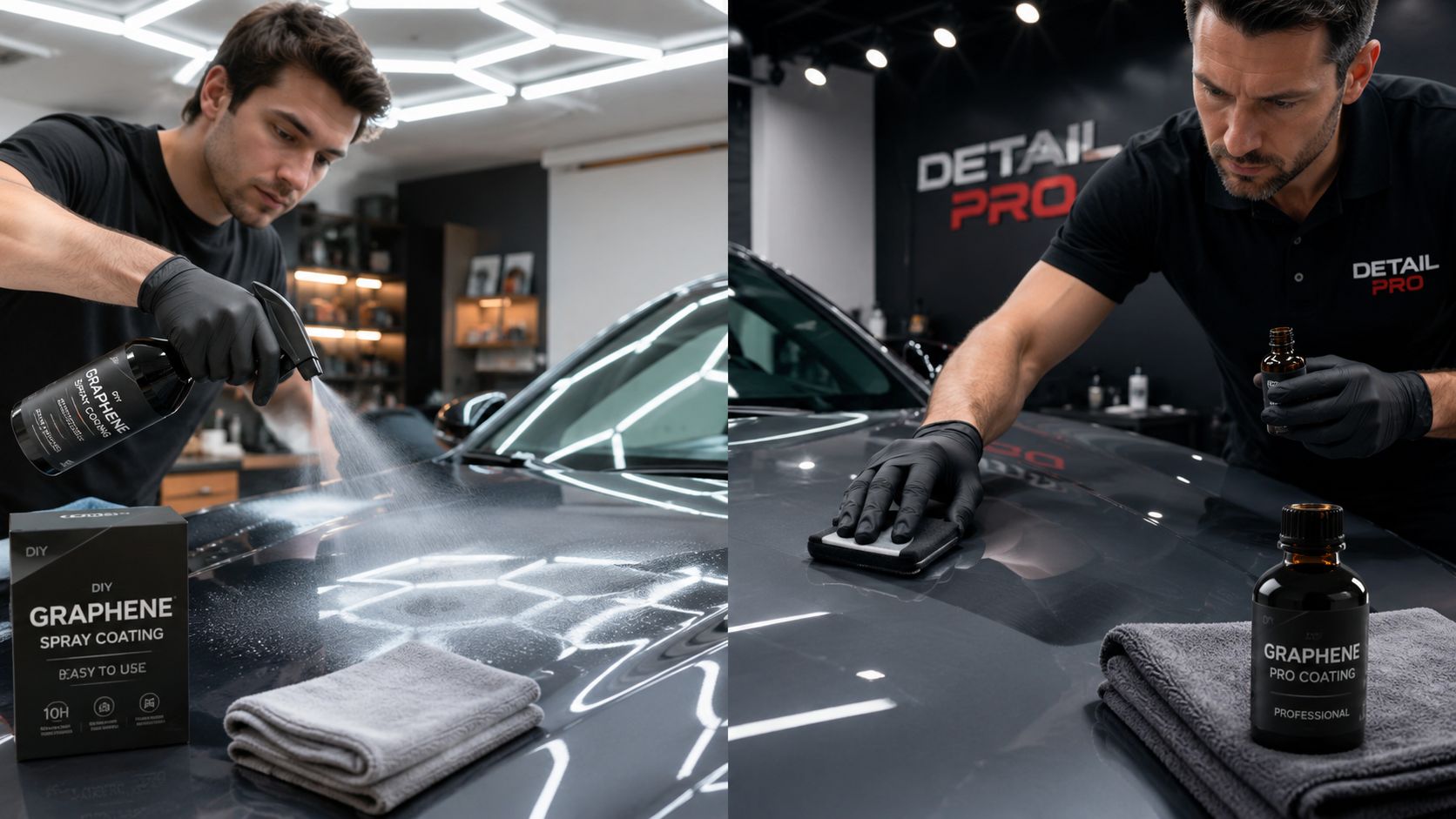
The best expectation to set is this. Professional application gives graphene its best shot at performing as advertised, because the prep, environment, and curing are controlled. DIY can still work, but it won't rescue bad paint or bad habits.
Maintaining Your Coating Through GTA Seasons
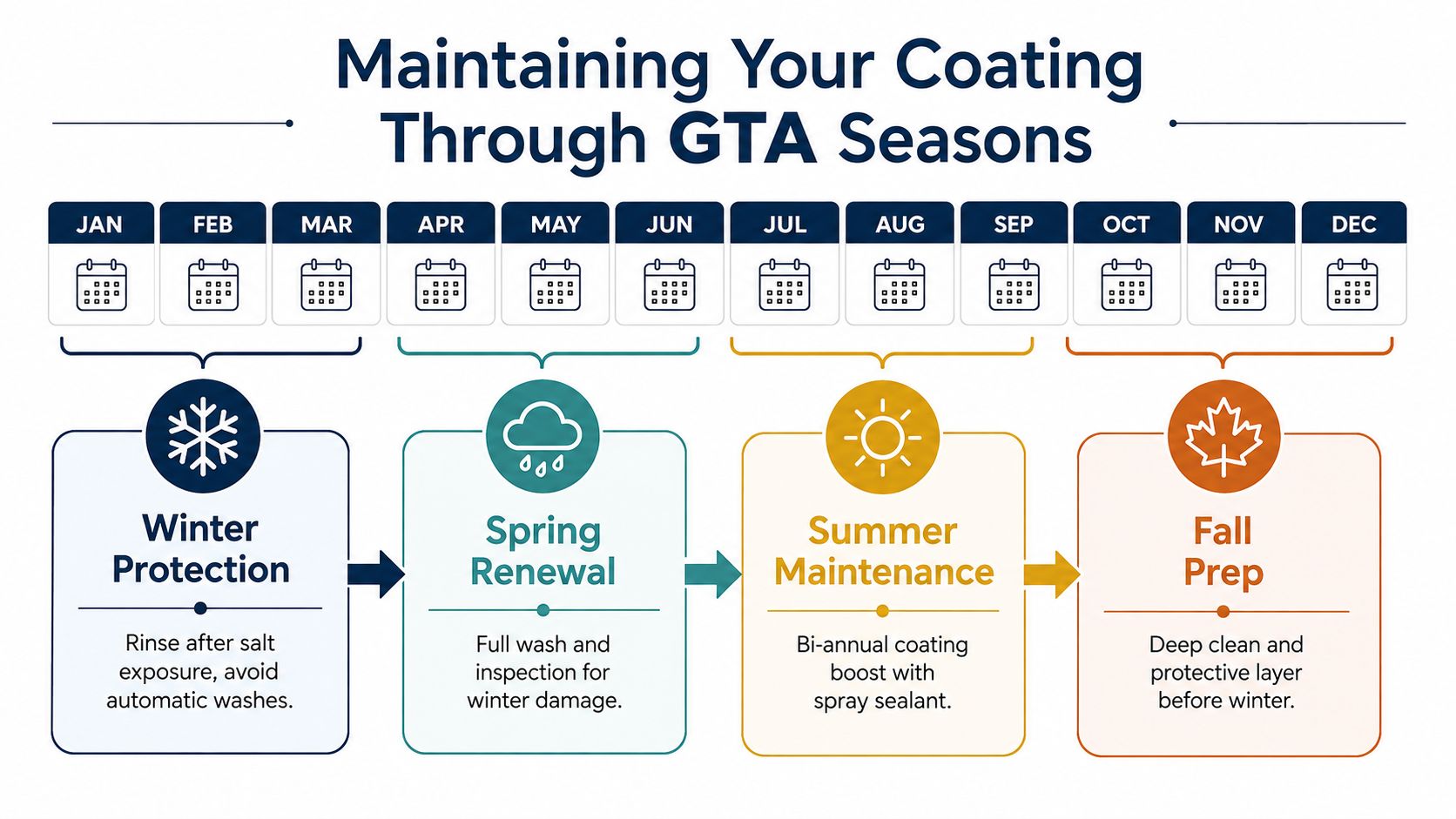
A coated car doesn't stay protected by accident. In the GTA, the maintenance rhythm has to match the season, because salt, UV, leaf residue, and winter grime each attack the finish in a different way. The owners who get the most from their coating aren't the ones chasing miracle chemistry, they're the ones keeping contamination off the paint.
Winter protection is about rinsing, not hoping
When salt is on the road, the most important move is to remove it quickly. Underbody washing matters because no coating fully stops corrosion if salt keeps sitting in places water can't easily flush. Frequent tunnel washes can be useful if they're followed by proper drying and a maintenance routine that keeps grime from hardening onto the coating.
Spring and fall need different habits
Spring is the reset season. Winter residue has to come off, and the finish needs a proper inspection for any buildup or missed areas. Fall is the prep window before the next ugly stretch, so a deep clean before temperatures drop gives the coating a better chance of surviving the season that follows.
Summer still does damage
Sun exposure doesn't get enough attention from drivers who only think about winter. Heat can stress the film, and road film still accumulates even when the weather looks clean. That's why a coated car still benefits from regular washing during the warmer months, not just when it starts looking rough.
A sensible GTA wash strategy looks like this:
- After heavy salt exposure: rinse promptly, especially the underbody.
- During winter: wash often enough that grime doesn't get a chance to bond.
- In spring: do a full exterior reset and check the surface carefully.
- In fall: clean thoroughly before the cold and slush return.
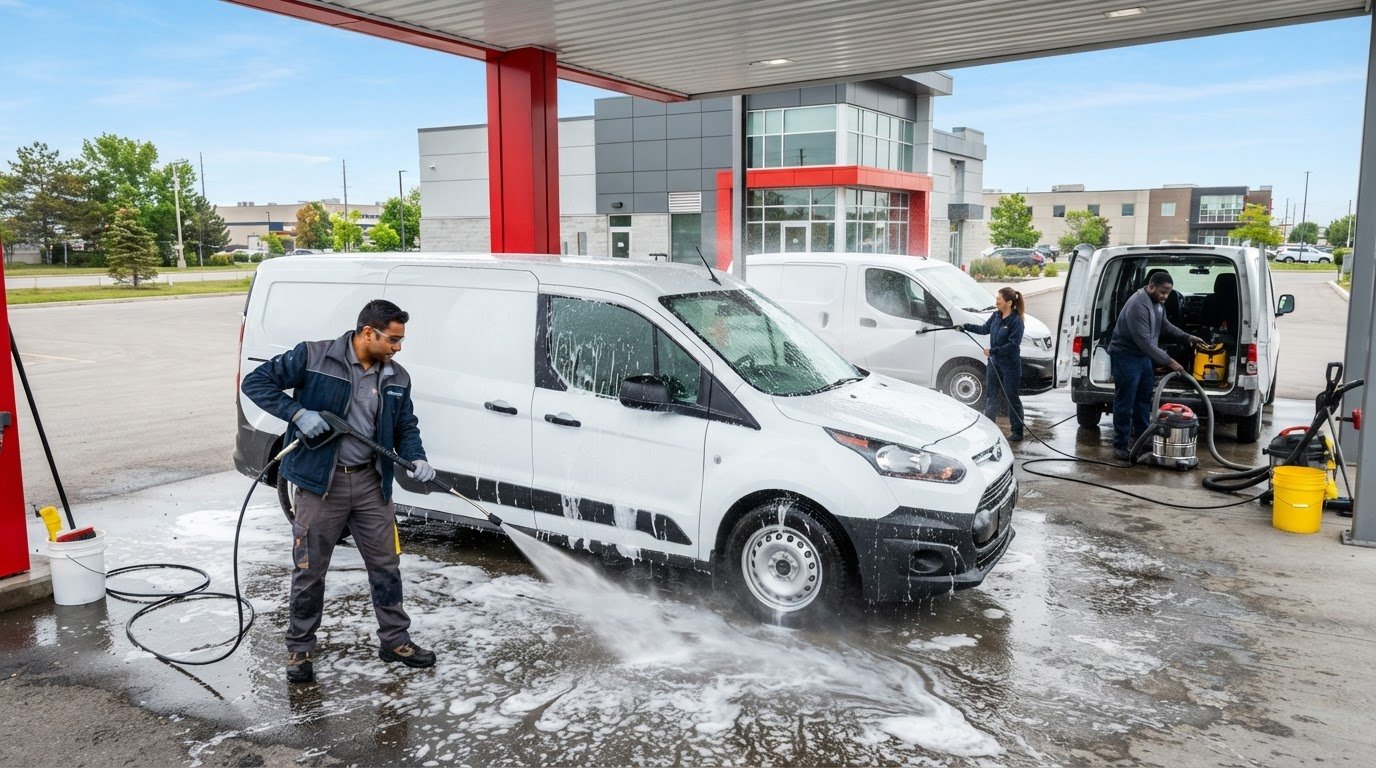
Nanak Car Wash fits this reality because the service mix matches the problem, not the hype. Express exterior washes starting at $9.99 + tax can keep winter buildup from hanging around too long, full-service packages starting at $29.99 + tax help when the interior needs attention too, and the Unlimited Wash Club gives regular drivers a practical way to stay on top of maintenance without treating every wash like a special occasion.
Common Questions About Graphene Coatings Answered
Drivers usually ask the same four things once the sales pitch ends. The honest answers are shorter than the hype.
Is graphene coating worth the premium over ceramic for a daily-driven GTA car?
Sometimes, but only if you'll maintain it properly. If you don't wash often and don't care about seasonal upkeep, you won't realize the full advantage.
How often should a coated car be washed in winter?
As often as the salt and slush demand it. Letting contamination sit is what shortens the coating's useful life.
Do automatic tunnel washes damage graphene coatings?
They can, especially if the wash is harsh or the car goes in filthy and comes out still dirty. A better wash process matters more than the coating label.
What if the coating starts failing early?
Check prep first, then check maintenance. Premature failure usually points to bonding, contamination, or poor wash habits before it points to some magical flaw in the word graphene.
The short version is this, graphene coating for cars helps when the owner helps it. If you expect chemistry to outwork bad habits in a Toronto winter, you'll be disappointed.
If you want your coating to survive GTA roads the way it should, book a wash and keep the maintenance simple. Nanak Car Wash offers the kind of practical service stack that protects a coated vehicle, from express exterior washes and underbody rinses to full-service cleaning and monthly memberships. Visit Nanak Car Wash, keep the salt off your paint, and stop gambling on marketing claims.

 6600 Finch Ave W, Etobicoke, ON M9V 3Z6
 647-703-8515
 MON – SUN 8 AM to 7 PM