

You search for a hand car wash near me when your car stops looking dusty and starts looking defeated. In the GTA, that usually happens after a winter of slush, road salt, dirty meltwater, and the kind of grime that settles into every panel gap and wheel arch. By the time spring shows up, the paint looks flat, the lower doors feel gritty, and the underbody has been through months of abuse.
A proper hand wash matters more here than it does in milder places. Ontario drivers don't just need shine. They need a safe way to remove salt, grime, and residue before those contaminants sit too long on paint, trim, and metal. That's why choosing the right wash isn't a small decision. It's basic maintenance.
Table of Contents
- Your Car Survived Another Ontario Winter Now What
- What a Professional Hand Car Wash Really Involves
- Hand Wash vs Automated The Best Choice for GTA Drivers
- Decoding Car Wash Menus From Express to Full Detail
- How to Choose a Hand Car Wash Near You Featuring Nanak Car Wash
- Your Top Hand Car Wash Questions Answered
Your Car Survived Another Ontario Winter Now What
By late winter, most GTA cars tell the same story. The rocker panels are chalky. The wheels are coated in brake dust and salt film. The hatch or trunk lip has that streaky grey crust that keeps coming back no matter how many times you spray it at a coin wash. You rinse it once, step back, and realise the car is still dirty in all the places that matter.
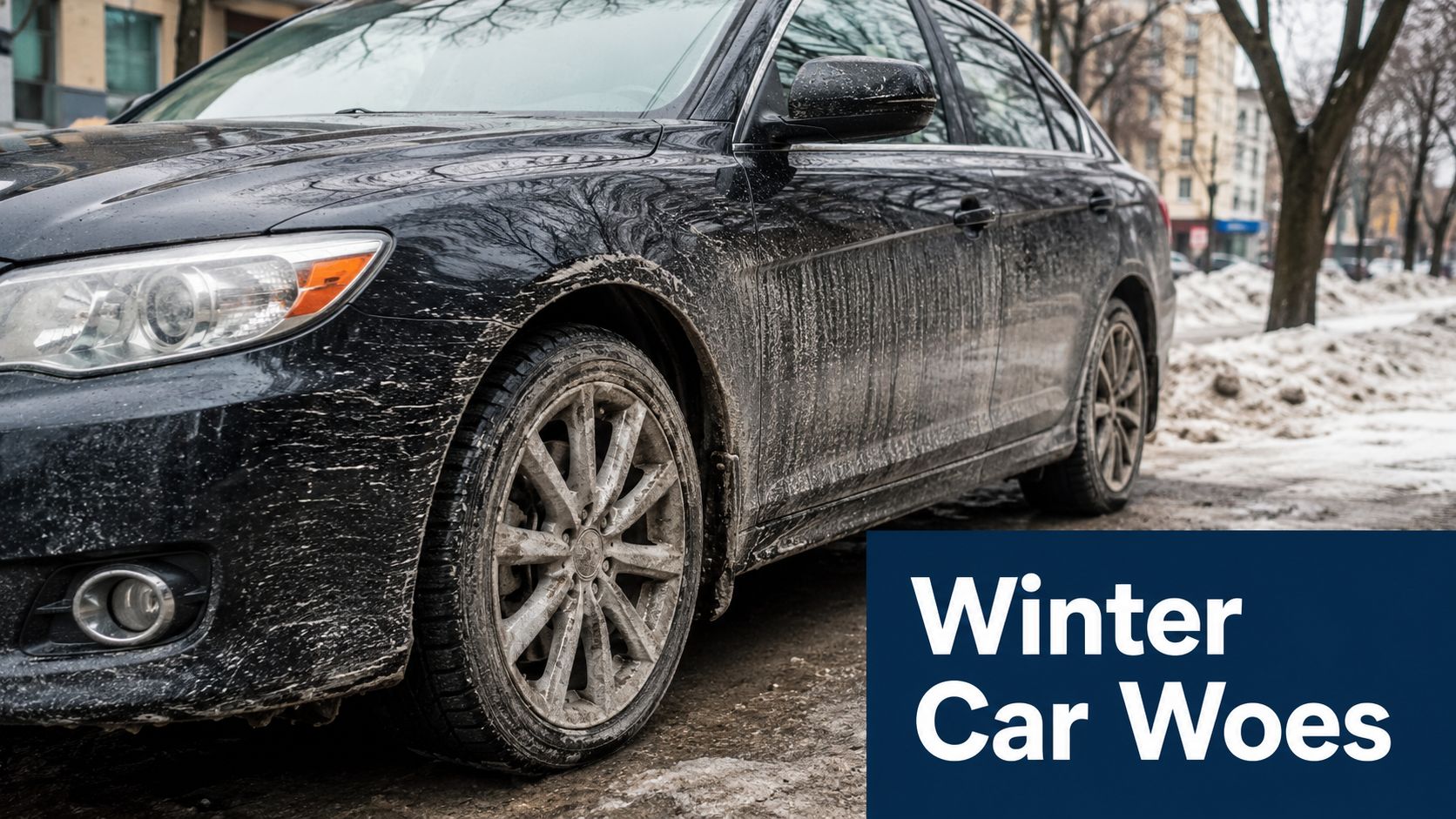
That's the point where a proper hand wash stops being a cosmetic treat and starts being part of ownership. Salt doesn't care whether you drive a work truck, a family SUV, or a weekend coupe. If it stays on the vehicle, especially around the lower body and undercarriage, it keeps doing damage steadily.
Ontario's car wash and detailing sector is large for a reason. The Car Wash & Auto Detailing industry in Ontario is projected to reach $617.2 million in 2026, about 36% of Canada's total market, with 3,929 businesses operating nationwide according to IBISWorld's Ontario car wash and auto detailing industry data. That isn't just a market stat. It reflects how many drivers need help dealing with climate, salt, and year-round road grime.
Why spring washes matter more than people think
A lot of drivers wait until the weather feels nice and then book the cheapest wash they can find. That's understandable, but it often misses the actual issue. Winter contamination isn't only on the surface you can see.
A useful spring wash should focus on:
- Undercarriage residue: Salt and slush collect where a casual rinse won't reach.
- Lower panel buildup: Doors, sills, and bumpers trap abrasive grime.
- Paint-safe removal: Winter dirt is gritty. If it's rubbed around carelessly, it marks the finish.
- Drying done properly: Water left in mirrors, trim, and seams creates spotting and leaves grime behind.
The right wash after winter should remove contamination first and chase gloss second.
That's why many GTA drivers searching for a hand car wash near them aren't really shopping for soap. They're shopping for a safer reset.
What a Professional Hand Car Wash Really Involves
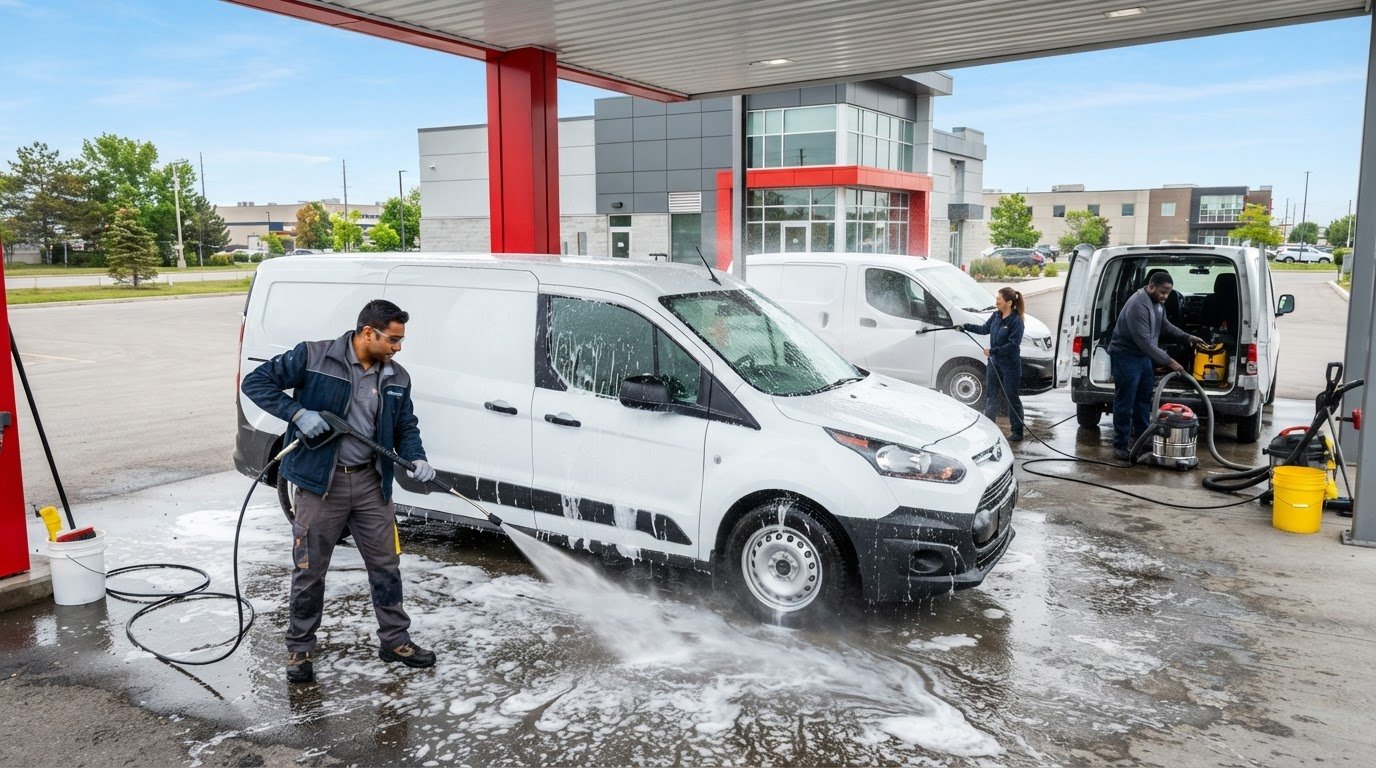
A proper hand wash is a process, not just a person with a mitt.
A real hand wash starts before the mitt touches paint
On a car that has spent months on GTA roads, the surface is usually carrying more than dust. There is salt film, gritty splash behind the wheels, and packed grime along the lower doors and rocker panels. If someone starts wiping that by hand right away, they are rubbing contamination across the clear coat.
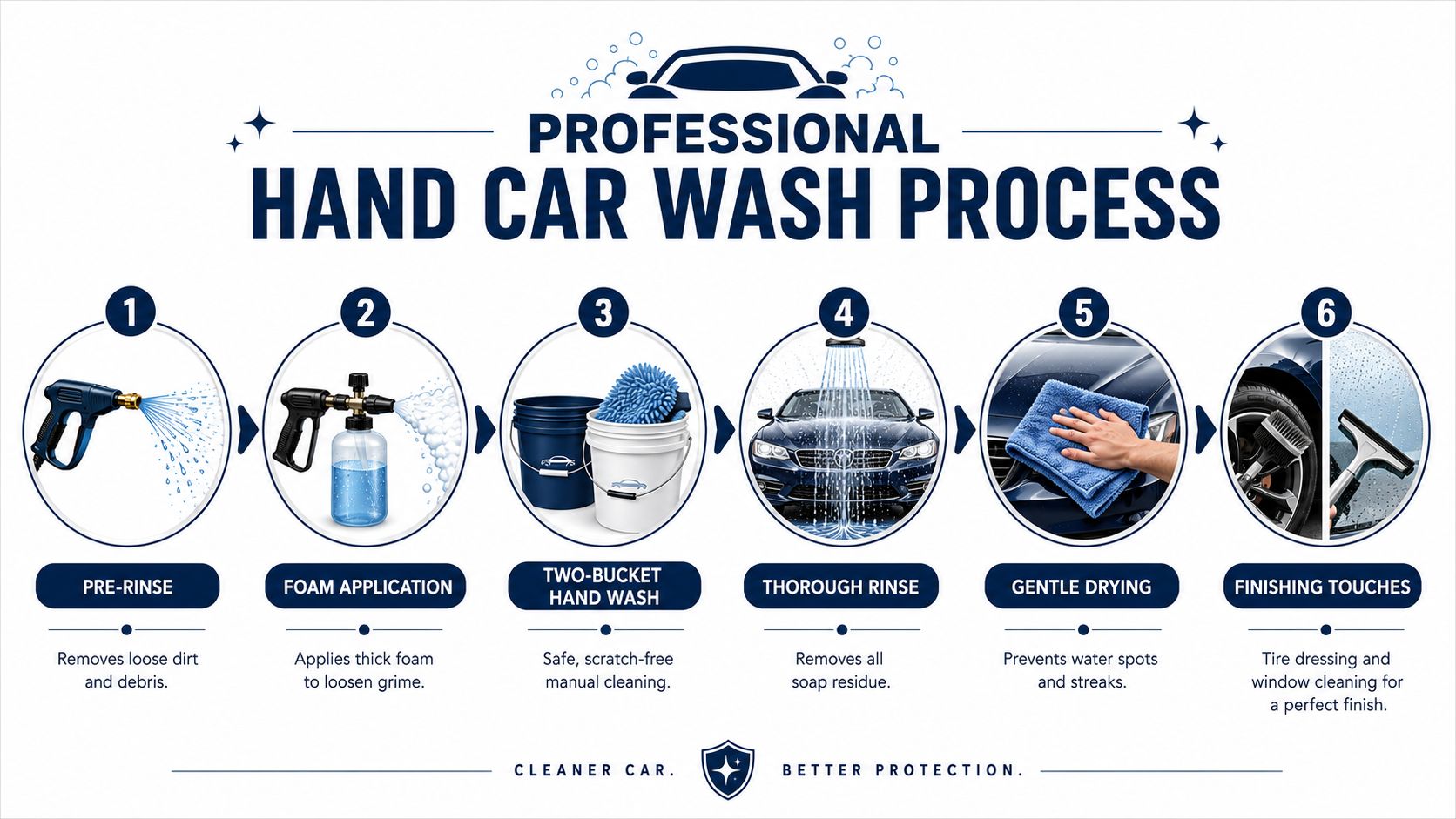
A professional wash starts with removal, not contact. The first stage should be a thorough rinse, followed by foam or a pre-soak that has time to loosen traffic film and winter residue. That first pass does a lot of the safety work. It reduces how much grit is left behind for the contact wash.
Pressure also matters, especially on wheel wells, lower panels, and the areas that collect Ontario slush. Good equipment helps flush contamination out of seams and textured trim so the staff do not have to scrub aggressively just to get the car clean.
Method matters more than product marketing
The shops that protect paint tend to follow the same habits every time. They separate dirty work from clean work. They rinse wash media often. They keep wheel tools away from painted panels.
The two-bucket method is still one of the clearest signs that a wash bay is being run properly. One bucket holds shampoo. The other is for rinsing out the mitt so grit stays out of the wash water. Honest Car Detailing's explanation of exterior detailing notes that this approach helps reduce wash-induced scratching, and that the soap bucket uses about 25ml of shampoo per vehicle.
In practice, a careful hand wash usually looks like this:
- Pre-rinse: Remove loose grit and soften buildup before touching the paint.
- Foam or pre-soak: Let the chemistry loosen road film so less force is needed later.
- Contact wash by section: Clean one panel at a time with a rinsed mitt.
- Separate wheel and tire tools: Brake dust and wheel grime stay off the paint.
- Dry with clean microfiber or air: Reduce water spots and avoid dragging leftover debris.
Practical rule: If one sponge is being used on the paint, lower panels, and wheels, the wash is cheap for a reason.
Drying is where rushed work shows up fast. Clean microfiber towels, frequent towel changes, and air for mirrors, grilles, and trim make a visible difference. In the GTA, where spring wash water often carries leftover grime and minerals, careless drying can leave spotting and fine marring even after the dirt is gone.
That is also why a good hand wash costs more than a fast tunnel wash. You are paying for time, clean tools, and technique. On a winter-beaten vehicle, that trade-off is usually worth it.
Hand Wash vs Automated The Best Choice for GTA Drivers
A GTA car in March tells the whole story. White salt lines on the rocker panels, grime packed behind the wheels, and a paint surface that feels rough even after the snow is gone. In that condition, the wash method matters as much as the soap.
Paint safety on winter-damaged cars
Ontario winter grime is not just loose dust. It is salt residue, traffic film, sand, and black sludge that sticks hardest on lower doors, wheel arches, and the rear hatch or trunk. If that buildup is still sitting on the vehicle, any wash that relies on shared brushes or cloth strips carries more risk, especially on softer clear coats and darker paint.
A proper hand wash gives the cleaner a chance to work around those problem areas instead of dragging contamination across the whole vehicle. That matters on winter-beaten cars, where the goal is not only to make the paint look clean, but to remove corrosive residue from seams, jambs, and lower panels before it keeps eating at the finish and the metal underneath.
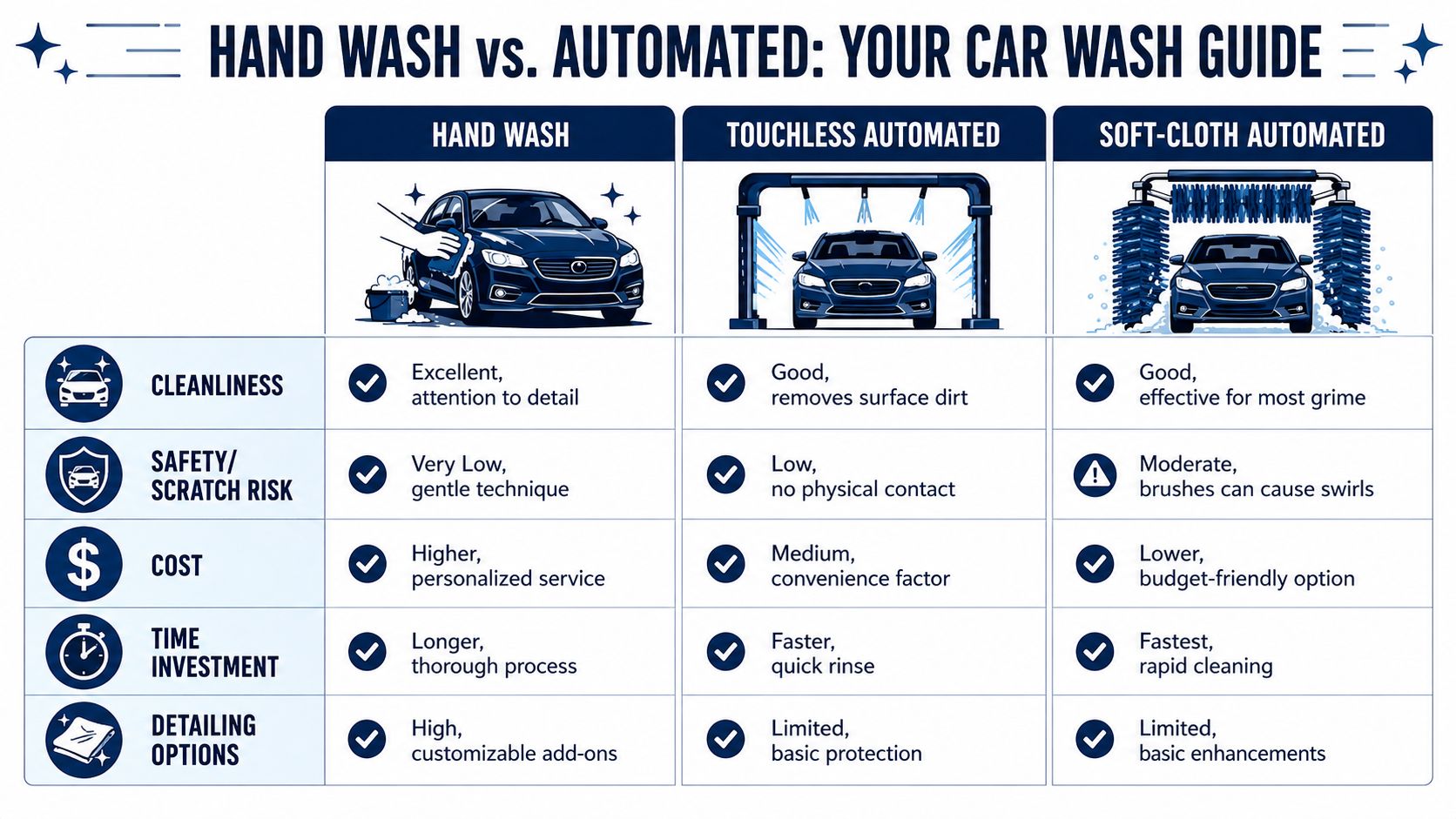
For GTA drivers, this is the debate. Automated washes win on speed. A careful hand wash usually wins on inspection, control, and paint safety.
Cleaning speed versus cleaning control
Automated washes are not useless. They just do different jobs.
| Wash type | What it does well | Where it falls short |
|---|---|---|
| Hand wash | Better for dirty winter vehicles, sensitive paint, badges, trim edges, and missed salt pockets | Costs more and depends heavily on staff technique |
| Touchless automated | Fast, no physical contact, good for knocking off loose grime between deeper cleans | Stronger chemicals are often needed, and stubborn film usually stays behind |
| Soft-cloth automated | Convenient and decent for routine cleaning on already-maintained vehicles | Contact materials can mark paint if grit from earlier cars is still present |
Touchless works well as a maintenance step in winter if the vehicle is getting washed often and the goal is to keep salt from building up too heavily. Soft-cloth can be acceptable on a commuter where perfection is not the priority. But on a car with visible winter buildup, existing swirl marks, or delicate paint, I would still put my money on a careful hand wash.
The trade-off is simple. Machines are consistent in speed. Skilled people are better at judgment.
A good hand-wash crew can slow down around caked lower panels, use extra rinse time where salt collects, and catch spots a tunnel wash misses. That is the kind of difference GTA drivers see after a long winter, and it is part of why shops like Nanak Car Wash are judged less by flashy menu names and more by how the vehicle looks and feels after the wash.
What is actually the better choice for GTA drivers
For a relatively clean car in summer, an automated wash can be perfectly reasonable.
For a vehicle coming out of Ontario winter, hand washing is usually the safer choice if you care about the finish. It gives you better odds of removing contamination without adding new marring. It also gives the operator a chance to pay attention to the areas that rust first, especially along the lower body and around wheel openings.
That extra labor is what you are paying for. On many GTA daily drivers, it is money well spent.
Decoding Car Wash Menus From Express to Full Detail
After an Ontario winter, a car wash menu can look more confusing than helpful. The names sound close, the prices jump fast, and plenty of drivers end up paying for the wrong level of service.
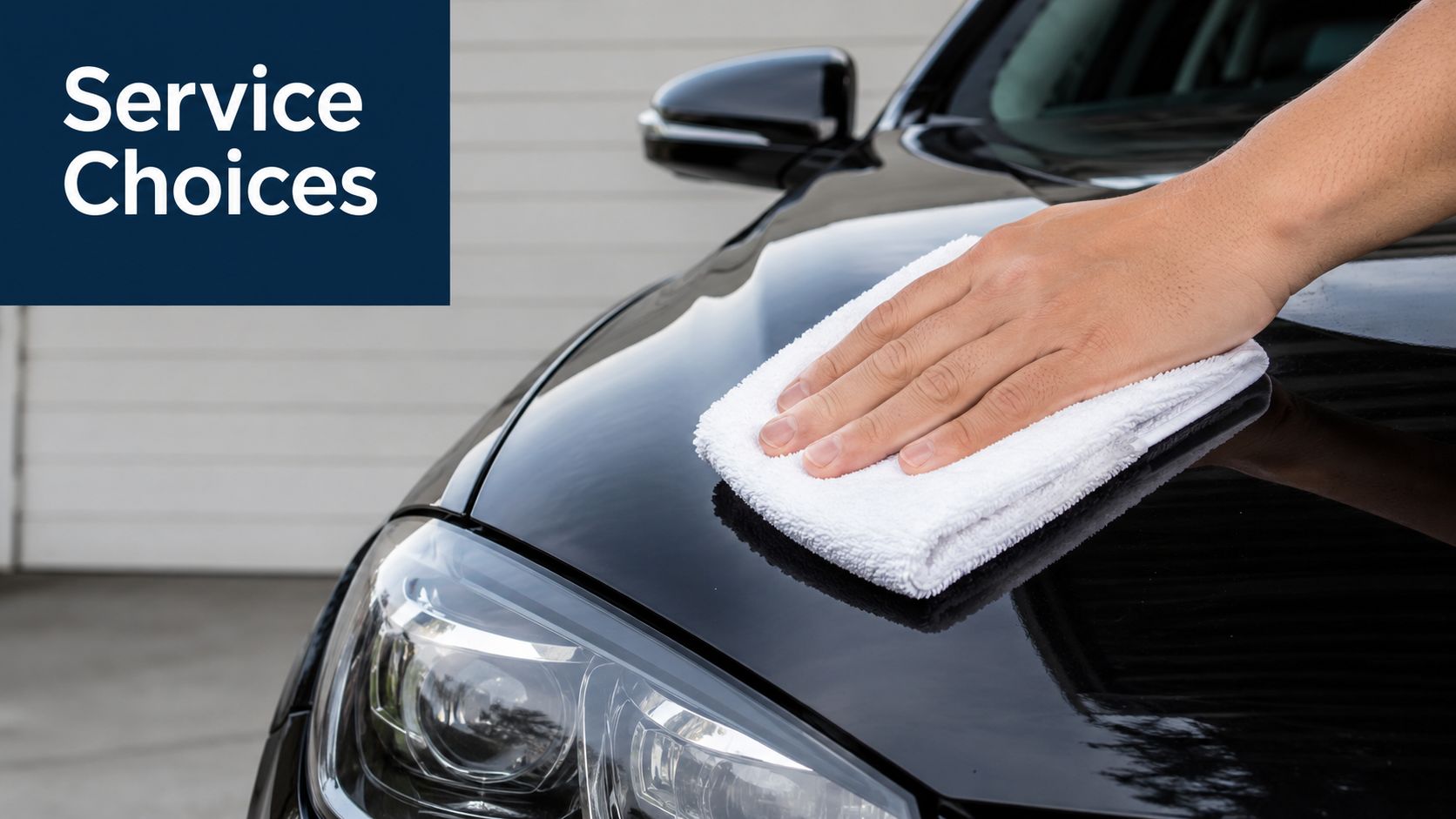
The easiest way to read the board is to ignore the fancy label and ask one question first. What problem does the car have right now? Light dust, winter salt film, crusted carpets, rough paint, pet hair, food spills, and dull clear coat all call for different work.
What each menu category usually means
An express exterior wash is routine upkeep. It should cover the body wash, rinse, wheels, and proper drying. This package makes sense for a vehicle that is already being washed regularly and does not need interior attention.
A full-service wash usually means the exterior plus interior basics. Expect vacuuming, window cleaning, mat cleaning, and a wipe-down of the main touch points. For a GTA commuter, this is often the sweet spot in late fall, winter, and early spring because that is when salt gets tracked inside and starts collecting around mats, pedals, and door sills.
A detail is a bigger job with more labour. It can include stain removal, shampooing, steam, deep trim cleaning, paint decontamination, polishing, and protection. Shops use the word differently, so it is smart to ask what is included before agreeing to the price.
What is worth paying for, and what can wait
Some add-ons solve real problems. Others are only worth the money if the car shows the condition they are meant to fix.
- Wax or paint sealant: Worth adding if the vehicle lives outside or sees a lot of highway driving. Protection helps grime release more easily on the next wash.
- Underbody or lower-panel wash: A smart choice in Ontario, where salt and slush sit in the areas that corrode first.
- Interior shampoo: Good value when carpets have salt staining, old spills, or musty odours.
- Clay bar treatment: Useful if the paint still feels gritty after washing. It removes bonded contamination that a standard wash leaves behind.
- Machine polishing: Pays off when the goal is gloss and defect reduction, not simple cleaning.
One common mistake is paying for polishing on paint that is still contaminated. Another is booking a basic wash for a vehicle that needs deep interior work. The right package depends on condition, not menu wording.
Here is the practical version:
| If your car looks like this | Usually enough | Better upgrade |
|---|---|---|
| Dusty, lightly dirty exterior | Express wash | Add wax or sealant for easier upkeep |
| Salt film, dirty mats, cloudy glass | Full-service wash | Add extra lower-body or underbody attention |
| Stained carpets, rough paint, neglected interior | Detail | Add polishing only if the finish matters to you |
There is a business lesson in this too. Clear package naming helps customers choose properly, which is one reason good local operators pay attention to presentation online as well as in the bay. Dealers and service businesses that study automotive SEO strategies are really solving the same problem. Make the options easy to understand, then deliver what the customer expected.
For drivers deciding between a driveway wash and a professional service, the practical trade-off is simple. Home washing can feel cheaper, but a commercial wash is often the cleaner choice for dealing with runoff and the grime that comes off a winter-driven vehicle. As noted earlier, that matters in Ontario, where the mess on the car is not just dirt. It is salt, traffic film, and all the residue that comes with months of cold roads.
How to Choose a Hand Car Wash Near You Featuring Nanak Car Wash
You search "hand car wash near me" in March because the car still has white salt crust behind the wheels, the rocker panels feel gritty, and the inside looks like a tray of winter sand. At that point, convenience matters, but process matters more. A nearby shop is only a good option if it can clean the areas Ontario winter punishes.

What to look for before you hand over the keys
Start with what you can see in five minutes.
A careful hand wash operation usually has a clear flow. Cars are pre-rinsed before anyone touches the paint. Wheel tools are separate from paint tools. Towels do not look tired and overloaded with residue. Staff can explain the difference between a quick wash and a more thorough service without turning it into a sales pitch.
Use this checklist:
- Visible wash steps: You should be able to tell how the vehicle is rinsed, washed, dried, and finished.
- Separate tools for separate jobs: Wheels, paint, jambs, and interior surfaces should not share the same cloths or mitts.
- Clear package wording: If the menu is vague, expect vague results.
- Clean working area: Bays, hoses, carts, and drying towels say a lot about day-to-day standards.
- Useful reviews: Look for comments about missed spots, drying quality, lower-panel cleaning, and consistency over time.
The underbody and lower body deserve extra attention in the GTA. That is where salt sits, and that is where corrosion starts if the car goes too long between proper cleanings. A wash that only improves the hood and doors is not much help after a real Ontario winter.
A practical example from a GTA operator
Nanak Car Wash is a useful example because the service mix matches how drivers use their cars here. The company offers express washes, full-service washes, detailing, and rust proofing across multiple locations. That matters for a winter-driven vehicle because the right answer is not always the most expensive package. Sometimes the car needs a solid exterior and interior reset. Sometimes it needs deeper cleaning in the high-contact areas and nothing more.
What I like from a customer standpoint is simple. The menu is easy to read, the starting prices are visible, and the package tiers are specific enough to compare before you leave home. That saves time and lowers the chance of buying the wrong service for the condition of the vehicle.
Good operators also make their services easy to understand online. The same logic shows up in other automotive businesses. Clear pages, clear packages, and clear local signals help customers choose faster. If you want to see how businesses sharpen that side of the job, Sight AI's guide to automotive SEO strategies is a solid read.
Nanak Car Wash Full-Service Package Comparison
Below is a simple planning view based on the published package structure.
| Service | Basic Full-Service (from $29.99) | Enhanced Full-Service | Premium Full-Service |
|---|---|---|---|
| Exterior wash and hand dry | Included | Included | Included |
| Interior vacuum | Included | Included | Included |
| Dashboard and window cleaning | Included | Included | Included |
| Door panels and console cleaning | Limited or not included | Included | Included |
| Cup holder attention | Limited or not included | Included | Included |
| Tire dressing | Not typically included | May be included | Included |
| Best for | Routine commuter cleanup | Dirtier daily drivers | Drivers who want a more complete refresh |
The smart choice depends on where the neglect is. A commuter car with light interior use may only need the basic full-service package. A family vehicle with salt stains, dirty cup holders, and film on the inside glass usually benefits from the middle or top tier.
One last point. Ask how the shop handles drying and final inspection. That is where careful operators separate themselves from busy ones. A proper hand wash should leave the paint clean, the glass clear, and the trim and lower panels free of the leftover grime that automatic systems often miss.
Your Top Hand Car Wash Questions Answered
Is a hand wash really worth paying more for
For a GTA daily driver, often yes.
The extra cost pays for control. A proper hand wash lets the crew spend more time on salt-packed rocker panels, behind wheel arches, around badges, and along lower doors where Ontario grime hangs on. Those are also the areas that get neglected or hit too aggressively in cheaper systems. If you plan to keep the car a few years, safer washing is usually money well spent.
How often should GTA drivers get a professional wash
Use the season as your guide. In winter, wash more often than you think you need to, especially after slushy days or long highway runs. Salt does not need months to start causing trouble. It only needs time and moisture.
In spring and summer, the schedule can relax. Once the paint feels gritty, the wheels are coated, or the glass keeps smearing after you wipe it, the car is due.
Is touchless good enough between hand washes
Yes, as a maintenance step.
Touchless works well for knocking off loose salt, road film, and fresh dirt when time is tight. It is a practical stopgap for commuters. It usually will not clean as thoroughly as a careful hand wash, especially on lower panels and rear surfaces, but it is still far better than letting contamination sit for weeks.
Can a hand wash remove light scratches
No. Washing removes dirt and traffic film. It does not level paint.
If you can still see the mark after the car is clean and dry, the next question is correction, not washing. That means polishing, and sometimes a paint depth check if the vehicle has been through a few hard winters and repeated cleanups.
What should I avoid when choosing a local wash
A few red flags tell a lot about how the shop treats paint:
- Dirty mitts, brushes, or towels: Grit trapped in tools scratches clear coat.
- No clear drying process: Poor drying leaves water spots, streaks, and missed grime around trim.
- Menus that hide the details: If you cannot tell what is included, expect shortcuts.
- Rushed contact washing on filthy panels: Winter dirt needs careful rinsing before any mitt touches the paint.
Ask simple questions. Do they clean the lower body properly? Do they change towels often? Do they inspect the car before it leaves? Good operators answer quickly and clearly.
Does hand washing help with rust prevention
Yes, if the wash includes the areas that matter.
Rust starts where salt and moisture stay trapped. Lower panels, wheel wells, door jambs, and the underbody take the worst of it in Ontario. Washing alone will not replace rust proofing, but regular removal of salt buildup is part of sensible prevention, especially for vehicles that see 400-series highway driving all winter.
The best hand wash removes contamination thoroughly and treats the finish with care.
If your car still looks and feels like winter, Nanak Car Wash is one local example of a shop that offers express washing, full-service cleaning, detailing, and rust proofing. As noted earlier, the right choice comes down to process, not branding. Look for clear service menus, hand-applied steps, and a wash approach that matches the condition of your vehicle.

 6600 Finch Ave W, Etobicoke, ON M9V 3Z6
 647-703-8515
 MON – SUN 8 AM to 7 PM