
You've just finished a driveway wash, the sun's out, and the car looks decent from ten feet away. Then it dries. The hood shows faint swirls, the mirrors are spotted, and the lower doors still carry that grey GTA road film that laughs at a quick rinse. That's the point where hand wash car detailing stops being a chore and starts becoming a craft.
Done properly, hand wash car detailing sits between a casual home wash and a full professional detail. It's the sweet spot for owners who want a cleaner finish, better paint care, and less winter grime clinging to the car after every slushy commute. In Ontario, that matters because the market around washing and detailing is big enough to be a real service category, not a side hustle. Ontario's car wash and auto detailing market was valued at $617.2 million in 2026, according to IBISWorld, and the national category reached $1.7 billion in 2026 across 3,929 businesses with a 3.6% CAGR from 2021 to 2026 in the Canadian industry family that groups detailing and washing together (IBISWorld).
Table of Contents
- That Showroom Shine The Art of the Perfect Hand Wash
- Gearing Up Your Detailing Arsenal
- The Two-Bucket Wash Method and Beyond
- Drying and Decontaminating Your Paint
- Mastering the Interior Clean
- DIY vs Pro Detailing When to Call Nanak Car Wash
That Showroom Shine The Art of the Perfect Hand Wash
The classic mistake is easy to spot. Someone gives the car a cheerful Saturday scrub, steps back, and finds swirl marks under the sun and spots baked into the paint. That's not a wash gone badly because the person didn't work hard enough, it's usually because the process invited dirt to skate back across the finish.
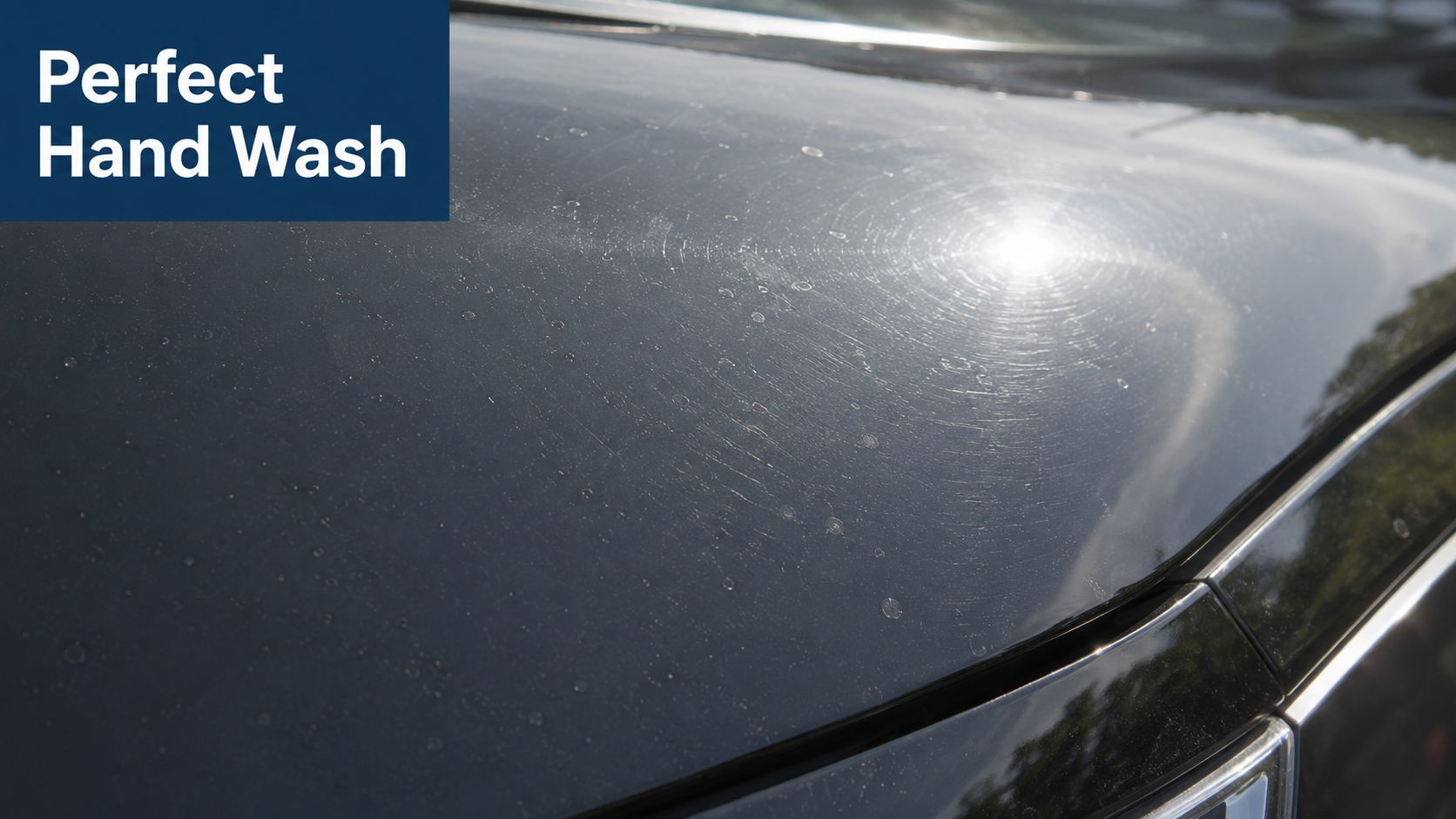
The better version feels calmer. You rinse away grit first, wash with control, and dry before mineral water leaves its little calling card on the panels. The primary appeal of hand wash car detailing is that it gives you control over every touch point, which is exactly why it keeps its place in a mature service market and in the routines of Toronto-area owners who deal with salt, film, and messy shoulder seasons.
Why hand washing still wins for careful owners
Hand washing isn't glamorous, but it's precise. You decide where the dirt goes, which tools touch the paint, and how much pressure the mitt uses on each section. Automated brushes can be fast, but they don't give the same level of selectivity around badges, mirrors, and lower panels where contamination tends to collect.
Practical rule: if the panel feels gritty, treat it like a dirty surface, not a surface ready for polish.
That mindset is what separates a quick rinse from a proper detail. The goal isn't just to make the car look wet and shiny for an hour. The goal is to clean it in a way that keeps the finish looking better after the third, fourth, and fifth wash too.
Gearing Up Your Detailing Arsenal
A good toolkit doesn't have to be expensive, it has to be disciplined. Most wash damage happens because the same sponge, towel, or bucket keeps picking up dirt and feeding it back into the paint. The right kit reduces that risk before the first panel is touched.
Start with the essentials
The first buy should be a two-bucket system, one bucket for shampoo and one for rinsing the mitt. A grit guard in each bucket helps keep grit at the bottom instead of floating back into the wash media. Pair that with a pH-neutral car shampoo, because harsh soaps can strip away protection faster than a mild cleaner designed for regular maintenance.
Microfiber matters just as much. Use a plush wash mitt, not an old bath sponge, and keep separate microfiber towels for drying and interior work. Old cotton towels can drag contaminants across the clear coat, while good microfiber lifts residue more cleanly and leaves less lint behind.
The cheapest upgrade is usually the one that prevents the most damage.
Build the rest of the kit around the car, not the hype
Wheels need their own brush, mitt, and cleaner because brake dust and road grime belong nowhere near paint towels. A soft wheel brush reaches barrels and tight spokes without forcing you to use the same tool on the bodywork. For drying, a large microfiber drying towel is the safer choice, and a drying aid or spray sealant helps the towel glide while reducing spotting.
| Item | Category | Why You Need It |
|---|---|---|
| Two buckets with grit guards | Wash control | Keeps dirt separated so it doesn't return to the paint |
| pH-neutral car shampoo | Paint care | Cleans without being overly aggressive on protection |
| Wash mitt | Contact wash | Lifts dirt more safely than a sponge |
| Wheel brush | Wheel care | Reaches brake dust and road film without cross-contamination |
| Plush microfiber towels | Drying and finishing | Reduces scratching and lint |
| Drying aid or spray sealant | Protection support | Helps drying and reduces water spotting |
| Dedicated interior microfiber towels | Cabin care | Keeps dashboard and glass work separate from exterior grime |
For owners who'd rather hand off the mess, Nanak Car Wash offers detailing services, including exterior cleaning, interior work, and rust proofing, so you're not forced to buy every piece of gear just to stay ahead of the mess. If you're outfitting a team or a mobile setup, branded aprons for teams can also keep uniforms tidy without mixing them into your wash towels.
What to buy first if you're starting from zero
If you only buy four things, make them the two buckets, a wash mitt, a microfiber drying towel, and proper shampoo. Everything else can wait a bit. That tiny starter kit can already move you from “I washed it” to “I detailed it” if you use it with care.
The Two-Bucket Wash Method and Beyond
The wash itself should feel methodical, almost like cooking with a clean mise en place. Speed matters less than sequence. The Greater Toronto Area makes that sequence even more important, because salt film and winter residue can sit on the car like fine abrasive dust if you rush straight into contact washing.
Wash the nasty parts before the pretty parts
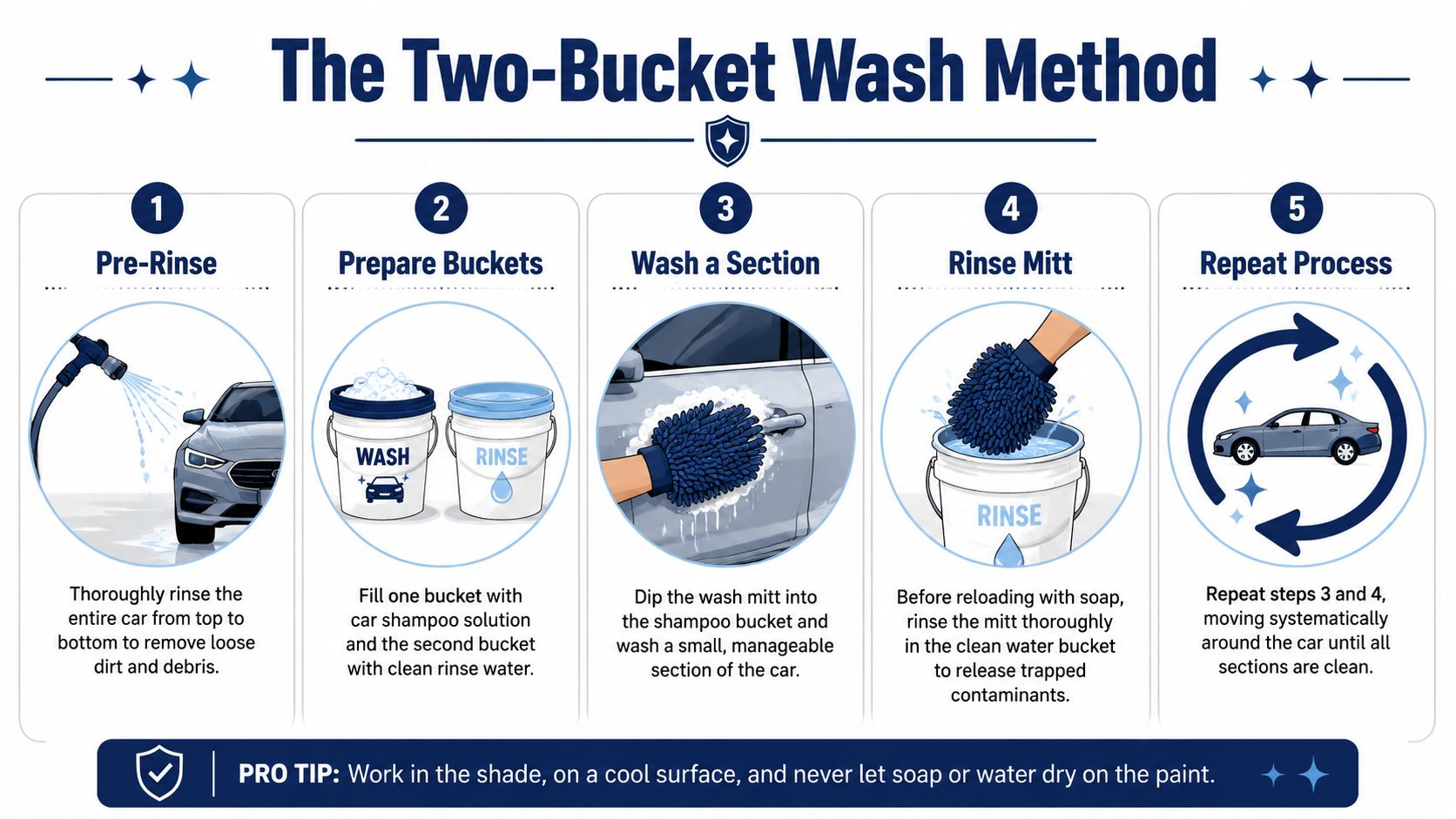
Start with a full pre-rinse. This knocks off loose grit before the mitt touches the paint, which is exactly what you want on a car that's been running through slush, spray, and road film. Then move to the wheels and tyres first with their own bucket and tools. That keeps brake dust and heavy grime out of the paint wash.
After that, move into the top-to-bottom contact wash. Roof, glass, upper panels, then the lower doors and bumpers last. Wash in small sections, reload the mitt often, and rinse it in the clean bucket before it ever sees more shampoo.
Keep the mitt clean while you work
The two-bucket method only works if you use both buckets. Dip into the shampoo bucket, wash one section, then rinse the mitt thoroughly in the clean water bucket before reloading with soap. That little habit is what keeps loose grit from being dragged across clear coat like sandpaper.
Rinse before soap contact, then dry immediately. That's the boring little routine that saves a lot of paint.
Expert Toronto detailing guidance also stresses immediate drying to avoid mineral-water spotting, and local exterior-detailing packages commonly use clay-bar decontamination and a 6-month spray sealant as a higher-tier protection benchmark (Honest Car Detailing). That lines up with what works in real driveways too, especially when the weather flips from damp to sunny and leaves spots behind fast.
Finish the wash cleanly
Don't leave soap residue hanging around. Give the car a final rinse from top to bottom, checking around emblems, mirror caps, fuel doors, and trim edges where suds like to hide. A good rinse should leave the surface clean, not sticky, and ready for drying immediately instead of “whenever you get to it.”
Drying and Decontaminating Your Paint
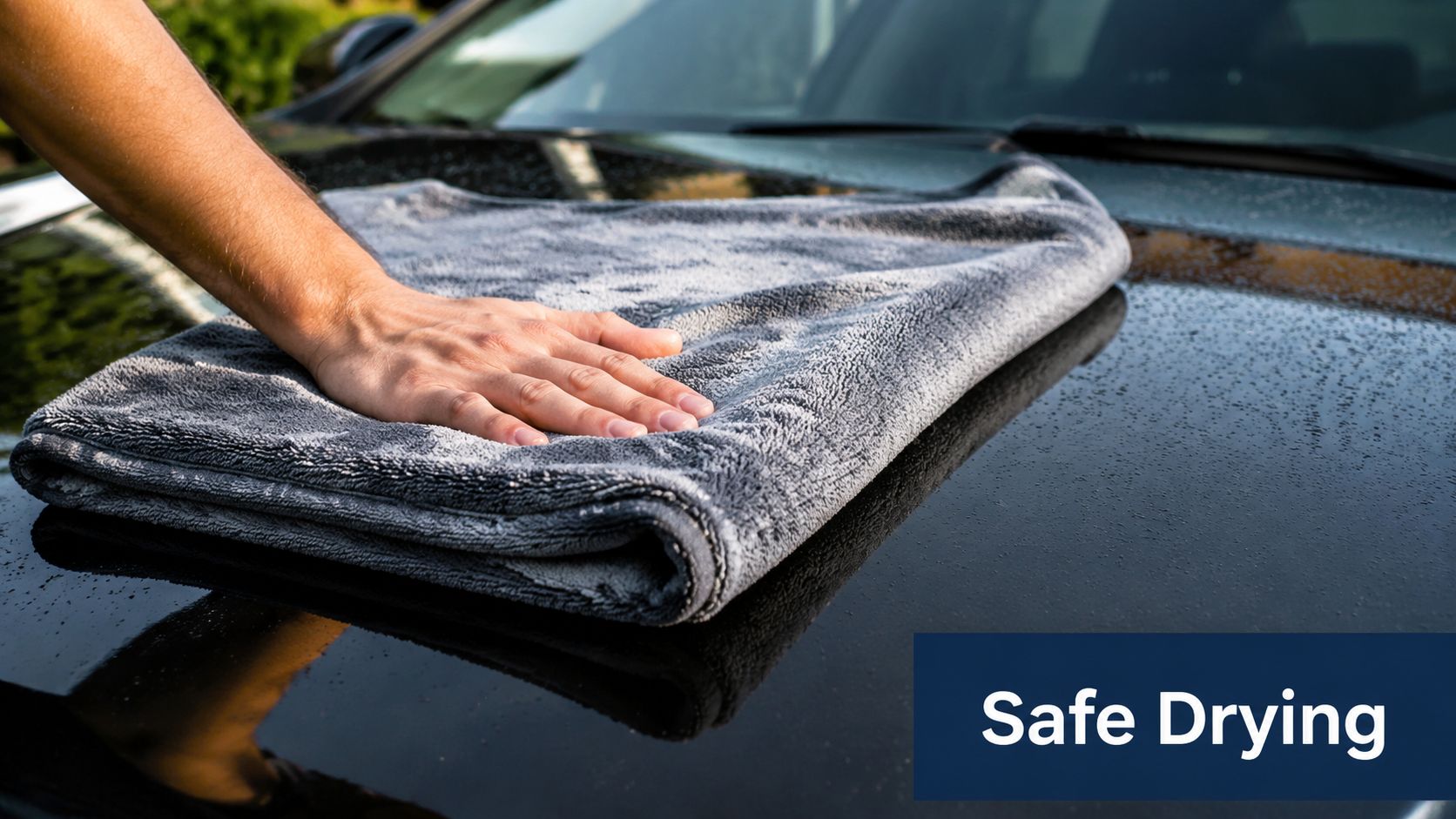
A lot of decent wash jobs get ruined in the last five minutes. Someone grabs a rough towel, rubs in circles, and creates the same swirl marks they were trying to avoid in the first place. Drying should be gentle, fast, and contact-light.
Dry with pressure you can barely feel
Use a large plush microfiber towel and either blot the panel or drag the towel with almost no pressure. The towel should do the work, not your wrist. If you want to be extra careful around mirrors, badges, and grilles, a leaf blower or dedicated air blower is even safer because it removes water without touching the paint at all.
Corners and trim deserve attention because they hold water long after the main panel looks dry. Open fuel doors, check around badges, and look under mirror housings before you call the job done. If you leave beads there, they'll crawl out later and leave little spots on fresh paint.
Smooth paint is not the same as clean paint
Even after washing, paint can still feel rough because contamination can cling to the surface. That's where clay-bar decontamination earns its keep. Lubricate the panel, glide the clay gently, and it lifts embedded fallout that a wash mitt can't remove.
You don't need to turn clay work into a drama. Small sections, light pressure, plenty of lubrication. When done right, the paint feels slicker, and that smoother surface helps the next protection layer bond and perform more evenly.
Useful test: if the towel grabs instead of glides, stop and add more lubrication or switch to a cleaner towel.
Lock in the result
A spray sealant or light protective layer after decontamination makes future washes easier and helps the finish resist grime a bit longer. That's especially handy in the GTA, where the car can go from clean to dull-looking after one slushy drive. Protection doesn't replace washing, but it makes the whole routine less annoying.
Mastering the Interior Clean
A spotless exterior with a dusty cabin feels half-finished. Interior work doesn't need a full shampoo every time, but it does need a smarter routine than “vacuum the obvious crumbs and hope for the best.” The trick is to clean from top to bottom so dust and grit fall into areas you haven't touched yet.
Vacuum in a deliberate order
Start with the upper surfaces, then move to seats, floor mats, and carpet. Use the brush attachment for fabric, the crevice tool for seat rails and console seams, and a narrower nozzle around pedals and under seats. That way, you're not shoving dirt into corners and then pretending it disappeared.
Dashboard and trim should be wiped with a light interior cleaner and a clean microfiber towel, then followed with a second dry towel if streaks remain. Keep the finish natural, not greasy. A shiny, oily dashboard usually just attracts more dust and makes the cabin look older, not newer.
Beat winter salt without overcomplicating it
GTA winter leaves a familiar mess on carpets, especially around the driver's mat. Salt marks usually respond well to a mild interior cleaner, light agitation with a soft brush, and controlled blotting with a dry towel. Work from the outside of the stain inward so you don't spread the residue.
Window cleaning deserves its own rhythm. Use one towel to apply glass cleaner and a second dry towel to finish the pass. That two-towel method cuts streaks and helps you spot the corners you missed on the first pass.
Keep the cabin clean without making it slippery
The goal is a cabin that feels fresh, not overly dressed. If a cleaner leaves the dash glossy enough to reflect sunlight into your eyes, it's too much. Neutral finishes, clean vents, and tidy glass do more for day-to-day comfort than a dramatic shine ever will.
DIY vs Pro Detailing When to Call Nanak Car Wash
DIY works well for routine upkeep, especially when the car only has light dust, fresh road film, or a bit of everyday grime. It gets less forgiving once the weather turns rough, the stains set in, or the paint needs correction. A hand wash in direct sun, the wrong soap, or a dropped mitt can turn a simple wash into a scratch hunt.
Know the jobs that cross the line
Deep salt stains, beverage spills, and stubborn interior contamination often call for tools most driveways do not have. A hot water extractor can pull out residue that scrubbing only pushes deeper into the fabric. Dull paint with visible fine scratches usually needs a machine buff and polish from someone who knows how to control heat, pressure, and pad choice without chasing more defects.
For GTA drivers, rust protection deserves its own attention. Road salt works its way into the places a home wash cannot fully treat, especially underneath the car and around exposed edges. A professional rust proofing application helps protect those trouble spots because it reaches the corrosive zones that hand washing only touches indirectly. If your team or shop wants to keep the process organized, branded aprons for teams can help keep everyone looking uniform while the work gets done.
Compare time, risk, and scope
If you have a free afternoon and the car only needs light cleaning, DIY makes sense. If the vehicle needs stain removal, paint correction, or protection beyond what a driveway routine can deliver, professional detailing is the cleaner choice. Nanak Car Wash fits that category because it combines wash, detailing, and rust proofing in one place, which helps when the car needs more than a surface clean.
The size of the market shows why that mix matters. Ontario's car wash and auto detailing market was valued at $617.2 million in 2026, according to IBISWorld, so this is not a side hobby, it is a major service category for drivers who want convenience and protection.
Choose the professional option before damage gets expensive
A good rule is simple. If the issue is dirt, DIY can handle it. If the issue is staining, correction, or corrosion defence, hand it off. If you want a practical middle ground with services ranging from wash to detail to rust proofing, Nanak Car Wash is one option to keep on your shortlist.

 6600 Finch Ave W, Etobicoke, ON M9V 3Z6
 647-703-8515
 MON – SUN 8 AM to 7 PM