
You're at the wash bay in January, salt crust on the rocker panels, slush in the wheel wells, and the menu board is asking you to choose between hot wax and cold wax. Most drivers shrug and pick whatever sounds fancier. In Ontario, that's the wrong move. The right choice depends on how often you drive, how long you keep the car outside, and whether you care more about durability or speed at the tunnel.
| Option | What it's really for | Best fit in GTA winter | Main trade-off |
|---|---|---|---|
| Hot Wax | Heated application that can improve film build and penetration-dependent performance | Daily drivers, salt, slush, frequent wash cycles | Takes more time and usually costs more than a basic add-on |
| Cold Wax | Ambient-temperature, quick protection layer | Light-duty protection, shoulder seasons, simple wash visits | Faster and cheaper, but not as strong when conditions get ugly |
| Skip both | No wax upgrade, just the base wash | Cars that are washed and detailed elsewhere on a strict schedule | You lose the extra protection layer entirely |
Table of Contents
- Why Ontario Drivers Keep Asking the Hot Wax vs Cold Wax Question
- What Hot Wax and Cold Wax Are at the Wash Bay
- Head-to-Head Comparison on the Things That Matter
- Why Hot Wax Lasts Longer When Salt and Slush Hit
- How Each Wax Fits into Nanak Car Wash Packages
- Matching Wax Choice to Your Real Driving Pattern
- Building a Seasonal Wax and Wash Schedule
- Honest Answers to the Questions Drivers Ask
Why Ontario Drivers Keep Asking the Hot Wax vs Cold Wax Question
You've just finished a grocery run in Mississauga, and the car looks like it went for a walk through a salt mine. The wash tunnel offers an upgrade, and you're doing the same mental math every Ontario driver does. Is this wax thing real protection, or just another box the operator wants you to tick because your paint already looks rough?
Salt season changes the question
In a mild climate, wax is a nice-to-have. In the GTA, it becomes part of the winter defence plan because roads throw slush, brine, and grit at your paint every day. The decision isn't really “wax or no wax”, it's which application method fits your reality.
That's why people keep asking about hot wax vs cold wax. They're trying to translate a menu item into something practical, like whether it helps the car shed road film faster and stay cleaner between washes. If you drive through salted parking lots all week, the answer matters more than it does for a garage-kept summer cruiser.
The real choice is protection versus convenience
Most comparison guides drift off into chemistry talk and lose the plot. In the wash bay, the big split is simple, hot wax leans into performance, while cold wax leans into speed and convenience. Skin Inc. notes that cold wax is pre-measured and pre-applied on cold strips, while hot wax gives the specialist more control over how much wax is applied, and that cold wax is less expensive and faster to use, but works best on fine hair and is less effective on thicker or coarse hair in its original context of application method and trade-off. The important takeaway for car care is the same: application method changes how the product behaves. Skin Inc. on cold versus hot wax application
Practical rule: If you want the wash bay to do more of the heavy lifting against winter grime, choose the hotter, longer-playing option.
The rest of the decision comes down to how you drive. Daily commuting, rideshare work, fleet use, and long highway slogs all punish paint differently. A weekend car can get away with less. A salt-battered SUV in February can't.
What Hot Wax and Cold Wax Are at the Wash Bay
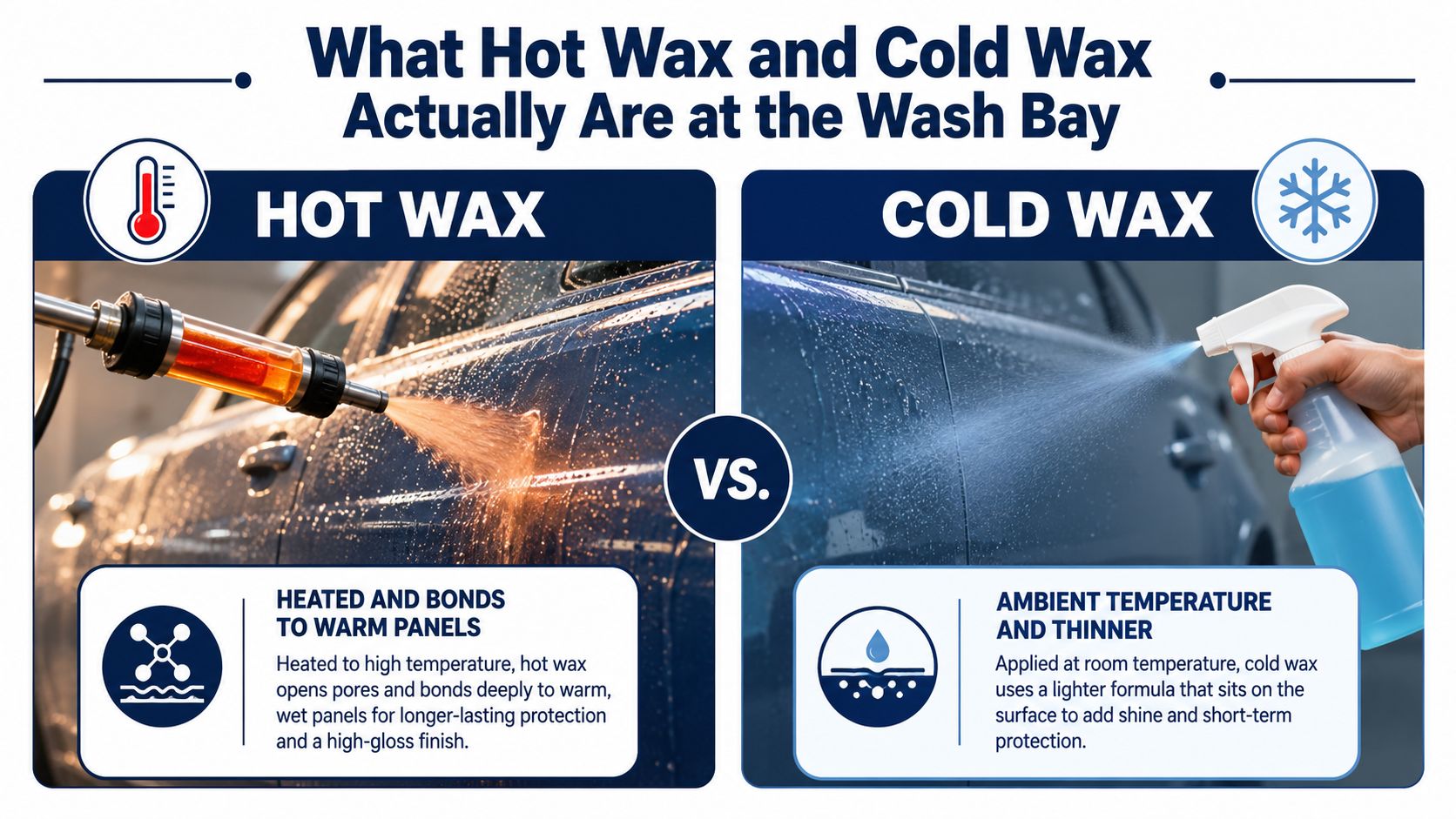
The cleanest way to understand these two is to forget the menu wording and watch what happens on the panel. Hot wax is heated before application, then laid onto a wet, warm surface so it can spread more evenly. Cold wax is applied at ambient temperature, usually as a thinner layer during a faster step in the wash cycle.
What happens with hot wax
Hot wax is the more deliberate process. The wash bay heats it, the operator or machine applies it while the vehicle surface is still receptive, and the film has a better chance to settle into the paint surface rather than just sitting on top of it. In practical terms, that makes it the wax choice you pick when you want the added layer to work harder against grime, road film, and salt.
Zero Friction Cycling's temperature comparison supports the core point that hotter application changes how much wax a surface holds. In its drivetrain testing, chains waxed at 95°C retained about 0.5 g less wax than chains waxed at 75°C, and chains waxed at 125°C retained about 1.3 g less wax than the 75°C baseline, showing that application temperature materially changes wax uptake and likely film build characteristics. Zero Friction Cycling temperature debate PDF
That does not mean hotter is always better in every situation. It means temperature changes the result in a real way.
What happens with cold wax
Cold wax is the faster, simpler path. It is applied without heating, usually as part of a quicker step in the wash process, and it is designed to give you a protection layer without extra setup. In plain Ontario terms, it is the add-on you choose when you want some help, but you do not want to spend longer in the bay.
DermNet NZ defines waxing as hair removal from the root and notes that hair should be about 5 mm long for optimal results, which is a useful reminder that application conditions matter in any waxing method. DermNet NZ waxing overview That principle carries over neatly here, a coating performs better when the surface and timing are right. Cold wax works, but it is the faster, lighter-touch option.
Head-to-Head Comparison on the Things That Matter
If you want the short version, hot wax wins on protection, cold wax wins on convenience. That's the whole argument in one line. The table below makes the trade-offs obvious.
| Criterion | Hot Wax | Cold Wax |
|---|---|---|
| Protection level | Better fit when you want the wax to bond more fully and do more work against winter grime. | Good for a lighter protection layer when you mainly want a quick add-on. |
| Durability | Stronger choice when the vehicle keeps facing salt, slush, and repeat wash cycles. | Better for short-term coverage and simple maintenance visits. |
| Salt-shedding behaviour | More likely to help the panel stay cleaner between washes because the film is built for more demanding use. | Helps, but the effect is lighter and more temporary. |
| Added time at the wash | Slower than a basic quick-step option. | Faster and easier to fit into a short stop. |
| Typical upgrade logic | Worth it when winter grime is your daily enemy. | Worth it when you want a no-fuss maintenance layer. |
| Best-fit driver type | Daily commuter, rideshare driver, fleet vehicle, SUV in salt country. | Weekend driver, low-mileage car, shoulder-season top-up. |
The row that matters most is the one about durability. Ontario drivers don't need a wax that sounds good on paper. They need one that keeps doing its job after the second and third run through dirty slush.
Big differentiator: Hot wax is about heat-driven penetration and a stronger film. Cold wax is about convenience-driven speed.
How to read the table like a car owner
A weekend driver can live with a lighter wax layer because the car isn't taking daily abuse. A courier van cannot. A family SUV that spends half its life in wet, salty parking lots also belongs on the stronger side of the chart.
If you're still comparing options at the bay, ignore the marketing words and ask one question. Do you want the wash to leave behind a quick coating, or do you want it to earn its keep in winter? That question points you to the right column every time.
Why Hot Wax Lasts Longer When Salt and Slush Hit
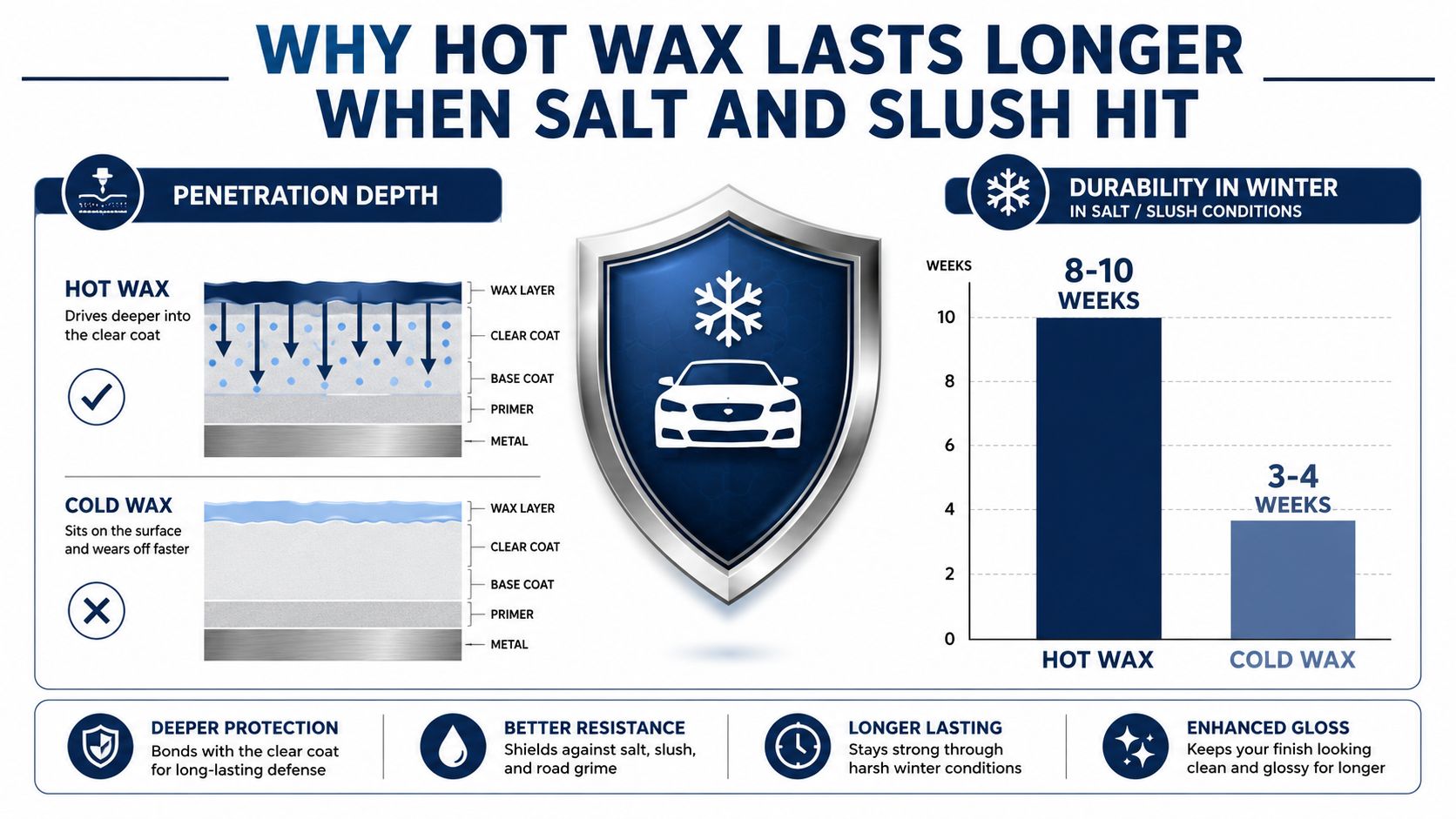
Hot wax has the edge in Ontario because winter attacks from every angle. Road salt sticks, slush cakes, and dirty spray keeps getting thrown back onto the same panels. A hotter application helps the wax spread and settle more effectively, which is why it's the better choice when you want the coating to hold up under punishment rather than just look decent when you leave the bay.
Temperature changes the film
The key issue is film build. Heated application changes how much wax stays on the surface and how well it lays down, which is why temperature matters in the first place. Excess product is not always a good sign. In practice, you want the material to bond where it can do real work, not sit loose on top and disappear fast in the next wash or storm.
For a Toronto-area driver, that turns into a simple result. The car sheds grime more cleanly, and the protection layer is less likely to give up right away after the next slushy drive home. That is the kind of difference that shows up in February, not in July.
Where cold wax still makes sense
Cold wax still has a place. If you want a quick top-up between bigger services, or you drive a low-mileage car that does not live outdoors, the simpler option is fine. I would not make it my main winter plan for a daily-driven vehicle, but I would use it as a convenient maintenance layer when the rest of the car-care routine is already solid.
The history matters too. Cold wax is a newer convenience method, built as an alternative to traditional heated waxing. That tells you what it was made for, speed and ease, not the toughest winter hold. For a salt-heavy Ontario commute, speed is nice. Staying protected is better.
How Each Wax Fits into Nanak Car Wash Packages
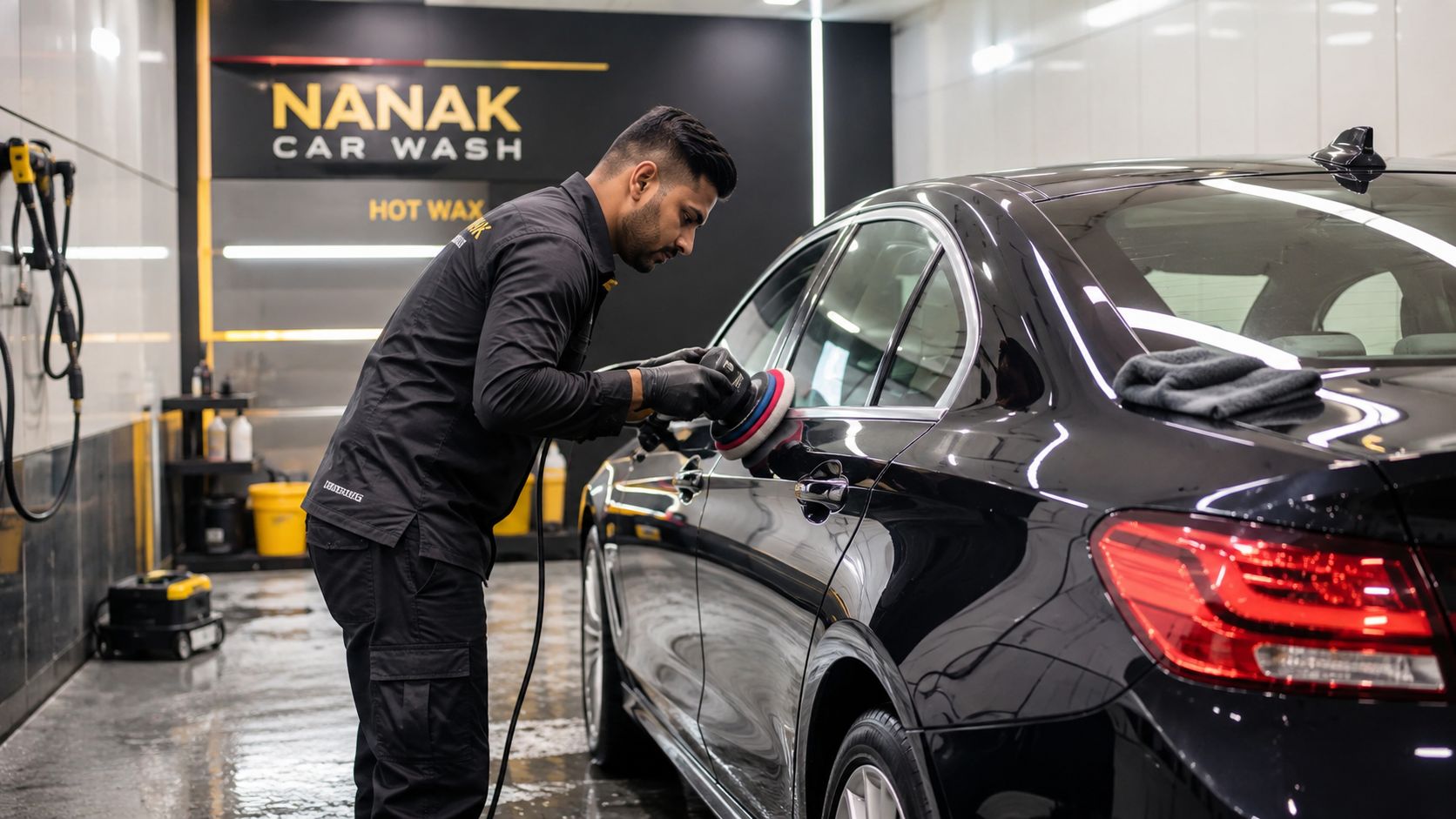
At Nanak Car Wash, the wax choice is tied to the service ladder, not treated as a standalone decision. You start with express exterior cleaning, then move into packages that add more protection, more labour, and more finish work. That matters because the right wax depends on how much else you want done in the same visit.
Express tiers and the wax add-ons
The express exterior packages begin with the basics, presoak soap, foam bath, rinse, drying agent, and air blowers. After that, the menu adds underbody wash, double drying agent, triple foam wax, hot wax, sealer wax, and lava foam. You are not picking wax in isolation. You are deciding how much finish work should come with a quick wash.
For a car that needs steady winter upkeep, that upgrade path usually makes more sense than booking a heavier service every time. A vehicle that sees regular tunnel washes can get a better exterior finish without turning every visit into a full detailing job.
Full-service and detailing are different jobs
Full-service wash packages go further by combining exterior cleaning with interior vacuuming, dashboard and window cleaning, and higher tiers add door panels, consoles, cup holders, and tire dressing. That is restoration and cleanliness, with the protective layer on the paint as only part of the job.
The detailing menu sits in a separate category again. Carpet and seat shampooing, salt and stain removal, vent and crevice blowout, leather deep cleaning, and machine buff and polish are deeper corrective services. If the paint needs real correction, detailing beats any tunnel wax. If the problem is daily winter exposure, a wax upgrade is the quicker move.
Rust proofing belongs in the same conversation
Rust proofing is not wax, and people confuse that all the time. It uses a dedicated chemical compound and is priced separately by vehicle size at about $119.95 to $149.95 + tax, which is the kind of service salted Ontario vehicles should at least consider alongside wax. Nanak Car Wash service lineup
For SUVs, vans, and pickup trucks, the smart play is often hot wax plus rust proofing, because the underbody and lower panels take a beating long before the paint on the hood does.
Matching Wax Choice to Your Real Driving Pattern
The easiest way to get this wrong is to choose based on personality. The right way is to choose based on the way you use the vehicle. A car that racks up daily kilometres through Mississauga traffic needs a different answer than a coupe that lives under cover and only comes out on weekends.
Clear verdicts for real drivers
- Rideshare driver, choose hot wax: You're in and out of traffic, parked in public lots, and getting hit with road spray all day. Hot wax is the better bet because it gives you stronger winter protection between washes.
- Fleet manager, choose hot wax for the working vehicles: Vans and service trucks pick up grime fast, and repeat washes are part of the job. You want the finish to hold up, not just shine for the drive home.
- Weekend driver, choose cold wax: If the car sees lighter use and regular garage time, cold wax is enough for basic maintenance. You're paying for convenience, not maximum resilience.
- SUV, van, or pickup in salt country, pair hot wax with rust proofing: These vehicles take extra abuse under the body and along the lower panels. Wax helps the exterior, rust proofing handles the longer-term fight below.
The one case where I'd skip the wax upgrade
If you already book proper detailing and keep the car on a strict wash routine, a simple tunnel wax may be redundant for some visits. That doesn't mean wax is useless. It means your maintenance stack already does more of the job.
For anyone running a business with multiple vehicles, the maintenance plan matters as much as the wash itself. If your crew also handles customer updates, it's worth reading advice on how to boost your shop's online presence, because good service habits and clear communication usually travel together.
Building a Seasonal Wax and Wash Schedule
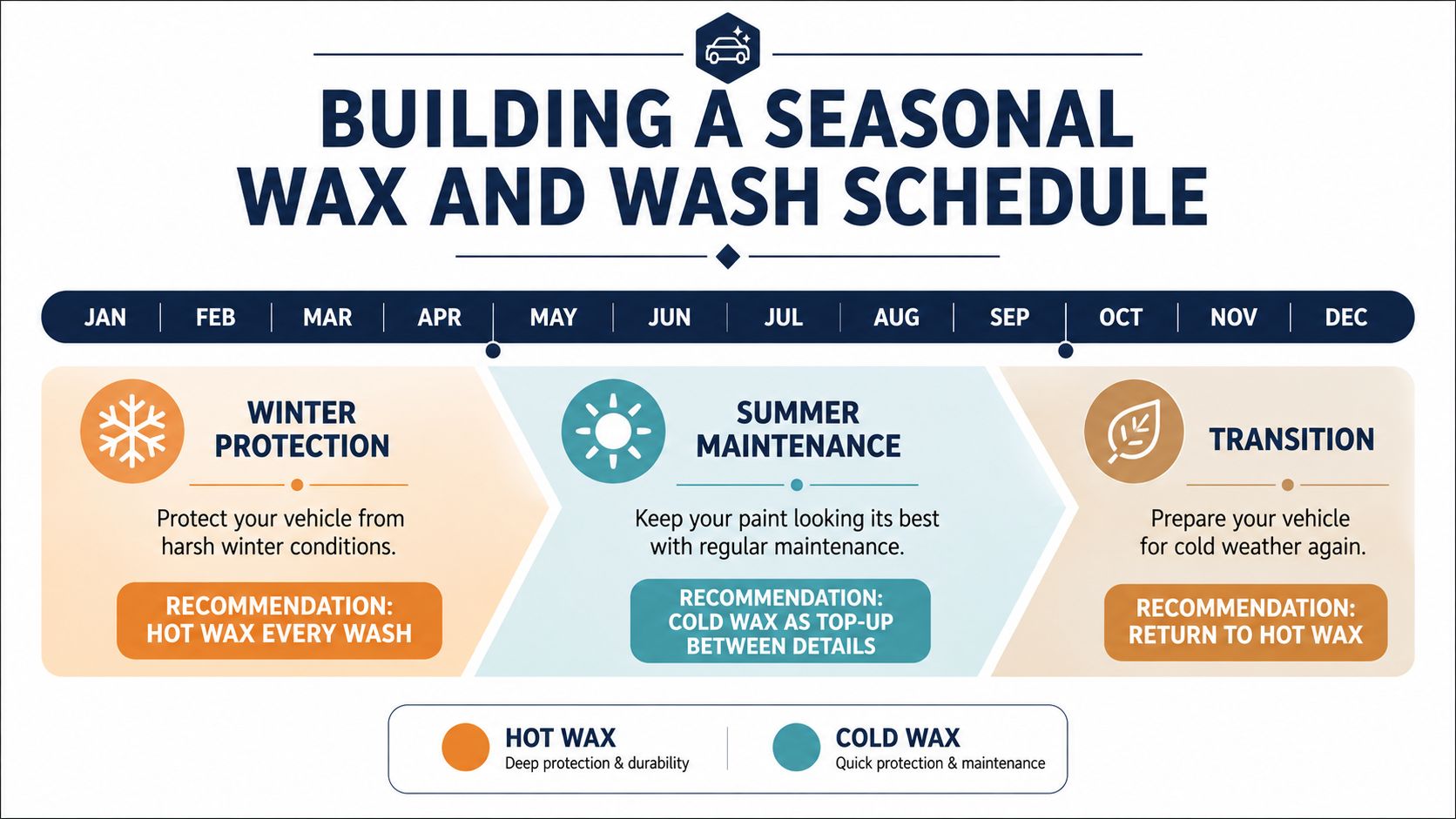
The cleanest schedule for GTA drivers is blunt and boring, which is exactly why it works. In the cold months, lean into hot wax. In the shoulder months, use cold wax or a sealer-style top-up when you want quick maintenance without the full winter setup.
A simple Ontario rhythm
- Late fall to early spring: Use hot wax with regular washes, especially after heavy slush or salt exposure.
- Shoulder season: Use cold wax as a lighter protection layer between fuller services.
- Once or twice a year: Book a proper detailing visit if the paint, interior, or trim needs deeper correction.
- When the lower body starts taking the hit: Add rust proofing, especially on SUVs, vans, and pickups.
That schedule makes sense because it matches the weather, not a marketing calendar. Winter is when your car needs the stronger protection layer. Summer is when you can get away with lighter maintenance.
Bundles and memberships make the schedule easier
Unlimited Wash Club memberships and prepaid bundles exist for a reason. They make repeat washing more predictable, and predictability matters when salt is flying every week. If you wash often enough, the wax question stops being theoretical and becomes part of your routine.
The best maintenance plan is the one you'll follow. A driver who pays once for a big service and then neglects the car for months is usually worse off than the driver who keeps up with shorter, consistent visits.
Honest Answers to the Questions Drivers Ask
Is wax even worth it on a newer car? Yes. New paint still gets hammered by salt, grit, and dirty spray, and GTA winters do not care how fresh the vehicle is. If you want that finish to stay sharp, protection starts early.
Can I just use cold wax every time? You can, but I would not make that my winter plan for a daily driver in Ontario. Cold wax works for quick upkeep, but it is the lighter option, and it shows once the roads turn ugly.
Does hot wax cancel out the need for rust proofing? No. Wax protects the paint and surface layer. Rust proofing does a different job, and vehicles that live through Ontario salt need both if you want real long-term protection.
How often should I be waxing in winter? Often enough that the car never sits too long without protection between salted drives. If the vehicle lives outside, make wax part of the winter wash rhythm, not a once-in-a-while extra.
If you run a business with several vehicles, the same rule applies. A clear wash-and-protection routine keeps the fleet cleaner, and that makes customer-facing operations look more organised. The same advice holds whether you are managing one SUV or a row of work vans, and if your crew also handles customer updates, it is worth reading advice to boost your shop's online presence.
If you want a straight answer on your own vehicle, Nanak Car Wash offers express wash upgrades, full-service cleaning, detailing, and rust proofing at GTA locations, so you can match the wax choice to the way you drive. Choose the protection level that fits your winter routine before the next round of salt and slush hits.

 6600 Finch Ave W, Etobicoke, ON M9V 3Z6
 647-703-8515
 MON – SUN 8 AM to 7 PM