
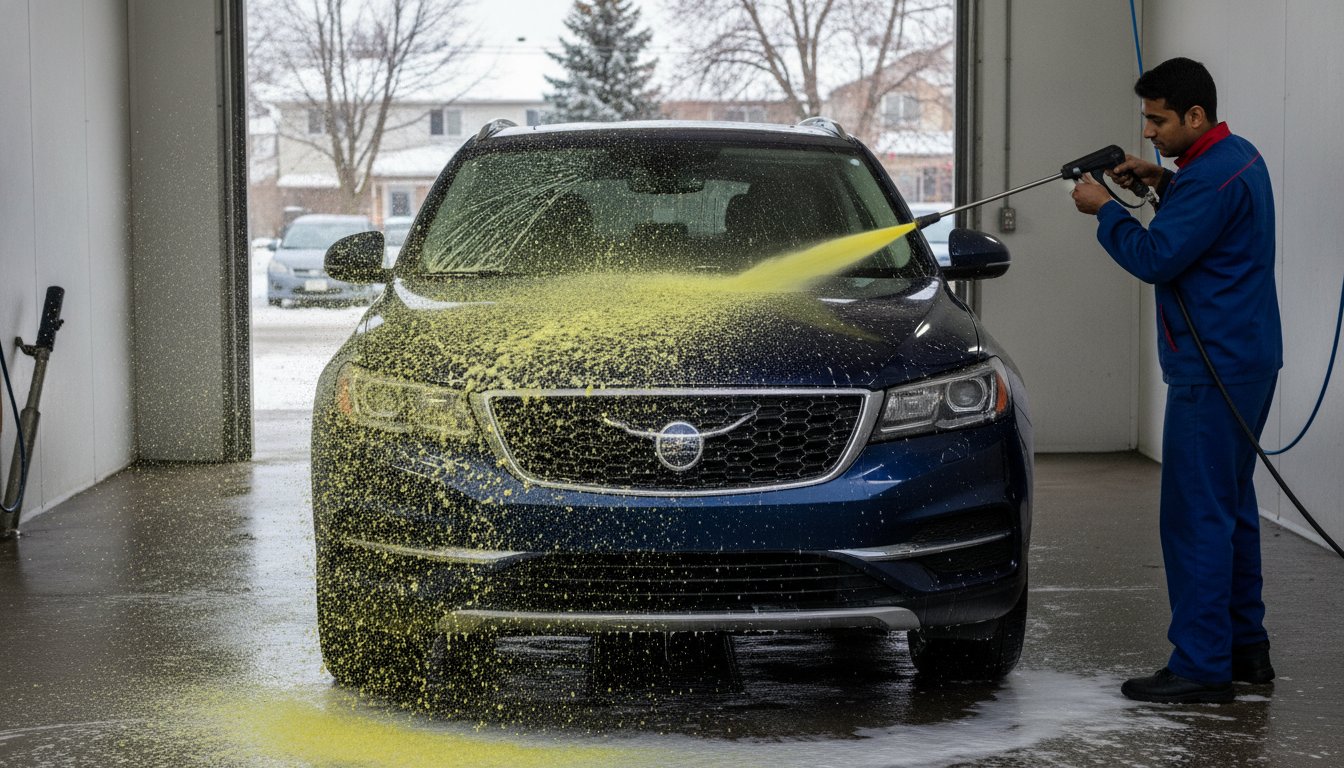
Did you know Canada uses over 5 million tonnes of road salt every single year? With Toronto recording a record 88.2 centimeters of snow in January 2026, your vehicle is under constant chemical attack. It’s frustrating to see corrosive salt eating through your paint and undercarriage. You’re tired of frozen door handles and the high cost of frequent maintenance. You want a clean car, but you don’t want to waste money on washes that only last ten minutes.
This guide reveals exactly how often to wash car in winter Ontario to stop rust and prevent salt damage for good. We’ll give you a clear, cost-effective schedule that works for the 2026 winter season. You’ll learn how to protect your undercarriage and keep your car looking new. We’ve simplified the process to save you time and money. Follow this plan to stay ahead of the salt and keep your vehicle in top condition all winter long.
Key Takeaways
- Adopt the “Every 10 Days” rule as your baseline defense against Ontario’s aggressive road brine.
- Discover how often to wash car in winter Ontario to prevent expensive rust damage during heavy snowfall seasons.
- Identify why prioritizing an undercarriage wash is more important than a shiny exterior for long-term vehicle health.
- Learn to combine regular cleaning with professional Rust Proofing for a dual-layer shield against corrosion.
- Save money and stay protected by using an UNLIMITED WASH CLUB membership to maintain a consistent cleaning schedule.
The Science of Salt: Why Ontario Winters Destroy Your Car’s Finish
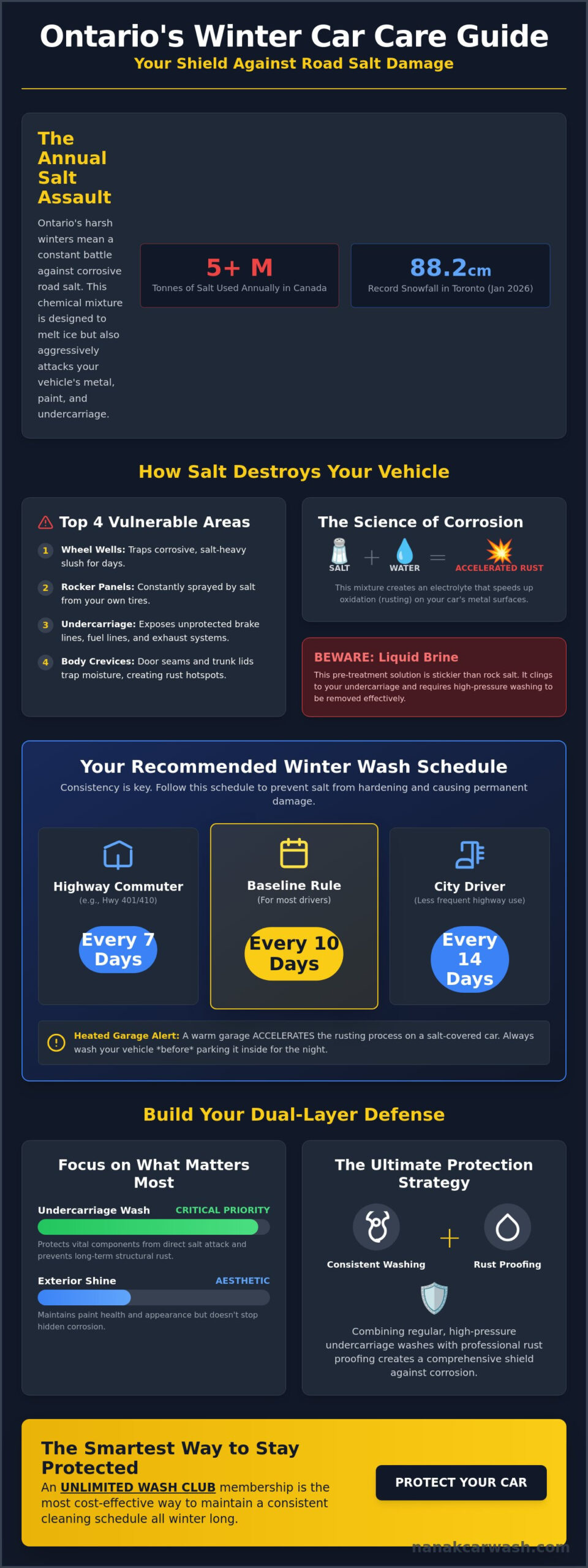
Ontario roads are a chemical battlefield during the winter months. Every year, Canada spreads over 5 million tonnes of road salt to keep drivers safe. In the Peel Region alone, crews use between 24,000 and 28,000 tonnes of salt annually to maintain regional roads. While this makes commuting possible, it creates a nightmare for your vehicle’s metal components. When salt mixes with melting snow and ice, it forms a powerful electrolyte. This liquid conducts electricity and forces the oxidation process to move at high speed. You need to understand The Science of Salt to realize why a simple rinse isn’t enough to save your car.
The damage isn’t just on the surface. Salt-filled slush packs into every hidden corner of your vehicle. It targets specific areas that are difficult to see but vital for safety. These vulnerable spots include:
- Wheel Wells: Heavy slush builds up here and stays frozen for days, keeping salt in direct contact with metal.
- Rocker Panels: These panels sit closest to the road and take the most direct hits from salt spray.
- Undercarriage: Your brake lines, fuel lines, and exhaust system are exposed and often lack the protective clear coat found on your hood.
- Body Crevices: Door seams and trunk lids trap moisture, creating a perfect environment for rust to bloom.
Ontario’s constant “freeze-thaw” cycle makes this even worse. During the day, salt-heavy slush melts and flows into tiny gaps in your car’s frame. At night, that water freezes and expands. This cycle acts like a hydraulic pump, forcing corrosive chemicals deeper into your vehicle’s structure. This is why knowing how often to wash car in winter Ontario is critical for long-term protection. The 2025-2026 winter season was especially salty, meaning your car faced higher concentrations of chloride than usual.
The Danger of Liquid Brine vs. Rock Salt
Municipalities now use liquid brine for pre-treating roads before a storm. It’s highly effective for melting ice, but it’s a disaster for your car. This sticky solution clings to surfaces much better than dry rock salt. It seeps into tight spaces, coats electrical sensors, and sticks to brake lines like glue. Standard garden hoses don’t have the pressure to remove it. You need professional, high-pressure washing to neutralize these chemicals before they harden and corrode your vital systems. Regular cleaning is the only way to fight this invisible threat.
Rust: The Silent Killer of Ontario Vehicles
Rust doesn’t wait for your car to get old. Even brand-new 2026 models face immediate undercarriage corrosion if left untreated. The oxidation process accelerates in the humid, salty conditions common in Southern Ontario. Once rust starts in your frame or floorboards, it’s incredibly expensive to fix. This structural damage kills your vehicle’s resale value instantly. Determining how often to wash car in winter Ontario is the best way to keep your investment safe. Don’t let a single “salty year” turn your reliable ride into a scrap pile. Consistent maintenance is the most cost-effective tool in your garage.
Determining Your Winter Wash Schedule: How Often is Enough?
Keeping your vehicle clean isn’t just about looks. It’s about survival. Most experts agree on the “Every 10 Days” rule for Southern Ontario. This frequency creates a consistent barrier against chemical buildup. If you wait longer, the salt layers harden and become much harder to remove. You don’t want to let the dangers of road salt sit on your paint during a warm spell. In fact, salt is most corrosive when temperatures hover around 0°C. Moisture stays in a liquid state at this temperature. This allows the chemical reaction to eat your metal faster than when it’s deep-frozen.
The 2026 winter season has been brutal. High snowfall means more salt on the roads. You must adjust your schedule based on how much you drive. If you’re wondering how often to wash car in winter Ontario, start by checking your daily mileage. Your specific needs depend on your route and where you park at night. For many, a quick Express Car Wash is the perfect mid-week solution to keep the grime away.
Commuter vs. Occasional Driver Schedules
Commuters on the 401 or 410 face extreme conditions. High speeds mist your car in a constant salt spray. You need a wash every 7 days without fail. City drivers in Brampton can usually wait 14 days if the roads are mostly clear. Do you keep your car in a heated garage? Be careful. Bringing a salt-covered car into a warm environment actually speeds up the rusting process. Wash it before you park it for the night. This keeps the chemicals from activating in the heat. Knowing how often to wash car in winter Ontario helps you balance protection with your busy schedule.
When to Break the Schedule: Post-Storm Protocol
Forget the calendar after a major snowstorm. The 24 to 48 hours after the plows finish are the most dangerous for your car. This is when the concentration of liquid brine is highest. Look for the “white crust” on your wheel wells and doors. That’s a sign of immediate danger. Get to a wash as soon as the roads dry out. A fast trip for a wash can save you thousands in future body work. Don’t let that crust sit. Wash it off fast to stay ahead of the damage. It’s a small price to pay for total vehicle safety.
Choosing the Right Wash Method for Sub-Zero Temperatures
Washing your car during a deep freeze isn’t just about appearance. It’s about precision. If you’re wondering how often to wash car in winter Ontario, remember that the method matters as much as the frequency. Sub-zero temperatures change how water and chemicals react with your paint. You need a process that removes salt without creating new problems like frozen locks or scratched clear coats. A professional wash is designed to handle these exact conditions. It’s the fastest way to get back on the road safely.
The undercarriage wash is your most important tool. It targets the hidden areas where liquid brine collects. Without this, you’re only doing half the job. Brine sticks to brake lines and fuel tanks. It stays wet even when the rest of the car looks dry. A Full-Service Car Wash ensures that both the visible and invisible parts of your vehicle stay protected. This is the most efficient way to maintain your vehicle’s structural integrity and avoid expensive repairs later.
Follow these post-wash steps to avoid winter headaches:
- Dry the seals: Use a microfiber cloth to wipe down all rubber door gaskets immediately. This prevents them from freezing shut and tearing.
- Clear the locks: Use a quick burst of compressed air or a silicone-based lock lubricant to keep moisture out of the mechanisms.
- Exercise the handles: Open and close your doors and trunk a few times while the car is still warm to shed excess water.
- Check the gas cap: Make sure no water is trapped behind the fuel door. A frozen gas cap can leave you stranded at the pump.
The Case for Touchless in Deep Freeze
Touchless systems are ideal when temperatures drop below -10°C. They use high-pressure water and specialized detergents to lift salt and slush. This avoids the risk of rubbing frozen grit or sand against your paint. Soft-touch brushes can sometimes trap ice particles. These particles act like sandpaper on your clear coat. While touchless might struggle with heavy, baked-on grime from weeks of neglect, it’s the safest way to maintain your vehicle during a cold snap. It provides the quick, effective cleaning you need without the risk of surface damage. It’s the pragmatic choice for keeping your car clean all winter long.
Interior Protection: Fighting Salt Stains
Don’t ignore the inside of your car. Ontario salt is a carpet killer. Your boots carry liquid brine directly onto your floor mats. Once it dries, it forms a hard white crust. This isn’t just ugly; it’s corrosive. This salt eventually seeps through the carpet and hits the metal floorboards. Professional cleaning is the only way to neutralize this mess. Regular vacuuming and high-heat mat scrubbing prevent permanent damage. For a deep clean that restores your cabin and protects your resale value, consider Interior Car Detailing. It’s a small investment that keeps your car feeling new and looking sharp.
Beyond the Shine: Protecting the Undercarriage and Preventing Rust
A shiny hood looks great. It won’t save your chassis, though. Surface washing is only the first step in a real defense plan. To truly fight Ontario’s winter, you must focus on the parts you can’t see. Your wheel wells are ground zero for corrosion. They trap salt-heavy slush that stays wet for days. This constant moisture contact triggers the rust cycle. Knowing how often to wash car in winter Ontario is vital. However, adding a physical barrier provides the total security your vehicle deserves. It’s about protecting your investment from the bottom up.
Salt doesn’t just sit on your car. It bonds to it. Without a protective layer, the chemicals eat directly into your clear coat and exposed metal. This is why seasonal preparation is critical. You want a surface that is slick and hydrophobic. When salt can’t stick, it can’t corrode. This proactive approach saves you thousands in body work down the road. It keeps your car looking new and structurally sound. Don’t wait for the first orange spot to appear. Start your protection plan before the temperature drops. Book your Rust Proofing service now for total winter peace of mind.
Rust Proofing: Your Winter Shield
Rust Proofing is your most powerful weapon. It creates a thick, hydrophobic barrier on the chassis. This stops salt and water from ever touching the metal. The best time to apply this in Brampton is early in the season. You want that barrier set before the first salt truck hits the road. We recommend combining professional Rust Proofing with your regular wash schedule. This dual-layer approach ensures your vehicle lasts for many years. It’s a simple, cost-effective way to maintain your car’s structural integrity. It’s the ultimate winter shield for any Ontario driver.
Waxing and Paint Protection
High-quality wax makes salt slide right off. It prevents chemical bonding with your clear coat. Don’t settle for a basic spray-on solution. A professional detailing polish provides a much thicker and more durable shield. This is a must-have before the first snowfall in Ontario. It keeps your paint smooth and protected against abrasive grit. This grit is found in every pile of winter slush. Paint protection is about long-term value. It’s the difference between a car that ages and one that stays showroom-ready. Invest in your paint now to avoid dullness and pitting later.
Nanak Car Wash: Affordable Winter Protection Packages in Brampton
Maintaining your vehicle shouldn’t break the bank. In 2026, Ontario drivers faced record snowfall and a critical road salt shortage. This led to higher concentrations of corrosive brine on our streets. If you’re wondering how often to wash car in winter Ontario, the answer is clear. You need a consistent, affordable routine to stay ahead of the damage. Nanak Car Wash offers the most practical solutions in the GTA. We focus on speed, efficiency, and real financial value.
Our service menu is designed for the pragmatic driver. We provide the tools you need to fight rust without the high costs of traditional maintenance. Choose the package that fits your schedule and budget:
- UNLIMITED WASH CLUB: Wash as often as you need. This is the ultimate way to follow the 10-day rule for a single monthly price.
- EXPRESS WASH: Fast, high-pressure cleaning. Perfect for removing salt spray during a busy work week.
- FULL-SERVICE CAR WASH: Complete protection. We handle the exterior salt and the interior slush in one visit.
- RUST PROOFING: A vital seasonal barrier. We apply a hydrophobic shield to protect your chassis all winter.
- CAR DETAILING: Professional mid-winter restoration. Get expert Car Detailing in Brampton to remove deep-set salt stains and restore your showroom shine.
Why Nanak is the Pragmatic Choice for GTA Drivers
We know your time is valuable. Our process is fast and efficient. We get you back on the road in minutes, not hours. Our value-driven pricing is built to beat the high cost of rust repairs. A regular wash is a small investment compared to a body shop bill. We maintain high standards for every vehicle. Our commitment to quality ensures your car stays protected against the harshest 2026 winter conditions. Choose the local leader for reliable, no-frills service that works. We focus on results so you can focus on the road.
Join the Unlimited Wash Club Today
Stop worrying about the weather forecast. Our subscription model lets you pay once and wash whenever it snows. It is the most cost-effective way to manage how often to wash car in winter Ontario. New members signing up in June 2026 receive their FIRST MONTH FREE. This limited-time offer provides IMMEDIATE SAVINGS for your household budget. Sign up is quick and easy. Enjoy total peace of mind knowing your vehicle is shielded from salt damage every day of the month. Visit us today to start your membership and protect your investment. Keep your car clean, keep your car safe, and save money with Nanak Car Wash.
Drive Salt-Free and Save Money Today
Don’t let Ontario’s record-breaking salt usage destroy your vehicle. Remember the 10-day rule for consistent protection. Prioritize undercarriage cleaning to stop rust in its tracks. It’s the smartest way to handle how often to wash car in winter Ontario while keeping your maintenance costs low. Our Brampton’s Top-Rated Car Wash is ready to help you win the war against corrosion. We provide a FAST EXPRESS WASH for Busy Ontario Commuters and offer SPECIAL SAVINGS on Winter Detailing Packages. You deserve a clean car without the stress of winter damage. Take control of your car care now. Click the link below to get started and keep your ride showroom-ready all season long.
JOIN THE UNLIMITED WASH CLUB FOR TOTAL WINTER PROTECTION
We’re here to help you stay ahead of the slush. See you soon!
Frequently Asked Questions
Is it too cold to wash my car in Ontario winter?
It’s never too cold for a professional wash. Professional facilities use heated water and high-velocity dryers to manage sub-zero temperatures safely. Washing in the cold prevents salt from sitting on your paint when the sun comes out and temperatures rise. Stay proactive and keep the salt off regardless of the thermometer. It’s the best way to avoid permanent damage to your finish.
Should I wash my car after it snows or before?
You should always wash your car after it snows and the roads have dried. This removes the fresh layer of liquid brine and rock salt applied by plows. Pre-washing is great for applying a protective wax, but the post-storm wash is what stops corrosion. Get the salt off as soon as the roads are clear to keep your chassis safe and clean.
How do I prevent my car doors from freezing shut after a winter wash?
Wipe down your rubber door seals with a microfiber cloth immediately after your wash. You can also apply a silicone-based lubricant to the gaskets to keep water from sticking. Open and close the doors and trunk a few times before parking for the night. This sheds any remaining droplets. It’s a fast, simple step that prevents frustrating morning delays.
Does a touchless car wash really remove all the salt?
Touchless washes use high-pressure jets to reach salt hidden in deep crevices. They are excellent for removing corrosive chloride without the risk of scratching your paint with frozen grit. While they might miss some baked-on road film, they are the safest choice for frequent winter cleaning. Regular visits ensure that salt never has the chance to bond to your clear coat.
Can road salt damage my car’s brakes and sensors?
Salt is a major threat to your safety systems. It corrodes metal brake lines and causes electrical sensors to fail. This leads to expensive repairs and dangerous driving conditions. High-pressure washing flushes these components clean. Don’t let chemicals compromise your stopping power. Regular cleaning keeps your sensors clear and your lines rust-free throughout the season.
Is an undercarriage wash worth the extra money in winter?
An undercarriage wash is the most important part of a winter maintenance routine. Most rust starts on the frame, fuel lines, and exhaust system where salt gets trapped. Paying for this specialized cleaning is a small price to protect your vehicle’s structural integrity. It targets the “ground zero” of winter corrosion. Never skip this step if you want your car to last.
How do I get rid of white salt stains on my car’s carpet?
Use a mixture of hot water and white vinegar to dissolve the tough salt crystals. Scrub the area gently with a brush and vacuum up the moisture immediately. For heavy buildup, professional detailing is the most effective way to restore your interior. It neutralizes the salt and prevents it from reaching the metal floorboards. Keep your cabin fresh and salt-free all winter.
Does rust proofing mean I don’t need to wash my car as often?
Rust proofing and washing work together as a team. Rust proofing protects the metal chassis, but salt can still damage your paint, lights, and trim. You must still follow a consistent schedule for how often to wash car in winter Ontario to maintain your vehicle’s appearance. Think of it as a dual-layer defense. One protects the frame while the wash protects the finish.

 6600 Finch Ave W, Etobicoke, ON M9V 3Z6
 647-703-8515
 MON – SUN 8 AM to 7 PM