

Wash your car every 10 to 14 days during a GTA winter, and tighten that to every 7 to 10 days or even once a week if you drive daily on salty highways, slush, or roads that look white with salt. For winter car washing, this frequency protects the metal, not just the paint.
You know the scene. One storm hits, the ploughs go through, the roads turn into a grey soup, and by the next morning your car looks like it's been rolled in chalk and dirty dishwater. The body panels are streaked, the wheel wells are packed, and the lower doors have that crusty white line that every GTA driver recognises immediately.
Often, people wait too long. They tell themselves they'll deal with it when the weather warms up, or after the next snowfall, or when the car gets really bad. That's how salt wins.
A proper winter wash schedule isn't about keeping your car pretty. It's about keeping salt off the places that cost real money to repair. The smart move is simple. Follow the general every 1 to 2 weeks rule, then adjust it based on how and where you drive. That's what this guide does.
Table of Contents
- That White Crust on Your Car Is a Bigger Problem Than You Think
- The Science of How Salt Destroys Your Vehicle
- Key Factors That Adjust Your Wash Frequency
- Your GTA Winter Wash Plan Based on How You Drive
- Proactive Protection A Shield Against Salt
- Your Simple Winter Car Care Mission
That White Crust on Your Car Is a Bigger Problem Than You Think
Toronto drivers see it after every messy week. You walk up to your car in a plaza parking lot, and the lower half looks like concrete dust glued itself to the paint. The windshield edges are filthy, the wheels are dull, and the wheel arches are carrying half of Highway 401 with them.
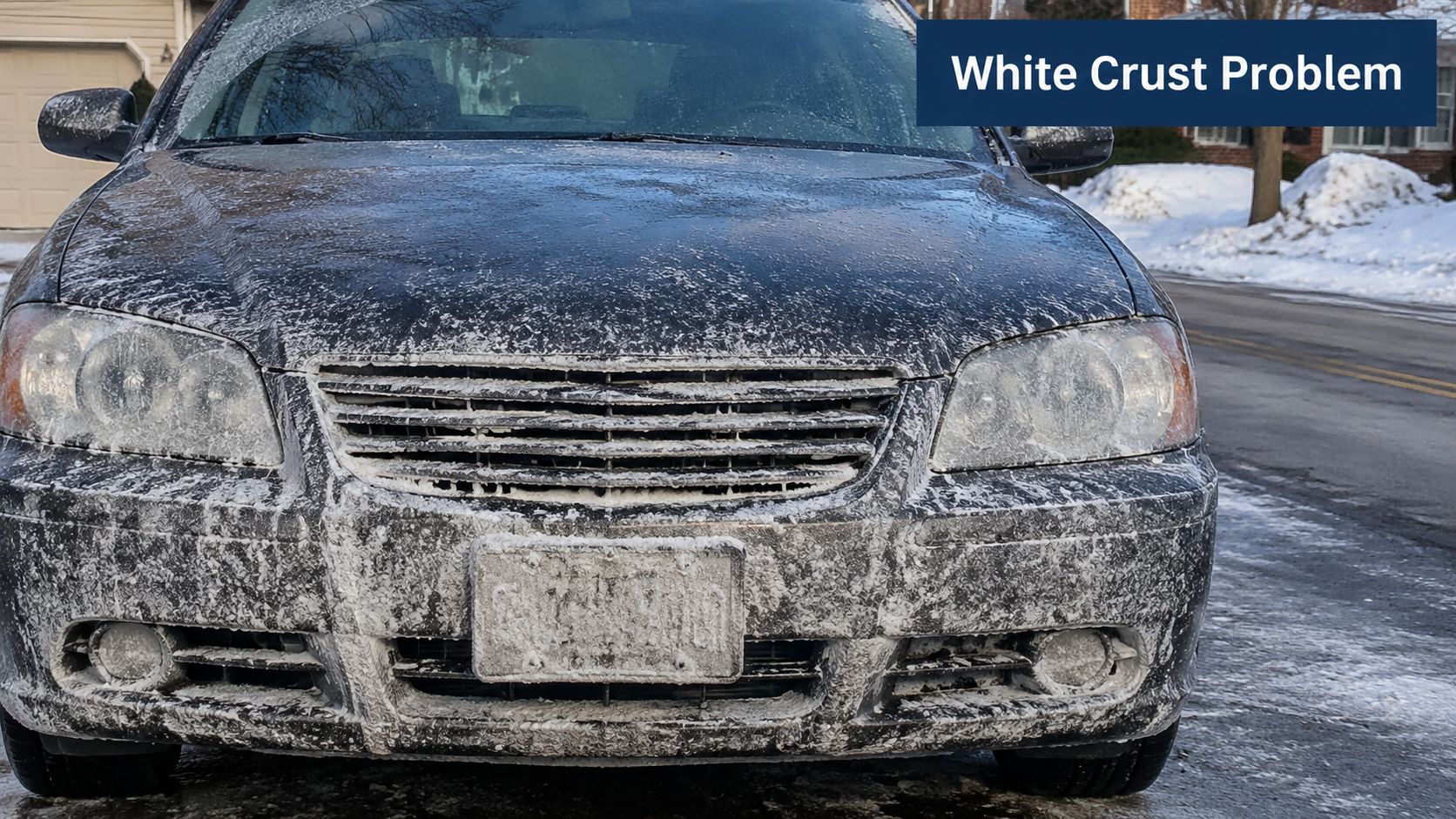
That mess isn't harmless winter dirt. It's a corrosive coating that keeps working while you're at the office, while the car sits overnight, and while it warms up in your garage. Salt gets into seams, chips, brake components, wheel wells, and the underside, a place often overlooked until something fails inspection or starts rusting through.
What GTA drivers usually get wrong
A lot of drivers judge by appearance alone.
- If it still “looks fine” from ten feet away: they skip the wash.
- If the weather forecast shows more snow: they delay again.
- If they had one wash recently: they assume they're covered.
That thinking costs people money. Winter washing is maintenance, not vanity.
Practical rule: If your roads are slushy, white, or heavily salted, treat your next wash like an oil change. It's routine protection, not an optional extra.
The schedule most people should follow
In salted road regions like the GTA, experts recommend washing your car at least once every 10 to 14 days, and stepping up to once per week if you drive often on snow, slush, or heavily salted roads where the surface appears white, according to winter car wash guidance for salted road regions.
That's the baseline. Your actual schedule depends on your commute, where you park, and how much highway brine your car wears each week. A downtown condo driver who uses the car twice on weekends doesn't need the same routine as someone grinding down the 401 five days a week before sunrise.
The Science of How Salt Destroys Your Vehicle
Salt is rust's favourite food. Not because it creates rust from nothing, but because it speeds up the whole ugly process.
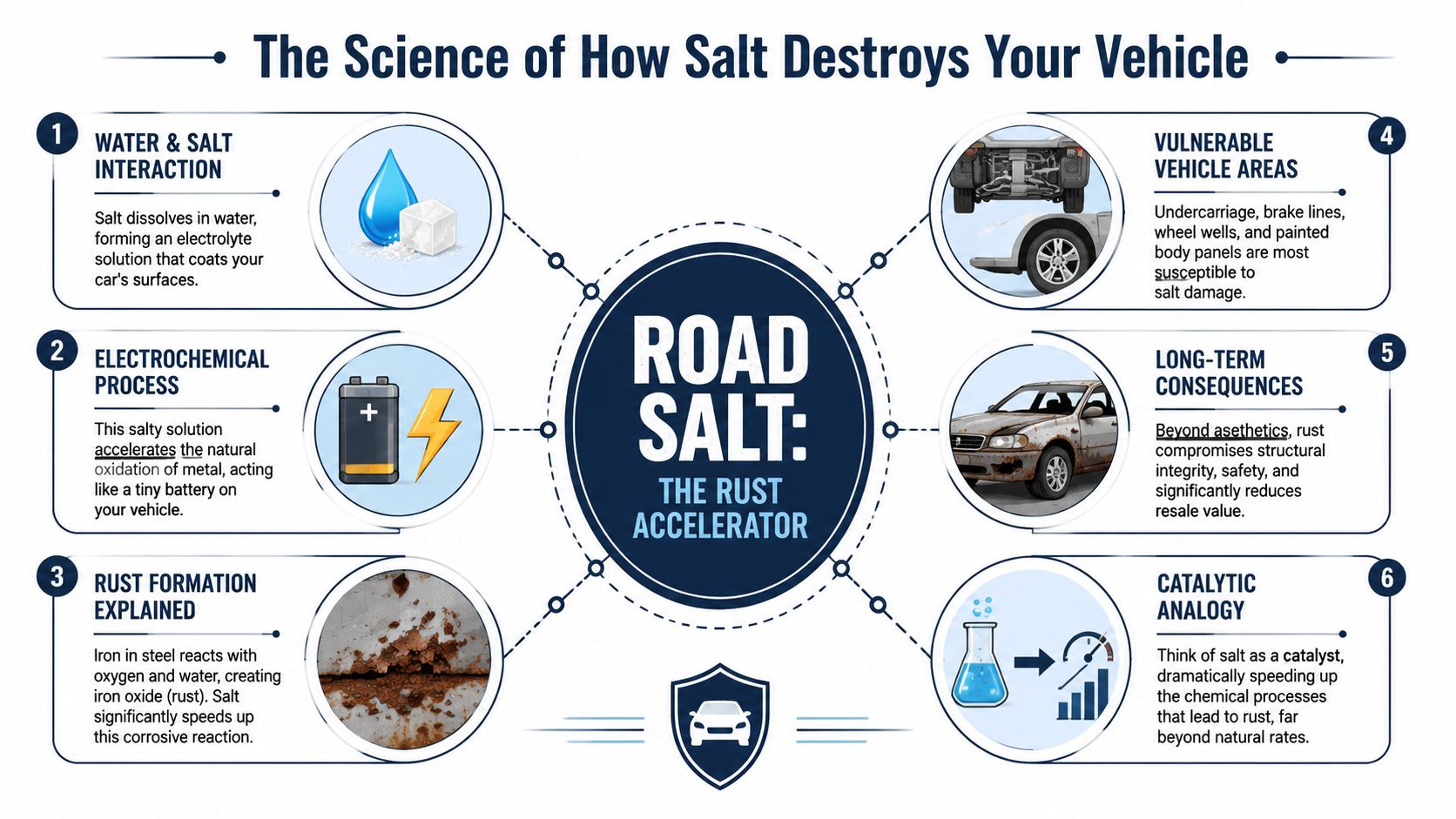
Salt doesn't just sit there
When salt mixes with water, slush, and road grime, it forms a conductive film over metal surfaces. That film helps corrosion move faster, especially when your car keeps cycling through cold roads, wet slop, and warmer parking conditions. It's the perfect Ontario recipe for damage that starts small and gets expensive.
The ugly part is timing. Technical specifications cited by Reader's Digest Canada on winter washing and corrosion note that salt residue left on a vehicle for more than 14 days in temperatures below −10°C can penetrate protective coatings and initiate rust at roughly 0.5 to 1.0 mm per year on untreated steel panels. The same source says washing every 10 to 14 days in winter, with undercarriage rinsing and anti-corrosion soap additives, is a benchmark in Ontario and can extend vehicle lifespan by 5 to 7 years compared with infrequent washing.
That's not cosmetic. That's real metal loss.
The hidden spots are the expensive spots
Drivers obsess over doors and hood panels because they can see them. Salt does some of its best work where you can't.
- Undercarriage: It collects brine, packed snow, and wet salt paste.
- Wheel wells: They get blasted constantly and stay dirty longest.
- Brake lines and hardware: They live in the spray zone.
- Lower body seams: Chips and cracks let salt stay put.
Salt that stays trapped underneath the car does more damage than the grime you can see on the doors.
If you only do a quick surface rinse and ignore the underside, you're solving the least important part of the problem. The underbody wash matters because that's where corrosion starts subtly.
Key Factors That Adjust Your Wash Frequency
The GTA doesn't hand every driver the same winter. Your ideal wash cadence depends on how often your car meets salt, how long that salt sits, and whether your parking setup helps it dry out or keeps it wet.
Ask yourself these questions
Use this as your personal checklist.
- How often do you drive? A car used every day in winter needs more attention than one parked most of the week.
- What roads do you use? Highway commutes throw far more brine and slush at your vehicle than short local trips on calmer streets.
- Do roads look white with salt? That's your warning sign. Once roads reach that stage, weekly washing makes sense for frequent drivers.
- Where do you park? A warm garage can keep salty moisture active longer than a cold outdoor spot.
- Do you drive right after storms? Fresh slush and heavy salting load the underside fast.
What matters most in the GTA
The biggest variable is exposure. If you're regularly on messy roads, daily highway routes, or stop-and-go traffic with constant spray, you should think in shorter intervals. For drivers in Ontario and the GTA who operate frequently in wet, salty winter conditions, the optimal wash frequency is every 7 to 10 days, and undercarriage washing is essential because salt buildup underneath the vehicle is a primary cause of rust, according to guidance for Ontario and GTA winter driving conditions.
That aligns with what experienced drivers already know. The more your car gets coated, the less room you have to procrastinate.
A winter wash schedule should be based on exposure, not on the calendar alone.
Here's the simple approach:
| Driving situation | Risk level | Sensible wash pace |
|---|---|---|
| Mostly parked, short local trips | Lower | Stay near the 10 to 14 day end of the range |
| Regular mixed driving | Moderate | Aim for the middle of the range |
| Daily commuting on salted roads | High | Move to 7 to 10 days |
| Constant messy-road driving | Very high | Go weekly |
If you're still unsure, err on the side of washing sooner. Nobody regrets removing salt too early. Plenty of people regret removing it too late.
Your GTA Winter Wash Plan Based on How You Drive
You leave work in Mississauga, crawl through wet slush on the 401, and park with a white film already drying on the doors. By the time you do it again tomorrow, the underside is worse. Your wash schedule should match that reality, not some generic winter tip.
The daily 401 commuter
If you drive the 401, Gardiner, DVP, 407, or QEW five days a week, wash on a tight cycle. Highway spray coats rocker panels, wheel wells, and the underbody fast.
Stick to every 7 to 10 days. Shift to weekly when roads are white, temperatures bounce above freezing, or you drive right after a storm.
Focus on three things:
- Undercarriage rinse: Your top priority.
- Wheel well cleaning: Salt packs in and stays there.
- Touchless or careful wash method: Better than rubbing winter grit into the paint.
The ride-hail and delivery driver
This is the toughest winter-use profile in the GTA. You work through storms, side streets, condo ramps, parking lots, and constant stop-and-go spray. The car never really gets a break.
Wash weekly through the worst salt months. After a messy storm cycle, wash sooner instead of waiting for your usual day.
Cost matters here because frequency matters. For this driver, an unlimited monthly plan with underbody wash access usually saves money and keeps the routine easy to maintain. Nanak Car Wash offers express exterior washes, underbody upgrades, full-service options, rust proofing, and an Unlimited Wash Club. That setup fits drivers who need repeat visits, not occasional cleanup.
The weekend errand runner
If the car mostly handles groceries, school runs, and local errands, you can stretch the interval a bit. You still need a schedule. Salt sitting on a parked car is still salt sitting on a car.
Aim for every 10 to 14 days. Move it up if you drove after a snowfall, hit heavily salted main roads, or let grime sit through a thaw.
Make each visit count. A more complete wash makes sense for this profile because buildup tends to stack over time instead of arriving all at once.
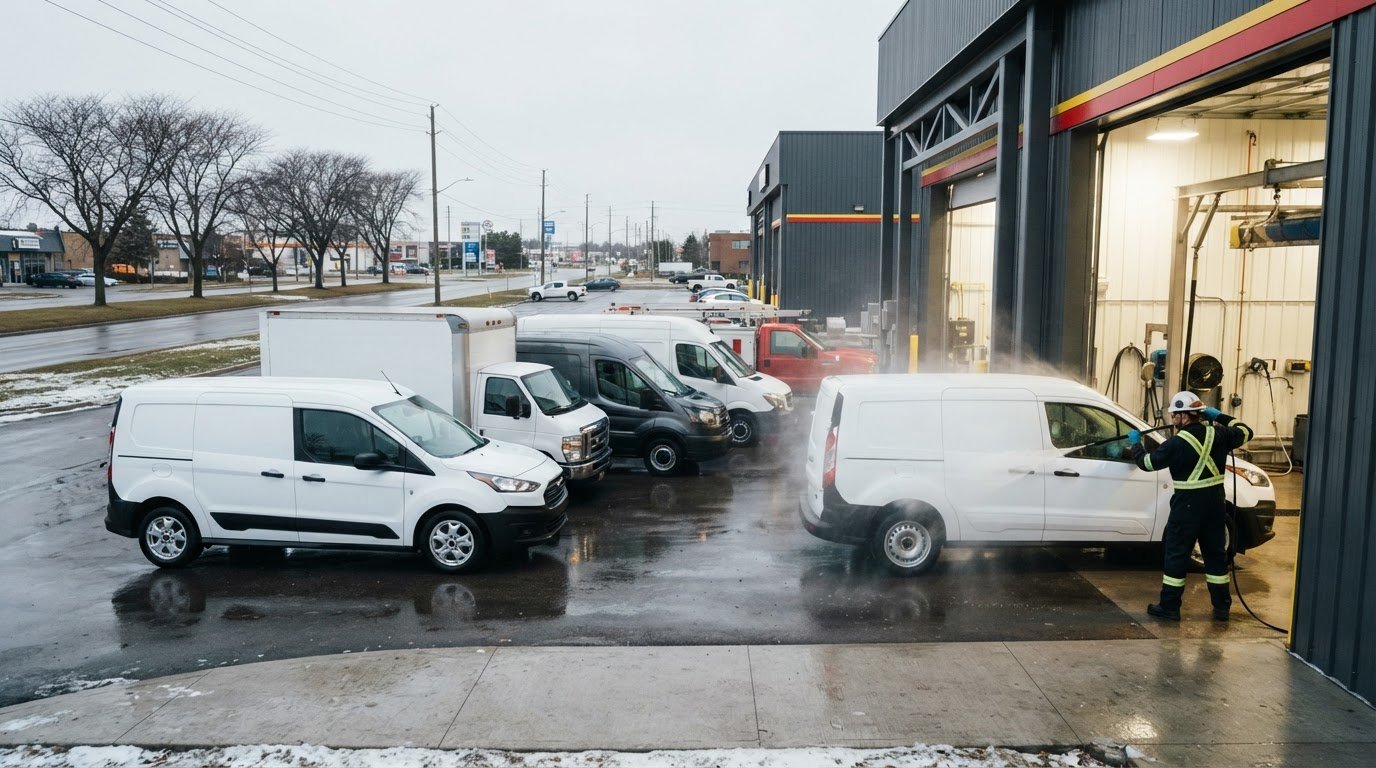
The small business fleet
Trades vans, service vehicles, and local delivery cars need a rule, not guesswork. Winter grime hurts the vehicle and the company image.
Set one repeating wash day each week, then tighten or relax the schedule based on route conditions. Vehicles on main roads and industrial areas usually need weekly washes. Lighter local use can often sit at every 10 days.
Use this as the working plan:
| Driver Profile | Recommended Frequency | Recommended Nanak Service |
|---|---|---|
| Daily highway commuter | Every 7 to 10 days, weekly in heavy salt | Express wash with underbody option or Unlimited Wash Club |
| Ride-hail and delivery driver | Weekly | Unlimited Wash Club plus periodic interior cleaning |
| Weekend errand runner | Every 10 to 14 days | Full-service wash with underbody attention |
| Small business fleet | Weekly to every 10 days based on route conditions | Prepaid multi-wash options or fleet-friendly repeat express washes |
For fleets, consistency beats good intentions. Put the washes on the calendar, track missed visits, and keep drivers from making it optional. Salt damage gets expensive fast.
Proactive Protection A Shield Against Salt
Washing removes salt. Protection gives your car a fighting chance between washes.
Washing removes salt but protection buys you margin
A winter wash by itself is defensive. You're removing contamination that's already there. That's necessary, but it's not the whole play.
Add a protective layer and you create some separation between the salt and the vehicle surface. Hot wax and sealer wax can help by leaving a temporary barrier on exterior surfaces. They won't replace washing, and they won't save an ignored undercarriage, but they make routine winter exposure less punishing.

What to add if you want fewer winter headaches
If you plan to keep your vehicle for years, rust proofing deserves serious attention. People love to spend money on screens, wheels, and appearance upgrades, then skip the one service aimed at slowing the kind of deterioration that wrecks resale value and underbody condition.
A sensible winter protection stack looks like this:
- Frequent washes: Keep salt from sitting too long.
- Undercarriage focus: Risk is concentrated on the undercarriage.
- Wax-based exterior protection: Helpful for painted surfaces.
- Professional rust proofing: Worth considering for long-term ownership.
The cheapest winter protection is the wash you get before salt has time to settle in.
If you only want one upgrade beyond basic washing, make it underbody cleaning. If you want the long-game move, add rust proofing and keep the wash schedule disciplined.
Your Simple Winter Car Care Mission
Winter car care in the GTA isn't complicated. Drivers make it complicated by waiting, guessing, and treating salt like dirt.
Your mission is straightforward:
- Match the schedule to your driving: Daily messy-road use means 7 to 10 days or weekly. Lighter use means 10 to 14 days.
- Prioritise the underside: The undercarriage matters more than the shine on the doors.
- Wash sooner after major storms: Heavy salt exposure changes the clock.
- Use protection when it fits your ownership plan: Wax helps. Rust proofing helps more if you're keeping the car.
Don't chase perfection. Chase consistency. A clean winter car isn't just nicer to look at. It's less likely to rust in the places that lead to repair bills, failed inspections, and ugly resale conversations later.
If you've been searching for how often to wash car in winter, the honest answer is this: more often than is typically done, and with a lot more attention to the underbody than is typically given.
If you want a simple way to stay on schedule, look at the wash, underbody, and membership options from Nanak Car Wash and pick a routine you'll keep through the worst of winter.




 6600 Finch Ave W, Etobicoke, ON M9V 3Z6
 647-703-8515
 MON – SUN 8 AM to 7 PM