
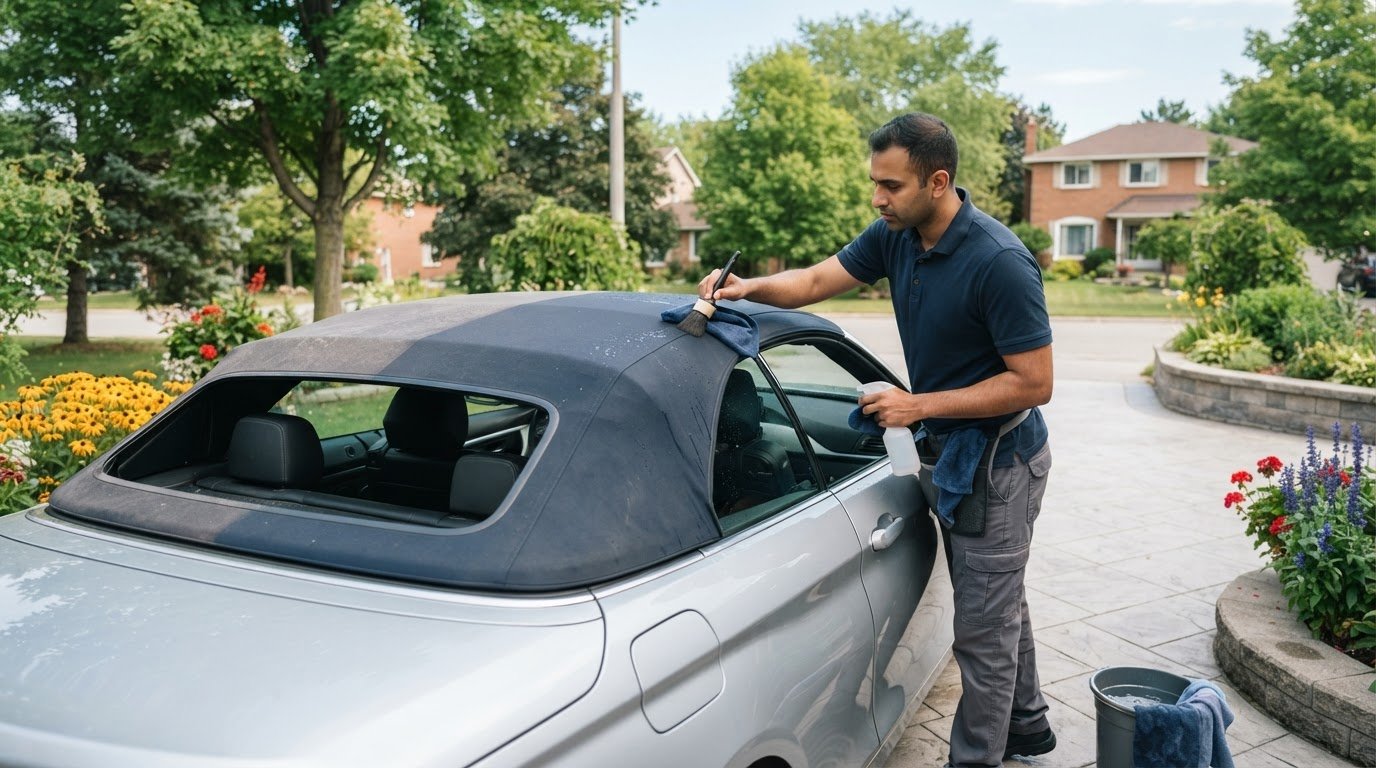
Could the quickest way to clean your convertible roof also be the easiest way to damage it? The wrong cleaner or an abrasive scrub can fade the surface, affect seams, or leave residue. If you’re unsure whether your roof is fabric or vinyl, pause before reaching for household products. Knowing how to clean a car’s convertible roof starts with identifying its material and checking the care instructions.
You can remove everyday dirt without soaking the interior or stressing the roof. This guide explains how to tell fabric from vinyl, choose a compatible cleaner, and wash gently around seams and windows. You’ll also learn how to rinse away residue and let the roof dry fully before folding or lowering it.
After cleaning, follow the vehicle maker’s guidance for protecting the roof from sun, rain, and changing weather. A few careful steps can help reduce unnecessary wear and keep your convertible looking its best. Start by checking the roof material and care instructions, then follow the appropriate routine.
Key Takeaways
- Learn how to clean a car’s convertible roof by first identifying whether it’s fabric or vinyl.
- Use a cleaner suited to the roof material and follow the vehicle and product instructions.
- Avoid harsh scrubbing, stiff brushes, and pressure washers that may damage some tops.
- Follow a gentle, step-by-step routine, cleaning small areas and rinsing away residue.
- Check for dirt buildup regularly, and consider comprehensive detailing when your vehicle needs broader care.
How to Clean a Car’s Convertible Roof Without Causing Damage
To clean a convertible roof safely, identify whether it’s fabric or vinyl, choose a compatible cleaner, work gently, rinse away residue, and let the roof dry fully. Fabric and vinyl need different care, so check the owner’s manual before using water or a cleaning product. If you’re learning how to clean a car’s convertible roof, start with the material and the vehicle’s care instructions, not a household cleaner.
Cleaning a convertible top means removing loose debris and surface dirt, then washing, rinsing, and drying it in a way that suits the material. It is routine care, not stain removal, waterproofing, or leak repair. A persistent stain, damaged seam, or leak may need attention beyond a basic wash. Don’t treat a cleaning routine as a fix for worn or damaged roof components.
What should you check before cleaning a convertible top?
Read the vehicle manual’s roof-care instructions and note any product restrictions. Inspect the seams, stitching, windows, and visible wear before applying water or cleaner. If you spot damage, avoid working cleaner into that area. Set up in a shaded place, and don’t clean a roof that’s hot from direct sun or frozen from cold weather. These checks help you see the surface clearly and work with more control.
Why does the roof material change the cleaning method?
Textured fabric can hold dust and dirt differently from smooth vinyl, so the cleaner and wiping method that suit one may not suit the other. Don’t assume a product labelled for convertible tops works on every material. Check that it matches your roof, then follow its label and the vehicle manual. If you’re unsure whether the roof is soft or a retractable hardtop, use the manufacturer’s guidance to identify the roof type before cleaning.
Keep the wash gentle. Use a soft cloth or brush that won’t scratch or snag the surface, apply cleaner as directed, and work in manageable areas. Rinse thoroughly so product doesn’t dry on the roof, windows, or seams. Let the top dry completely before folding or retracting it. This approach can remove everyday grime while reducing the risk of residue or unnecessary wear.
Fabric vs. Vinyl Convertible Roofs: Choose the Right Cleaner
The cleaner that suits a fabric roof may not be right for vinyl. Fabric often has a woven or textured surface, while vinyl is typically smoother and less absorbent to the touch. These clues can help you narrow it down, but appearance alone may not settle the question. Check the owner’s manual and the vehicle manufacturer’s roof-care information before choosing a product. That’s the safest starting point for how to clean a car’s convertible roof.
| Roof material | Common appearance and texture | Cleaning approach |
|---|---|---|
| Fabric | Often woven or textured | Use a cleaner labelled for that fabric; brush lightly and rinse as directed. |
| Vinyl | Often smoother and less absorbent | Use a vinyl-compatible cleaner with a soft cloth or brush; remove residue as directed. |
Don’t choose a product based on the words “convertible top” alone. Read the label and confirm that it matches both the roof material and the vehicle’s care guidance. Household detergents can leave residue, while bleach and solvents may discolour or weaken some surfaces. Avoid unapproved dressings, too. Some can leave a greasy or slippery film, and compatibility varies by roof material.
How should you clean a fabric convertible roof?
Start with a soft, clean brush to loosen dry surface dirt. Apply a fabric-compatible cleaner gently and evenly, working in small areas. Brush lightly rather than scrubbing hard, especially near seams and stitching. Rinse thoroughly if the product instructions call for it, and follow the vehicle manual and cleaner label throughout. Gentle, consistent passes are safer than trying to force out a stubborn mark.
How should you clean a vinyl convertible roof?
Use a clean microfiber cloth or soft brush with a cleaner marked as suitable for vinyl and your vehicle’s roof. Wipe gently, then remove cleaner residue according to the label. Skip abrasive pads, which can scratch or roughen the surface, and avoid products that leave a greasy or slippery finish. If the label and manual give different directions, follow the vehicle-specific guidance.
Material identification matters more than choosing the strongest cleaner. If the roof’s care needs remain unclear, rely on the manufacturer’s instructions rather than testing an unapproved product across a visible area. For broader context on trust and consistency in automotive service, MOTOR Magazine introduces the Automotive Maintenance and Repair Association (AMRA). Once the roof is clean, comprehensive car detailing can help address other interior and exterior cleaning needs.
Common Convertible-Roof Cleaning Mistakes That Can Cause Problems
Careful cleaning is not the same as aggressive scrubbing. Trying to force out dirt or stains can wear the surface, affect stitching, or push water where it shouldn’t go. Use a gentle method suited to the roof material, and stop if the surface changes while you clean. The goal is to remove ordinary dirt, not restore faded, torn, or deteriorated material.
Distinguish loose dust and everyday grime from a persistent stain, mildew, a leak, or damaged stitching. Repeated scrubbing won’t repair a seam or seal, and a basic wash may not resolve mildew that returns or appears embedded in the material. Treat these signs as a reason to stop and assess the roof rather than applying stronger chemicals.
Can you use a pressure washer on a convertible roof?
Avoid directing high-pressure water at the roof, seams, seals, or edges. The force may be unsuitable for some tops and could drive water into the cabin or lift weakened material. Follow the vehicle manufacturer’s instructions and use a gentle flow of water instead. If water enters the vehicle or you notice material lifting, don’t try to solve the problem by washing harder. It may point to a seal or roof issue that needs attention.
What should you avoid when removing stains or mildew?
Don’t use bleach, harsh solvents, stiff brushes, or forceful scrubbing as general-purpose stain treatments. These can affect colour, texture, or the roof surface, especially if the product isn’t approved for its material. If the vehicle and cleaner instructions allow, test the compatible cleaner in a discreet spot first. Stop if colour transfers to the cloth, the texture changes, or the material shows signs of damage.
Common mistakes to avoid:
- Using too much force: A stiff brush or hard scrubbing can stress fabric, vinyl, stitching, or seams.
- Blasting the roof with water: Keep high-pressure spray away from edges and seals.
- Escalating to harsh chemicals: A stronger product isn’t automatically a safer or more effective stain remover.
- Retreating a damaged area: Torn material, loose stitching, recurring mildew, and leaks call for more than routine dirt removal.
If a mark doesn’t lift with a compatible cleaner and gentle effort, don’t keep working the same spot. Recheck the product label and vehicle guidance, and stop if the roof reacts poorly. Knowing how to clean a car’s convertible roof also means recognizing when cleaning should end. A careful approach helps protect the top, but it can’t reverse fading, tears, or material breakdown.
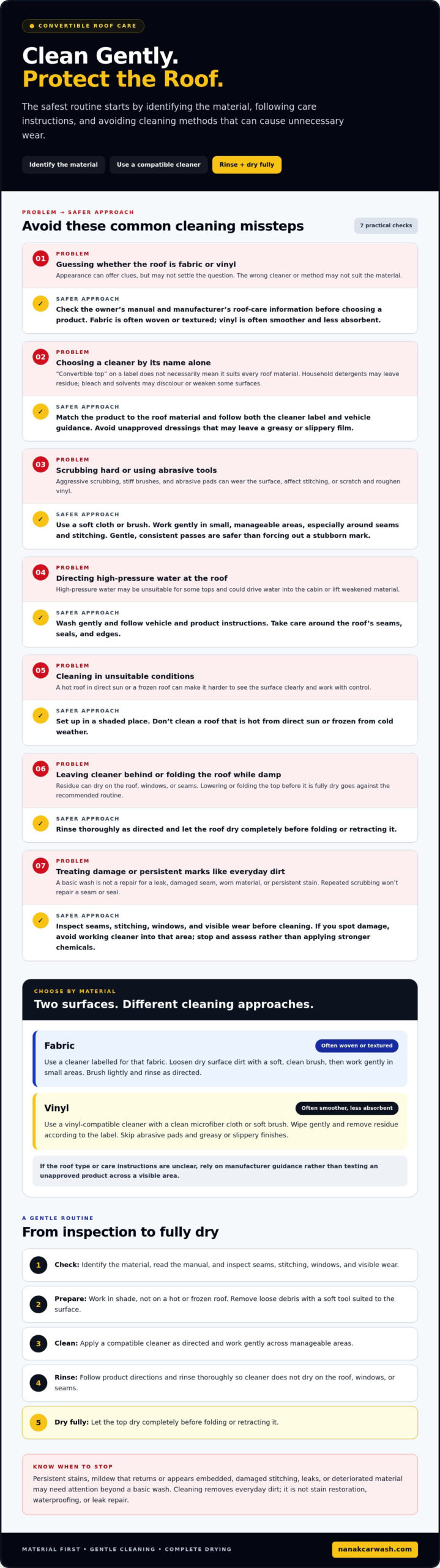
How to Clean a Convertible Roof: A Step-by-Step Routine
A simple routine helps you clean in a controlled way, reducing the chance of rubbing grit into the roof or leaving cleaner behind. Check the owner’s manual first, especially for material-specific directions and temperature limits. In Brampton, avoid washing in freezing conditions and follow the vehicle maker’s guidance on suitable temperatures.
What tools and preparation make the job easier?
Gather a soft brush, clean microfiber cloths, a cleaner compatible with the roof material, and access to gentle rinse water. Choose a shaded work area. Close the windows, secure the roof as the manual directs, and protect nearby paint and trim from cleaner runoff. Remove leaves and loose grit before washing so they don’t get dragged across the surface.
- Prepare the roof. Confirm the roof is secure and the surface is cool. Read the cleaner label and vehicle instructions before applying anything.
- Remove loose debris. Use a soft, clean brush or cloth to lift away leaves, dust, and grit. Work lightly, especially near seams and stitching.
- Clean by material. Apply the fabric- or vinyl-compatible cleaner as directed. Work in small, manageable areas with a soft brush or microfiber cloth. Use gentle, even strokes rather than scrubbing hard or soaking the top.
- Rinse carefully. Use a gentle flow of water to remove cleaner and loosened dirt. Direct the rinse across the surface, not toward seams, seals, or roof edges. Follow the cleaner label if it gives specific rinsing directions.
- Let the roof dry fully. Allow it to dry according to the vehicle and product guidance before folding, covering, or storing the car.
How should you rinse and dry the roof afterward?
Thorough rinsing helps prevent cleaner residue from drying on the roof or nearby trim. Keep water pressure gentle, and don’t aim it into seams or seals. Drying matters too: trapped dampness can encourage musty odours or mildew, particularly if a soft top is folded while wet. Give the surface time to dry completely, and follow the owner’s manual if it advises against folding, covering, or storing a damp roof.
Don’t rush the last step. If the roof still feels damp, leave it open to air-dry when the vehicle instructions allow. This careful approach makes how to clean a car’s convertible roof easier to repeat without turning routine washing into unnecessary wear. For broader interior and exterior cleaning in Brampton, explore Nanak Car Wash’s car detailing packages.
Protect Your Convertible Roof and Know When to Get Detailing Help
Good roof care is straightforward: inspect the surface regularly, clean it when dirt builds up, and follow the vehicle maker’s instructions for any protectant. Don’t apply a dressing just because it says it’s for cars. Protectants can be material-specific, so check that the product is suitable for your roof and use it only as directed. If you’re unsure, follow the owner’s manual rather than guessing.
How can Ontario weather affect convertible-top care?
In Brampton, seasonal dirt, rain, and changing temperatures make regular visual checks useful. Look for accumulated grime, spots that remain after washing, or changes around seams and stitching. Choose suitable conditions for cleaning, and avoid washing when the roof is frozen or temperatures are below the vehicle maker’s guidance. After rinsing, let the roof dry fully before freezing weather or before folding or covering it, as directed by the manual. Damp material stored away can develop musty odours or mildew.
Keep care consistent, not calendar-based. A quick inspection helps you decide whether the roof needs routine cleaning or whether another issue needs attention. For more ways to care for the rest of the vehicle, see our car cleaning guide.
When can professional detailing be the practical next step?
Routine washing may not be enough if a stain persists, a leak appears, stitching is damaged, or the material looks worn or deteriorated. Cleaning won’t repair seams or restore faded or torn material. Stop if the roof shows damage, and treat the issue separately from everyday dirt removal.
Detailing is a practical option when the vehicle needs broader interior and exterior cleaning, not just attention to the roof. Nanak Car Wash’s detailing packages include intensive cleaning, shampooing, polishing, and waxing to help care for the whole vehicle. Explore our car detailing guide for more on comprehensive vehicle care.
Keep up with visual checks and clean dirt before it accumulates. For comprehensive vehicle cleaning in Brampton, explore car detailing at Nanak Car Wash.
Keep Your Convertible Roof Ready for Every Drive
The safest way to clean a convertible roof is to match the method to its material, follow the vehicle and cleaner instructions, and avoid harsh scrubbing or high-pressure water. Let the roof dry fully, check it regularly, and don’t treat persistent stains, leaks, or damaged seams as routine dirt. These habits help you care for the roof without adding unnecessary wear.
Knowing how to clean a car’s convertible roof is one part of keeping your vehicle in good shape. For broader interior and exterior cleaning, Nanak Car Wash serves vehicle owners in Brampton, Ontario, with car detailing packages that include intensive cleaning. Explore car detailing at Nanak Car Wash and give the rest of your vehicle some care, too.
Take it one careful step at a time, and enjoy a cleaner car and more confidence on the road.
Frequently Asked Questions
Can I use regular car soap on a convertible roof?
Use regular car soap only if its label and your vehicle’s care instructions say it’s suitable for your roof material. Fabric and vinyl may need different cleaners, so don’t assume one soap works for both. Follow the label’s directions, rinse gently, and don’t let cleaner dry on the surface. If the manufacturer allows it, test the product on a small, discreet area first and stop if the material changes.
Can you pressure wash a convertible top?
Avoid directing high-pressure water at a convertible top unless the vehicle manufacturer specifically permits it. Strong spray may be unsuitable for the roof material and can force water toward seams, windows, or seals. Use gentle rinse water instead, following the vehicle’s instructions. Stop if you notice water entering the cabin, lifted edges, or damaged stitching. Those signs may point to a roof or seal issue rather than ordinary dirt.
How do you clean a fabric convertible roof at home?
Clean a fabric convertible roof by checking the owner’s manual, removing loose debris with a soft brush, and using a fabric-compatible cleaner as directed. Work gently across small sections, and avoid aggressive scrubbing around seams and stitching. Rinse thoroughly if the product instructions call for it. Let the roof dry completely before folding or covering it, and follow both the vehicle guidance and cleaner label throughout the process.
How do you clean a vinyl convertible roof?
First confirm the roof is vinyl and review the vehicle’s care instructions. Apply a vinyl-compatible cleaner with a clean microfiber cloth or soft brush, using gentle strokes to lift dirt without abrasive pads. Remove cleaner residue as directed on the label, then let the surface dry. Avoid unapproved products or dressings that leave a greasy finish. If the manual gives different care directions, follow the vehicle-specific guidance.
What should you avoid when cleaning a convertible roof?
Avoid bleach, strong solvents, abrasive pads, stiff brushes, and dressings not approved for your roof material. They may damage the surface or leave unwanted residue. Don’t scrub aggressively, let cleaner dry on the roof, or aim forceful water at seams and seals. Follow the vehicle maker’s instructions, especially if the roof is older or you’re dealing with mildew or a stain that doesn’t lift with gentle cleaning.
How often should you clean a convertible roof?
There’s no single cleaning schedule that suits every car, roof material, climate, or driving routine. Inspect the top regularly and clean it when dirt or residue builds up. After driving through heavy grime or changing weather, check for fresh buildup and clean only as needed. Knowing how to clean a car’s convertible roof also means knowing when to stop: unnecessary scrubbing can add wear without improving the surface.
Can you clean a convertible roof in winter?
Clean the roof only in conditions that allow safe washing and complete drying, and follow the vehicle maker’s temperature guidance. Don’t wash a frozen top or leave it damp when freezing conditions are expected. In Brampton and elsewhere in Ontario, seasonal temperature changes make it useful to check the forecast and allow enough drying time before folding or covering the roof. Avoid rushing the process in cold weather.
What should I do if my convertible roof still has a stain after cleaning?
Stop rather than scrubbing harder or switching to a stronger chemical. Recheck the owner’s manual and cleaner label, since the mark could be mildew, fading, or material damage rather than surface dirt. If the stain persists, or you notice a leak or damaged seam, routine washing won’t fix the underlying issue. Avoid further treatment that could worsen the surface, and have the condition assessed before trying another cleaning method.

 6600 Finch Ave W, Etobicoke, ON M9V 3Z6
 647-703-8515
 MON – SUN 8 AM to 7 PM