
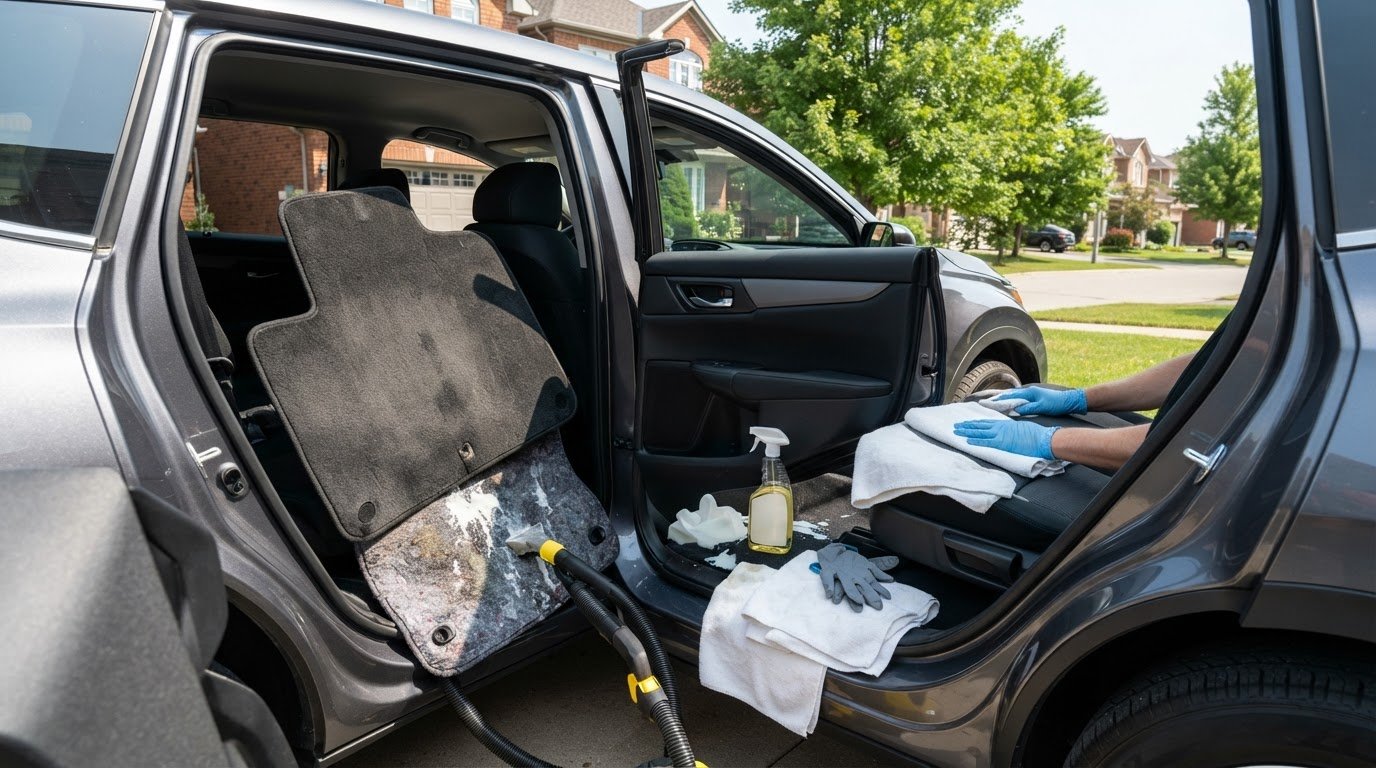
A gallon of milk can soak through carpet and seat fabric into the padding underneath, while the sour smell may linger after the surface looks clean. If you’re wondering what to do if you spill a gallon of milk in your car, start by blotting up the liquid and moving anything that could hold more milk. Don’t scrub: rubbing can spread the spill and push it deeper into the interior.
You’ll learn how to contain the mess, check where the milk has travelled, and choose a cleaning method for carpet, upholstery, and hard surfaces. We’ll also cover lingering odours and signs that a deeper clean may be needed. Nanak Car Wash offers Car Detailing Packages with interior cleaning, including a package with interior and trunk shampoo. Here’s how to work through the spill, step by step.
Key Takeaways
- For what to do if you spill a gallon of milk in your car, use a staged approach: contain the spill, inspect its reach, then clean each surface appropriately.
- Check beyond the visible wet area, including seat seams, carpet edges, floor mats, and the space beneath removable items.
- Match the cleaning method to the material. Follow its care instructions and the cleaner’s label to avoid damage or leftover residue.
- If dampness returns or the odour persists, Nanak Car Wash’s detailing packages include interior cleaning. The Deal From $120 package includes interior and trunk shampoo.
Spilled a Gallon of Milk in Your Car? Start with These Immediate Steps
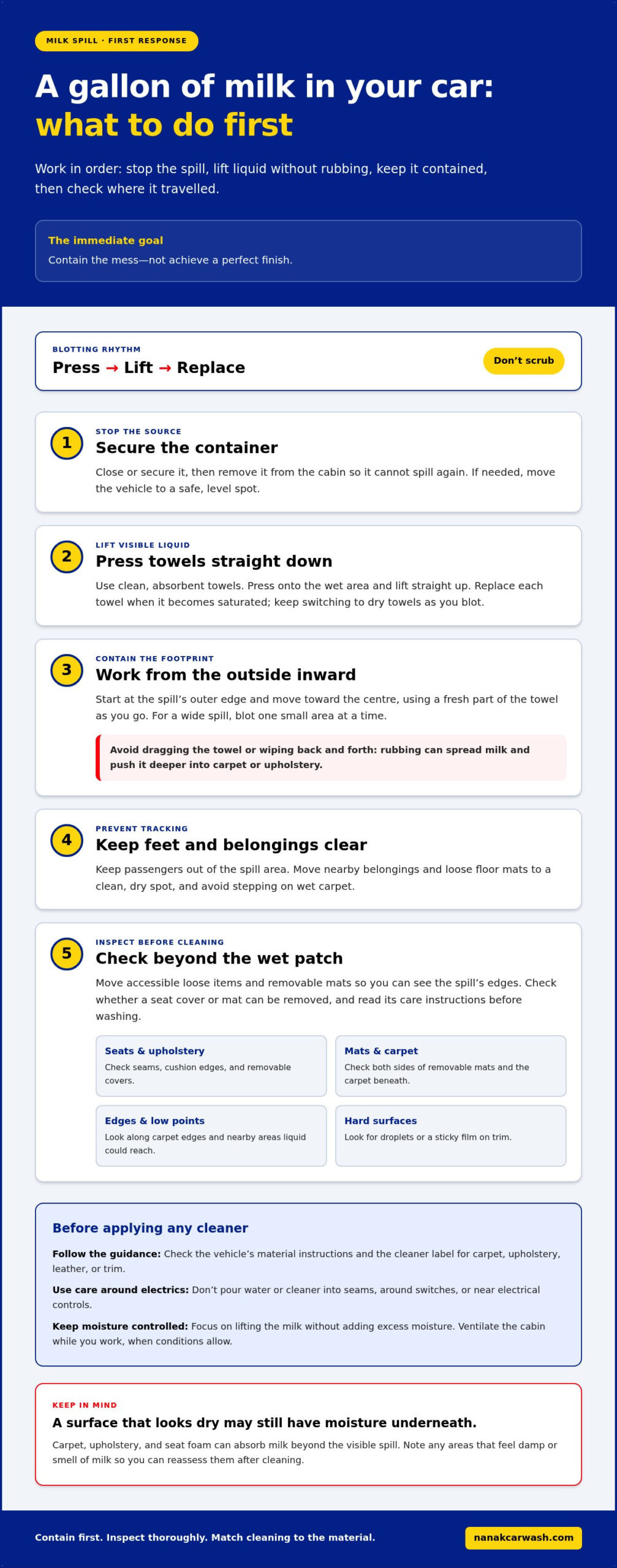
Act in order and resist the urge to scrub. If you’re deciding what to do if you spill a gallon of milk in your car, first stop any remaining milk from pouring, then blot up the liquid and keep shoes and belongings away from the wet area. The immediate goal is to contain the spill, not to achieve a perfect finish.
If needed, move the vehicle to a safe, level spot. Pick up the container and set it upright outside the affected area. Then follow these first-response steps:
- Stop the source. Close or secure the container and remove it from the cabin so it can’t spill again.
- Lift visible liquid. Press clean, absorbent towels onto the wet area, then lift them straight up. Replace each towel as it becomes saturated.
- Contain the footprint. Work from the outer edge toward the centre, using a fresh part of the towel as you go. This helps prevent milk from spreading onto dry carpet or nearby upholstery.
- Prevent tracking. Keep passengers out of the spill area. Move nearby belongings and loose floor mats to a clean, dry spot, and avoid stepping on wet carpet.
How to blot a large milk spill without pushing it deeper
Press, lift, and replace. Don’t drag the towel across the surface or scrub back and forth. Rubbing can spread milk through carpet or upholstery fibres and push it further into absorbent material. When a towel becomes wet, switch to a dry one instead of wiping another section with it. Continue blotting until clean towels pick up less visible liquid.
For a wide spill, work on one small area at a time. This gives you better control than pressing over the entire wet patch, which can move liquid outward. Apply steady pressure with your palm, but don’t kneel or lean heavily on saturated seat cushions.
What to do before applying any cleaner
Move accessible loose items, including bags and removable mats, so you can see the spill’s edges. Check whether a seat cover or floor mat can be removed and washed safely. Read its care instructions first; don’t assume every cover is machine washable. Also check the vehicle’s material guidance and the cleaner label before applying a product to carpet, upholstery, leather, or trim.
Keep the cabin ventilated while you work, when conditions allow. Avoid pouring water or cleaner into seams, around switches, or near electrical controls. Interior materials need different care, as reflected in auto detailing techniques for interior cleaning. For now, focus on lifting the milk without adding excess moisture. Once the immediate spill is contained, inspect the surrounding area before choosing how to clean each surface.
Where a Gallon of Milk Can Hide in Car Seats and Carpets
A surface that looks dry may still have moisture underneath. Carpet, upholstery, and seat foam can absorb liquid beyond the visible spill, so inspect around the area instead of judging by the surface alone. Plastic trim may show droplets or a film, while absorbent materials can hold moisture out of sight.
Look for a trail that follows gravity. Milk may run from a seat onto the floor, collect at a carpet edge, or spread beneath a floor mat. Check nearby areas where liquid could flow downhill or through a gap. Don’t pull apart seats or lift fixed carpet to investigate, and avoid disturbing wiring or components beneath the seats.
How to check seats, seams, and removable covers
Inspect the original spill zone, nearby seams, and joins between seat cushions and backrests. Look for dampness, visible residue, or a sour milk odour. Check the outer edges of the seat as well as the centre, since liquid can run along seams. Remove a cover only if it is designed to come off and its care instructions allow washing. Don’t soak seat components or apply liquid near electrical controls.
If the seat has power controls, heating, or other electrical features, keep the inspection visual and don’t pour or spray cleaner into gaps. Use a dry cloth to check accessible surfaces for moisture. A cool, damp feel at a seam can be a sign that liquid has travelled beyond where it first landed.
How to inspect carpet, floor mats, and nearby areas
Lift out removable floor mats and check both sides, then inspect the carpet underneath. Look along carpet edges, near the seat rails, and around the centre console or door sill if the spill could have reached them. Don’t force up fixed trim or carpet. Check nearby hard surfaces for sticky residue, which may be visible even when surrounding material looks dry.
- Seat and upholstery: Check seams, cushion edges, and any removable cover.
- Floor mats: Inspect the top, underside, and carpet beneath each mat.
- Carpet: Look at the spill’s outer edge and nearby low points where liquid may collect.
- Hard surfaces: Check trim and other smooth areas for droplets or a tacky film.
Note the areas that feel damp or smell of milk so you can reassess them after cleaning. If moisture returns or the odour remains, the spill may have reached beyond the visible area. Avoid adding more liquid to investigate. For a more thorough clean of affected interior materials, Nanak Car Wash detailing includes interior cleaning.
Which Milk-Spill Cleaning Method Fits Your Car’s Interior?
Choose a cleaning method based on the surface, not just the size of the spill. Hard plastic trim, removable fabric covers, carpet, and seat upholstery can respond differently to moisture and cleaning products. For what to do if you spill a gallon of milk in your car, separate the job into three parts: absorb remaining liquid, clean residue from the material, then reassess any sour odour. One product or pass may not address all three.
Use the comparison below as a starting point. The material’s care guidance and the cleaner’s label should take priority over general advice.
| Surface | Cautious approach | Watch for |
|---|---|---|
| Hard surfaces, such as plastic trim | Wipe with a soft cloth and a cleaner labelled as suitable for that surface. | Keep liquid away from switches, openings, and controls. Remove any sticky film without flooding gaps. |
| Removable covers | Check the care label. Wash only if the cover is designed to be removed and its instructions allow it. | Don’t assume a fitted cover can go in a washing machine or dryer. |
| Carpet and floor mats | Use a carpet cleaner labelled for the material, following its directions. Treat removable mats separately when appropriate. | Excess moisture can leave the area wet. Check the carpet beneath the mat as well. |
| Upholstery | Use a product labelled for that upholstery type, after testing an inconspicuous spot. | Avoid soaking seams or seat components, especially near electrical controls. |
When an upholstery or carpet cleaner may be appropriate
For fabric seats or carpet, select a cleaner whose label names the affected material. Test it on a hidden area first and let the spot dry so you can check for colour or texture changes. Follow the product directions, including how to apply and remove it. Don’t add extra liquid in an effort to reach deeper; that can leave more moisture in absorbent material.
Steam, enzyme cleaners, and absorbent products: what to weigh
Steam cleaning and enzyme products are sometimes used to address sour-milk odour, while upholstery or carpet cleaners are designed for cleaning those surfaces. These options aren’t guaranteed fixes. An enzyme cleaner may suit milk residue if its label permits use on the specific material. Consider steam only when the surface care guidance and equipment instructions allow it.
Absorbent towels help lift liquid, while a surface cleaner is intended to loosen or remove residue. An odour-focused product addresses a different concern. Don’t treat masking a smell as proof that the spill is gone. After cleaning and drying as directed, reassess the area. If dampness or odour persists, repeated DIY applications may add moisture without resolving residue that has soaked into the material.
How to Clean a Gallon of Milk from Your Car Step by Step
A thorough clean works best as a sequence, not a single spray-and-wipe. First contain the spill, then inspect its reach, clean each material according to its care instructions, remove cleaner residue as directed, and reassess after the area dries. If you’re deciding what to do if you spill a gallon of milk in your car, don’t treat the whole cabin with one product. Carpet, fabric upholstery, removable mats, and hard trim may need different care.
- Contain what remains. Keep people and belongings away from the spill. Use clean absorbent material to lift visible liquid, and remove loose mats or items from the affected area.
- Inspect before cleaning. Check the visible spill and nearby seams, carpet edges, and areas beneath removable mats. Note which surfaces are hard and which are absorbent so you can choose an appropriate method for each.
- Clean by material. Follow the care instructions for the specific surface and the cleaner label. For example, use a product labelled for carpet on carpet, and a product suitable for the upholstery type on a fabric seat. Test an inconspicuous area first if the product directions advise it.
- Remove residue as directed. Follow the product’s instructions for wiping, rinsing, or extracting cleaner. Don’t add more water than directed, especially on carpet or seat fabric, where extra moisture may soak in.
- Dry and ventilate. Leave the cleaned area open to air when conditions allow. Keep the vehicle ventilated while it dries, and follow any product instructions about drying or reuse. Avoid covering the damp area or returning loose mats before the underlying carpet is dry.
- Reassess before finishing. Once the area has dried and the cabin has been aired, check for returning dampness, visible residue, or sour odour. These signs can mean the spill reached deeper than the surface clean.
A practical sequence for the visible spill and affected materials
Work in manageable sections, moving from the spill’s outer edge toward its centre so you don’t spread residue onto clean areas. Clean removable mats separately only if their care guidance allows it, and inspect beneath them before putting them back. For hidden or persistent residue, don’t flood carpet or upholstery with repeated applications. Stop if the material remains saturated.
How to reassess for lingering milk residue or odour
Check the area again only after it has dried and the cabin has been aired. A fragrance may cover a sour smell without addressing leftover residue, so don’t use a masking scent as your test. If dampness or odour persists, stop repeating the same method. Nanak Car Wash’s Car Detailing Packages include interior cleaning, and the Deal From $120 package includes interior and trunk shampoo. For broader care between spills, see this interior car detailing guide. Explore Nanak Car Wash detailing as a next step when a spill needs more thorough interior attention.
When Professional Car Detailing Can Help After a Milk Spill
A gallon of milk can spread beyond the spot you can see. If you’ve cleaned the surface but dampness returns or a sour odour lingers after the area has dried and the cabin has been aired, consider professional interior cleaning instead of repeating the same DIY treatment. A useful decision point is whether your cleaning has addressed the affected area without leaving it saturated.
Signs a large spill may need more than surface cleaning
Pay attention to what happens after the first clean, not just how the interior looks immediately afterwards. Professional detailing may be worth considering if:
- The milk odour returns after cleaning, drying, and airing the vehicle.
- Carpet or upholstery stays damp, or feels wet again after seeming dry.
- The spill covered several areas, such as a seat, the floor, and a mat.
- You suspect residue has reached a seam or another area that’s difficult to clean safely.
These signs don’t prove that a particular component is damaged. They suggest the surface clean may not have reached all the affected material. Avoid flooding the area with more cleaner or dismantling seats to investigate. If repeated cleaning leaves upholstery saturated or the odour keeps returning, pause and consider a more thorough interior clean.
What Nanak Car Wash detailing can contribute
Nanak Car Wash offers Car Detailing Packages with interior cleaning. The Deal From $120 package includes interior and trunk shampoo, which can be relevant when a large spill has affected more than one interior area. A detailing package is a practical next step when milk has soaked into absorbent surfaces or household cleaning hasn’t resolved the problem. Results depend on where the milk travelled and the affected materials, so detailing shouldn’t be treated as a guarantee that every trace or odour will be removed.
Before arranging a deeper clean, note where the milk landed and which spots still feel damp or smell sour. Mentioning the areas you’ve already cleaned can help focus attention on the spill’s reach and the interior surfaces that need attention. Don’t keep adding products simply to cover the smell; fragrance can mask odour without addressing residue.
If the spill is widespread, the odour persists after the area has dried, or dampness keeps returning, explore Nanak Car Wash’s professional interior detailing. It’s a practical next step for a large interior mess that needs more attention than a surface wipe, while keeping expectations realistic about the clean-up.
Take the Next Step Toward a Fresh Interior
A large spill can be frustrating, but you don’t have to keep repeating a home-cleaning method if the cabin still smells sour or feels damp. Decide whether the remaining issue is manageable with material-safe care or needs a more thorough interior clean. Knowing what to do if you spill a gallon of milk in your car also means knowing when to stop and get help.
Nanak Car Wash offers Car Detailing Packages with interior cleaning. The Deal From $120 package includes interior and trunk shampoo. Nanak Car Wash has 1,983 Google reviews, giving you a practical place to explore detailing for a spill that needs further attention. No cleaning approach can promise every trace or odour will disappear, but a considered next step can help you move forward without over-wetting the interior.
Explore Nanak Car Wash detailing and choose a path toward a cleaner, more comfortable cabin. You have a clear plan, and the next step is within reach.
Frequently Asked Questions
Should I use baking soda on spilled milk in my car?
You can use baking soda as an odour-absorbing step, but it doesn’t remove milk residue by itself. First lift as much liquid as possible; don’t bury a wet spill under powder. Once the surface is no longer visibly wet, apply a light layer only if it’s suitable for the material. Let it sit as directed, then vacuum it up thoroughly. Avoid using it on surfaces where powder could enter controls or seams.
Can I use vinegar to clean milk from car upholstery?
Don’t apply vinegar to upholstery unless the material’s care instructions allow it. Household remedies can affect colour or texture, and vinegar may leave its own smell. Check the vehicle’s upholstery guidance and any product label before treating the seat. If permitted, test a small, hidden spot first and let it dry before cleaning the visible area. For leather or delicate fabric, use only a cleaner labelled as suitable for that material.
What if the milk spilled into a seat buckle or electrical control?
Keep liquid cleaners out of the buckle opening and electrical controls. Don’t spray, pour, or push cloths or tools into gaps. If milk has entered the buckle mechanism or a control, don’t keep testing or operating the affected part. Follow the vehicle manual’s guidance for that component. You can gently wipe accessible exterior surfaces with a dry cloth, but don’t assume a clean exterior means liquid hasn’t entered inside.
How do I get dried milk out of a car seat?
Start by removing loose dried residue carefully with a soft brush or cloth, without scraping hard enough to damage the fabric. Then use a cleaner labelled for that seat material, following its directions and testing a hidden area first. An enzyme-based cleaner may be an option if its label permits upholstery use. Avoid soaking the cushion. If dried residue sits deep in seams, repeated surface wiping may not reach it.
Will opening the car windows remove the sour milk smell?
Ventilation can help air out the cabin, but it won’t remove milk residue trapped in fabric or padding. Air the vehicle when weather and conditions allow, then check whether the odour returns after the interior has aired. If it does, fragrance or fresh air alone is unlikely to address the source. Avoid leaving windows open where rain, moisture, or security concerns could create another problem.
When should I stop cleaning a milk spill myself?
Stop if the material stays saturated, the smell returns after drying and airing, or milk has reached a buckle, electrical control, or a hard-to-access area. Repeating applications can add moisture without reaching hidden residue. If you’re unsure whether a surface can tolerate another treatment, pause and follow the vehicle’s care guidance. For a large spill that remains difficult to manage, professional interior detailing may be a sensible next step.

 6600 Finch Ave W, Etobicoke, ON M9V 3Z6

 647-703-8515
 MON – SUN 8 AM to 7 PM