
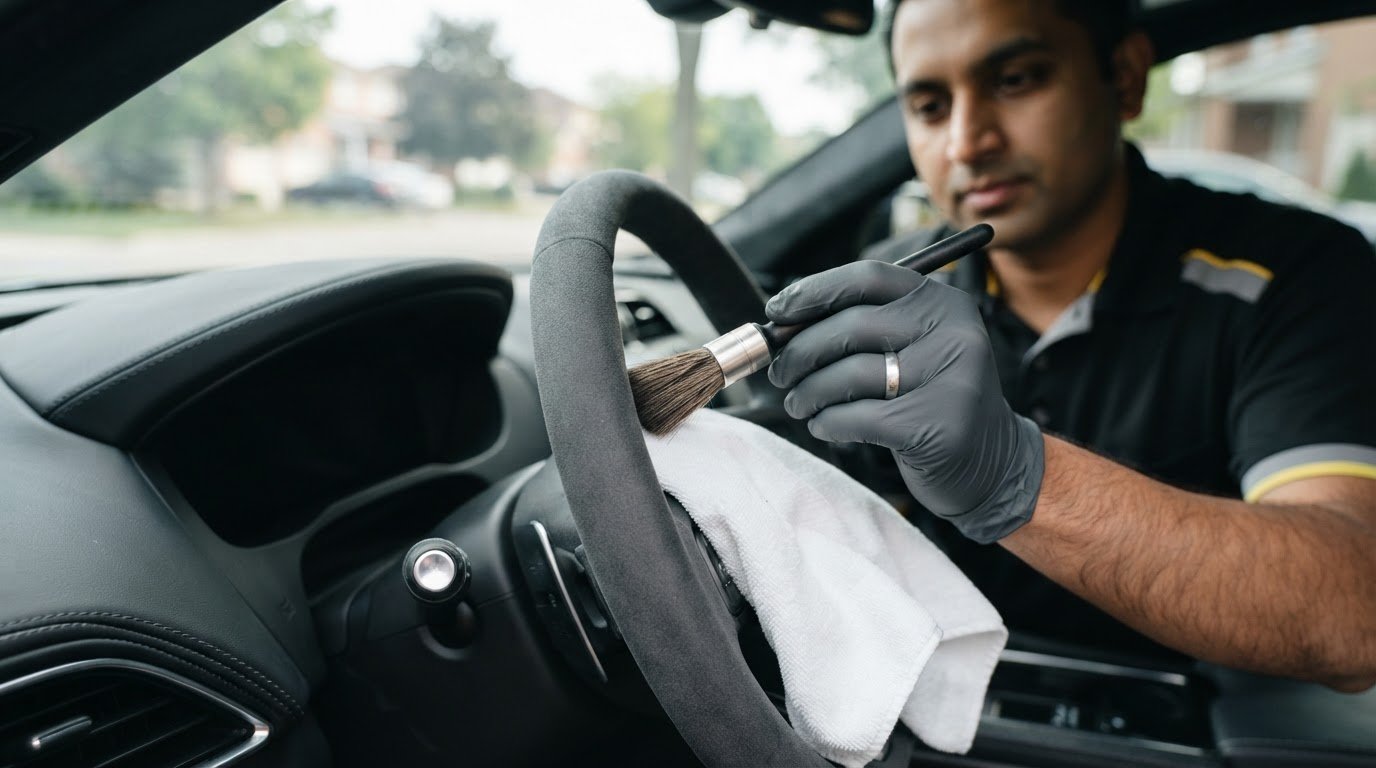
More cleaner isn’t the answer to a greasy, shiny Alcantara steering wheel. Too much moisture or rough scrubbing can flatten its soft pile, so learning how to clean Alcantara steering wheel material safely starts with a light touch. The goal is to lift everyday grime while preserving the wheel’s texture and grip.
If your wheel feels slick or looks polished, skin oils may have built up in the fibres. It’s reasonable to be cautious if you’re unsure which cleaner, brush or cloth is suitable. A controlled method can clean the surface without soaking it or treating it like leather or natural suede.
This guide covers the tools to use, the cleaning steps and common mistakes to avoid. You’ll also learn how to maintain the pile and when home cleaning may not be enough. If grime is widespread or a careful clean isn’t improving it, professional interior detailing can be a practical next step. Nanak Car Wash serves Brampton drivers with intensive interior and exterior detailing.
Key Takeaways
- Alcantara is a branded synthetic textile, not natural suede, so follow care guidance suited to the material.
- Learn how to clean Alcantara steering wheel material with a controlled, gentle approach that helps protect its texture.
- Use a clean microfiber cloth and soft brush, and avoid soaking the wheel or scrubbing forcefully.
- Keep the surface in better shape by using clean hands and responding gently when light grime appears.
- When grime is widespread or DIY cleaning isn’t helping, interior detailing can be a practical next step.
Why an Alcantara Steering Wheel Needs a Gentle Cleaning Approach
A steering wheel is handled constantly, so its surface collects skin oils, sweat, dust and everyday dirt. On Alcantara, that buildup can settle among the fine fibres and change how the wheel looks and feels. Knowing how to clean Alcantara steering wheel material starts with understanding that its textured surface needs different care from smooth leather.
Alcantara is a branded synthetic textile, not natural suede, and its fine, raised fibres give it a distinct feel and appearance. It’s made from polyester and polyurethane, but that doesn’t mean every synthetic material with a suede-like finish has the same care needs. The What is Alcantara? overview provides more background on the material and its uses.
Check your vehicle manual before choosing a cleaner or technique. Steering wheels can use different materials and finishes, including similar-looking synthetic textiles with their own manufacturer instructions. Don’t assume a product labelled for suede, leather or upholstery is suitable for Alcantara. The surface may look similar, but its care guidance can differ.
What makes an Alcantara steering wheel different from leather?
Leather typically has a smoother, more continuous surface, while Alcantara has a soft textile pile that you can feel under your fingertips. That raised texture contributes to the wheel’s tactile grip and gives it a matte, fabric-like appearance. Rubbing, pressure or unsuitable products can alter how the pile sits, so don’t treat it like leather or apply leather conditioner.
Why do Alcantara steering wheels become shiny or greasy?
Repeated hand contact transfers oils and sweat to the wheel, while airborne dust and other dirt add to the residue. Over time, fibres may lie flatter where hands rest, making those areas look darker or shinier than less-touched sections. A slick feel or visible residue can suggest surface buildup, but appearance alone can’t confirm damage.
Look closely at the pattern and feel before deciding what the wheel needs. A patch of shine in a frequently held area may have more than one cause, including residue, flattened fibres, normal texture changes or wear. Don’t try to correct it by scrubbing harder. If the material looks uneven, feels rough, or has a mark that doesn’t lift with gentle care, pause instead of applying stronger products or more moisture.
- Greasy feel: May indicate oils or residue on the surface.
- Localised shine: Often appears where hands repeatedly grip the wheel, but isn’t a diagnosis by itself.
- Different-looking patches: Compare their location and texture, and refer to the vehicle’s care guidance before cleaning.
A careful assessment helps you choose a suitable next step and avoid making a small surface issue worse. Treat the wheel according to its specific material instructions, not just its resemblance to suede.
How to Clean an Alcantara Steering Wheel Step by Step
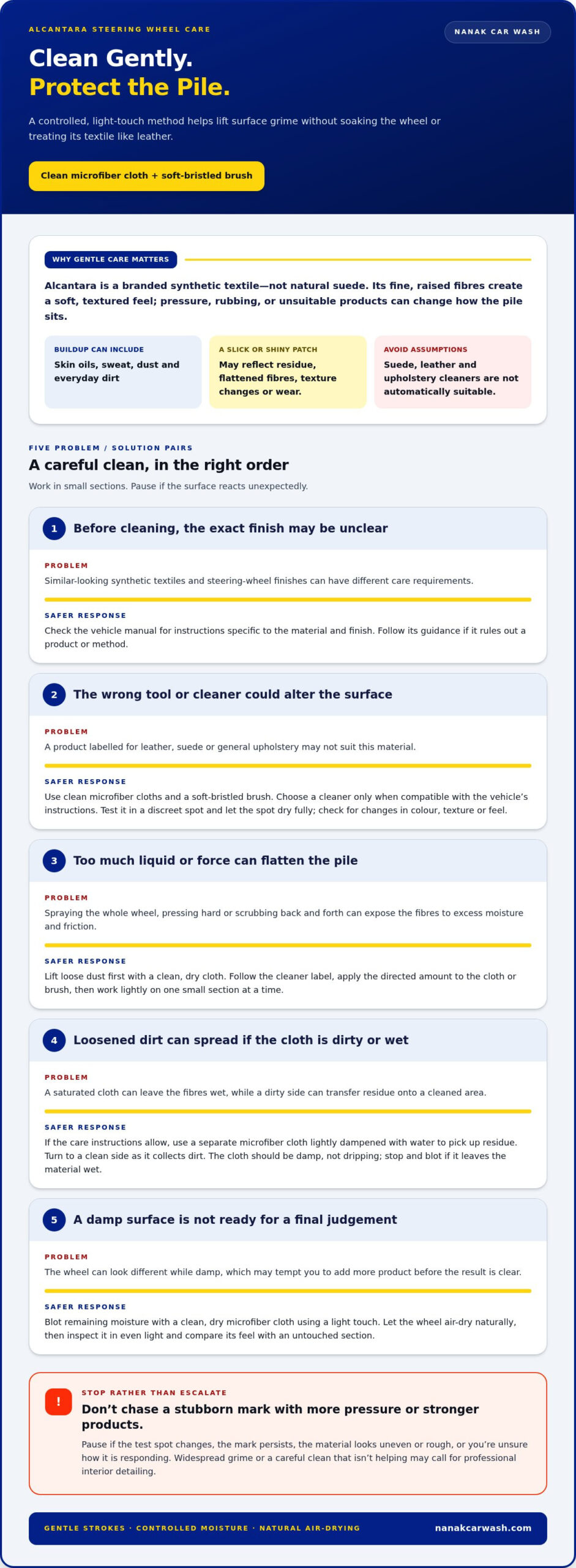
A careful clean depends on the right order: confirm the material’s care instructions, control moisture and work on a small area at a time. This helps lift surface grime without treating the whole wheel as washable fabric. If you’re learning how to clean Alcantara steering wheel material, pause whenever the surface reacts unexpectedly. Don’t keep adding cleaner or pressure to chase a stubborn mark.
Controlled moisture and gentle agitation reduce the risk of changing the material’s feel or appearance. Follow these steps, and let the wheel dry between any product test and full cleaning.
- Step 1: Check the care guidance. Read the vehicle manual for instructions specific to the steering-wheel material and finish. Similar-looking synthetic textiles may have different care requirements. If the manual advises against a product or method, follow that guidance.
- Step 2: Prepare your tools. Set out clean microfiber cloths and a soft-bristled brush. Choose a cleaner only if it’s compatible with the vehicle manufacturer’s instructions. Don’t assume an all-purpose, leather or suede cleaner is suitable. Before using a product on the wheel, test it on a discreet area and allow that spot to dry fully. Check for changes in colour, texture or feel.
- Step 3: Clean lightly in small sections. If there’s loose dust, lift it with a clean, dry cloth first. Follow the cleaner’s label for application. Put the directed amount on the cloth or brush rather than spraying across the entire wheel. Work on a small section, such as one part of the rim, so you can control how much liquid reaches the fibres. Use light strokes. Don’t press hard or scrub aggressively back and forth.
- Step 4: Remove loosened residue. Use a separate clean microfiber cloth, lightly dampened with water if the care instructions allow, to pick up residue. The cloth should be damp, not dripping. Turn it to a clean side as it collects dirt, and avoid spreading residue over sections you’ve already wiped. If the cloth starts to leave the material wet, stop and blot gently with a dry one.
- Step 5: Let the wheel air-dry. Blot away remaining moisture with a clean, dry microfiber cloth, using a light touch. Leave the wheel to dry naturally before handling it or judging the result. Don’t apply more product just because the surface looks different while damp. Once dry, inspect the cleaned area in even light and compare its feel with an untouched section.
Keep the process simple. If the test area changes, a mark persists, or you’re unsure how the material is responding, stop rather than escalating to a stronger cleaner. For widespread interior grime or a DIY clean that isn’t producing a good result, Nanak Car Wash offers interior car detailing in Brampton as a practical next step.
Will Water or the Wrong Cleaner Ruin Alcantara? Risks to Avoid
Alcantara may be water-resistant, but that doesn’t make a steering wheel waterproof or safe to soak. Excess liquid can penetrate the textile and leave it damp, while unsuitable cleaners or rough handling may affect its appearance and feel. The risk depends on the material, finish, product and method, so don’t assume one cleaner or household ingredient is always safe or harmful. Start with your vehicle manual, then take a cautious approach to how to clean Alcantara steering wheel material.
Which cleaning mistakes can leave the wheel rough or slippery?
Too much product can leave residue among the fibres. That residue may make the surface feel tacky or slick, while stiff bristles and forceful scrubbing can disturb the pile and create an uneven appearance. Household cleaners, solvents, alcohol and steam aren’t automatically suitable or unsuitable in every case. Their effects depend on the formula, material and manufacturer guidance. Don’t experiment on the visible grip area.
Avoid this. Do this instead.
- Don’t saturate the wheel. Use controlled amounts and work a small section at a time, following the vehicle’s care instructions.
- Don’t use a stiff brush or scrub hard. Choose a soft brush and light strokes, stopping if the fibres or surface seem to change.
- Don’t leave cleaner sitting on the textile. Follow the product directions, then gently lift away residue with a clean cloth suited to the care guidance.
- Don’t assume a familiar household product is safe. Check the vehicle manual and cleaner instructions, and test compatibility discreetly before treating a larger area.
What should you do if the material changes after cleaning?
Stop if you notice discolouration, stiffness, unusual residue or a new change in texture. Don’t add another cleaner to counteract it. If the surface is damp, blot gently with a clean cloth if the care instructions allow, then let it air-dry fully. Moisture can temporarily change how the pile looks and feels, so assess the result only after the wheel is dry.
- Wait and inspect. Compare the dry area with an untreated section in even light. Avoid rubbing to test whether the texture will return.
- Pause further DIY attempts. If the change persists, grime appears embedded, or the material looks damaged, seek a professional assessment instead of escalating to stronger products.
For widespread interior soil or a cleaning result that hasn’t improved with careful home maintenance, professional interior detailing can be a practical next step. Nanak Car Wash provides intensive interior and exterior cleaning for Brampton drivers. Follow the vehicle’s material-specific instructions when caring for Alcantara.
How to Keep an Alcantara Steering Wheel Clean Between Deep Cleans
Routine care doesn’t mean repeatedly washing the wheel. A light touch when you notice surface grime can help prevent buildup, while avoiding unnecessary product and moisture. Let your driving habits and the vehicle manufacturer’s care advice guide the timing. Keep the routine simple: use clean hands, notice changes early and clean only what needs attention.
- Before driving: If practical, use clean, dry hands. This can reduce the transfer of oils, food residue and dirt to the grip surface.
- After visible soiling: Follow your vehicle’s material-care instructions and gently address the affected area rather than cleaning the entire wheel.
- After spot care: Let the surface dry fully, then check whether the feel and appearance have returned to normal.
- For general upkeep: Inspect the wheel as part of your usual cabin tidy-up. Don’t schedule a deep clean if the surface is already clean.
How often should you clean an Alcantara steering wheel?
There’s no single schedule that suits every driver. Someone who drives daily may notice buildup sooner than someone who uses a vehicle occasionally, but visible soil and the manual’s care advice matter more than a fixed weekly or monthly target. Use the how to clean Alcantara steering wheel method for light spot care when needed. Save intensive cleaning for when the surface calls for it.
Regular light care means responding to a small, fresh mark with the approved method. Deep cleaning involves more product or wider coverage, so doing it repeatedly without a clear need adds effort and may expose the material to unnecessary handling. If a quick, gentle clean doesn’t improve the surface, don’t repeat it over and over. Reassess the material and care guidance instead.
When is it time to stop cleaning it yourself?
Stop if the surface feels different after it dries, a stain persists, or residue remains despite careful removal. Widespread interior soil is another reason to step back from spot cleaning. More scrubbing isn’t a reliable fix, and stronger products can make it harder to identify what’s affecting the finish.
For marks that won’t lift or texture changes that remain, seek experienced care rather than continuing to experiment. Broader interior car detailing can address cabin grime beyond the steering wheel, while this car detailing guidance explains the wider role of professional cleaning. If your vehicle needs more than routine upkeep, explore car detailing packages from Nanak Car Wash in Brampton, including intensive interior and exterior cleaning.
When Professional Interior Detailing Makes Sense for an Alcantara Wheel
A careful home clean can help with light surface grime, but there’s a point where more DIY effort may not be the best next move. Persistent marks, residue that remains after gentle cleaning, or a surface that still feels different once dry are good reasons to stop and consider professional help. Widespread soil across the cabin is another reason, especially when the steering wheel is only one part of a larger cleanup.
Professional interior detailing is a practical option when you’re unsure how to proceed or repeated attempts aren’t improving the result. It can address more than one small spot and help clean the wider interior. That doesn’t mean every Alcantara wheel needs a special treatment. Follow the vehicle’s care instructions, and don’t assume a general interior service uses a particular product or process on this material.
What professional detailing can help with
Nanak Car Wash serves Brampton drivers with detailing that includes intensive interior and exterior cleaning. Interior work includes vacuuming and shampooing seats and carpets. This broader cleaning can make sense if dust, spills or soil have built up across multiple cabin surfaces, not just the steering wheel. The manufacturer’s instructions should guide any care for an Alcantara wheel.
Think of detailing as a useful next step for an interior that needs wider attention, rather than a promise that a stubborn wheel mark will disappear. If the wheel is the only concern and the surface still looks or feels altered after a careful home clean, stop experimenting and seek an experienced assessment. Adding products or pressure may make it harder to identify what’s affecting the material.
Choose the next step for your vehicle
Use gentle home care when the soiling is light, the vehicle’s instructions are clear, and the surface responds as expected. Step back when a mark persists, residue remains, or the texture seems changed after drying. If the cabin also needs attention, Nanak Car Wash’s interior and exterior detailing offers a broader cleaning option. For practical ideas on caring for the rest of your vehicle, explore this car cleaning guidance.
For more context on what a full interior clean involves, read this guide to interior car detailing. Knowing how to clean Alcantara steering wheel material safely also means knowing when to stop. Don’t chase a persistent mark with increasingly aggressive methods. Brampton drivers who need broader interior care can explore Nanak Car Wash and its car detailing services.
Keep Your Next Clean Simple and Careful
A clean steering wheel doesn’t need a complicated routine. Let the material’s care instructions guide your choices, and treat a small spot only when it appears. If you’re unsure how to clean Alcantara steering wheel material or a mark remains after gentle care, pause before trying a stronger product or repeating the process. Protecting the surface is better than chasing a perfect finish with extra scrubbing.
Use the same practical approach for the rest of your vehicle. If interior grime has spread beyond the wheel or home cleaning isn’t giving you the result you want, professional detailing can help with a broader clean. Choose the option that fits your vehicle’s needs, and keep material-specific instructions in mind for delicate surfaces.
Explore car detailing at Nanak Car Wash and take the next step toward a cleaner, more comfortable vehicle. With careful upkeep and the right support when needed, you can keep your cabin feeling ready for the road.
Frequently Asked Questions
Is Alcantara the same as suede?
No. Alcantara is a branded synthetic textile, while suede is leather with a napped surface. They can look and feel similar, but that doesn’t make their care interchangeable. For example, a product marketed for natural suede may not suit an Alcantara steering wheel. Check the vehicle manual for the exact trim material and its cleaning directions before choosing a product or method.
Can I use water to clean an Alcantara steering wheel?
Yes, but use very little, and only if the vehicle’s care instructions allow it. A lightly damp cloth may help lift residue after cleaning, but a wet, dripping cloth can leave the surface too damp. Don’t rinse or soak the wheel. If you’re unsure how to clean Alcantara steering wheel material on your specific vehicle, follow the manual before using water or cleaner.
Can I use an all-purpose cleaner on an Alcantara steering wheel?
Don’t assume an all-purpose cleaner is suitable just because its label mentions upholstery or fabric. Formulas vary, and the wheel’s finish and manufacturer care instructions matter. Check both the vehicle manual and cleaner directions. If they don’t clearly support using the product on the material, choose a compatible option instead. Test any permitted cleaner on a discreet spot and assess it after it dries.
Can a steam cleaner be used on an Alcantara steering wheel?
Don’t use steam unless the vehicle manufacturer’s instructions specifically permit it for that steering-wheel material. Steam combines heat and moisture, and the effect can depend on the textile, backing and finish. A method intended for hard cabin surfaces isn’t automatically appropriate for a textured steering wheel. If the manual doesn’t provide clear approval, skip steam and use only the care method it recommends.
Why does my Alcantara steering wheel feel shiny or smooth?
A shiny or smoother patch can appear where hands repeatedly grip the rim. Skin oils and residue may collect there, and frequent contact can leave fibres lying flatter than surrounding areas. That appearance alone can’t tell you whether the material is dirty, compressed or worn. Compare the affected spot with a less-used area, and avoid vigorous rubbing to test it. If the texture remains changed after drying, stop cleaning.
Can professional car detailing clean an Alcantara steering wheel?
Professional car detailing can be a practical choice when grime extends beyond the wheel or home cleaning hasn’t helped. Nanak Car Wash’s detailing includes intensive interior and exterior cleaning, with vacuuming and seat and carpet shampooing. Follow the vehicle’s material-specific instructions for Alcantara care. Brampton drivers can consider detailing when the cabin needs more than light, localised upkeep.



 6600 Finch Ave W, Etobicoke, ON M9V 3Z6

 647-703-8515
 MON – SUN 8 AM to 7 PM