
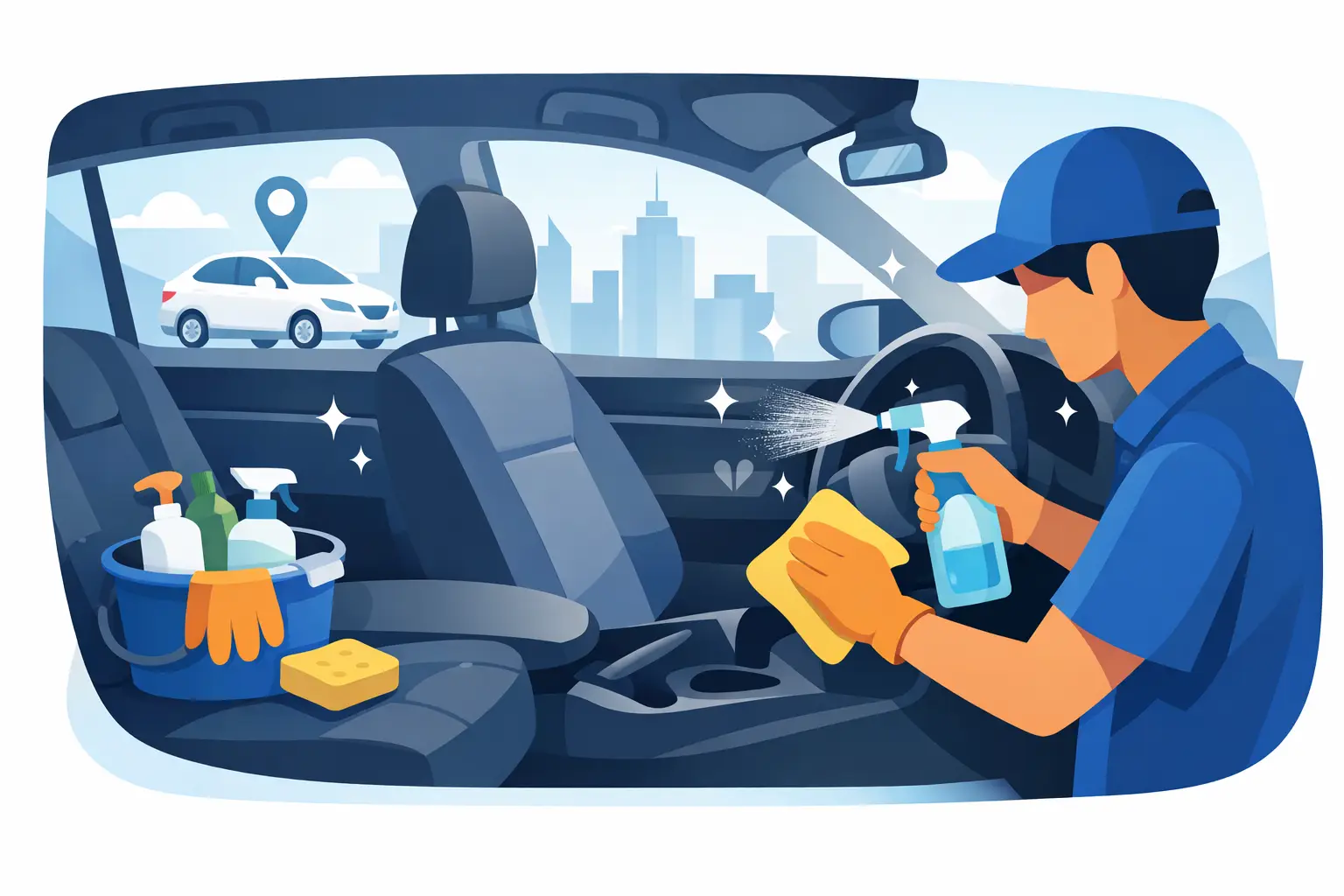
A rideshare car can go from spotless to rough in a single shift. Coffee drips in the cup holder, road salt gets ground into the mats, and the back seat somehow collects crumbs, receipts, and mystery smudges by the end of the day. If you are figuring out how to clean rideshare vehicle interior without wasting half your earnings on downtime, the key is simple: clean a little every day, then go deeper before the mess gets expensive.
Your passengers notice more than you think. A clean interior helps with ratings, tips, and repeat rides. It also protects the value of your vehicle. For rideshare drivers, interior cleaning is not about perfection. It is about keeping the car fresh, presentable, and easy to maintain between shifts.
How to clean rideshare vehicle interior without losing driving time
The biggest mistake rideshare drivers make is waiting too long. Once dirt, spills, and odors build up, a quick wipe-down no longer does the job. What should have taken 10 minutes turns into a full afternoon.
A better system is to break the work into three levels: quick reset, end-of-day cleanup, and deep cleaning. That keeps your car ready for passengers while cutting down on bigger detailing costs later.
Start with a quick reset between rides
Between trips, you do not need to fully detail the cabin. You only need to keep the obvious mess under control. That means tossing out trash, checking the back seat, and doing a fast visual scan of the floor and door panels. If someone leaves crumbs or a small spill, deal with it right away. Fresh mess is always easier to clean than dried-on mess.
Keep a few basics in the trunk or center console: microfiber towels, interior-safe wipes, paper towels, a small trash bag, and a fabric or upholstery cleaner for emergencies. This is one of those situations where cheap supplies can cost you more later. Harsh cleaners can leave shiny streaks on dashboards, fade trim, or make seats feel sticky. Use products meant for automotive interiors.
If you are driving full-time, a cordless handheld vacuum can also save time. It will not replace a stronger vacuum for deep cleaning, but it helps with the loose dirt that builds up fast in a rideshare vehicle.
Handle high-touch areas every day
Passengers touch the same surfaces over and over: door handles, window switches, seat belt buckles, armrests, and the back of the front seats. These areas collect skin oils, dust, and grime even when the car looks clean at first glance.
Wipe those surfaces daily with a damp microfiber towel or interior cleaner. Do not oversaturate buttons, screens, or control panels. Spray the towel, not the surface, especially around electronics. For dashboards and plastic trim, less product usually works better. You want a clean finish, not a greasy one that attracts more dust by tomorrow.
Cup holders need regular attention too. In a rideshare car, they take a beating. Sticky soda residue and coffee drips can leave odors behind quickly. If the inserts are removable, take them out and wash them. If they are fixed, use a towel wrapped around your fingers or a small detailing brush to get into the corners.
The best end-of-day routine for a rideshare interior
At the end of a shift, spend 15 to 20 minutes getting ahead of the next day. This is where most of the real maintenance happens.
Start by removing all trash, including under the seats and in door pockets. Then vacuum the seats, carpets, floor mats, and trunk area if you use it for passenger luggage. Dirt in a rideshare car spreads fast because people are getting in and out all day. If you skip vacuuming too often, that grit starts wearing down carpet fibers and gets pushed deeper into fabric seats.
Floor mats deserve extra attention. They take the worst abuse, especially in rainy weather or winter conditions. Rubber mats are easier for heavy-duty use because they can be rinsed and scrubbed. Carpet mats look good, but they hold onto dirt and moisture longer. If you use carpet mats, vacuum them thoroughly and let them dry fully after spot cleaning.
Next, wipe down the dashboard, center console, steering wheel, door panels, and any visible trim. For glass, use a separate towel from the one you use on plastic or vinyl. Otherwise, you end up smearing interior dressing onto the windows, and passengers notice dirty glass fast.
Don’t ignore seats
Seats are where your ratings can take a hit. Even if the floors are clean, stained or dusty seats make the whole car feel neglected.
For cloth seats, vacuum first, then spot clean stains with fabric-safe upholstery cleaner. Blot instead of scrubbing hard, especially on fresh spills. Aggressive scrubbing can spread the stain and rough up the fabric. For leather or synthetic leather, wipe with a soft cloth and use a cleaner made for that material. Follow with a conditioner when needed, but not so often that the seats feel slick.
There is also a practical trade-off here. Cloth is more forgiving with heat and comfort, but it traps odors and stains more easily. Leatherette or vinyl is easier to wipe down, but it can show cracks or wear if neglected. Your cleaning routine should match the interior you actually have.
Odor control matters more than heavy fragrance
A lot of drivers try to solve interior odor with strong air fresheners. That can backfire. Some passengers are sensitive to heavy scents, and strong fragrance can make them assume you are covering up a bigger problem.
The better approach is to remove the source. Clean spills quickly, vacuum often, and let the cabin dry out fully after any wet cleaning. Moisture trapped in mats or seat fabric creates that stale smell that keeps coming back.
If odors linger, check the usual problem spots: under seats, trunk liners, cup holders, and floor mats. Food wrappers, spilled drinks, and damp debris hide in those areas. Cabin air filters can also hold smells, especially if you drive long hours in traffic. Replacing a dirty cabin filter can make a bigger difference than another air freshener.
A light, clean scent is fine. Just do not rely on it as the main fix.
How to deal with stains before they set
Rideshare driving means dealing with the occasional ugly surprise. Makeup marks, coffee spills, muddy shoes, and grease from takeout bags are all common.
The rule is simple: act fast, and match the cleaner to the mess. Water-based spills like soda or coffee are usually easier to treat early with upholstery cleaner and blotting. Oily stains may need a stronger interior-safe product. Mud should be allowed to dry first, then vacuumed before you spot clean it. If you attack wet mud right away, you usually just grind it in.
For tougher stains, repeated light cleaning is safer than soaking the area once. Too much moisture can leave water rings in fabric or seep into seat foam, where it creates odor problems later.
When a deeper service makes more sense
Sometimes DIY upkeep is enough. Sometimes it is not. If the interior has heavy salt buildup, deep staining, odor issues, or packed-in dirt from months of driving, professional interior cleaning is the smart move. It saves time, gives you better results, and helps reset the vehicle so your day-to-day maintenance becomes easier again.
That is especially true for full-time drivers. A car that is earning every day gets dirty faster than a personal vehicle. Paying for occasional vacuuming, mat washing, shampooing, and dashboard cleaning can be cheaper than letting the interior wear down until resale value drops or passengers start leaving lower ratings.
For drivers who want a fast, affordable way to stay ahead of the mess, Nanak Car Wash offers practical cleaning options that fit real schedules and real budgets. The goal is not to make your car look like a show car. The goal is to keep it clean enough that every rider steps into a fresh, cared-for space.
Build a cleaning routine you can actually keep
The best system is the one you will follow during a busy week. If you drive weekends only, your routine may be a quick reset after each shift and a deeper clean once a week. If you drive full-time, you may need daily vacuuming, frequent wipe-downs, and scheduled deep interior service every few weeks.
Consistency beats intensity. A small cleanup done often keeps stains from setting, odors from building, and surfaces from looking worn out. It also makes your car easier to live with during long driving hours.
A rideshare vehicle works hard. Treat the interior the same way you treat your gas tank and oil changes – regular upkeep, no drama, no waiting for a bigger problem. A clean cabin does not just look better. It helps your car earn better every time a passenger opens the door.

 6600 Finch Ave W, Etobicoke, ON M9V 3Z6
 647-703-8515
 MON – SUN 8 AM to 7 PM