
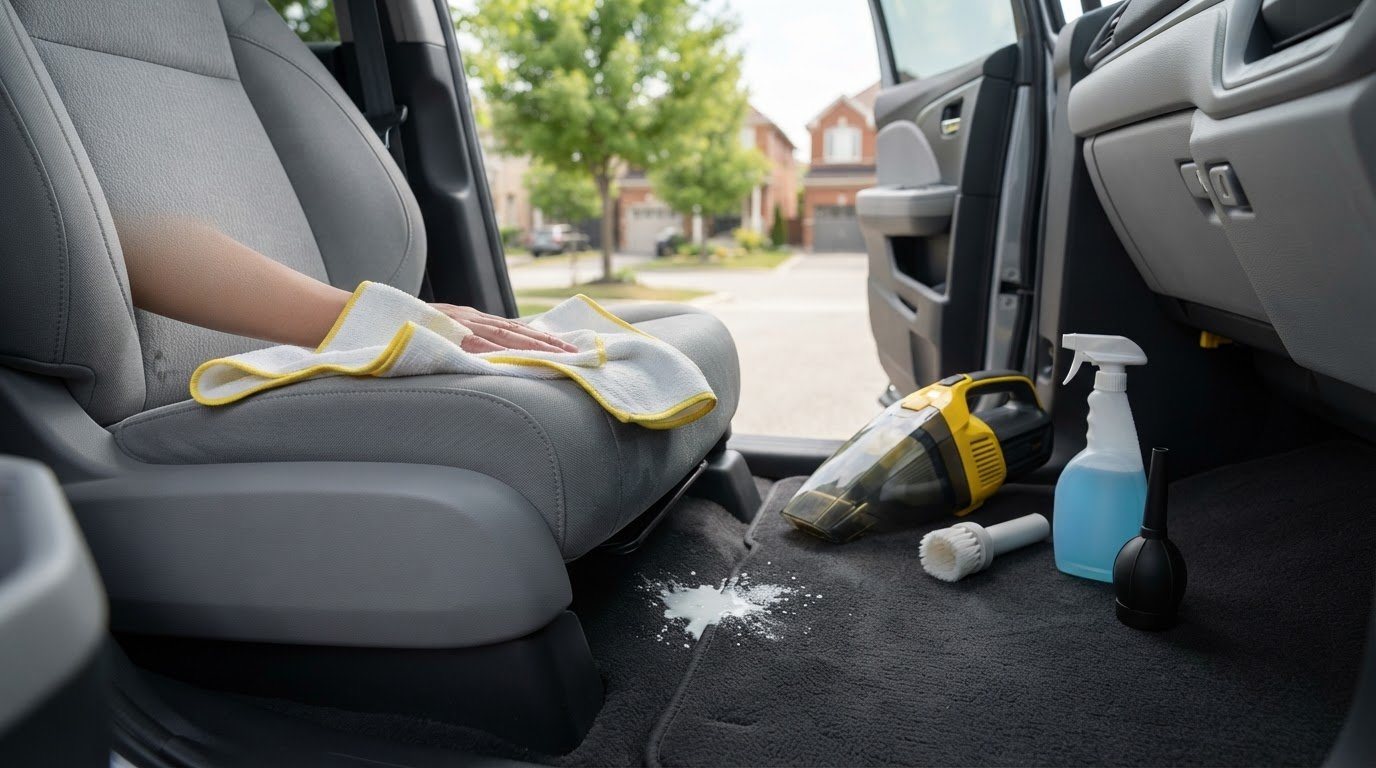
Could one small milk spill leave your car smelling sour for days? Yes. Milk can soak past the visible surface into upholstery and carpet, where a quick wipe or fragrance spray won’t remove the residue causing the odour. If you’re wondering how to clean up a milk spill in a car before it smells, start by blotting it promptly. Avoid rubbing, which can push liquid deeper into the material.
Choose cleaners carefully. The wrong product or too much moisture can cause another problem, while a fresh scent may only cover the smell. This guide explains how to lift milk residue, choose a cleaner suitable for the surface, and dry the area thoroughly. You’ll also find steps for dried spills and signs that professional interior cleaning may help. Nanak Car Wash in Brampton offers car detailing that includes shampooing seats and carpets, which may be worth asking about if milk has soaked in or the smell remains.
Key Takeaways
- Learn how to clean up a milk spill in a car before it smells, starting with steps that limit how far it spreads.
- Choose a cleaning approach suited to cloth, carpet, leather, or hard trim rather than treating every surface the same way.
- Understand why a quick wipe or fresh scent may not remove the residue behind a lingering milk odour.
- Dry the affected area thoroughly to reduce the chance that moisture remains trapped beneath the surface.
- Recognize when a widespread spill or returning smell may be a reason to ask about professional interior detailing.
How to Clean Up a Milk Spill in a Car Immediately
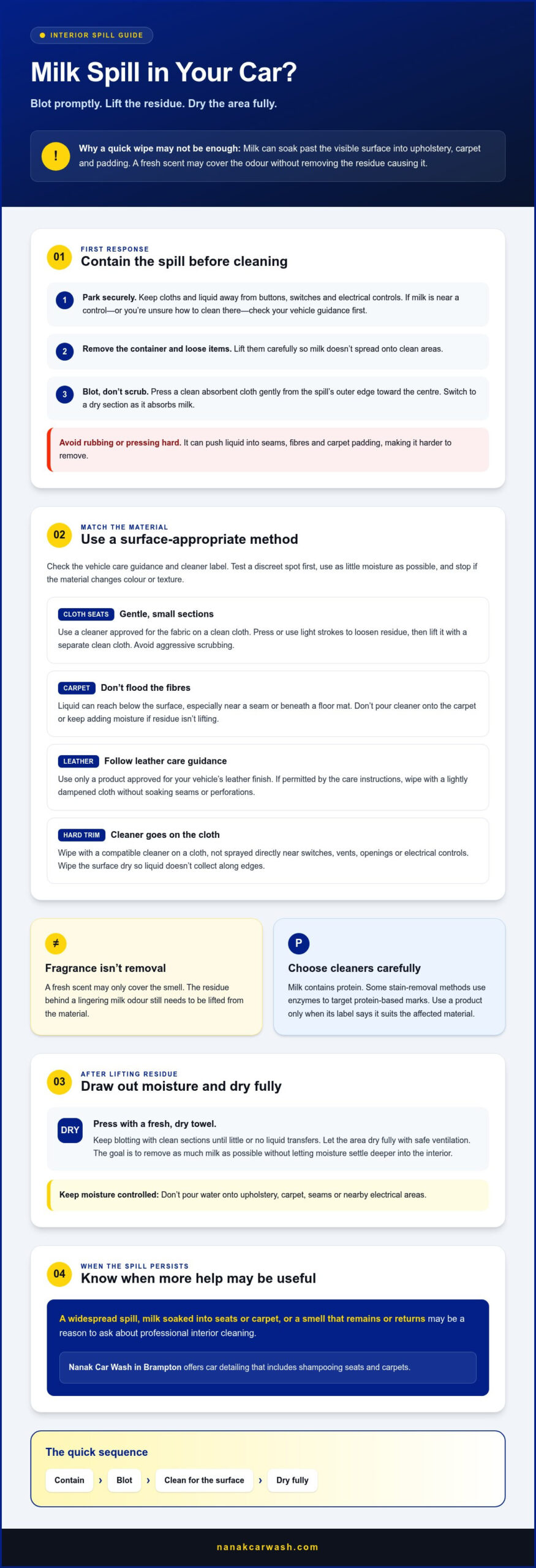
Acting quickly can limit how much milk reaches seat fabric, carpet fibres, and the padding beneath them. Park securely before cleaning. Keep cloths and liquid away from buttons, switches, and other electrical controls. If the spill is near a control, or you’re unsure how to clean that area, check your vehicle guidance before proceeding.
Blot fresh milk; don’t scrub it. Rubbing can push liquid into seams and deeper into the material, making it harder to remove. A careful first response is the best start for anyone learning how to clean up a milk spill in a car before it smells.
What should you do first when milk spills in a car?
First, stop the spill from spreading. Remove the container and any loose items with milk on them, taking care not to drag them across clean areas. Press a clean, absorbent cloth gently onto the spill, working from the outer edge toward the centre to help contain the wet area.
Switch to a dry section of cloth as it absorbs milk. Don’t rub back and forth or press so hard that liquid is forced into seat seams or carpet padding. If milk has reached a control, avoid wiping it across the control or into nearby gaps.
How do you lift fresh milk without soaking the interior?
Once you’ve blotted up the liquid, gently lift any visible residue or small solids with a clean cloth. If residue remains, use a lightly dampened cloth only if it’s suitable for the surface. Test a hidden spot first and follow the vehicle’s care guidance. Don’t pour water onto upholstery, carpet, seams, or nearby electrical areas.
Different materials need different care, so check the cleaner label and vehicle guidance before applying a household product. Milk contains protein, and some stain-removal methods use enzymes to target protein-based marks. For background on how enzymes break down protein stains, see the stain-removal overview. Choose a product only if its label says it is suitable for the affected material.
- Cloth or carpet: Blot and lift residue without flooding the fibres or padding.
- Leather or hard trim: Use a cloth and cleaner suited to the material. Don’t let liquid collect in gaps.
After lifting the residue, press a fresh, dry towel against the area to draw out moisture. Keep blotting with clean sections until little or no liquid transfers. Then let the area dry fully with safe ventilation. The goal is to remove as much milk as possible without allowing moisture to settle deeper into the interior.
How to Remove Milk Residue From Car Seats and Carpet
Once the visible spill is under control, match the cleaning method to the surface. Cloth, carpet, leather, and hard trim respond differently to moisture and cleaners. The aim is to lift milk residue from the material, not push it into the cushion or carpet padding below.
Before using a product, check your vehicle manual and the cleaner label for surface compatibility and instructions. Test it on a discreet area first. Use as little moisture as possible, and keep liquid away from seams, openings, and electrical controls.
How do you clean milk from cloth seats and car carpet?
After blotting up the remaining liquid, dampen a clean cloth with a cleaner approved for the fabric. Work on a small area at a time, using gentle presses or light strokes to loosen residue. Lift it with a separate clean cloth, turning to a fresh section as needed. Avoid aggressive scrubbing, which can spread the milk and roughen fabric fibres.
Carpet can hold liquid below the surface, especially if the spill reached a seam or the area beneath a floor mat. Don’t pour cleaner onto it or keep adding moisture if the residue isn’t lifting. Excess liquid can travel into the padding and take longer to dry. Follow the product directions, and stop if the fabric changes colour or texture.
What changes when milk spills on leather or hard trim?
Leather needs a more cautious approach than cloth. Use only a product approved for your vehicle’s leather finish, and apply it as directed. If the care instructions allow, use a lightly dampened cloth to wipe away residue without soaking seams or perforations. Avoid general household cleaners unless vehicle guidance confirms they’re suitable.
Hard trim can usually be wiped with a compatible cleaner applied to a cloth. Don’t spray directly near switches, vents, openings, or electrical controls. Clean the affected surface with the cloth, then wipe it dry so liquid doesn’t collect along edges or run underneath trim.
- Cloth and carpet: Clean gently in small sections and lift loosened residue with a fresh cloth.
- Leather: Check the vehicle’s care guidance and use only an approved product.
- Hard trim: Apply cleaner to the cloth, not directly to the surface near controls or openings.
Surface-specific cleaning helps reduce the chance of pushing milk deeper into the interior. If a spill has soaked into seats or carpet and home cleaning isn’t enough, Nanak Car Wash in Brampton offers car detailing that includes shampooing seats and carpets. You can ask about interior car detailing for the affected materials.
Will Air Freshener or a Quick Wipe Stop Milk Smell?
A quick wipe can make the surface look clean, and air freshener can change how the cabin smells. Neither proves that the milk residue is gone. Fragrance changes what you notice; it doesn’t clean contaminated upholstery or carpet. If residue remains in a seam or beneath the surface, the odour may return. Find and clean the spill before using a deodorizing product.
When learning how to clean up a milk spill in a car before it smells, separate spill control from odour masking. Each method has a different purpose:
| Method | What it does | What it doesn’t do |
|---|---|---|
| Blotting | Absorbs accessible fresh milk from the surface. | May not reach residue already in seams or padding. |
| Surface wiping | Lifts residue from a compatible, wipeable area. | Doesn’t confirm that deeper material is clean. |
| Air freshener | Adds fragrance that can change the perceived smell. | Doesn’t remove milk or the source of its odour. |
| Thorough residue removal | Targets milk left on and within the affected material. | May require different care depending on the surface and how far the spill spread. |
Can air freshener remove the smell of spilled milk?
No. An air freshener may cover or compete with the sour smell, but it won’t remove the spill. Avoid layering strong fragrances over a damp or contaminated area. The cabin may smell strongly scented while milk residue remains. Locate the affected area and clean it appropriately first. Consider deodorizing only after the material is clean and dry.
Why can milk smell remain after the surface looks clean?
Milk can travel through fabric into seat seams, carpet backing, or cushioning. A wipe may remove what’s visible while leaving residue out of sight. Dampness can also make it difficult to tell whether an odour is lingering from the spill or whether the area hasn’t dried yet. Don’t assume the surface is clean just because it looks clean.
Check nearby gaps and the underside of removable floor mats, where liquid can collect or transfer. If the odour persists once the area is dry, revisit the likely spill path rather than adding fragrance. The cleaning needed depends on where the milk went, how much spilled, and which interior material was affected.
How to Dry the Area and Handle an Old or Large Milk Spill
Cleaning isn’t finished until the affected material is dry. Moisture left in upholstery or carpet can linger below the surface, making it harder to tell whether milk residue remains. Follow your vehicle’s care guidance and avoid excessive heat, which may affect interior materials.
How do you dry car upholstery after cleaning a milk spill?
Press a clean, dry towel onto the cleaned area to absorb moisture. Use a fresh, dry section as it becomes damp, and don’t rub. If you have a wet/dry vacuum, use it only if it’s suitable for the material and follow its instructions. Then ventilate the cabin safely, such as by opening the doors or windows where conditions allow. Let the area dry fully before closing the vehicle.
- Remove damp floor mats so they can dry separately.
- Keep airflow gentle and avoid placing a heater close to seats, carpet, or trim.
- Don’t trap damp towels or other wet materials inside the car.
What if the milk has dried or the smell keeps coming back?
Check the likely spill path again. Look along seat seams, carpet edges, nearby crevices, and the underside of removable floor mats. Dried residue may need careful cleaning suited to the material. Don’t repeatedly soak the area or mix cleaners if you’re unsure where the smell is coming from. Check product labels and vehicle guidance before trying another treatment.
A small surface mark is different from a large spill that has reached carpet backing or seat cushioning. If milk may have soaked into padding, reached an inaccessible space, or contacted electrical components, stop DIY cleaning and seek suitable professional advice. Persistent odour after careful cleaning and full drying can also mean the source is deeper than the visible surface.
For a broader overview of what interior detailing can involve, read this interior car detailing guide. If you’re in Brampton and the spill has soaked into seats or carpet, contact Nanak Car Wash to ask about its car detailing. The service includes shampooing seats and carpets, but discuss the affected materials and depth of the spill before deciding whether it’s suitable.
When considering how to clean up a milk spill in a car before it smells, remember that thorough drying matters as much as removing visible residue. Don’t rush to cover the odour. Find the source, clean only as the material permits, and let the area dry completely.
When Professional Car Detailing Can Help With a Milk Spill
Home cleanup may be enough for a small spill that stayed on the surface. Consider professional advice if milk spread across a larger area, soaked through upholstery or carpet, or reached a place you can’t access without removing interior parts. A sour smell that returns after careful cleaning and complete drying may also point to residue below the visible surface.
When is DIY cleanup not enough for a milk spill?
Pay attention to where the liquid went, not just how the surface looks. A spill that reached seat cushioning, carpet backing, or a tight gap may be difficult to clean thoroughly at home. Avoid repeatedly soaking the area or trying several products without a clear plan. That can leave more moisture behind or complicate cleanup.
If you seek help, explain the spill’s location and approximate size, when it happened, and which cleaners you’ve already used. Mention whether the odour disappeared and then returned. These details help a detailer assess the affected materials and discuss what may be practical. No cleaning method can guarantee complete odour removal in every case.
What should you ask a detailer before booking?
Ask whether the service can address the specific material affected, such as a cloth seat or carpet, and what the cleaning includes. Be clear if milk may have reached the padding or an area that’s difficult to access. Ask what outcome is realistic for the condition of your interior rather than assuming a standard cleaning will reach every hidden spot.
Nanak Car Wash serves Brampton and offers car detailing that includes interior vacuuming and shampooing seats and carpets. This may be relevant if milk has soaked into those surfaces, but ask whether the service suits your spill and the affected materials. For broader interior-care context, see this car cleaning guide.
If you’re in Brampton and aren’t sure whether detailing is the right next step, ask Nanak Car Wash about interior detailing. Share what spilled, where it went, and what cleanup you’ve tried so you can discuss whether the service fits the situation.
Keep Your Car Fresh With the Right Next Step
Knowing how to clean up a milk spill in a car before it smells comes down to three practical steps: act quickly, use a cleaning method suited to the affected material, and dry the area completely. A quick wipe or air freshener may hide the odour temporarily, but checking seams and beneath mats can help you find residue that remains.
If the spill has soaked into seat cushioning or carpet, or the smell returns after careful cleaning and drying, ask about professional help. Nanak Car Wash serves Brampton, Ontario, and its car detailing includes interior vacuuming and shampooing seats and carpets. Ask whether the service is suitable for your spill and the materials affected.
Ask Nanak Car Wash about interior detailing. Describe where the milk went and what you’ve tried so you can discuss a suitable next step.
Frequently Asked Questions
How quickly should I clean up spilled milk in a car?
Start as soon as it’s safe. If you’re figuring out how to clean up a milk spill in a car before it smells, blot fresh milk with a clean, absorbent cloth, working from the outer edge inward. Don’t rub, since that can push liquid into seams, carpet backing, or seat padding. Remove remaining residue with a method suited to the material, then dry it fully. For a large spill, avoid soaking the interior.
Can I use baking soda to clean milk from car upholstery?
Baking soda may absorb some surface moisture or odour, but it won’t replace removing milk residue. First blot and clean the affected material with a suitable method. Before using powder, check that it’s appropriate for the surface and can be vacuumed up completely once dry. Don’t rely on baking soda to reach milk trapped in seams, carpet backing, or cushioning. If residue remains below the surface, more targeted cleaning may be needed.
Will spilled milk in a car always start to smell?
No, not every spill will develop a noticeable odour. The risk depends on how much milk spilled, where it reached, and whether the residue and moisture were removed. Milk left in upholstery, carpet, or padding can smell, particularly if the area stays damp. Clean visible residue with a suitable method and dry the area fully. If the smell returns, check seams and less visible spots, or consider a professional assessment.
Can I use vinegar to remove milk smell from my car?
Don’t assume vinegar is suitable for every car interior. It may affect some finishes, and adding liquid before removing milk can leave the area wetter without addressing the residue. Check your vehicle guidance and the surface-care instructions before using a cleaner. Test a compatible product on a discreet spot first. Blot and lift the milk residue, then dry the area. If the spill soaked in or the smell persists, ask a detailer about the affected material.
What should I do if milk spilled on a leather car seat?
Blot the spill promptly with a clean, soft cloth. Avoid rubbing milk into the seams or perforations. Use only a cleaner approved for your vehicle’s leather finish, and follow both its label and your owner’s manual. Apply minimal moisture, then dry the area gently. If milk appears to have entered the stitching or the odour persists, avoid repeated home treatments. Ask a professional to assess the seat and recommend a suitable next step.
When should I take my car to a detailer after a milk spill?
Consider a detailer if the spill covered a large area, reached seat padding or carpet backing, entered hard-to-reach gaps, or still smells after careful cleaning and complete drying. Explain where and how much milk spilled, how long it was there, and which cleaners you used. Ask whether the service covers the affected materials and what results are realistic. Nanak Car Wash in Brampton offers detailing that includes vacuuming and shampooing seats and carpets.

 6600 Finch Ave W, Etobicoke, ON M9V 3Z6
 647-703-8515
 MON – SUN 8 AM to 7 PM