
You open the driver's door after a wet GTA commute and get hit with that unmistakable smell of damp socks, old carpet, and something earthy. The mats look almost dry, the seats seem clean, and an air freshener is already hanging from the mirror. Yet every time the car warms up, the mildew smell returns.
That pattern usually means you're dealing with moisture first and odour second. Damp carpet padding, seat foam, a wet trunk well, or moisture inside the HVAC system can keep releasing the smell after the visible surface looks clean. Health Canada says mould can develop when indoor relative humidity is too high, and recommends keeping humidity below 50% in summer and 30% in winter. Its guidance also identifies mouldy smells from materials such as carpets, wood, and gypsum board as a warning that fungi may be present. Health Canada's residential mould guidance is written for buildings, but the moisture-control principle applies neatly to enclosed vehicle interiors.
Table of Contents
- Why Your Car Smells Musty and What That Odor Means
- Finding the Hidden Source of Mildew Smell in Your Vehicle
- Deep Cleaning Carpets and Upholstery to Remove Mildew Odor
- Cleaning Vents Crevices and Hard Surfaces That Trap Moisture
- Drying Deodorizing and Preventing Mildew Smell From Returning
- When to Call a Professional Detailer and What to Expect
Why Your Car Smells Musty and What That Odor Means
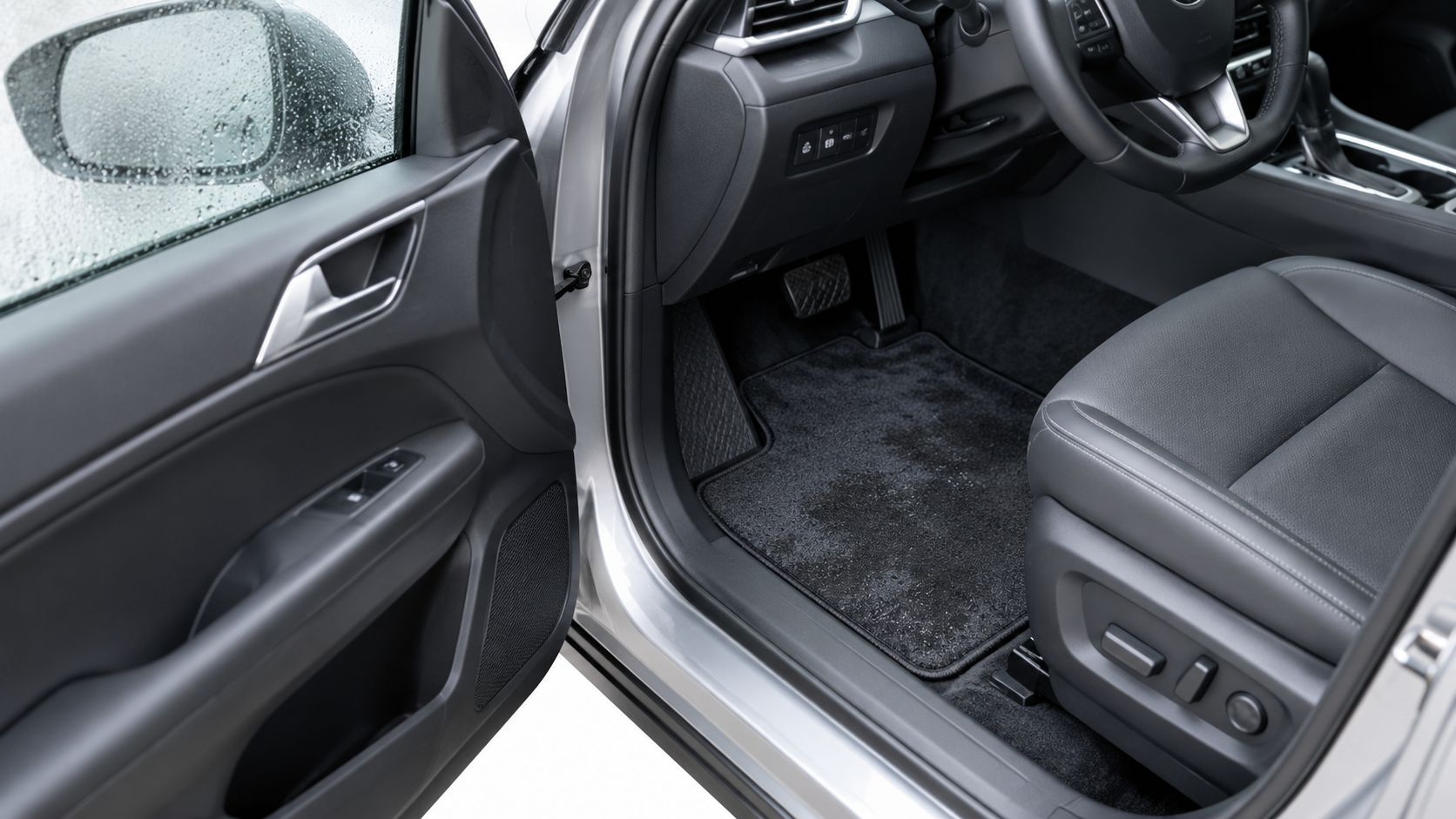
A musty car often starts with an ordinary event. Snow melts from boots onto the floor, a coffee spills under the seat, or rainwater slips past a door seal. The liquid reaches the carpet, then the padding underneath, where it stays protected from airflow. You wipe the top, close the doors, and assume the problem is handled. A few days later, the odour is back.
That's because automotive carpet is a layered system. The visible pile can feel dry while the backing and foam beneath it remain damp. Seat foam, trunk liners, insulation, and the evaporator area in the air-conditioning system can hold moisture too, giving fungi the conditions they need to produce a stale, earthy smell.
Practical rule: If the smell returns after fragrance or a quick wipe-down, stop treating the odour as a surface problem.
Ontario's humid season makes drying slower, especially after rain, snowmelt, or a wet interior wash. A vehicle can look tidy while moisture remains trapped in places you can't see. Ontario public-health guidance notes that indoor mould can create unpleasant odours before a major visual problem becomes obvious, so a smell can act as an early warning signal, not merely an annoyance. Ontario's mould alert also identifies greater concern for people with asthma, bronchitis, hay fever, allergies, or weakened immune systems.
Air fresheners, scented sprays, and odour beads may make the first few minutes more pleasant, but they don't remove dampness. The reliable order is simple: find the source, remove contaminated material, clean the affected surfaces, dry everything thoroughly, then prevent new moisture.
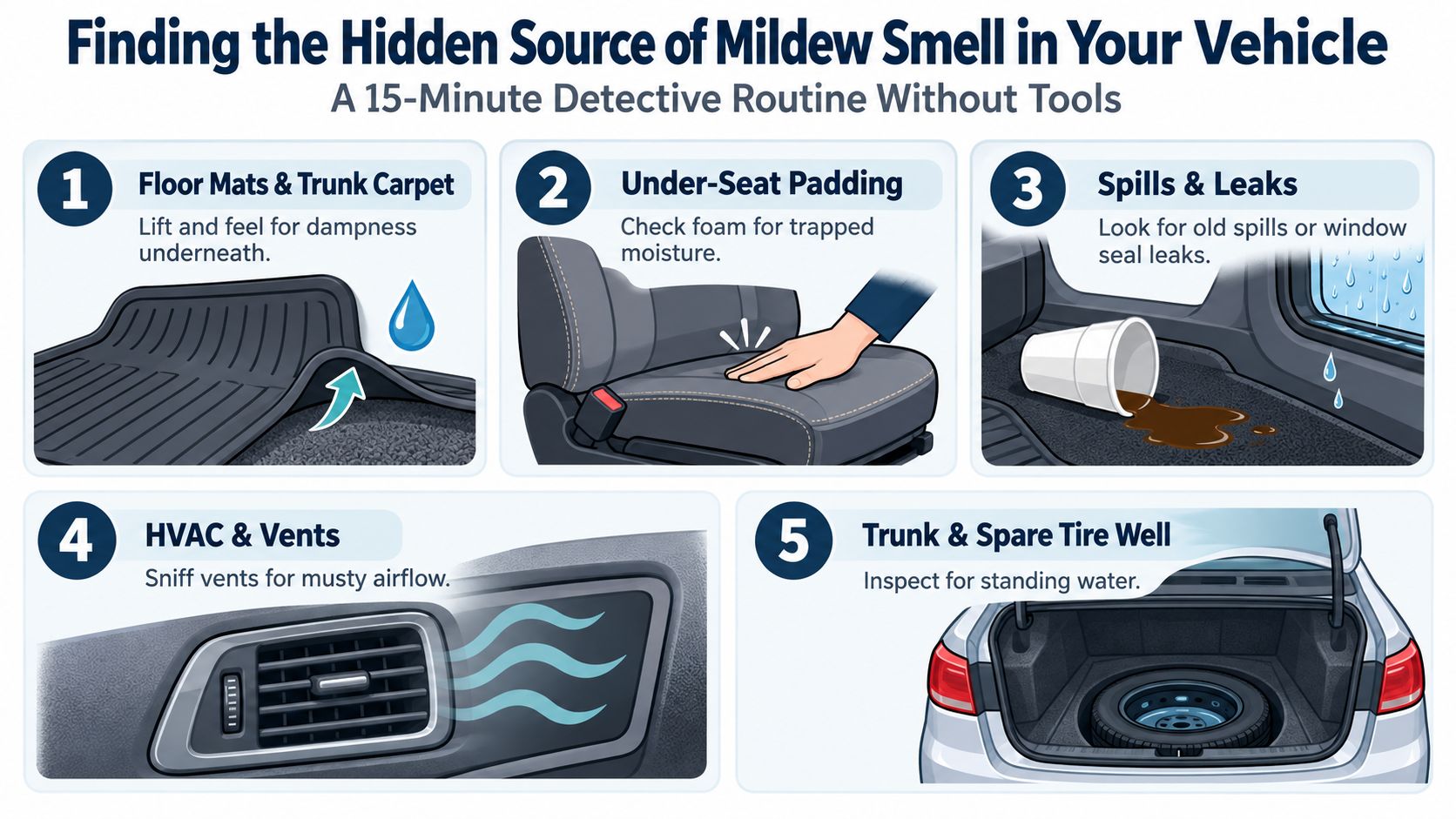
Finding the Hidden Source of Mildew Smell in Your Vehicle
Don't start by shampooing the entire cabin. Start with a quick inspection while the smell is still noticeable, then narrow the search to the area that feels or smells damp.
Check low areas before high areas
Remove every floor mat, including the one in the trunk. Run your hand along the underside and press a dry paper towel against the carpet beneath each mat. If the towel picks up dampness, staining, or a sour smell, you've found a strong suspect.
Next, press the carpet around the seat rails and under the front seats. Padding can stay wet where a towel or shop vacuum can't reach. Check the rear footwells as well, particularly if children, pets, or passengers have carried wet clothing into the car.
Look closely at common spill zones:
- Cup holders and consoles: Sticky residue can hold moisture and organic material.
- Door sills and seals: A loose or damaged seal can let rainwater run under the carpet.
- Sunroof edges: Blocked drains can send water into headliners, pillars, or floor areas.
- Trunk and spare-tire well: Lift the liner and inspect for pooled water, damp tools, or a wet jack compartment.
The HVAC system deserves its own sniff test. Run the fan with the air conditioning off, then repeat with the air conditioning on. If the odour becomes strongest through the vents, inspect the cabin air filter and note whether the smell changes when you switch between fresh-air and recirculation modes. Condensation on the windows after the vehicle has been sitting can also point to excess moisture inside the cabin.
Keep a simple note of what you find after rain. If the same corner becomes damp repeatedly, cleaning alone won't solve the problem. For broader moisture-control habits that apply to enclosed spaces, effective mould prevention advice can help reinforce the source-first approach.
Deep Cleaning Carpets and Upholstery to Remove Mildew Odor
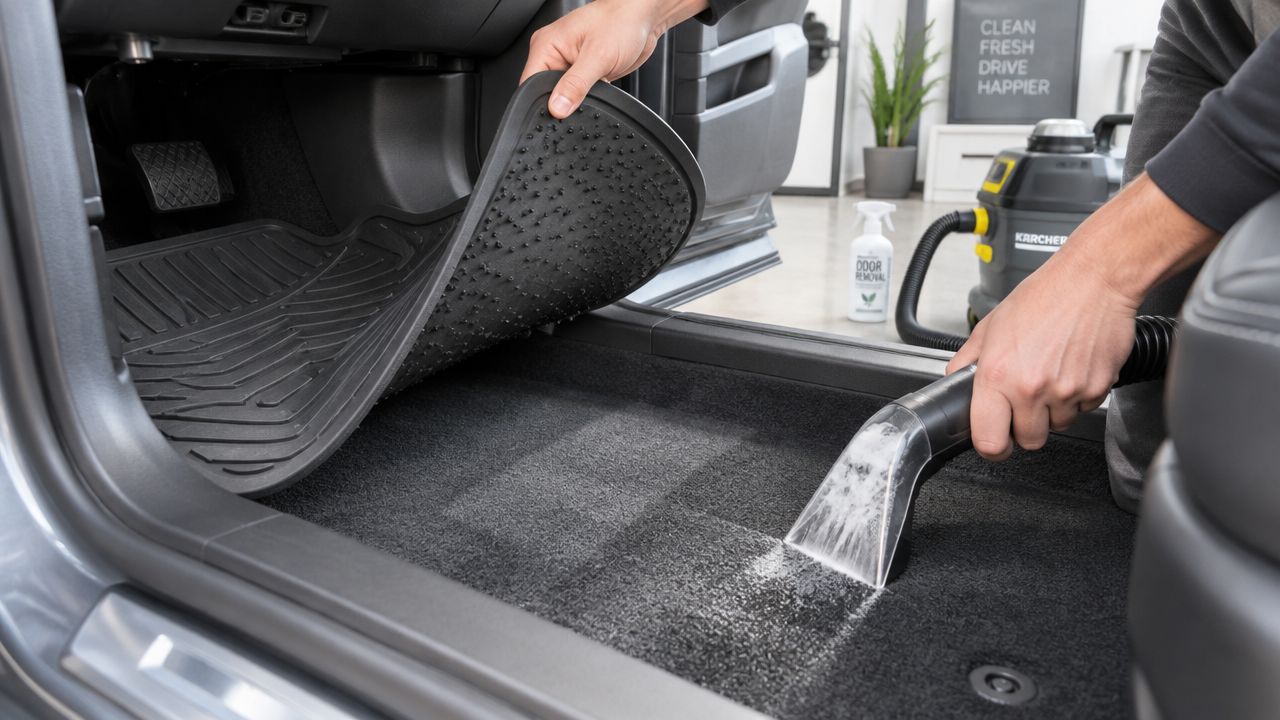
Soft materials hold the smell longest, so a proper clean earns its keep. Before adding water, remove loose grit, salt, pet hair, and dried mud with a thorough vacuum. Lift the mats out of the vehicle rather than cleaning them in place, and vacuum the carpet underneath from several directions.
Clean in small sections
Work on one manageable area at a time. Lightly apply a fabric-safe upholstery or enzyme cleaner, agitate with a soft detailing brush, and allow the product to dwell according to its label. Enzyme cleaners can be useful for organic residues such as spilled coffee, food, or pet-related contamination, but they won't repair a leak or dry saturated padding.
Avoid flooding the carpet. The goal is to suspend the dirt and odour source so you can extract it, not push moisture deeper into the underlay. A wet-dry vacuum with a narrow upholstery nozzle is far more useful than repeatedly spraying and scrubbing. Make slow extraction passes, then repeat with the vacuum alone until very little moisture comes up.
Salt from winter boots needs attention because it leaves a mineral residue that attracts and holds dampness. Use a suitable carpet cleaner, agitate gently, and extract the solution rather than leaving the area wet. Treat fabric seats with the same restraint. Don't soak seat bolsters, electrical components, seat controls, or heated-seat areas.
Baking soda can help with residual odour on a dry carpet. Sprinkle a light layer, leave it overnight, and vacuum it completely the next day. It's an absorber, not a cure, so use it only after the moisture source has been addressed and the fabric is dry.
Dry before closing the doors
Open the doors and hatch in a safe, ventilated place. Use fans aimed across the carpet, not just at the dashboard, and keep the mats separate until they're dry on both sides. Gentle warmth can help, but don't use high heat against plastic trim, leather, or delicate upholstery.
Key takeaway: Extraction removes the dirty moisture. Airflow removes what the extractor leaves behind.
If the carpet has been soaked or the padding remains wet, home equipment may remove only the surface water. Our guide to removing water from carpet offers useful background on extraction and drying when a spill has travelled below the visible layer. Persistent odour after a careful clean usually means you need to inspect beneath the carpet, not add stronger fragrance.
Cleaning Vents Crevices and Hard Surfaces That Trap Moisture
Hard surfaces don't absorb water like carpet, but they collect the film that damp air leaves behind. Dust, skin oils, spilled drinks, and residue around vents can combine into a stale coating that the fan distributes through the cabin.
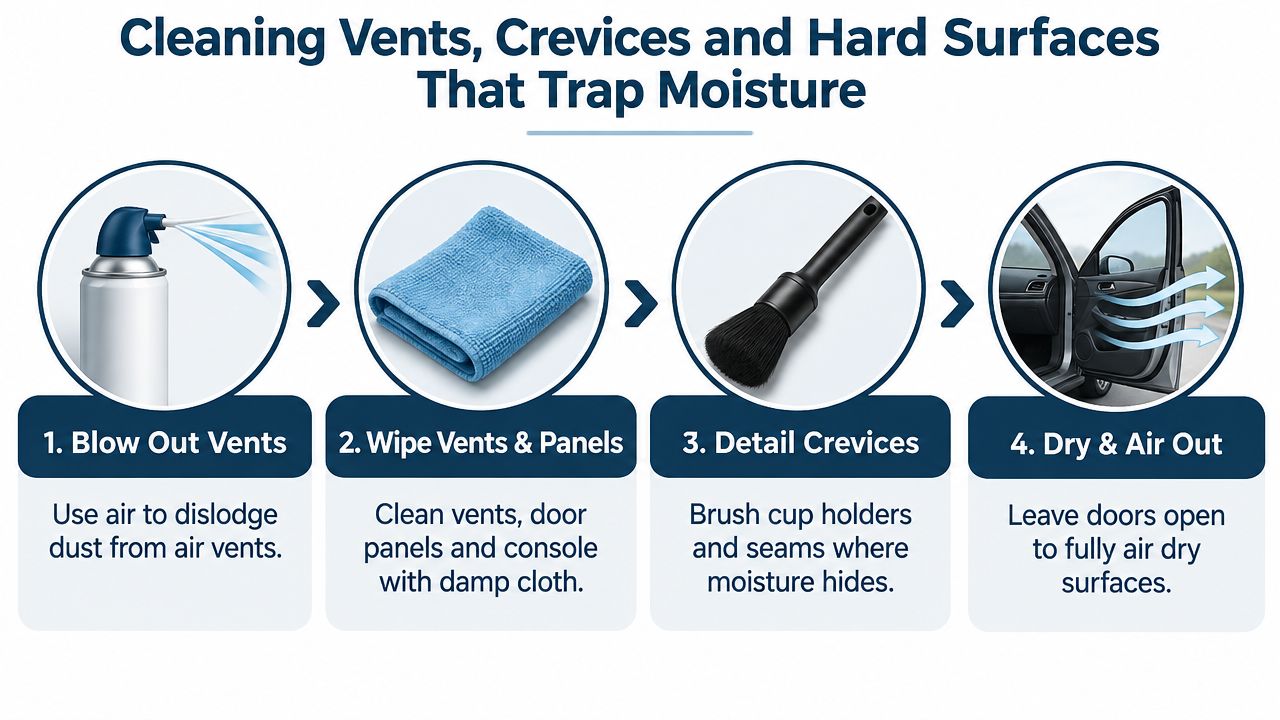
Begin with the vents. Use a soft detailing brush or controlled bursts of compressed air to loosen dust, then catch the debris with a vacuum. Follow with a lightly damp microfiber cloth wrapped around a vent brush. The cloth should be damp, not dripping. Excess liquid can run behind the dashboard and create a new problem.
Wipe the dashboard, steering-wheel area, door panels, console, cup holders, and seat tracks. Use cotton swabs or a small detailing brush for seams and corners. Check beneath removable cup-holder inserts, where old drinks and condensation commonly sit.
Leather needs more than conditioner if mildew is present. Clean it with a leather-safe cleaner, wipe away residue, and let it dry before applying conditioner. Conditioner can improve the finish, but it won't remove contamination from stitching, perforations, or the underside of a damp seat.
Don't overlook the HVAC system
Inspect the cabin air filter and replace it if it smells musty, looks dirty, or has been exposed to moisture. The filter isn't the only possible source. The evaporator and its drain area can retain moisture, especially if the drain is restricted.
Run the air conditioning while driving, then use the heater and fan afterward to help dry the system. If the smell is strongest whenever the fan starts, if the filter replacement makes no difference, or if you see signs of water entering the dashboard area, stop spraying products into the vents. HVAC components are difficult to reach safely, and careless liquid application can damage electronics or move the odour deeper.
For readers comparing vehicle concerns with broader ventilation and indoor air quality services, the same principle applies: clean accessible surfaces, improve airflow, and investigate the moisture source rather than relying on scent cover-ups.
Drying Deodorizing and Preventing Mildew Smell From Returning
A clean car can still smell mildewy if you close it up while the carpet, seat foam, or mats are damp. Drying is the part many owners rush, and that shortcut explains why the smell often returns after the next humid spell.
Health Canada recommends keeping relative humidity below 50% in summer and 30% in winter. Its moisture and mould guidance supports treating musty odours as clues to hidden moisture and prioritising source removal, thorough cleaning, and humidity control.
Build a drying routine
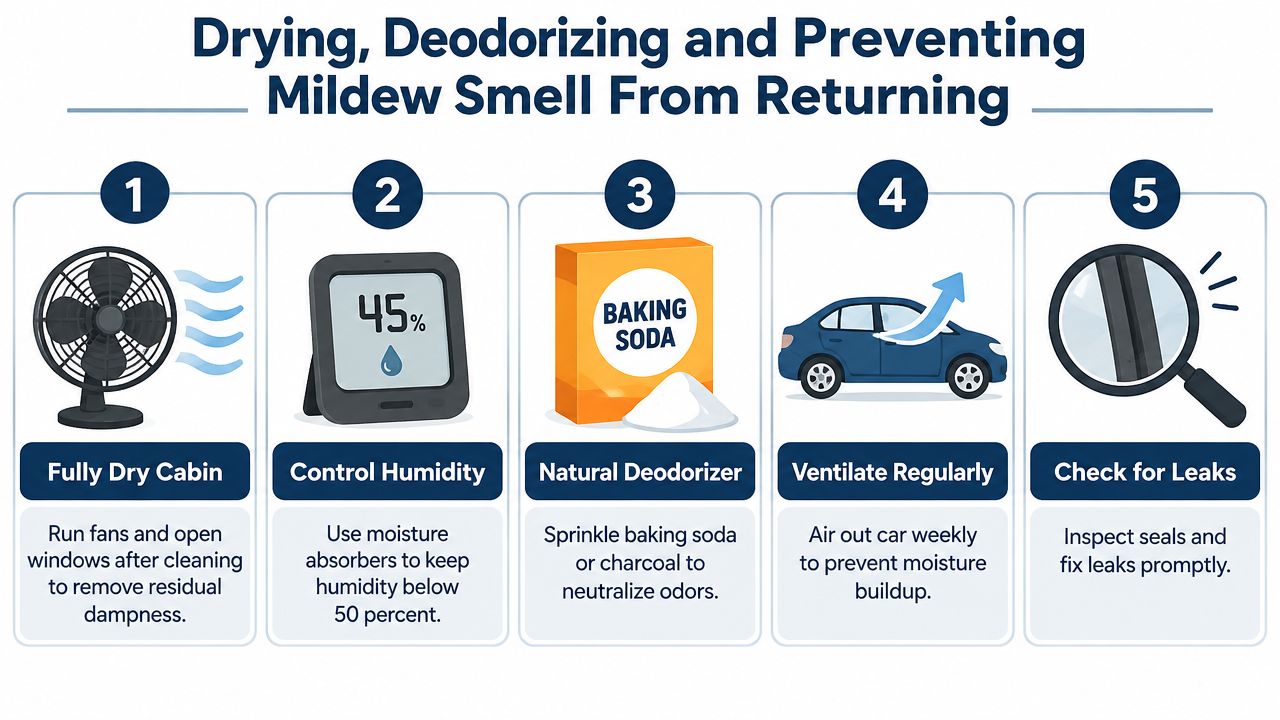
After cleaning, park somewhere safe with the doors or windows open, use fans to move air across the floors, and leave mats outside the cabin until fully dry. Don't rely on a small dashboard fan pointed at the windshield. Air needs to reach the low, padded areas where moisture sits.
A compact hygrometer can show whether the cabin is drying, while a moisture absorber or desiccant can help manage residual dampness. Replace or recharge the product as directed, and treat it as a supporting measure, not a substitute for repairing a leak.
For lingering odour on dry surfaces, activated charcoal or a light application of baking soda can neutralise some smells. Fragrance sprays and scented gels are the weak link. They may hide the odour temporarily, but they don't remove contaminated moisture and can make it harder to tell whether the underlying problem remains.
Keep moisture out
Use this short prevention check after wet weather and interior cleaning:
- Shake out mats: Remove snow, grit, and water before they soak into the carpet.
- Air out the cabin: Let fresh air circulate after washing or carrying wet gear.
- Run the climate system sensibly: Use air conditioning to help manage damp air, then ventilate the cabin.
- Check seals and drains: A recurring wet spot needs a repair, not another deodorising treatment.
- Recheck the trunk: Water in the spare-tire well can keep the whole vehicle smelling stale.
If the odour disappears only while an absorber or fragrance product is present, assume the moisture investigation isn't finished.
When to Call a Professional Detailer and What to Expect
DIY cleaning makes sense when the source is accessible, the affected area is limited, and you can dry the vehicle properly. It becomes a poor bargain when the padding stays wet, the odour comes through the vents, or the smell returns after you've cleaned the visible surfaces.
A professional detailer brings equipment and access that most owners don't have at home. That can include deep extraction from carpet and seat fabric, salt and stain removal, vent and crevice blowout, leather cleaning, odour-neutralising treatment, and controlled drying. The important difference isn't a stronger perfume. It's the ability to remove more contaminated moisture from deeper layers.
Health guidance is another reason to avoid aggressive DIY work when visible mould is extensive or occupants have asthma, allergies, respiratory conditions, or weakened immune systems. Ontario guidance lists symptoms such as runny nose, eye irritation, skin rash, cough, and congestion among possible effects associated with mould exposure. If water continues entering the vehicle, a detailer can clean the aftermath, but a technician may still be needed to repair the leak, drain, or HVAC fault.
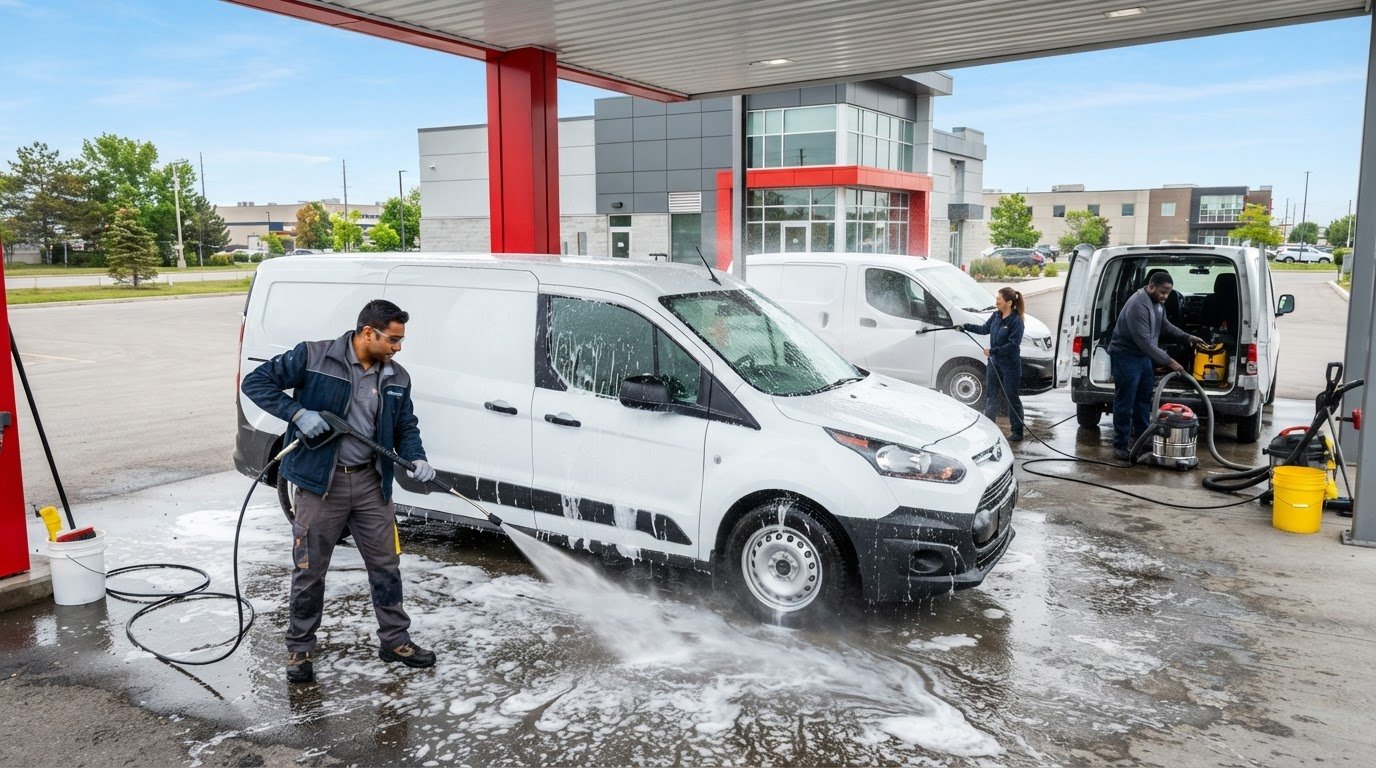
In the GTA, Nanak Car Wash offers appointment-based interior and exterior detailing that includes carpet and seat shampooing, salt and stain removal, vent and crevice blowout, and leather deep cleaning. Typical service windows run 1 to 4 hours, with pricing based on vehicle size and added charges possible for SUVs, vans, trucks, or pet hair. That makes it a practical option when extraction and drying equipment are more sensible than another weekend of surface cleaning.
Don't wait until the odour spreads through every fabric surface. Find the damp area, dry it completely, clean what remains, and repair the entry point before the smell settles back in.
If your GTA vehicle still smells musty after you've checked the mats, carpet, trunk, and vents, book an interior detailing appointment with Nanak Car Wash. Their service can address carpet and seat cleaning, salt and stains, vents, crevices, leather, and the drying stage that ordinary home cleaning often misses.


 6600 Finch Ave W, Etobicoke, ON M9V 3Z6
 647-703-8515
 MON – SUN 8 AM to 7 PM