
You're probably looking at your car right now and seeing the usual GTA winter leftovers. White crust around the wheel arches, grime packed behind the mud flaps, maybe a tiny chip on the hood that didn't seem like a big deal in January. That's how rust starts. Not with drama. With neglect.
After enough Ontario winters, you stop thinking of rust as bad luck. It's maintenance debt. Salt, trapped moisture, and chipped paint collect interest fast, and the bill usually shows up when the rocker panels start bubbling or the underbody looks like it's been ageing in brine. The good news is that learning how to prevent rust on car surfaces and hidden metal is not complicated. It just requires routine, timing, and a bit of common sense.
Table of Contents
- Your Foundation of Rust Prevention a Relentless Washing Ritual
- Winning the War Against Winter a Seasonal Salt Defence Plan
- The Shield Choosing Your Rust Proofing Armour
- The First Responder Spotting and Treating Chips Immediately
- Your Year Round Rust Defence Calendar
- Rust Never Sleeps But You Can Rest Easy
Your Foundation of Rust Prevention a Relentless Washing Ritual
Tuesday in February, the roads are grey soup, the wheel arches are packed, and the car looks only a little dirty from ten feet away. Underneath is the problem. Salt slurry is sitting in seams, on brake line brackets, behind splash liners, and along the rocker panels, exactly where Ontario cars start to rot.
Why clean metal lasts longer
Rust needs exposed metal, moisture, and enough time to keep working. GTA roads supply all three for months. The dirt you can see on the doors is only part of it. Much of the trouble collects in wheel wells, rocker panels, lower door edges, hatch seams, and the undercarriage, where grime stays wet and keeps grinding away at coatings.
A quick rinse over the paint does very little for those areas.
Practical rule: If your wash doesn't clean underneath the car, it's only doing half the job.
Ontario drivers often focus on the hood, roof, and windows because that's what looks filthy first. The underbody takes the worst beating. Subframes, suspension arms, pinch welds, fuel and brake line mounting points, and welded seams catch the mess that turns a solid car into a rust repair bill a few winters later.
How to wash for protection instead of vanity
A rust-prevention wash follows a simple order. Knock off the heavy grime first. Flush the hidden areas next. Then let the car shed water instead of trapping it in seams and folds.
Use this approach:
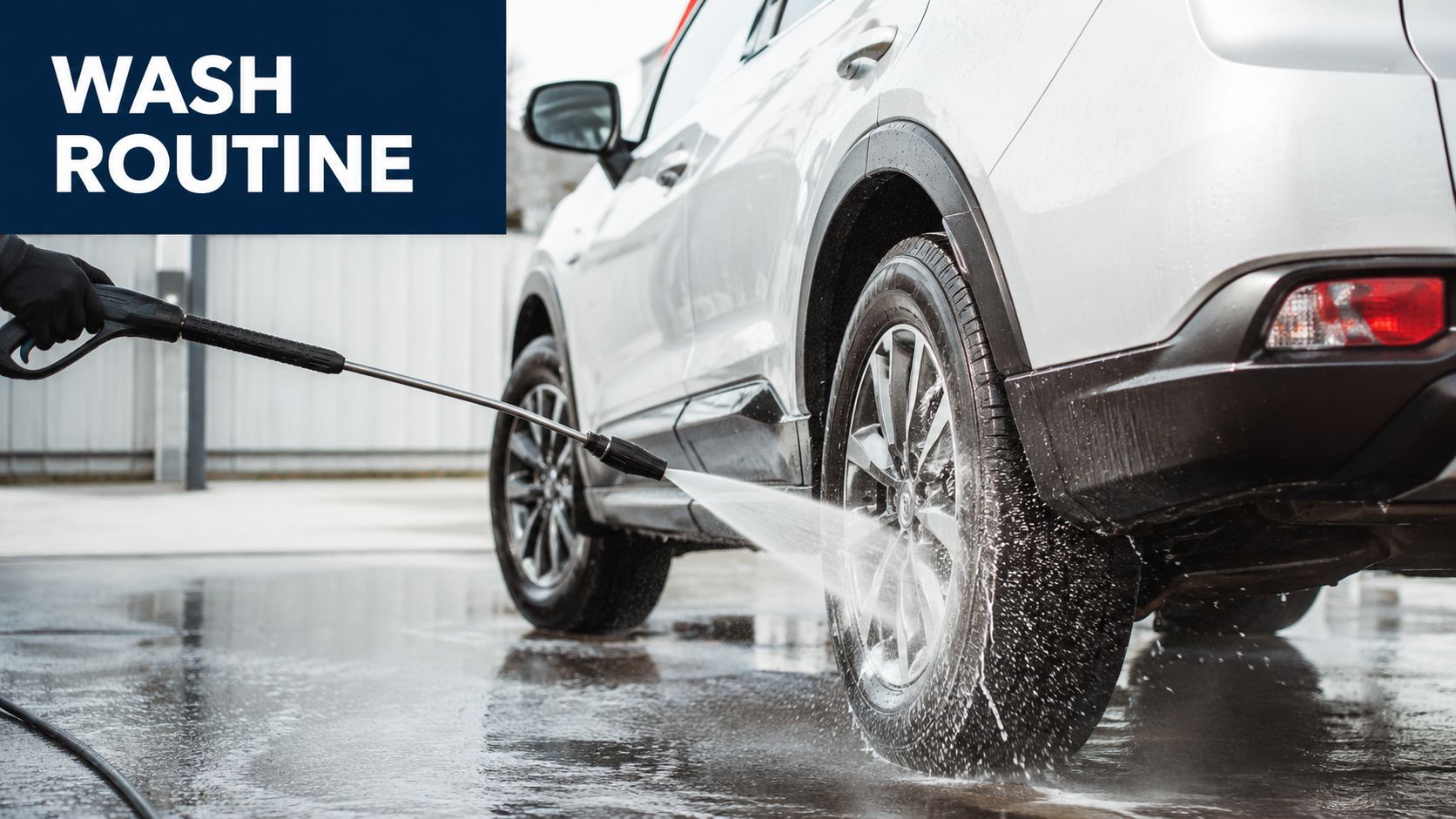
- Start with the underbody. A proper underbody flush pushes out slush and salt from places you cannot reach by hand.
- Hit the wheel wells hard. Turn the wheels when possible and spray inside the liners, around the lip edges, and behind the mud flap area.
- Clean rocker panels and lower doors. Those sections take constant spray from your own tires and from every transport truck beside you on the 401.
- Rinse the trunk lip, hood edges, and fuel door area. Dirt packs into tight seams and sits there.
- Don't park it soaking wet in a warm garage. Let it drain and dry as much as possible first, especially after a salty drive.
If you wash at home, a pressure washer helps. If you use a wash bay or drive-through, pick one with underbody spray, not just soap and spinning cloth. Plenty of drivers pay for a shiny finish, then leave the salty parts untouched. Looks clean. Rusts anyway.
What fails every year is the same lazy routine. Waiting for a warmer day. Doing a fast hose rinse that never reaches behind liners. Washing only when the body panels start looking embarrassing.
Better habits are simple.
- Good habit: Wash soon after messy drives, especially when roads are wet, slushy, and coated in brown spray.
- Weak habit: Cleaning only the visible paint and glass.
- Best habit: Treat every wash as underbody maintenance first, cosmetic cleaning second.
Winning the War Against Winter a Seasonal Salt Defence Plan
Road salt is the main villain in this story, and it plays dirty. According to this corrosion research summary on ScienceDirect, road salt can accelerate the corrosion process by up to ten times, and visible rust can begin to form on an unprotected scratch in as little as 72 hours in damp, salty conditions. That should change how you think about winter grime sitting on your car.
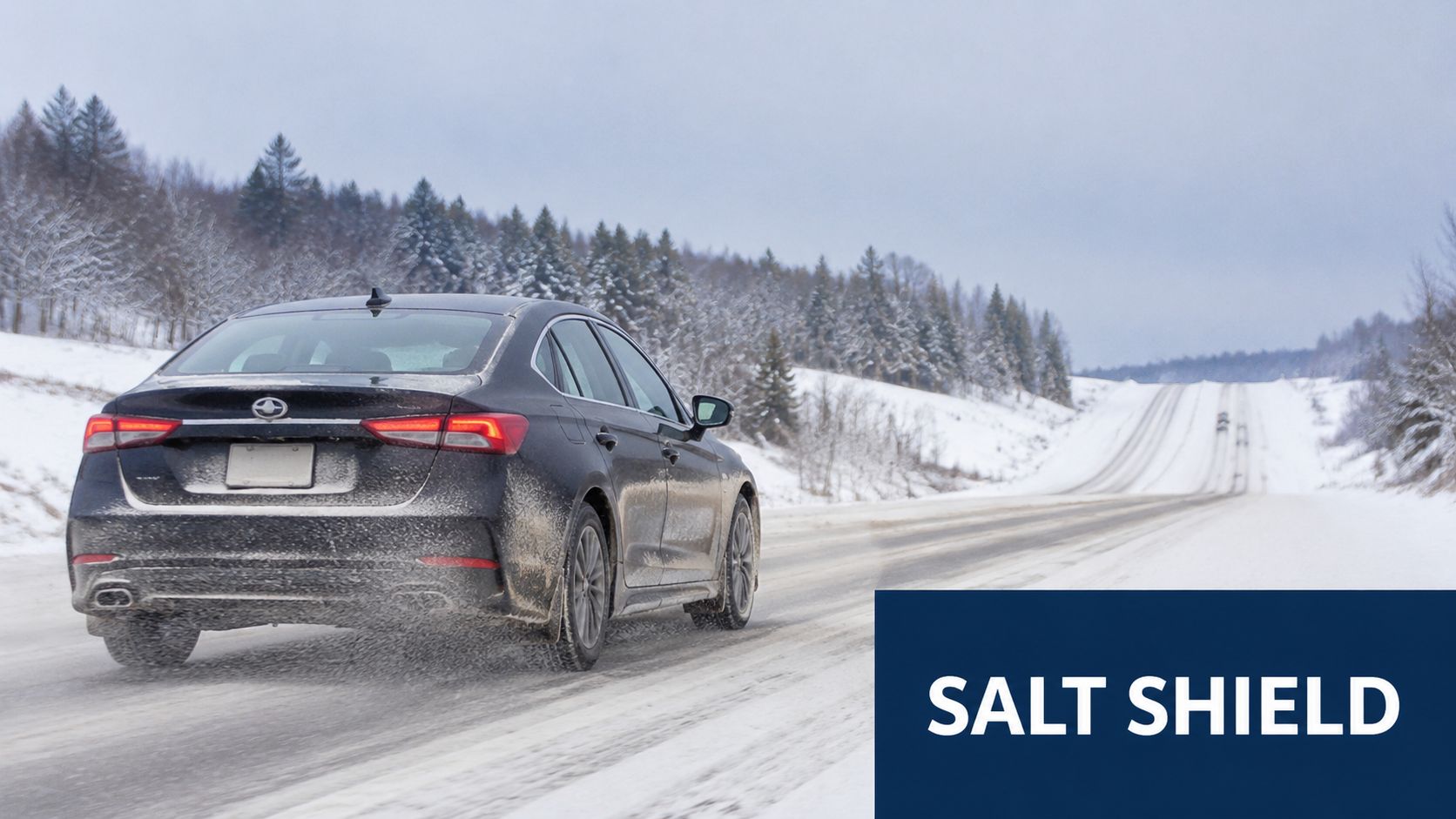
That chalky white film isn't just ugly. It's active. It gets into scratches, joints, and exposed edges, then stays there every time the temperature swings and the roads turn into salty soup.
Before snow flies
Go into winter with protection already on the car. A wax or paint sealant helps the painted surfaces shed grime more easily. It won't protect bare metal underneath, but it does make regular washing more effective because contamination doesn't cling as stubbornly.
Pay attention to drain points too. Doors, trunk channels, and lower body seams need to shed water. If leaves and debris clog those spots, moisture hangs around where it shouldn't.
During winter use
Many individuals often lose the battle. They decide it's “too cold to wash” or “it's pointless until spring.” That thinking is how cars rot.
When roads are salted, washing is maintenance, not pampering. The best time is often during a mild stretch, after slushy driving, or when roads are wet and dirty rather than freshly snow-covered. You want to remove the residue before it cakes on.
Salt left on a car doesn't politely wait for spring. It keeps working in every damp patch and every chip.
Focus on these areas during winter:
- Undercarriage first: Flush away slush and salt accumulation.
- Wheel wells next: Packed snow and dirty spray sit there constantly.
- Lower body panels: The bottom half of the car takes the blast from every lane change.
- Floor mats and door sills: Not for rust on the body, but because salty slop gets dragged everywhere and holds moisture.
After the thaw
Spring's first warm weekend is not the time for a lazy bucket wash. It's the time for a decontamination clean. Salt often lingers in seams, under trim edges, and around suspension components well after roads look clear.
That means you need a wash with intent:
- Use a thorough underbody rinse
- Clean wheel wells by hand if possible
- Inspect drain holes and seam areas
- Check for new chips or bubbling paint
The hard truth is simple. If you drive year-round in the GTA, winter care can't be passive. You either remove salt on purpose or you let it sit and chew on the car.
The Shield Choosing Your Rust Proofing Armour
Washing removes contamination. Rust proofing adds a barrier. You need both if you plan to keep a vehicle beyond the easy years, especially if it sees winter roads, highway commuting, or long stretches parked outside.
There are two common paths. You can do a DIY job with aerosol cans, or you can pay for a professional application. Both have their place. They are not equal.
What DIY gets right and where it falls short
DIY aerosol products appeal to people who don't mind getting dirty and want to save money. Fair enough. They can help on visible areas, exposed seams, and small sections you can access without dismantling half the car.
The catch is coverage. Individuals often don't reach the hidden cavities where corrosion starts. Inner panels, overlaps, boxed frame sections, backsides of seams, and awkward recesses are hard to hit properly in a driveway. Then there's overspray, drips, and the usual mess.
DIY makes sense if:
- You're comfortable working underneath safely
- You want to top up obvious exposed spots
- The vehicle is older and you're managing rather than perfecting
DIY falls short when:
- Access is limited
- You want cavity coverage
- You don't want product all over the garage floor
- You expect one afternoon and one can to solve everything
When professional treatment makes sense
Professional rust proofing is better suited to daily drivers you care about, newer vehicles worth preserving, and people who know they won't crawl around on cold concrete with a spray can. The main advantage is more complete application in hard-to-reach areas.
Some providers use a drip-free chemical compound designed to coat and protect hidden metal surfaces more thoroughly than a basic aerosol approach. That matters because rust often starts where you can't inspect easily.
Here's the practical comparison.
| Factor | DIY (Aerosol Cans) | Professional (e.g., Nanak Car Wash) |
|---|---|---|
| Coverage | Limited to areas you can physically reach | Better access to hidden cavities and awkward areas |
| Convenience | Time-consuming and messy | Faster for the vehicle owner |
| Cleanliness | Overspray and driveway drips are common | Usually more controlled application |
| Skill required | Moderate, especially for even coverage | Minimal owner effort |
| Best for | Small touch-ups, older vehicles, hands-on owners | Daily drivers, newer cars, long-term ownership plans |
| Consistency | Depends heavily on prep and technique | More uniform when done properly |
A few straight truths from the trade:
- Rust proofing is not magic. It won't reverse severe structural rust.
- It works best before major corrosion appears.
- It does not replace washing. Coated surfaces still collect salt and grime.
- One skipped year might not look dramatic, but neglect compounds fast in Ontario conditions.
If you're choosing based on ownership plans, be straightforward. Short-term car, light DIY may be enough. Long-term car, family hauler, work truck, or commuter that sees every filthy 401 slush storm, professional treatment usually makes more sense.
The First Responder Spotting and Treating Chips Immediately
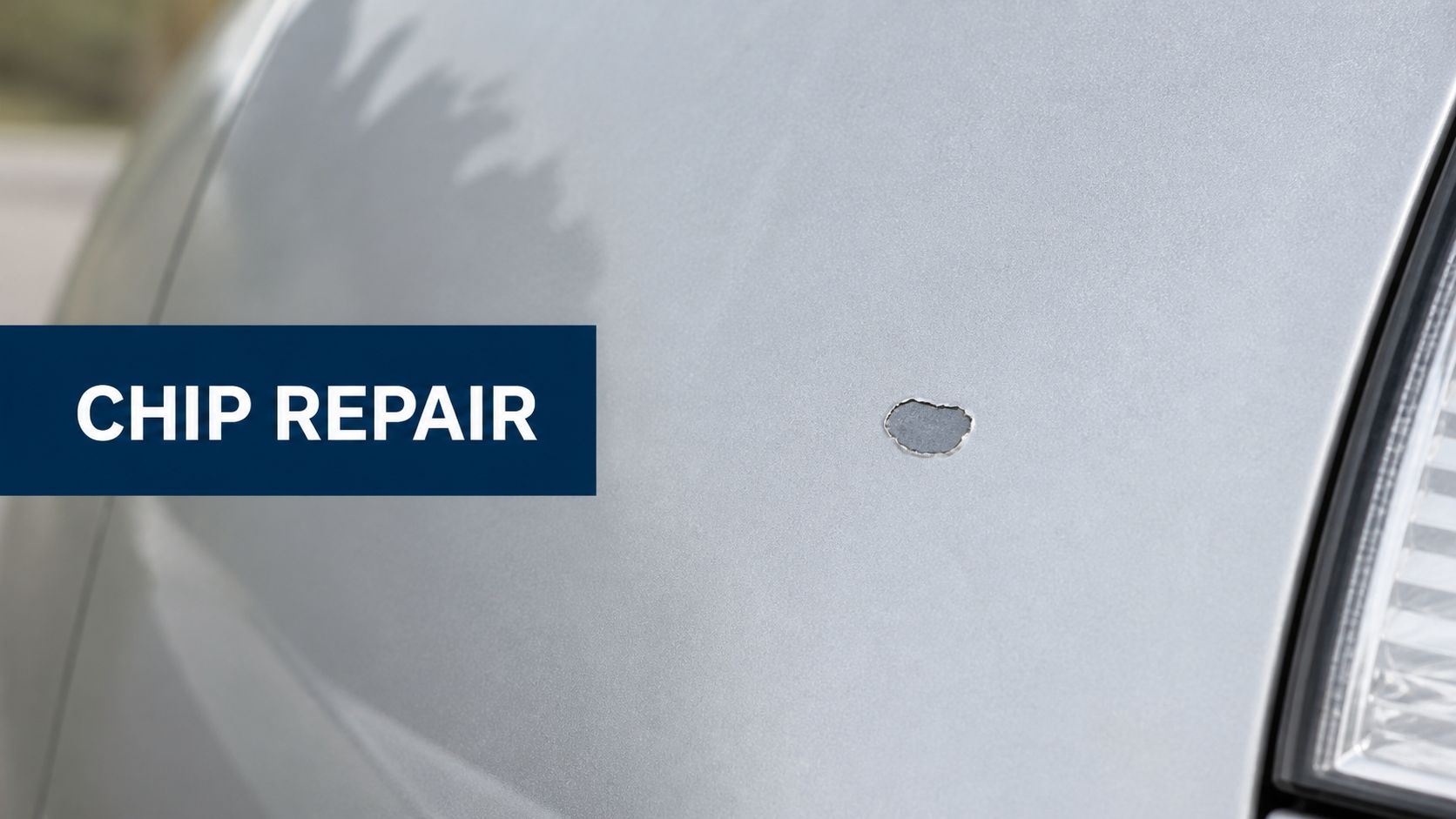
Most rust stories start with something tiny. A stone chip on the hood. A nick at the edge of a door. A scratch above the wheel arch from brushing past a snowbank or dragging a bag across the paint. Leave that exposed, and moisture gets invited straight to the metal.
Your five minute walkaround
Do this after a wash, not before. Clean paint makes damage obvious.
Check these spots in order:
- Front edge of hood and bumper area: Highway debris hits here first.
- Windshield pillars and roof leading edge: Often ignored, often chipped.
- Door edges and handles: Parking lots are brutal.
- Wheel arches: Constant spray and grit attack them.
- Lower rocker area: Out of sight, usually dirty, often damaged.
Use your phone flashlight if the lighting is poor. You're looking for dark specks in the paint, tiny craters, or spots where colour is missing and the surface looks raw.
A chip you fix early is a cheap nuisance. A chip you ignore becomes bodywork.
How to use a touch up paint pen properly
You don't need to be a body tech for this. You need patience and a steady hand.
- Wash and dry the area so you're not trapping dirt.
- Remove loose debris carefully. Don't gouge at it.
- Use the correct colour-matched touch-up pen for your vehicle.
- Apply a tiny amount into the chip, not all over the surrounding paint.
- Let it cure properly according to the product directions.
- Leave perfectionism out of it. Sealed is better than exposed.
A common mistake is slopping too much paint onto the spot and making a blob. Another is touching up over contamination. Keep it tidy. If the chip is large, rusty already, or on a panel edge that's bubbling, a proper repair shop is the smarter move.
This habit is one of the cheapest answers to the question of how to prevent rust on car panels. Not glamorous. Very effective.
Your Year Round Rust Defence Calendar
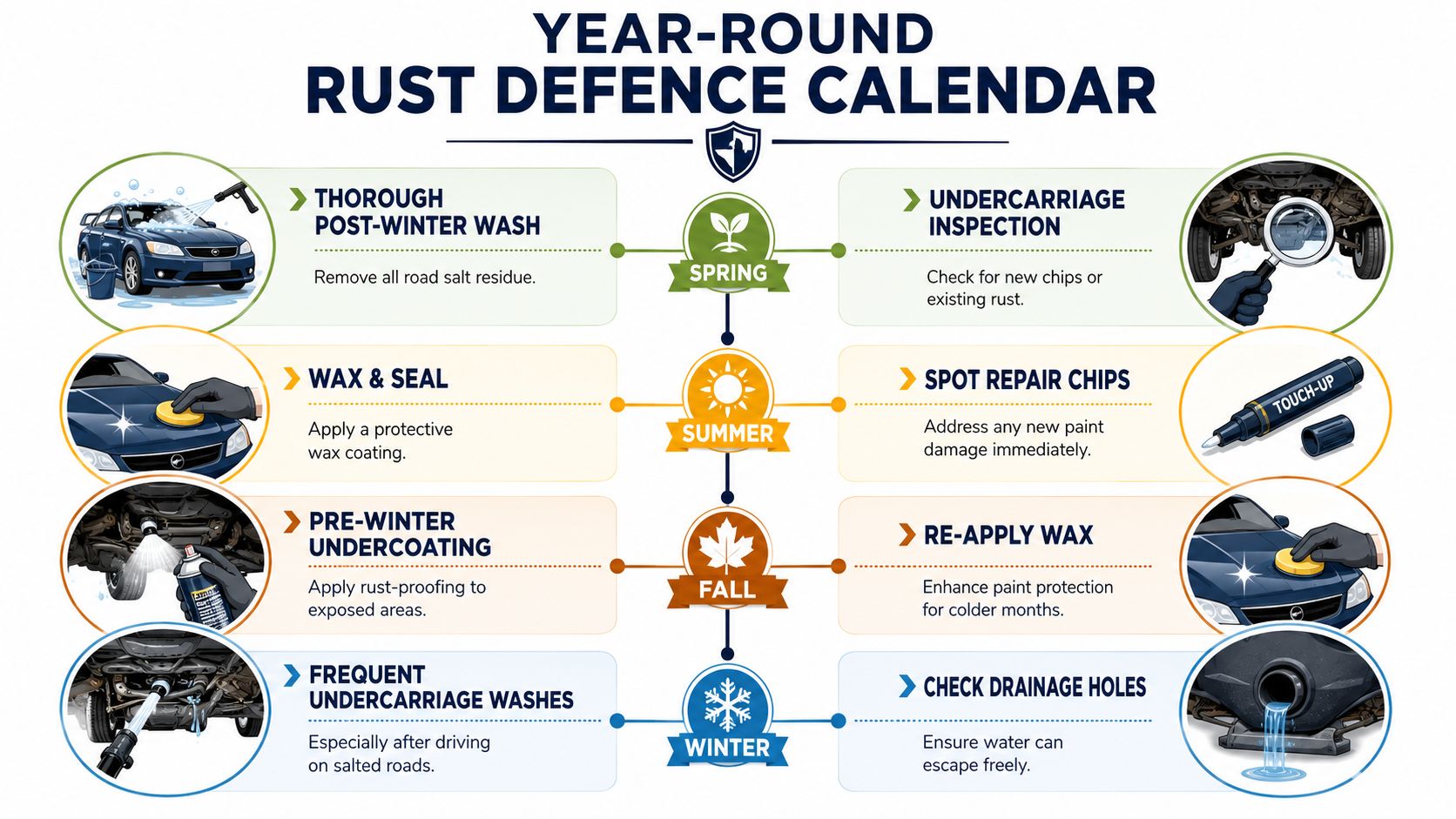
A rust plan works better when it lives on your calendar instead of in your head. The GTA gives you four different conditions to deal with, and each one calls for a different job. Follow the seasons and the work stays manageable.
Fall prep
Autumn is when smart owners get ahead of winter instead of apologising to their rocker panels in March.
- Reapply wax or sealant: Give painted surfaces a sacrificial layer before salt season.
- Book rust proofing if needed: Do it before the roads turn filthy.
- Clean drains and jambs: Leaves clog everything.
- Inspect old chips: Seal anything exposed before damp weather settles in.
Winter defence
Winter is active defence. Not once. Repeatedly.
Keep washes focused on the underbody, wheel wells, and lower body panels. If you get a thaw, use it. If you drive through slush, don't wait forever. If the car looks like it's been dusted with road seasoning, assume the hidden parts look worse.
A few winter checks matter:
- Watch wheel arches for packed grime
- Clear out heavy slush from around mud flaps
- Keep floor mats dry enough that moisture isn't living inside the car
Spring decontamination
Spring is cleanup and inspection season. This is the time for the most thorough wash of the year, inside and out.
Give the car a deep underbody flush, clean the wells properly, and inspect for fresh chips, flaking coatings, or bubbling paint. If your interior has gone crusty from winter boots, salt stain removal and a proper deep clean are worth doing too. People forget that spring isn't just cosmetic. It's when you find out what winter tried to start.
Summer watch
Summer feels harmless, but it's when road-trip chips and bug splatter get ignored. Don't let warm weather make you lazy.
Use summer for lighter maintenance:
- Wash regularly to remove grime and bug residue
- Touch up chips quickly
- Check lower panels after gravel cottage roads or highway travel
- Top up protection if water stops beading well
Summer is the season to repair small damage before fall hands it back to moisture and salt.
This calendar works because it matches real conditions. Fall protects. Winter removes contamination. Spring resets. Summer catches damage early.
Rust Never Sleeps But You Can Rest Easy
You see it every spring in the GTA. A car still looks decent from ten feet away, then you open a door, check the rocker seam, and find the first orange crust starting its little career.
Rust prevention works the same way every year. Keep salt and grime from sitting too long. Protect the vulnerable areas before winter. Deal with chips and scratches while they are still cheap. Then repeat the routine on schedule instead of waiting for a surprise in April.
That is the whole game. No magic bottle. No once-a-year rescue mission.
Cars around Toronto handle winter better than neglected owners do. The drivers who get the longest life out of a vehicle are the ones who stay on top of the plain, unglamorous maintenance. Wheel wells, drain holes, inner door edges, rocker panels, hatch seams. Saving money happens by maintaining the boring bits.
The nice part is that this does not need to become a hobby. A simple rust defence calendar gets the job done. DIY washes and quick checks cover a lot. Professional underbody cleaning, detailing, and rust proofing help with the jobs that are messy, time-sensitive, or easy to put off. That mix is what keeps a daily driver solid through Ontario winters instead of letting one salty season get ahead of you.
If you want help with the heavy lifting, Nanak Car Wash offers underbody cleaning, detailing, and rust proofing across the GTA, which makes it easier to stick to the plan every season.


 6600 Finch Ave W, Etobicoke, ON M9V 3Z6
 647-703-8515
 MON – SUN 8 AM to 7 PM