
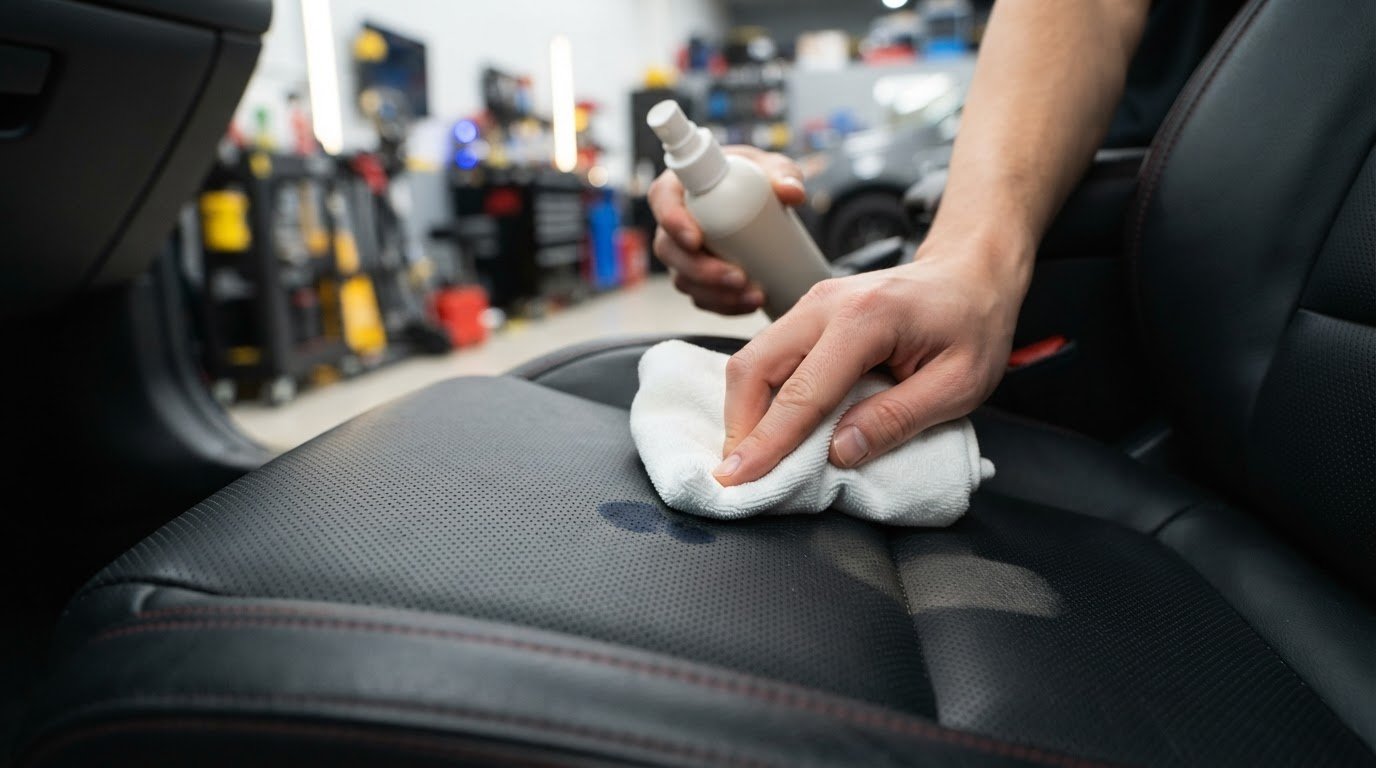
A small ink mark on a leather car seat can look like an easy fix, until rubbing spreads it or a cleaner dulls the finish. If you’re trying to remove ink stain from leather car seat upholstery, start gently. The right approach depends on the leather’s surface, and aggressive scrubbing can make the damage worse.
It’s understandable to want the mark gone quickly, especially when you’re unsure which products are safe. First identify what you can about the leather, check the vehicle’s care instructions, and test a suitable cleaner in a hidden spot. Then treat the mark with light, controlled steps. Avoid harsh solvents and don’t apply conditioner before the area is clean.
Most importantly, know when to stop. If the ink isn’t lifting, the colour or finish changes, or you’re uncertain about the material, another home attempt may do more harm than good. This guide covers the signs that it’s time to stop cleaning and consider professional detailing.
Key Takeaways
- Pause before cleaning. Scrubbing can spread ink or harm a leather finish.
- The seat’s finish and the age of the mark affect how to remove ink stain from leather car seat upholstery safely.
- Use the seat-care guidance and cleaner label to choose a cautious approach, then test it in a hidden spot first.
- Stop if the leather becomes tacky, fades, transfers colour, or the mark spreads.
- Broader interior detailing in Brampton may be a practical next step for a stubborn stain or a soiled cabin.
Ink on a Leather Car Seat: What to Do Before It Sets
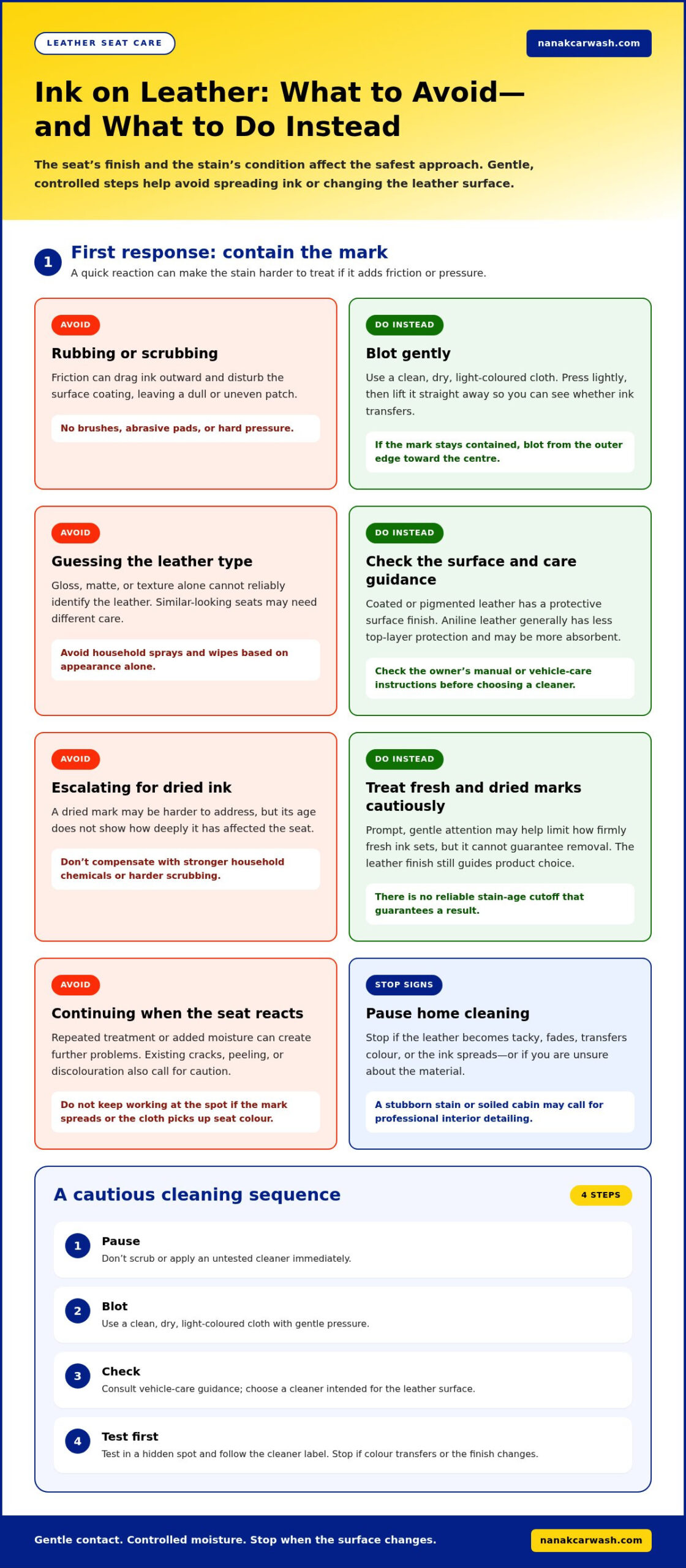
Stay calm. The safest first move is to pause, not scrub. Leather seats can have different finishes, and a cleaner that suits one surface may dull, dry, or discolour another. Even seats that look similar may need different care, so don’t reach for household sprays or wipes based on appearance alone.
Gently blot fresh ink, avoid adding untested products, and check the vehicle’s care guidance before cleaning. This can help limit further transfer, but it can’t guarantee that the stain will come out. Taking a moment to assess the surface is safer than rushing into a treatment.
What should you do as soon as you spot the ink?
Use a clean, dry, light-coloured cloth. Press it gently against the mark to pick up fresh ink, then lift it straight away. Don’t rub, scrub, or press hard. A pale cloth also makes it easier to see whether ink is transferring, without adding colour from the cloth itself.
If the mark stays contained, blot from its outer edge toward the centre to help avoid pushing pigment outward. Stop if the mark begins to spread or the cloth starts picking up the seat’s colour. Keep pens, wet wipes, and untested cleaners away from the area. Then check the owner’s manual or vehicle-care instructions for leather-specific guidance.
Why rubbing can make a leather-seat stain harder to treat
Friction can drag ink across a wider area instead of lifting it. It may also disturb the seat’s surface coating, leaving a dull or uneven patch that’s harder to address than the original mark. Gentle blotting means brief, light contact with a cloth. Scrubbing with a brush or abrasive pad adds friction and pressure, so avoid both.
Leather is sensitive to its finish and condition, and soaking it can cause additional problems. The overview of Conservation and restoration of leather objects explains why leather care calls for attention to the material and cleaning method. Keep moisture and pressure controlled rather than experimenting with several products.
- Pause: Don’t scrub or apply a cleaner immediately.
- Blot: Use a clean, dry, light-coloured cloth with gentle pressure.
- Contain: Work inward only if blotting isn’t spreading the mark.
- Check: Consult the vehicle’s care instructions before choosing a cleaner.
Resist the urge to keep working at the spot just because the first blot hasn’t removed it. A careful first response can reduce the risk of spreading ink or affecting the finish, while repeated rubbing can make later cleaning less straightforward. For context on broader cabin care, Nanak’s complete interior car detailing guide covers the role of careful cleaning across vehicle interiors.
How Leather Finish and Ink Age Change the Cleaning Approach
The same ink mark can call for different care depending on the leather beneath it. A cleaner suitable for a protected surface may be too harsh for more absorbent leather. The stain’s age matters, too: fresh ink and a dry, set-in mark don’t always respond the same way. Before choosing a treatment, identify what you can about the seat and follow its care instructions.
Identify the leather finish before selecting a cleaner, because the wrong product can affect the surface as well as the stain. That’s safer than guessing from the seat’s colour or shine.
How can you tell what kind of leather is on your seat?
Coated, or pigmented, leather has colour and a protective finish on its surface. Aniline leather is coloured mainly with dye and generally has less of a protective top layer, so it may be more absorbent and sensitive to cleaning. “Unfinished” is sometimes used to describe leather with little surface protection, though labels and terminology can vary.
Check the owner’s manual or vehicle-care documentation before applying a product. A glossy, matte, or textured look isn’t reliable proof of leather type. Coatings and surface treatments can make different materials look alike. If the seat is cracked, peeling, or already discoloured, avoid home treatment because cleaning could worsen an existing surface problem.
Does fresh ink come out more easily than dried ink?
Fresh ink hasn’t had as much time to dry on or interact with the surface, so prompt, gentle attention may help limit how firmly the mark sets. That doesn’t mean it will lift completely or that every fresh stain is safe to treat at home. The leather finish still determines which products and methods are appropriate.
A dried mark may be harder to address, but its age alone doesn’t reveal how deeply it has affected the seat. Don’t compensate by reaching for stronger household chemicals or scrubbing harder. Either can spread pigment or harm the finish, especially on more absorbent leather. If a cautious approach doesn’t improve the mark, or you’re unsure about the surface, stop rather than escalating the treatment.
For a stain that won’t lift, the next step isn’t automatically a more powerful cleaner. Consider the finish, existing wear, and whether the mark changes with gentle care. These clues can help you decide whether to proceed with a product approved for the seat or leave further treatment to a professional. There’s no reliable stain-age cutoff that guarantees a particular result.
How to Treat an Ink Stain on a Leather Car Seat Carefully
Once you’ve checked the seat’s care guidance and have a cleaner intended for its leather surface, work slowly. The aim is to treat the mark without stripping colour or changing the finish. A product labelled “leather cleaner” still needs to be used exactly as directed. A successful test on one part of the seat also doesn’t guarantee that every area will react the same way.
A cautious test-first cleaning process
Follow these steps in order. Don’t move on if you see colour transfer or a change in the leather’s appearance.
- Review the care instructions. Check the owner’s manual or vehicle-care documentation for restrictions on cleaning leather. If it advises against a product or method, don’t use it.
- Test an inconspicuous area. Choose a hidden spot on the same seat, such as a discreet edge. Apply the cleaner as its label directs, using a soft, clean cloth. Stop if the cloth picks up the seat’s colour or the surface looks different.
- Let the test dry fully. Don’t judge the result while the leather is still damp. Wait until it has dried naturally, then inspect it in good light for fading, dullness, tackiness, or another finish change.
- Treat the mark only if the test looks safe. Put a small amount of cleaner on a cloth, not directly on the seat. Dab the ink gently without soaking the leather. Use a clean section of cloth for each pass so you don’t transfer picked-up ink back onto the surface.
- Reassess before continuing. Pause after a light pass and check the area. If the mark is spreading, the finish is changing, or you see colour transfer, stop. Don’t keep repeating the process in the hope that more product will solve it.
Use only a cleaner labelled for the relevant leather surface, and follow its directions for application and removal. If the label calls for a particular cloth or wiping method, follow that instruction rather than improvising. This measured approach is safer than trying several products in quick succession to remove ink stain from leather car seat upholstery.
What to avoid when cleaning leather upholstery
Don’t soak the seat, scrub aggressively, or mix household cleaning products. Too much moisture can affect leather, while friction can spread pigment or wear the finish. Alcohol, acetone, and bleach aren’t universal ink fixes. Don’t apply them unless the vehicle’s care guidance specifically permits them. Avoid abrasive pads, stiff brushes, and other tools that can scratch or scuff the surface.
After cleaning, let the area dry naturally. Keep it away from direct sunlight and avoid using heat to speed things up. If the stain remains or the leather changes during treatment, stop rather than escalating to a stronger chemical. A professional assessment is more sensible than risking further damage.
When to Stop DIY Cleaning and What to Do Next
One cautious attempt is enough to reveal whether home care is a sensible path. Watch the leather as closely as the ink. A stain that remains may be frustrating, but changes to the seat’s colour, texture, or finish are a clear reason to stop. Continuing could turn a small mark into a larger surface problem.
Signs that another cleaning attempt could cause damage
Stop immediately if you notice any of these changes:
- Colour transfer: The cloth picks up the seat’s colour, not just ink.
- A different feel: The treated area becomes sticky, tacky, rough, or otherwise unlike the surrounding leather.
- A changing finish: The surface looks faded, dull, or uneven.
- A spreading stain: Ink moves beyond its original edges during treatment.
Don’t continue testing cleaners if the seat is cracked, peeling, perforated, or already discoloured. These conditions can make the surface more vulnerable, and a home treatment could worsen existing damage. Valuable or delicate upholstery also deserves a professional assessment before you try another method. Note what you’ve already applied, if anything, so it can be considered when the seat is assessed.
How to care for the seat after a cautious cleaning attempt
Let the area dry naturally, away from direct heat and sunlight. Assess the colour and texture only once it’s fully dry, since moisture can temporarily change how the leather looks. If the mark remains, resist repeating the treatment or switching to a stronger product. That’s the point to stop and consider professional help, not intensify the DIY approach.
Conditioner isn’t an automatic next step. Use it only if the vehicle’s manual or leather-care instructions recommend it for that surface, and follow their directions. Applying an unapproved product may create a new issue or alter the finish. For routine cabin care, use guidance suited to each material rather than assuming every surface can be cleaned the same way.
Home care is most appropriate when the seat’s guidance supports the cleaner, the test area stays unchanged after drying, and the mark doesn’t spread. Professional assessment is more sensible if the leather reacts, the stain persists, or you’re unsure what finish you have. There’s no guaranteed outcome, but stopping early can help avoid unnecessary damage. For a broader view of interior and exterior cleaning, Nanak’s car detailing guide explains how detailing fits into vehicle care.
If you’re still unsure how to remove ink stain from leather car seat upholstery without risking the finish, consider professional interior detailing instead of trying another chemical. Explore Nanak Car Wash detailing as a practical next step for broader interior cleaning.
Professional Interior Detailing in Brampton: A Practical Next Step
DIY care has a limit. If the ink remains after a cautious attempt, previous treatments haven’t helped, or you’re concerned about damaging the seat, stop rather than trying stronger products. Detailing may also be worth considering when the stain is part of a broader cabin-cleaning need, such as soiled seats and carpets alongside the mark.
Professional detailing focuses on the vehicle’s overall cleanliness. It can be a practical next step when you want more than another attempt at one spot, but it doesn’t guarantee that a particular ink stain will disappear or restore damaged leather. The condition and finish of the seat still matter.
What to expect from a professional interior-cleaning visit
Nanak Car Wash is based in Brampton and offers car detailing with intensive interior and exterior cleaning. The service includes seat and carpet shampooing as part of broader cleaning. This can suit a vehicle that needs attention beyond an isolated mark, though the result for a specific ink stain depends on the leather and the mark.
When arranging service, describe which seat is affected, whether the mark is fresh or dried, and what you’ve already tried. Mention any colour transfer or finish changes you noticed. This context helps set clear expectations and avoids repeating an approach that may already have affected the surface. Don’t apply additional products just to prepare the seat.
Get help with a cleaner car interior in Brampton
Consider detailing if the ink remains, home attempts haven’t helped, or the cabin needs broader attention. It’s a practical choice for addressing the vehicle’s overall interior condition, while the outcome for an individual stain can depend on the leather and the mark. Share the seat-care guidance and any relevant cleaning history when you arrange your visit.
For drivers in Brampton looking for intensive vehicle cleaning, Nanak’s detailing is a practical next step. Explore Nanak Car Wash and its detailing services for broader interior cleaning rather than risking another round of guesswork on the leather.
Choose the Next Step That Protects Your Seat
A clean-looking result isn’t worth damage to the leather. If you’re still deciding how to remove ink stain from leather car seat upholstery, let the seat’s condition guide your next move. A cautious home attempt may be reasonable when the surface remains unchanged. If you’re unsure, pause and consider professional interior detailing instead of trying another product.
Think beyond the mark, too. A stain can be a useful prompt to refresh the cabin and make the space more comfortable for everyday drives. Nanak Car Wash offers car detailing in Brampton, Ontario, for intensive interior and exterior cleaning.
Explore Nanak Car Wash detailing services and take a practical next step toward a cleaner vehicle. A careful choice now can help you look after both the seat and the rest of your interior with confidence.
Frequently Asked Questions
Can you remove an ink stain from a leather car seat at home?
Sometimes, but the result depends on the leather finish, the ink, and the care instructions for your vehicle. If those instructions allow a leather cleaner and a hidden-area test shows no change after drying, cautious home treatment may be reasonable. There’s no guaranteed result. If you’re unsure what the seat is made of, don’t guess at how to remove ink stain from leather car seat upholstery.
What is the safest way to remove fresh ink from leather?
Start by gently blotting the fresh mark with a clean, dry, light-coloured cloth. Use a new section of cloth as ink transfers so you don’t redeposit it elsewhere. Avoid wiping across the stain or pressing hard, especially near seams where ink could be pushed into creases. Check the vehicle’s leather-care instructions before deciding whether to try a suitable cleaner.
Can rubbing alcohol damage a leather car seat?
Yes. Rubbing alcohol can affect a leather seat’s colour or finish, and it shouldn’t be treated as a universal ink remover. Even if it appears to lift some ink, the treated area may look different once dry. If you’ve already applied alcohol, stop adding products or rubbing the spot. Let it dry naturally, then inspect the surface before choosing what to do next.
What should you do if an ink stain has dried on leather?
Don’t scrape, pick at, or aggressively re-wet a dried mark. First, check the vehicle’s care guidance and consider the seat’s condition. A dry stain may be more difficult to treat, but its appearance alone can’t tell you how it will respond. If a cautious, approved approach isn’t appropriate or doesn’t help, leave further treatment to a professional rather than escalating to stronger household chemicals.
Can you use household wipes to remove ink from a leather seat?
It’s safer to avoid household wipes unless the vehicle’s care instructions specifically permit them. Wipes can contain ingredients intended for other surfaces, and their suitability for one leather seat doesn’t establish that they’re safe for another. If you’ve already used one, don’t keep wiping to chase the mark. Let the area dry, check for a change in colour or feel, and stop if you notice one.
How do you know when to stop cleaning an ink stain?
Stop if the mark spreads, the cloth picks up the seat’s colour, or the treated area feels sticky or looks faded or dull. Also stop if the leather is already cracked or peeling. If you’re uncertain, take a clear photo and note which products you used. That information can help a professional assess the situation without another round of trial and error.
Can professional car detailing help with an ink stain on a leather seat?
Professional detailing may be a useful next step if the mark resists cautious care or the cabin needs broader cleaning, but it can’t guarantee removal of a particular ink stain. Nanak Car Wash in Brampton provides intensive interior and exterior detailing, including seat and carpet shampooing. Describe the affected seat and any products you’ve tried when arranging service so expectations are clear.

 6600 Finch Ave W, Etobicoke, ON M9V 3Z6

 647-703-8515
 MON – SUN 8 AM to 7 PM