
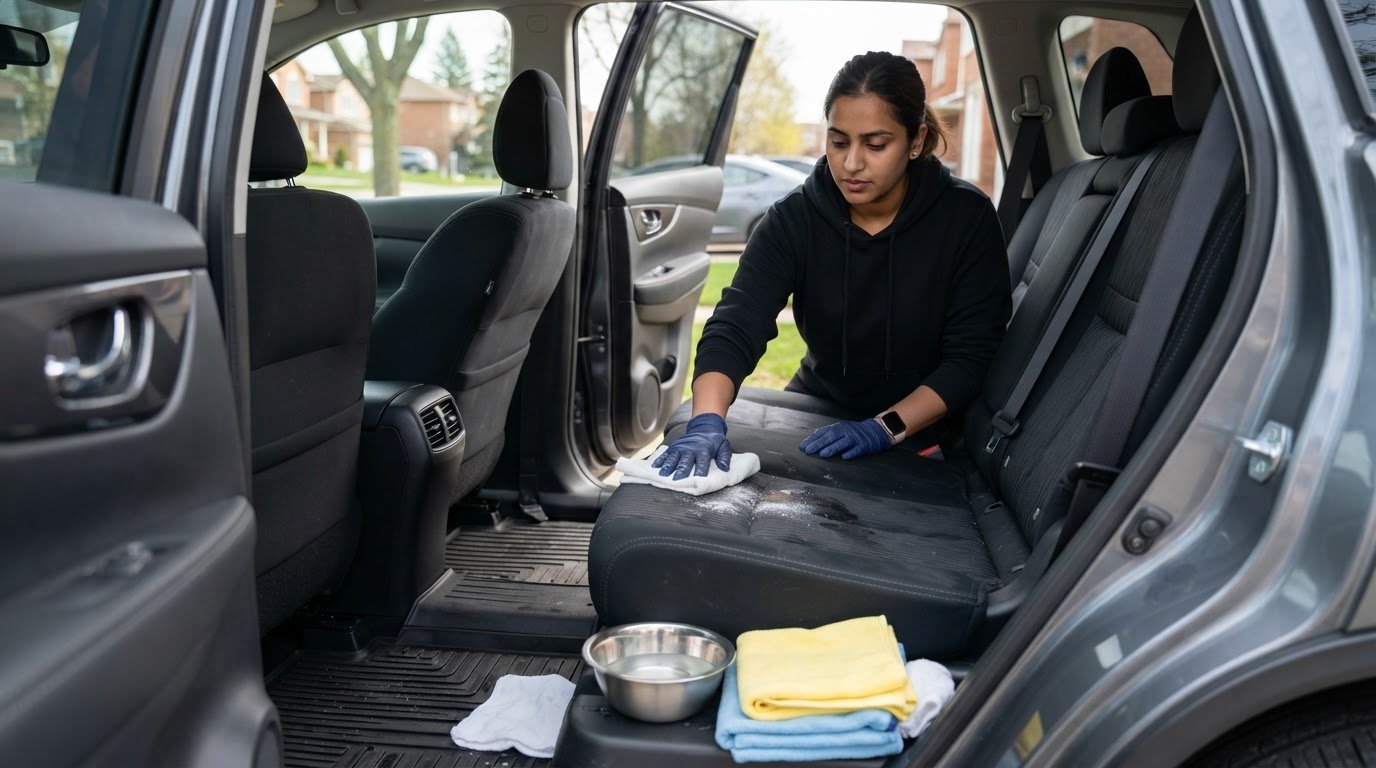
A gasoline smell in your car is more than unpleasant: fumes can cause headaches, dizziness, and nausea, and may create a fire hazard in extreme cases. To learn how to remove gasoline smell from car upholstery, blot the spill instead of rubbing it, ventilate the vehicle, and let baking soda or kitty litter sit on the affected area for at least four hours or overnight before gently cleaning with mild soap and water. Don’t pour water directly onto fresh gasoline, since it can spread the fuel deeper into the upholstery or carpet.
It’s understandable to want to cover the odour quickly, but masking it won’t remove fuel residue. This guide explains safe first steps, how to use vinegar and dish soap on affected surfaces, and ways to reduce lingering smells. You’ll also learn what can cause gasoline odours to return, when ventilation and home cleaning may not be enough, and when a professional interior clean can help.
Key Takeaways
- Blot spilled fuel instead of rubbing it, and avoid pouring water onto a fresh spill.
- Ventilate the vehicle and use absorbent materials carefully to help limit lingering odours.
- Learn how vinegar and dish soap can help clean affected upholstery and carpets.
- Know which recurring fuel smells may point to a spill, container residue, or a vehicle leak.
- If odour remains after cleaning, Nanak Car Wash’s Car Detailing Packages offer a practical next step for a thorough vehicle clean.
Can gasoline odours be harmful if left untreated in a car?
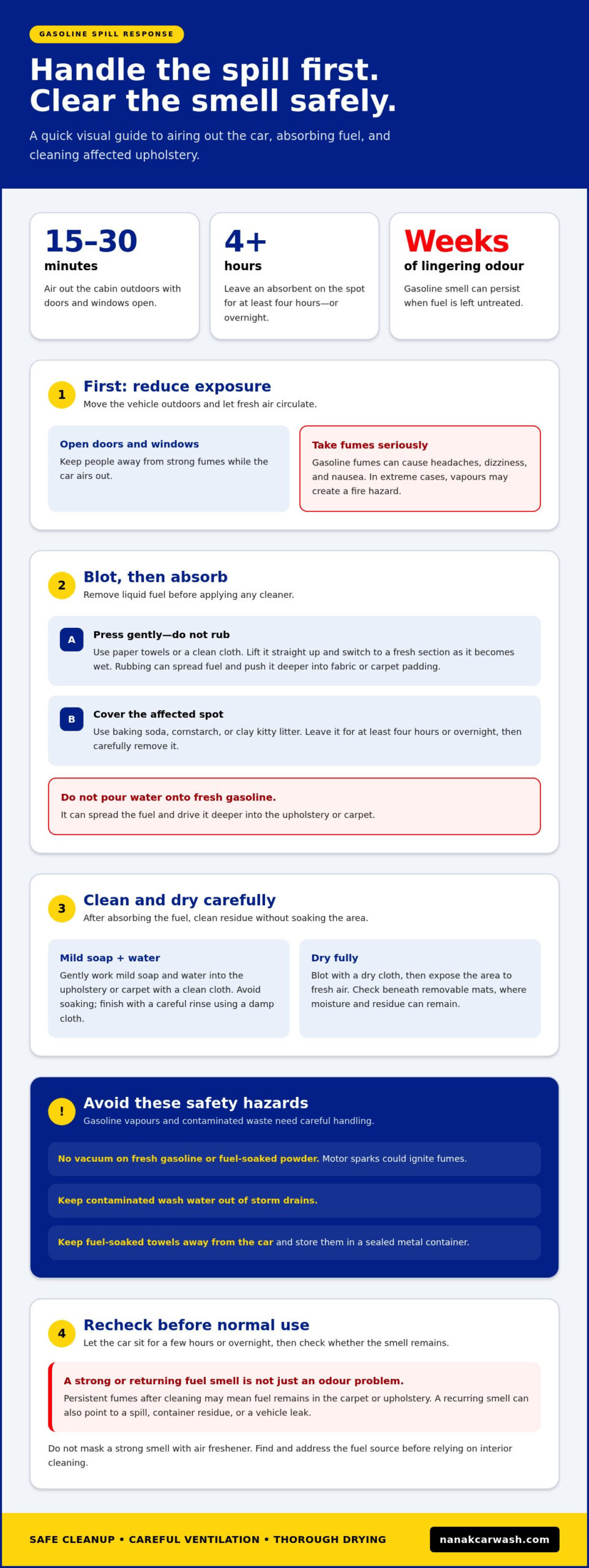
- Ventilate the vehicle and limit exposure. Move the car outdoors, then open its doors and windows to let fresh air circulate. Gasoline fumes inside a car can cause headaches, dizziness, and nausea. In extreme cases, vapours may create a fire hazard. Keep people away from strong fumes while the vehicle airs out.
- Blot the spill without rubbing. Use paper towels or a clean cloth to press gently against gasoline on upholstery, carpet, or a floor mat. Lift the cloth straight up and use a fresh section as it becomes wet. Rubbing spreads fuel across a wider area and can push it deeper into fabric or carpet padding.
- Absorb fuel before applying cleaner. Cover the affected spot with baking soda, cornstarch, or clay kitty litter. Leave it for at least four hours or overnight, then carefully remove the absorbent material. Don’t use a regular vacuum or wet-dry vacuum on fresh gasoline or fuel-soaked powder. Motor sparks could ignite fumes.
- Clean the remaining residue with mild soap. After absorbing the fuel, gently work mild soap and water into the affected upholstery or carpet with a clean cloth. Avoid soaking the area. Pouring plain water onto a gasoline spill can spread fuel and drive it into the carpet padding. Finish with a careful rinse using a damp cloth.
- Handle mats and cleaning waste separately. Remove a floor mat if you can do so without spreading fuel, and clean it outdoors. Blot, absorb, and gently wash the affected area. Don’t let gasoline-contaminated wash water flow into storm drains. Keep fuel-soaked towels or paper towels away from the car, and store them in a sealed metal container.
- Dry the cleaned area completely. Blot upholstery or carpet with a dry cloth, then leave it exposed to fresh air. Check beneath removable mats, where moisture and fuel residue can remain. Gasoline left on carpet can discolour fabric, damage fibres, leave permanent stains, and create sticky residue that attracts dirt.
- Reassess the odour before driving as usual. Let the car sit for a few hours or overnight, then check whether the smell remains. Gasoline odour can linger for weeks when fuel is left untreated. Don’t mask a strong smell with air freshener. Persistent fumes after cleaning may mean fuel remains in the carpet or upholstery.
Common causes of gasoline odours in a car
- Inspect for a refuelling spill. Gasoline can splash onto a shoe and transfer to a floor mat or carpet. A small spill near the fuel door can also reach clothing or the vehicle’s exterior before entering the cabin. Check the driver’s footwear, mats, and cargo area after refuelling. Clean visible residue before the smell spreads.
- Stop when the fuel pump clicks. Topping off after the pump shuts off can cause gasoline to spill around the filler opening. Repeated overfilling may also contribute to problems with the evaporative emissions system, or EVAP system. If the odour appears after filling the tank, note whether it was topped off and inspect the area around the fuel door.
- Check transported fuel containers. A loose cap or container that tipped in the trunk can leave residue on a liner, mat, or nearby upholstery. Remove the container from the vehicle and inspect the surface beneath it. If you must transport gasoline—whether for lawn care or heavy job-site vehicles sourced through Simple Lend Marketplace—keep the can sealed and upright, with a towel or rubber mat underneath.
- Look for signs of a fuel leak. Wet spots or stains near the gas tank and fuel lines can point to escaping gasoline. Check the ground beneath the parked car and look around the rear of the vehicle for fresh damp patches. A smell near the engine or fuel system may also signal a leak. Have the vehicle checked by a mechanic before driving.
- Inspect the gas cap and dashboard. A loose or cracked gas cap can let fuel vapours escape. Make sure the cap is fitted securely after refuelling, then watch for a check-engine light. A fuel smell combined with that warning light is a reason to have the EVAP system inspected. Cleaning the upholstery won’t address vapours from a vehicle fault.
- Compare when and where the smell appears. An odour that starts just after refuelling may indicate a spill, topping off, or a cap that isn’t seated correctly. A smell that persists while parked or returns after the cabin is cleaned calls for a closer look at the tank, fuel lines, and transported containers. Record the location and timing to help identify the source.
- Address the source before treating the cabin. Remove gasoline residue from mats and cargo liners, but don’t rely on upholstery cleaning to resolve a recurring fuel smell. If you find wet areas around the tank or lines, or smell fuel near the engine, avoid driving until the vehicle has been checked. Once the source is addressed, clean any contaminated interior surfaces.
Odour eliminators and ventilation systems
- Air out the cabin before treating the smell. Park outdoors, open the doors and windows, and let fresh air move through the vehicle for 15-30 minutes. Avoid running the air conditioner or recirculation while gasoline odour remains. Those settings can keep the smell moving inside the cabin instead of letting it disperse.
- Use absorbents only after removing liquid fuel. Once the spill has been blotted, place baking soda or activated charcoal near the affected upholstery. Leave it in the car overnight, then remove it. These materials can help absorb lingering odours, but they don’t replace cleaning fuel residue from fabric, carpet, or floor mats.
- Try coffee grounds as an odour absorber. Put dry coffee grounds in a bowl and leave it in the vehicle overnight. Keep the bowl stable, away from pedals and seats, to prevent spills while driving. Coffee grounds can also sit in the cabin for a couple of days. Remove them before using the car.
- Choose an upholstery-safe odour cleaner. For fabric seats or carpet, use an enzymatic cleaner made for upholstery and odour neutralization. Apply it according to the product label, and test a hidden spot first for colour changes. Don’t saturate the padding. Trapped moisture can prolong drying and leave the interior damp.
- Follow the label on commercial eliminators. Use a car odour eliminator exactly as its instructions direct. Check whether the label permits use on fabric, carpet, or enclosed vehicle interiors. Apply it only after cleaning visible residue. A scented spray can mask gasoline odour without removing the source, so don’t rely on fragrance alone.
- Dry upholstery with sustained airflow. After cleaning, leave doors or windows open in a safe outdoor parking spot. Allow the interior to air-dry for 4 to 5 hours, and keep damp mats out of the cabin until dry. Drying matters because moisture left in carpet or seat fabric can hold unpleasant smells.
- Recheck the odour before starting a normal drive. Let the vehicle sit for a few hours or overnight, then assess the cabin before using air freshener. With treatment and ventilation, gasoline odour usually fades in a few days. If it remains, inspect for fuel residue and consider whether the source has been fully removed.
Vinegar and dish soap cleaning solutions
- Remove fuel residue before using a water-based cleaner. Blot the gasoline and absorb any remaining liquid first. Don’t pour vinegar, soap, or plain water onto a fresh spill. Liquid can spread gasoline into nearby fabric or carpet padding. Start this cleaning method only after visible fuel has been removed and the area is ready for careful surface cleaning.
- Test the cleaner on a hidden spot. Choose an inconspicuous area beneath a seat or along a carpet edge. Apply a small amount of the solution, then blot it with a clean cloth. Check for colour transfer or fabric changes before treating a visible area. This quick test helps protect upholstery with delicate dyes or finishes.
- Mix a vinegar solution for carpet. Combine equal parts white vinegar and hot water. Add a few drops of liquid dish soap, then stir gently. Avoid adding more soap, which can leave residue that attracts dirt. Prepare only enough solution to treat the affected carpet rather than soaking a large section of the interior.
- Apply the solution lightly. Dampen a clean cloth with the mixture and press it onto the affected carpet or upholstery. Don’t pour it directly over the area or saturate the padding beneath. Work from the edge of the spot toward its centre. This limits spreading and keeps excess moisture out of deeper layers.
- Give the vinegar solution time to work. For carpet, let the vinegar-and-water mixture sit for 15 minutes before blotting. Use a timer, then press the area with a fresh cloth to lift moisture and loosened residue. For white vinegar used to address odour, the suggested application window is 15-20 minutes. Avoid leaving fabric wet longer than needed.
- Use mild dish soap for remaining residue. Mix a small amount of mild dish soap with water, then apply it sparingly with a cloth. Let it work for 10-15 minutes on gasoline residue before blotting. Don’t scrub hard; vigorous friction can spread residue or roughen upholstery fibres. Use clean sections of cloth as they pick up soil.
- Blot, rinse, and dry the treated area. Use a cloth dampened with clean water to lift cleaner from the surface. Blot again with a dry towel, then let the carpet or seat air-dry completely. Check the area after it dries. If the gasoline smell remains, repeat careful cleaning only after confirming no fresh fuel remains.
When should gasoline-soaked car upholstery be replaced instead of cleaned?
- Assess the extent of the spill first. A small, surface-level mark on a removable floor mat differs from gasoline soaked through carpet into its padding. Check the affected surface and the underside of removable mats. Don’t decide on replacement based on smell alone; first establish whether fuel residue remains after careful cleaning and drying.
- Look for lasting fabric damage. Gasoline left on carpet can discolour fabric, damage fibres, and leave permanent stains. Compare the affected area with nearby upholstery in daylight. If fibres look weakened, rough, or visibly discoloured after cleaning, replacing that section may make more sense than repeating surface treatments.
- Check below the carpet surface. Carpet padding can hold fuel residue beyond the visible spill area. If the surface seems clean but the same spot continues to smell after drying, inspect the underside where practical. A lingering odour can indicate contamination deeper in the material, not simply a need for fragrance or another surface wipe.
- Separate removable mats from fixed upholstery. Take out a removable mat and assess it outside the cabin. A mat that remains stained, sticky, or strongly odorous after cleaning may be easier to replace than fixed carpet. For attached carpet or seat fabric, avoid cutting or pulling material without understanding how it is secured.
- Clean once, then judge the result when dry. Blot and clean the affected area using a method suitable for its fabric. Let it dry completely before assessing the odour or texture. Wet upholstery can smell different from dry material, so a decision made immediately after washing may not reflect the final condition.
- Stop repeating treatments if the material worsens. More scrubbing, water, or cleaner can spread residue, damage fibres, or leave upholstery damp. If the stain grows or the fabric changes after cleaning, pause. Note the affected area and whether the smell returns after drying. Those details help determine whether cleaning remains practical.
- Consider replacement when cleaning cannot resolve the contamination. Replacement may be appropriate when gasoline has soaked deeply, the material remains stained or sticky, or the odour returns after thorough cleaning and drying. The deciding factors are contamination depth, visible fibre damage, and whether the affected piece can be removed separately.
- Choose a professional clean before replacing fixed interior material. A specialist interior clean can assess residue on seats, carpets, and mats, then determine whether cleaning is suitable. For help with vehicle interior cleaning, explore professional car detailing. If fuel odour continues after cleaning, identify and address its source before replacing upholstery.
Nanak Car Wash: Car Detailing Packages
Nanak Car Wash offers Car Detailing Packages for drivers who need more than a routine exterior wash. After blotting and cleaning a gasoline spill, consider a detailing package if odour or residue remains on interior surfaces. A Full-Service Car Wash or Express Car Wash can suit general vehicle cleaning, but persistent upholstery contamination calls for attention to the interior.
Cleaning won’t fix a fuel leak or replace upholstery damaged by gasoline. Address any suspected vehicle fault first, then choose cleaning based on the affected surfaces and remaining residue. For a cleaner, more comfortable cabin, contact Nanak Car Wash or visit nanakcarwash.com.
Make your next step a clean, comfortable cabin
Knowing how to remove gasoline smell from car upholstery helps you act quickly, but the next decision is whether home cleaning has addressed the affected interior. If odour or residue remains after cleaning, choose an interior-focused clean rather than relying on fragrance to cover it. Share where the spill occurred and which surfaces were affected so the cleaning can focus on the areas that matter.
Nanak Car Wash offers Car Detailing Packages for vehicle interiors that need more attention. A Full-Service Car Wash or Express Car Wash can suit general vehicle cleaning, while detailing is the more relevant option for lingering interior residue. A suspected fuel-system leak needs attention before any cleaning. We do our Best to keep the prices low and give Good service.
Take the next step at your pace. Contact Nanak Car Wash about a vehicle clean and move toward a fresher cabin with a clear plan.
Frequently Asked Questions
How Different Materials Trap Gasoline Molecules?
Porous materials can hold gasoline residue below the surface. Woven seat fabric, carpet fibres, foam, and carpet backing may retain fuel after the visible spot looks dry. Leather and vinyl have less absorbent surfaces, but seams, perforations, and creases can collect residue. Check those hidden areas, especially where a seat meets its cushion or carpet meets a door sill.
Why Does Gas Smell in Your Car Happen?
A gasoline smell usually comes from fuel spilled during refuelling, residue from a container, or vapours escaping from the vehicle. Notice when it starts: an odour immediately after filling may point to a spill, while a smell returning after interior cleaning suggests another source. A persistent smell near the engine or fuel system can indicate a leak, which needs attention before driving.
Why The Scent Stays?
The odour can linger because fuel residue remains in places a cloth cannot reach, such as carpet backing, seat seams, or a mat’s underside. Warm cabin air can make the smell more noticeable as trapped residue releases vapours. Covering the area with fragrance won’t remove that residue. Find the affected material and check beneath removable mats before treating the cabin again.
What should I do immediately after gasoline spills on car upholstery?
Stop the engine, move the vehicle outdoors if safe, and open the doors and windows. Keep smoking, flames, and other ignition sources away from the spill. Press paper towels or a clean cloth onto the gasoline; don’t scrub. Keep a regular or wet-dry vacuum away from fresh fuel. If the spill is large or fumes are strong, leave the vehicle and keep others clear.
How can I safely remove gasoline smell from fabric car seats and carpet?
To learn how to remove gasoline smell from car upholstery safely, first absorb the spill and avoid soaking the fabric. Treat fabric with a small amount of mild soap and water on a cloth. Remove loose carpet mats and clean them separately. An enzyme-based upholstery cleaner can help address odour on fabric seats. Follow its label, test a hidden area, and let each surface dry fully.
How do you clean gasoline from leather or vinyl car upholstery?
Blot liquid from leather or vinyl with a clean, absorbent cloth, using gentle pressure. Wipe the area with a lightly damp cloth and mild soap, then dry it with a separate towel. Avoid flooding seams, perforations, or seat joins, where liquid can collect. Check the vehicle’s upholstery-care instructions before applying a cleaner, and test any product on a hidden patch.
Which cleaners absorb gasoline odour from car upholstery, such as baking soda or activated charcoal?
Baking soda can sit on an affected area for 4-12 hours to help absorb odour. Activated charcoal can be placed in a stable bowl inside the vehicle overnight or for a couple of days. Use either only after removing liquid fuel. Don’t vacuum powder that has absorbed gasoline; fumes could ignite from motor sparks. Follow commercial odour eliminator labels.
How long does gasoline smell take to disappear from car upholstery?
Knowing how to remove gasoline smell from car upholstery includes understanding that the odour usually fades in a few days with proper cleaning and ventilation. An untreated spill can leave a smell for weeks. The time depends on how much gasoline reached the upholstery, whether it soaked into padding, and how well the cabin dries. If the smell persists, check beneath mats or for a continuing fuel source.

 6600 Finch Ave W, Etobicoke, ON M9V 3Z6

 647-703-8515
 MON – SUN 8 AM to 7 PM