
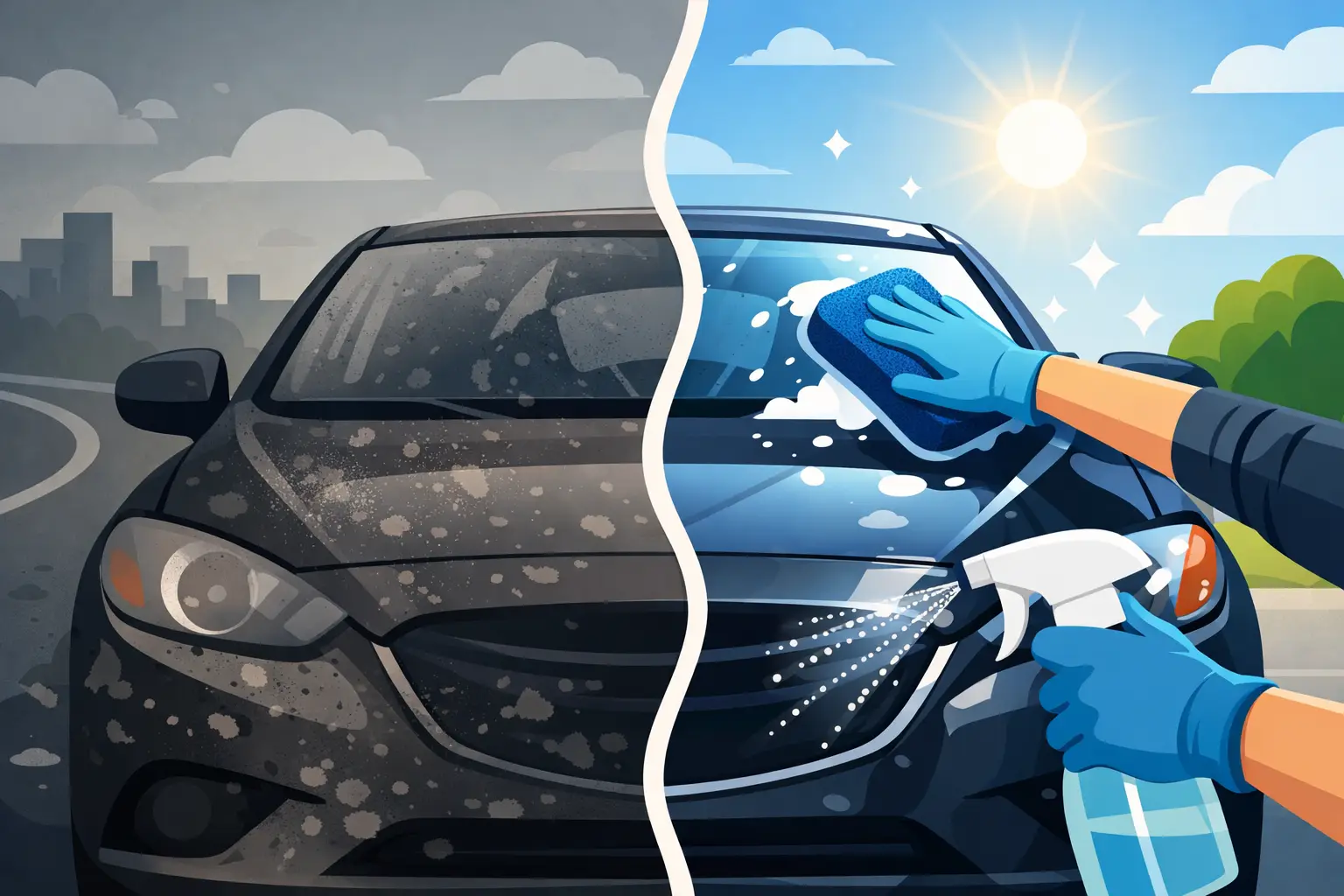
That dull gray-brown layer on your doors, bumpers, wheels, and rear hatch is not just ordinary dirt. To remove road film properly, you need more than a quick rinse. Road film sticks to paint because it is a mix of oily residue, exhaust soot, brake dust, tire grime, salt, and fine dirt picked up during everyday driving.
For commuters, family vehicles, rideshare cars, and work trucks, it builds up fast. It can make a freshly washed vehicle still look dull, leave dark streaks around trim, and make wheels look permanently dirty. The good news is that you do not need harsh chemicals or an expensive detail every time. The right wash process can get the job done safely and keep your vehicle looking cared for between deeper cleanings.
Why Road Film Is Hard to Wash Off
Road film has an oily side to it. Water alone can rinse away loose dust and mud, but it does not always break down the traffic grime that bonds to the surface. That is why a vehicle can look cleaner after rain, yet still feel rough or look hazy in direct sunlight.
Winter driving makes the problem worse. Road salt, slush, and grime collect behind wheel wells, along rocker panels, under the bumpers, and around the lower doors. In busy driving areas such as Brampton, Mississauga, Vaughan, and Toronto, regular highway traffic adds more exhaust residue and spray from other vehicles.
Leaving road film on for too long does not automatically ruin paint, but it can wear down wax or sealant protection over time. It also makes it harder to spot issues such as chips, scratches, tar spots, and early rust around lower body panels. Regular washing is simple preventative care, especially when the roads are wet, salty, or dusty.
How to Remove Road Film Without Damaging Paint
The biggest mistake is scrubbing a dry or barely rinsed vehicle. Dirt trapped in a towel or sponge can drag across the paint and leave fine scratches. Start with water pressure and proper wash soap, then use gentle contact washing only after the loose grime has been softened.
Start With a Thorough Rinse
Rinse the entire vehicle from top to bottom, giving extra attention to the lower panels, wheel arches, grille, rear bumper, and wheels. Do not rush this step. The goal is to knock off grit before you touch the paint.
If the road film is heavy, let the water run over those areas for a little longer. Avoid washing in hot direct sunlight when possible. Soap and water can dry too quickly on warm paint, leaving spots and making the job harder.
Use Car Wash Soap, Not Household Cleaner
Use a soap made for automotive finishes. A quality car wash soap helps lift oily traffic grime while being safer for paint, trim, wax, and protective coatings. Dish soap, laundry detergent, and strong all-purpose cleaners may cut through grease, but frequent use can strip protection and dry out plastic or rubber trim.
Apply the soap evenly and let it dwell briefly. Do not let it dry on the vehicle. If you are using a foam cannon or foam gun, treat the foam as a way to loosen dirt, not as a replacement for a careful wash when the vehicle is heavily soiled.
Wash Gently From the Top Down
Use a clean microfiber wash mitt and work from the roof down to the lower panels. Rinse the mitt often in a separate bucket of clean water. The lower doors, rocker panels, and rear of the vehicle hold the most grit, so wash them last.
For a heavily used vehicle, the two-bucket method is worth the extra minute. One bucket holds soapy water and the other is for rinsing your mitt. This keeps dirty water from going back onto the paint.
Do not use the same mitt on paint and wheels. Wheels collect brake dust and sharp debris that can scratch clear coat. Use a separate wheel brush, mitt, or microfiber towel for those areas.
Treat Stubborn Areas the Right Way
Sometimes normal wash soap will not fully remove road film, especially behind the wheels and along the lower body. A dedicated road film remover, bug and tar cleaner, or mild all-purpose cleaner can help, but read the label and test it on a small area first.
Use stronger cleaners only where they are needed. They are helpful for neglected vehicles, winter buildup, fleet vehicles, and long highway trips, but they should not be the everyday answer for every wash. Applying an aggressive cleaner too often can affect wax, sealants, and some sensitive trim finishes.
Tar spots may need a separate tar remover. Iron fallout from brake dust may need an iron remover. If paint still feels rough after washing, bonded contamination may be the issue rather than road film alone. In that case, clay treatment and paint protection are better handled carefully, particularly on dark-colored vehicles where marring shows easily.
Rinse, Dry, and Check Your Work
Rinse all soap and cleaner from the vehicle, including door jambs, mirrors, wheel wells, and around emblems. Dry with clean microfiber towels or forced air if available. Drying matters because it prevents water spots and lets you see whether the film is actually gone.
Check the lower doors, rear hatch, bumper corners, and wheels in good light. If those areas still look dull, repeat a gentle wash or use the appropriate spot cleaner rather than scrubbing harder.
What You Need for a Better Road Film Wash
A basic setup is enough for regular upkeep. Keep these items on hand if you wash at home:
- Automotive car wash soap
- Two buckets with grit guards if possible
- Clean microfiber wash mitts and drying towels
- A separate wheel brush or wheel mitt
- A safe cleaner for bugs, tar, or stubborn lower-panel grime
The clean towels and mitts matter as much as the products. A premium soap cannot prevent scratches if you use a dirty towel that has been sitting in the trunk for months.
Protect the Paint So Road Film Lets Go Easier
After you remove road film, add protection. Wax, paint sealant, or a ceramic-style spray protectant creates a slicker surface that makes future grime easier to wash away. It will not stop your car from getting dirty, but it can reduce how hard road film sticks and help water bead off the paint.
Spray protectants are a practical choice for everyday drivers because they are fast to apply after a wash. Traditional wax can last longer depending on the product and weather, while professional ceramic coatings offer stronger long-term protection but cost more and need proper prep. The right choice depends on your budget, how often you wash, and whether your vehicle is parked outside.
Do not forget underbody care during salt season. Washing the visible paint is great, but salt and grime under the vehicle can affect metal components over time. Regular undercarriage rinses and professional rust protection can be a smart investment for vehicles driven through harsh winter conditions.
When a Quick Wash Is Enough and When Detailing Helps
A routine exterior wash is usually enough when road film is fresh and the paint still feels smooth after cleaning. If your vehicle has dull lower panels, stained trim, embedded brake dust, old tar, or interior grime to match the exterior buildup, a deeper detail may save you time and frustration.
This is especially true for rideshare drivers, families, and fleet vehicles that spend long hours on the road. Consistent wash visits cost less effort than waiting until the vehicle looks neglected. Unlimited wash plans can also make regular exterior care easier to fit into a busy week.
At Nanak Car Wash, a regular wash can help keep everyday traffic grime under control, while hand-finished detailing is a better option when the buildup needs more attention. The best schedule is the one you can keep: wash after heavy salt, muddy weather, highway trips, or whenever the lower panels start looking dull.
A clean vehicle does more than look better in the driveway. It is easier to maintain, easier to inspect, and more pleasant to drive. Give road film less time to settle in, and each wash becomes faster, safer, and easier on your paint.

 6600 Finch Ave W, Etobicoke, ON M9V 3Z6
 647-703-8515
 MON – SUN 8 AM to 7 PM