
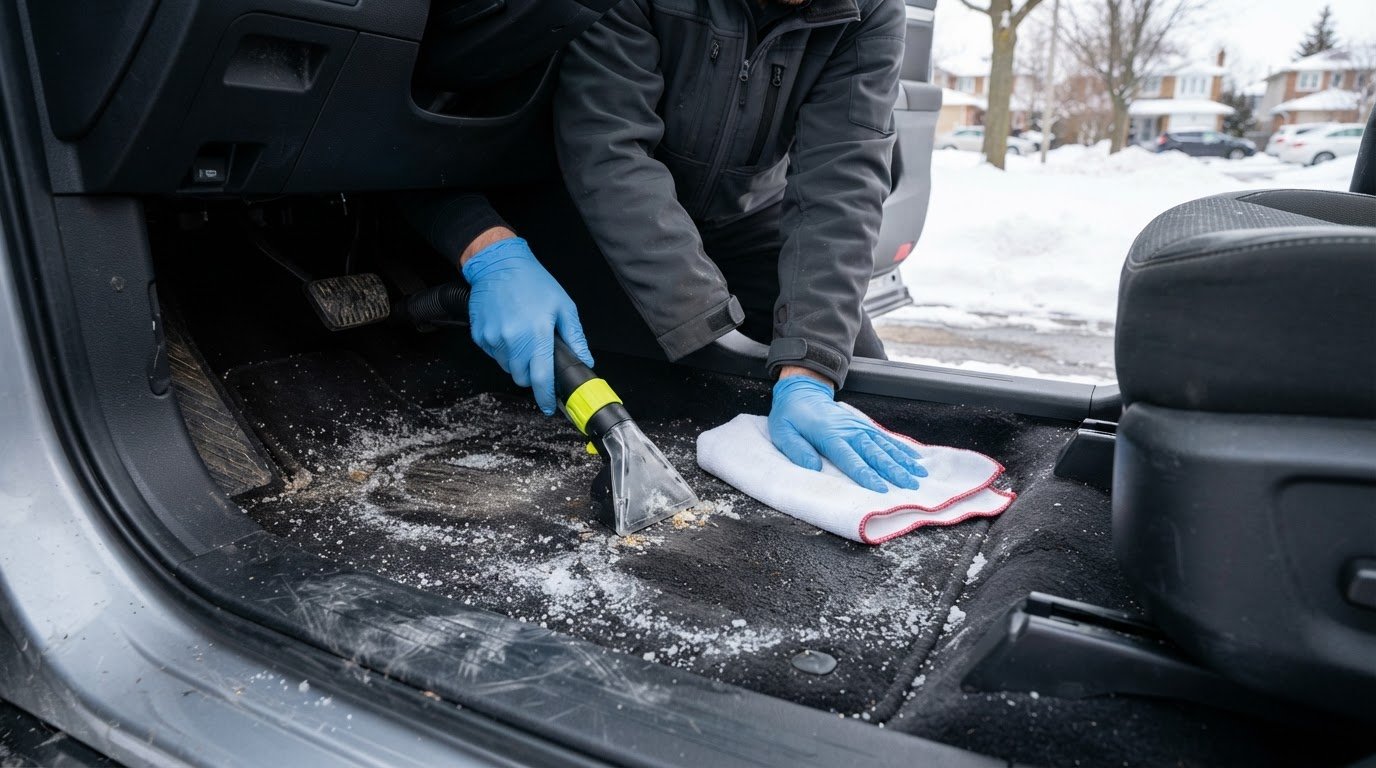
What if more scrubbing is why those white rings keep coming back? If you’ve wiped a winter salt stain and watched it reappear as the carpet dries, you’re not alone. Learning how to remove salt stains from car carpets in winter means loosening the residue and lifting it out, not spreading it around with a damp cloth.
You can tackle light marks without soaking the carpet or reaching for a harsh cleaner. Start by removing loose salt, then use a suitable cleaner sparingly. Blot or extract the moisture instead of letting it settle deep into the fibres.
This guide walks you through a careful cleaning process, explains why white rings can return, and offers practical ways to help the carpet dry fully and avoid lingering damp smells. You’ll also learn when repeated home cleaning may be less effective than professional carpet shampoo and stain removal.
For stubborn or recurring stains, Nanak Car Wash in Brampton offers car detailing packages that include carpet shampoo and stain removal. Start with the manageable steps below, then choose the right next move for your carpet.
Key Takeaways
- Learn how to remove salt stains from car carpets in winter with a careful approach that targets residue without soaking the fibres.
- Separate removable mats from fixed carpet, and clear away loose grit before using a cleaner.
- Follow the cleaner’s label and apply it sparingly to help prevent damp carpet and white marks after drying.
- If a mark returns, check whether residue remains and whether the area has dried fully before trying again.
- For recurring stains or larger affected areas, Nanak Car Wash’s Deal From $99 includes carpet shampoo and stain removal.
Why winter road salt leaves white stains on car carpets
After a snowy drive, pale, crusty marks on floor mats or carpet are a familiar sight. They’re salt residue left behind when salty water dries on or within the carpet fibres. The moisture evaporates, but dissolved minerals can remain and show up as a white film or ring.
Road salt gets into the cabin on boots and shoes. The term can refer to different salts used to help manage icy roads; Road Salt provides background on common types and their uses. During repeated trips through slush and wet snow, salty moisture transfers from footwear to mats, then to the carpet underneath or beside them.
How road salt gets from winter roads into the cabin
In Ontario, winter driving often means getting in and out of the vehicle with damp footwear. Salt and grit cling to boot treads, collect on removable mats, and can be pressed into carpet as people shift their feet. A visible mark on a mat may not be the whole problem: moisture can seep through or spill over the edges, leaving residue on the fixed carpet below.
Check the two surfaces separately. Remove and inspect mats on their own, then check the carpet underneath, especially around the edges. This helps you find where the salt has settled instead of treating only the most obvious white patch.
Why a salt mark can appear again after cleaning
A quick wipe can make a mark look better at first, but it may simply move salty moisture across the surface. If dissolved residue remains between the fibres, it can show again as the damp area dries. A pale ring returning after cleaning doesn’t mean the stain appeared from nowhere. It can indicate that residue was loosened but not fully removed.
Brushing the dry surface has limits, too. It may lift loose grit, but it won’t necessarily reach salt embedded in the carpet pile. The goal of how to remove salt stains from car carpets in winter is to loosen the residue, lift away the dirty moisture, and let the area dry fully. Each step matters. Leftover cleaning liquid can carry dissolved salt toward the surface as it evaporates.
If a mark returns, pause before adding more cleaner. Check whether the dirty moisture was removed and whether the carpet had time to dry completely. Repeatedly wiping a damp spot can spread moisture and make it harder to tell what remains. Focus on removing residue, not just wetting the visible patch until it temporarily looks lighter.
What to do before cleaning salt stains from car carpet
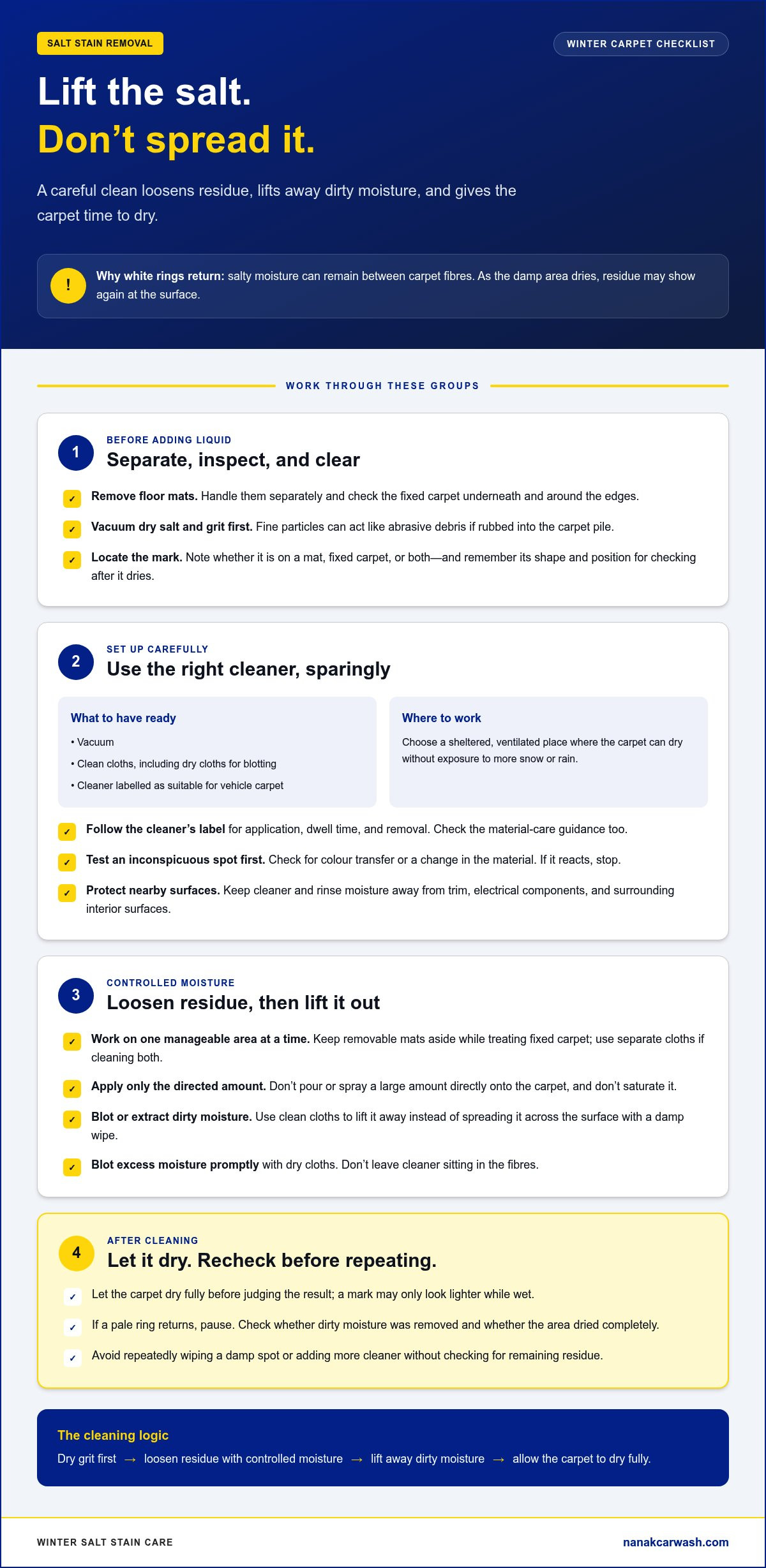
A few minutes of preparation can help stop a small salt mark from becoming a larger damp patch. Before adding liquid, clear away loose grit and salt. Fine particles can act like abrasive debris if rubbed into the pile. Wetting them first can also make them harder to remove cleanly.
Remove floor mats and handle them separately from the fixed carpet. Clean mats according to their material-care guidance, and check the carpet underneath for salty moisture that may have passed through or around the edges. Don’t assume that a clean-looking mat means the carpet below is clear.
Gather supplies and protect the surrounding interior
Keep the setup simple: use a vacuum, clean cloths, and a cleaner labelled as suitable for vehicle carpet. Follow the product directions for application and removal. There isn’t one cleaner that suits every carpet or mat, so rely on the label and the vehicle’s care guidance rather than assuming a household product is compatible.
- Vacuum dry grit before wet cleaning.
- Keep cleaner and rinse moisture away from trim, electrical components, and nearby interior surfaces.
- Work in a sheltered, ventilated place where the carpet can dry without exposure to more snow or rain.
Have dry cloths ready so you can blot excess moisture promptly instead of leaving cleaner to sit in the fibres. Avoid pouring or spraying a large amount directly onto the carpet. Use only the amount directed by the cleaner’s label, and don’t saturate the area.
Check the carpet, mats, and stain before applying cleaner
Look closely at where the mark is: on a removable mat, on fixed carpet, or on both? Note its shape and location before cleaning. This gives you a useful comparison once the area dries and helps distinguish a lasting improvement from a mark that only looks lighter while wet.
Test the chosen cleaner on a small, inconspicuous spot first, following its label. Use a clean cloth to check for colour transfer or a change in the material. If the carpet or mat reacts, stop instead of applying the cleaner to the visible stain. Check the material-care guidance before choosing another method.
Preparation also helps you decide whether a DIY clean is suitable. If the affected area is broad or your test raises concerns about the material, avoid experimenting with stronger products or extra water. For stubborn carpet marks, Nanak Car Wash’s Deal From $99 includes carpet shampoo and stain removal. Learn more about car detailing packages.
How to remove salt stains from car carpets step by step
A careful clean has two parts: lift dry particles first, then loosen and remove the residue with controlled moisture. This helps prevent grit from being pushed deeper and excess cleaner from being left in the carpet. Choose a product labelled as suitable for vehicle carpet, and follow its directions for application, dwell time, and removal.
Loosen the salt and lift residue without scrubbing aggressively
Work on one manageable area at a time. Keep removable mats out of the way while cleaning fixed carpet, and use separate cloths if treating both surfaces. Don’t start by wetting the whole floor. Focus on the affected fibres while keeping moisture under control.
- Vacuum the dry area. Pick up loose salt, grit, and dirt with a vacuum. Move the nozzle slowly over the stained section without grinding debris into the fibres. Vacuum the surrounding area too, since particles can sit just beyond the visible mark.
- Apply cleaner sparingly. Follow the label’s directions for the amount and application method. Avoid soaking the carpet or letting liquid run toward seat rails, trim, or nearby surfaces. If the label specifies a dwell time, follow it rather than guessing or leaving the cleaner on longer.
- Agitate gently. Use a clean cloth or a brush suitable for the carpet material. Work lightly over the stain to help loosen residue without roughing up or damaging the fibres. Follow the cleaner’s directions if they specify a particular method.
Extract moisture and check the carpet after it dries
Loosened salt needs to be removed with the cleaning solution. Blot with a clean, absorbent cloth, pressing down and lifting to draw up moisture. Move to a dry part of the cloth as it becomes damp. If using an extractor, make sure it’s intended for the surface and follow its instructions. Don’t keep adding liquid just because a faint mark is still visible while the carpet is wet.
- Remove the dirty moisture. Blot or extract the treated area, working from the outside of the spot toward the centre to avoid spreading moisture. Use steady pressure, not rubbing.
- Repeat only if appropriate. If residue remains after the carpet dries, repeat the process only as needed and within the cleaner’s instructions. Stop if the material changes, colour transfers, or the carpet becomes overly wet.
- Let the carpet dry fully. Keep mats off the treated area until it is completely dry. Don’t judge the result while the fibres are damp, as moisture can temporarily change the mark’s appearance. Once dry, inspect the spot in good light for residue or a returning ring.
The key to how to remove salt stains from car carpets in winter is controlled cleaning and removal, not repeated soaking. If the stain keeps returning after careful attempts, pause before applying more product. Check whether residue was removed and let the area dry fully before deciding what to do next.
How to handle stubborn salt marks and reduce winter residue
A white mark that remains after cleaning and one that returns as the carpet dries may need different responses. A faint spot on damp fibres doesn’t tell you whether the residue is gone. Let the area dry fully before assessing it. If the mark remains, consider whether the cleaning solution and loosened residue were removed before adding more cleaner.
What to try when a white ring returns
Start by checking how you cleaned the area. Was the carpet still damp when you inspected it? Did you blot or extract the dirty moisture, or mostly wipe the surface? A returning ring can mean residue remains in the fibres, or that moisture carried residue back toward the surface as it dried. Look at the stain only once the area is fully dry, and compare it with how it looked before treatment.
If the material looks unchanged and the cleaner’s directions allow another application, a controlled second treatment may be reasonable. Use the product as directed, focus on the affected area, and remove the loosened moisture. Don’t increase the amount of cleaner or scrub harder to force a result. Stop if the stain spreads, remains after a careful repeat, colour transfers, or the carpet’s texture or appearance changes. Continued wetting and friction can leave the carpet damp and wear the fibres. For recurring or stubborn marks, professional carpet shampoo and stain removal is a practical next step.
Use this quick check before repeating a DIY clean:
- Still damp? Give the carpet more time to dry before judging the result.
- Dry but marked? Consider whether residue may remain and whether the first cleaning moisture was fully removed.
- Material reacting or mark spreading? Stop instead of adding more product or scrubbing.
Simple ways to limit salt tracked into the cabin
You can reduce winter residue without expecting to prevent every mark. A few small habits can limit how much salty slush and grit reaches the fixed carpet, especially during repeated snowy drives around Ontario.
- Knock loose snow and grit from footwear before getting into the vehicle when practical.
- Lift removable mats regularly, clear away dry debris, and check the carpet beneath them.
- Vacuum accumulated grit before shoes or repeated foot traffic press it into damp carpet.
These habits target a common source of cabin marks: material carried in on footwear and held on mats before reaching the carpet. They also make it easier to spot moisture or residue early, while the affected area is still small. Mats need attention too, since a visibly dirty mat can transfer residue back into the cabin after cleaning.
If DIY cleaning hasn’t cleared a stubborn or recurring carpet mark, Nanak Car Wash’s Deal From $99 includes carpet shampoo and stain removal. Choose professional carpet shampoo and stain removal for help with persistent winter residue.
When professional car detailing can help with winter salt stains
A small, accessible mark is often a reasonable DIY job if the carpet’s care guidance allows cleaning and you can control the moisture. Professional help becomes more practical when the affected area is broad, a white mark keeps returning after careful cleaning, or repeated attempts haven’t improved it. At that point, more scrubbing or cleaner may add dampness and wear without removing residue deep in the fibres.
DIY cleaning or professional carpet shampoo: how to decide
After one careful attempt, let the carpet dry fully before deciding what to do next. A mark that remains on dry fibres, covers a large section, or returns after another properly controlled clean is a good reason to stop experimenting. Keep track of what you’ve tried and how the material responded. If colour transfers or the carpet’s texture changes, don’t continue applying products.
DIY cleaning can suit an isolated spot. Persistent or widespread salt residue may call for professional carpet shampoo and stain removal, especially if removing moisture thoroughly at home is difficult. For more context on interior-care approaches, see this interior car detailing guide. It explains how carpet care fits into maintaining a clean vehicle interior.
Choosing professional help doesn’t guarantee every mark will disappear. It means handing a stubborn cleaning job to a detailing service instead of continuing with repeated DIY treatments that could leave the carpet too wet or damage its fibres.
A practical next step for Brampton drivers
Nanak Car Wash serves vehicle owners in Brampton, Ontario. Its Deal From $99 includes carpet shampoo and stain removal, making it a relevant option when winter salt marks remain after a careful home clean. For broader interior-care context, explore this car detailing guide.
Before arranging a professional clean, note where the stains are and whether you’ve already treated them. This helps you describe the issue clearly and avoid applying more product just before the carpet is assessed. If only one small mark remains, a measured DIY attempt may still be suitable. If marks recur or cover several areas, professional shampooing is a sensible next step.
The best approach to how to remove salt stains from car carpets in winter depends on the size of the affected area, how the carpet responds, and whether you can remove the moisture properly. Don’t keep repeating a method that isn’t working. Explore Nanak Car Wash detailing for a practical next step with stubborn winter carpet stains.
Keep winter stains from taking over your interior
A clean, dry carpet is easier to maintain through the rest of winter. Check high-traffic areas after snowy drives, and deal with new residue before it gets pressed repeatedly into the fibres. If a mark keeps returning, don’t keep adding cleaner. Pause and choose a more suitable next step.
Knowing how to remove salt stains from car carpets in winter also means knowing when to stop. A careful home clean can be a sensible first try, but persistent marks may need professional attention. Nanak Car Wash serves drivers in Brampton, Ontario, and its listed Deal From $99 includes carpet shampoo and stain removal.
Give your interior a practical reset with Explore Nanak Car Wash detailing packages. Choose professional carpet shampoo and stain removal for stubborn winter marks and take the next step toward a cleaner-feeling cabin.
Frequently Asked Questions
Does vinegar remove salt stains from car carpets?
Vinegar may help loosen some salt residue, but it isn’t suitable for every carpet or mat. Materials and cleaner formulations differ, so don’t assume a homemade solution is safe for your vehicle’s interior. Check the carpet’s care guidance and the cleaner label, then test discreetly. Apply moisture sparingly and remove the dirty solution afterward. Simply wetting a white mark can leave residue behind as the area dries.
Can road salt damage car carpet?
Salt residue can leave visible marks, and moisture mixed with grit can make the carpet harder to clean. That doesn’t mean permanent damage is inevitable. Deal with residue carefully and let the area dry fully. If the carpet stays discoloured after drying, or its colour or texture changes during cleaning, stop DIY treatment. Further scrubbing or adding product may make it harder to assess the material.
Why do salt stains come back after cleaning?
Salt marks can return if residue remains within the fibres or dirty cleaning moisture wasn’t fully removed. As damp carpet dries, leftover residue may become visible again. A key part of how to remove salt stains from car carpets in winter is checking the dry result, not just how the spot looks while wet. Reassess moisture removal first, and repeat carefully only if the cleaner’s directions allow it. Don’t repeatedly soak the same area.
Can I use a steam cleaner on salt-stained car carpet?
There isn’t a universal yes, because carpet materials, backing, and steam-cleaner instructions vary. Check the vehicle’s material-care guidance and the machine directions before using heat or moisture. Avoid applying more water than the equipment instructions call for, and let the carpet dry completely before replacing mats. If you’re unsure about compatibility, or a previous attempt has left the area very damp, pause instead of applying more heat or water.
Should I clean salt stains from floor mats differently from fixed carpet?
Yes. Removable mats can be taken out and cleaned separately according to their material and care instructions. Fixed carpet must be treated inside the vehicle, so take extra care to control moisture around nearby interior surfaces. For either surface, remove loose grit before using a liquid cleaner. Don’t assume a method that suits one mat type will suit another, and make sure mats are fully dry before putting them back.
How do I get rid of a salty smell in my car carpet?
First check whether the carpet is damp or still has visible residue, since fragrance alone won’t remove the source of an odour. Clean the affected area according to the material-care guidance and product label, then remove excess moisture and let it dry completely. Avoid masking the smell with fragrance or using a household product without checking its suitability. If the odour remains after the carpet is dry, reassess the area before applying more cleaner.
When should I stop trying to remove a salt stain myself?
Stop if the carpet changes colour, the stain spreads, the material reacts, or repeated careful cleaning leaves the area wet. Persistent or widespread marks may be better suited to professional carpet shampoo and stain removal than further DIY attempts. Nanak Car Wash’s listed Deal From $99 includes carpet shampoo and stain removal. It’s a practical option for drivers in Brampton, though no cleaning method can promise every mark will disappear.





 6600 Finch Ave W, Etobicoke, ON M9V 3Z6

 647-703-8515
 MON – SUN 8 AM to 7 PM