
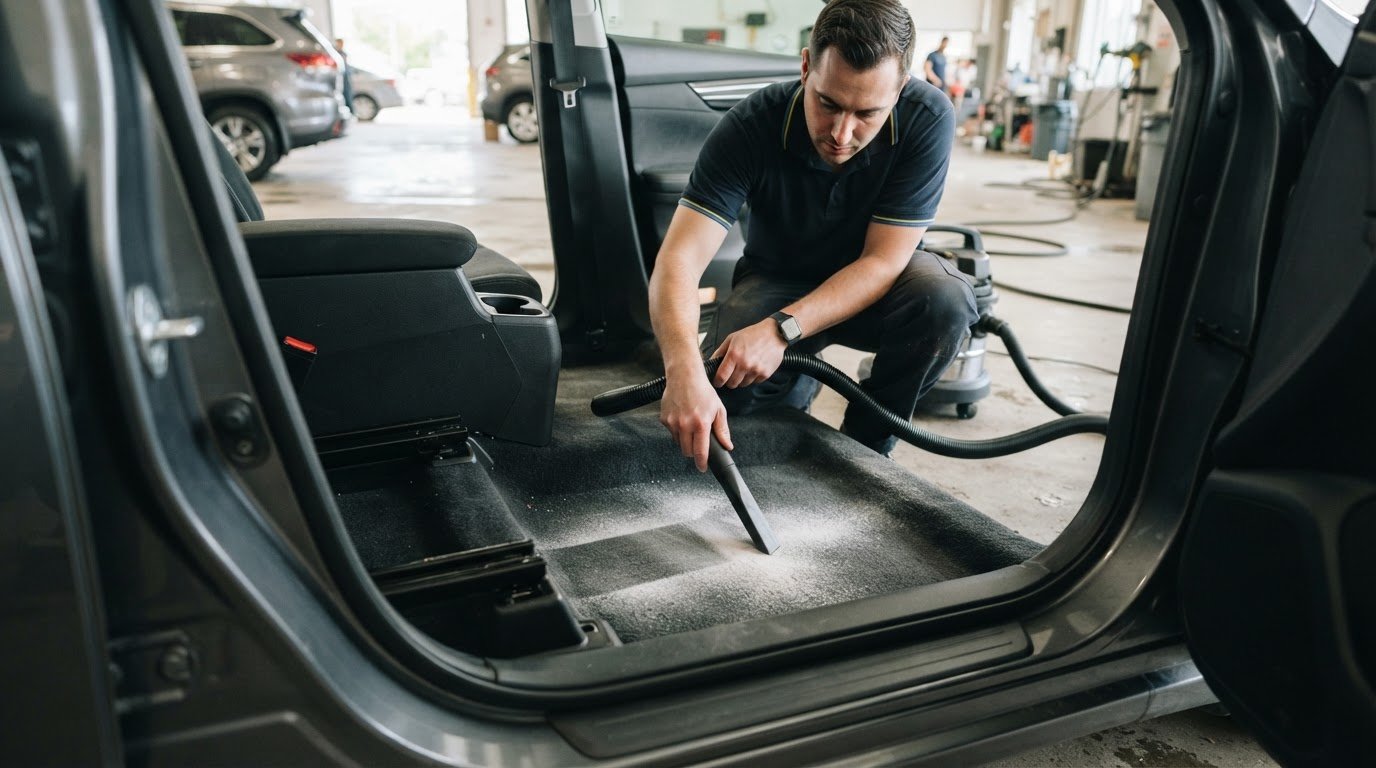
The smell won’t stay gone if vomit residue remains deep in the carpet. To learn how to remove vomit smell from car carpet, act within the first hour if possible: blot up the mess, clean the affected area, and let it dry thoroughly. Once the carpet is clean, sprinkle baking soda over the spot, leave it for about 5 minutes, then vacuum it up.
That lingering odour can be frustrating, especially when the carpet looks clean. To remove vomit smell from car carpet, first lift the solids and blot away liquid, then clean the residue before using an odour absorber. This guide explains how to clean carpet and removable floor mats, when baking soda or other odour-control options may help, and what to do if the smell returns. The goal is to deal with the source, not just cover it up.
Key Takeaways
- Clean the spill as soon as possible, ideally within the first hour, to help reduce staining and lingering odour.
- Blot up vomit instead of rubbing it, which can push residue deeper into the carpet.
- Use baking soda on suitable carpet or polyester upholstery, then vacuum it up after about 5 minutes.
- Remove soiled floor mats for separate cleaning and let them dry fully before putting them back.
- If the odour persists, look beyond the visible stain for residue in crevices or the vehicle’s ventilation system.
How long must I clean vomit before it stains my car interior?
- Start cleaning as soon as possible, ideally within the first hour. Open the car windows, put on rubber gloves, and lift away solid vomit with paper towels. Don’t rub; rubbing can spread residue and push it deeper into carpet fibres. Quick removal helps reduce the risk of staining and lingering odour.
- Blot the carpet with clean paper towels or kitchen roll. Press gently, replacing each towel as it absorbs liquid. Work from the outside of the spill towards the centre to limit spreading. Continue until little or no liquid transfers to the towel, paying particular attention to carpet seams and seat rails.
- For a mild clean, mix a small amount of dish soap with warm water. Dampen a cloth without soaking the carpet, then gently work the solution into the affected fibres with a soft brush or cloth. Wipe the area with a separate cloth dampened with clean water to remove soap. Avoid excess moisture, which can reach the padding underneath.
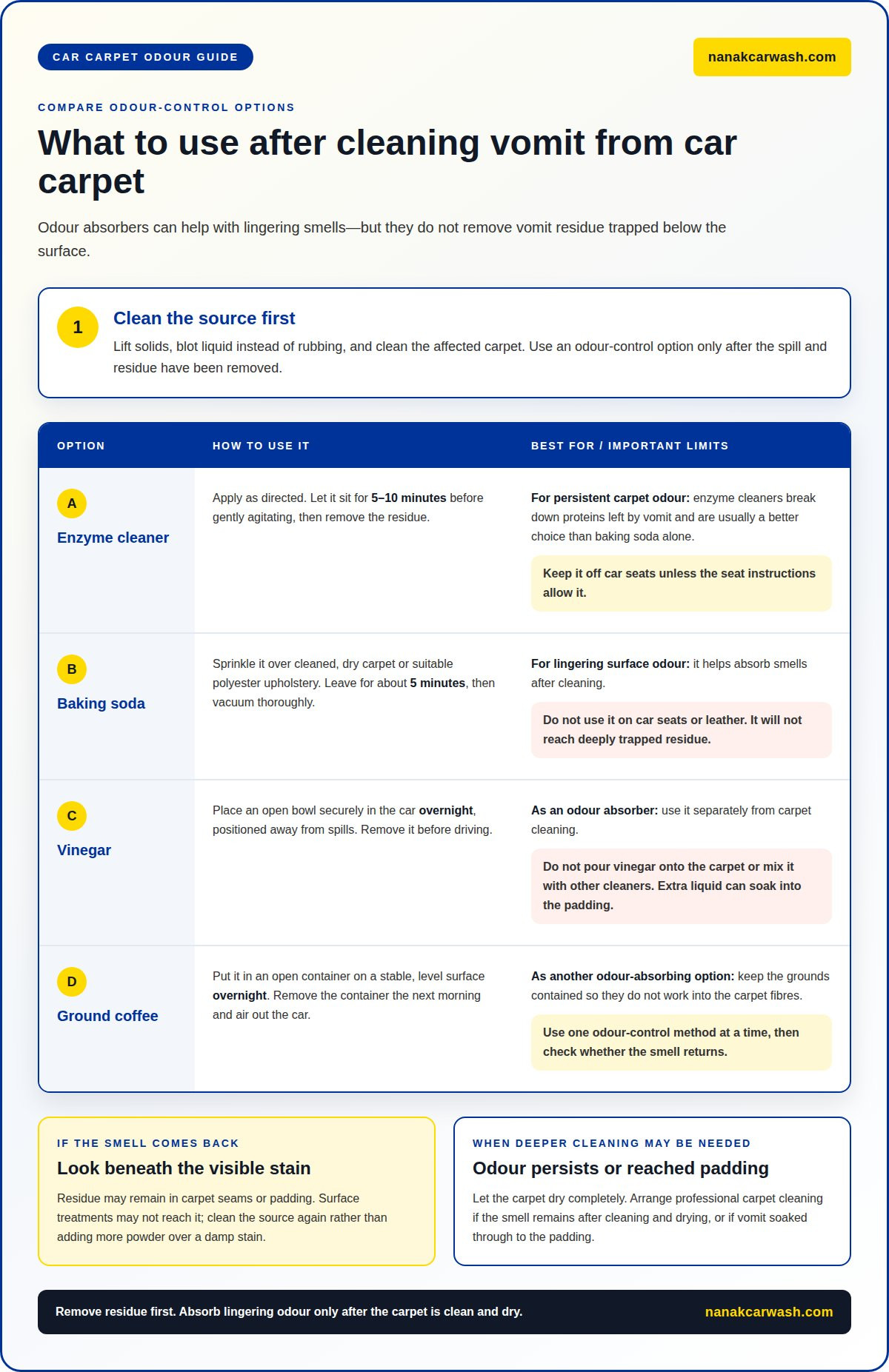
- For persistent odour in carpet, an enzyme cleaner is usually the better choice than baking soda alone. Enzyme cleaners break down proteins left by vomit, while baking soda helps absorb odours after cleaning. Apply an enzyme product as directed, let it sit for 5-10 minutes before gently agitating, then remove the residue. Keep enzyme cleaner off car seats unless the seat instructions allow it.
- Use a carpet cleaner and brush applicator only if the product is suitable for your carpet. Follow its label, leave the cleaner on for the directed time, then brush gently rather than scrubbing hard. If using fabric-cleaner foam, follow its instructions for how long to leave it before brushing. Wipe away residue with a damp cloth and clean water. These steps help remove vomit smell from car carpet without pushing residue deeper.
- Vinegar is better used as a separate odour-control option than as a substitute for removing vomit. After cleaning, leave an open bowl of vinegar in the car overnight, positioned securely away from spills. Don’t pour it onto the carpet. Baking soda can also be left on suitable carpet for about 5 minutes, then vacuumed up.
- Steam cleaning does not replace blotting and removing residue first. Don’t use it on car seats or leather upholstery. Clean those surfaces according to the seat manual or with suitable leather products. Avoid applying baking soda or upholstery cleaner to car seats or leather.
- Arrange professional carpet cleaning if the smell remains after cleaning and drying, or if vomit has soaked through to the padding. Let the carpet dry completely before driving, and repeat the cleaning steps if needed. Knowing how to remove vomit smell from car carpet also means recognizing when odour has reached material beneath the surface.
Odour neutralizing with vinegar, coffee grounds, or baking soda
Use odour absorbers only after removing the spill and cleaning the carpet. Baking soda, vinegar, and coffee grounds may help with lingering smells, but they won’t remove vomit residue trapped below the surface.
-
Neutralise Lingering Odours With Baking Soda
Sprinkle baking soda over the cleaned, dry carpet or suitable polyester upholstery. Leave it for about 5 minutes, then vacuum thoroughly so powder doesn’t remain in the fibres. Keep baking soda off car seats and leather upholstery. If the smell persists, don’t keep adding powder over a damp stain; return to cleaning the source instead.
-
Treat Odours in the Carpet Padding
Check for odour after the carpet surface has dried. If vomit soaked through, the padding or underlay may still hold liquid and smell beneath the visible stain. Blot accessible moisture, then clean the carpet without saturating it. Baking soda sprinkled on the surface won’t reach deeply trapped residue. If the smell persists, arrange professional carpet cleaning rather than pouring vinegar or water under the carpet.
- Use vinegar as an odour absorber, not as a carpet rinse. Place an open bowl securely in the car overnight, away from children, pets, and surfaces where it could spill. Remove it before driving. Don’t pour vinegar onto the carpet or mix it with other cleaners. Extra liquid can soak into the padding and make drying harder.
- Ground coffee in an open container is another overnight odour-absorbing option. Set it on a stable, level surface where it won’t tip when entering or leaving the car. Keep the grounds contained, as loose coffee can work into carpet fibres and create more cleanup. Remove the container the next morning, air out the car, and assess the smell.
- Try one odour-control method at a time rather than layering several absorbers. Let the carpet dry fully, then check the spill area and nearby seams for returning odour. If the smell is strongest near a seam or beneath the carpet, surface treatments may not reach the source. Clean the affected area again before using an absorber.
- If possible, ventilate the vehicle while the cleaned carpet dries. Avoid driving with damp carpet, as trapped moisture can contribute to lingering odour. Once the area is dry, vacuum up any baking soda and remove vinegar or coffee containers. If the smell returns, look for hidden residue rather than masking it with fragrance.
How should I clean vomit from the car floor mats?
Remove each soiled mat before cleaning it. Clean mats separately from the carpet so you can reach both surfaces without getting rinse water inside the vehicle.
- Put on rubber gloves before handling a contaminated mat. Lift it carefully with the soiled side facing upward to keep debris off the car carpet. Carry it to a suitable cleaning area and set it down without dragging it across the interior.
- Lift solid vomit from the mat with paper towels. Scoop gently from the outside of the mess towards the centre. Don’t rub or press down, since that can spread residue into the mat’s texture. Pick up any remaining small pieces individually.
- Use clean paper towels to absorb liquid left after removing the solids. Press and lift, changing towels as they become soiled. Check grooves, raised edges, and textured sections where liquid or debris can collect. Avoid sharp objects that could damage the mat.
- Rinse the mat to remove loose residue before applying cleaner. Direct water over the affected area rather than splashing dirty water onto clean sections. If residue remains in grooves, rinse them gently and check the reverse side for transferred mess.
- Apply a dedicated mat cleaner according to its label, covering the contaminated section and any grooves where residue remains. Leave it on for the stated working time, then scrub with a suitable brush. Use controlled strokes across textured areas. Aggressive scrubbing can spread residue or wear the surface.
- Rinse the mat again to remove the cleaner and loosened residue. Pay attention to corners and raised edges, where cleaner can collect. Check both sides in good light. If visible residue remains, repeat the cleaning and brushing step before drying.
- Clean the exposed vehicle carpet while the mats are out. Lift solid debris with paper towels instead of rubbing it into the fibres, then blot remaining liquid with fresh towels. Keep cloths used on the carpet separate from those used on the mat to avoid transferring residue.
- Let each mat dry completely before reinstalling it. Leave it in a ventilated spot and check the underside as well as the top. A damp mat can trap moisture against the vehicle carpet. Once dry, inspect both the mat and the cleaned area for visible residue or returning odour.
Using essential oils or commercial odour eliminators
Use odour absorbers and sprays only after removing the spill and cleaning the affected material. They may help with lingering smells, but they won’t remove vomit hidden in carpet padding or the ventilation system.
- Apply baking soda to suitable, cleaned vehicle carpet or polyester upholstery once the surface is dry. Leave it for about 5 minutes, then vacuum it up completely. Don’t use baking soda on car seats or leather upholstery. If odour remains, find and clean the source instead of repeatedly covering the area with powder.
- Use cat litter only on affected fabric to help absorb moisture and reduce odour. Sprinkle it over the spot, keeping it away from leather and seat mechanisms, and remove it fully after the fabric dries. Vacuum carefully so granules don’t remain in seams. Cat litter absorbs moisture; it does not replace removing vomit residue.
- Place ground coffee in an open container inside the car overnight to help absorb cabin odour. Set it on a stable surface, away from the spill and where it won’t tip. Don’t scatter grounds on the carpet, as particles can settle into fibres and create more cleanup. Remove the container before driving.
- Make an essential-oil spray with 2 cups of water and 20-25 drops of essential oil. Mix it in a spray bottle, then apply a light mist to suitable carpet rather than soaking the fabric. Avoid car seats and leather, and don’t spray near controls, air vents, or electronics. Let the area dry fully before using the vehicle.
- Choose a commercial odour eliminator labelled for the specific automotive surface you’re treating. Follow its application and drying instructions, and test it on a hidden patch first to check for colour change. Use one product at a time. Combining cleaners or masking sprays can leave residue and make a returning smell harder to trace.
- Check the cabin air filter if the smell has circulated through the vehicle’s air-conditioning system. Vomit odour can linger in the ventilation system even after carpet cleaning. If the smell comes through the vents, replace the cabin air filter rather than spraying fragrance into them. Clean accessible vent surfaces with a suitable cloth.
- Assess the car again once the carpet and upholstery are completely dry. If the odour returns when you start the fan, focus on the cabin filter and ventilation path. If it returns near the original spill, inspect the carpet seams and padding. Odour absorbers work best after removing the source, not as a cover-up for remaining residue.
Blotting instead of rubbing
Blotting lifts vomit from carpet fibres; rubbing can spread it and push residue deeper. Use clean absorbent towels and gentle pressure to contain the spill before applying cleaner.
- Put on rubber gloves and open the car windows. Gather paper towels, a rubbish bag, and clean cloths before starting. Having supplies ready helps you avoid stepping on the spill or carrying residue across the interior while searching for cleaning materials.
- Lift solid vomit with paper towels before addressing the liquid. Slide a towel under each piece and scoop it up. Don’t press down or drag it across the carpet. For small pieces caught between fibres, carefully lift them with a fresh towel instead of rubbing them loose.
- Place a clean paper towel over the wet spot and press straight down. Hold briefly, then lift it vertically, using a fresh section for each press. This draws liquid into the towel without pushing it sideways into clean carpet or deeper towards the padding.
- Work from the outer edge of the spill towards the centre. Blotting inward helps contain the affected area. For example, if vomit has spread across a seat footwell, start at the carpet’s outer edge and move towards the wettest central patch.
- Replace towels as soon as they look wet or soiled. A saturated towel can transfer vomit back onto the carpet fibres. Put used towels in a rubbish bag, then continue blotting with clean kitchen roll. Stop when fresh towels pick up little or no liquid.
- Use a soft brush only after blotting and applying a carpet cleaner suitable for the material. Work gently over the affected fibres and follow the cleaner’s label. Scrubbing hard can spread residue or roughen the fibres. For polyester upholstery, use a damp cloth or soft brush with a mild cleaning solution.
- Rinse away soap or cleaner with a separate cloth dampened with clean water. Press and lift it over the cleaned area rather than rubbing, moving to a clean section of cloth as residue transfers. Avoid soaking the carpet, as excess moisture can reach the padding underneath.
- Blot the damp area with dry towels, then let it dry completely. Once dry, check the carpet seams and the centre of the spill. If either still smells or feels sticky, clean that specific area again. Don’t cover a returning odour with fragrance before removing the residue.
Nanak Car Wash
Nanak Car Wash offers Car Detailing Packages for thorough vehicle cleaning when a spill has affected more than one area. If you’ve removed the visible mess but odour remains in the carpet or nearby surfaces, detailing can be a useful next step. It may also help when repeated cleaning leaves the carpet damp or residue returns after drying. The right approach depends on where the spill reached and which interior surfaces need attention. A quick wash suits general cleaning, but lingering vomit odour needs attention to the affected interior, not just a fresh scent. Choose the next step based on the problem you need to solve. For vehicle cleaning, contact Nanak Car Wash.
Choose the right next step for a fresh interior
If the smell keeps returning, consider what it may indicate: residue could remain beneath the carpet or in the vehicle’s airflow. Decide whether another careful cleaning is practical or whether the interior needs more thorough attention. Knowing how to remove vomit smell from car carpet helps you address the visible area, but persistent odour may call for a broader approach.
Nanak Car Wash offers Car Detailing Packages for vehicle cleaning, as well as Full-Service Car Wash and Express Car Wash options for general wash needs. Choose based on the work your vehicle needs, not fragrance alone. Aim for a clean, dry interior rather than simply masking the smell.
For help with your vehicle’s cleaning needs, contact Nanak Car Wash. Take the next step toward a cleaner, more comfortable car.
Frequently Asked Questions
How do I keep the vomit smell from coming back after cleaning?
Find the source of a returning smell before adding another deodorizer. If it appears when the fan runs, check the cabin air filter and accessible vents. If it’s strongest near the original spill, inspect carpet edges and seams for residue. A clean surface can still smell if liquid reached deeper layers, so let the affected carpet dry fully before judging the result.
How do I remove vomit from car carpet step by step?
Remove solids first, then blot liquid with clean paper towels. Apply a carpet-safe cleaner according to its label and work gently with a soft brush. Wipe away the cleaner with a damp cloth, then dry the area completely. Check around seat tracks and carpet seams, where small pieces can hide. Keep cleaners away from car seats unless the seat manual permits their use.
What household cleaners neutralize vomit odour in car carpet?
A mild dish-soap solution can clean suitable carpet, while baking soda may help absorb odour after cleaning. An open bowl of vinegar or ground coffee may help with cabin odour, but don’t pour them onto the carpet. Use one method at a time and don’t combine cleaning products. Keep powders and liquids away from car seats and leather upholstery.
What are the best enzyme cleaners for vomit on car upholstery and carpet in Canada?
Choose an enzyme cleaner only if its label specifically allows use on automotive carpet or the fabric you’re treating. Check the surface directions before applying it. Clean car-seat fabric and straps as described in the seat manual, and don’t use enzyme cleaner on car seats. A product suitable for carpet isn’t automatically suitable for every upholstery material.
How long should an enzyme cleaner sit on car carpet to remove vomit odour?
Let the cleaner sit for 5-10 minutes before gently agitating the carpet. That gives the product time to work on residue before brushing. Follow the product’s directions if they specify a different application process, and avoid soaking the carpet. Remove cleaner residue as directed, then let the area dry completely before checking whether the odour remains.
How do I dry car carpet after cleaning to prevent mould?
Blot away as much moisture as possible with dry towels. Vacuum after cleaning only if suitable for the carpet. If possible, leave the windows open while the vehicle dries to improve airflow. Keep the car parked until the carpet is completely dry, including around seams and beneath removable mats. Damp carpet can trap moisture and contribute to mildew or lingering odours.

 6600 Finch Ave W, Etobicoke, ON M9V 3Z6

 647-703-8515
 MON – SUN 8 AM to 7 PM