
The boots come off in the driveway, but the winter comes inside with them. Slush drips from the mats, a pale salt ring appears beside the seat, and a white crust starts blooming along the rocker panel. Outside, the car may look clean after a quick wash. Underneath, brine is still sitting in the wheel wells, seams, and lower panels.
That's the problem with treating winter care as a shine exercise. In the Greater Toronto Area, interior and exterior detailing is a salt-survival strategy. A basic wash has a place, but it doesn't always reach the contamination doing the most damage. The right service removes what you can see, what you can feel under your fingers, and what's hiding below the car or inside the cabin.
Table of Contents
- Why a Standard Wash Stops Short for Ontario Drivers
- What Interior and Exterior Detailing Actually Includes
- The Exterior Side of a Real Detail
- The Interior Side of a Real Detail
- Choosing Between a Wash, a Single-Side Detail, or a Combined Package
- Why Underbody and Interior Extraction Matter More Than Shine
- How Often to Book and When to Add On
Why a Standard Wash Stops Short for Ontario Drivers
After a wet GTA commute, a tunnel wash can leave the car looking presentable while salt brine remains in the wheel wells, rocker seams, and underbody. The painted panels get attention because they are easy to see. The areas that hold moisture need a more deliberate process.
A standard tunnel wash still has a useful job. It removes loose dust, mud, and road film from the body, cleans the glass, and may apply wax or a drying agent. Its limitation is reach. Most cycles do not flush every hidden area where winter brine settles, and they rarely address salt pressed into carpets or trapped around trim.
Ontario applies roughly 1.5 to 3 million tonnes of road salt each winter, while Toronto alone uses about 130,000 to 150,000 tonnes annually. A Transportation Research Board exposure study measured Toronto atmospheric corrosion at 5,108 mg/dm² over 19 months. These figures are reported in this Ontario road-salt and vehicle corrosion overview. Salt combines with meltwater to form conductive brine, which reaches wheel wells, rocker panels, door sills, suspension hardware, frame rails, and underbody seams.
Practical rule: If the wash only cleans the painted surfaces, the winter job is unfinished.
What remains after the wash
Take a commuter vehicle home after a messy drive through the GTA. The body looks respectable after the tunnel cycle, yet grey paste remains inside the wheel arches. Grit clings to the lower door edges, and salt crystals stay pressed into the carpet beneath a floor mat.
That residue keeps moisture against metal and fabric after the vehicle leaves the wash bay. Repeated quick washes can maintain the visible finish while leaving the contamination that causes persistent odours, staining, and corrosion in place.
A wash provides routine maintenance. A detail provides targeted recovery and protection. The difference is deliberate cleaning of the places that collect salt, rather than moving loose dirt across the easiest surfaces.
The cabin tells the same story
Canadian consumer survey data found that 51% of drivers washed their car exteriors regularly, while 73% cleaned their interiors less than once every few months, according to this Canadian car-cleaning habits survey. Owners see a dirty body immediately. Salt beneath a mat, dust in a vent, or dampness in carpet can remain unnoticed for weeks.
Keep washing regularly, then add a detail when vacuuming leaves residue, wiping fails to remove odours, or the vehicle still feels gritty after rinsing. Those signs call for extraction and hidden-area cleaning, not another quick pass.
What Interior and Exterior Detailing Actually Includes
Detailing isn't just a more expensive wash. It's a planned series of cleaning, correction, and protection steps carried out with separate tools and products for paint, wheels, glass, fabric, leather, plastics, and rubber. The technician works slowly enough to inspect surfaces, treat contamination, and dry the vehicle properly.
A reputable shop may quote a service by vehicle size and condition rather than promising the same result for every car. A lightly used sedan and a salt-loaded SUV shouldn't receive an identical process.

The exterior workflow
A serious exterior service normally follows a controlled order:
- Pre-wash: Snow foam or a strong pre-rinse loosens road film before contact with the paint.
- Hand wash: Separate wash media and a grit trap reduce the chance of dragging abrasive particles across the finish.
- Wheels and wheel wells: Brushes reach the barrel, spokes, calipers, and arches where brake dust and salt accumulate.
- Decontamination: Clay or a chemical iron remover lifts bonded particles that shampoo can't remove.
- Paint refinement: A polish improves clarity, while compound addresses more noticeable defects when the paint can safely take correction.
- Protection: Wax, spray sealant, or a coating creates a sacrificial layer that makes future cleaning easier.
- Inspection: The technician checks the finish under suitable lighting and removes missed residue or streaks.
The order matters. Polishing dirty paint is a bad shortcut, and sealing damp contamination into seams defeats the purpose of the service.
The interior workflow
Inside, the technician removes rubbish and personal items, takes out the mats, vacuums seat rails and trunk seams, then works from higher surfaces down. Brushes and compressed air loosen debris from vents, switchgear, cup holders, and narrow crevices before the vacuum collects it.
Carpets, mats, and cloth seats may need shampooing or extraction. Leather requires a suitable cleaner followed by conditioning, while vinyl and plastic need products that won't leave a slippery film. Glass is cleaned on both sides so winter condensation and interior haze don't obscure visibility.
The important distinction is surface cleaning versus embedded contamination removal. A quick cabin tidy can make the dash look presentable. A full detail deals with what has worked into the fabric, seams, and cavities.
The Exterior Side of a Real Detail
A real exterior detail starts where winter damage starts, at the lower half of the car. In the GTA, that means salt, slush, and grit packed into the front bumper, rocker panels, wheel wells, and seams. A quick wash removes the surface film. It does not clear the places where brine lingers.
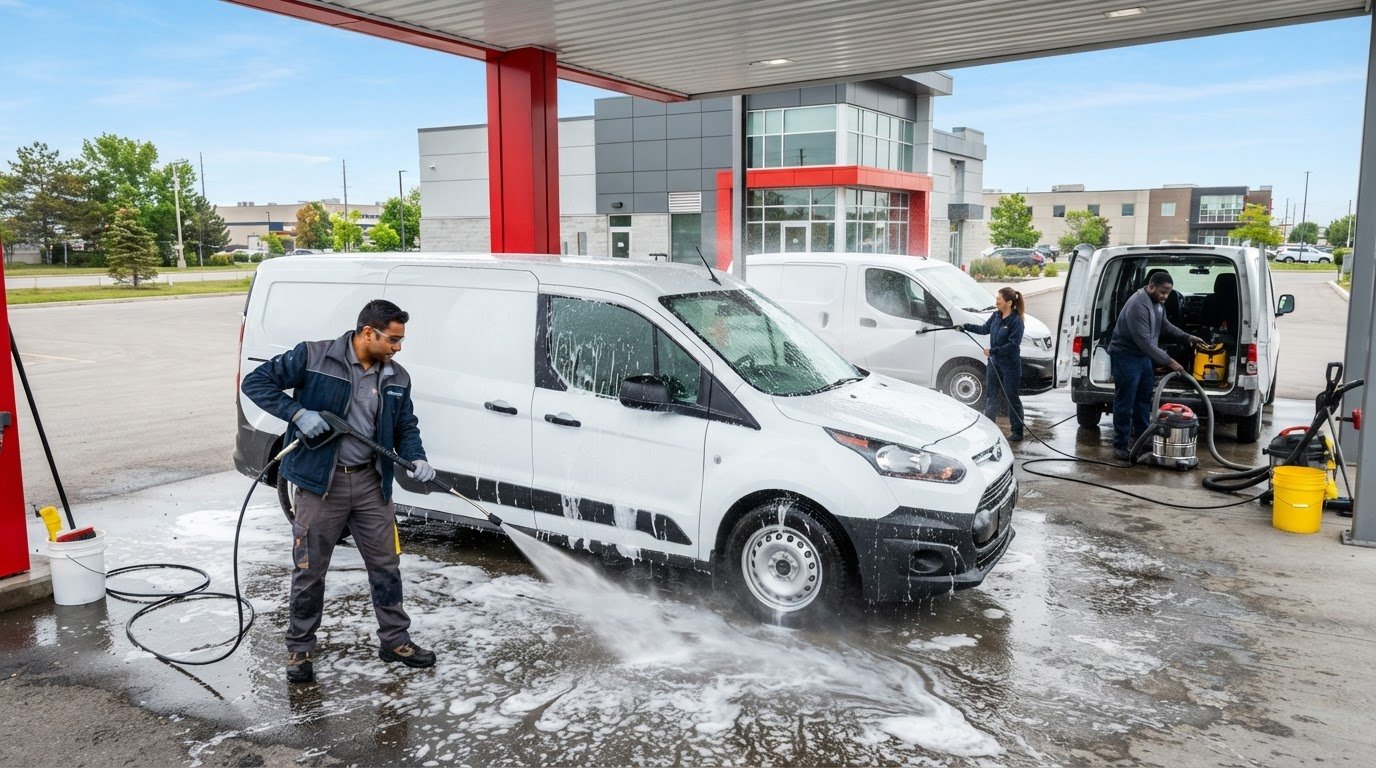
The first pass should loosen contamination before anything touches the paint. Snow foam or a pre-rinse needs enough dwell time to soften road grime, not just look active for the camera. After that, use a proper grit-trap setup and separate tools for wheels and painted panels. That keeps the dirtiest residue away from the finish instead of dragging it across the body.
Salt survival work has its own order
| Step | What It Does | Salt Protection Role |
|---|---|---|
| Pre-rinse and foam dwell | Softens salt film before contact | Cuts the amount of grit that can scratch during washing |
| Grit-trap hand wash | Lifts loose dirt with controlled contact | Keeps abrasive residue from being rubbed back into the paint |
| Wheel, barrel, and lower-panel cleaning | Clears brake dust, slush, and heavy road residue | Targets the worst buildup on the car |
| Hidden-area rinse | Flushes arches, seams, and underbody edges | Reaches salt that regular washing leaves behind |
The lower edges of the vehicle deserve a close inspection after the wash. Look at rocker panels, door bottoms, fuel door edges, and the seams around the wheel openings. If dirty runoff keeps appearing there, the rinse was not thorough enough. That is where winter corrosion gets a head start.
The case for hidden-area rinsing is simple. Ontario winter care advice from winter rust-prevention guide for Ontario drivers points to the places owners do not usually check, because that is where salt sits and stays. Visible shine does not matter much if the underside and trapped edges are still holding brine.
Protection only matters after the car is clean
Correction and protection are different jobs. A polish improves the look of the paint and can reduce light defects. A compound removes more visible damage, but it also removes more clear coat. Neither one deals with corrosion already starting in the seams or underbody.
Protection should fit how the vehicle is used. A spray sealant is quick and practical for routine maintenance. Wax gives short-term help and a nice finish. A coating lasts longer, but it still depends on good washing and regular rinsing of the lower car. If a package talks only about gloss and ignores the hidden salt traps, it is a cosmetic service, not winter protection.
The Interior Side of a Real Detail
A proper interior detail starts below eye level. The technician removes the mats, vacuums seat rails, reaches under the pedals, cleans trunk seams, and works around the edges where salt and grit collect. Vacuuming only the visible mat is the cabin equivalent of rinsing only the roof.
Compressed air or a blower then dislodges dust from vents, buttons, seams, and switchgear. This matters in a winter vehicle because fine grit and dried brine don't always lift with a cloth. Blowing first allows the vacuum to collect material instead of pushing it deeper into the trim.
Fabric needs extraction, not perfume
Brine-soaked mats and carpets can develop salt rings, stale odours, and a stiff texture. Shampooing with hot water or an extractor lifts residue from the fibres, while controlled extraction removes the dirty moisture. The cabin must then dry fully. Leaving fabric damp trades visible grime for a moisture problem.
Ontario winter guidance for interior work focuses on vent-and-crevice blowout, carpet and seat shampooing, and careful extraction because salt can dry into abrasive crystals. This Ontario rust-protection and interior contamination guidance also connects repeated salt exposure with the need to clean areas where road residue is carried into the cabin.
Leather needs a different process. A technician should use a leather-safe, pH-balanced cleaner, work around seams and bolsters, and apply conditioner after the surface is clean. The bolsters deserve attention because repeated entry and exit puts pressure and friction there first. A greasy seat isn't a sign of quality care. It's usually excess product.
Hard surfaces and glass finish the job
Dashboards, door panels, consoles, cup holders, and vinyl trim need cleaning without leaving a shiny, slippery coating. The technician should apply product to a towel or brush rather than flooding electronics and seams. Glass gets cleaned inside and out, especially where temperature swings create a hazy film.
Odour neutralisation is different from fragrance. A scent can cover a smell for a short time, but it won't remove food residue, damp fabric, pet hair, or salt-loaded carpet. If the odour returns after the fragrance fades, the source still needs cleaning.
An interior-only service may skip the exterior wash, paint decontamination, wheel cleaning, and underbody work. Confirm the scope before booking, particularly if you want the cabin and the body treated as one winter recovery job.
Choosing Between a Wash, a Single-Side Detail, or a Combined Package
Choose the service based on the vehicle's condition, not the package name. A basic wash is right for a lightly dirty vehicle that has already received deeper care. It should remove loose grime, clean the wheels, rinse the body, and leave the cabin tidy enough for everyday use.
A detail is justified when contamination has bonded, stains have set, odours persist, or the finish needs correction and protection. If you're deciding where to spend, inspect the lower panels, wheel wells, mats, and seat edges. Those areas tell you more than the roof does.
| Service Tier | Typical Time | Best For |
|---|---|---|
| Standard wash | Short visit | Light dirt, recent detailing, routine maintenance |
| Exterior-only detail | Extended appointment | Salt recovery, paint decontamination, polishing, or protection |
| Interior-only detail | Extended appointment | Families, pets, food spills, odours, and embedded cabin grime |
| Combined package | Longest appointment | Seasonal resets, heavily used vehicles, and pre-sale preparation |
When a standard wash is enough
Use a standard wash when water still sheets reasonably from the paint, the wheels aren't carrying heavy buildup, and the mats only need a quick shake or vacuum. It's also the correct maintenance choice between more substantial services.
Don't expect it to remove paint contamination, correct scratches, shampoo fabric, or reach every underbody cavity. The service is valuable because it controls loose dirt. It isn't a replacement for recovery detailing.
When to choose one side
Pick an exterior detail when winter has left the paint rough, the lower panels feel gritty, or the body needs a wax or sealant refresh. Spring is a sensible time because the vehicle has accumulated months of salt and road film.
Choose an interior detail when the car carries children, pets, food messes, rideshare passengers, or damp winter gear. It's also the right move when vacuuming leaves behind visible rings, recurring odours, or salt that reappears as the carpet dries.
When combined work makes sense
A combined package earns its place when both sides show neglect. It's particularly sensible at seasonal changeovers, before listing a vehicle for sale, or after a winter of heavy commuting. You're paying for one coordinated reset instead of solving half the problem and leaving the other half in place.
Ask for the actual deliverables. Confirm whether the service includes underbody rinsing, wheel-well cleaning, salt extraction, stain treatment, leather care, paint decontamination, and protection. A cheaper package can be good value if it matches the need. It's poor value if it omits the contaminated areas you booked it to address.
Why Underbody and Interior Extraction Matter More Than Shine
A glossy bonnet is satisfying, but it isn't the highest-value winter result. Salt and brine collect underneath the car, inside wheel wells, around suspension components, near exhaust hangers, and along seams that aren't visible from standing height. Corrosion often starts where the owner never looks.
Underbody flushing uses an undercarriage wand or pressure-washing setup to direct water into those areas. A tunnel wash may offer an underbody option, but a detailer should still inspect the lower sections and concentrate on areas holding visible residue. Rinsing the body while leaving the wheel wells packed with salty sludge is incomplete work.
A clean roof looks good. A clean underbody protects the parts you'll eventually have to pay to replace.
The cabin has its own version of the same problem. Salt gets carried in on boots, melts into mats, and migrates into carpet edges and under-seat areas. If you only vacuum the surface, you remove loose grit while leaving dissolved residue and stained fibres behind.
Extraction changes the result
Wet vacuuming, hot-water extraction, or controlled steam cleaning can lift contamination that dry vacuuming can't reach. The technician needs to remove the dirty moisture and dry the material properly, especially around floor areas where condensation and damp winter clothing add more moisture.
The point isn't to promise a specific repair bill or resale return. It's simpler than that. Removing salt before it remains bonded to fibres helps preserve the cabin's materials, reduces persistent odours, and leaves less contamination sitting above the vehicle floor.
A vehicle washed every week can still carry damaging salt in the wrong places. One properly planned seasonal service with underbody flushing and interior extraction can address a bigger risk than repeated surface cleaning. Keep the routine wash, but spend your detail budget on hidden areas before cosmetic upgrades.
How Often to Book and When to Add On
Base your schedule on how the vehicle lives. A commuter that runs through slush, sits outside, carries kids or pets, or gets used for rideshare work needs more attention than a garage-kept car that only sees dry roads.
A smart routine is a combined interior and exterior detail at the seasonal change, with maintenance washes in between. After winter, book the deeper reset to strip out the salt and road film that basic washing leaves behind. Before the next cold stretch, do it again so the car starts clean instead of already loaded with residue.
Ontario drivers are usually told to wash every one to two weeks, and after major storms, to slow corrosion. Use that as a washing rhythm. It does not replace detailed underbody and interior work, because a rinse only helps when it reaches the grime that matters.
Book before the rush
Spring slots disappear fast because owners wait until the salt is obvious. That is too late. Book after the worst road season eases, before repeated brine has time to dry into the mats, seams, and lower panels.
Do the same before winter. Do not wait for the first heavy storm to find out the carpets smell damp or the paint feels rough. A clean vehicle is easier to keep clean than one already carrying a full season of buildup.
Spend on the add-ons that solve a problem
Some add-ons earn their place right away:
- Underbody rinsing: Worth adding when winter exposure is heavy or the lower panels are visibly contaminated.
- Leather conditioning: Useful when seats and bolsters feel dry, look dull, or show early wear.
- Headlight restoration: Sensible when oxidation cuts clarity and night visibility.
- Engine-bay cleaning: Appropriate when grime has built up and the technician can work safely around sensitive components.
Other upgrades depend on what the car needs. Fabric protection can make sense for a family vehicle, premium wax can suit an owner who cares about appearance, and scent treatment only helps after the source of the odour has been cleaned. Skip cosmetic extras when the mats, vents, wheel wells, and underbody still need attention.
Nanak Car Wash offers express and full-service washes, interior and exterior detailing, and automotive rust proofing for GTA-area drivers, with detailing services that include salt and stain removal, vent and crevice cleaning, carpet and seat shampooing, leather care, and exterior paint treatment.
Book the combined package when both the cabin and lower exterior show winter buildup, then ask the technician to prioritise underbody flushing and interior extraction before shine-focused upgrades. Visit Nanak Car Wash to review the available wash, detailing, and rust-protection options and choose the service that matches your vehicle's actual condition.

 6600 Finch Ave W, Etobicoke, ON M9V 3Z6
 647-703-8515
 MON – SUN 8 AM to 7 PM