
Yes, an underbody car wash is safe and recommended when it uses proper pressure and the vehicle has time to dry. In Ontario, where road crews can use about 3–5 million tonnes of salt each winter, skipping the rinse does more harm than a properly timed wash.
You finish a GTA commute with slush packed behind the wheels, a grey film along the rocker panels, and salty spray coating everything underneath. The roads may look merely wet, but your vehicle's underside has collected a sticky brine that can remain active long after the pavement dries.
I've seen enough rusted frames, weakened brake lines, and seized fasteners to be blunt about this: underbody washing is maintenance, not a vanity add-on. The risk isn't the rinse itself. The risk is poor pressure, bad timing, or allowing salt to sit in hidden cavities throughout the winter.
Table of Contents
- The Winter Dilemma Every GTA Driver Faces
- How Road Salt Attacks Your Undercarriage
- Real Risks Versus Common Myths
- When and How to Wash the Underbody Safely
- Building a Complete Corrosion Defence Routine
- Which Vehicles and Drivers Need It Most
- Your Underbody Care Action Plan
The Winter Dilemma Every GTA Driver Faces
A winter commute through the Greater Toronto Area can leave the underside saturated with saltwater before the body looks heavily soiled. Highway spray reaches frame rails, slush packs into wheel wells, and residue gathers around suspension mounts and exposed lines. The driver sees dirty doors. Corrosion may already be starting underneath.
So, is underbody car wash safe? Yes, when the wash is built for vehicles and the underbody can dry afterward. A controlled rinse removes chloride residue and trapped slush from areas exposed to Ontario's winter road treatment.
Ontario's conditions make wash timing a maintenance decision, not a cosmetic preference. The province can use about 3–5 million tonnes of road salt per winter, and salt exposure is identified as a leading reason vehicles fail safety inspections. The underside, frame rails, brake lines, fuel lines, and wheel wells receive the heaviest spray and debris, as described in this Canadian guide to winter vehicle rust prevention.
Workshop rule: If salt is visibly caked underneath, rinse it off. Leaving it in place because you fear water causes the greater corrosion risk.
Freeze-thaw weather sets the safety boundary. Wash during a warmer part of the day, then give the vehicle several hours of driving and airflow. Avoid washing immediately before a hard overnight freeze. Water trapped around seams, locks, and crevices can freeze before it has drained or evaporated.
Drying conditions matter as much as the rinse itself. A wash followed by warmth and airflow helps remove active brine. A poorly timed wash can leave moisture sitting in the same hidden areas you were trying to clean.
The practical question is not whether underbody washing is safe in general. It is whether the pressure, timing, and drying window suit the day's conditions.
How Road Salt Attacks Your Undercarriage
A vehicle can look clean while its undercarriage holds a wet layer of salt. Road salt mixes with water to form conductive brine, which spreads across metal and keeps it damp after visible spray has dried. In freeze-thaw weather, that brine repeatedly melts and refreezes, extending the time corrosion can work.
The liquid reaches seams, fasteners, folded edges, and cavities that an exterior wash misses. It can sit behind liners and inside joints, especially where slush is packed tightly. Bare or damaged metal then stays in contact with chloride residue, while protective coatings gradually lose their ability to block corrosion.
The areas that deserve attention
Frame rails carry structural loads and contain seams where salt-laden moisture can settle. Suspension mounts and brackets take repeated spray, grit, and impact damage. Brake and fuel lines need close attention because corrosion there can become a safety problem, not merely a cosmetic defect.
Wheel wells collect salty water thrown by the tyres. Trapped slush keeps the inner arches wet, while exhaust components, subframes, and underbody shields can hold contamination against nearby metal.
Ontario's salt exposure makes cleaning below the vehicle a direct maintenance measure. The rust-prevention guidance cited earlier identifies the underside, frame rails, brake lines, and wheel wells as the zones most exposed to salt spray and trapped slush.
Why a rinse is a direct countermeasure
An underbody wash removes the residue that keeps attracting moisture. It will not reverse existing rust, repair a weakened line, or replace an inspection. It does reduce the chloride feeding further corrosion, provided the wash is followed by enough warmth and airflow to dry hidden areas.
The goal is not a polished-looking underside. Rinse chloride residue away before it remains against safety-critical metal through another freeze-thaw cycle. Wash when the vehicle can dry, not just when the road salt is visible.
Real Risks Versus Common Myths
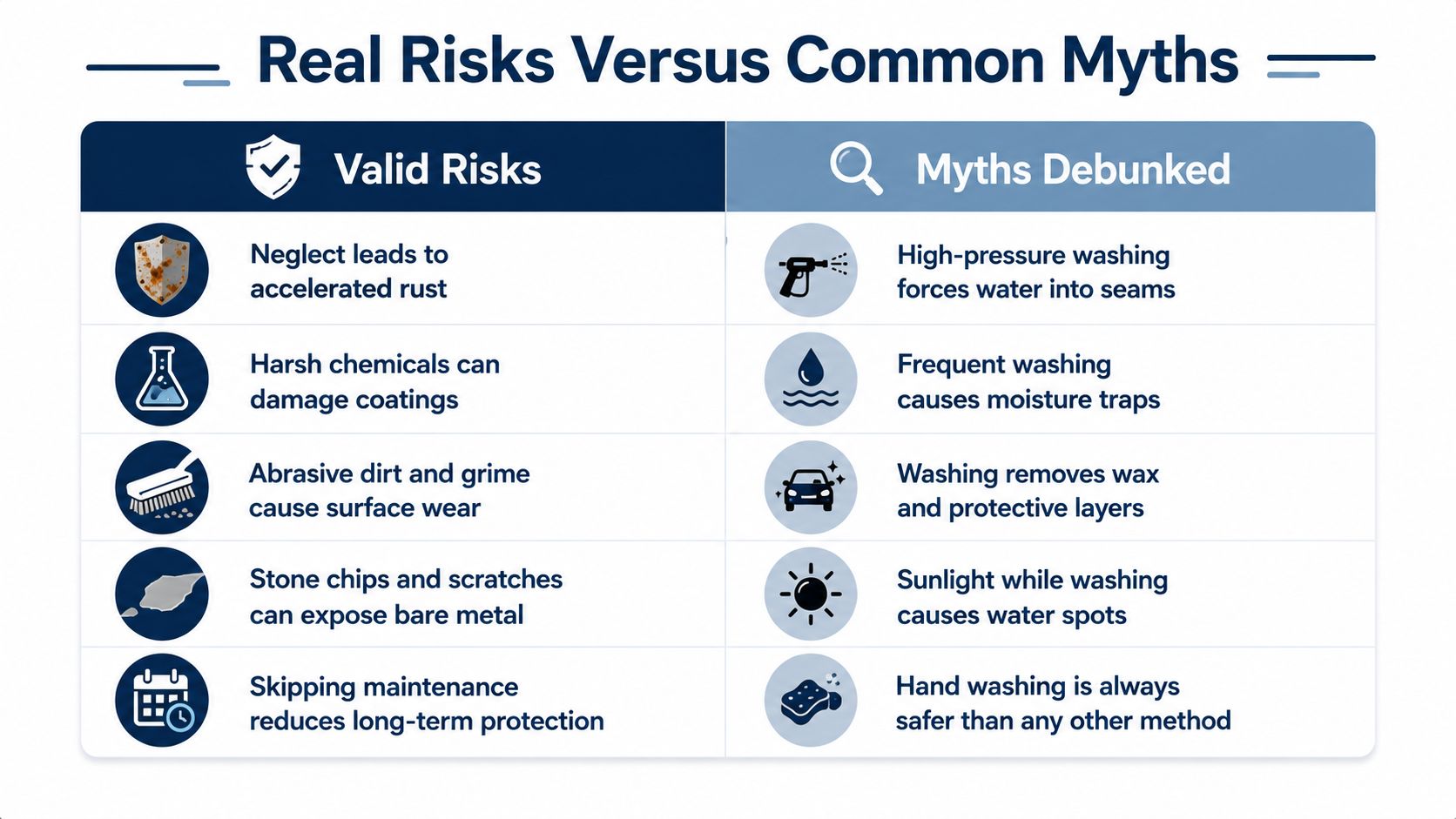
The most common objection sounds reasonable: “Won't washing the underside force water into seams and cause rust?” In practice, that fear confuses temporary wetness with sustained salt contamination. Water can dry. Salt residue continues attracting moisture and keeps the corrosion process active.
A peer-reviewed Canadian study found that untreated underbody and body panels had 3.9 times more corrosion than treated underbody and body panels, according to the published vehicle-corrosion study. That finding supports cleaning and protecting salt-exposed areas rather than avoiding them.
What can actually go wrong
A poorly maintained wash can use excessive pressure, harsh chemicals, or poorly aimed jets. Those practices may damage fragile coatings, dislodge loose underbody material, or push contamination around instead of removing it. A vehicle with already loose rust needs inspection, not an aggressive blast at close range.
The more practical winter risk is timing. If you wash shortly before freezing temperatures arrive, water may remain in seams or around components and freeze. That can create inconvenience and temporary issues, but it doesn't make washing itself a cause of corrosion.
| Concern | My assessment | Sensible response |
|---|---|---|
| Water enters seams | Usually overstated | Use controlled pressure and allow drying |
| Frequent rinsing causes rust | Not supported by the corrosion comparison | Remove salt regularly |
| Harsh pressure damages coatings | A legitimate risk | Avoid close-range, maximum-pressure spraying |
| Washing before a freeze | Poor timing | Choose a warmer part of the day |
| Existing heavy rust | A genuine concern | Inspect before using aggressive equipment |
The same peer-reviewed research also places motor-vehicle corrosion at 79% of an estimated USD 29.7 billion annual corrosion cost, with the study estimating the motor-vehicle portion at USD 23.4 billion. Those figures put the problem in perspective. Corrosion is not an imaginary maintenance concern, and avoiding water isn't a sensible defence against salt.
When and How to Wash the Underbody Safely
Timing decides whether an underbody wash helps or creates avoidable winter trouble. The same rinse can work well on a mild afternoon, then become poor planning before an overnight freeze. In a freeze-thaw climate, drying conditions are part of the wash decision, not an afterthought.
During salt season, wash the underbody every 2–3 weeks from roughly November to April, as outlined in the Canadian winter washing guidance referenced earlier in this guide. Treat that interval as a practical target, not a rigid appointment. A car that stayed off salted roads may need less frequent washing, while a daily GTA commuter should rinse away salt before visible rust appears.
Use the clock and thermometer
Choose a day above freezing, preferably in the morning or around midday. That timing gives water longer to drain and evaporate while the vehicle is driven or parked in milder conditions. Avoid washing immediately before an overnight freeze. As explained in this Ontario road-salt damage guide, the deciding issue is whether the vehicle can dry afterward, not whether rinsing creates rust.
Use controlled pressure
Professional wash equipment is usually safer than a powerful home pressure washer held close to the chassis. Keep the spray moving, avoid concentrating it on one seal or connector, and never try to strip factory coatings from a corroded underside.
Use this routine:
- Rinse heavy contamination first. Clear loose slush and grit before applying detergent.
- Target wheel wells and exposed underside areas. These collect salt-laden debris quickly.
- Keep the nozzle at a sensible distance. Pressure should remove residue without punishing seals or coatings.
- Drive afterward when conditions allow. Airflow helps clear standing water from accessible areas.
- Inspect periodically. Check for flaking coatings, damaged shields, wet cavities, and developing rust.
Fresh water is useful for winter washing because it prevents concentrated salty residue from returning to the vehicle. Nanak Car Wash states that its washes use 100% fresh water and offers underbody-rinse options alongside rust proofing services.
Building a Complete Corrosion Defence Routine
An underbody wash is one layer of protection. It removes salt, but it doesn't create a permanent barrier over every seam, cavity, and damaged coating. Drivers who want durable winter protection should combine washing with inspection and rust proofing.
Rust proofing involves applying a dedicated protective compound to vulnerable underbody areas. The treatment complements washing because the rinse removes contamination while the coating helps protect exposed surfaces afterward. Neither service replaces the other.
Four parts of a workable routine
Assessment comes first. A technician should identify existing rust, damaged shields, exposed metal, blocked drain paths, and areas where previous coatings have failed. Spraying over severe corrosion without understanding its condition can hide a problem instead of solving it.
Underbody washing handles the active contamination. It removes salt, sand, mud, and slush from frame rails, wheel wells, brackets, and accessible lines. The goal is a clean surface for inspection and, where appropriate, protection.
Rust proofing protects vulnerable areas between washes. It is particularly useful for vehicles that spend winter on salted roads, but the product and application method matter. A proper application should be directed at suitable surfaces rather than used as a blanket excuse to ignore corrosion.
Inspection keeps the routine honest. A periodic check can reveal flaking rust, weakened components, or leaks before a safety inspection exposes them under pressure. Washing makes those checks easier because accumulated debris no longer hides the metal.
Busy operators can apply the same thinking to multiple vehicles. The principles used in fleet maintenance planning for UK operators are relevant here, even though Ontario's salt conditions differ. Record wash dates, inspections, protection work, and defects instead of relying on memory.
Combining services at one facility can also make the routine easier to follow. A wash removes current contamination, rust proofing adds protection, and an inspection identifies what needs attention next.
Which Vehicles and Drivers Need It Most
Not every vehicle sees the same salt exposure. A compact sedan used occasionally on cleared city streets has a different corrosion profile from a pickup that travels rural roads, construction sites, and salted highways every day.
SUVs, vans, and pickups often present larger exposed underbody areas and may carry more debris through slush. Greater ground clearance doesn't make them immune. It can expose frame sections, suspension components, and cavities to direct spray that a lower vehicle may partially shield with its bodywork.
Daily GTA commuters should treat underbody washing as routine winter upkeep, particularly when their route includes heavily treated highways or roads that remain wet after ploughing. Ride-hailing and delivery drivers face an even stronger case because their vehicles accumulate constant road exposure and spend long hours moving through traffic spray.
Priority depends on exposure, not badge
Vehicle age also matters. An older vehicle with existing coating damage or surface rust needs a closer inspection before cleaning, while a newer vehicle benefits from keeping salt away before corrosion gains a foothold. A wash won't restore structural strength to a rusted frame, so don't confuse prevention with repair.
| Driver profile | Vehicle types | Recommended frequency | Priority level |
|---|---|---|---|
| GTA daily commuter | Sedan, hatchback, crossover | Every 2–3 weeks during salt season | High |
| Ride-hailing or delivery driver | Sedan, crossover, SUV | Every 2–3 weeks during salt season, adjusted for visible buildup | Very high |
| Contractor or service fleet | Vans, pickups, utility vehicles | Organised around route exposure and inspection findings | Very high |
| Occasional suburban driver | Sedan or compact SUV | After heavy salt or slush exposure | Moderate |
| Rural or gravel-road driver | Pickup, SUV, work van | Frequent rinsing when contamination is visible | Very high |
| Older vehicle with existing rust | Any vehicle | Wash only with inspection-aware pressure and protection planning | High |
The table isn't a licence to ignore the vehicle between appointments. If salt is packed into the wheel wells or the underside carries wet grey residue, wash sooner. If rust is flaking or a line looks pitted, book an inspection rather than adding another wash package.
Fleet managers should also keep records. A simple log showing each vehicle's wash, inspection, and rust-proofing status makes neglected units easier to identify and supports safer maintenance decisions.
Your Underbody Care Action Plan
Start with exposure. Ask where the vehicle travels, how often it encounters salted roads, whether it carries slush in the wheel wells, and whether the underside already shows rust or damaged coating.
Then set a practical schedule. During Ontario's salt season, the established recommendation is every 2–3 weeks, with earlier service when heavy buildup is obvious. You don't need a showroom finish. You need the salt removed from places you can't reach with a normal driveway rinse.
Follow these five decisions
- Assess the underside. Have rust, damaged lines, loose shields, and compromised coatings checked before using aggressive pressure.
- Schedule the rinse. Keep underbody washing in the winter maintenance calendar instead of waiting for a visible problem.
- Choose drying weather. Wash above freezing and avoid the hours immediately before an overnight freeze.
- Add protection where appropriate. Rust proofing can complement washing by protecting suitable vulnerable surfaces after contamination has been removed.
- Check the result. Look beneath the vehicle periodically for recurring salt traps, coating failure, or structural deterioration.
The clear answer to “is underbody car wash safe” is yes, when pressure is controlled and drying is possible. In Ontario, consistent rinsing is one of the simplest ways to reduce salt exposure, while inspection and rust proofing address the problems a wash alone can't solve.
Don't wait for a failed safety inspection or a visibly weakened frame. Choose a suitable wash day, remove the salt, and arrange an underbody inspection if the vehicle shows established corrosion.
Nanak Car Wash offers exterior wash packages with underbody-rinse options, plus detailing and automotive rust proofing for GTA drivers dealing with winter salt. Visit Nanak Car Wash to choose a practical wash or protection service and keep your vehicle's underside ready for the next Ontario freeze-thaw cycle.

 6600 Finch Ave W, Etobicoke, ON M9V 3Z6
 647-703-8515
 MON – SUN 8 AM to 7 PM