
A rideshare driver pulls into a wash bay with a cream leather SUV, two winters of salt on the mats and a dog's fur woven into the passenger seat. The seats look ready for a deep clean, but a close inspection may reveal that some marks are dirt and others are worn colour. Those are different jobs, and only one belongs on a cleaning quote.
A professional leather upholstery cleaning service should start by checking the material and its condition, then explaining the price, likely duration and limits before work begins. That way, you're paying for cleaning when cleaning can help, and you're not expecting conditioner to perform upholstery surgery.
Table of Contents
- Leather Upholstery Cleaning Prices and Surcharges
- What a Professional Leather Clean Includes and How It Runs
- When Cleaning Cannot Fix Leather Damage
- Professional Cleaning Versus Doing It Yourself
- Choosing a Leather Cleaning Provider
- Caring for Leather After the Clean
- Leather Cleaning Questions Answered
- Book Your Leather Clean Before the Next Salt Season
Leather Upholstery Cleaning Prices and Surcharges
A leather cleaning quote is built from labour time, not from the word leather alone. Vehicle type, seat count, soil level and pet hair all change how long the job takes, so any base figure is a starting point rather than a final number. Ontario has no shortage of candidates for this work: Statistics Canada's light-duty vehicle registration figures put the province at 35.9% of Canadian registrations in 2024, or approximately 8.8 million vehicles.
Nanak Car Wash pricing depends on vehicle type and location, so ask for a written quote for your specific vehicle before booking. What stays consistent is the structure: a duration range plus whichever surcharges apply.
| Service tier | Typical duration | Surcharge that applies |
|---|---|---|
| Leather deep clean, sedan or coupe | 1–2 hours | None listed |
| Leather deep clean, SUV, crossover or pickup | 2–3 hours | SUV, van and truck surcharge |
| Leather deep clean, minivan or cargo van | 2–4 hours | Van surcharge |
| Heavy pet hair add-on, any vehicle | Adds time to the job | Pet hair surcharge |
| Full interior detail with leather conditioning | 2–4 hours | Vehicle-type surcharge where applicable |
Size is the main driver. An SUV or pickup has more leather surface and deeper bolsters to work around, and a minivan can add a full row of seats. Pet hair adds vacuuming and brush time before any cleaning product touches the hide. Those are labour costs, and a straight quote names them up front rather than discovering them at the till.
Before comparing prices, sort the marks on your seats into two piles. Ground-in dirt, salt residue and body oils are cleaning jobs. Worn colour, cracking and peeling finish are repair jobs, and no amount of shampooing will reverse them. A quote that folds both into one line is charging a cleaning price for a result cleaning cannot deliver.
Nanak's interior and exterior detailing packages run one to four hours by appointment, include leather deep cleaning, and carry SUV, van, truck and pet-hair surcharges. Unlimited Wash Club members get discounted interior cleaning, which suits drivers fighting salt season on a repeat basis. For context on how the same material-first logic applies to household pieces, the Giorgi Bros. Furniture upholstery cleaning guide explains why one universal method does not fit every fabric or hide.
Three questions settle most quotes: What is the base price? Which surcharges apply to my vehicle? How long will the job take? A provider who answers all three clearly has already inspected the car. One who cannot is quoting blind.
What a Professional Leather Clean Includes and How It Runs
Think of a professional clean as a deep scale and polish at the dentist. It can remove buildup and improve the surface, but it can't fill a missing piece of leather or stitch a seam back together. Before the technician starts, walk around the vehicle together and point out peeling colour, tears, open seams, old repairs and any area that already feels unusually slick or brittle.
That inspection matters after a Toronto winter. During the 2023–2024 season, 135 Ontario organizations reported using 1,679,395 tonnes of road salt and applying it across 104,187 kilometres of roadway, according to Environment and Climate Change Canada's road-salt data. Salt rides into the cabin on boots, clothing, floor mats and cargo. If residue and grime stay on the surface and conditioner goes on top, the leather can look dull or feel stiff instead of clean.
The job, in order
Vacuum first. The technician vacuums the seats, then uses an air tool to clear grit from vents, seams and crevices. This reduces the chance of rubbing loose dirt across the finish.
Lift salt from the seams. Salt and grime tend to collect where panels meet. The technician loosens these deposits carefully, rather than pushing them farther into stitching or perforations.
Test a hidden area. A small, concealed patch shows how the cleaner interacts with the finish before the technician treats a visible panel.
Clean in small sections. A leather-safe cleaner goes on sparingly. A soft brush or microfiber works the surface with controlled agitation, including seat bolsters, the centre seat, headrests, door panels, the console, steering wheel and armrests.
Remove soil and residue in passes. The technician wipes each area, then repeats as needed. The aim is to lift contamination without leaving cleaner pooled in seams or perforations.
Dry with airflow. Surfaces need time to dry in ventilated conditions before the technician considers conditioning. A seat can feel dry on top while moisture remains in a seam.
Condition only when appropriate. Once the surface is clean and dry, a thin coat may help maintain the finish. More product isn't better; a thick layer can feel greasy and attract grime.
Review the result together. The technician checks the cleaned areas with you, notes any marks that remain and explains aftercare.
Most interiors take one to four hours on site, with extra time possible for heavy soil or pet hair. Ask for the expected drying window before booking, especially if the vehicle will carry passengers straight after the appointment. Stitching repair, recolouring, torn foam and panel replacement are separate work, not hidden extras a cleaning service can solve.
When Cleaning Cannot Fix Leather Damage
A commuter brings in a black leather seat with faded patches and expects a deep clean to bring the colour back. The technician checks the surface and finds that the protective colour layer has worn through. Cleaning may remove grime around the patches, but it can't replace the finish that's already gone.
That distinction is the difference between removable soil and material failure. A surface can be dirty and damaged at the same time, but a stronger cleaner won't turn damaged leather into sound leather. Nor can conditioner rebuild missing coating, foam or stitching.
| Damage type | Can cleaning help? | Next step |
|---|---|---|
| Salt film, body oil, dust and grime | Yes | Deep clean, then condition |
| Dye transfer from denim | Partly | Test a concealed area; recolour if the finish is lost |
| Dull, sticky or over-conditioned surface | Yes | Remove residue and rebalance the finish |
| Peeling or flaking colour | No | Recolour or refinish the panel |
| Cracks or open seams | No | Stitching or panel repair |
| Torn leather or missing foam | No | Reupholster the affected section |
Dye transfer from dark denim can sometimes be reduced, but aggressive scrubbing risks stripping the factory finish. A technician should test a concealed spot and stop if the finish starts to change. The honest answer may be that the remaining mark needs recolouring, not another pass with cleaner.
Heated or ventilated seats can be cleaned, but their features call for careful moisture control. Perforations and seams shouldn't be flooded, and the technician should avoid pushing liquid into ventilation openings. A glossy seat might be dirty, over-conditioned or worn, so look at the whole panel and ask for an inspection rather than guessing from shine alone.
A cleaning quote should promise cleaning, not new leather.
When the finish won't tolerate the process, the technician should stop and report what they've found. That protects the seat and gives you the chance to price the right repair instead of paying for a more aggressive clean that can make the damage worse.
Professional Cleaning Versus Doing It Yourself
DIY works for light maintenance. A professional is worth considering when seats carry salt, pet hair or deep staining, or when they're heated or perforated. The useful comparison isn't “cheap versus expensive”; it's whether the method matches the condition of the seat.
| Criteria | Professional clean | DIY clean |
|---|---|---|
| Moisture control in seams and perforations | Controlled, measured application | Easy to over-wet |
| Salt and deep-grime removal | Multiple passes and appropriate tools | Often surface-level |
| Product control and residue removal | Tested products, final residue wipe | Depends on the kit and technique |
| Time required | 1–4 hours, handled for you | Several hours of your own time |
| Risk to seats | Low when the technician inspects first | Higher on damaged or perforated leather |
| Results on heavy soiling | Strong | Limited |
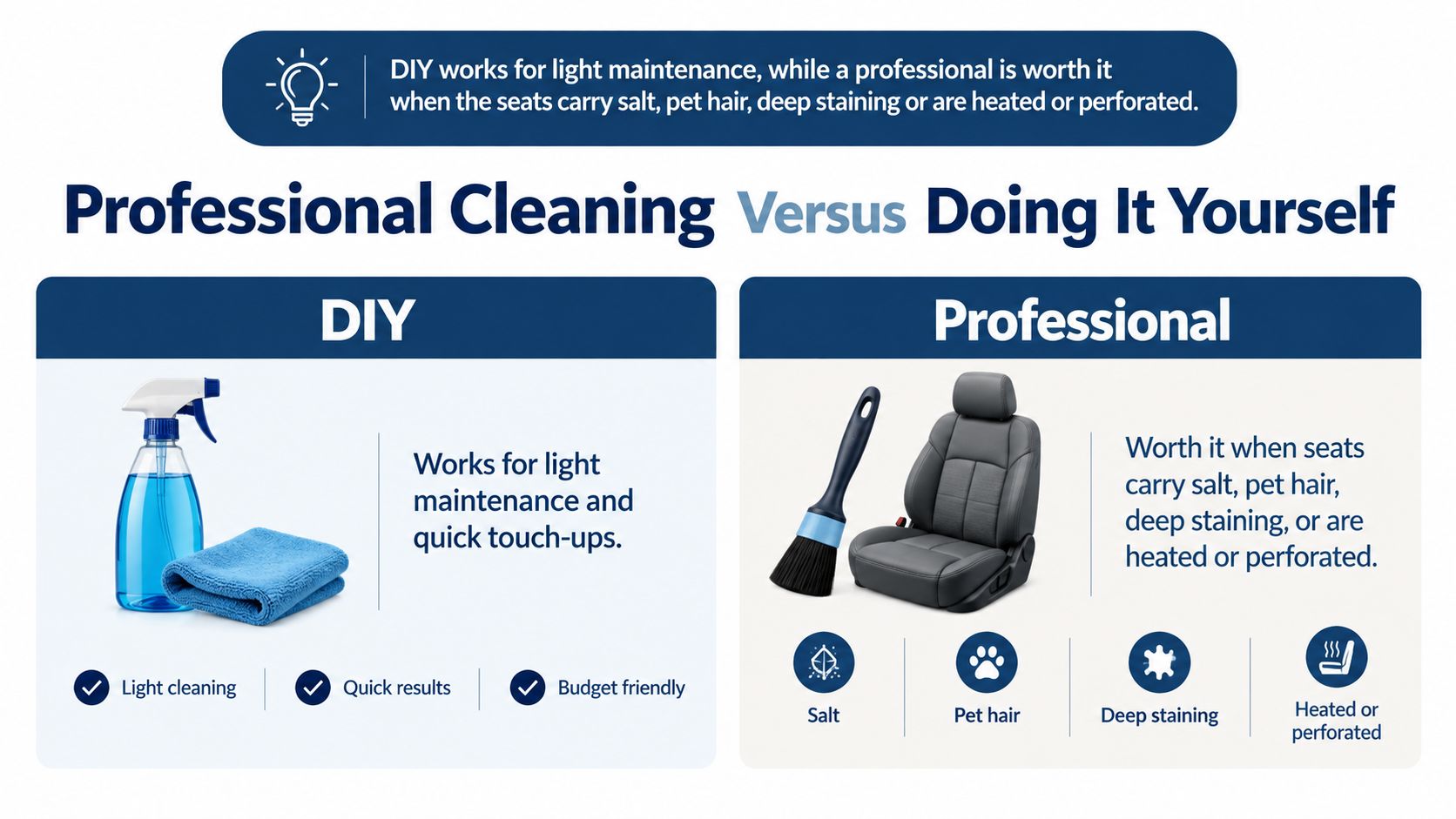
A professional can check the finish before cleaning, test products and control how much liquid reaches the seams and foam. At home, it's easy to spray more because a spot hasn't disappeared yet, then scrub harder when the extra cleaner leaves a sticky residue. On leather, that's a quick route to turning one problem into two.
DIY makes sense for an occasional wipe-down with a clean microfiber cloth and a product labelled for automotive leather. It's less attractive for salt packed into seams, stubborn dye transfer or pet hair that has worked into seat edges. A household leather guide such as Indian River Furniture's leather cleaning guide can help with basic care, but a car seat has seams, perforations and sometimes built-in heating or ventilation to account for.
The hidden cost of a failed DIY attempt is that a damaged finish may need repair or refinishing rather than another cleaning pass. For a weekly commuter with light-use seats, regular wiping and vacuuming can be enough maintenance. A rideshare driver, a family travelling with pets or an owner dealing with winter salt should consider booking a professional clean at least once a year.
Choosing a Leather Cleaning Provider
Before booking, ask the provider to inspect the seats and explain what the quoted service will do. A price without a condition check can be misleading: two vehicles with the same model and seat count may need very different amounts of work.
Questions worth asking before you book
- Inspection: Will someone check for peeling colour, cracks, open seams and old repairs before quoting?
- Products: Can the provider name the cleaner and conditioner it uses, and explain whether each is intended for automotive leather?
- Price: Does the written quote show the base price and every applicable SUV, van, truck or pet-hair surcharge?
- Moisture: How does the technician protect seams, perforations and ventilated seats from excess liquid?
- Drying: How long should the vehicle remain ventilated before passengers use the seats?
- Results: Is there a satisfaction or results policy, and what does it exclude?
- Limits: Will the provider say plainly when cleaning won't fix a mark or damaged finish?
A practical shortcut is to call the location, describe the vehicle type and ask for the expected duration. That helps you plan around work or passenger pickups, and it gives the provider a chance to flag an extra row of seats or a pet-hair surcharge before you arrive. Don't settle for “it'll be quick” if the job includes a full interior detail.
Nanak Car Wash has operated since 2004, states that it uses 100% fresh water for washes, and combines modern equipment with hand-applied steps by trained staff. Washes, detailing and rust proofing are offered at the same locations, including Etobicoke, Brampton, Concord, North York, Oshawa and Guelph. Its interior detailing packages include leather deep cleaning, so ask the location for a current quote and the precise scope of work for your vehicle.
Caring for Leather After the Clean
A freshly cleaned seat can pick up a salt mark on the ride home, so treat the first 24 hours as drying time. Keep the cabin ventilated, avoid heavy passenger loads and wet gear, and leave heated or ventilated seat functions off until the surfaces are completely dry. If a seat still feels damp, don't switch on the heater to hurry it along.
Water can travel into seams, perforations or ventilation openings, where it is harder to remove and may leave an odour. In winter, excess water can sit in seams and foam while boots and mats bring slush into the cabin, so drying needs patience. Aggressive extraction isn't automatically better. Lightly soiled leather responds to controlled wiping, while heavily contaminated areas need deeper treatment followed by careful drying.
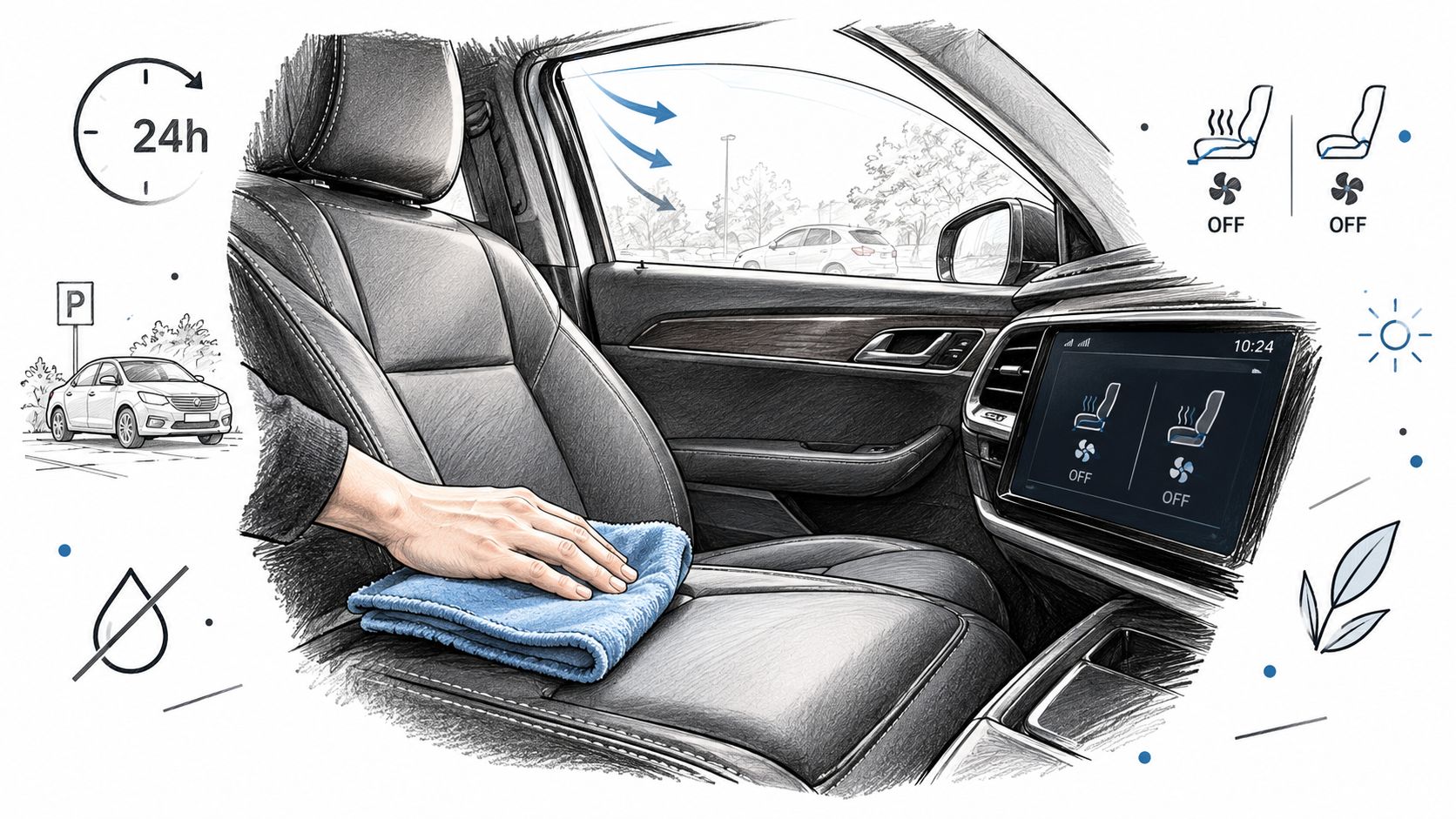
For a fresh spill, speed matters but pressure does not. Blot it with a dry cloth. Rubbing can spread the spill or abrade the finish, and extra force will not turn finish damage into removable soil. If liquid reaches the cushion or disappears into perforations, have a technician inspect the seat before more cleaner goes in.
For regular upkeep, wipe salt and surface grime with a clean microfiber cloth and vacuum around seat edges and seams. Apply conditioner sparingly and only when the leather is clean and dry; a slick, greasy layer isn't a protective bonus. For household upkeep outside the vehicle, this guide to leather care for Virginia Beach homeowners offers general background, but follow automotive product directions on seats.
Leather Cleaning Questions Answered
How long does a professional leather clean last?
It can hold through the season if you keep up with regular wipe-downs, particularly after winter driving. Heavy daily use, spills and passengers carrying grit shorten that quickly. If the seats look dull but the colour and seams are intact, that is usually soil; if the finish is lifting, cleaning time will not buy it back.
Does a clean remove odour?
It helps when odour comes from removable salt, sweat or spills. If moisture has reached the cushion or the seat stays damp, have the area dried and inspected before more product goes on.
Are light-coloured seats harder to keep clean?
They show dark-denim dye transfer more readily than darker seats. Try gentle cleaning only; if the mark stays, the finish may need assessment rather than harder scrubbing.
How often should a rideshare car be cleaned?
Because rideshare seats get frequent contact, arrange a professional clean at least once a year. Clean sooner if salt, spills or pet hair build up.
Can I clean seats that are still damp from snow?
Wait until they are fully dry before booking. Dry leather shows whether the mark is surface soil or damage, and the technician is not adding moisture to an already wet area.
Can cleaning restore faded or peeling colour?
Cleaning removes soil. Peeling, fading or worn colour is material loss, so ask for refinishing to be flagged during inspection before you pay for a clean.
What should a results policy cover?
Get it in writing. It should say how remaining stains and dye transfer are handled, what counts as pre-existing damage, and whether any recommended repair or extra work is included or priced separately.
Book Your Leather Clean Before the Next Salt Season
Three steps can keep a cleaning appointment useful and the quote predictable.
- Inspect the seats first. Look for peeling colour, open seams, cracks or torn areas. If you find them, ask about repair before paying for a clean that can't restore the missing material.
- Request a written quote. It should show the base price, any SUV, van, truck or pet-hair surcharge, the service included and the expected duration. Keep it so you can compare it with the final invoice.
- Choose a convenient location and book. Post-winter cleaning helps remove salt before it sits through another cycle of use. Check the live Nanak Car Wash site for current prices before you book.
Nanak Car Wash offers interior detailing that includes leather deep cleaning, with vehicle-type and pet-hair surcharges to confirm when you request a quote. Check current pricing and contact a location near you through Nanak Car Wash to plan a clean before the next salt season.

 6600 Finch Ave W, Etobicoke, ON M9V 3Z6

 647-703-8515
 MON – SUN 8 AM to 7 PM