
Professional express washes average roughly 7.5 minutes per vehicle, and basic washes usually sit around $10 to $12. That's the speed-and-price baseline, which is why a minute car wash looks like a bargain until winter grime, streaking, and weak drying make you question whether you bought convenience or just a shorter wait.
You know the moment. You're at the bay door, salt is crusted on the lower panels, the line behind you is growing, and the sign says express. The easy choice is to tap your card and hope the car comes out clean enough to stop you thinking about it until next week.
Table of Contents
- The Dilemma at the Car Wash Bay Door
- How Express Car Washes Actually Work
- Speed Versus Finish: The Trade-off
- Express Wash Full Service Detailing and Rust Proofing Compared
- Nanak Car Wash Packages and Membership Options
- Smart Prep Pickup and Membership Decisions
The Dilemma at the Car Wash Bay Door
What you're buying
A minute car wash is really a short, automated exterior service built to move vehicles through quickly, keep labour light, and send drivers back on the road without turning car care into a half-day errand. In Ontario, that pitch makes sense because the market is dense, the roads are busy, and vehicles keep getting hit by the same mix of salt, spray, and dust.
Ontario drivers also live with the trade-off every winter. A quick wash clears the top layer of grime, but it rarely gives the same finish as a slower, more hands-on service. That is why the express model fits so neatly into the GTA. The format is popular because it solves a real problem, not because it is glamorous.
Practical rule: if the wash is part of your weekly routine, speed matters. If you are hoping one quick pass will fix weeks of buildup, you are asking the wrong service to do the wrong job.
Why the question is not just about price
The sign may advertise an entry wash for less money than a full-service clean, but the key decision is whether the finish is good enough to justify the visit. Ontario winters make that calculation sharper. Salt and slush cling to lower panels, wheel wells, mirrors, and underbodies, so a mediocre wash does not feel neutral, it feels unfinished.
That is the false economy people miss. A quick exterior clean can be the right call on a Tuesday between meetings, but it can also leave the same grime behind if the rinse coverage is weak, the drying is rushed, or the underbody gets little attention. The better choice depends on what you are trying to remove, how often you drive, and whether you care more about queue time or the way the car looks when you step back from it.
How Express Car Washes Actually Work
The tunnel is faster than it looks
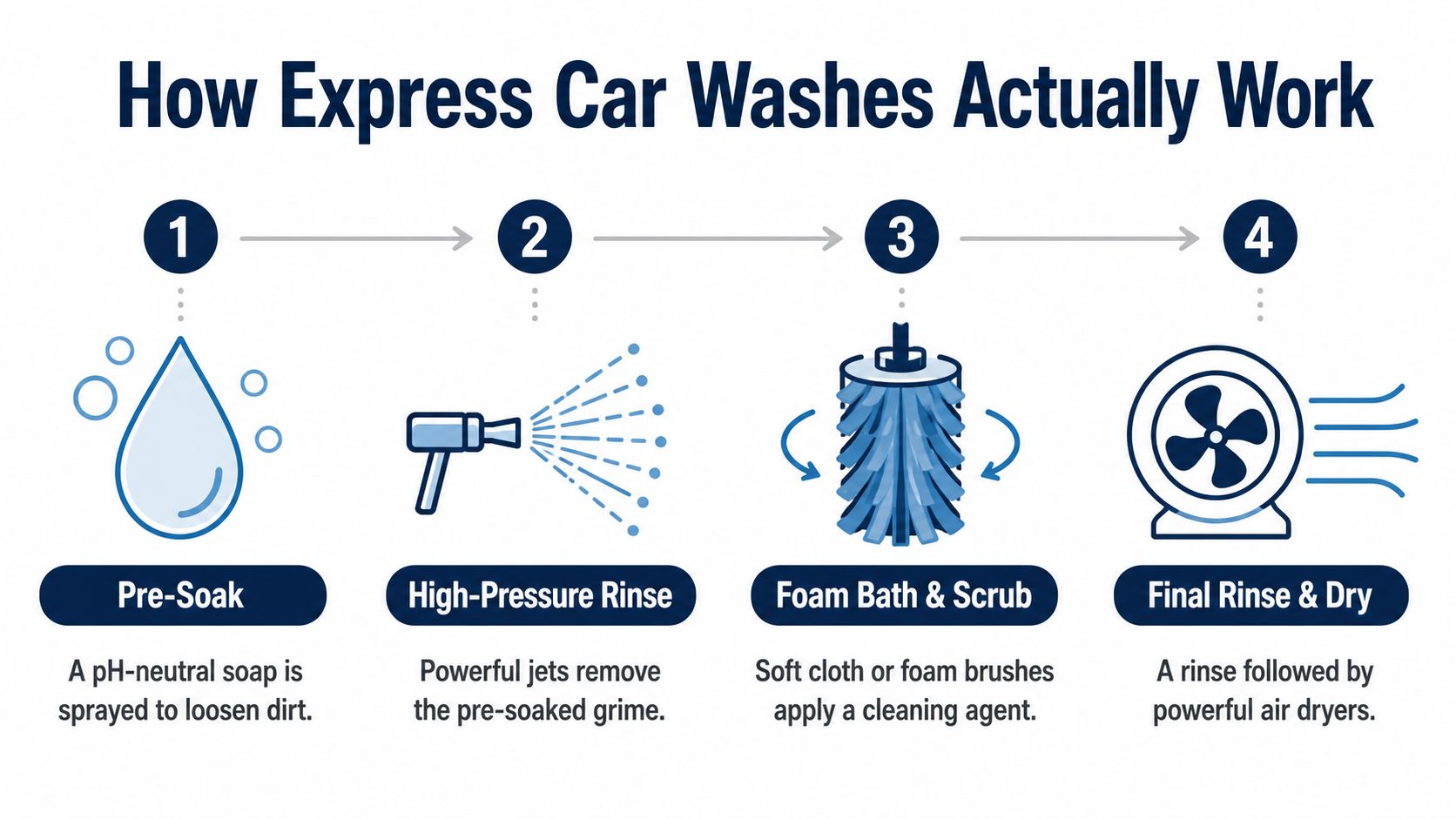
An express wash works because each stage is compressed, not skipped. A vehicle is pre-soaked, detergent loosens surface film, the wash action lifts grime, then the car is rinsed and dried before it leaves the bay. The total cycle usually lands somewhere between three and eight minutes, depending on the machine and package ATS ELGI.
That speed sounds simple, but it depends on hard limits. Water flow, air supply, and chemical contact time all affect the result. One commercial configuration lists 3 to 4 minutes per car on the fastest programme with 85 to 100 L of water per car and 7 bar / 5 CFM air supply, while a higher-cleaning programme runs 6 to 7 minutes and uses 120 to 130 L per car ATS ELGI.
Why the order of the steps matters
The wash has to loosen dirt before it can remove it. If the pre-soak is weak, the rest of the tunnel works harder than it should. If the drying stage is rushed, the car can leave with beads in creases, around badges, and along mirrors.
That's where Ontario driving conditions complicate things. Winter salt sticks differently from summer dust, and road film does not behave like loose surface dirt. A faster programme can still do solid work, but it needs enough dwell time for the chemicals to break down residue and enough air movement to push moisture out of the hard-to-reach spots.
A quick wash can be perfectly sensible, but only if the machine is built to rinse and dry well enough for the season you're in.
What the fastest setting usually sacrifices
The trade-off is not mystery, it's contact time. Add underbody rinse, wheel wash, drying, and wax stages, and the car stays in the tunnel longer. That extra dwell time is often exactly what helps remove winter residue that a bare-bones cycle leaves behind.
A compact touchless platform can still hit 3.5 minutes per car at 24 bar water pressure, 125 L water consumption, and 0.6 kWh per car, while another high-speed tunnel system reports 5 to 8 minutes, 100 to 140 L water use, and 15 kW / 380V three-phase power with multiple 5.5 kW blowers for finishing Schumak India. The takeaway is simple, faster service only works when the rinse and dry stages are strong enough to keep up.
Speed Versus Finish: The Trade-off
Faster does not always feel better
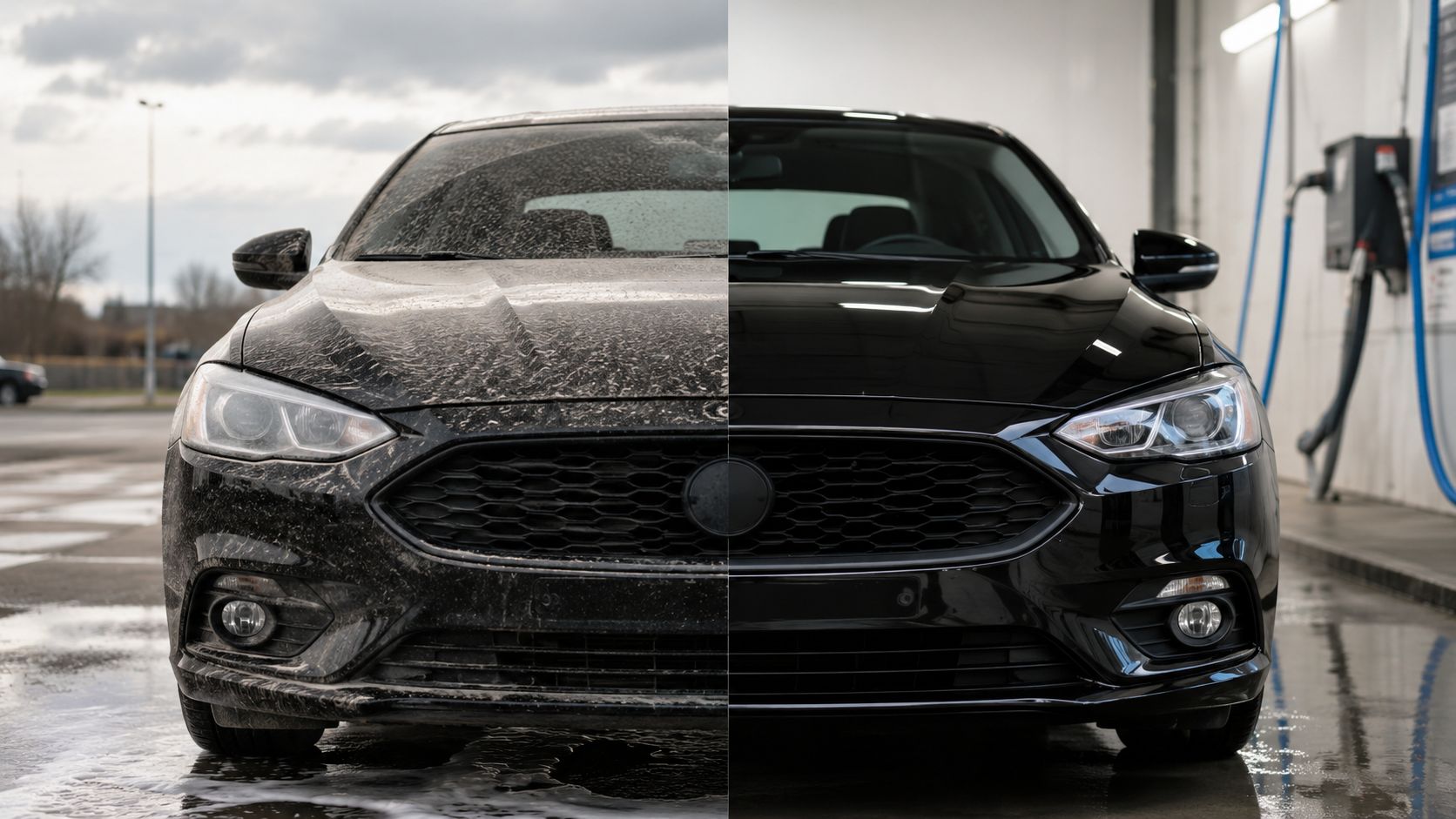
Drivers tend to focus on the timer and ignore the finish. That is usually where frustration starts. A wash can move cars quickly and still leave streaks, uneven drying, or spots that make the vehicle look unfinished, which is why customer complaints often center on the final result Carwash.com.
Ontario makes that trade-off harder to ignore. Salt spray settles on dark paint fast, and slush clings to lower panels, mirrors, and rear openings in a way that clean summer dust never does. A short wash can still be worthwhile, but only if the rinse and drying stages do enough work to match the season.
What a good express wash gets right
A well-run express wash handles the parts drivers notice first. It rinses the body, clears the glass, gets into the wheels, and dries the surfaces well enough that the car does not pull out looking half-finished. Basic wash programs usually sit around $10 to $12, which makes sense for frequent upkeep rather than deep correction WorldMetrics.
That said, the program has to match the job. SUVs, work vans, and hatchbacks often carry grime around the tailgate, lower doors, and wheel wells, and a light cycle may not move all of it. If the underbody still holds salt or the paint comes out wet and streaky, the driver saved a few minutes but did not really solve the problem.
Add-ons can close the gap
The better add-ons earn their place. An underbody rinse helps with salt. Better drying reduces spotting. Wax or sealant can leave behind a layer that makes the next wash easier to manage. None of that turns an express wash into detailing, but it does improve the balance between time spent and result delivered.
The practical way to judge it is simple. An express wash is a maintenance tool, not a restoration tool. If the vehicle is already in decent shape, it keeps problems from piling up. If the vehicle is heavily contaminated, it can still help, but it will not erase neglected grime in one pass.
Express Wash Full Service Detailing and Rust Proofing Compared
| Service | Typical Duration | Price Range | Best For |
|---|---|---|---|
| Express wash | A few minutes | Entry pricing around the low-cost wash tier | Quick exterior maintenance, salt removal, repeat visits |
| Full-service wash | Longer than an express wash | Higher than express pricing | Drivers who want vacuuming, hand drying, and interior touch-ups |
| Detailing | One to four hours | Higher and usually appointment-based | Deep interior restoration, stain removal, polish work |
| Rust proofing | Service-specific appointment | Size-based pricing | Vehicles that need corrosion protection in salt-heavy conditions |
Match the service to the job
The name on the menu matters less than the problem sitting on the car. An express wash fits routine cleanup when time is tight and the vehicle only needs the winter film removed. A full-service wash makes more sense when the inside also needs attention. Detailing belongs in the restoration lane, where the job is to correct dirt buildup, stains, and neglected surfaces.
Rust proofing sits in a different category altogether. It is not about shine or a cleaner cabin. It is about helping protect the vehicle from corrosion in a climate that keeps putting salt on the underbody, which makes it a separate conversation for owners who plan to keep a vehicle and want more than short-term appearance.
What drivers usually get wrong
The common mistake is paying for more service than the car needs. A driver buys a deeper package for a light cleanup, then pays for time and labor that do not change the result very much. The other mistake is sticking with the cheapest exterior option while the interior stays dirty or the underbody keeps taking salt exposure. Both come from using the wrong tool for the job.
A cleaner decision starts with urgency and contamination level. If the car only needs the winter film knocked off, an express wash is enough. If the seats, dashboard, and glass all need attention, the value shifts toward a fuller service. If the vehicle sees regular salt exposure and you plan to keep it for years, rust protection deserves its own look.
Useful filter: ask whether you are buying appearance, hygiene, or protection. Once the outcome is clear, the right service is easier to spot.
Nanak Car Wash Packages and Membership Options

What the package ladder actually means
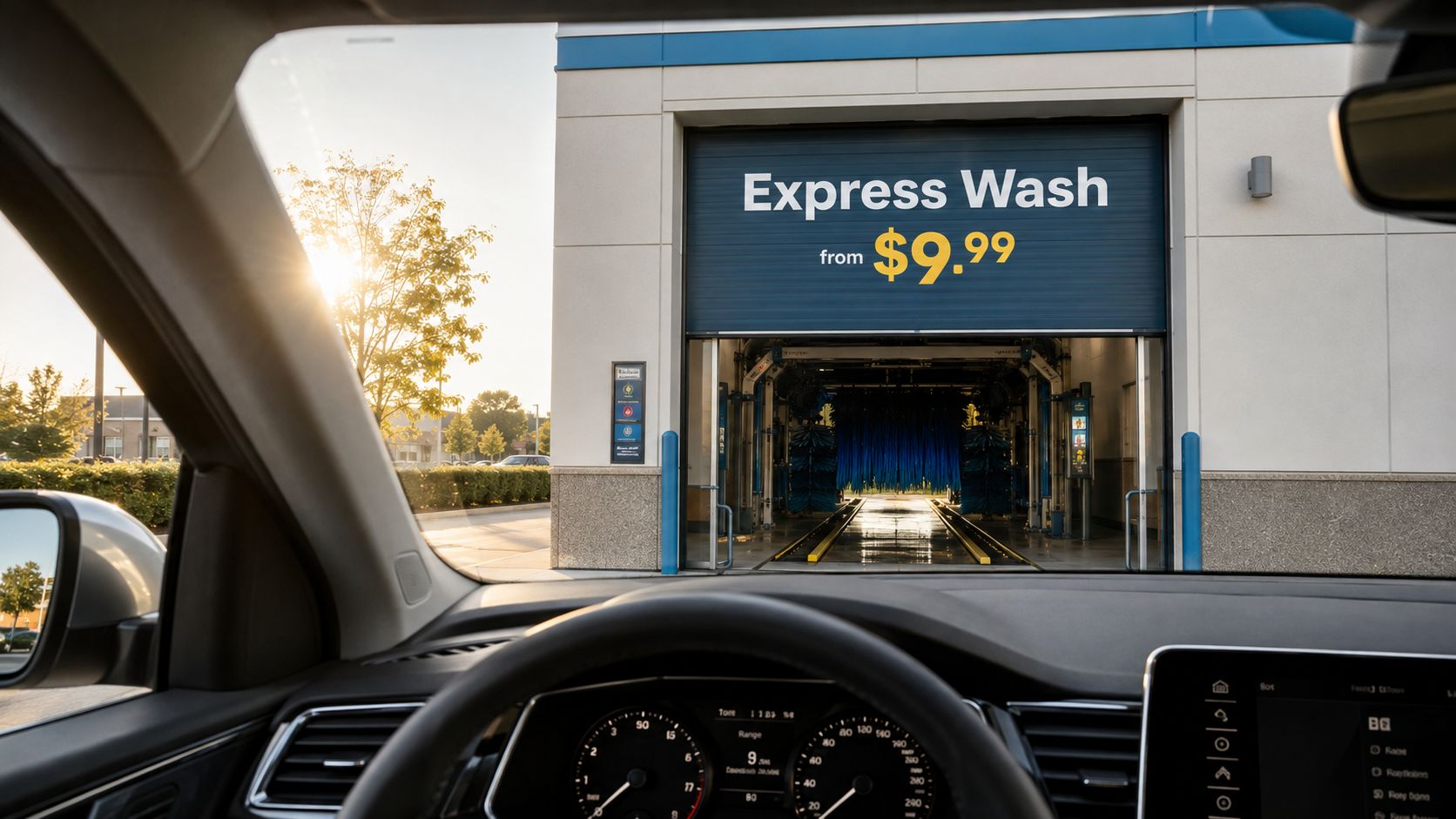
Nanak Car Wash translates the express-to-detailing spectrum into a practical menu. Its express exterior washes start from $9.99 plus tax, and the package includes presoak soap, foam bath, rinse, drying agent, and air blowers. Optional upgrades add underbody wash, double drying agent, triple foam wax, hot wax, sealer wax, and lava foam.
That structure is useful because it lets drivers pay for the one or two steps that matter most. If you're a commuter mainly trying to strip off road film, the base wash is the point. If you're dealing with winter residue or you want a better finish, the upgrades make more sense than jumping straight to a bigger service.
The middle and upper tiers solve different problems
The full-service washes begin at $29.99 plus tax and add interior vacuuming, dashboard and window cleaning, and hand drying. Higher tiers extend the work to door panels, consoles, cup holders, and tire dressing. That's not the same job as an express wash, and it shouldn't be priced or judged like one.
Interior and exterior detailing is available by appointment and typically runs one to four hours. The service covers carpet and seat shampooing, salt and stain removal, vent and crevice blowout, leather deep cleaning, and machine buff and polish. Rust proofing is priced by vehicle size at roughly $119.95 to $149.95 plus tax.
Where memberships fit
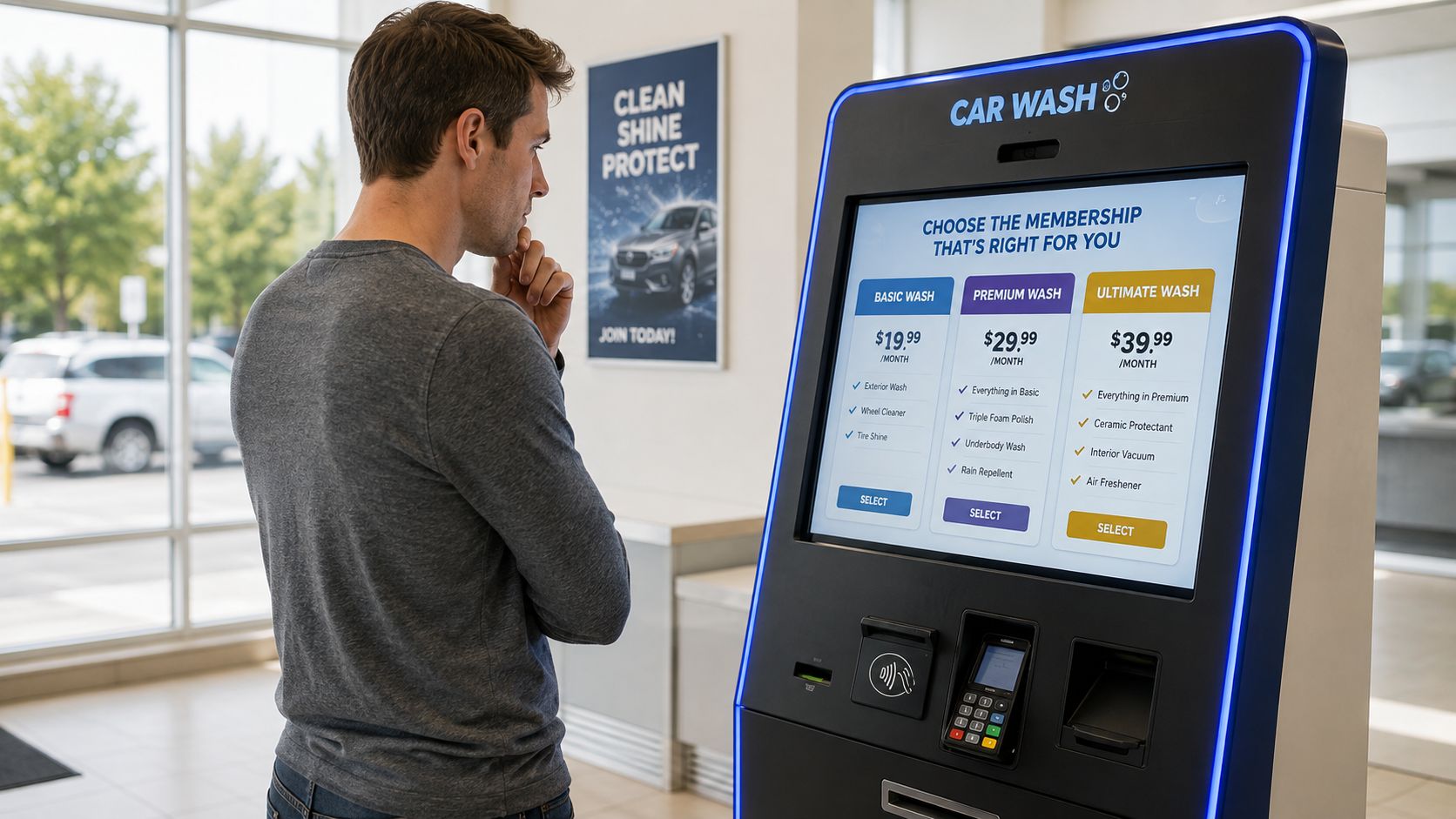
The Unlimited Wash Club is aimed at drivers who return often enough that individual tickets stop making sense. Nanak Car Wash also shows promotional first-month-free offers on site and discounted interior cleaning for members, which helps frequent users reduce the sting of repeated winter washing without locking into a long-term contract.
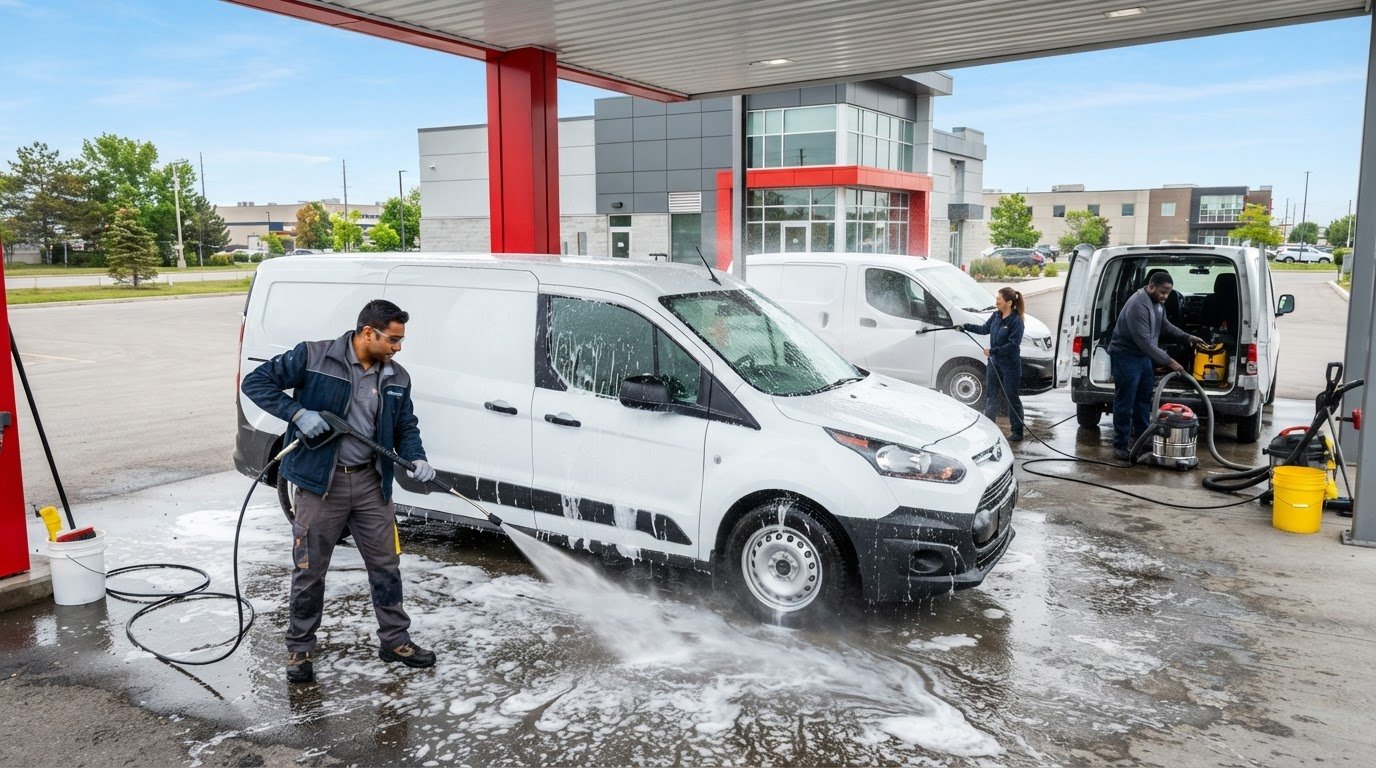
For a commuter, the base wash is usually the cleanest fit. For a rideshare driver, delivery courier, or small fleet operator, the membership starts to look more practical because repeated exterior cleanups are part of the job. For an SUV owner carrying kids, sports gear, or a dog, the value often shifts towards a fuller package when the inside is the bigger headache than the paint.
Smart Prep Pickup and Membership Decisions
Small prep changes the result more than people think
The quickest way to waste a wash is to arrive unprepared. Loose items in the cabin should be removed before you pull in, especially if you're adding interior cleaning. If the site asks for anything specific, such as a window position or driver-side mirror fold, do it before you reach the attendant.
Salt buildup and problem areas deserve a clear mention at the start. If the lower panels are caked or the back end has been collecting road spray for days, say so. The team can't fix what they don't know is there.
Check the car before you leave
The pickup moment matters because it's your only chance to catch a miss without turning the whole visit into a debate later. Look at the mirrors, the rear hatch, the lower doors, and the edges around the wheels before you merge back into traffic. If something obvious is still dirty or visibly wet, it's better to spot it immediately than after you've driven home.
The best re-wash is the one you avoid by looking closely while the car is still on site.
When membership pays off and when it doesn't
Frequent drivers are the best fit for a monthly pass, but only if they use it. Ride-hail, delivery, and fleet vehicles often need repeated exterior washing, so the convenience can outweigh the friction of buying single tickets over and over. Drivers who wash only occasionally may be better off staying with prepaid bundles or one-off visits.
Winter changes the equation because salt exposure raises the need for underbody cleaning, not just a quick rinse. A membership that matches your real driving pattern is worth more than a cheap plan you barely touch. That's the part many get wrong, they choose the plan they like the sound of instead of the one they'll use.
If you want a quick exterior wash, fuller interior cleaning, detailing, or rust proofing in the GTA, Nanak Car Wash has a package ladder that matches different driving patterns and vehicle needs. If you're comparing express speed against finish quality, visit the site, check the current options, and choose the service that fits how you actually drive through Ontario's weather.

 6600 Finch Ave W, Etobicoke, ON M9V 3Z6
 647-703-8515
 MON – SUN 8 AM to 7 PM