
You open the driver's door after a wet GTA commute and get hit by a smell that seems to have been waiting for you. Maybe it's sour milk, damp carpet, stale smoke, or the unmistakable funk of a forgotten gym bag. You spray an air freshener, turn up the fan, and hope for the best. Ten minutes later, the fragrance and the original smell are competing for space.
Effective odor removal car work starts with diagnosis, not perfume. A cabin smell usually has a source, and the right treatment depends on whether that source is sitting on a washable surface, trapped in upholstery, hiding under padding, or moving through the HVAC system.
Table of Contents
- Become a Car Smell Detective
- Your DIY Odor Removal Toolkit
- Deep Cleaning Beyond the Surface
- When to Call the Professionals
- Keeping Your Car Smelling Fresh for Good
Become a Car Smell Detective
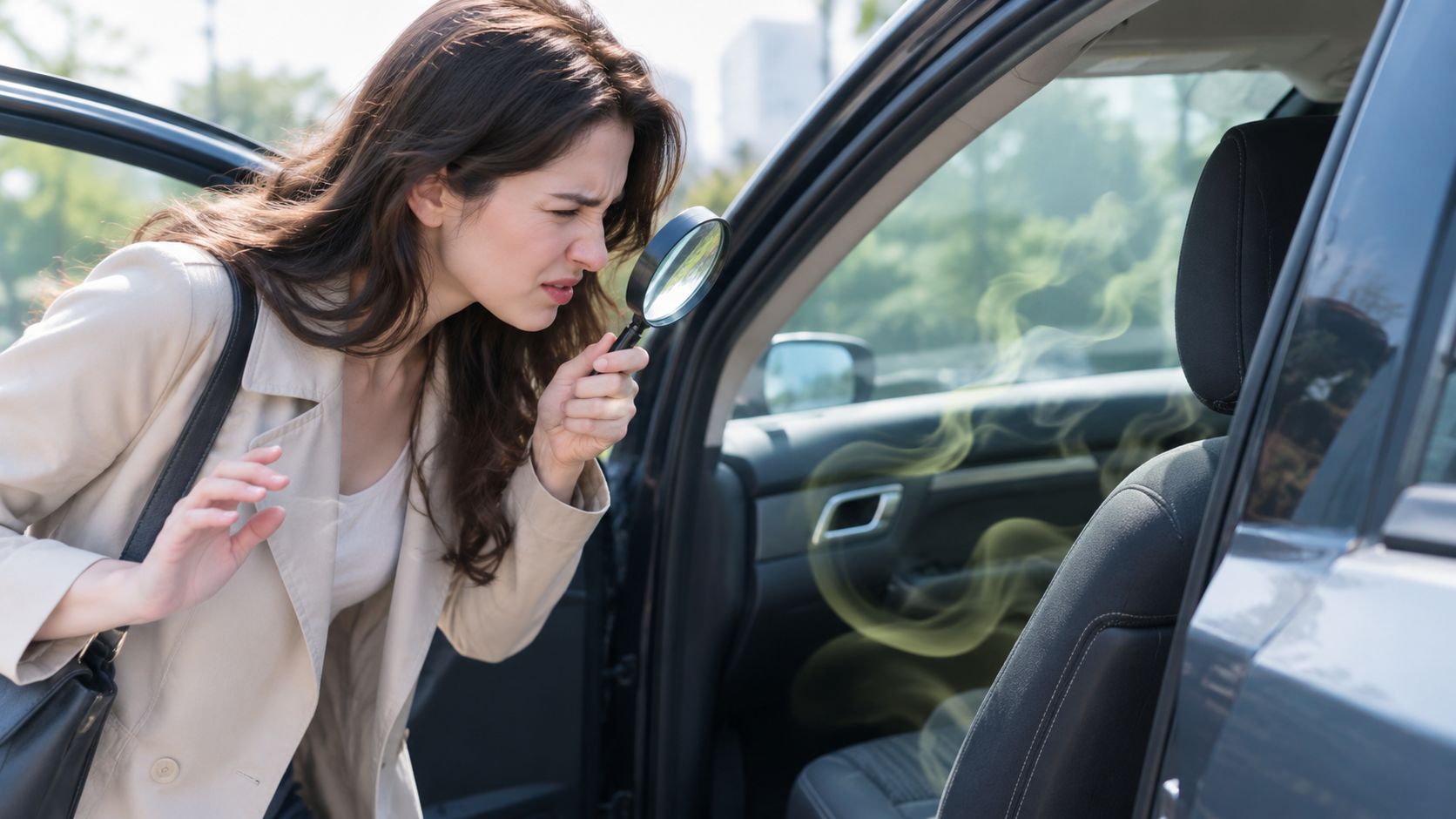
Treat the cabin like a small investigation. Before you vacuum, spray, or shampoo anything, turn off the fragrance products and notice when the odour appears. Is it strongest when you first open the door, after the car warms up, or only when the fan or air conditioning runs?
The smell itself offers clues:
- Stale smoke: Smoke residue often clings to the headliner, seat fabric, trim, and vents. A clean-looking cabin can still hold smoke odour in porous materials.
- Damp mildew: A wet floor mat, blocked drainage point, water leak, or damp padding can create a musty smell that becomes stronger when the HVAC system operates.
- Pet odour: Fur, skin oils, saliva, and accidents can settle into seat seams, carpet backing, and foam.
- Old food: Sour or rotten smells usually point to a spill, crumbs, takeout container, or liquid that has reached below the visible surface.
- General musty funk: This often indicates a mixture of trapped moisture, dust, stale air, and residue rather than one obvious contaminant.
Start with the places people skip
Remove every floor mat and inspect underneath it. Feel the carpet, check beneath the front seats, look inside the spare-tire area, and inspect door pockets and seat rails. In the GTA, slush and spring thaw can carry moisture into floor mats and carpet edges, while humid summer weather can slow drying.
Health Canada guidance on dampness links persistent mouldy smells with ongoing moisture control and cleaning of contaminated surfaces. Once moisture reaches padding or insulation, a surface wipe may leave the underlying problem untouched, as reflected in this vehicle interior air-quality presentation on dampness and VOCs%20-%20VIAQ%20VOCs.pdf).
Practical rule: If the odour returns immediately after the cabin dries and looks clean, stop adding fragrance and look underneath the visible carpet or inside the ventilation path.
You can also perform a simple HVAC check. Run the fan briefly with the windows open, then switch between fresh-air and recirculation settings. If the smell arrives mainly through the vents, cleaning seats and carpets alone won't finish the job. Find the culprit first, then choose the treatment.
Your DIY Odor Removal Toolkit
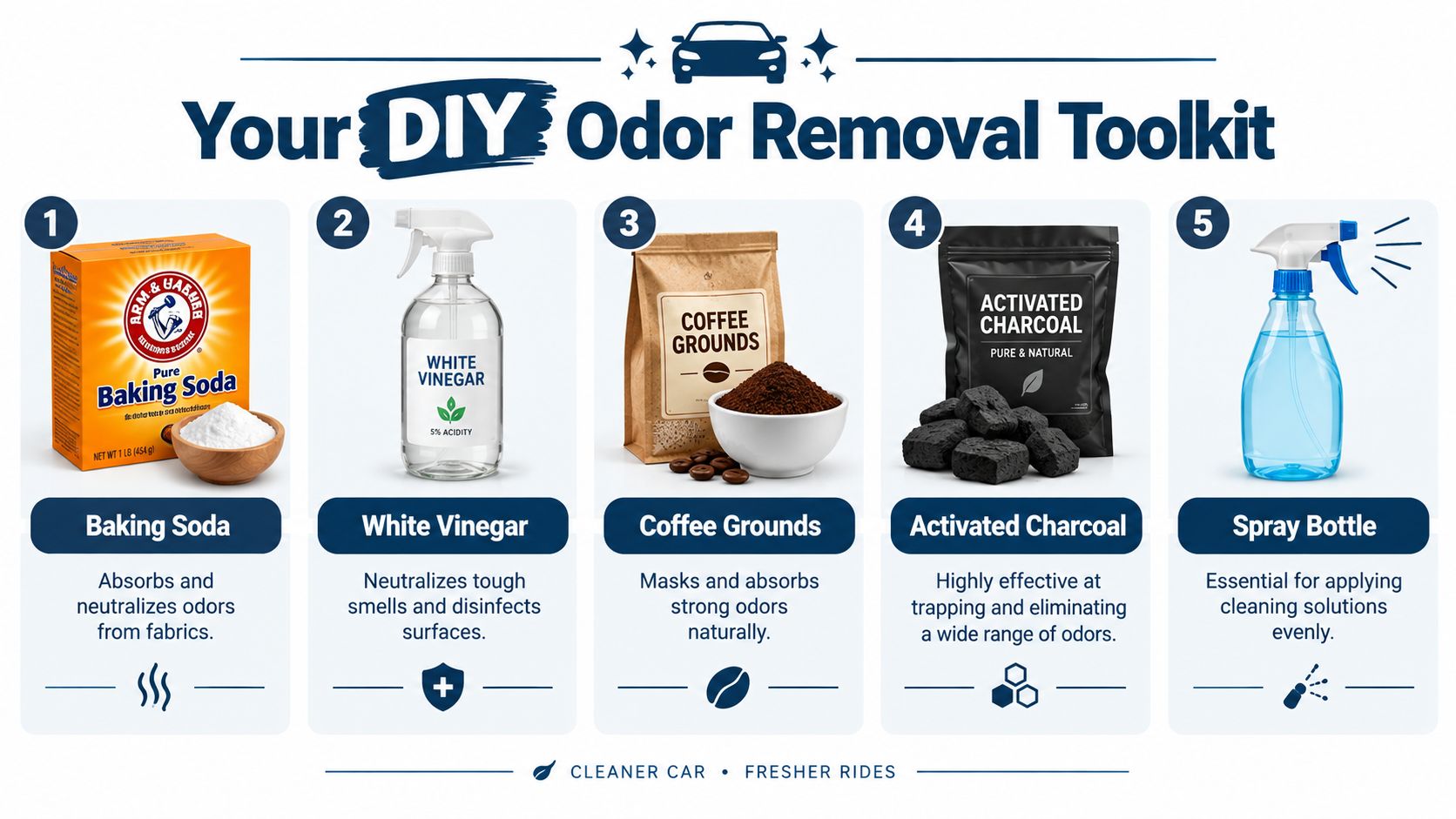
For a mild, recent smell, you don't need a shelf full of specialist chemicals. You need a vacuum, clean microfibre cloths, a soft brush, a suitable interior cleaner, and an absorbent or neutralising product that matches the source.
Baking soda is useful on dry fabric and carpet. It can help neutralise odours sitting near the surface, but it isn't a substitute for removing milk, pet contamination, or damp padding. Sprinkle it lightly, work it into the fabric with a soft brush, leave it undisturbed, then vacuum slowly and thoroughly.
White vinegar can help with certain stale smells on hard, compatible surfaces when diluted with water. Test an inconspicuous area first, avoid soaking electronics and delicate trim, and never mix vinegar with bleach or other cleaning chemicals. The goal is a controlled wipe, not a wet interior.
Activated charcoal works as a passive odour absorber in a closed cabin. Place a proper charcoal odour bag or container where it won't spill, then give it time to work. Coffee grounds may absorb or soften a smell temporarily, but they can introduce their own scent and create a mess, so they're better treated as a short-term experiment than a complete solution.
Match the remedy to the odour
| Odor Type | Best DIY Solution | How It Works |
|---|---|---|
| Smoke on hard trim | Diluted white vinegar on a microfibre cloth, after testing | Helps clean residue from compatible hard surfaces rather than covering it |
| Light pet odour | Vacuuming, fabric-safe cleaner, and baking soda on dry upholstery | Removes hair and surface residue, while baking soda helps with remaining fabric odour |
| Recent food smell | Remove the source, clean the spill, then ventilate | Physical removal stops the material from continuing to release odour |
| Mild mustiness | Dry mats and carpet completely, then use activated charcoal | Reduces surface dampness and passively absorbs lingering smells |
| Fragrance overload | Fresh air, careful wipe-down, and time | Removes excess product instead of adding another competing scent |
The order matters. Remove rubbish, shake out mats, vacuum seams and seat rails, clean the suspected spill, and dry the area fully before using an absorber. If you're comparing DIY problem-solving with professional help in another home-service context, this guide to DIY vs professional pest control offers a useful reminder that the cheapest first step isn't always the most efficient final solution.
Avoid spraying a strong scent over a wet or contaminated surface. That approach can make the cabin smell busier, not cleaner, and it may hide warning signs of moisture or decay.
Deep Cleaning Beyond the Surface
A deodoriser can handle what remains after cleaning. It can't reliably remove a spill that has soaked through carpet, foam, or insulation. Once a smell has penetrated porous material, extraction becomes more useful than another passive absorber.
Start by emptying the vehicle completely. Vacuum loose dirt from the seats, carpet, mats, crevices, and cargo area before adding water. Dirt turns into muddy residue during wet cleaning, and loose pet hair can clog an extractor if you don't remove it first.
Extract, don't saturate
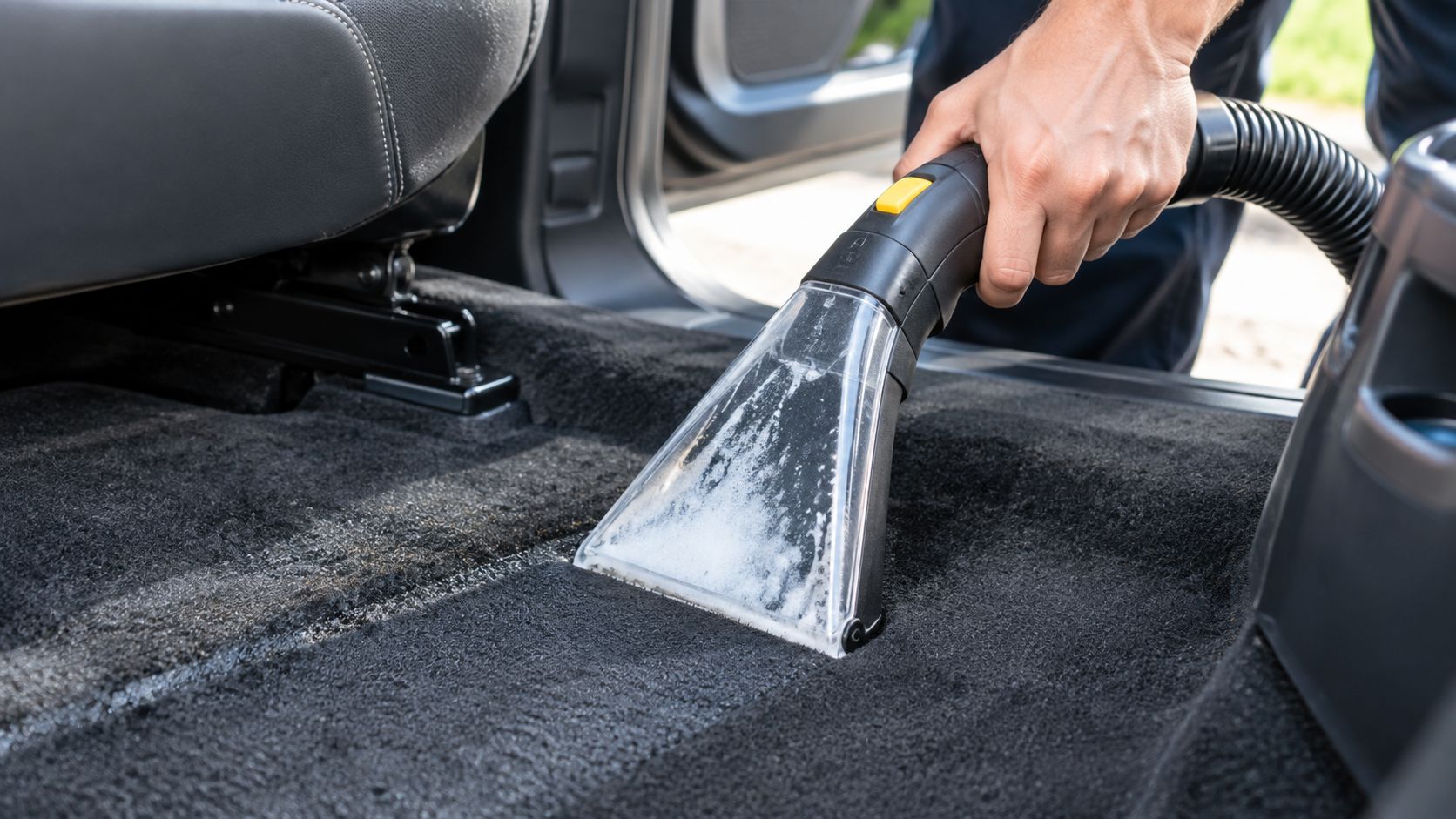
A wet/dry vacuum can remove liquid from carpet and fabric, but it works best when you control the amount of solution. Apply a fabric-safe cleaner sparingly, agitate with a soft brush, then make slow extraction passes. Repeat with clean water only if the product instructions call for rinsing, and keep extracting until very little moisture comes back.
An upholstery extractor rental can provide stronger results on seats, mats, and carpet. It also creates a risk. If you flood the cabin and close the doors too soon, you may trade a food smell for a damp-car smell. Park somewhere safe with good airflow, leave the interior open when practical, and don't reinstall wet mats.
Don't forget the headliner and vents
Smoke residue loves the headliner because it settles overhead and can be disturbed by heat. Use minimal moisture and gentle pressure. Aggressive scrubbing can loosen the fabric or leave a visible sag, turning an odour problem into an upholstery repair.
If the smell appears when the blower runs, use an automotive HVAC cleaning product designed for the system and follow its instructions exactly. Replace the cabin air filter if it's due for replacement, but don't assume a new filter will clean contamination already inside the ducts or evaporator area.
Ozone treatment is sometimes discussed alongside portable air-cleaning equipment. If you're researching equipment for controlled, appropriate use, you can shop portable automotive purifiers, but ozone isn't a licence to skip extraction, drying, safety precautions, or ventilation. Deep cleaning should remove the source first.
When to Call the Professionals
DIY cleaning has a sensible limit. If you've cleaned the visible surfaces, dried the cabin, and the smell returns quickly, the source is probably somewhere your household tools aren't reaching. That could mean soaked padding, smoke residue in several materials, an HVAC pathway, or moisture from a leak that hasn't been corrected.
Persistent mildew deserves particular attention. GTA vehicles deal with wet boots, slush, condensation, and repeated temperature changes, so a damp mat may be the beginning rather than the whole problem. If the carpet feels damp underneath, the smell strengthens with the fan, or the odour returns after drying, professional inspection is more useful than another spray.
Smoke is another escalation point. A light, recent smell on hard trim may respond to careful cleaning, but long-standing smoke can settle into fabric, foam, headliners, and vents. Removing the visible film without addressing those materials often leaves the cabin smelling clean for a short time and smoky again later.
What a proper treatment looks like
A professional workflow should begin with inspection. The technician identifies likely sources, checks the interior systematically, and decides whether the job needs extraction, HVAC attention, an odour neutraliser, ozone, or a combination.
The documented Ontario workflow is sequential:
- Inspect the source.
- Vacuum and shampoo the interior.
- Apply neutralising treatment only after physical cleaning.
- Ventilate and verify the result.
That order is supported by Ontario vehicle odour-removal guidance. Ozone can oxidise odour-causing molecules in a sealed cabin, but it shouldn't be used as a cover-up for organic residue trapped in carpet or foam. The car must also be aired out before anyone uses it.

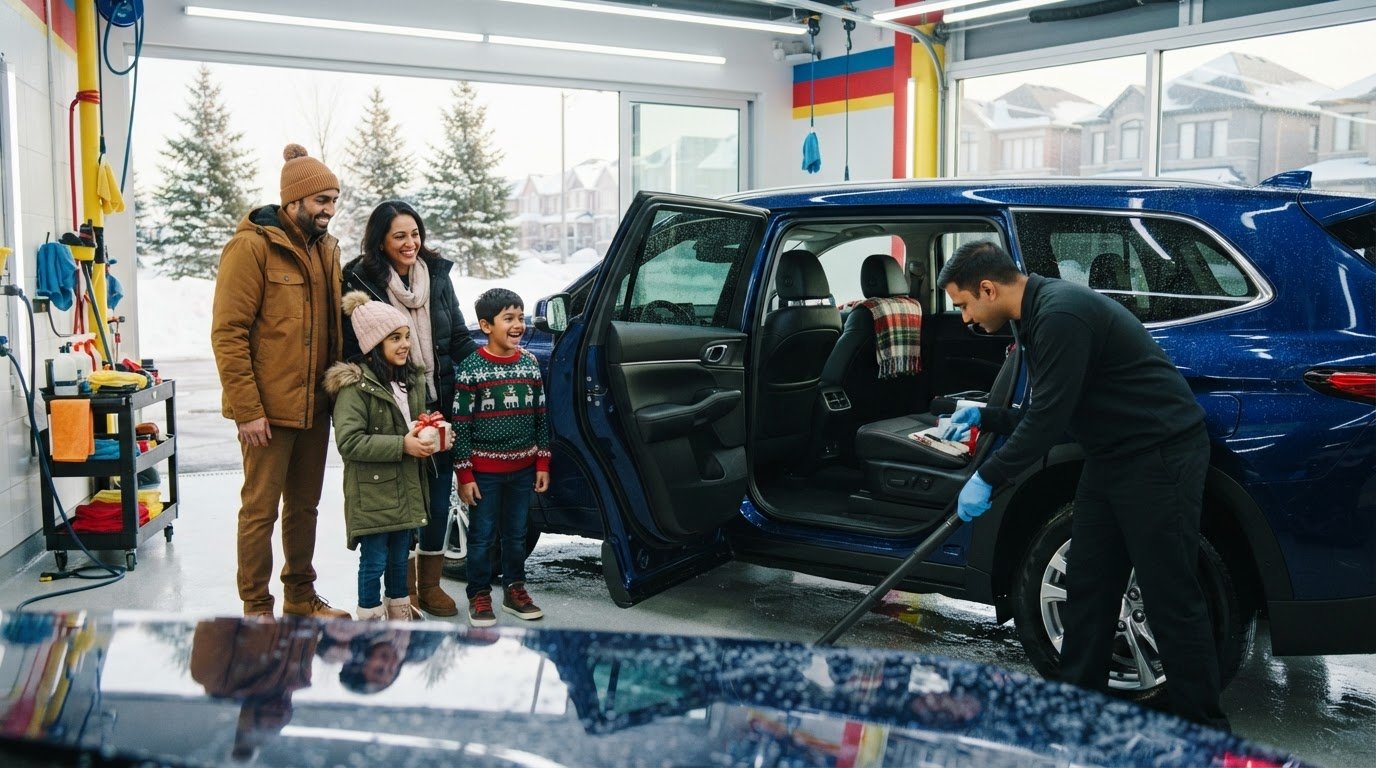
For GTA owners who want this handled as a detailing job, Nanak Car Wash offers interior and exterior detailing that can include carpet and seat shampooing, salt and stain removal, vent and crevice cleaning, and odour-focused treatment. Professional service isn't a failure of DIY. It's the appropriate next step when the contamination has moved beyond the surfaces you can safely reach.
Keeping Your Car Smelling Fresh for Good
Odour prevention is mostly organised housekeeping, especially in a climate that sends wet shoes, road salt, and damp clothing into the cabin. You don't need to make the car sterile. You need to stop small sources from becoming embedded ones.
Use all-weather mats during wet seasons and lift them regularly to inspect the carpet beneath. Remove snow and standing water instead of leaving mats to dry slowly inside a closed vehicle. After a spill, blot first, clean the material according to its care requirements, and extract or dry any moisture that has travelled below the surface.
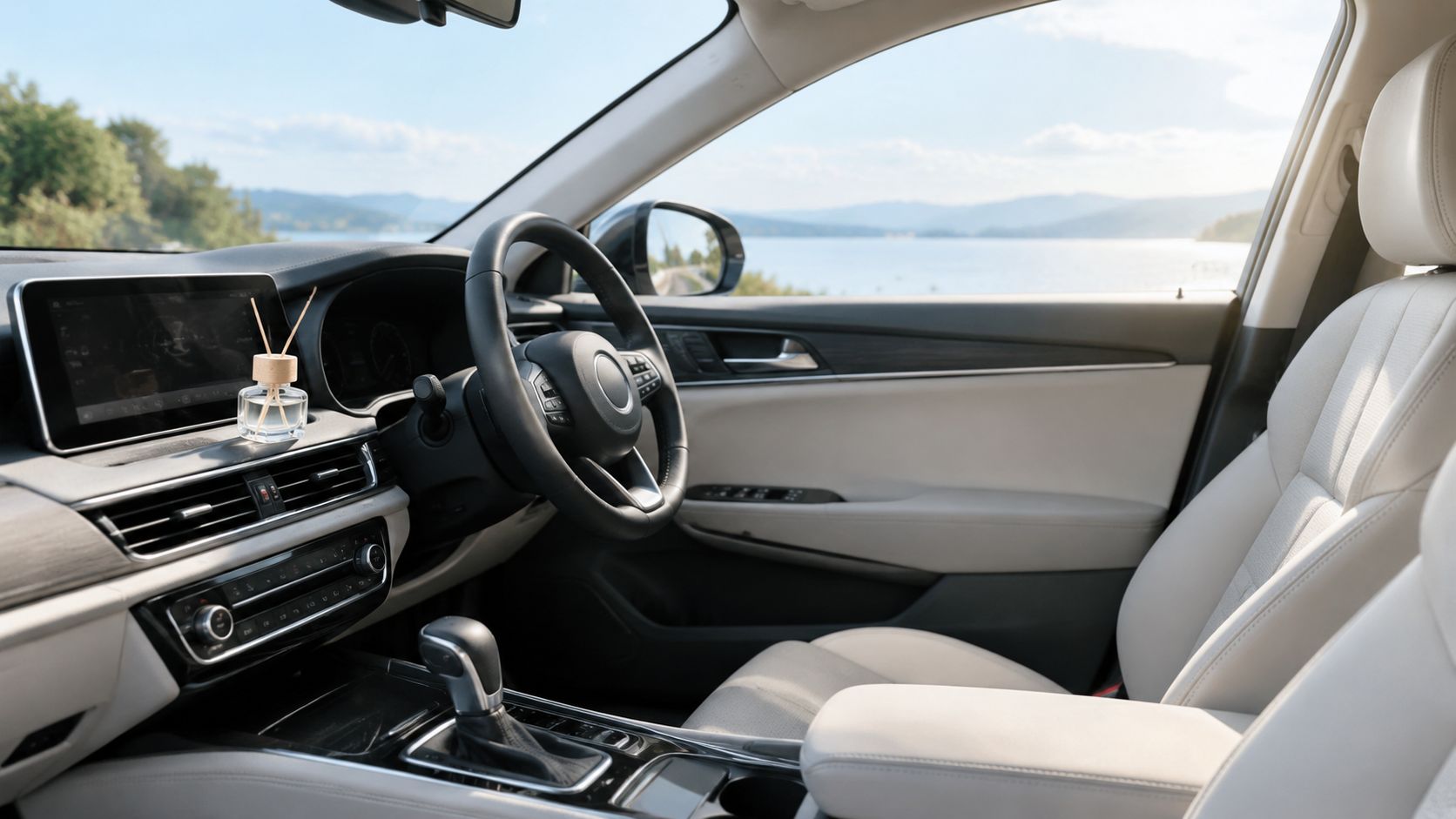
A simple freshness routine
- Control rubbish: Keep a small garbage bag or wastebasket in the vehicle and empty it regularly. IHSA specifically recommends this practice to prevent trash buildup and odours in work vehicles, as outlined in its Ontario vehicle-cleaning guidance.
- Clean high-touch areas: Wipe the steering wheel, gear shifter, dashboard, windows, and door handles with suitable cleaner. IHSA recommends routine cleaning of these frequently touched surfaces, using detergent and water followed by disinfectant wipes where appropriate.
- Ventilate after wet trips: Let damp mats and the cabin dry instead of sealing moisture inside.
- Limit food exposure: Use a container for drinks and remove wrappers, crumbs, and leftovers before they disappear under a seat.
- Watch the HVAC clue: If the smell appears only with the fan or air conditioning, investigate the ventilation system rather than repeatedly cleaning the upholstery.
Freshness lasts when you remove sources early. A quick inspection after a spill or wet commute can save you from extracting an entire interior later.
Nanak Car Wash provides interior cleaning and detailing for GTA vehicles, including vacuuming, shampooing, stain and salt removal, and vent and crevice cleaning that can support a complete odour-removal plan. Visit Nanak Car Wash to book an interior service and get your car back to a cleaner, fresher state.

 6600 Finch Ave W, Etobicoke, ON M9V 3Z6
 647-703-8515
 MON – SUN 8 AM to 7 PM