
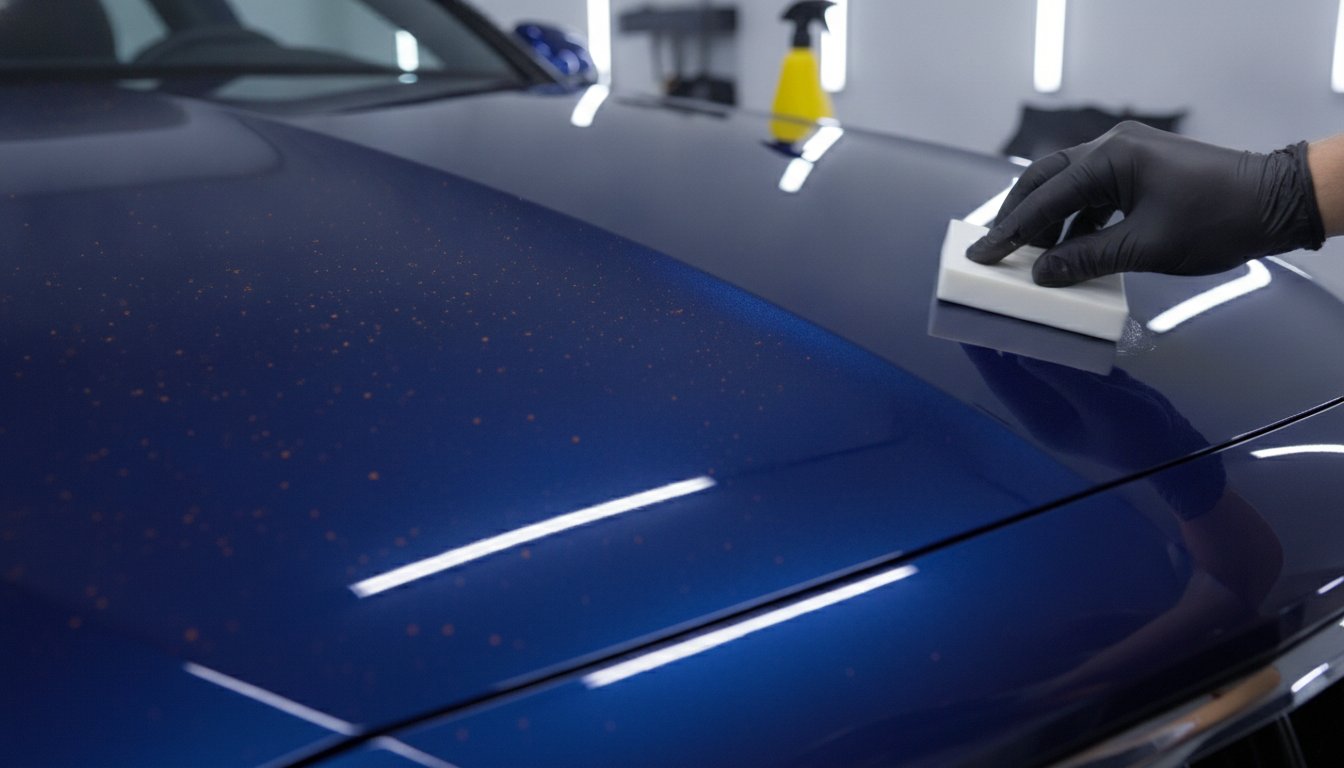
What if your regular car wash is leaving the most damaging contaminants behind? You have likely felt it after a wash; you run your hand across the hood and the paint feels like sandpaper instead of glass. Over 80% of vehicles show clear signs of surface contamination under close inspection, according to a 2022 industry report. This is why professional paint decontamination and clay bar treatments are essential for any driver who wants to protect their investment and maintain a high-value appearance.
It’s frustrating to see black spots or orange specks that just won’t disappear. You might even fear scratching the finish by scrubbing too hard. We agree that your car deserves better than a surface-level clean. This article will show you how specialized treatments remove bonded grit to restore that factory-smooth shine you love. You’ll learn how these methods provide a glass-smooth surface, ensure better wax adhesion, and offer critical protection against rust. Get ready to transform your vehicle’s finish into something you can be proud of today.
Key Takeaways
- Learn why standard washes leave damaging grit like iron filings and tree sap behind.
- Understand how a paint decontamination and clay bar treatment dissolves and pulls out embedded contaminants.
- Master the “Plastic Bag Test” to identify invisible paint damage instantly.
- Discover how professional car detailing packages provide better protection and a glass-smooth finish.
- See how proper lubrication prevents scratches while restoring your vehicle’s factory shine.
Table of Contents
What is Paint Decontamination and Why Does Your Car Need It?
Most drivers think a bucket of soap and a sponge are enough to keep a car looking new. They aren’t. Standard washing only removes loose surface dirt. It leaves behind a layer of bonded grit that ruins your finish and destroys your clear coat over time. This is where professional paint decontamination and clay bar treatments become vital for your vehicle maintenance routine. These processes target iron filings, tree sap, and industrial fallout that embed themselves deep into the paint. You simply can’t wash these away with traditional methods. Paint decontamination is the essential bridge between washing and polishing.
When these microscopic particles stay on your car, they lead to oxidation and rust. They create a rough texture that traps even more dirt. If you want a truly clean car, you have to go beyond the surface. A professional deep clean removes the invisible threats that a standard car wash ignores. It’s the most cost-effective way to preserve your vehicle’s value and ensure your paint stays healthy for years.
The Difference Between Dirty Paint and Contaminated Paint
Dirty paint looks bad, but contaminated paint feels bad. You might see a car that looks clean from a distance, but running your hand across the surface tells a different story. If it feels like sandpaper, it’s contaminated. This bonded grit acts like an abrasive. It slowly erodes your car’s shine every time you drive. Many owners make the mistake of “washing harder” to remove stubborn spots. This is a huge mistake. Scrubbing contaminated paint only drags the grit across the surface, creating permanent scratches and ugly swirl marks. Professional paint decontamination and clay bar services remove these particles safely without ruining your finish.
Common Contaminants Found on Brampton Roads
Brampton drivers face harsh conditions that accelerate paint damage. Our local environment is full of specific pollutants that eat away at your vehicle’s exterior. You need to be aware of these common threats:
- Industrial Fallout: Microscopic metallic particles from local manufacturing and rail lines, often known as rail dust, that settle on your car and begin to rust.
- Brake Dust: High-temperature metallic shards from your own brakes and surrounding traffic that melt into your wheels and side panels.
- Organic Matter: Bird droppings and tree sap that create acidic etching, leaving permanent marks if not removed through proper decontamination.
- Road Salt: Essential for winter safety but devastating for your clear coat if it isn’t thoroughly stripped away.
These contaminants don’t just look ugly; they cause permanent structural damage to your paint. Removing them is the only way to restore that factory-smooth finish and prepare your car for a fresh layer of wax or sealant.
Chemical vs. Mechanical Decontamination: Breaking Down the Process
Most people think a clay bar is the only way to deep clean paint. It’s not. Professionals use a two-step approach to get the best results. Chemical decontamination comes first. This process uses specialized pH-neutral liquids to dissolve metallic and organic bonds. Then, mechanical decontamination (the clay bar) finishes the job. Using this paint decontamination and clay bar combo is the only way to achieve a true glass-smooth finish. It prepares your car perfectly for a fresh layer of wax or a ceramic coating.
A professional detailer always uses a “chemical first” strategy. This minimizes physical contact with your paint. Less contact means a lower risk of creating scratches or swirl marks. By dissolving the bulk of the grit with chemicals, the clay bar has less “heavy lifting” to do. This keeps your clear coat safer and ensures a much cleaner surface than using a clay bar alone.
How Chemical Iron Removers Work
Iron removers are essential for modern car care. They target microscopic metallic particles from brake dust and industrial fallout. When the chemical reacts with iron, it creates a “bleeding” effect, turning bright purple. This shows you exactly where the contamination is dissolving. It’s a safer way to clean because it removes sharp metal shards before you ever touch the paint. This prevents you from dragging those shards across the surface during the mechanical stage. It also stops “unseen” rust from oxidizing and causing permanent damage to your clear coat.
The Role of Tar and Grease Removers
Road tar is incredibly stubborn. Standard soap and water fail to penetrate oily traffic film. Tar removers break down these bonds quickly. They also strip away adhesive residue from old stickers or wraps. This step is vital for preparing the surface. If you don’t remove the grease and tar first, your clay bar will get clogged instantly. A clean, de-greased surface allows the clay to glide smoothly and pull out deeply embedded particles.
Once the chemicals have done their work, the mechanical stage begins. You must know How To Properly Use a Clay Bar to avoid marring the finish. This involves using a specialized resin compound and heavy lubrication to grab any remaining grit. This final step leaves your paint feeling like glass. If you want this professional level of care for your vehicle, our Car Detailing Packages include this full multi-stage process to protect your investment.
How the Clay Bar Treatment Works to Restore Your Paint
A clay bar is not just a simple piece of putty. It is a specialized resin compound engineered to grab and hold microscopic grit that stays behind even after a chemical deep clean. This is the physical stage of a paint decontamination and clay bar treatment. The resin works by “shearing” off contaminants that have bonded to the clear coat. It pulls these particles into the bar, leaving the surface perfectly flat. This process is the secret to achieving that mirror-like reflection and glass-smooth feel.
Safe claying requires a specific technique. You must move the bar in straight lines, never circles. Circular motions can trap dirt and create swirl marks if your technique isn’t perfect. Follow these steps for the best results:
- Prep the surface: Ensure the car is thoroughly washed and chemically decontaminated as described in previous sections.
- Lubricate heavily: Spray a 2×2 foot section with a dedicated lubricant. Never let the paint go dry.
- Glide the bar: Use light pressure. Let the clay do the work. You will feel and hear it picking up grit at first.
- Check for smoothness: Once the bar glides silently and without resistance, the section is clean.
- FOLD THE CLAY: This is the most important step. After every section, fold the clay bar in half and knead it to reveal a fresh, clean surface. This prevents you from rubbing trapped dirt back onto the paint.
- Wipe clean: Use a high-quality microfiber towel to remove excess lubricant before moving to the next area.
One final warning: if you drop your clay bar on the ground, throw it away immediately. It will pick up sand and rocks from the floor that will destroy your clear coat. It isn’t worth the risk. Always start with a fresh piece if a mishap occurs.
The Importance of Clay Lubricant
Lubrication is the only thing protecting your paint during this process. You should never use plain water or concentrated dish soap. Water lacks the necessary “slip,” and dish soap can break down the clay resin or dry out your rubber trim. Proper lubrication creates a state of “hydroplaning.” The clay bar should float on a microscopic film of liquid. This prevents the resin from sticking to the paint and causing marring or surface scratches. While some use quick detailers, dedicated clay lubricants provide the best results because they are specifically formulated to keep the resin stable and slick.
Different Grades of Detailing Clay
Not all clay bars are the same. Choosing the right grade depends on your vehicle’s condition. Fine or soft clay is the safest choice for well-maintained vehicles or new cars. It removes light contamination without the risk of dulling the finish. Medium clay is the standard workhorse for daily drivers in Brampton. It handles road salt and industrial fallout effectively. Heavy or aggressive clay is reserved for neglected vehicles or heavy paint overspray. Be careful with aggressive grades; they often leave a slight haze on the paint, meaning you will need to perform a machine polish afterward to restore the shine.
Signs Your Vehicle Needs a Deep Paint Decontamination
Your car might look clean from a distance, but the surface tells a different story. Even after a thorough wash, invisible contaminants cling to the clear coat. These particles are the reason your paint feels rough and loses its luster. If you want to know if your vehicle requires a paint decontamination and clay bar treatment, you need to look closer and feel the surface yourself. Ignoring these signs leads to permanent paint damage and rust. It’s better to catch it early and save money on future repairs.
Watch for these three major warning signs on your vehicle:
- Visible Orange Spots: On white or silver cars, look for tiny rust specks. These are microscopic metal shards rusting into your paint. This is rail dust or industrial fallout, which is very common for drivers in Brampton.
- Water Beading Failure: Watch how water reacts after a wash. If water sits flat on the surface instead of forming tight beads, bonded grit is the likely cause. Contaminants create a jagged surface that traps water and dirt.
- Dull or Cloudy Finish: Contamination hides the depth of your paint’s color. If your car looks “hazy” even when it’s clean, the clear coat is likely covered in microscopic debris.
How to Perform the Plastic Bag Test at Home
The PLASTIC BAG TEST is the most effective way to diagnose your paint. It’s simple and takes less than two minutes. First, wash and dry a small section of the hood or roof. Next, place your hand inside a thin sandwich bag. Slide your hand gently over the dry paint. If you feel bumps or a sandpaper-like texture through the bag, your paint is heavily contaminated. The bag amplifies the sensation, making it impossible to miss. If it isn’t smooth, you need a professional paint decontamination and clay bar service immediately.
When to Schedule Professional Decontamination
Timing is everything when it comes to paint health. You should schedule this service at least twice a year. The best times are right after the winter salt season and once before winter prep in the fall. Ontario roads are brutal on clear coats. Road salt and brine eat away at your finish if they aren’t stripped off. You also need a deep clean before applying any new wax, sealant, or ceramic coating. If you don’t decontaminate first, the protection won’t bond properly. It will simply wash off in a few weeks. If you’ve recently driven through construction zones or parked near industrial areas, check your paint today. Our Car Detailing Packages include a full inspection to ensure your paint stays glass-smooth and protected year-round.
Professional Paint Decontamination Services at Nanak Car Wash
Restoring your vehicle’s finish shouldn’t be a stressful DIY project. Nanak Car Wash offers specialized car detailing packages that take the guesswork out of exterior restoration. Our team understands that Brampton drivers face unique challenges, from industrial fallout to heavy road salt. We don’t just wash your car; we deep-clean the paint to remove every trace of bonded grit. Our proven paint decontamination and clay bar process combines high-quality chemical removers with expert mechanical techniques. You get a showroom shine without the risk of scratching your clear coat or spending your entire weekend in the driveway.
You can SAVE BIG by bundling your services. We offer comprehensive deals that combine exterior decontamination with full-service interior cleaning. This value-driven approach ensures your car looks and feels new inside and out. Don’t settle for a basic wash that leaves your paint feeling like sandpaper. Choose a professional treatment that protects your investment and delivers a glass-smooth finish every time.
Why Choose Professional Detailing Over DIY?
Many owners try to use a clay bar at home and end up with “marring” or hazy scratches. This usually happens because they use the wrong clay grade or not enough lubricant. Our professionals know exactly which clay grade your car needs based on its condition. We use industrial-strength iron removers that you won’t find in big-box stores. These professional products dissolve metallic bonds faster and more safely than consumer-grade sprays.
Book Your Detailing Appointment in Brampton Today
We are conveniently located in Brampton and serve drivers from across the GTA. Our facility is designed for speed and quality, ensuring you get the best value for your money. Beyond exterior care, we provide expert interior car detailing to keep your cabin fresh and sanitized. Regular maintenance is the best way to protect your vehicle’s resale value in Ontario’s harsh climate.
GET A SPOTLESS RIDE and enjoy the psychological satisfaction of a perfectly maintained vehicle. Whether you’re preparing for a lease return or just want to restore that factory glow, we’re here to help. Our hard-working team is committed to providing top-tier service at competitive prices. Contact us today to secure your spot and experience the difference of a professional deep clean. Your car will thank you with a mirror-like shine that lasts.
RESTORE YOUR VEHICLE’S FACTORY SHINE TODAY
Your car deserves more than just a surface-level wash. Standard soap and water simply can’t touch bonded iron or industrial fallout. A professional paint decontamination and clay bar treatment is the ONLY way to get back that glass-smooth feel. This multi-stage process removes the hidden grit that causes rust and dullness. It ensures your wax or sealant bonds perfectly for a long-lasting, deep glow. You get better protection and a much higher resale value for your vehicle.
Nanak Car Wash is Brampton’s top-rated detailing service. We include professional iron and tar removal in our affordable packages built for every budget. Don’t risk scratching your paint with a difficult DIY job. Let our efficient, hard-working team handle the heavy lifting for you. We focus on speed, quality, and extreme value for every local driver.
GET YOUR SHOWROOM SHINE – BOOK A DETAILING PACKAGE NOW
Take pride in your ride again. We look forward to seeing you at the wash soon!
Frequently Asked Questions
Will a clay bar remove scratches from my car’s paint?
No, a clay bar will not remove scratches or swirl marks from your paint. It is designed specifically to pull out bonded grit like iron filings, tree sap, and road tar. If you have deep scratches or oxidation, you will need a machine polish or paint correction service. Think of claying as cleaning the surface, while polishing is what actually fixes physical damage to the clear coat.
How often should I use a clay bar on my vehicle?
You should typically perform a paint decontamination and clay bar treatment twice a year. For drivers in Brampton, the best times are right after the winter salt season and once before winter prep in the fall. This frequency protects your clear coat from the harsh Ontario environment and prevents permanent pitting or rust spots from forming on your panels.
Can I use a clay bar on my windows and wheels?
Yes, you can use a clay bar on windows and wheels to remove stubborn debris. It works wonders on glass to remove water spots and tree sap that standard cleaners leave behind. On wheels, it pulls out baked-on brake dust that is stuck in the finish. Just remember to use a separate piece of clay for your wheels to avoid transferring metallic shards back to your vehicle’s paint.
Is paint decontamination necessary before ceramic coating?
Yes, paint decontamination is absolutely necessary before applying a ceramic coating. The coating needs a perfectly clean, bare surface to bond correctly with the clear coat. If you skip this step, the coating will trap contaminants underneath and likely fail within a few months. It is the most critical prep step for any long-term protection or high-end sealant application.
What happens if I drop my clay bar on the ground?
You must throw the clay bar away immediately if it touches the ground. It will pick up sand, dirt, and tiny rocks from the floor that you simply cannot see. Using a dropped bar will cause deep, permanent scratches across your entire vehicle. It isn’t worth the risk to save a few dollars; always start with a fresh piece of resin if a mishap occurs.
Does a clay bar treatment remove my car’s wax or sealant?
Yes, a clay bar treatment will strip away most of your car’s wax or sealant. The mechanical process is effective enough to remove old layers of protection along with the contaminants. You should always plan to apply a fresh layer of wax, sealant, or ceramic coating immediately after you finish claying to protect the newly exposed paint from the elements.
Is chemical decontamination safe for all car colors?
Yes, professional chemical decontamination is safe for all car colors and finishes. We use pH-neutral iron removers that target metallic particles without harming your clear coat. Whether your car is black, white, or metallic, the process safely dissolves contaminants. This is a vital part of paint decontamination and clay bar services, especially for light-colored cars where rust specks are most visible.
How long does a professional clay bar treatment take?
A professional treatment usually takes between 1 and 2 hours. This timeframe depends on the size of your vehicle and the severity of the contamination. Our team works with high-volume efficiency to get you back on the road with a showroom shine as quickly as possible. It is a much faster and safer option than trying to tackle the multi-stage process yourself in a driveway.

 6600 Finch Ave W, Etobicoke, ON M9V 3Z6
 647-703-8515
 MON – SUN 8 AM to 7 PM