
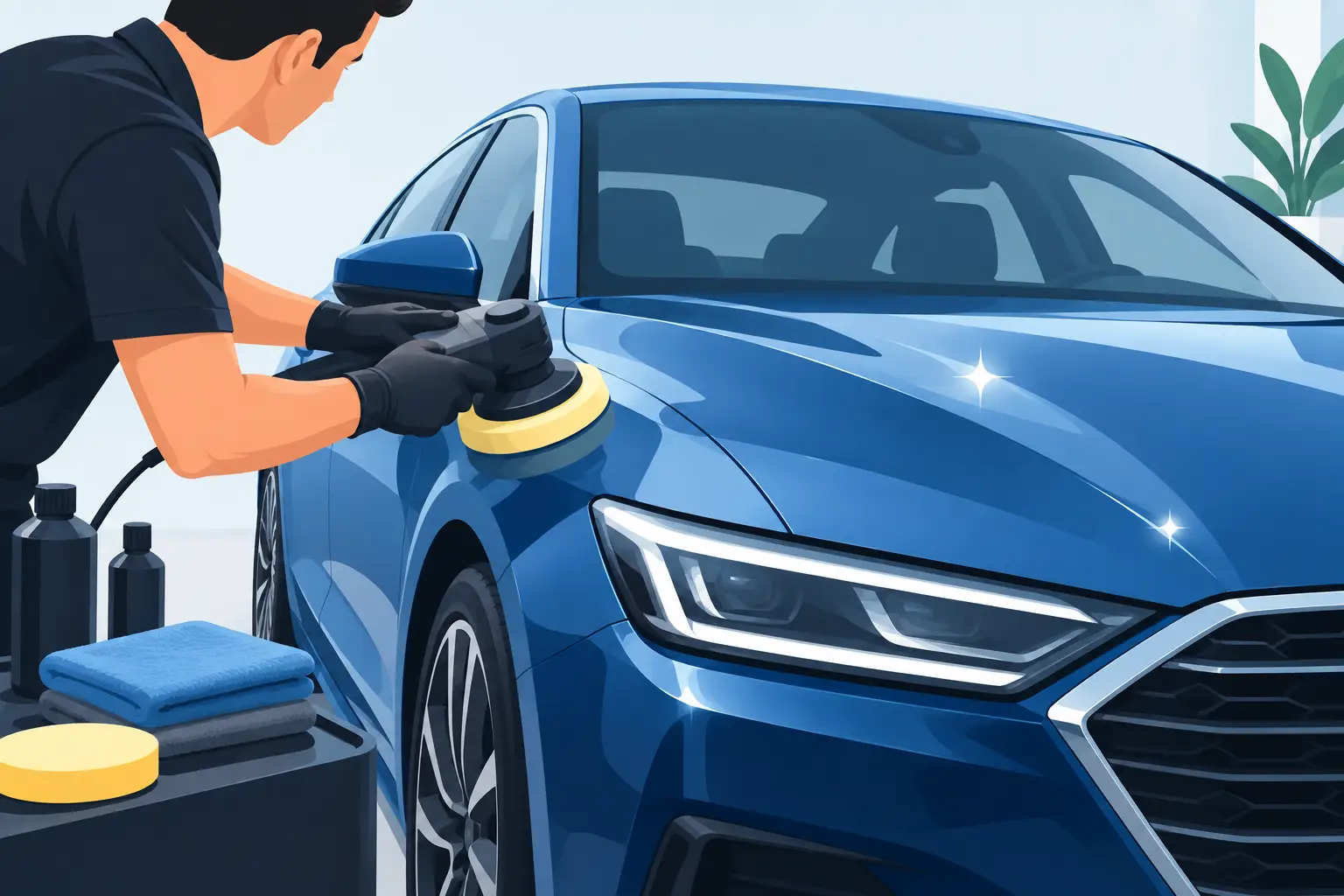
A car can be freshly washed and still look dull under sunlight. Light swirls, water spots, road film, and tiny scratches scatter the light instead of reflecting it cleanly. This paint polishing guide explains what polishing can fix, what it cannot fix, and when it makes more sense to bring your vehicle in for professional detailing.
Paint polishing is not just for show cars. It is a practical way to improve the look of a daily driver, family SUV, rideshare vehicle, or work truck before a sale, lease return, special event, or seasonal cleanup. The right approach can bring back a noticeably cleaner, glossier finish without paying for work your vehicle does not need.
Paint Polishing Guide: Start With the Right Goal
Polishing works by carefully leveling a very thin layer of damaged clear coat. Most modern vehicles have a colored base coat covered by clear coat. When that clear layer has fine scratches and oxidation, the paint loses depth and shine. A polish uses fine abrasives to smooth those imperfections so light reflects more evenly.
That does not mean every mark should be polished away. Deep scratches, paint chips, dents, and peeling clear coat need a different repair. If you can catch a scratch with your fingernail, polishing may make it less visible, but it usually will not remove it completely. Trying to chase a deep scratch with aggressive polishing can thin the clear coat and create a bigger problem.
Set a realistic goal before you start. For most everyday vehicles, the best value is reducing visible swirls, restoring gloss, and cleaning up the overall finish. A near-perfect correction takes more time, more paint measurement, and more money. It may be worthwhile for a newer vehicle or collector car, but it is not always necessary for a commuter vehicle that sees parking lots, highway driving, and winter weather.
What Polishing Can Improve
A proper polish can reduce fine wash scratches, mild oxidation, dullness, light water-spot etching, and hazy areas caused by old wax buildup. Dark-colored vehicles often show the biggest visual change because swirl marks stand out more clearly in direct sun or under bright parking lot lights.
Polishing can also improve the appearance of older paint that has lost its depth. On a white, silver, or gray vehicle, the change may be less dramatic from a distance, but the finish can still feel smoother and look brighter. The goal is not simply shine. It is a cleaner-looking surface that is easier to protect afterward.
Polish is different from wax. Polish corrects the paint surface. Wax, sealant, and ceramic protection sit on top of the surface to add gloss and help repel water, dirt, and road grime. Applying protection over neglected paint can make it look better briefly, but it will not remove the swirls underneath.
Inspect the Vehicle Before You Polish
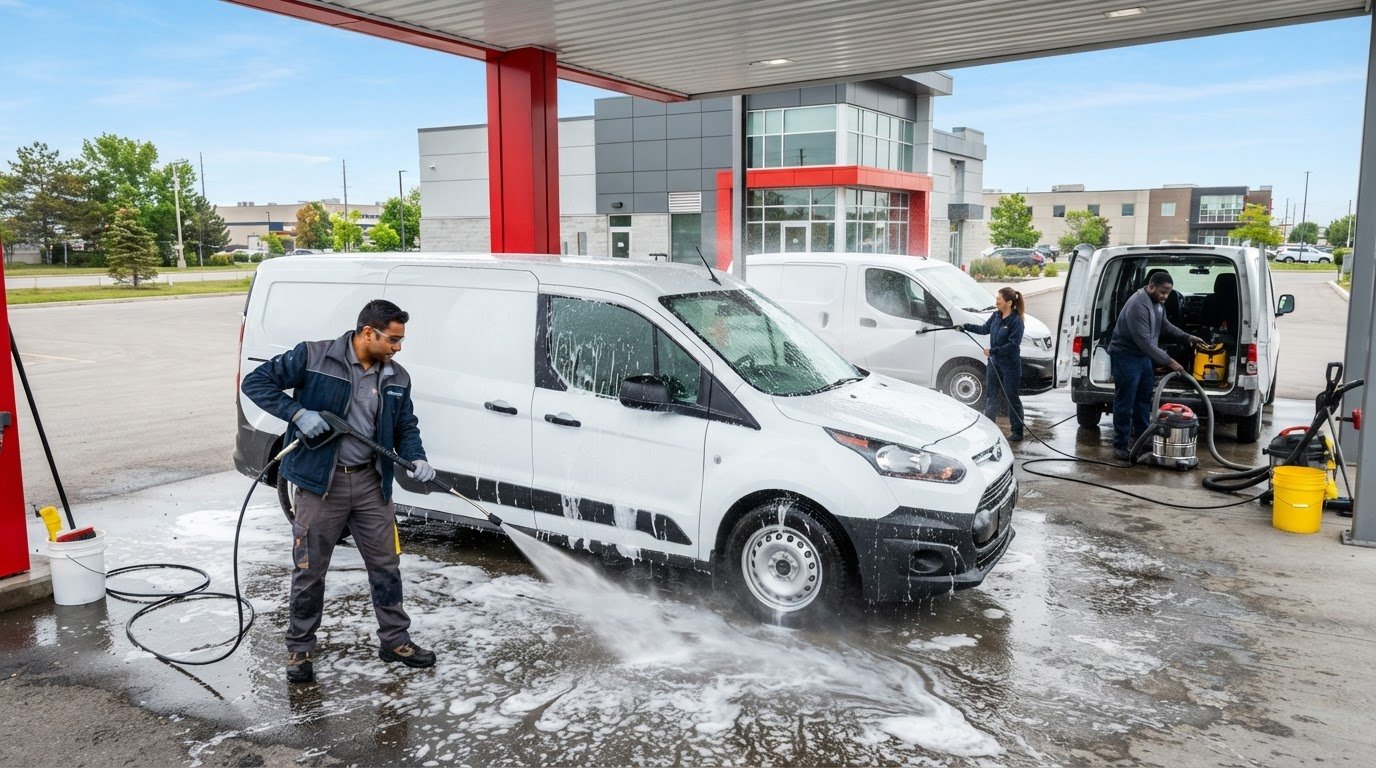
Never polish a dirty vehicle. Dirt and grit can get caught in a polishing pad or towel and add more scratches to the paint. Start with a thorough wash using clean water, proper car wash soap, and fresh microfiber towels. Pay close attention to lower doors, rocker panels, wheel arches, and the rear of the vehicle, where road grime collects.
After washing, inspect the paint in good light. Sunlight is useful, but a focused inspection light can reveal swirls that do not show up in the shade. Look at the hood, trunk, roof, and upper door panels first. These flat, exposed areas usually show the most wear.
Run a clean hand lightly over the paint after drying it. If it feels rough, the surface may have bonded contaminants such as brake dust, industrial fallout, or tree sap residue. Polishing over contamination is not a good idea. The paint should be decontaminated first with the appropriate treatment or clay process, then washed or wiped clean before polishing begins.
Be especially careful around edges, body lines, door handles, badges, and repainted panels. Paint is often thinner on sharp edges, and a panel that has been repaired may not respond the same way as factory paint. If you are unsure about paint condition, a detailing professional can inspect it before any correction work starts.
A Practical Paint Polishing Process
For light swirls and general dullness, a one-step polish is often the sensible choice. It combines moderate correction with a good finish and avoids unnecessary extra work. Heavier defects may need a compound first and a finishing polish afterward, but that is a more involved job with more risk if the wrong pad, product, or technique is used.
Use the least aggressive method that gets the result you want. Start with a finishing polish and a soft foam pad in a small test area, usually about two feet by two feet. Wipe the area clean and inspect it before deciding whether stronger correction is needed. This test spot saves time and helps prevent over-polishing the entire vehicle.
Keep the pad clean as you work. A clogged pad can haze the paint and reduce the polish’s effectiveness. Use slow, controlled passes with even pressure, and avoid holding the machine in one place. Heat is not your friend when polishing, especially on plastic bumpers, painted edges, and thin areas near panel gaps.
Hand polishing has its place for tight areas, around emblems, and for very mild cleanup. However, it usually will not remove noticeable swirl marks across a full hood or roof. A dual-action machine polisher is more effective and safer for most beginners than an aggressive rotary buffer, but skill still matters. The machine, pad, product, paint condition, and technician’s technique all affect the final result.
After polishing, remove residue with a clean microfiber towel and inspect the paint from different angles. A surface can look glossy while still hiding holograms or missed defects. This is why a quick wipe under poor lighting is not enough for quality detailing work.
When Professional Polishing Is the Better Value
DIY polishing can be satisfying, but it is not always the lower-cost option. By the time you buy a machine, pads, compounds, polish, microfiber towels, panel prep products, and protection, the total can add up. There is also the cost of time, especially if you are working around family, commuting, or rideshare hours.
Professional paint polishing makes sense when your vehicle has heavy swirls, visible oxidation, water-spot damage, or a dark finish that shows every mistake. It is also a smart choice before selling your vehicle, returning a lease, or applying a longer-lasting paint protection product. A trained detailer can choose the right level of correction instead of using a one-size-fits-all approach.
At Nanak Car Wash, hand-finished detailing can be a practical add-on when a regular wash no longer gives your vehicle the clean, polished look you want. Ask for a clear explanation of what the service includes, what results are realistic, and whether protection is included after the polishing work. Good value means paying for the condition your vehicle actually has, not automatically buying the most expensive package.
Protect the Finish After Polishing
Freshly polished paint needs protection. A wax can add warm gloss and is often a budget-friendly option, but it needs more frequent reapplication. A synthetic sealant generally lasts longer and offers good protection for daily drivers. Ceramic coatings can provide longer-term chemical resistance and easier cleaning, but preparation matters, and they are not scratch-proof.
For vehicles driven through wet weather, construction dust, road salt, and frequent highway miles, regular maintenance is more valuable than a one-time correction. Wash the vehicle before grime builds up, use clean microfiber towels, and avoid dry wiping dusty paint. Automatic washes are convenient, but touchless or well-maintained wash equipment can be gentler on a freshly corrected finish than worn brushes.
A polished vehicle will not stay perfect forever, and it does not need to. Keep it clean, protect it after correction, and choose polishing when the finish needs a real reset. That approach keeps your car looking cared for while keeping your time and budget under control.

 6600 Finch Ave W, Etobicoke, ON M9V 3Z6
 647-703-8515
 MON – SUN 8 AM to 7 PM