
You pull into the driveway after a week of Ontario winter driving, step out, and your car barely looks like its own colour anymore. The doors are lined with a chalky white crust. The wheel wells are packed with slush residue. The back bumper has that gritty grey film that seems welded on by highway spray. Worst of all, you know the mess you can see isn't the part that does the most damage.
That's where a proper Power Wash Car Wash matters. Not the quick splash-and-go kind of rinse that makes the paint look slightly better for a day, but the kind of wash built for road salt, grime, underbody buildup, and the reality of driving around the GTA. Ontario drivers don't need a generic definition. They need a wash that handles winter fallout properly and helps protect the vehicle underneath.
Table of Contents
- Your Car After an Ontario Winter
- What Exactly Is a Power Wash Car Wash
- Power Wash vs Touchless vs Hand Wash
- Why Power Washing Is Crucial for Ontario Vehicles
- Your Best Power Wash Options at Nanak Car Wash
- Get More Value from Every Wash
- Frequently Asked Questions About Power Washing
Your Car After an Ontario Winter
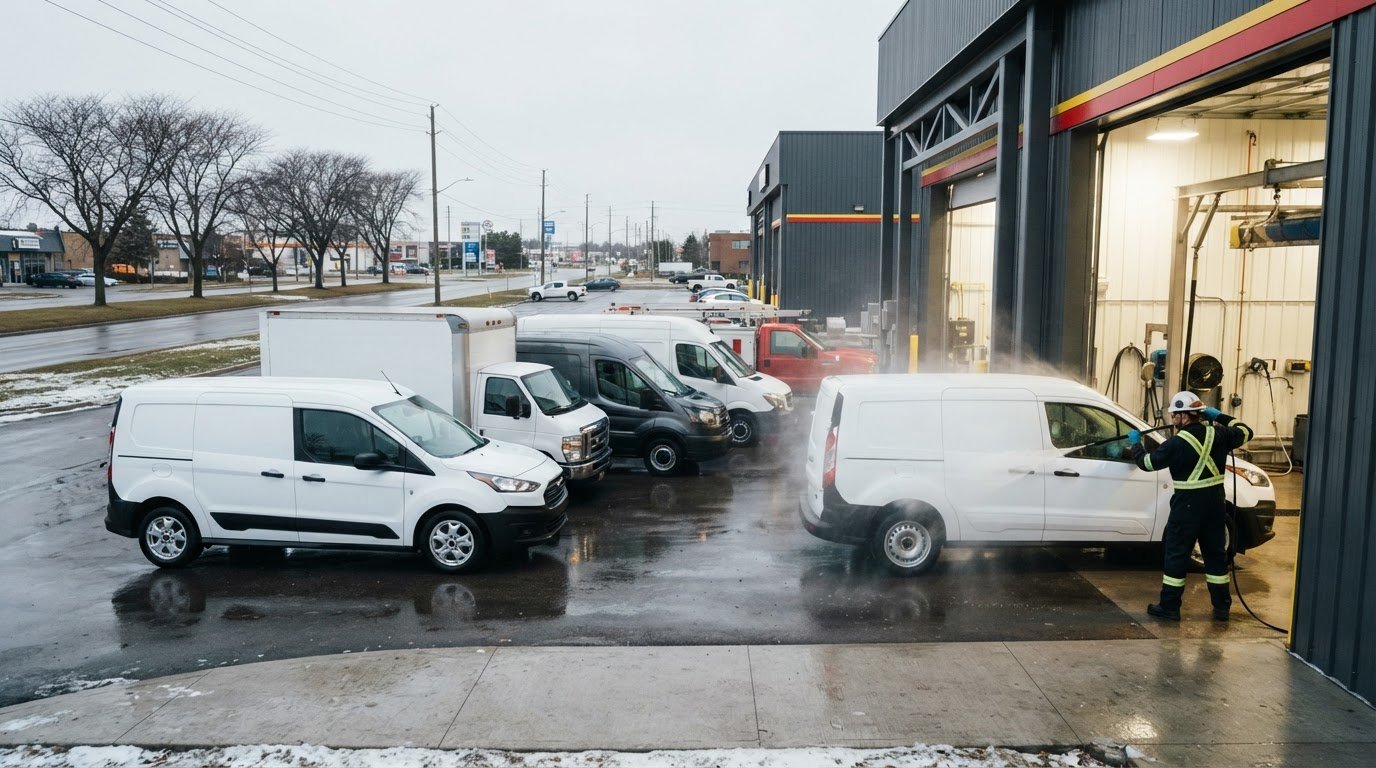
A lot of drivers wait until the first warm weekend to deal with winter buildup. By then, the car has already spent weeks carrying salt on the rocker panels, in the wheel arches, and all over the underside. You might run a finger across the paint and feel a rough layer instead of a smooth finish. The car looks tired, but the bigger problem is what's clinging to seams and metal underneath.
That's the normal Ontario pattern. You get a snowfall, then plough spray, then slush, then a stretch of wet roads, then another round of salt. Every trip adds another layer. School runs, errands, highway commuting, delivery driving, it all stacks up fast.
A clean-looking hood can fool you. The underbody usually tells the real story after winter.
There's a reason drivers keep coming back to professional washes in this region. The Canadian car wash and auto detailing industry generated $1.7 billion in revenue in 2026, and the sector includes services used across the GTA, according to IBISWorld's Canadian car wash and auto detailing industry report. For an Ontario operator that's been serving local drivers since 2004, that lines up with what people already know from experience. Winter grime isn't occasional here. It's part of owning a vehicle.
What winter grime actually feels like
- On the paint: dull, gritty, streaked, and harder to rinse than summer dust.
- Around the lower body: thick residue that hangs on behind the wheels and along the doors.
- Underneath: hidden contamination that keeps working long after the outside starts to look passable.
That's why people ask for a power wash car wash in the first place. They're not chasing showroom perfection every week. They're trying to get ahead of the kind of contamination Ontario roads leave behind.
What Exactly Is a Power Wash Car Wash
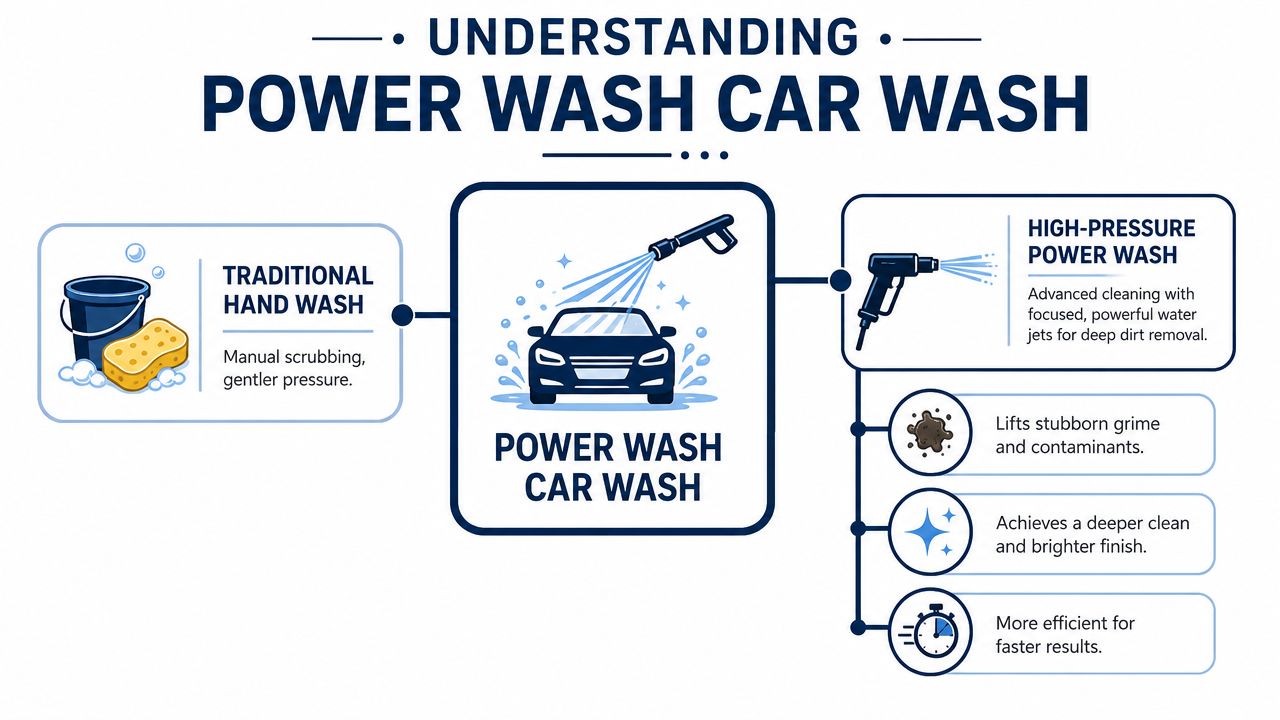
A Power Wash Car Wash is easiest to understand if you compare it to cleaning your teeth. Swishing water around your mouth removes almost nothing that's stuck. A water flosser uses a targeted stream to knock debris out of the places a casual rinse won't touch. Vehicle washing works the same way. The point isn't brute force. The point is directed cleaning power.
It is pressure with control
A proper power wash car wash combines several things at once:
- Targeted water delivery: the stream is aimed where grime collects most heavily.
- Managed pressure: enough force to break road film loose, without treating the car like a concrete patio.
- Detergent stages: cleaners loosen salt, dirt, and oily residue so water can carry them away.
- Rinse sequencing: each stage prepares the surface for the next one, instead of just blasting everything randomly.
That last part matters more than most customers realise. People often picture “power wash” as a wand with strong spray. In a vehicle setting, the better systems are controlled, repeatable, and designed around paint, trim, glass, wheels, and underbody areas that all need different treatment.
Why the chemistry matters too
Pressure alone doesn't do all the work. Road film has a stubborn, greasy quality. Salt slurry can compact into seams and recesses. Winter residue sticks because it's a mix, not a single contaminant. Good wash chemistry helps break that bond before the main rinse and final clean.
Practical rule: If a wash relies on force alone, it usually leaves grime in the places that matter most.
That's also why a good operator thinks about the full system, not just the spray. Presoak, foam application, rinse pattern, drying, and protection steps all affect the result. If you want a broader look at cleaning methods outside the auto world, Pine Country Window Cleaning shares useful expert tips for exterior cleaning that help explain why technique matters as much as equipment.
The short version is simple. A power wash car wash isn't just “more water, harder.” It's controlled cleaning designed to remove the kind of contamination Ontario drivers see every week.
Power Wash vs Touchless vs Hand Wash
The choice isn't typically between a good wash and a bad wash. The decision is instead among three methods that each solve a different problem. That's why the debate gets confusing. The right answer depends on how dirty the car is, how much time you have, and what kind of finish you expect when you drive away.
Car Wash Method Comparison
| Method | Cleaning Power | Paint Safety | Speed |
|---|---|---|---|
| Power Wash | Strong on winter grime, road film, and lower-body buildup when the system is properly managed | Safe when pressure, chemistry, and equipment are balanced for vehicles | Fast |
| Touchless | Good for lighter contamination, may struggle with stubborn film and packed residue | No brush contact, but still depends on proper pressure and temperature control | Fast |
| Hand Wash | Detailed and selective, especially around problem spots | Can be very gentle with correct tools and technique | Slow |
Which one fits which driver
A hand wash gives the operator the most flexibility. If there's bird droppings on one panel, caked mud behind one wheel, or delicate trim you want treated carefully, hand work is hard to beat. The trade-off is obvious. It takes more time, costs more, and isn't always practical for frequent winter maintenance.
A touchless wash appeals to drivers who want no physical contact on the paint. That preference is common. A verified claim notes that 54% of drivers may prefer touchless systems to avoid swirls, while also warning that high-pressure water alone can still micro-abrade paint if not properly managed, as described in this discussion citing paint-related concerns around touchless washing. That's the trade-off people miss. “No brushes” doesn't automatically mean “no risk” if the wash isn't calibrated properly.
A power wash car wash often lands in the practical middle. It's faster than hand washing, more aggressive on heavy contamination than a basic rinse, and better suited to repeated use when roads are filthy. For Ontario drivers, that combination matters more than buzzwords. A wash has to remove grime from places winter throws it, not just avoid touching the car.
Here's where each one tends to make the most sense:
- Choose hand wash if your car needs selective attention, delicate cleaning, or finishing work after a messy season.
- Choose touchless if the vehicle has lighter dirt and your main priority is avoiding physical contact.
- Choose power wash if the car sees regular commuting, winter roads, slush spray, or frequent lower-panel contamination.
The best wash method is the one that matches the dirt on the car, not the one with the most marketing around it.
A lot of daily drivers don't need a ceremonial detailing session every week. They need something repeatable, thorough on the grime that counts, and realistic for the way Ontario roads treat a vehicle.
Why Power Washing Is Crucial for Ontario Vehicles
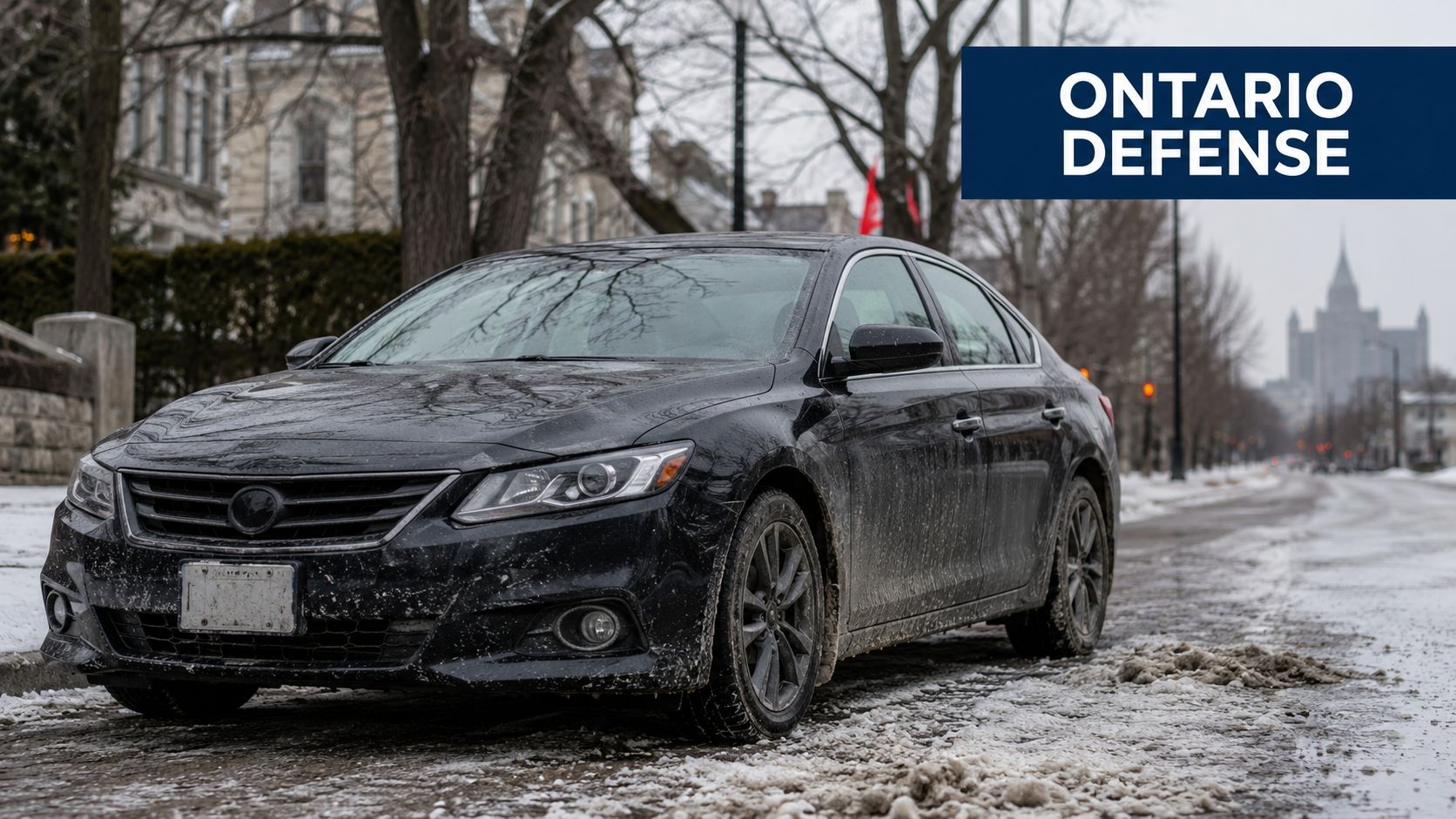
A car can leave a winter drive in Ontario looking only mildly dirty while the true problem is stuck underneath. Salt slurry, sand, and road grime get forced into wheel wells, seams, suspension components, and the underbody. Once that buildup dries, a quick surface wash does very little for the areas that matter most over a long winter.
Salt does not stay where you can see it
Ontario drivers deal with more than dirty doors and splash marks. Highway spray throws contaminated slush deep into frame rails, around brake and suspension hardware, and along the rocker panels. That buildup holds moisture and salt against metal long after the exterior panels look dry.
A wash that only cleans what you can see leaves too much behind.
That is why underbody cleaning matters so much in this province. For commuters, delivery drivers, and families running the 401 in February, the goal is not just a better-looking car. The goal is removing the material that sits in hidden areas and keeps working on the vehicle between storms.
Why underbody rinse quality matters
Underbody washing is only as good as the system doing the work. In a heavy-salt climate, the spray has to hit hard enough and from the right angles to break loose compacted residue, not just wet it. KKE Wash notes that effective cold-climate underbody cleaning calls for at least 1,200 PSI with angled nozzles, and that if a wash falls short, corrosion can accelerate by 2 to 3 times, according to the cold-climate wash benchmark described by KKE Wash.
Drivers notice the difference after a rough storm cycle. One wash leaves the vehicle looking cleaner for a day. A better underbody-focused wash removes more of the packed salt that keeps collecting around joints, fasteners, and lower structural areas.
A proper power wash helps protect:
- Frame and suspension areas: parts that take constant road spray
- Wheel wells: common spots for thick salt and slush buildup
- Lower panels and rocker areas: surfaces that absorb the worst of winter spray
- Long-term vehicle condition: especially for people keeping the car for several years
At Nanak Car Wash, this is the practical standard Ontario drivers should look for. Winter washing is not a finishing step. It is part of looking after the vehicle properly.
Your Best Power Wash Options at Nanak Car Wash
A driver pulls in after a week of slush, highway spray, and parking lot meltwater. The paint looks dull, the lower panels are caked, and the mats are carrying half of Ontario back into the cabin. At that point, the right wash is not about picking the biggest package on the menu. It is about matching the service to the kind of dirt the vehicle is carrying.

What to choose based on the condition of your car
For light dust, city film, or a car that just needs a reset between errands, an express exterior wash usually does the job. It is a practical choice for drivers who wash often and do not let buildup sit for weeks.
Winter dirt is different. If the vehicle has been through salted roads, thaw cycles, and dirty spray from traffic, the smarter choice is an exterior wash with an underbody wash and protective add-ons that help grime release more easily on the next visit. That is usually the point where a basic wash starts to feel incomplete.
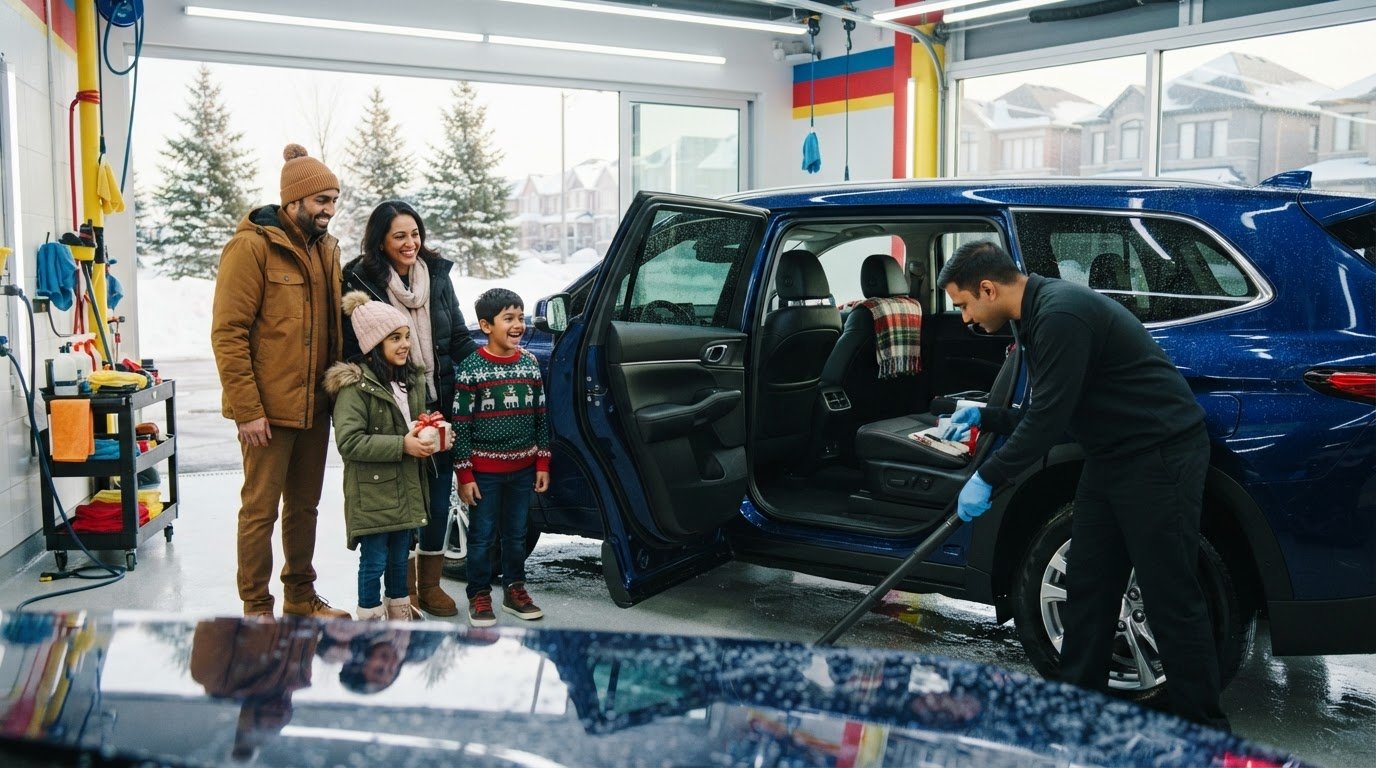
A full-service wash makes more sense when the inside of the vehicle is part of the problem too. Families, commuters, and ride-share drivers often need both. Vacuuming, wipe-downs, and interior cleaning save a second stop later.
Then there are vehicles that need more than maintenance. For salt marks, ground-in debris, pet hair, stained carpets, or a finish that has been ignored through the season, detailing by appointment is the better fit. That is a common call for SUVs, vans, work trucks, and older vehicles coming out of winter.
Nanak Car Wash offers express exterior washes, full-service packages, detailing, rust proofing, prepaid bundles, and monthly memberships across locations including Etobicoke, Brampton, Oshawa, Concord, Burlington, Cambridge, Guelph, and North York.
Why fresh water changes the finish
Water quality affects the result more than many drivers realize. Some wash systems reuse water, which can carry fine sediment back into the process. Using 100% fresh water follows accepted best practices for reducing the chance of micro-scratching and helping the final rinse finish cleaner, as described in this industry note on wash water and sediment concerns.
That matters most on a vehicle already carrying abrasive grime. Salt, sand, and road grit are hard enough on the surface on their own. Adding sediment back into the wash cycle does not help.
A simple way to choose:
- Daily driver with winter film and salt spray: exterior wash with underbody focus
- Family vehicle that is dirty inside and out: full-service package
- Vehicle with neglected paint or heavy interior mess: detailing appointment
- Owner planning to keep the car for years: regular washing paired with rust proofing
The right option depends on use, buildup, and season. For Ontario drivers, the best value usually comes from choosing the wash that fits the vehicle's real condition, not the package with the most impressive name.
Get More Value from Every Wash
Value doesn't come from squeezing the price of a wash down to the lowest possible number. It comes from washing often enough that grime never gets the chance to harden into a bigger problem. That's especially true in winter and spring, when one stormy week can undo a month of good intentions.
How to make frequent washing affordable
If you wash regularly, a monthly membership usually makes more sense than paying one visit at a time. Prepaid tickets can also work well if you want predictability without thinking about it every week. The main advantage isn't just convenience. It removes the little mental negotiation that makes drivers postpone a wash until the car is already heavily soiled.
There's also the water issue. Washing a car at home can use up to 450 litres of water, while professional car washes are significantly more efficient, according to the Canadian Carwash Association Industry FAQs. For drivers who care about both cleanliness and water use, that's a practical reason to stop doing driveway washes that still miss the underbody mess.
A simple routine that works
For most Ontario drivers, a basic routine is enough:
- In winter: wash weekly if you're driving regularly on salted roads.
- In spring and fall: every couple of weeks is a sensible rhythm for daily drivers.
- In summer: wash as needed, especially after highway bugs, bird droppings, tree sap, or cottage-road dust.
Before you enter any wash, do a quick prep check:
- Close everything fully: windows, sunroof, and trunk need to be properly shut.
- Secure exterior accessories: loose items, fragile add-ons, or poorly fitted trim should be handled before the wash.
- Fold mirrors if recommended: some vehicles benefit from it, depending on design.
- Know your roof setup: if you've got a roof rack, cargo box, or mounted accessory, confirm it's compatible with the wash type.
Regular washing costs less trouble than delayed cleaning after months of buildup.
The smartest routine isn't complicated. Keep the car from getting overwhelmed, choose the right wash type for the season, and treat winter grime like maintenance instead of a cosmetic annoyance.
Frequently Asked Questions About Power Washing
Is a power wash safe for a convertible soft top
Usually, yes, but it depends on the condition of the top and seals. If the fabric is worn, seams are failing, or weatherstripping is already compromised, any wash can expose that weakness. A quick inspection first is worth it.
Can a power wash remove bird droppings and tree sap
Bird droppings often come off with normal wash chemistry if they haven't baked in too long. Tree sap is trickier. Fresh sap may loosen, but hardened sap often needs targeted treatment by hand rather than expecting the wash alone to solve it.
How soon after a new paint job should I use a power wash
Ask the body shop or paint professional who did the work. Fresh paint needs curing time, and the timeline can vary depending on materials and process. If you've had recent repainting or body repairs, don't guess.
What about a vinyl wrap or paint protection film
Most wrapped or protected vehicles can be washed safely, but condition and edge adhesion matter. If any edge is lifting, get that fixed first. A wash is for cleaning a sound surface, not testing a failing installation.
Is one winter wash enough if I don't drive much
Not always. Even occasional trips can load the underbody with salt if road conditions are bad. What matters isn't just mileage. It's the kind of roads you drove on and how much residue the car picked up.
If your vehicle is carrying salt, road film, or underbody grime, a practical next step is to book a wash that matches the condition of the car. Nanak Car Wash offers exterior washes, full-service cleaning, detailing, rust proofing, and membership options for drivers across the GTA.

 6600 Finch Ave W, Etobicoke, ON M9V 3Z6
 647-703-8515
 MON – SUN 8 AM to 7 PM