
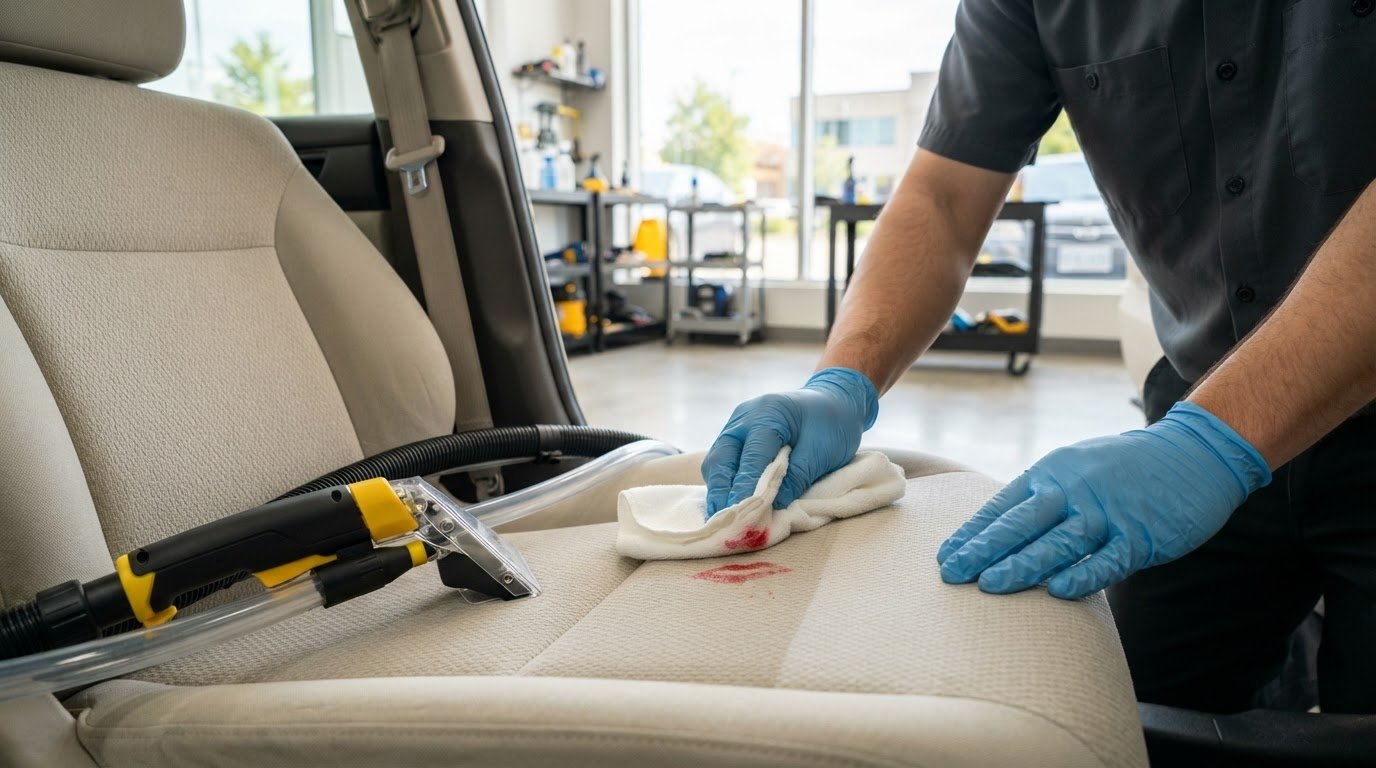
That lipstick mark isn’t ordinary dirt. Rubbing can push colour deeper into fabric or spread it across the seat. If you’re looking for professional makeup and lipstick stain removal from interior surfaces, start carefully: avoid scrubbing, and don’t reach for a household cleaner without checking how it may affect the upholstery or trim.
It’s understandable to want the stain gone quickly, especially when it stands out against a clean interior. Makeup can contain oils, pigments, and waxes that respond differently to cleaning, and car-interior materials vary too. The wrong product or too much friction may leave a larger mark or damage a delicate surface.
This guide explains what to do first, why makeup stains can be stubborn, and which common cleaning mistakes to avoid. You’ll also learn when professional interior detailing is a practical next step. At Nanak Car Wash in Brampton, car detailing includes intensive interior cleaning, vacuuming, and shampooing seats and carpets for vehicles that need more than routine care.
Key Takeaways
- Learn how to handle a fresh cosmetic mark without rubbing it deeper or spreading residue.
- Understand why lipstick can be stubborn: pigments, oils, and waxes may cling differently to different interior materials.
- Compare fresh and set-in stains, familiar and delicate materials, and light versus repeated contamination to decide when to stop DIY cleaning.
- See why professional makeup and lipstick stain removal from interior surfaces calls for a careful, material-aware approach.
- For persistent marks, Nanak Car Wash’s Brampton detailing includes intensive interior cleaning, vacuuming, and seat and carpet shampooing.
Makeup and Lipstick Stains in a Car: What to Do First
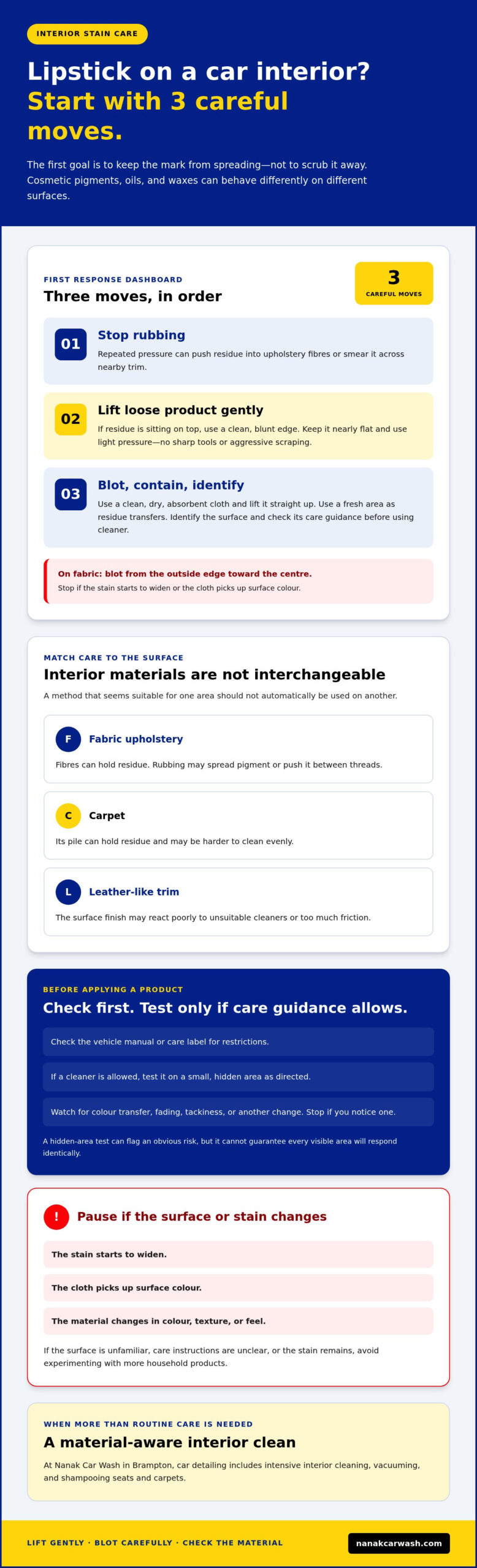
A fresh lipstick mark can catch your eye right away, but a rushed wipe may make it larger. Keep the first response simple. The goal isn’t to scrub the surface clean; it’s to limit spreading while you identify the material. These first steps can help protect the surface before you decide whether further cleaning is appropriate.
- Stop rubbing. Repeated pressure can push cosmetic residue into upholstery fibres or smear it across nearby trim.
- Lift loose residue gently. If product is sitting on the surface, use a clean, blunt edge to lift it without scraping or pressing down.
- Keep the mark contained. Blot with a clean, dry, absorbent cloth. Before adding cleaner, identify the surface and check its care guidance.
Safest first response: lift what’s loose, blot gently, and check the material before applying a cleaning product.
What to do when fresh lipstick gets on a car seat
Work slowly. Hold a clean cloth against the mark and lift it straight up, using a fresh area of cloth as residue transfers. Don’t scrub back and forth. On fabric, blot from the outside edge toward the centre to reduce the chance of spreading colour into clean upholstery. Stop if the stain starts to widen or the cloth picks up surface colour.
For a raised smear, use a clean, blunt edge to lift excess product first. Keep it nearly flat against the surface and apply light pressure. Avoid sharp tools or aggressive scraping, which can snag fabric or mark trim. The right approach to professional makeup and lipstick stain removal from interior surfaces starts with preserving the material, not forcing the stain away.
Identify the car-interior surface before cleaning
Don’t assume every seat or panel can be cleaned the same way. Fabric upholstery has fibres that can hold residue; carpet has a different pile and may be harder to clean evenly; leather-like trim has a surface finish that may react poorly to an unsuitable cleaner. Check the vehicle manual or any care label for restrictions before applying a product, even if it’s marketed for general cleaning.
If the guidance allows a cleaner, test it first on a small, hidden area. Apply a little as directed, then check for colour transfer, fading, tackiness, or another change. Stop if you notice one. A hidden-area test can’t guarantee that every visible area will respond identically, but it can flag an obvious risk before you treat the stain.
Auto detailing covers interior care as well as exterior cleaning, and the appropriate approach can vary by surface. If you’re unsure what the trim is made of or its care instructions are unclear, avoid experimenting with household products. A cautious first response helps prevent one visible mark from becoming a wider cleaning problem.
Why Professional Makeup and Lipstick Stain Removal Takes More Than Wiping
A quick wipe may remove the mark you can see without lifting everything left behind. Lipstick and other cosmetics can contain pigments, oils, waxes, and additional ingredients in different combinations. That mix can leave colour, a slick feel, or both. The result depends on the product, how much transferred, the surface, and what has already been tried.
Lipstick behaves less like loose dust or crumbs and more like a coloured, sometimes oily residue that can cling to a surface or settle into its texture. That’s why wiping harder isn’t a reliable fix. Pressure can move the stain rather than remove it.
How lipstick and makeup leave marks on upholstery
Cosmetic formulas aren’t all alike. A light powder mark and a creamy lipstick smear can leave different kinds of residue, so one cleaning approach may not work equally well on both. Even two lipstick marks can respond differently depending on the product and the upholstery beneath them.
Friction adds another challenge. Rubbing can spread pigment beyond the original spot, while pressure may push residue between fabric threads. A cloth might pick up the surface layer but leave a faint coloured or oily trace behind. That trace can become more noticeable as the area dries, even if the first wipe seemed to help.
Time, warmth inside a parked vehicle, and earlier cleaning attempts may also affect the stain. Residue that has sat for a while can be harder to address than a fresh mark, and repeated attempts with different products may leave moisture or cleaner behind. These factors don’t guarantee a particular outcome, but they’re good reasons to pause before trying another method.
Why different interior materials need different care
Woven upholstery, carpet fibres, and leather-like finishes have different surfaces. Fabric and carpet can hold residue among their fibres. A leather-like finish has a surface layer that may be affected by unsuitable cleaners or too much friction. A method that seems appropriate for a carpet spot shouldn’t automatically be used on a seat panel or trim.
Too much scrubbing can rough up fabric, spread colour, or change the look of a finished surface. Excess moisture may also affect nearby areas. Follow the vehicle’s care guidance and product directions, and stop if the material changes in colour, texture, or feel. If the stain remains or the surface is unfamiliar, professional makeup and lipstick stain removal from interior materials calls for a more careful approach than another round of wiping.
For a vehicle that needs more than routine cleaning, car detailing for interior cleaning provides a deeper-cleaning option. The key is matching the cleaning approach to both the residue and the material, rather than treating every cosmetic mark as ordinary dirt.
DIY Cleaning or Professional Lipstick Stain Removal: How to Choose
A careful first response may be reasonable for a small, fresh mark, but the stain’s age, the material, and any earlier cleaning attempts matter. Use this comparison to decide whether to stop at gentle blotting or move on to professional interior detailing.
| What you see | Careful at-home response | When to stop and consider detailing |
|---|---|---|
| Fresh or set-in | A fresh, small mark may respond to gentle blotting if you understand the material’s care guidance. | A set-in stain may have settled into fibres. Avoid increasing pressure or trying a series of cleaners. |
| Known or uncertain material | Proceed cautiously only when the vehicle’s instructions make clear what the surface can tolerate. | If you can’t identify the material, or it’s delicate or finished, don’t experiment. |
| Light or repeated contamination | A single, light transfer is easier to assess than an area that has been marked repeatedly. | Large marks, repeated contamination, or several treated spots may need broader interior cleaning. |
When careful at-home blotting may be enough
Keep home treatment limited to a fresh, small mark on a surface whose care instructions you understand. If those instructions allow a cleaner, follow its label and test an inconspicuous spot first. Use minimal moisture on a clean cloth; don’t saturate the upholstery or trim. Blot gently, then reassess instead of repeating the motion automatically.
Stop if colour transfers to the cloth, the surface looks or feels different, or the stain begins to spread. Don’t switch to a stronger product to force a quick result. A change in the material is a reason to pause, not scrub harder.
When professional detailing is the more practical choice
Set-in, large, repeated, or previously treated marks are good reasons to stop home attempts. The same applies to unfamiliar materials and any visible change in colour or finish. Each additional product or round of friction can complicate the cleaning, especially when you don’t know how the surface will respond.
Avoid bleach, strong solvents, fragranced cleaners, and unverified online recipes on vehicle interiors. A product suitable for one household surface may not be suitable for car upholstery or trim. Don’t mix cleaners or apply a product without checking its directions and the vehicle’s care guidance.
Professional makeup and lipstick stain removal from interior surfaces depends on both the stain and the material, so no result should be promised in advance. At Nanak Car Wash in Brampton, detailing includes intensive interior cleaning, vacuuming, and shampooing seats and carpets. For more context on the broader service, the article Interior Car Detailing: A Complete Guide to a Spotless Ride explains what interior detailing involves. If the mark persists, professional car detailing is a practical next step.
How to Avoid Making a Car-Interior Makeup Stain Worse
Before trying another cleaning step, pause and run through this checklist. A controlled approach helps protect the seat, carpet, and trim from extra moisture, transferred pigment, or an unsuitable cleaner.
- Check the surface and care guidance. Identify whether the mark is on fabric, carpet, or finished trim, then follow the vehicle’s instructions.
- Use a clean cloth area. Switch to a fresh section as residue transfers. A cloth already stained with lipstick can spread pigment back across the material.
- Keep moisture controlled. Don’t pour or spray cleaner directly onto the mark. Excess water can leave a damp patch, spread residue, or reach nearby seams and materials.
- Use one suitable product at a time. Read its directions and check compatibility with the surface. Don’t mix cleaners or layer products to make them stronger.
- Pause and inspect. Let the area dry according to product directions, then check whether the mark remains before considering another step.
Stop treatment if the stain spreads or the surface visibly changes. Continuing to scrub or add products may enlarge the affected area or further alter the material.
Cleaning mistakes that can spread or set cosmetic residue
Avoid scrubbing, circular rubbing, and repeated passes with the same dirty cloth. These actions can move colour beyond the original mark or work residue further into fabric texture. Don’t use a hot tool or apply heat unless the vehicle’s material-specific guidance says it’s suitable. Heat may affect some finishes or materials, and it won’t make an unknown cleaning method safer.
Skip unverified household recipes and don’t assume a stronger cleaner will work better. Products can react differently with upholstery, carpet, and leather-like finishes. Layering them may leave additional residue or make it harder to tell what caused a colour or texture change. If you’re unsure whether a product is compatible, don’t apply it.
Protect the surrounding seat, carpet, and trim
Keep any approved cleaning liquid on the affected area rather than letting it run toward seams, seat controls, electronics, or adjacent trim. Use separate clean cloth areas for blotting and drying, and don’t carry a lipstick-stained cloth from the seat onto a nearby panel. These precautions help prevent a single mark from becoming a broader cleanup.
After following product directions, let the area dry appropriately before judging the result. A damp surface can look different from a dry one, so avoid repeating treatment immediately. If a mark remains, or you notice a change in colour, finish, or texture, stop experimenting. For a persistent interior stain that needs more than routine cleaning, book car detailing with Nanak Car Wash in Brampton. Intensive interior cleaning, vacuuming, and seat and carpet shampooing provide a deeper-cleaning option, though no specific stain-removal result can be guaranteed.
Professional Interior Detailing for Makeup Stains in Brampton
A cosmetic stain that remains after careful first steps may need more than a routine wash. Nanak Car Wash serves Brampton drivers with comprehensive car detailing that includes intensive interior cleaning. It’s a practical option when a lipstick or makeup mark is part of a broader interior-cleaning need, or when you’d rather stop experimenting with an unfamiliar surface.
Detailing gives the vehicle’s interior a deeper clean, but it doesn’t guarantee that every stain will disappear. Results depend on factors such as the stain’s age and condition, the material, and any products already used. A mark on carpet may respond differently from one on a seat or finished trim, so keep expectations realistic.
What to expect from interior car detailing
Interior detailing goes beyond the surface cleaning associated with a routine wash. Nanak Car Wash’s car detailing includes vacuuming and intensive interior cleaning, as well as shampooing seats and carpets. These steps address interior areas that may need more attention than a quick clean, particularly when soil or residue is present in upholstery or carpet.
Professional makeup and lipstick stain removal from interior materials depends on the surface and the stain. Detailing provides a deeper-cleaning approach, but no specific stain-removal result is guaranteed. The sensible goal is to have the interior cleaned with its condition in mind, without adding more untested products or using harsh scrubbing at home.
Choose a sensible next step for your vehicle
Before arranging interior cleaning, make a short note of what you know. It can help to record:
- Location: seat, carpet, or trim, and whether the mark is near a seam.
- Material: fabric, carpet, or a leather-like surface, if known.
- Condition: whether the mark is fresh, set in, small, or spread across a larger area.
- Previous attempts: any cleaners or home treatments already used, and any change in colour or texture.
These details give useful context about the interior and the stain. If you’re exploring the wider scope of vehicle care, the article Car Detailing: The Ultimate Guide to a Showroom Finish offers broader context on car detailing.
For a persistent mark or an interior that needs more than routine cleaning, explore Nanak Car Wash car detailing in Brampton. Intensive interior cleaning, vacuuming, and seat and carpet shampooing provide a practical next step, with results depending on the stain and surface.
Choose a Careful Next Step for Your Interior
A lipstick mark can be frustrating, but it doesn’t have to become a bigger problem. If another home-cleaning attempt feels uncertain, pause. Protecting the surface matters as much as addressing the stain, and a measured next step can help you avoid unnecessary scrubbing or product use.
For professional makeup and lipstick stain removal from interior surfaces, keep expectations practical. Results depend on the material and the mark’s condition, so no approach should be treated as a guaranteed fix. Focus on getting the interior cleaned appropriately, rather than chasing a perfect result with increasingly strong products.
Nanak Car Wash serves Brampton drivers with interior detailing for vehicles that need more than routine care. Take the next step toward a cleaner, more comfortable cabin: explore car detailing at Nanak Car Wash.
A careful choice now can help you move forward with confidence and enjoy a fresher-feeling vehicle.
Frequently Asked Questions
Can lipstick stains be removed from car upholstery?
Sometimes, but complete removal depends on the stain and upholstery. A fresh transfer may be easier to address than a mark that has dried or been treated with several products. Even if the raised or waxy residue lifts, a faint colour trace may remain. Check the seat’s care instructions before cleaning, and don’t assume a product suitable for one fabric will work on another.
How do you remove makeup from a car seat without spreading it?
Start by lifting any raised product gently, then blot with a clean cloth instead of wiping side to side. Work from the mark’s outer edge toward its centre, and switch to an unused part of the cloth as soon as it picks up colour. Don’t press hard with your fingertips or keep using a stained tissue. If the mark expands, stop rather than chasing its edges.
Is rubbing alcohol safe to use on car upholstery?
Don’t assume rubbing alcohol is safe for car upholstery. It may affect colour or the finish, and different materials can react differently. Check your vehicle’s care guidance and the cleaner’s label before applying anything. If alcohol isn’t specifically permitted for that surface, skip it. This is especially sensible for unfamiliar or leather-like trim, where an unsuitable solvent may leave a visible change.
What should you do if lipstick gets on a leather car seat?
Lift loose lipstick carefully, then blot the spot with a clean, dry cloth. Avoid scraping, abrasive pads, alcohol, or household cleaners unless the vehicle’s care guidance specifically permits them for that surface. Keep liquid away from seams and perforations, where it may be harder to remove. If the finish changes, feels tacky, or the colour transfers, stop and avoid further treatment.
Can a professional car detailer remove a set-in makeup stain?
A detailer may be able to improve a set-in makeup stain, but removal isn’t guaranteed. The result can depend on how long the mark has been present, the surface, and any earlier cleaning attempts. Keep a note of what products you’ve used and whether the stain changed afterwards. That information helps describe the current condition and supports a realistic assessment of what interior cleaning may achieve.
Will shampooing a car seat remove lipstick stains?
Shampooing may help clean some fabric seats, but it won’t reliably remove every lipstick mark. Cosmetic residue can contain different ingredients, and a visible colour trace may remain after cleaning. Seat shampoo is also not automatically appropriate for leather-like finishes. Check the vehicle’s material guidance before using any shampoo, and don’t saturate a seat in an attempt to force the stain out.
What should you avoid using on a makeup stain in a car?
Avoid bleach, strong solvents, abrasive tools, and unverified household recipes such as toothpaste or hairspray. Don’t mix cleaners, layer products, or apply a hot tool without material-specific guidance. These shortcuts can affect colour or finish, spread residue, or leave excess moisture behind. Use only a cleaner suitable for the surface and follow its directions. Stop if the material changes or the mark spreads.

 6600 Finch Ave W, Etobicoke, ON M9V 3Z6

 647-703-8515
 MON – SUN 8 AM to 7 PM