
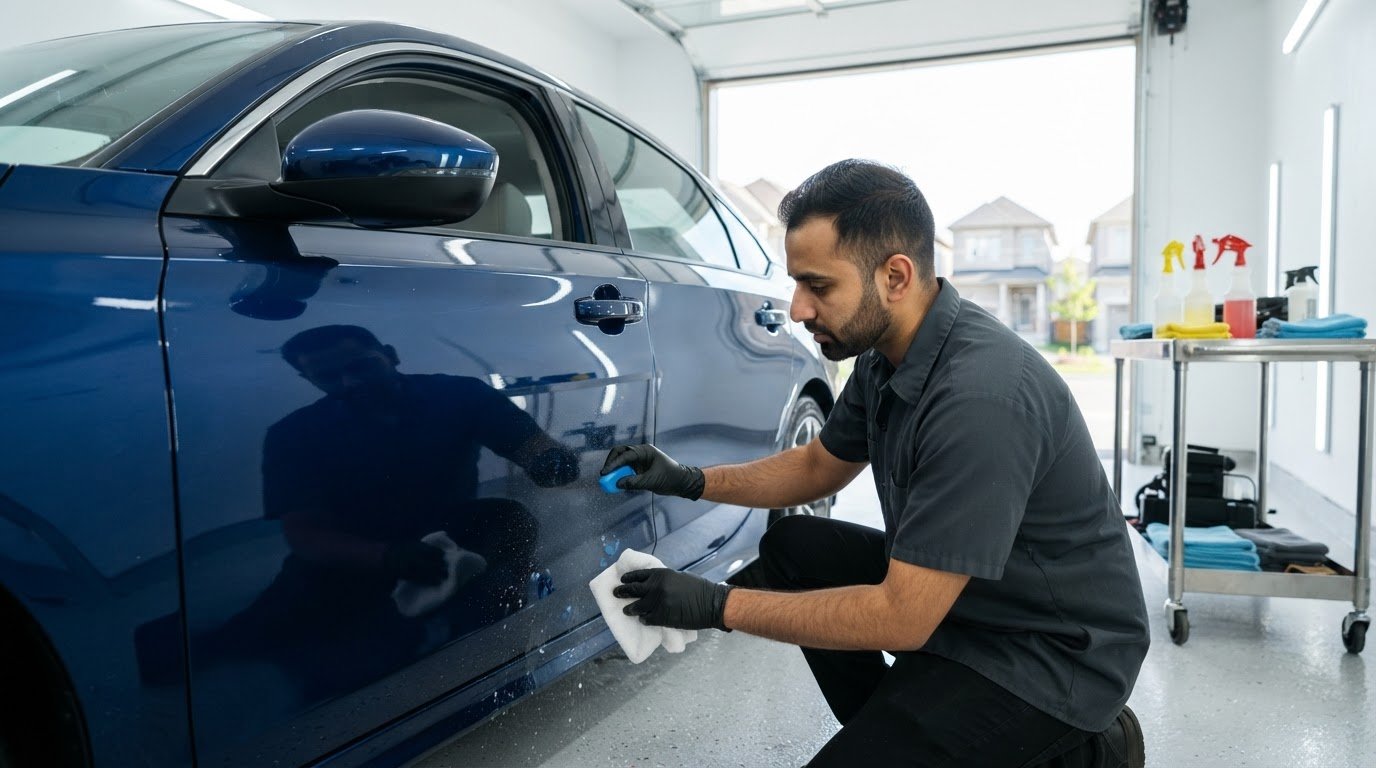
Fresh road paint and tar can cling to your vehicle before you notice. Tar sticks to tyres and gets flung onto lower panels, bumpers and wheels, while road paint can leave stubborn splashes on the exterior. A professional tar and road paint removal service uses careful, paint-conscious methods to lift residue without harsh scrubbing.
Dark spots or bright paint marks on a clean vehicle are frustrating, and a regular wash may not remove them once they start to harden. Take care: dirt dragged across the surface can scratch it, while unsuitable solvents can damage paint, trim and protective coatings.
This guide explains how road tar and paint build up, what to do with fresh or semi-hardened residue, and how automotive tar remover and properly lubricated detailing clay are used at different stages. You’ll also learn when professional detailing can help, how careful washing supports the process, and what to consider when choosing the next step for your vehicle’s exterior.
Key Takeaways
- Wash your vehicle soon after driving on freshly paved roads to make tar easier to remove before it hardens.
- Match the removal method to the residue: tar remover treats tar, while detailing clay can lift small remaining contaminants.
- For hardened road paint, use a careful process that includes keeping the clay clean and rinsing treated areas thoroughly.
- Choose a cleaning option based on how much of the vehicle needs attention, from a wash to more comprehensive detailing.
- Removal costs depend on the affected areas and the work required, so consider the condition of the exterior when assessing the service.
Removing fresh and semi-hardened road paint
Fresh road paint needs a different approach from a fully hardened mark. Road markings are typically thermoplastic paint made with synthetic resins, beads, pigments and other materials. The mixture can cling to lower surfaces, especially around wheel wells, rocker panels, bumpers and wheels. Tyres can pick up tar and debris, then fling it onto those areas as you drive.
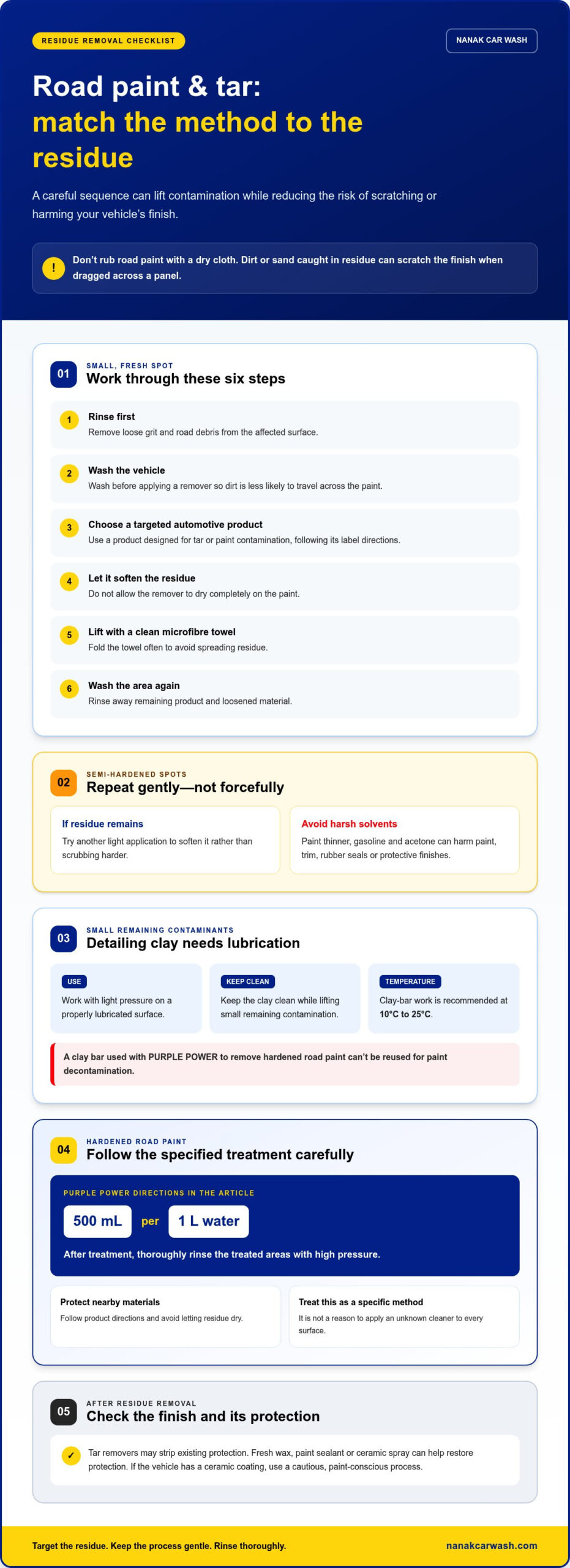
Wash the vehicle as soon as practical after driving through fresh roadwork. Washing soon after travelling on freshly paved roads can make tar easier to remove before it hardens. If paint has splashed onto the body, don’t rub it with a dry cloth. Loose dirt or sand caught in the residue can scratch the finish when dragged across the panel.
For a small, fresh spot, use a careful process:
- Rinse the affected surface to remove loose grit and road debris.
- Wash the vehicle before applying a remover, so dirt is less likely to travel across the paint.
- Use an automotive product designed for tar or paint contamination, following its label directions.
- Let the remover soften the residue, but don’t allow it to dry completely on the paint.
- Lift softened material with a clean microfibre towel, folding the towel often to avoid spreading residue.
- Wash the area again to remove remaining product and loosened material.
Semi-hardened spots may need another light application, not more force. Aggressive scrubbing can damage paint, trim, rubber seals or a protective finish. Household solvents such as paint thinner, gasoline and acetone can also harm vehicle surfaces, so keep them away from the bodywork.
For small residues left after treatment, a detailing clay bar and proper lubricant can help lift contamination. Work with light pressure, keep the clay clean, and use it only on a lubricated surface. Clay-bar work is recommended at a surface temperature of 10°C to 25°C. A clay bar used with PURPLE POWER to remove hardened road paint can’t be reused for paint decontamination.
Directions for hardened road paint specify 500 mL of PURPLE POWER per 1 L of water, followed by a thorough high-pressure rinse. This is a specific method, not a reason to apply an unknown cleaner to every surface. Protect nearby materials, follow product directions, and avoid letting residue dry. After removal, fresh wax, paint sealant, or ceramic spray can help restore protection, since tar removers may strip existing protection. If a ceramic coating is present, use a cautious, paint-conscious process to protect its finish.
Professional tar-removal methods
A professional tar and road paint removal service matches the cleaning method to the residue and affected surface. The time required varies with the area covered, how firmly the residue has bonded and the treatment needed.
Tar and Road Paint Removal Services
In Canada, a professional service first distinguishes tar from road-marking paint, then selects a suitable automotive treatment. Tar remover is designed for tar, while hardened road paint may need a different method and thorough rinsing. A professional tar and road paint removal service should address the specific contamination instead of treating every mark as ordinary dirt.
Washing away loose grime helps make targeted cleaning more controlled. For tar, bug and tar remover can sit on the affected area for 2-3 minutes before wiping. If softened residue remains, another light application is preferable to aggressive scrubbing. The amount and location of contamination matter: spots on an exposed panel are different from residue close to trim or rubber seals.
Hardened road paint needs careful treatment and a thorough high-pressure rinse of treated areas. SUPER SOL is flammable, so keep it away from open flames, hot surfaces and ignition sources. Washing the area after treatment removes leftover product and residue. Because tar removers can strip existing paint protection, fresh wax, paint sealant or ceramic spray may be needed afterward.
Expected Removal Time
There’s no single timeframe for every vehicle. A few fresh spots on an accessible panel involve less work than hardened paint across several lower panels, wheels and bumpers. The affected area, residue condition and need for additional treatment all shape the work involved.
The 2-3-minute dwell time for bug and tar remover is only one step. Washing, treating separate areas, rinsing, and inspecting the finish take additional time. A second application may also be needed if softened tar remains. Hardened road paint often calls for focused treatment and a thorough rinse, rather than a quick wipe.
For routine exterior cleaning alongside residue care, a Full-Service Car Wash can help remove everyday road grime. Share where the marks are and whether they appear to be tar or paint when describing your vehicle’s needs. Those details help clarify the cleaning required.
Use an automotive tar remover designed to break down tar without harming paint. Choosing the right product is part of the removal method: treatment should target the residue while respecting the vehicle’s finish. A professional can identify the contamination instead of treating every roadside mark as the same material. Selecting a product specifically for tar gives the cleaning process a clear purpose and avoids using it as a catch-all.
Once the product has loosened the tar, don’t simply keep wiping until the mark disappears. Clear away leftover product and check that no residue remains. A measured approach also avoids unnecessary rubbing when the finish is a concern. Automotive tar remover is a practical starting point, followed by careful application and a final review. Assess any remaining mark on its own terms instead of assuming it is tar.
Road tar removal
Road tar can harden quickly, making it difficult to remove with a standard wash. Tyres pick up sticky material from asphalt and fling it onto lower doors, bumpers, wheel arches and wheels. Tar left in place can collect dirt, dust and grime, which may scratch the clear coat if rubbed across the surface.
Inspect the vehicle in good light. Look behind each wheel and along the lower panels, where small black spots can hide under road film. Washing soon after highway or construction-zone driving can make fresh deposits easier to remove. Warm soapy water may loosen small spots, but stubborn buildup usually needs an automotive tar remover.
Use a controlled detailing process instead of scrubbing the whole panel. Work on a manageable area at a time and follow the remover’s label directions. Let the product soften the tar, then lift it gently with a clean microfiber towel. Fold the towel often so removed material stays on the cloth rather than being rubbed back onto the paint. If residue remains, apply another light treatment instead of increasing pressure.
- Wash the affected panel first to clear loose grit.
- Apply an automotive tar remover only to the targeted area.
- Wipe softened residue with a clean section of microfiber.
- Wash the panel again to clear product and loosened contaminants.
- Inspect the clear coat before applying fresh protection.
Avoid paint thinner, gasoline, acetone and household solvents. They can damage paint, trim, rubber seals or an existing coating. Tar removers can also strip wax or paint sealant, so the finish may need fresh wax, paint sealant or ceramic spray afterward. A ceramic coating is no reason to scrape or scrub bonded tar; use a suitable automotive method to protect the coated surface.
Professional detailing is useful when tar covers several panels, sits near delicate trim or remains after careful treatment. A detailer can assess whether the marks are surface contamination or whether light staining has dulled the paint. Automotive polish may help restore gloss and clarity when staining remains after tar removal, but polishing is a separate step from dissolving residue.
For prevention, wash the vehicle at least once a week, especially after highway driving, to help remove tar before it hardens. Inspect for new spots monthly, with extra attention after construction zones or rural-road travel. Reapply vehicle paint sealant every 3-6 months; a protected surface can make later cleaning easier, though it won’t prevent every tar deposit.
The key is to avoid dragging loosened contamination across the finish. Tar can hold dirt, dust and grime, and improper wiping or washing may scratch paint. If the first treatment leaves material behind, use another light application to soften it rather than pressing harder with the cloth. A measured approach helps prevent aggressive scrubbing.
Keep household solvents out of the process, including paint thinner, gasoline and acetone. They can damage paint, trim, rubber seals and protective coatings. Once the tar has lifted, wash the treated area again to remove the product and any remaining residue. This follow-up cleaning clears the area without harsher chemicals or extra pressure.
What professional services remove tar and road paint from cars in Canada?
In Canada, vehicle detailing services address bonded tar and road-marking residue with methods suited to automotive surfaces. The right service depends on the material, its location and whether it has hardened. A standard wash can clear loose road grime, but stuck tar or thermoplastic paint often needs targeted treatment beyond routine washing.
First, distinguish the marks. Black, sticky dots around tyres, wheels and lower panels may be road tar flung up from asphalt. Coloured splashes may be road paint, which typically contains synthetic resins, beads and pigments. The distinction matters because tar remover and road-paint treatments are not interchangeable.
When comparing professional detailing, look for a process that addresses the affected areas rather than simply washing the whole vehicle. A careful service should account for painted panels, wheels, trim, rubber seals and existing paint protection. Key steps include:
- Identifying whether the contamination is tar, road paint, or ordinary grime.
- Washing away loose dirt before treating stuck residue.
- Using an automotive product suited to the contaminant and surface.
- Rinsing treated areas and washing away product residue.
- Inspecting the finish and considering whether paint protection needs renewal.
Describe where the marks are and what they look like when arranging vehicle cleaning. For example, mention tar on the rocker panels or paint splashes inside a wheel arch. The affected area and residue condition help define the work. A few accessible spots differ from hardened contamination across several surfaces, and cleaning near trim calls for a suitable approach.
A Full-Service Car Wash can handle routine exterior cleaning, such as road film and loose dirt. Bonded residue may need targeted detailing methods rather than a wash alone. Keep that distinction in mind when deciding what your vehicle needs. If road paint has left the finish dull, automotive polish may help restore gloss after residue removal. Cleaning removes contamination; it does not repair chipped or damaged paint.
After tar treatment, consider the vehicle’s existing coating or sealant. Tar removers can strip paint protection, so fresh wax, paint sealant or ceramic spray may be appropriate afterward. For regular upkeep, washing at least once a week helps remove tar before it hardens. Monthly inspections can also catch deposits around tyres, bumpers and lower panels before they become more difficult to clean.
When comparing local detailing services, look for one that identifies whether the residue is tar or road paint and uses treatment suited to the affected surfaces, rather than relying on a standard wash alone. Describe where the marks are and ask whether the process includes rinsing and inspecting the finish, with attention to existing paint protection.
How much does professional tar and road paint removal cost in Canada?
There’s no single price for professional tar and road paint removal in Canada. The cost depends on the vehicle’s condition and the work required, and is given after a quote request. A few fresh tar spots on one panel call for a different process than hardened road paint across wheels, bumpers, and lower panels.
Coverage is a key factor. A detailer considers how many areas need treatment and how accessible they are. Tar around a wheel arch may require careful work near trim, while several marked panels need more cleaning and inspection. The residue type matters too: automotive tar remover treats tar, while hardened road paint may need a separate method and thorough rinsing.
Residue condition also affects the work. Fresh contamination can be easier to lift, while hardened material may need additional treatment. If the first light application leaves softened tar behind, another application may be preferable to aggressive scrubbing. Each pass adds work, especially when marks are spread across multiple surfaces.
Paint protection can affect the work needed after removal. Tar remover may strip existing wax or sealant, so fresh wax, paint sealant or ceramic spray may be appropriate afterward. If staining remains and the finish looks dull, automotive polish may help restore gloss and clarity. These are separate detailing steps, so include them when considering the scope of the work.
To make a request useful, describe the affected areas and residue as clearly as possible. For example, note whether black spots appear around the tyres or coloured splashes sit on the bumper. Mention whether the residue seems fresh or hardened, and note any visible paint protection. Clear details help establish whether the work involves targeted removal, broader cleaning or follow-up protection.
- Residue: tar and thermoplastic road paint call for different treatments.
- Coverage: one small spot differs from contamination across several panels.
- Condition: hardened deposits may need repeated, controlled treatment.
- Finish: staining or removed protection may call for additional detailing.
Compare quotes by looking at the work described, not just the final amount. Check whether the scope covers residue removal, rinsing, and any separately described polishing or protection. For an estimate based on your vehicle’s tar or road-paint cleanup needs, request a quote for vehicle cleaning.
Nanak Car Wash: Car Detailing Packages
Nanak Car Wash offers Car Detailing Packages for drivers who want more comprehensive vehicle cleaning. If road grime has built up beyond routine washing, detailing can be a practical next step for overall vehicle care. A Full-Service Car Wash or Express Car Wash suits routine cleaning, while the Unlimited Wash Club is an option for drivers who wash regularly.
Choose the service that fits your vehicle’s cleaning needs. A wash can clear everyday dirt and grime, while detailing provides a broader cleaning option. For bonded tar or road paint, the method depends on the residue and affected surface, so don’t assume a wash alone will remove it.
Contact Nanak Car Wash to discuss your vehicle’s cleaning needs.
Keep Your Vehicle Ready for the Road
Fresh road residue is easier to address before it becomes a regular part of vehicle-cleaning. If marks remain, a professional tar and road paint removal service can help determine the appropriate next step for the affected surfaces. Keep the vehicle’s finish in mind and avoid harsh scrubbing that could turn cleaning into paint damage.
For ongoing care, Nanak Car Wash offers Car Detailing Packages, a Full-Service Car Wash and an Express Car Wash. Choose the cleaning option that fits your vehicle’s needs, from a routine wash to more comprehensive detailing. The aim is simple: keep everyday dirt under control and make vehicle care easier to maintain.
Ready to plan your next vehicle-cleaning visit? Contact Nanak Car Wash today and take a practical next step toward a cleaner vehicle.
Frequently Asked Questions
What methods and products are used to remove or treat road paint from a vehicle?
For hardened road paint, the specified treatment uses 500 mL of PURPLE POWER per 1 L of water, followed by a thorough high-pressure rinse. A clay bar used with this mixture must stay clean and cannot later be reused for paint decontamination. Black fabric wheel wells need a different approach: remove loose or peeling paint, protect adjacent surfaces from overspray, then apply black carpet dye rather than trying to strip every paint mark from the fabric.
How do auto detailing shops remove road paint and tar safely?
Auto detailing shops identify the residue and surface before choosing a method. For example, fabric wheel wells are handled differently from painted panels, and nearby surfaces are protected before applying dye. If using SUPER SOL, keep it away from ignition sources because it is flammable. Shops avoid harsh household solvents and aggressive scraping, then clean away treatment residue. This surface-specific process helps limit avoidable damage during removal.

 6600 Finch Ave W, Etobicoke, ON M9V 3Z6

 647-703-8515
 MON – SUN 8 AM to 7 PM