
You pull into a GTA car wash in February, and the wheel wells are packed with grey salt crust. The rocker panels are wet, the underside is filthy, and somewhere beneath the floor sits a battery pack carrying high voltage. The question comes quickly: is rust proofing a hybrid safe, or could the treatment damage the very system that makes the car a hybrid?
That concern is reasonable, but the answer isn't a simple yes or no. Hybrid vehicles still have steel seams, floor pans, brackets, suspension mounts, brake lines, and structural sections that face the same Ontario salt, moisture, and road grime as a petrol-powered car. The difference is that a technician must work around sealed electrical hardware and high-voltage components instead of treating every visible surface as an ordinary underbody target.
Table of Contents
- Why Hybrid Owners Worry About Rust Proofing
- Hybrid Undercarriage Anatomy Explained
- High-Voltage Zones Technicians Must Avoid
- Comparing Rust Proofing Methods for Hybrids
- Combining Underbody Washing with Rust Protection
- Warranty Concerns and Dealer Misconceptions
- Your Seasonal Rust Defence Checklist
Why Hybrid Owners Worry About Rust Proofing
A February wash makes the risk visible. Saltwater runs out of the wheel arches, black grime sticks to the underside, and the car's smooth, quiet operation can create a false sense that its mechanical systems are somehow protected from winter. They aren't. A hybrid powertrain changes how the vehicle moves, not the basic fact that exposed steel corrodes when salt and moisture stay in contact with it.
Ontario's winter road environment is especially demanding. One independent source estimates that the province uses 3 to 5 million tonnes of road salt per winter, and identifies Ontario and Quebec as among Canada's highest rust-risk provinces. The salt-laden spray reaches underbody parts that hybrid owners often can't see, including seams, fasteners, brake lines, and mounting structures. Ontario's road-salt environment and its impact on vehicle corrosion explain why rust prevention is a maintenance decision, not merely a way to keep a car looking tidy.
The real risk is poor application
The battery enclosure makes the job more technical, but it doesn't make rust proofing pointless. The problem begins when a shop treats the vehicle like a blank canvas and sprays indiscriminately around connectors, wiring, housings, or charging hardware. A coating applied in the wrong place can interfere with inspection, cooling, electrical connections, or future service access.
A competent technician separates the vehicle into protected steel zones and restricted electrical zones. They inspect the underside, identify the battery housing and orange high-voltage wiring, mask sensitive components, then apply the product to appropriate seams, cavities, and exposed metal around them.
Practical rule: A hybrid-safe treatment protects the steel around the battery system. It doesn't coat the battery system itself.
The evidence supports treating corrosion seriously. A 2022 peer-reviewed study examined 228 aftermarket-treated vehicles and 141 untreated vehicles at three Ontario facilities. Untreated body panels showed 6.8 times more measurable corrosion, untreated underbody parts showed 3.6 times more, and the combined untreated areas showed 3.9 times more corrosion than treated vehicles, as reported in this Ontario corrosion study summary. Those findings don't remove the need for careful hybrid procedure. They show why avoiding rust protection altogether is the wrong conclusion.
Hybrid Undercarriage Anatomy Explained
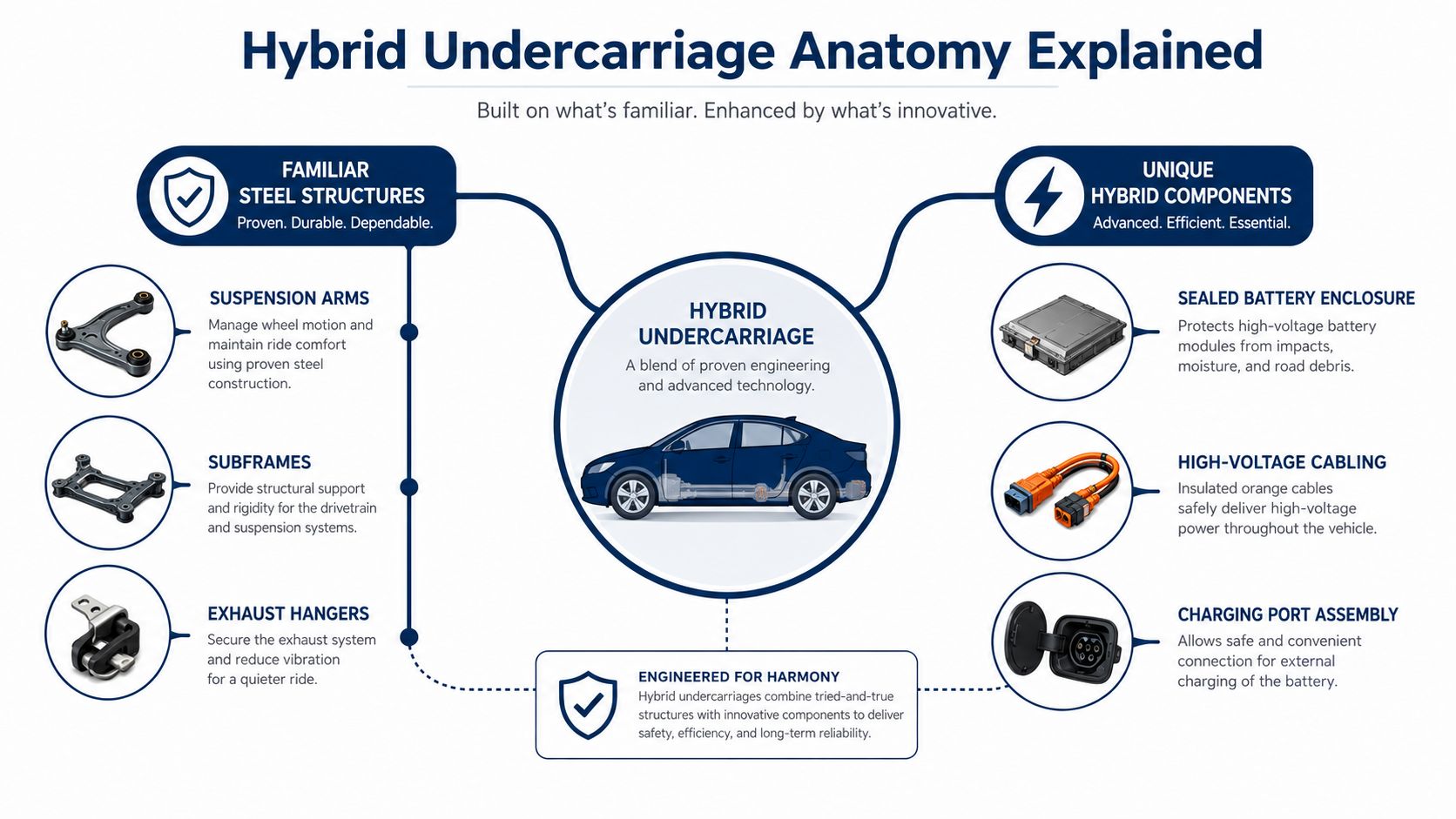
Think of a hybrid as a house with a modern electrical panel bolted onto an older foundation. The electrical panel requires special handling, but the foundation still needs protection from water. Under a hybrid, the battery and its related hardware are the specialised system. The steel floor, seams, brackets, and suspension structures remain familiar corrosion targets.
The steel structures still carry the rust risk
Most hybrids share important underbody components with conventional cars:
- Floor pans and seams: These folded and joined steel sections can hold moisture and salt in overlapping edges.
- Subframes and suspension mounts: These carry loads and often sit in the spray path from the front wheels.
- Rocker panels and structural sections: Their cavities can trap damp road debris.
- Brake lines and fasteners: Salt exposure can attack exposed metal and threaded connections.
- Brackets and exhaust-related hangers: Even vehicles with hybrid-specific exhaust operation still use steel mounting hardware and supporting structures.
The battery pack doesn't replace the entire body structure. It occupies space within or beneath that structure, and the surrounding mounting points can still corrode. Hybrid rust-proofing guidance from Ultimate Detail makes the essential distinction clear: hybrid vehicles don't eliminate rust risk because corrosion-sensitive steel remains around the battery pack.
The components that change the job
A hybrid adds parts that demand a no-spray approach. The sealed battery enclosure, orange high-voltage cable routes, inverter housing, cooling lines, electrical connectors, and charging-related hardware must be identified before treatment begins. Their exact layout varies by model, so a technician shouldn't rely on a generic visual assumption.
The right target is adjacent steel, not the sealed electrical assembly. Cavity protection belongs inside suitable body cavities and seams. Underbody protection belongs on exposed metal surfaces that can be safely accessed without coating connectors, vents, service points, or high-voltage housings.
That distinction also explains why a hybrid isn't automatically more difficult to protect than a conventional car. It requires better inspection, more masking, and more disciplined product placement. The foundational corrosion problem remains familiar, while the restricted zones require model-aware procedure.
High-Voltage Zones Technicians Must Avoid
A shop that says “we spray everything underneath” isn't giving you reassurance. It's giving you a reason to leave. Hybrid rust proofing is safe only when the technician knows what must remain clean, accessible, and untreated.
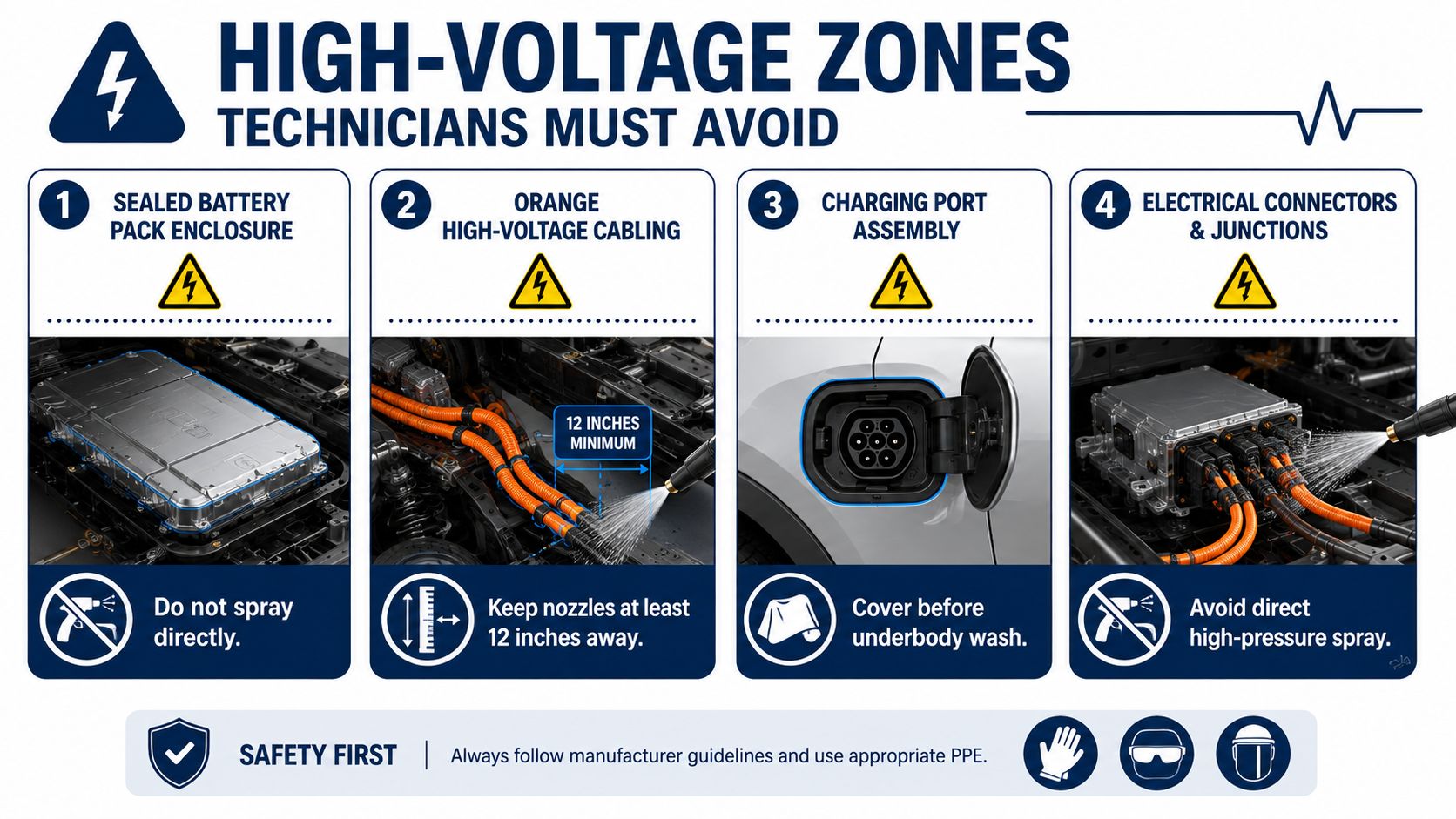
Four areas belong on the no-spray list
The sealed battery pack enclosure should not receive a direct coating. The enclosure is designed as a sealed protective housing, and adding product over it can complicate inspection or interfere with the way the system manages heat and service access. Protect the steel around the housing, including suitable seams and mounting structures, without treating the enclosure itself.
Orange high-voltage cabling requires visible respect. Don't bury cable surfaces, clips, protective conduits, or connection points under a thick product. The technician should trace the cable route, mask it where necessary, and direct the spray toward nearby steel rather than across the cable.
Charging port hardware needs protection from contamination and careless application. On plug-in hybrids, the charging port assembly includes electrical contacts and related components that shouldn't be flooded with oil, wax, or undercoating. The area should be covered or kept outside the spray pattern during underbody work.
Electrical connectors, junctions, and inverter-related hardware must remain clear. These parts are especially vulnerable to incorrect coating placement or aggressive pressure washing. Cooling lines and service access points also deserve attention because the technician mustn't block inspection or create a mess that hides a developing fault.
What a proper appointment looks like
The process should start with identification, not a spray gun. The technician confirms the hybrid or plug-in hybrid model, raises the vehicle safely using approved lift points, and visually maps the battery housing, cable routes, connectors, and charging hardware. A good inspection also checks existing rust, damaged shields, loose clips, drain holes, and areas where salt has accumulated.
Then comes masking and targeted application:
- Clean and inspect the underside. Dirt and salt should be removed so the technician can see seams and metal condition.
- Mask restricted zones. Battery housings, orange cables, connectors, charging hardware, and service points should be protected from direct product.
- Treat cavities selectively. Cavity wax or a suitable penetrating compound can reach seams and enclosed steel without flooding electrical areas.
- Coat exposed surrounding metal. Apply underbody product to appropriate steel sections, brackets, and mounting structures while maintaining clearance.
- Inspect the finished work. The technician should confirm that drain holes, labels, fasteners, lift points, and service access remain usable.
Independent guidance from NAPA Auto Parts on anti-rust treatment for hybrid and electric cars supports the practical position: hybrids can be treated like conventional vehicles when electrical components are avoided. Ask the shop to show you which zones it will mask. If the answer is vague, the procedure is vague too.
Comparing Rust Proofing Methods for Hybrids
The product category matters, but placement matters more. A well-applied oil or wax treatment can protect the right steel areas, while a poorly applied premium product can create problems around sensitive components. For GTA hybrids, I judge each method by penetration, cleanability, service access, and how confidently the technician can keep it away from high-voltage hardware.
The main options
Traditional oil-based spray stays fluid and works its way into seams, overlaps, and cavities. That penetration is useful on body seams and enclosed steel, but the product can drip, attract road dirt, and require regular inspection or reapplication. It also demands disciplined masking around electrical components.
Dripless oil or wax-based coatings form a thicker film with less mess. They can look tidier and remain in place on exposed surfaces, but a thicker film may not reach every narrow seam as effectively. The technician still needs to keep the material away from battery housings, connectors, cable routes, and service points.
Electronic rust modules avoid sprayed chemicals, which sounds appealing for a hybrid. Their effectiveness is controversial, and they don't physically fill a seam or create a barrier on exposed steel. I wouldn't treat an electronic module as a substitute for cleaning, inspection, cavity protection, or appropriate coating.
| Method | Hybrid safety | Seam penetration | Reapplication | Typical cost |
|---|---|---|---|---|
| Traditional oil-based spray | Safe when sensitive zones are masked and avoided | Strong penetration into suitable seams and cavities | Requires ongoing inspection and repeat treatment | Varies by provider and vehicle |
| Dripless oil or wax-based coating | Safe when applied selectively to approved steel surfaces | More limited in tight seams than fluid oil | Repeat treatment depends on wear and product condition | Varies by provider and vehicle |
| Electronic rust module | No spray exposure, but installation still needs care | Doesn't physically penetrate or coat seams | Maintenance depends on the system and installation | Varies by provider and vehicle |
My recommendation for Ontario hybrids
For most GTA owners, I favour a professionally applied fluid or wax-based treatment selected for the vehicle and placed only on suitable steel. Fluid products make sense where seams and cavities need access. A wax-based option can make sense on exposed areas where a stable film and cleaner finish matter more.
Don't choose by the product label alone. Choose a shop that can explain its masking procedure, lift-point plan, battery clearance, and post-application inspection. A hybrid-safe service is defined by controlled application, not by a marketing claim that the product works on every vehicle.
Combining Underbody Washing with Rust Protection
Rust proofing does not replace washing. Salt-laden slush still reaches wheel wells, brake lines, rocker panels, and frame rails. Ontario's heavy winter salt use, noted earlier, makes regular underbody cleaning necessary. Follow this winter salt-damage guidance for vehicle underbodies and remove contamination before it remains against treated or exposed steel.
Rinsing prevents the coating from doing all the work
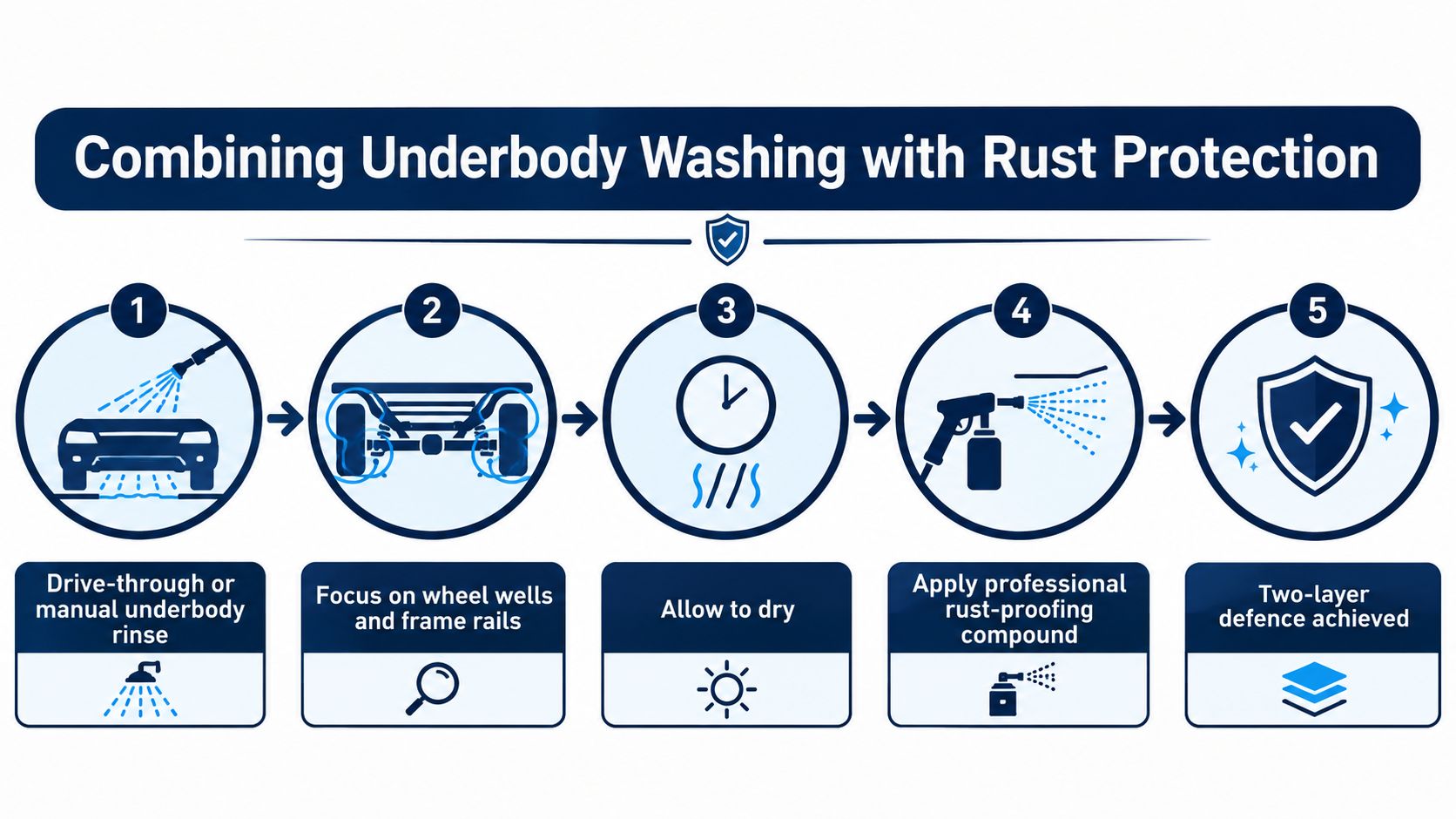
During active salting periods, rinse the underbody every 1 to 2 weeks. Prioritise the wheel wells, rocker panels, rear suspension areas, and visible frame or subframe sections. A drive-through underbody wash works for routine removal. Manual rinsing gives better control around packed debris and accessible cavities.
Use moderate pressure around hybrid equipment. Remove salt without forcing water into connectors or damaging protective shields. Keep a concentrated nozzle away from orange high-voltage cables, charging hardware, electrical junctions, and the battery enclosure. Those areas require avoidance, not aggressive cleaning.
Use the two-layer approach
A reliable routine combines cleaning with controlled protection:
- Rinse first: Remove loose salt and slush from the underside and wheel wells.
- Let the vehicle dry: Dry steel makes inspection easier and limits trapped moisture.
- Treat professionally: Apply rust-proofing compound to suitable steel seams, cavities, and surrounding structures, while keeping high-voltage zones clear.
- Inspect routinely: Check for exposed metal, damaged shields, blocked drains, or worn coating.
- Repeat the cycle: Washing preserves the treatment, while treatment protects areas a quick rinse cannot cover for long.
Washing and coating address different risks. Rinsing removes corrosive material from the vehicle. Rust proofing forms a barrier on appropriate steel and reaches spaces that washing cannot protect. Skipping either step leaves the other doing work it was never designed to handle. The safe result comes from both actions, performed with deliberate clearance around hybrid-specific components.
Warranty Concerns and Dealer Misconceptions
Many hybrid owners delay rust proofing because someone at a dealership says aftermarket treatment will void the warranty. That statement is too broad. A manufacturer or dealer generally can't reject unrelated warranty coverage merely because a rust-proofing product was applied. The practical issue is causation. If an incorrectly applied product directly contributes to a failure, the dispute becomes about that damage, not the mere existence of an aftermarket treatment.
Read the warranty booklet instead of relying on a casual service-counter warning. Separate the corrosion coverage from the hybrid-system or battery coverage, then keep the rust-proofing invoice, product description, date, vehicle identification, and any inspection notes. Documentation gives you a clear service history if questions arise later.
What responsible owners should document
- The treatment area: Ask the provider to record that the battery enclosure, high-voltage cables, connectors, charging hardware, and service points were avoided.
- The vehicle condition: Keep photographs or inspection notes showing existing corrosion, damaged shields, and exposed steel before application.
- The product and procedure: Retain the invoice and any care instructions, especially if the provider recommends future inspections.
- Dealer communication: If a dealer says coverage is void, ask them to identify the exact warranty clause and explain the direct connection between the treatment and the claimed failure.
Owners comparing broader protection for ageing vehicles can also compare extended car warranties, but an extended warranty doesn't replace proper rust prevention. It covers whatever its contract defines. It won't undo corrosion or make careless application acceptable.
The sensible position is simple. Rust proof the steel areas that need protection, leave high-voltage components untouched, and keep a clean paper trail. If a shop can't explain those boundaries, don't let it work underneath your hybrid.
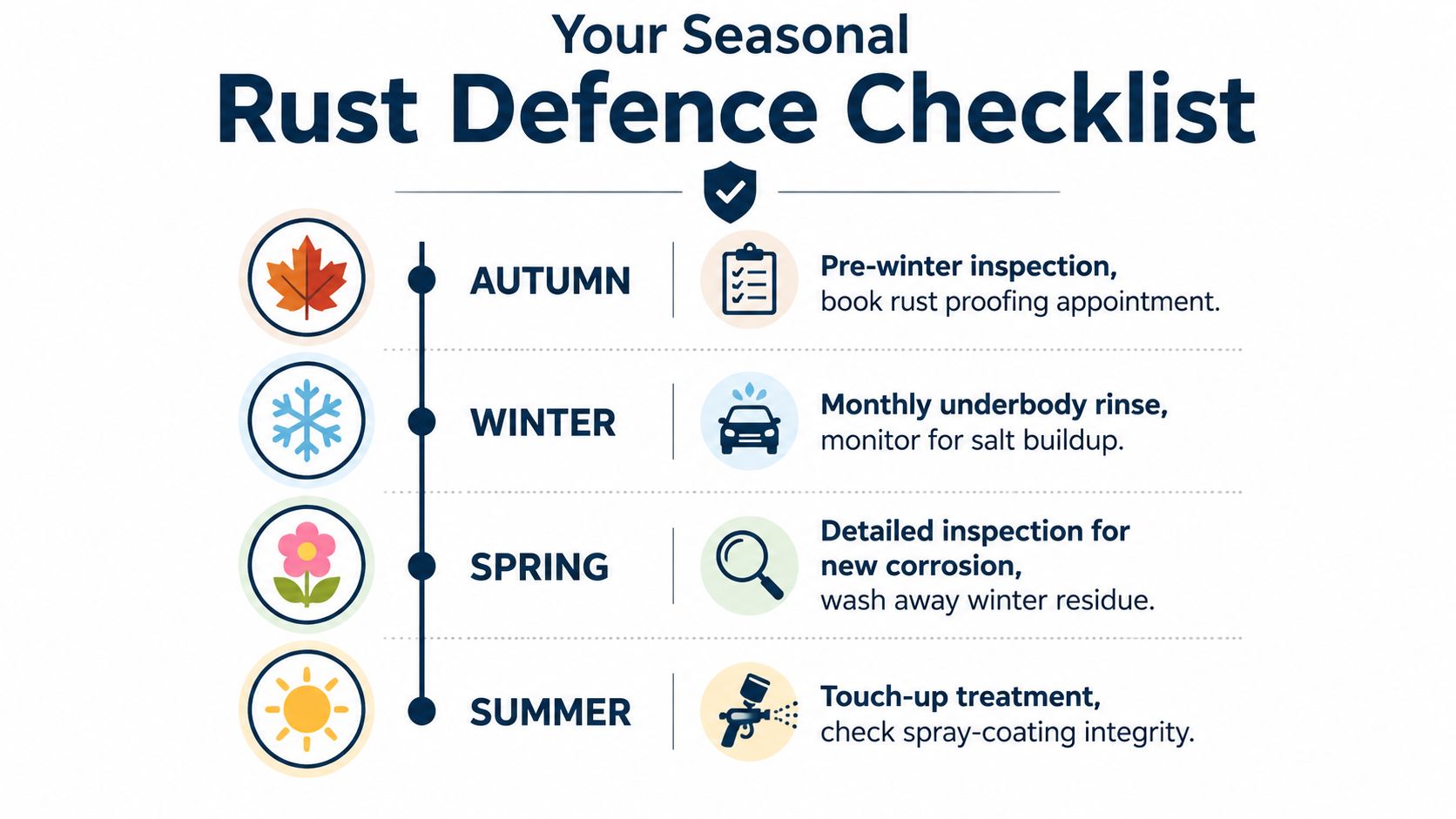
Your Seasonal Rust Defence Checklist
GTA hybrids need a routine, not a one-time appointment. Follow the calendar and adjust your attention when roads are heavily salted or the vehicle has driven through deep slush.
- Autumn: Inspect seams, rocker panels, brake lines, suspension mounts, and underbody shields before winter. Book professional rust proofing while the underside can be cleaned and examined properly.
- Winter: Rinse the underbody every 1 to 2 weeks during active salting periods, based on the practical guidance cited earlier. Check wheel wells and rocker panels after major snow and slush events, and don't ignore packed salt because the car still drives normally.
- Spring: Arrange a detailed underside wash to remove winter residue. Inspect for fresh corrosion, worn coating, loose shields, and blocked drainage points.
- Summer: Have the treatment checked while the vehicle is dry. Touch up suitable exposed steel or cavities where the coating has worn, and schedule the next application before the following salt season.
The Ontario study cited above found untreated body panels with 6.8 times more measurable corrosion, untreated underbody parts with 3.6 times more, and combined areas with 3.9 times more than treated vehicles. That makes the yearly inspection worth doing, but the provider must understand hybrid-specific masking, lift points, cable routes, and battery clearances.
If your hybrid has spent the winter collecting GTA salt, visit Nanak Car Wash for an underbody wash, detailing support, and rust-proofing service designed around vehicle size and exposed steel areas. Ask the team to identify the high-voltage zones before application, then make underbody rinsing part of your regular winter routine.


 6600 Finch Ave W, Etobicoke, ON M9V 3Z6
 647-703-8515
 MON – SUN 8 AM to 7 PM