
You're probably already doing the Mississauga winter shuffle. You blast down the QEW or Hurontario, the roads are grey with brine, the wheel wells collect slush, then the car sits outside long enough for everything underneath to stay damp. That's exactly how rust gets a foothold, and why rustproofing in Mississauga isn't a vanity add-on, it's routine maintenance that belongs on the same list as oil changes.
The local market exists because Ontario winters keep feeding salt and moisture into seams, pinch welds, and underbody joints. CAA guidance in Canada recommends annual rustproofing, and Ontario pricing usually sits in the low hundreds, with Rates.ca noting a typical complete package at $130 to $170 and Rust Check putting common pricing at about $100 to $180 depending on vehicle size (Rates.ca). In Mississauga, local pricing lines up with that reality, including Nanak Car Wash's published rust proofing at about $119.95 to $149.95 plus tax for size-based tiers.
If you want a plain-English companion for the corrosion side of the story, the write-up on cleaning and coating for rust prevention is useful because it reinforces the same basic truth. Clean metal, covered properly, survives winter better than dirty metal with a half-hearted spray.
Table of Contents
- Why Mississauga Drivers Need Rustproofing Every Year
- How Rustproofing Works Under the Car
- The Main Rustproofing Methods Compared
- What Nanak Car Wash Rustproofing Actually Includes
- When to Book Rustproofing in the Ontario Calendar
- Common Rustproofing Myths GTA Drivers Should Ignore
- What Rustproofing Costs in Mississauga Today
- Booking Rustproofing and Next Steps for Your Vehicle
Why Mississauga Drivers Need Rustproofing Every Year
A Mississauga winter doesn't just put salt on the road, it keeps the underside of your vehicle wet and salty for months. That's the problem. Salt lowers the freezing point of water, so slush keeps hanging around instead of drying out cleanly, and the wet film gets forced into the places you never see, like seams, overlaps, weld points, and enclosed cavities.
That's why I tell people to stop thinking of rustproofing as a “nice to have”. It's a recurring defence against a recurring climate problem. CAA's annual recommendation fits the local reality because winter salt exposure doesn't respect model years or badge names, and even newer vehicles still spend every season getting sprayed from below.
Why waiting makes the bill worse
Rust is easier to slow down than to fix. Once corrosion gets a start in hidden steel joints, you're no longer paying for prevention, you're paying for cleanup, repairs, and a lot more labour.
The old Canadian lesson here matters. The Automobile Protection Association says a CAA study in the 1980s found that 85% of dealer-applied rustproofing left one or more high-risk areas unprotected (APA). That history is exactly why reputable shops still talk about underbody coverage, seams, and annual renewal instead of pretending rust can be eliminated forever.
Practical rule: if the car is driven through salted winters, treat rustproofing like a calendar item, not a rescue mission.
The last thing I'll say on this is simple. If the vehicle is already old and showing corrosion, you've missed the cheap phase. Prevention is still worthwhile, but it gets more expensive in time and attention once rust has started spreading into the structure.
How Rustproofing Works Under the Car
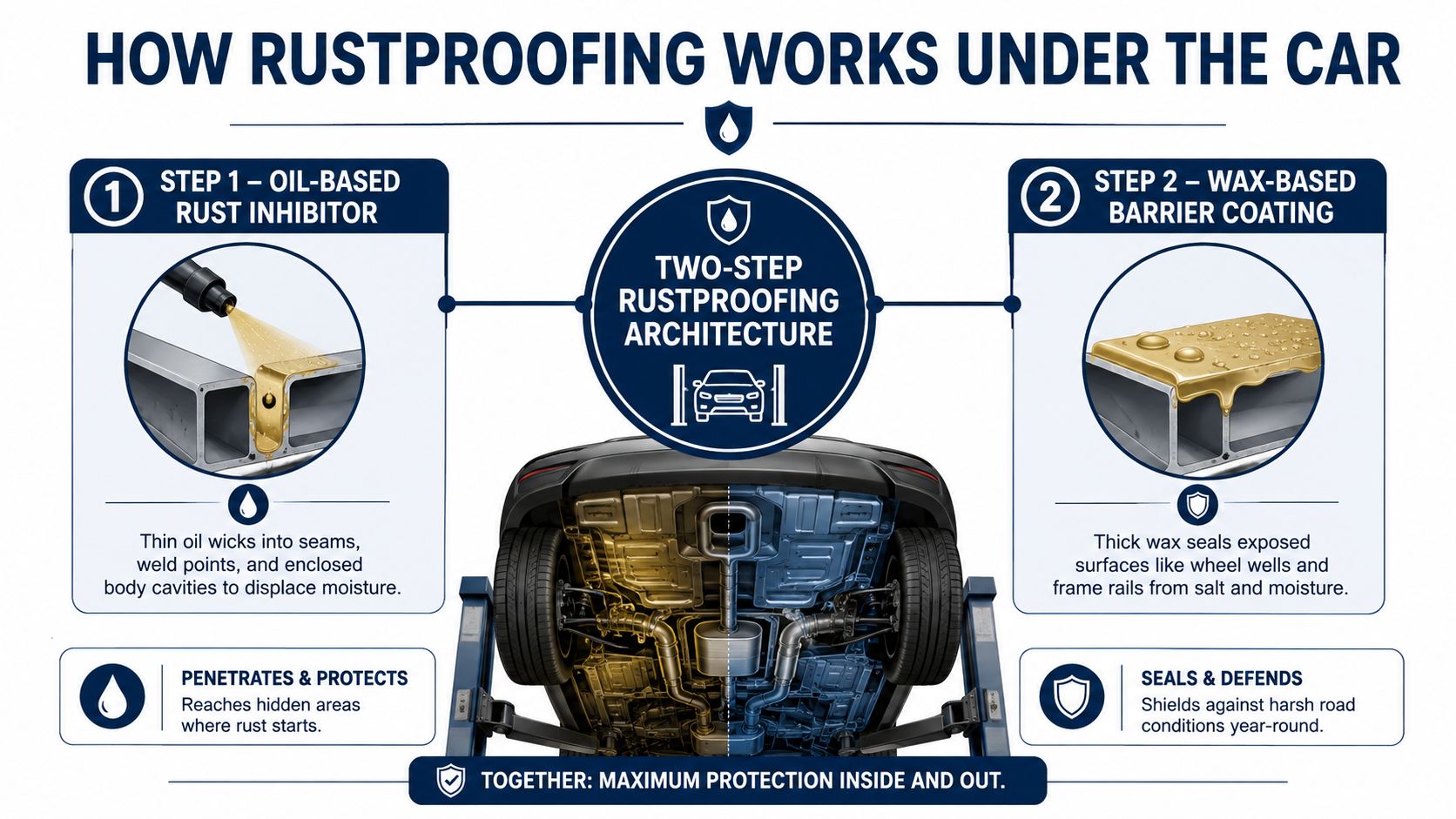
The best Mississauga rustproofing jobs do not rely on one product to do all the work. They use a two-step approach. First comes a thin oil-based inhibitor that moves into places brushes and spray guns cannot reach. Then comes a tougher underbody layer that takes the abuse from road spray, chips, and winter grime.
The difference is where the product reaches. Oil has to get into seams and cavities, while the outer layer has to hold up on exposed metal. If you only coat the surface, you leave the hidden steel to fight salt and moisture on its own.
The part that matters most is inside the metal
Corrosion does not begin on the visible flat panel most drivers stare at in the driveway. It starts where moisture gets trapped, inside seams, weld points, pinch welds, and enclosed cavities. That is why a professional oil spray is designed to work through capillary action and polar attraction, so the inhibitor creeps into tight spaces and displaces moisture where metal joints are vulnerable (Rust Check).
The second layer matters too. A higher-viscosity underbody coating acts as a wash-off and abrasion barrier against chloride-laden spray from winter roads. That combination is stronger than a one-step approach because Mississauga driving means repeated exposure to slush, salt, and spray, not a dry road and a clean underside.
Timing is part of the chemistry
A clean, dry vehicle matters because oil needs a surface it can migrate across. Warm metal helps too, which is why late summer or early fall is the sweet spot. By then, the vehicle is dry, the body is warm, and the product has a better chance to work into the hidden areas before winter starts hammering the underside again.
Apply it to a dirty, wet vehicle and you are making the product fight grime before it can reach the steel.
Good shops care about prep for a reason. The chemistry is only half the story. The other half is whether the vehicle was ready to accept the treatment in the first place.
The Main Rustproofing Methods Compared
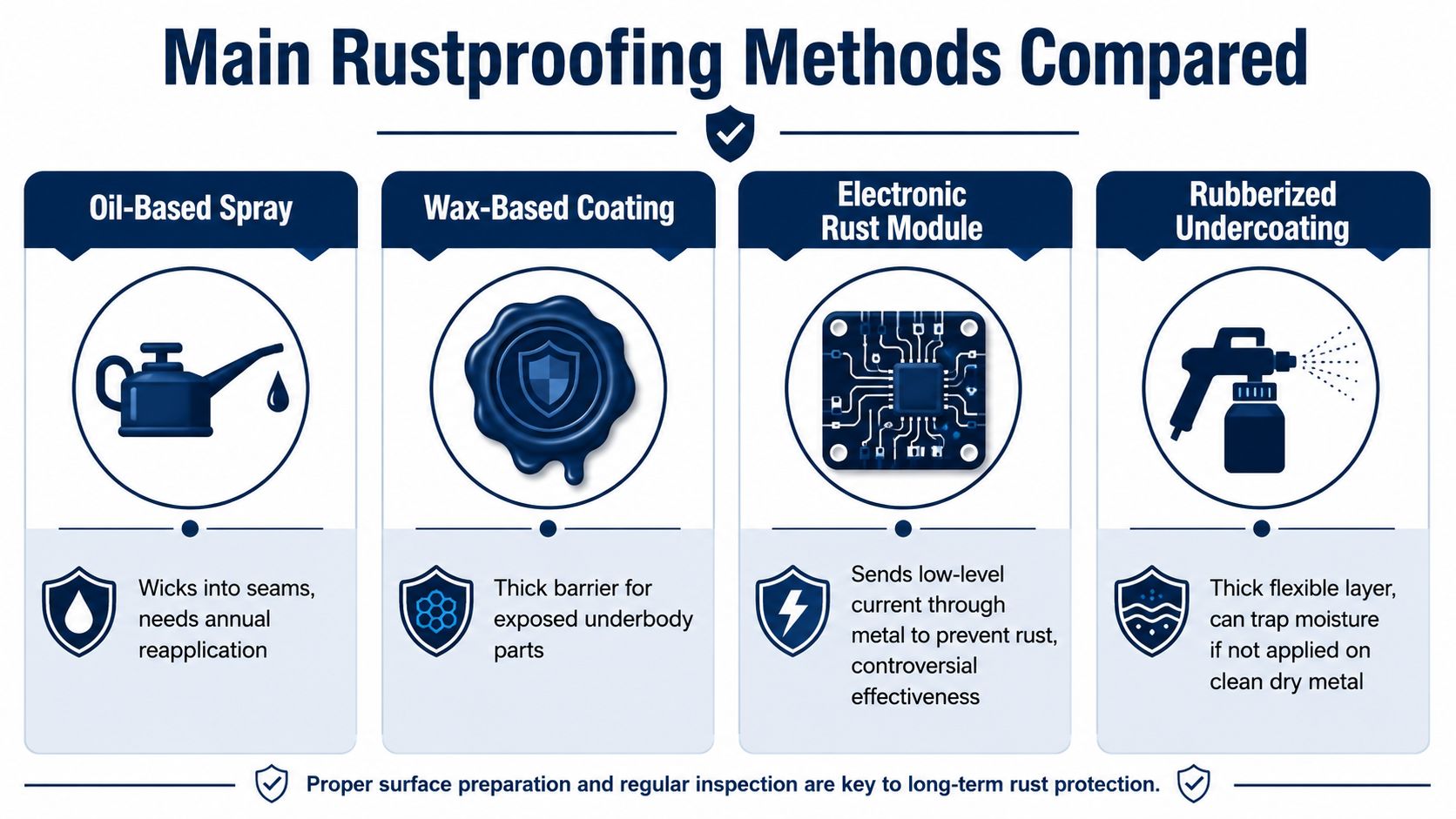
A rust protection quote only tells you something useful if you know what is inside it. Mississauga drivers usually end up choosing from four broad methods, and they are not equal. Compare them on cavity penetration, underbody durability, recurring cost, and fit for Ontario winters, and the weak options show themselves fast.
What each method does
- Oil-based spray: It moves into seams and cavities, which is where winter corrosion starts. It needs annual reapplication because that is how the protection model works.
- Wax-based coating: It forms a tougher barrier on exposed underbody parts, so it suits surfaces that take the most spray and abrasion.
- Dealer-applied or factory rustproofing: The old weakness still matters. Coverage was often incomplete, and that is why aftermarket inspection and renewal stayed relevant in Canada.
- DIY spray-can products: These are touch-up products, not a replacement for professional treatment. They can help on small exposed spots, but they do not match controlled cavity access or full underside coverage.
Why the oil-and-underbody mix wins here
Ontario's salt season is hard on any one-step surface coating. A coating that only protects what you can see leaves hidden cavities exposed, and that is where the rust cycle starts. For Mississauga, a two-step setup makes more sense than a quick spray from an auto-parts shelf.
The practical question is simple. Does the treatment protect both the internal cavities and the exposed underside, or only one of them? If it only handles one side of the job, you are buying less protection than the quote suggests.
What Nanak Car Wash Rustproofing Actually Includes
Nanak Car Wash's rust proofing sits in the practical middle of the market, which is where most GTA drivers should be shopping. The published pricing is tiered by vehicle size, roughly $119.95 to $149.95 plus tax, and the service is built around a dedicated chemical compound rather than a generic splash-and-go coating (Nanak Car Wash promotions).

What you're paying for
The point of a size-based tier is labour and coverage. A small car is quicker to treat than a larger SUV, van, or truck, and bigger vehicles also expose more underbody area and more joints that need attention. That's why the price isn't flat.
Nanak's appeal is consolidation. The same place can handle the wash, the underbody rinse, and the rust protection, so you're not driving around the GTA to patch together separate appointments. For drivers who already use the Unlimited Wash Club or visit regularly for salt removal, that setup makes sense because the car is being cleaned and protected in the same routine.
The company also lists express exterior washes, full-service washes, detailing, prepaid tickets, and membership options under one roof. That matters because winter protection is not just one appointment, it's a workflow. Salt gets removed, the car gets dried, and the rustproofing is applied when the vehicle is ready for it.
If your vehicle sees repeat salt exposure, a single location that handles washing and rust protection is cleaner operationally than juggling three different shops.
The practical takeaway is blunt. You're not buying a miracle coating. You're paying for a size-based annual treatment that fits into a broader car-care routine, which is exactly how Mississauga vehicles stay cleaner underneath for longer.
When to Book Rustproofing in the Ontario Calendar
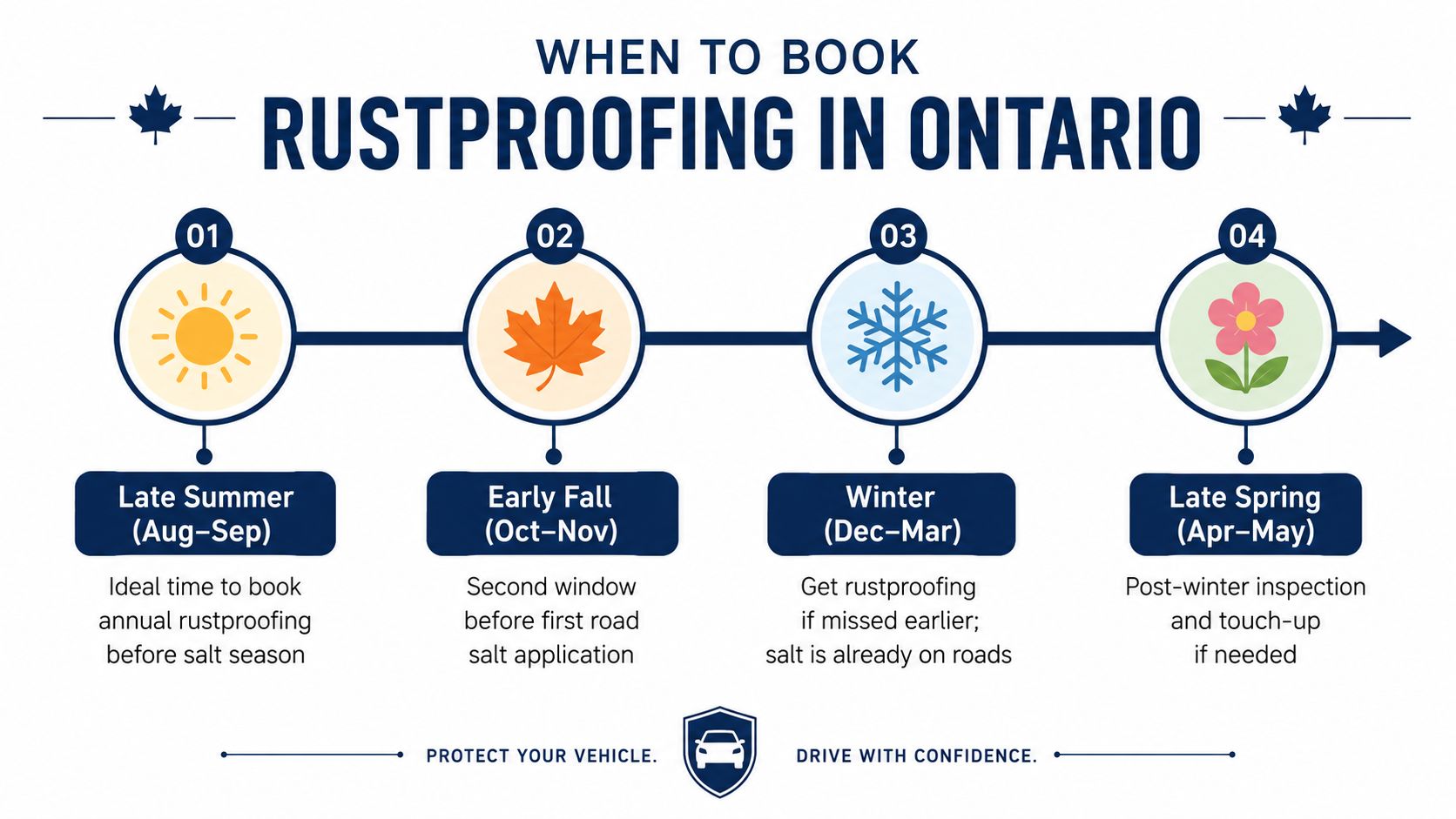
Late summer and early fall are the serious booking windows. That's when the vehicle is warm, the metal is dry, and the treatment can reach hidden areas before road salt starts chewing through the season. If you miss that window, winter booking is still better than waiting until spring, because the salt is already doing its work.
A simple year-round rhythm
- Late summer and early fall: book the annual rustproofing appointment before the salt season starts.
- During winter: keep rinsing the underside so the salt doesn't sit there all week.
- After the last spring salt wash-down: get a full clean and inspect the underside for any damage.
- Every fall: look over seams, pinch welds, and visible edges before the next cycle starts.
That's the same logic behind a preventive maintenance plan in any serious fleet schedule. If you want a broader framework for organising recurring service without forgetting the seasonal jobs, the fleet maintenance schedule tips from Fleetalyse line up well with the way corrosion prevention has to be handled in Ontario.
Match the season to the service
A regular underbody rinse belongs in the wash routine because you're not trying to make salt vanish through wishes. You're physically removing it before it lingers. A full detail or reset after winter makes sense because that's when you can inspect what happened during the worst months.
Don't overcomplicate the schedule. Book the rustproofing before winter, keep the underside cleaner through the salt months, then inspect and reset in spring. That cycle repeats because Ontario winters repeat.
Common Rustproofing Myths GTA Drivers Should Ignore
The first myth is that factory or dealer rustproofing is a lifetime solution. It isn't. Even with modern galvanised panels, the weak points are the seams, the edges, and the joints that keep getting hammered by wet salt every winter. The historical reason aftermarket services exist is that dealer coverage was often incomplete, and that problem never stopped mattering just because vehicles got newer.
The second myth is that a can of underbody spray from an auto-parts store replaces a professional treatment. It doesn't. A DIY spray can coat visible areas, but it can't match the controlled access, cavity penetration, and coverage discipline of a proper shop application. It's the difference between touching up a chip and protecting the whole panel.
What people usually get wrong
- “My car is newer, so I don't need it.” Newer steel still sees the same winter salt.
- “The dealer already did rustproofing once.” One application doesn't turn into an annual maintenance plan by magic.
- “I can just spray the underside myself.” You can do spot treatment, but you're not recreating professional cavity protection in your driveway.
The bigger mistake is thinking rust is a cosmetic issue until the resale value drops. It shows up first in hidden places, then it starts costing money in repairs you didn't budget for. Prevention is cheaper because it happens before the metal gets rough, swollen, and hard to save.
What Rustproofing Costs in Mississauga Today
A sensible quote in Mississauga should line up with the wider Ontario market, not look like a number someone guessed at the front counter. Rates.ca puts a typical complete package at $130 to $170, while Rust Check says prices commonly sit around $100 to $180 per treatment depending on vehicle size. Nanak's published size-based tiers at about $119.95 to $149.95 plus tax fit within that range.
| Service Tier | Typical Ontario Range | Nanak Car Wash Published Tier | Best For |
|---|---|---|---|
| Compact car rustproofing | Around the low hundreds to mid hundreds, depending on shop | About $119.95 plus tax | Smaller daily drivers that still face winter salt |
| Mid-size vehicle rustproofing | Around the low hundreds to mid hundreds, depending on shop | Middle tier within the published range | Sedans and crossovers used through the salt season |
| Larger vehicle rustproofing | Around the higher end of common Ontario pricing | About $149.95 plus tax | SUVs, vans, and trucks with more underbody area |
| Annual protection plan | Repeated yearly spending is the normal model in Ontario | Membership and wash bundling can help spread visits out | Drivers who want routine maintenance, not one-off fixes |
What the price should include
You are paying for time, product, and access. A proper technician has to cover seams, cavities, and the exposed underside carefully, not just mist the visible metal and move on. Bigger vehicles cost more because they bring more surface area, more hardware, and more labour under the car.
If you drive an SUV, van, or truck, expect related interior or detailing services to cost more as well. That isn't a scam, it's a matter of vehicle size and labour time. If you already wash often, bundling rustproofing with a wash or membership makes the routine easier to keep up without turning it into a once-a-year emergency bill.
Booking Rustproofing and Next Steps for Your Vehicle
Pick the rustproofing tier that matches the vehicle's size, then book it before the salt season gets going. If you already use wash services, bundle the appointment with an express or full-service visit so the car goes in cleaner and comes out ready for winter.
For drivers who want a simple benchmark beyond Mississauga, the rustproofing for Lincoln cars page from GP Mobile Car Wash & Detail is a useful reminder that the same annual logic applies across Ontario vehicle types. Different vehicle badges don't change the basic job, clean metal and full coverage still matter.
Nanak Car Wash lists locations across the GTA, including Etobicoke, Brampton, Concord, Oshawa, North York, Burlington, Cambridge, and Guelph, so the practical move is to book at the closest one and keep the yearly cycle moving. Bring a reasonably clean, dry vehicle if you want the treatment to penetrate properly, then set a reminder for next fall so you're not making the decision after the roads are already white with salt.
Nanak Car Wash already offers the core services Mississauga drivers need, rust proofing, washes, and membership options that fit a winter maintenance routine. If you want one place that can handle the underside, the salt rinse, and the seasonal reset, visit Nanak Car Wash and book the visit before winter eats into another underbody.

 6600 Finch Ave W, Etobicoke, ON M9V 3Z6
 647-703-8515
 MON – SUN 8 AM to 7 PM