
You've scrubbed the white ring from your car carpet, left the doors open, and waited for it to dry. The next morning, the stain is back, usually sharper around the edges. That frustrating repeat isn't a sign that you need to scrub harder. It usually means dissolved salt has moved into the carpet backing or padding and travelled back to the surface as the moisture evaporated.
For GTA drivers, winter salt isn't a minor seasonal nuisance. Ontario uses about 1.5 to 3 million tonnes of road salt each winter, while Toronto alone uses roughly 130,000 to 150,000 tonnes annually, according to this Ontario road-salt and corrosion summary. The right salt stain remover carpet method has to dissolve the mineral residue, lift it gently, and remove the dirty solution without soaking the interior.
Table of Contents
- Why Ontario Salt Stains Keep Coming Back
- The Low-Moisture Vinegar Method for Salt Stains
- When to Upgrade to Commercial Extractors and Neutralizers
- The Hidden Danger of Over-Wetting Your Car Carpet
- When DIY Fails and Professional Detailing Becomes Essential
- Your Winter Carpet Maintenance Checklist
Why Ontario Salt Stains Keep Coming Back
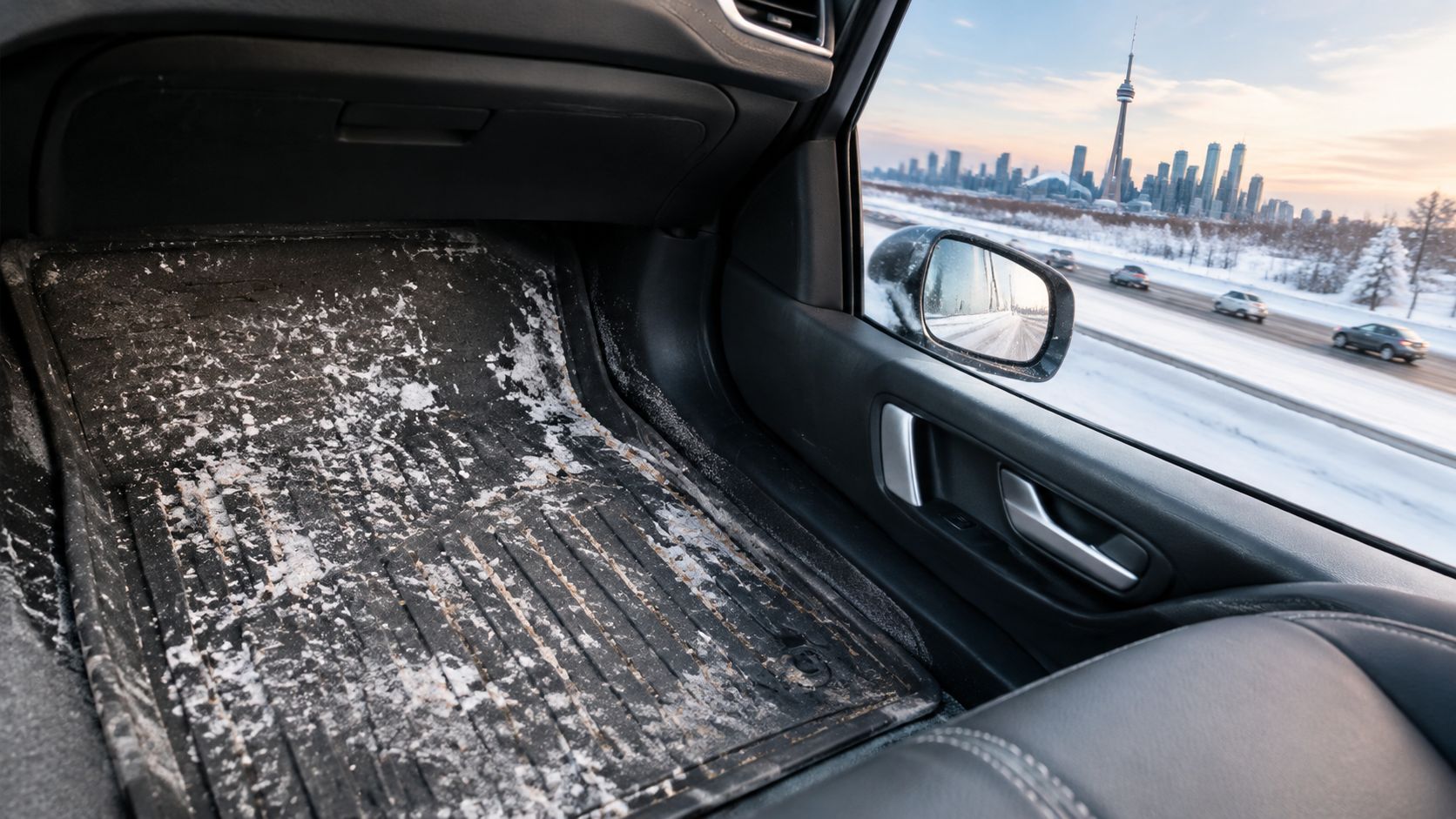
A typical winter commute tells the story. Snow melts on your boots, the water turns grey with road brine, and your floor mat catches most of it. Some still reaches the carpet beneath, especially around the pedals, seat rails, door openings, and the raised edges of removable mats. After the surface dries, white crystals remain. You vacuum them, spray a cleaner, wipe the area, and think the problem is finished.
Then the ring returns.
Salt is water-soluble, so moisture can carry it below the visible carpet fibres. A surface wipe may remove what you can see while leaving residue in the backing. As the carpet dries, that moisture moves upward and deposits the dissolved salt at the edge of the treated area. That process explains why a clean-looking patch can develop a fresh white outline later.
GTA winter conditions raise the stakes
Ontario's salt load combines with freeze-thaw conditions for roughly five to six months each year, as reported in the same Ontario winter corrosion reference. That gives drivers repeated cycles of wetting, drying, tracking, and re-wetting. A carpet that's only lightly marked in early winter can become a layered contamination problem by spring.
The residue also matters beyond appearance. A historical corrosion study recorded Toronto atmospheric corrosion at 5,108 mg/dm² over 19 months, one of the highest figures in its multi-city comparison, according to the historical corrosion paper summarised for Toronto drivers. Salt and moisture that remain around the floor can create an unfavourable environment for metal components beneath the interior.
Practical rule: If a white stain reappears after drying, treat it as contamination below the visible surface, not as a mark that needs more aggressive scrubbing.
The chemistry is also why ordinary carpet shampoo often disappoints. Shampoo can make the fibres look brighter while leaving dissolved mineral residue behind. The reliable process is controlled moisture, enough dwell time to dissolve the crystals, gentle agitation, and extraction that physically removes the slurry.
The Low-Moisture Vinegar Method for Salt Stains
For moderate, surface-level salt buildup, a low-moisture vinegar treatment can work well when the carpet and padding are still mostly dry. Vinegar dissolves the crystals, while controlled application limits how far moisture travels. Flooding the carpet, skipping dry vacuuming, or stopping after wiping leaves dissolved salt below the visible fibres and can produce another white ring as the area dries.
Gather a dry vacuum, spray bottle, white vinegar, warm water, soft carpet brush, clean towels, and an extractor if available. Test the solution in a hidden area first, especially on coloured or delicate carpet.
Follow the process in order
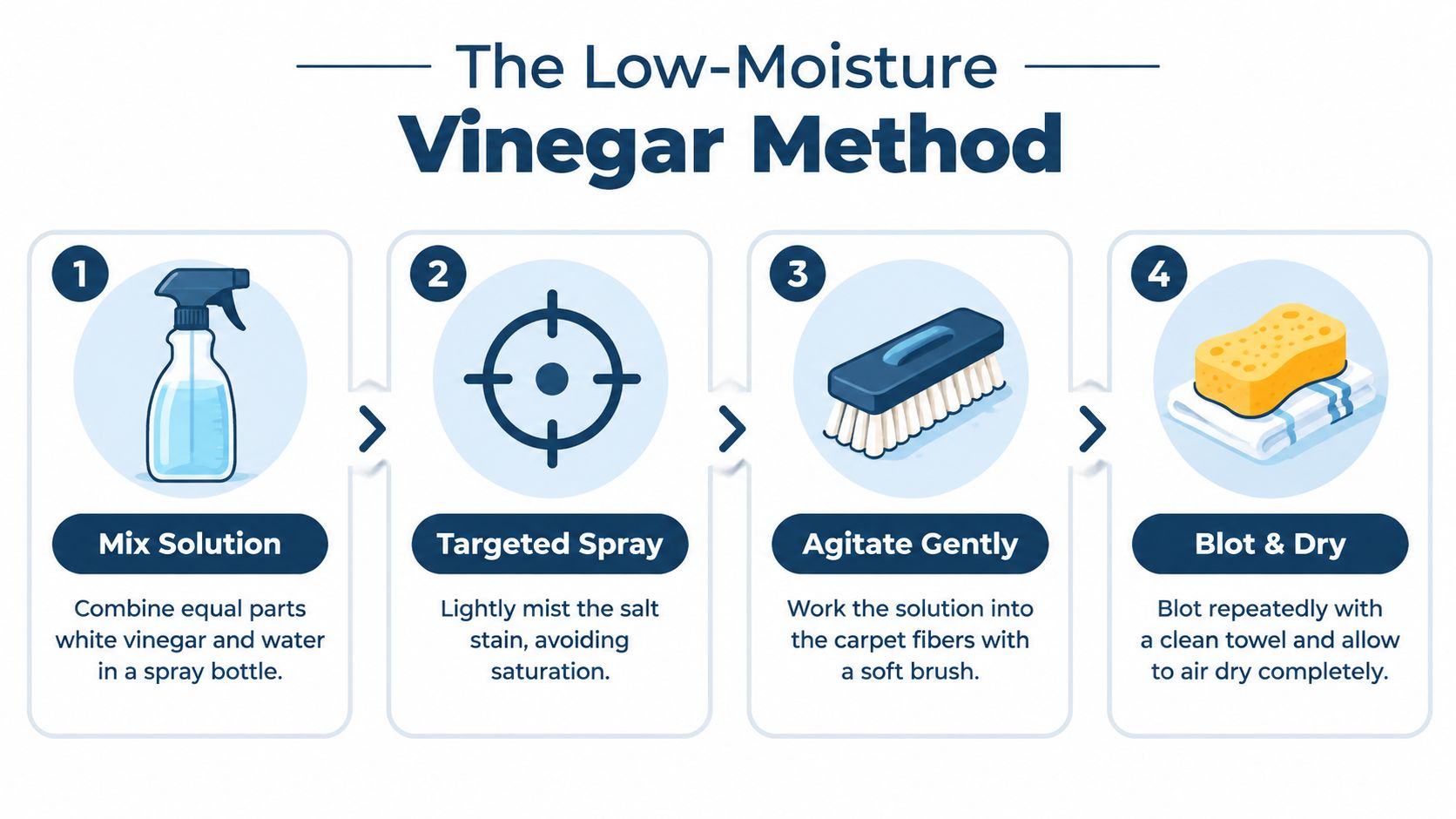
Vacuum the carpet while it's dry. Make several slow passes over the stain and along seams. Remove loose salt crystals and grit before moisture turns them into slurry.
Mix equal parts white vinegar and warm water. A 1:1 solution is the recommended starting point for winter car-carpet cleaning in the GTA, according to this GTA salt-stain removal guide.
Mist the stain lightly. Never pour the mixture onto the carpet. Dampen the affected fibres without allowing the solution to reach the backing or padding.
Let it dwell for 3 to 5 minutes. This gives the solution time to dissolve the crystals. The area should remain controlled, not visibly soaked.
Agitate with a soft brush. Work in several directions using light pressure. Hard scrubbing can mat the pile and move dissolved residue beyond the original stain.
Extract immediately. Use a carpet extractor, wet vacuum, or clean towel to lift the loosened solution. Blotting removes surface moisture, while extraction pulls more liquid from the carpet pile.
Keep the carpet damp, not soaked
Moderate buildup will often respond in one pass. If a white edge returns after drying, repeat the dampen, agitate, and extract cycle instead of adding a large amount of solution at once. Ontario detailing guidance for salt removal recommends drying with open doors or windows, or using fans for several hours.
The moisture threshold matters. A towel can make the surface look clean while dissolved salt and water remain lower in the pile or padding. If the backing feels damp, stop applying solution. Without effective extraction, a larger stain is safer to handle with professional equipment.
Avoid mixing vinegar with other chemicals. Do not use this method on already wet carpet, and do not keep reapplying it when moisture has reached the backing. More liquid does not provide more cleaning. For heavy Ontario salt buildup, repeated rings, or damp padding, professional extraction is the more reliable option.
When to Upgrade to Commercial Extractors and Neutralizers
Vinegar suits a small, recent deposit. It becomes the wrong tool when the carpet has crusted salt, recurring white rings, a clammy feel, or an odour. Those signs point to contamination below the visible fibres. The job is to dissolve residue through the pile, then recover the moisture before it reaches or remains in the backing.
Commercial products help when the buildup exceeds what a towel or household wet vacuum can recover. Canadian equipment guidance recommends an extractor dilution of 1:120 and warns against hot solutions or chemical mixing. The same Canadian salt-stain prevention and extraction guide also describes full-strength treatment for heavy stains, a 1:1 dilution for light stains, and a 3 to 5 minute dwell before brushing and shampooing. Follow the product label rather than treating these ratios as universal.
Match the method to the contamination
| Condition | More suitable approach | Main limitation |
|---|---|---|
| Light white residue on the surface | Low-moisture 1:1 vinegar and water, followed by extraction | Repeated application can over-wet the carpet |
| Crusted or widespread buildup | Purpose-made neutralizer at the manufacturer's dilution | Requires careful chemical handling |
| Salt mixed with mud and road grime | Pre-treatment, gentle agitation, then extractor rinse | Blotting alone can leave dissolved residue |
| Reappearing rings after cleaning | Deeper rinse and mechanical extraction | The backing may need more drying time |
Neutralizers target mineral residue rather than ordinary oily soil. Start with dry vacuuming, apply the approved chemistry, allow the required dwell, agitate gently, then extract with clean water or the specified rinse. Do not pour neutralizer into an extractor unless the instructions permit it. Keeping treatment chemistry separate from the rinse protects the machine and makes the result easier to control.
A strong extractor can recover much of the loosened slurry after blotting, provided the carpet was vacuumed first and the solution had time to dwell. That recovery depends on technique, not the machine alone. Skipping dry removal or rushing the dwell leaves more salt behind, while aggressive spraying can push moisture into the padding.
Equipment decision: If you cannot control both application and recovery, adding more chemical will not solve the problem. Upgrade the extraction step instead.
The Hidden Danger of Over-Wetting Your Car Carpet
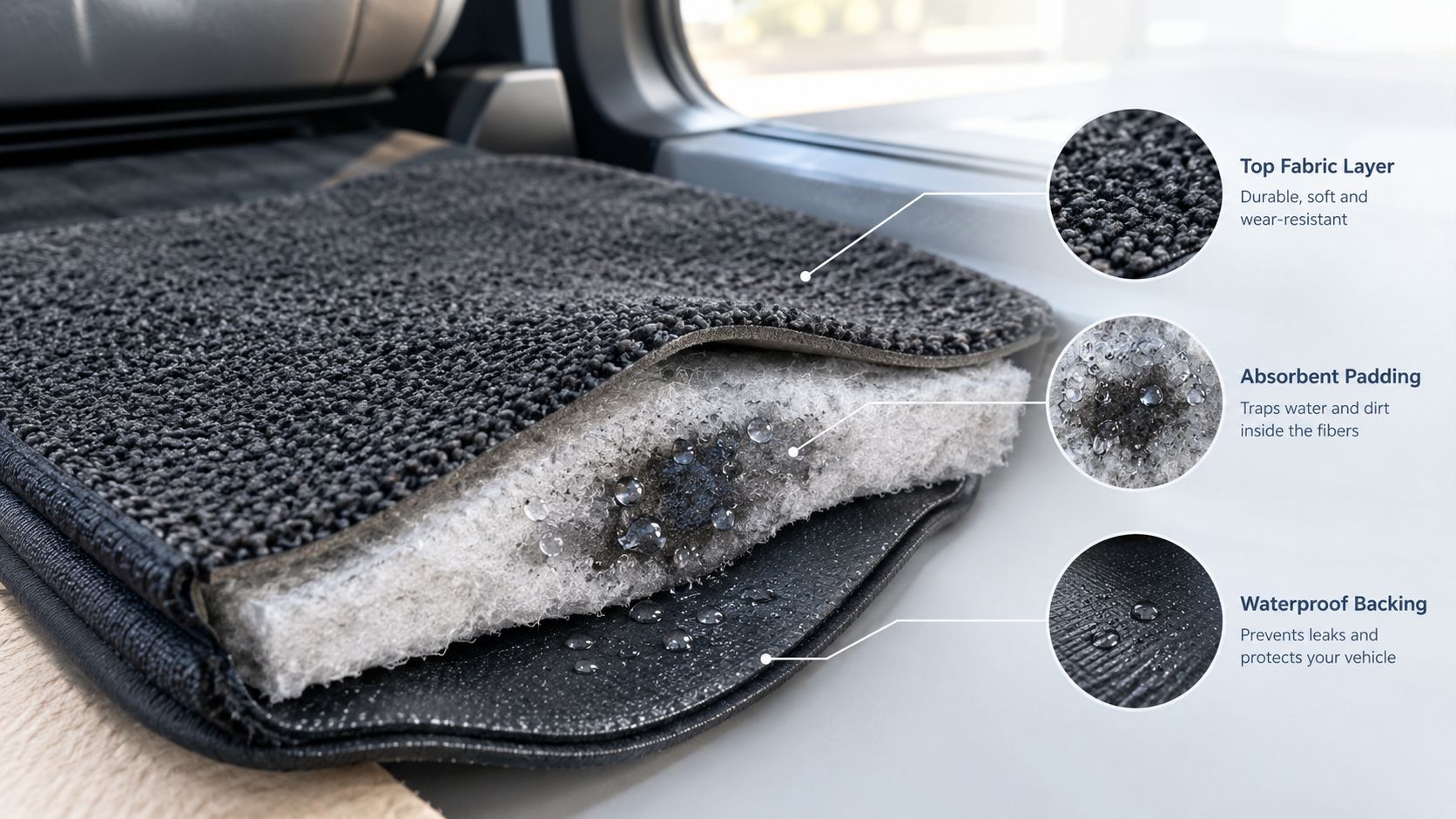
The safe working limit is simple: make the carpet damp enough to dissolve the residue, but not saturated enough to wet the padding. Cross that threshold and a quick vinegar treatment can create a larger drying problem than the original stain. Carpet density, backing construction, temperature, ventilation, and stain size all change how much liquid the area can tolerate, so watch the material while you work rather than relying on a fixed amount.
Stop and reassess if:
- The backing feels wet: End solution application and switch to extraction or careful blotting.
- The stain spreads outward: Too much liquid is carrying dissolved residue beyond the working area.
- The carpet stays clammy: Moisture may be held below the visible fibres.
- The odour changes after cleaning: Damp material beneath the carpet may need stronger recovery and drying.
- The white edge returns: The treatment may have shifted residue instead of removing it.
A small mark on a removable mat can often tolerate a controlled, low-moisture vinegar solution. A built-in carpet over damp padding is different. Repeated spraying increases the chance of mildew and leaves you with a slower, less predictable drying process. Ontario detailing guidance warns that soaking can push dissolved salt into padding and make drying harder, as explained in this GTA road-salt carpet cleaning reference.
Drying determines whether the job worked
Open the doors or windows when conditions allow, and move air across the carpet with fans. Keep wet mats off the treated area. They trap moisture against the carpet and slow evaporation.
If the carpet remains damp below the surface, stop repeating home treatments. A professional extractor can recover moisture that towels cannot, while controlled airflow gives the padding a better chance to dry. For heavy Ontario salt buildup, that combination is safer than adding more vinegar and hoping the white marks disappear.
Persistent dampness also deserves attention beneath the interior. Salt and moisture can contribute to corrosion around metal components. Ontario corrosion research found measurable steel loss from treated road salt in exposure testing, with average rebar weight loss of 0.2117%, compared with 0.2433% for standard road-salt exposure, according to this Ontario and TAC-linked steel corrosion study. Carpet cleaning cannot repair corrosion already present, but prompt removal and thorough drying reduce the salt and moisture left against the vehicle.
When DIY Fails and Professional Detailing Becomes Essential
A spray bottle and towel have a place. They're useful for a small, fresh mark on a removable mat. They're not the right equipment for carpet that has absorbed repeated winter contamination.
Book professional interior detailing when the stain returns after a careful low-moisture treatment, when the carpet feels damp below the surface, or when odour remains after drying. The same applies when salt covers a broad section of the footwell, has reached seat rails and seams, or has mixed with mud, food, pet hair, and other material that needs separate treatment.
Use the result, not the appearance, as your test
A carpet can look clean immediately after wiping and still contain dissolved salt underneath. Professional hot-water extraction uses controlled solution and suction to rinse contaminants out of deeper fibres and backing. It also gives the operator a way to recover moisture rather than leaving it to migrate through the interior.
For GTA vehicles, that distinction matters. A commuter car may accumulate residue gradually, while a ride-hail vehicle, delivery vehicle, SUV, or fleet unit can receive repeated wet footwear and mat contamination with little time between trips. Thick carpet and packed debris make drying a practical constraint, not just a cosmetic concern.
Nanak Car Wash lists interior and exterior detailing packages that include carpet and seat shampooing, salt and stain removal, vent and crevice blowout, and leather deep cleaning. The service information also notes typical appointment durations of 1 to 4 hours, with SUV, van, truck, and pet-hair surcharges applying where relevant, as described in the Nanak Car Wash interior detailing services.

A practical decision test
Try DIY when the deposit is dry, limited, and clearly sitting on the surface. Stop DIY treatment when the carpet remains damp, the stain wicks back, or the area needs repeated wetting to look acceptable. At that point, professional extraction is usually the lower-risk choice because it addresses recovery and drying, not just appearance.
Don't expect cleaning to reverse fibre abrasion or damaged carpet pile. Salt crystals can wear fibres when they're ground into the carpet, so extraction can remove contamination while leaving physical wear behind. Set expectations before treatment, especially on older vehicles with worn mats or exposed backing.
Your Winter Carpet Maintenance Checklist
Prevention starts before the white crust appears. Use properly fitted, heavy-duty floor mats that catch slush and brine, and empty them before water spills over their edges. Mats don't eliminate salt exposure, but they keep more of the contamination removable.
Vacuum dry residue regularly, especially around the driver's footwell, seat tracks, mat edges, and door sills. Don't wet-vacuum with a standard dry vacuum, and don't apply chemical solution before loose crystals and grit have been removed.
Use this decision tree during winter:
- Fresh, light residue: Dry vacuum, lightly mist the 1:1 vinegar-and-warm-water solution, allow a 3 to 5 minute dwell, brush gently, and extract.
- Moderate residue: Repeat one controlled dampen, agitate, and extract cycle instead of flooding the carpet.
- Crusted or recurring stains: Use a suitable neutralizer and extractor, following the product's dilution instructions.
- Damp backing, odour, or repeated wicking: Stop home treatment and arrange professional interior extraction.
- After every wet clean: Open doors or windows and use fans until the carpet and padding are fully dry.
Check the carpet again after it dries completely, not while it's still damp. A surface that looks clear but develops a white outline later needs deeper recovery, not another heavy spray.
Dry mats separately, keep the carpet uncovered during drying, and deal with salt early. The longer brine remains in the interior, the more likely it is to travel into backing, padding, seams, and areas that are difficult to recover at home.
Nanak Car Wash offers interior detailing with carpet and seat shampooing, salt and stain removal, and vent and crevice blowout for GTA vehicles carrying winter residue. If your carpet keeps developing white rings or won't dry properly, visit Nanak Car Wash to arrange a professional interior cleaning.

 6600 Finch Ave W, Etobicoke, ON M9V 3Z6
 647-703-8515
 MON – SUN 8 AM to 7 PM