
You're halfway across the Gardiner Expressway, the sun is sitting low over the dashboard, and your air conditioner is working like it has a personal grudge against summer. The cabin feels hot, the steering wheel is unpleasantly warm, and the glare bouncing off nearby cars makes every lane change feel more demanding. At home, that same afternoon sun may be turning a south-facing office into a greenhouse and fading furniture near the glass.
That's where shade window tinting earns its keep. Properly selected film can reduce glare, filter ultraviolet light, improve privacy, and make a car or room feel more comfortable. The trick is choosing the right shade for the right pane, especially in Ontario, where vehicle tint rules involve more than memorising one percentage.
This guide starts with the basics, then separates film types, shade levels, Ontario's roadside and inspection standards, and practical choices for cars and homes. You'll also see why a lighter front film paired with a darker rear film often makes more sense than covering every window in the darkest shade available.
Table of Contents
- Introduction to Shade Window Tinting and Why It Matters
- How Shade Window Tinting Works and What VLT Means
- Comparing Tint Types and Shade Levels for Real Needs
- Ontario and GTA Legal Limits You Must Know Before Tinting
- Benefits and Best Uses for Cars Versus Homes in Ontario
- Choosing the Right Shade Costs and Easy Maintenance Tips
- When to Choose Professional Installation and What to Expect
Introduction to Shade Window Tinting and Why It Matters
A GTA driver usually starts looking into tint after one annoying trip. The sun is bright, the traffic is slow, and the cabin temperature keeps climbing while the navigation screen becomes difficult to read. You may want privacy too, but comfort is often the first reason someone searches for shade window tinting.
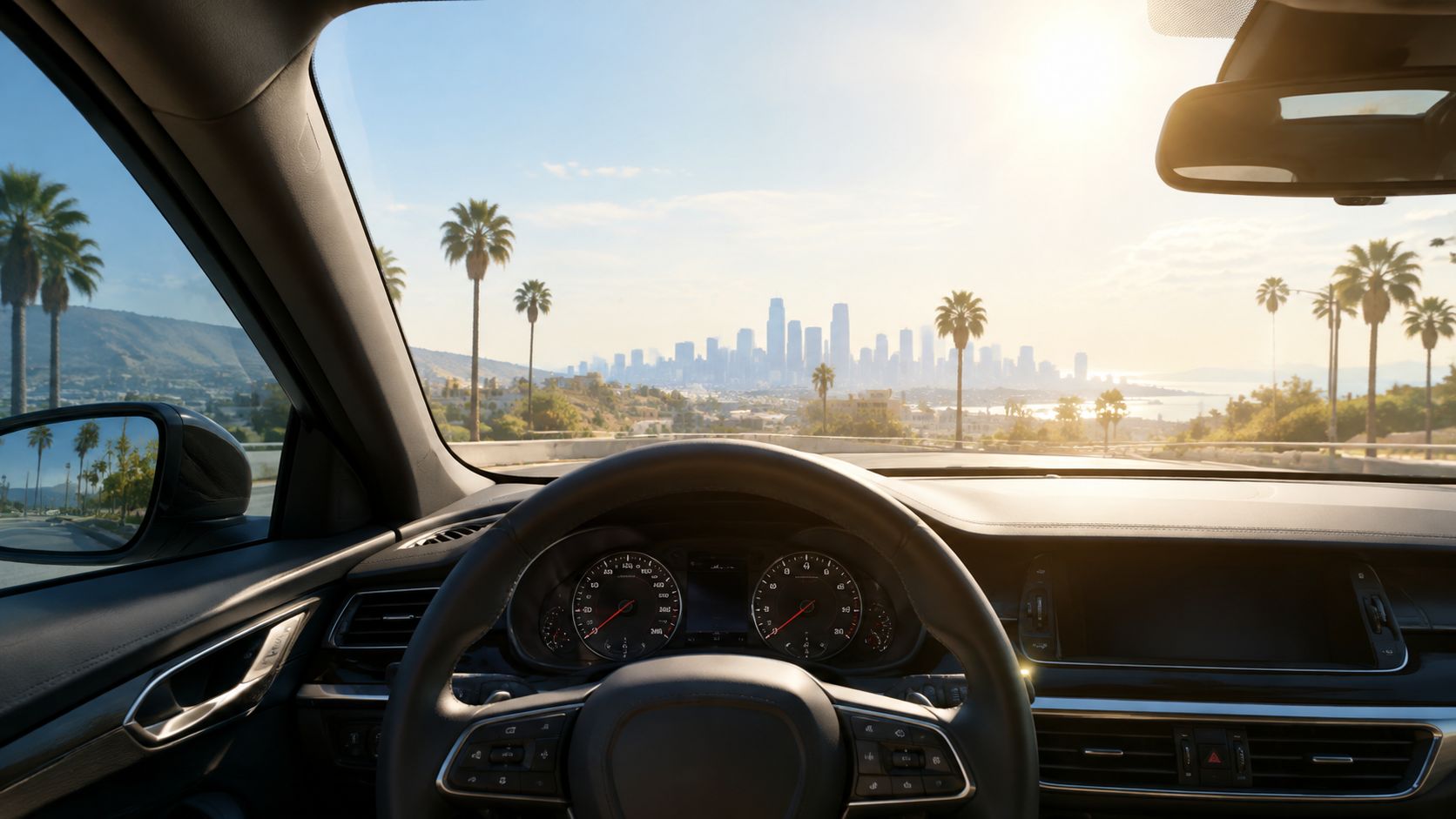
Tint works by filtering light before it enters the vehicle or home. The result isn't “darker glass.” Depending on the film, you may gain glare control, UV filtering, solar heat management, privacy, and a more comfortable visual environment without making the glass impractical at night.
The right choice depends on the window's job. A driver needs a clear forward view and reliable visibility after sunset. A rear passenger area can often handle a darker treatment, particularly when the vehicle already has dark factory glass. A home office may benefit from stronger solar control on a bright-facing window, while a hallway may need little more than privacy.
The useful question isn't “How dark can I go?” It's “What problem am I solving at this window?”
Ontario adds another layer. Vehicle owners must think about roadside visibility, safety inspection requirements, factory glass, aftermarket film, mirrors, and model-year rules. Those details matter in Toronto, Mississauga, Brampton, Vaughan, and every other busy GTA driving environment where a borderline setup can create avoidable stress.
A good tint plan therefore balances three things:
- Comfort: Reduce harsh sunlight and cabin or room heat.
- Visibility: Preserve a confident view during rain, winter glare, and night driving.
- Compliance: Choose a setup that remains defensible under Ontario's overlapping legal standards.
Homes don't follow the same vehicle tint framework, but the design principle still applies. Use the film where sunlight causes the most trouble, rather than treating every pane as though it has the same purpose.
How Shade Window Tinting Works and What VLT Means
Think of window film as sunglasses fitted to a pane of glass. Sunglasses don't need to make the world black to reduce discomfort. They filter selected parts of incoming light, soften glare, and help your eyes work less hard. Window film uses a similar idea, although the exact performance depends on the material and construction.
The most important term is visible light transmission, or VLT. VLT describes how much visible light passes through the finished glass and film combination. A higher VLT looks lighter. A lower VLT looks darker. The number belongs to the final glazing, not necessarily the roll of film by itself.
That last point catches people out. Factory glass may already have a tint, and aftermarket film adds another layer. A film advertised as light can produce a darker final result once it sits on privacy glass. Ask an installer to assess the existing glass before choosing a shade.
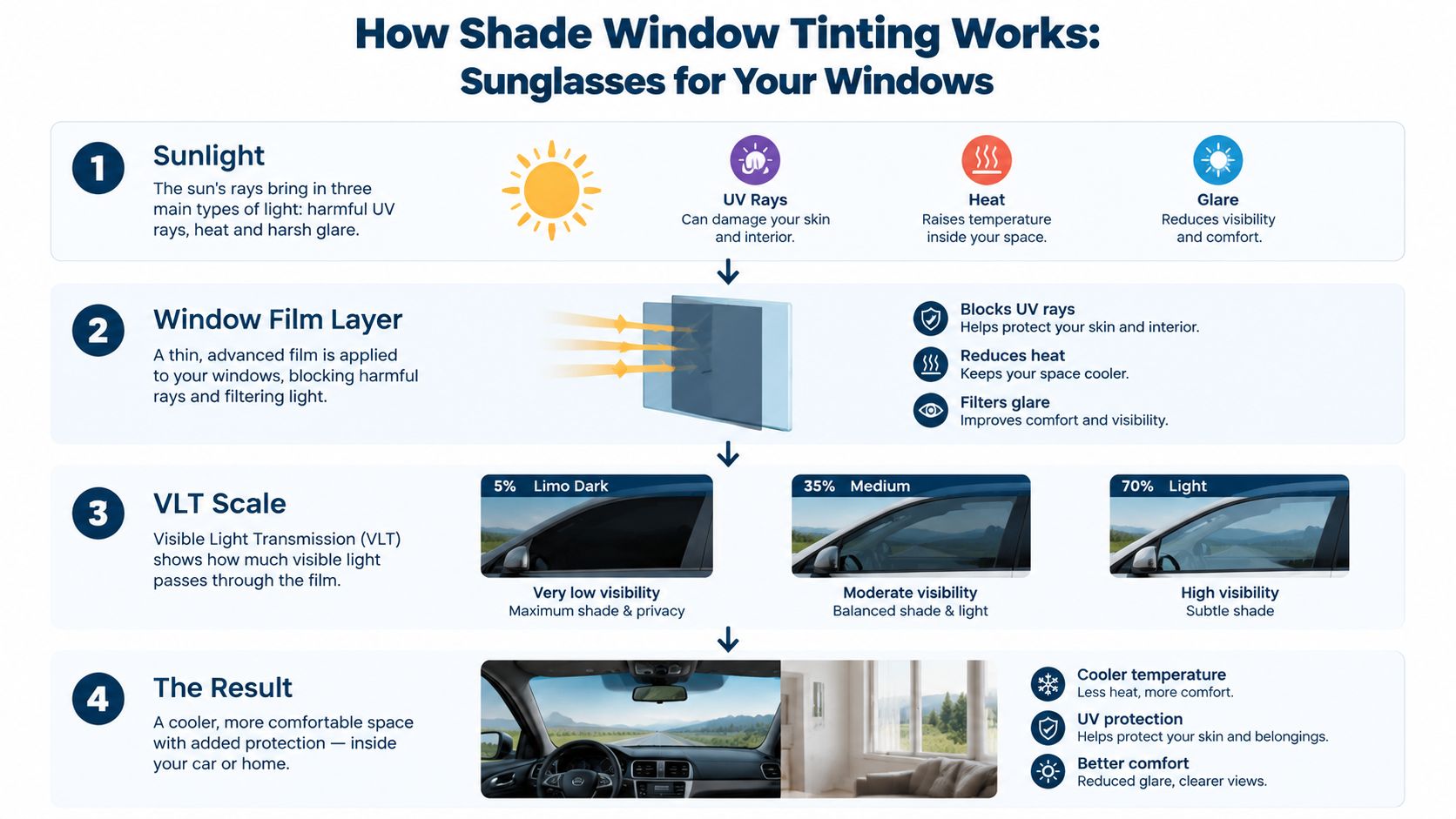
VLT is about visible brightness, not a complete score for heat rejection. A light film can still offer useful solar control.
Here's the filtering process in simple terms:
- Sunlight reaches the glass. It carries visible light, ultraviolet energy, and infrared energy associated with heat.
- The film filters selected wavelengths. The film may absorb or reject portions of the incoming energy while changing the visible appearance.
- The finished window produces a new balance. You see less glare or brightness, feel less solar discomfort, or gain more privacy.
- The material affects the experience. Dyed, carbon, ceramic, metallic, and hybrid films use different structures to achieve that balance.
Dyed film generally focuses on appearance and basic light control. Carbon film offers a more neutral look and is often selected when someone wants a clean shade without a shiny finish. Ceramic film uses non-metallic particles designed to manage solar energy while preserving electronic signals. Hybrid films combine characteristics from more than one approach.
Shade labels help you compare darkness, but they don't tell the whole story. A very dark film may create privacy, yet a lighter ceramic option can be more comfortable in direct sun without producing the same nighttime visibility compromise. The best result usually comes from matching film construction, VLT, window position, and driving habits.
Comparing Tint Types and Shade Levels for Real Needs
Two films can look similar from the kerb and behave very differently inside the cabin. One may prioritise appearance, another heat control, and another signal-friendly performance. Treat the shade as one part of the decision, not the entire product.
| Tint Type | Heat Rejection | UV and Glare Control | Best For |
|---|---|---|---|
| Dyed | Basic to moderate solar comfort | Useful glare and UV filtering, depending on product | Budget-conscious owners seeking appearance and lighter glare |
| Carbon | Moderate to strong comfort with a neutral appearance | Good glare management and interior protection | Daily drivers wanting a non-reflective look |
| Ceramic | Strong solar control without relying on a metallic appearance | Strong UV and glare management, with clear or light options available | Long commutes, family vehicles, premium comfort, and bright home glass |
| Hybrid | Balanced performance between film constructions | Practical light and glare control | Owners wanting a middle-ground specification |
The table is a decision aid, not a promise that every film in a category performs identically. Ask for the manufacturer's technical sheet and clarify whether the stated performance applies to the film alone or to a particular glass-and-film combination.
Dyed film can make sense for a secondary vehicle, a short-distance commuter, or someone mainly seeking a uniform visual finish. Its appeal is straightforward. It changes the look of the glass and can reduce brightness without the added complexity of a higher-performance material.
Carbon film suits drivers who dislike reflective or shiny finishes. It can provide a deep, neutral appearance and a practical comfort upgrade for everyday driving. For an SUV used for school runs, errands, and weekend trips, carbon may offer a sensible balance between budget and performance.
Ceramic film is the more considered choice when heat and glare matter every day. A GTA commuter who spends hours in traffic, a rideshare driver who keeps the vehicle occupied, or a homeowner with strong sun across a workspace may value its solar-control characteristics more than simple darkness.
Metallic films can create signal concerns in some installations, so ask specifically about compatibility with navigation, mobile devices, toll equipment, and other electronics before approving a specification. Also avoid mirrored, red, blue, or amber finishes, which Canadian legal guides widely flag as prohibited for vehicle applications. For a broader home-focused comparison of solar-control approaches, best window tints for Colorado homes offers useful context, although Ontario vehicle rules still require separate attention.
The practical winner isn't always the darkest option. A targeted film on the most troublesome panes often delivers a more comfortable and usable result than a blanket choice based only on appearance.
Ontario and GTA Legal Limits You Must Know Before Tinting
Ontario vehicle tinting becomes much clearer once you separate the roadside obscured-view standard from the inspection VLT standard. They overlap, but they aren't the same test, which explains why online tint charts can leave drivers with more questions than answers.
For vehicles manufactured on or after January 1, 2017, aftermarket tint isn't allowed on the windshield. The narrow allowance is a top visor strip extending up to 75 mm, or 3 inches, from the top edge. That strip isn't a licence to tint the full windshield. It's a limited sun visor area. These requirements are outlined in Ontario's window tint guidance for Canadian drivers.
The front side windows must allow at least 70% visible light transmission, so the tint can't block more than 30% of visible light under the commonly applied inspection standard. This is why a legal-looking front film can appear surprisingly light compared with dark rear privacy glass.
Rear side windows can be tinted without a VLT limit when the vehicle has both exterior side mirrors, according to the same guidance. That mirror condition matters. Don't treat rear darkness as an automatic permission without checking the vehicle's mirror arrangement and the installer's compliance assessment.
Why roadside enforcement causes confusion
Ontario's Highway Traffic Act uses a qualitative standard concerning tint that “substantially obscures” the driver's view. The familiar 70% figure comes from inspection standards rather than a simple roadside percentage test. Ontario's inspection regulation contains separate provisions for windshield and side-window tinting, and notes that the Section 8 tinting requirements don't apply to vehicles manufactured before July 1, 2011.
That creates two practical questions. Could a borderline film avoid immediate roadside attention but still cause trouble at inspection? Yes, the standards address different situations. Could a film that technically meets a product label still produce a questionable final result? Yes, because factory glass and aftermarket film combine.
A defensible GTA setup
For many Ontario vehicles, the conservative approach is simple:
- Windshield: Keep the glass clear below the permitted top strip.
- Front sides: Use a light film and have the finished VLT assessed, not guessed from the film's marketing name.
- Rear sides and rear glass: Select a darker film when the vehicle has both exterior side mirrors and the result remains comfortable at night.
- Finish: Avoid mirrored, red, blue, or amber appearances.
- Records: Keep the installer's product information and any VLT or inspection documentation with the vehicle.
If you drive for rideshare, make frequent airport runs, or depend on passing a safety inspection without surprises, choose a setup with visible compliance margin. “It probably passes” is a poor strategy when the final glass can be measured and the driver's view remains the central safety concern.
Benefits and Best Uses for Cars Versus Homes in Ontario
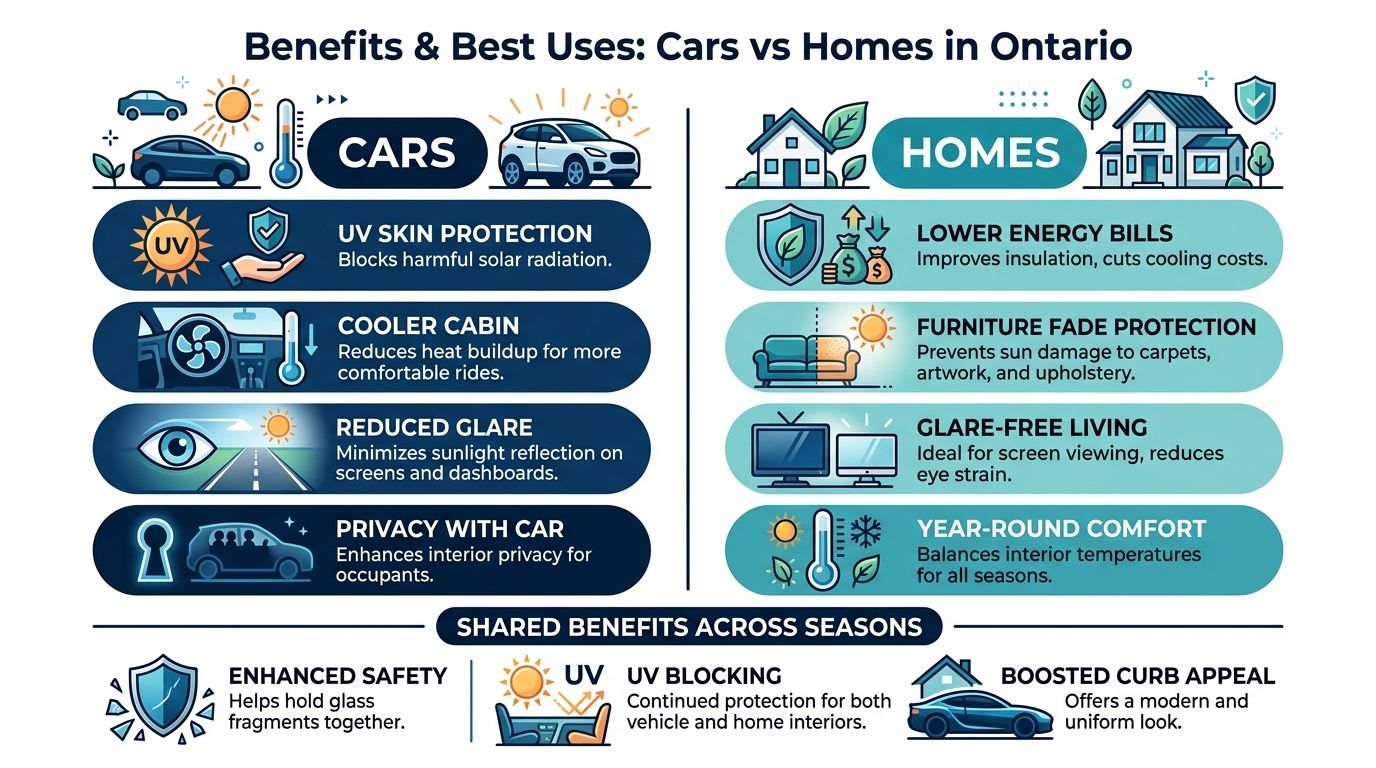
Tint earns its place through everyday annoyances it removes. In a car, that may mean less squinting during a low winter sun angle, fewer distractions from bright reflections, and a cabin that feels calmer on a summer commute. In a home, it may mean a desk that stays usable while strong daylight still fills the room.
Ultraviolet filtering can help protect vehicle interiors and household furnishings from sun exposure. Glare control matters for drivers, television viewers, home-office users, and anyone trying to read a screen beside a bright window. Privacy adds another layer, particularly for rear passengers, bedrooms, street-facing rooms, and vehicles parked outside overnight.
Cars need a visibility-first plan
A vehicle has changing conditions that a house doesn't. You may leave a bright parking lot, enter a shaded street, drive through rain, and finish the trip after dark. A shade that feels excellent at noon can feel too restrictive when reversing into an unlit driveway.
That's why a lighter front and darker rear arrangement often works well. The front preserves a clear view and addresses Ontario's front-window requirements. The rear can provide stronger privacy and solar control, especially for SUVs carrying children, pets, or rear-seat passengers.
Rear darkness should improve comfort, not turn night-time reversing into a guessing game.
Check the effect from the driver's seat, not only from outside the vehicle. Sit in the car at dusk, look through the rear glass, and test the view through side mirrors. If the rear film makes parked cars, cyclists, or pedestrians disappear into a dark blur, the shade is doing too much for that use case.
Homes allow more design flexibility
Residential tinting begins with orientation and room use. A south-facing office may need stronger heat and glare management than a north-facing storage room. A street-level living-room window may prioritise privacy, while a kitchen window may need maximum natural light.
Homeowners can also consider broader solar-control solutions alongside film. For general information on energy saving sun shades, compare how exterior or interior shading works with your existing glass, curtains, and window layout. Film is most useful when you want a cleaner sightline, permanent daytime filtering, or protection without keeping blinds closed.
Avoid assuming darker means better. Excessive darkness can make an interior feel gloomy and may reduce the natural daylight you enjoy. A professional can review the room at different times of day and suggest a targeted treatment rather than applying one identical shade everywhere.
For cars and homes, the shared principle is seasonal balance. Summer heat matters, but Ontario's winter glare and early sunsets matter too. Select the film that supports comfort across the full day, not only during the brightest hour of July.
Choosing the Right Shade Costs and Easy Maintenance Tips
Price depends on the project, not just the shade label. Vehicle size, number of windows, glass shape, film construction, removal of old film, and installation complexity all influence the quote. Residential work also varies with window area, access, glass type, and whether the installer must work around screens, furniture, or unusual frames.
Use cost guides such as Superior Home Improvement tint prices for general planning, then request a local quote based on your actual vehicle or home. A precise estimate should identify the film line, coverage, warranty terms, preparation work, and whether the quoted shade refers to film VLT or final glass VLT.
Match shade to the job
- Privacy first: Choose a darker rear treatment or a residential film that reduces outward visibility without making the room uncomfortably dim.
- Heat first: Prioritise a film type designed for solar control, then select the lightest practical shade that addresses the bright pane.
- Night visibility first: Keep driver-facing glazing light and assess the finished result from inside the vehicle after sunset.
- Appearance first: Ask for a neutral finish and view a sample on your own glass, since factory tint changes the final look.
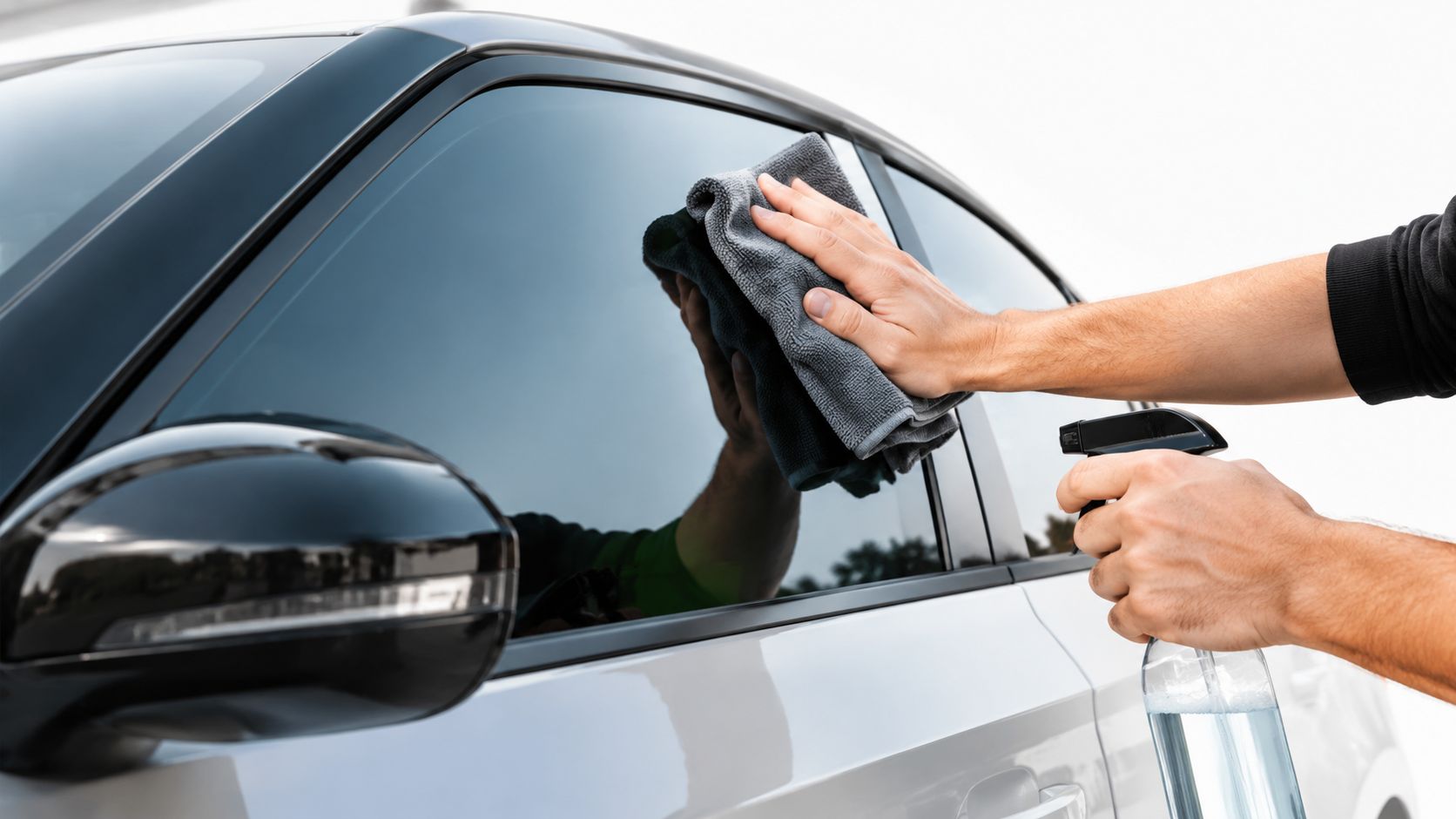
After installation, follow the curing instructions exactly. Don't press, lift, or pick at edges while the adhesive settles. Clean with a soft microfiber cloth and a tint-safe solution that doesn't contain ammonia, and avoid abrasive pads, rough paper towels, blades, or anything that can scratch the surface.
Salt, slush, and winter grime can make exterior cleaning more important, but the film itself sits on the inside of vehicle glass. Clean gently and inspect the edges when seasonal detailing takes place. If you notice bubbling, peeling, a hazy appearance, or a damaged edge, ask the installer to assess it rather than trying to repair the film with household tools.
A warranty is useful only when you understand what it covers. Confirm whether it addresses bubbling, colour change, adhesive failure, workmanship, and transfer to a new owner. Keep the invoice and product details with your vehicle records.
When to Choose Professional Installation and What to Expect
DIY film looks tempting when the project appears to involve little more than a roll, a spray bottle, and a squeegee. Vehicle glass quickly reveals the catch. Curved windows, dust, edge alignment, defroster lines, door seals, and factory glass all punish rushed installation.
A professional installer should discuss the final VLT, not just show you a shade card. Ask how the existing glass will affect the result, which windows will receive film, whether the windshield strip is permitted, and what documentation you'll receive. For an Ontario vehicle, that conversation is part of the job, not paperwork after the job.
Look for a process that includes:
- Glass assessment: The installer checks factory privacy glass and existing film before recommending a shade.
- Clean preparation: The work area and glass receive careful cleaning to limit dust and contamination.
- Accurate cutting: Templates or precise trimming keep the film away from seals and edges.
- Final inspection: You receive guidance on curing, cleaning, warranty coverage, and any VLT documentation.
- Plain answers: The installer explains trade-offs instead of promising that the darkest film is automatically the best film.
A warning sign is a shop that guarantees roadside approval without discussing the obscured-view standard or inspection requirements. Another is a quote that names only “5%,” “20%,” or “30%” without identifying the film material and final glass measurement.
For most GTA drivers, the sensible formula remains practical rather than dramatic: keep the windshield clear except for the permitted visor area, use a light front film, and choose a darker rear treatment only when mirrors, visibility, and the vehicle's use support it. Keep your paperwork, follow the curing instructions, and test the view at night before calling the project finished.
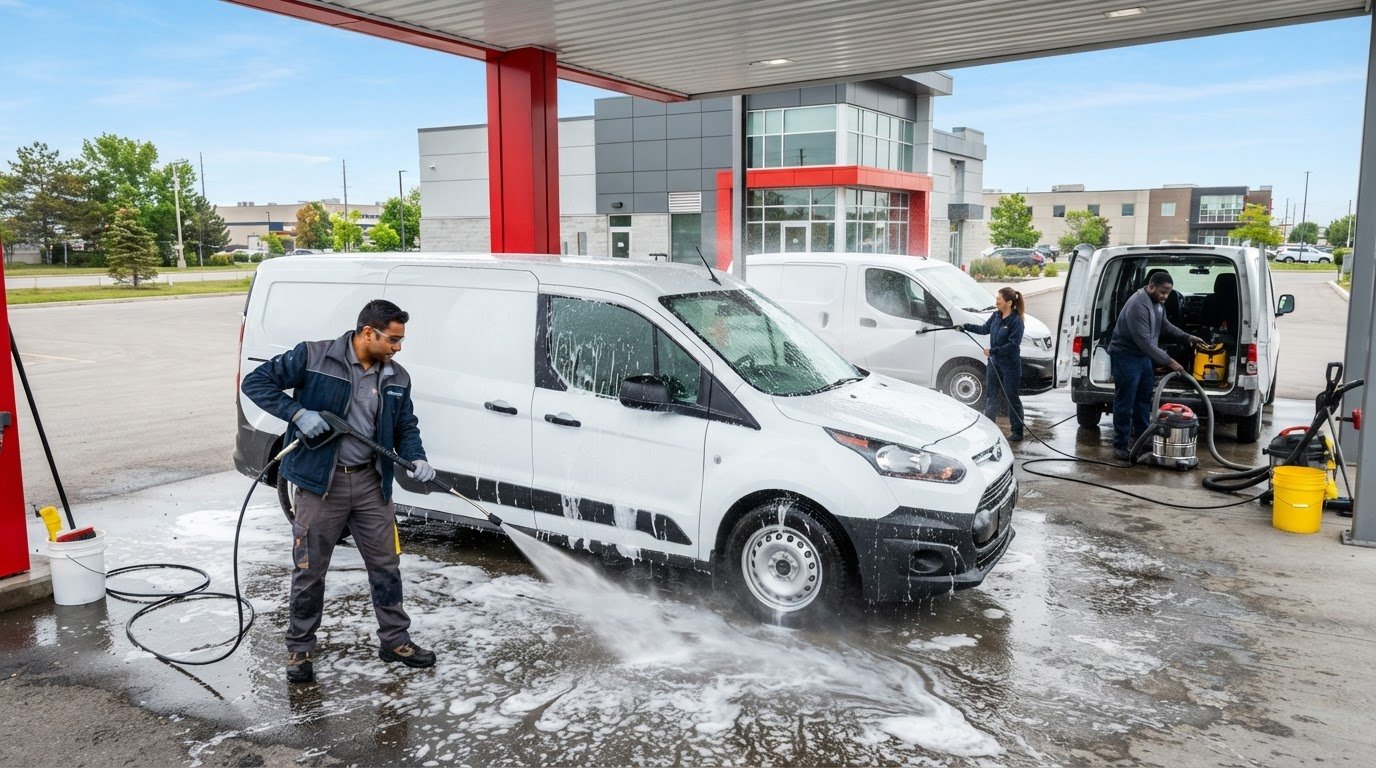
If your vehicle needs a clean-up before or after tinting, Nanak Car Wash offers exterior washing, interior cleaning, detailing, and rust proofing at GTA-area locations. Visit Nanak Car Wash to choose a service that keeps your newly treated glass and the rest of your vehicle looking ready for the next sunny drive.

 6600 Finch Ave W, Etobicoke, ON M9V 3Z6
 647-703-8515
 MON – SUN 8 AM to 7 PM