
Most Toronto car detailing advice starts with shine. That's backwards. A glossy bonnet won't protect a brake line, frame rail, or subframe from a winter's worth of brine. In the GTA, detailing should begin underneath the vehicle, where road salt and trapped moisture create the conditions for corrosion.
Toronto has a large, persistent vehicle base. Toronto Metropolitan University transportation research cites about 1,396,000 vehicles in Toronto in the forecast year, while a Toronto-area study found that 84% of Toronto CMA households owned at least one vehicle in 2021. The same research recorded 355,000 more car-owning households across the GTHA between 2006 and 2016, including growth in both the City of Toronto and the Toronto core. The Toronto Metropolitan University vehicle ownership research makes the point clearly: private vehicles remain central to daily life across the region.
If you drive in Toronto, Mississauga, Brampton, Vaughan, Markham, or Scarborough, your maintenance plan needs to reflect that environment. Choose underbody rinses, salt removal, rust protection, and sensible paint protection before you spend heavily on cosmetic extras.
Table of Contents
- Why Toronto Car Detailing Is About Survival Not Shine
- Comparing Express Washes Full Service and Professional Detailing
- The Hidden Cost of Road Salt and Winter Corrosion
- Choosing the Right Service for Your Driving Habits
- Memberships and Prepaid Bundles for Frequent Drivers
- How to Evaluate a Toronto Detailing Provider
- Building a Year-Round Vehicle Protection Routine
Why Toronto Car Detailing Is About Survival Not Shine
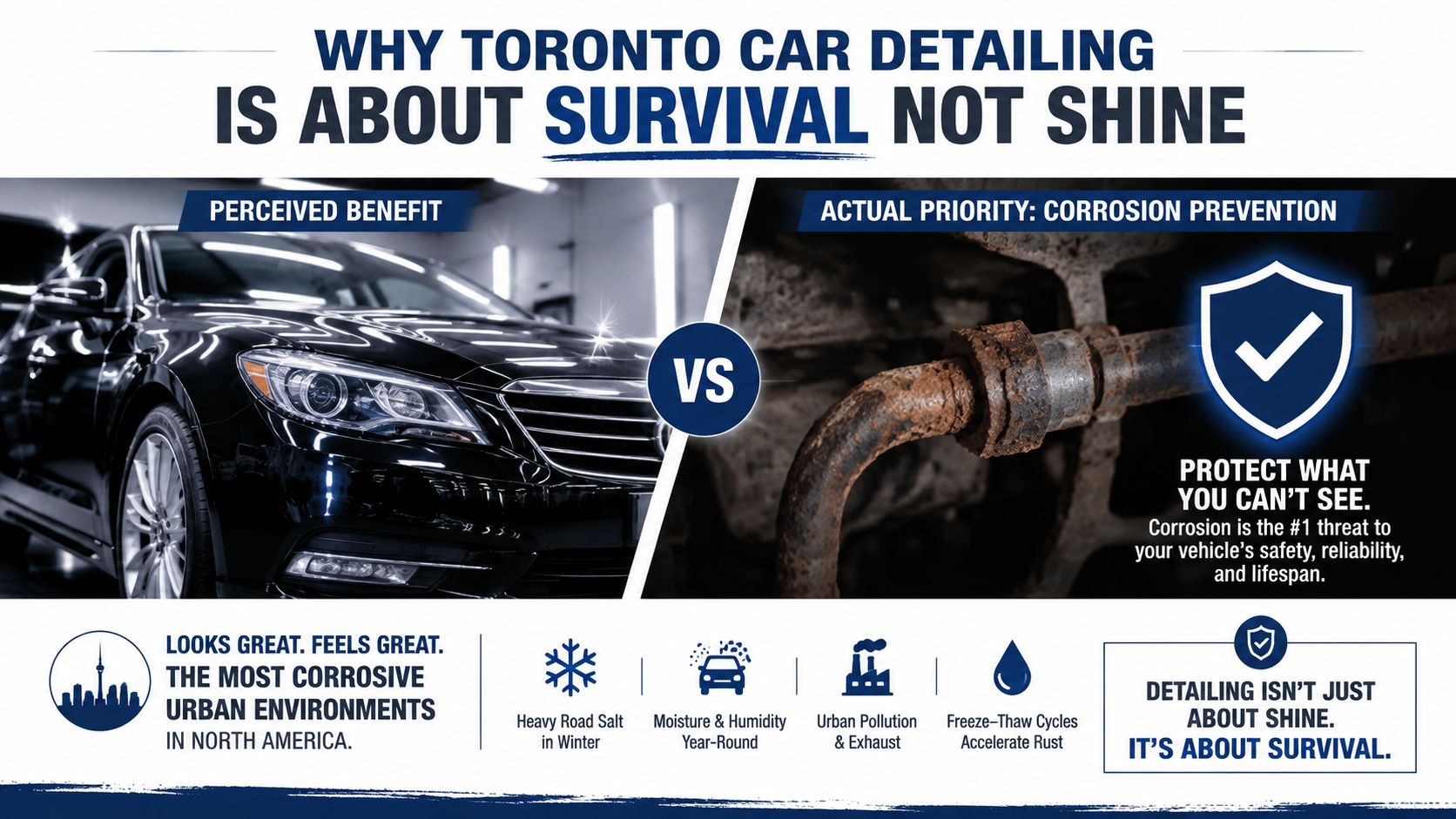
A car can look immaculate while corrosion is already developing underneath it. That's the uncomfortable truth most cosmetic-first detailing packages avoid. A polished exterior improves appearance, but it doesn't address salt lodged around wheel wells, exhaust components, brake lines, or subframes.
Toronto's corrosion exposure is unusually severe. A Transportation Research Board study measured atmospheric corrosion in Toronto at 5,108 mg/dm² over 19 months, one of the highest readings among the sampled locations, as documented in the Transportation Association of Canada road salt corrosivity study. The same body of research concluded that deicing salt in the Toronto area doubled corrosion compared with conditions without salt.
The part of the car most owners ignore
Road salt becomes more damaging when it mixes with moisture. Ontario's treated sodium chloride produced about 0.2117% average weight loss of steel rebar in Transportation Association of Canada testing, and regular sodium chloride caused the highest corrosion among the tested materials. Those laboratory results don't describe your exact vehicle, but they confirm why exposed steel and salty moisture are a dangerous combination.
The vulnerable areas aren't glamorous. They include:
- Brake and fuel lines: Salt collects along exposed lines and fittings, where rust can weaken components that are expensive and safety-critical.
- Subframes and suspension mounts: Trapped grime holds moisture against structural metal, particularly around seams and mounting points.
- Exhaust systems: Heat, condensation, and salt create an aggressive environment for pipes, hangers, and shields.
- Wheel wells and lower panels: These areas receive direct spray from traffic and stay dirty long after the rest of the vehicle appears clean.
Practical rule: If a detailing package doesn't include a meaningful underbody rinse during salt season, it isn't a complete winter protection service.
Wax still has a place. A sealant can help contaminants release more easily, and paint correction can restore a tired finish before protection is applied. But those services should support a corrosion-prevention plan, not replace it. For Toronto drivers, the most valuable detail is often the one that removes what you can't see.
Comparing Express Washes Full Service and Professional Detailing
A commuter returning from a mid-winter thaw usually needs fast salt removal, not paint correction. A neglected family SUV needs a different appointment altogether. Match the service to the contamination and the vehicle's condition.
| Service Tier | What It Does | Time Required | Best For |
|---|---|---|---|
| Express wash | Removes loose road film and surface salt, with optional underbody rinsing and drying treatments | Short visit | Frequent maintenance and salt removal |
| Full-service wash | Adds hand drying, interior vacuuming, dashboard and window cleaning, with deeper cabin options at higher tiers | Moderate visit | Drivers who need the inside and outside handled together |
| Professional detailing | Uses deep cleaning, shampooing, polishing, paint correction, sealants, ceramic protection, or interior restoration | Longer appointment | Neglected vehicles, lease returns, resale preparation, and paint restoration |
| Rust proofing | Applies a dedicated protective compound to vulnerable underbody areas and hidden cavities | Appointment-based service | GTA vehicles exposed to repeated winter salt and moisture |
Express washes handle routine salt removal, not paint restoration
Use an express wash when your vehicle regularly faces salt, slush, mud, or road spray. Frequent cleaning removes contamination before it remains against painted and exposed metal. Choose the underbody option whenever available, particularly after a thaw or a long highway trip.
Its value depends on repetition. An express wash will not remove embedded stains, pet hair, odours, or bonded contaminants, and it will not correct swirl marks or restore oxidised paint.
Full-service washes bridge the gap
A full-service wash suits winter grime that has entered the cabin. Salt tracked onto mats and carpets spreads through the interior, while hand drying removes water around trim and door edges. It works well for households, commuters, and drivers who want routine interior and exterior cleaning without booking restoration work.
Ask whether the full-service wash includes an underbody rinse and interior crevice cleaning. Confirm that the crew cleans mats and salt residue, rather than only adding tyre dressing or fragrance. Package names vary, so judge the service by the areas it reaches.
Professional detailing and rust proofing solve different problems
Professional detailing handles paint correction, deep interior cleaning, machine polishing, and protective coatings. Rust proofing applies a dedicated compound to vulnerable underbody areas and hidden cavities. These services address separate problems and should be selected accordingly.
A ceramic coating or sealant protects painted surfaces and makes future washing easier. It cannot reach the underside, brake lines, suspension components, or concealed cavities that rust proofing is designed to cover. For a vehicle driven through GTA winters, schedule recurring salt rinses and prioritise rust protection before paying for a high-gloss package. Use professional detailing when the paint, cabin, lease-return condition, or resale presentation needs specialist work.
The Hidden Cost of Road Salt and Winter Corrosion
A glossy exterior does not prove a vehicle is protected. Toronto's salt solution remains active on wet metal, allowing corrosion to continue beneath the car after the roads appear dry. Prioritise salt removal and rust proofing over another wax application.
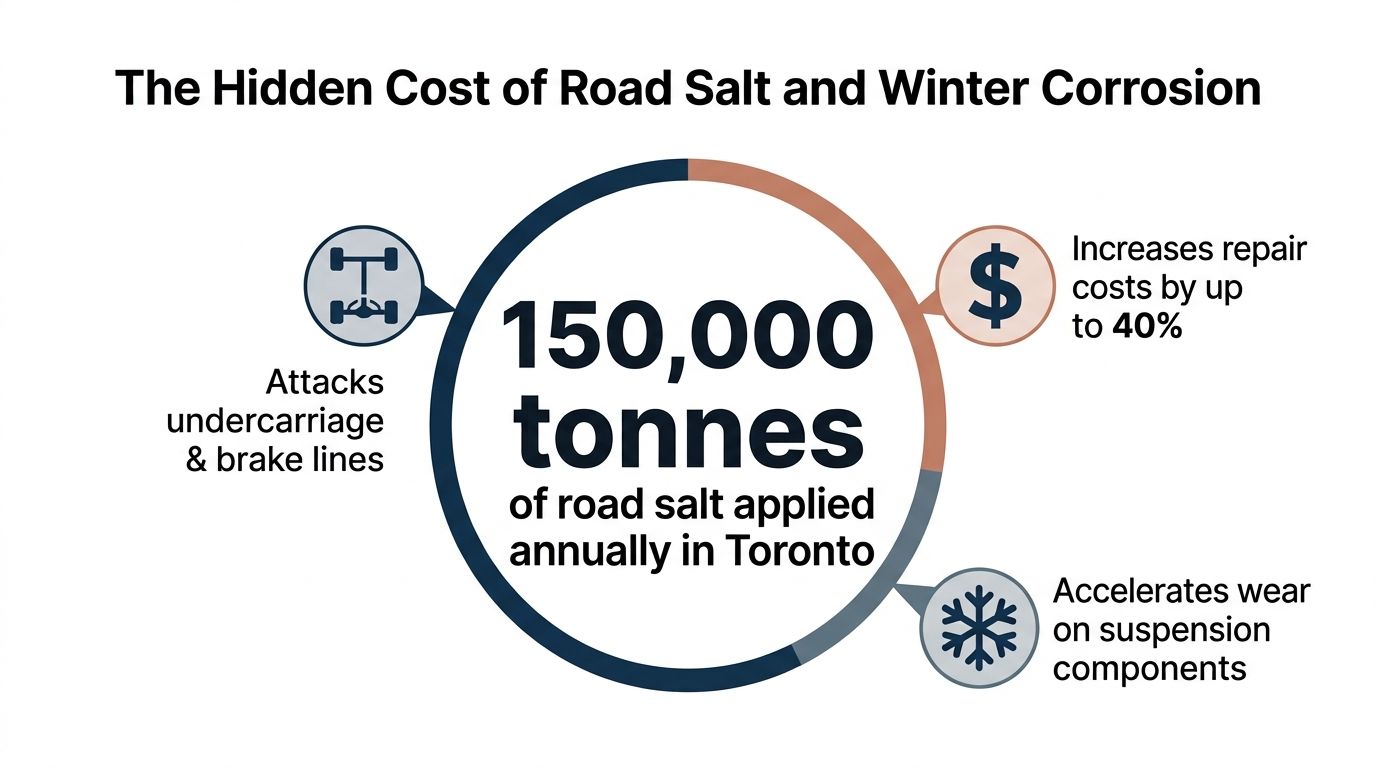
Ontario's road network uses 3 to 5 million tonnes of road salt each winter, according to the Transportation Association of Canada study on road salt and alternatives. Ontario and Quebec account for more than half of Canada's road salt use, as described in this Canadian rust-proofing maintenance guide. The precise amount reaching your street varies, but the maintenance response stays the same: remove salt repeatedly before it settles into seams and cavities.
Why the underside needs priority
A standard exterior wash can leave the worst contamination behind. Salt spray reaches the undercarriage, wheel wells, rocker panels, exhaust, brake lines, fuel lines, and suspension components. Mud and brine collect in seams and recesses, where limited airflow and sunlight slow drying.
Use an underbody rinse weekly or biweekly during salt season, with another wash after thaw events while brine remains liquid, following Canadian guidance on rust proofing and salt exposure. Daily GTA driving justifies this schedule. It keeps fresh contamination from becoming a persistent deposit.
Winter maintenance rule: Rinse the underside whenever salt has accumulated. Do not wait until the vehicle looks dirty.
Rust proofing and recurring underbody rinses protect areas that paint sealants and ceramic coatings cannot reach. Detailing still has a place when the cabin needs deep cleaning or the paint needs correction, but a high-gloss finish should come after corrosion control.
Businesses using vehicles for deliveries, service calls, or passenger transport also need to review insurance alongside maintenance. If employees or contractors drive vehicles the business does not own, use this resource to find Non Owned Car Liability coverage.
Choosing the Right Service for Your Driving Habits
The right Toronto car detailing schedule depends less on what your vehicle looks like on Saturday and more on how often it travels through salt, traffic spray, construction dust, and wet winter roads.
Rideshare and delivery drivers
High-frequency drivers should treat cleaning as operating maintenance. A vehicle carrying passengers or making deliveries needs a clean interior, but constant road exposure also means salt reaches the underside more often.
Use an express wash with an underbody rinse regularly through winter. Add a proper interior clean when mats, carpets, door panels, and cup holders begin holding visible salt or grime. Don't spend every visit on wax or fragrance. Those extras do little for the areas taking the hardest punishment.
Fleet managers
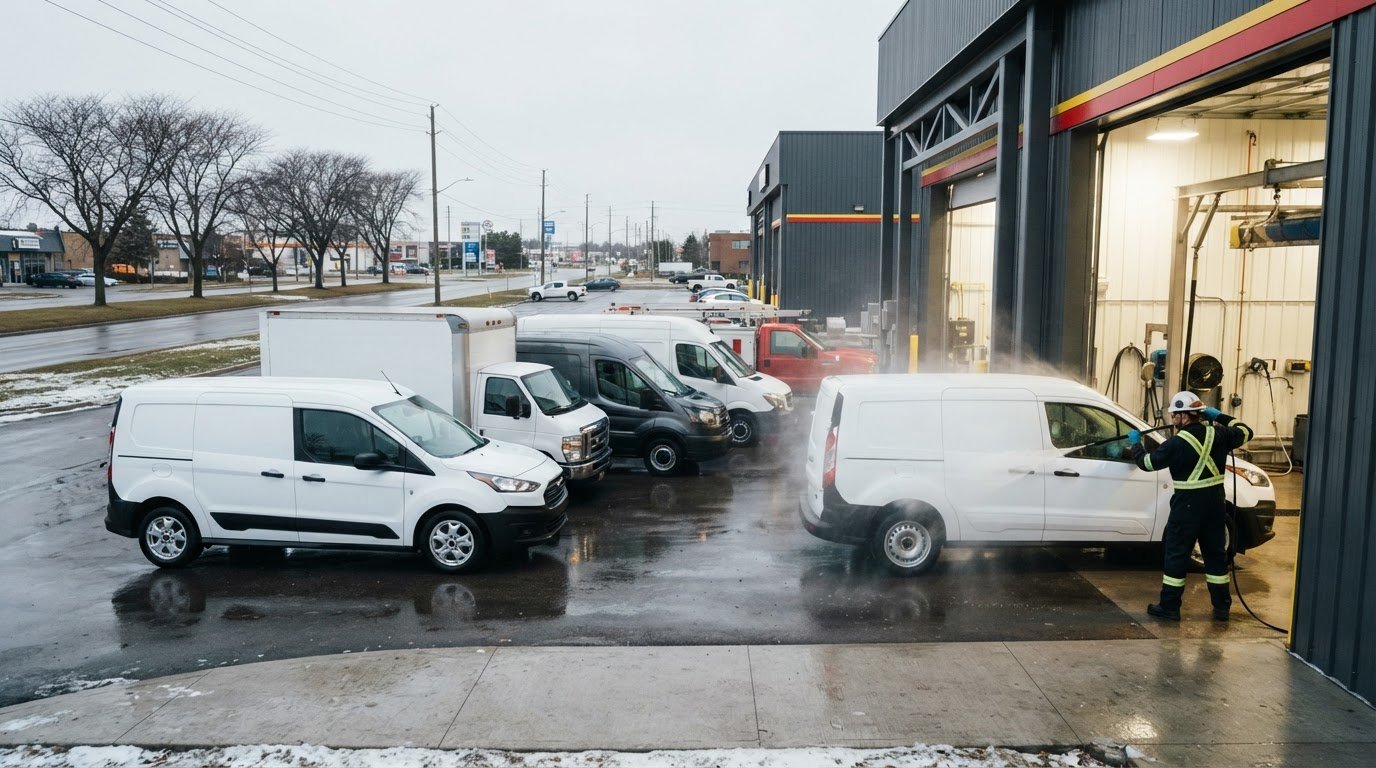
Fleet vehicles need consistency. Create a standard service instruction that specifies underbody rinsing during salt season, interior cleaning according to vehicle use, and inspection for visible corrosion during scheduled maintenance.
A fleet provider should be able to record which vehicles received rust proofing, when each one received a wash, and whether a vehicle needs a deeper inspection. Standardising the process prevents the cleanest-looking vehicle from receiving all the attention while the high-mileage work van continues carrying salt underneath.
SUV, van, and truck owners
Larger vehicles often collect more road grime across their lower panels, wheel wells, running boards, and underbody. Trucks used on unpaved roads or construction sites need more aggressive dirt removal, but aggressive doesn't mean careless. Excessive pressure or harsh chemicals can damage trim, seals, and finishes.
| Driver Profile | Winter Frequency | Summer Frequency | Recommended Package | Key Add-On |
|---|---|---|---|---|
| Rideshare or delivery driver | Frequent express washing, with underbody rinsing after heavy salt exposure | Regular express maintenance with periodic interior cleaning | Express plus interior service | Salt and stain removal |
| Small fleet operator | Organised recurring washes and documented underbody cleaning | Scheduled full-service maintenance | Fleet wash plan plus rust proofing | Corrosion inspection |
| SUV, van, or pickup owner | Express or full-service washing based on road exposure | Full-service wash with occasional detailing | Full-service wash and seasonal detail | Underbody rinse or rust proofing |
A commuter who parks outdoors and drives daily should wash more often than someone who uses a vehicle occasionally. The vehicle's use pattern decides the package. The badge on the bonnet doesn't.
Memberships and Prepaid Bundles for Frequent Drivers
Frequent drivers should stop comparing memberships by headline price alone. The useful question is whether the plan gives you enough access to remove salt when it matters, without forcing you to pay for cosmetic extras you won't use.
The Toronto detailing market is active and fragmented. A Canadian business dataset lists 112 car detailing businesses in Toronto and 2,734 in Ontario, as shown in this Toronto car detailing business database. That competition gives drivers options, but it also makes package comparisons important.

When a membership earns its place
An unlimited or recurring wash plan can work well for rideshare drivers, delivery operators, and commuters who need repeated exterior cleaning. The value comes from making frequent salt removal easy enough to maintain. If the plan only covers a basic exterior pass and excludes underbody rinsing, it may not solve the problem you have.
Ask these questions before joining:
- What is included: Confirm whether the plan includes an underbody rinse, drying, and access to the locations you use.
- Where it works: GTA travel can cross several municipalities. Check whether the membership is location-specific.
- How renewal works: Review auto-renewal, cancellation, and payment terms before providing your card details.
- What it excludes: Look for blackout periods, vehicle-size restrictions, and additional charges for larger vehicles.
- What it adds: Tyre shine and air freshener may improve presentation, but they aren't substitutes for salt removal or rust protection.
Prepaid bundles suit predictable use
Prepaid tickets make more sense when you know you'll wash regularly but don't need unlimited visits. They're useful for seasonal commuters, families, and small fleets that can forecast their cleaning needs. Compare the actual services, not just the number of visits.
A good bundle should let you direct visits toward winter contamination. If every ticket includes decorative foam but no underbody option, the package may be cheaper while providing weaker protection. For high-use vehicles, pay for access to the service that removes the problem, not the add-on that photographs well.
How to Evaluate a Toronto Detailing Provider
A polished waiting room means little if the shop leaves Toronto's road salt packed beneath your vehicle. Choose a provider by its process, equipment, and ability to explain how it removes contamination and limits corrosion.
Inspect the equipment and wash process
Ask whether the shop uses dedicated underbody jets or a manual wand. The rinse should reach frame rails, wheel wells, suspension components, and exhaust areas. Spray on the lower doors does not show that the undercarriage was cleaned.
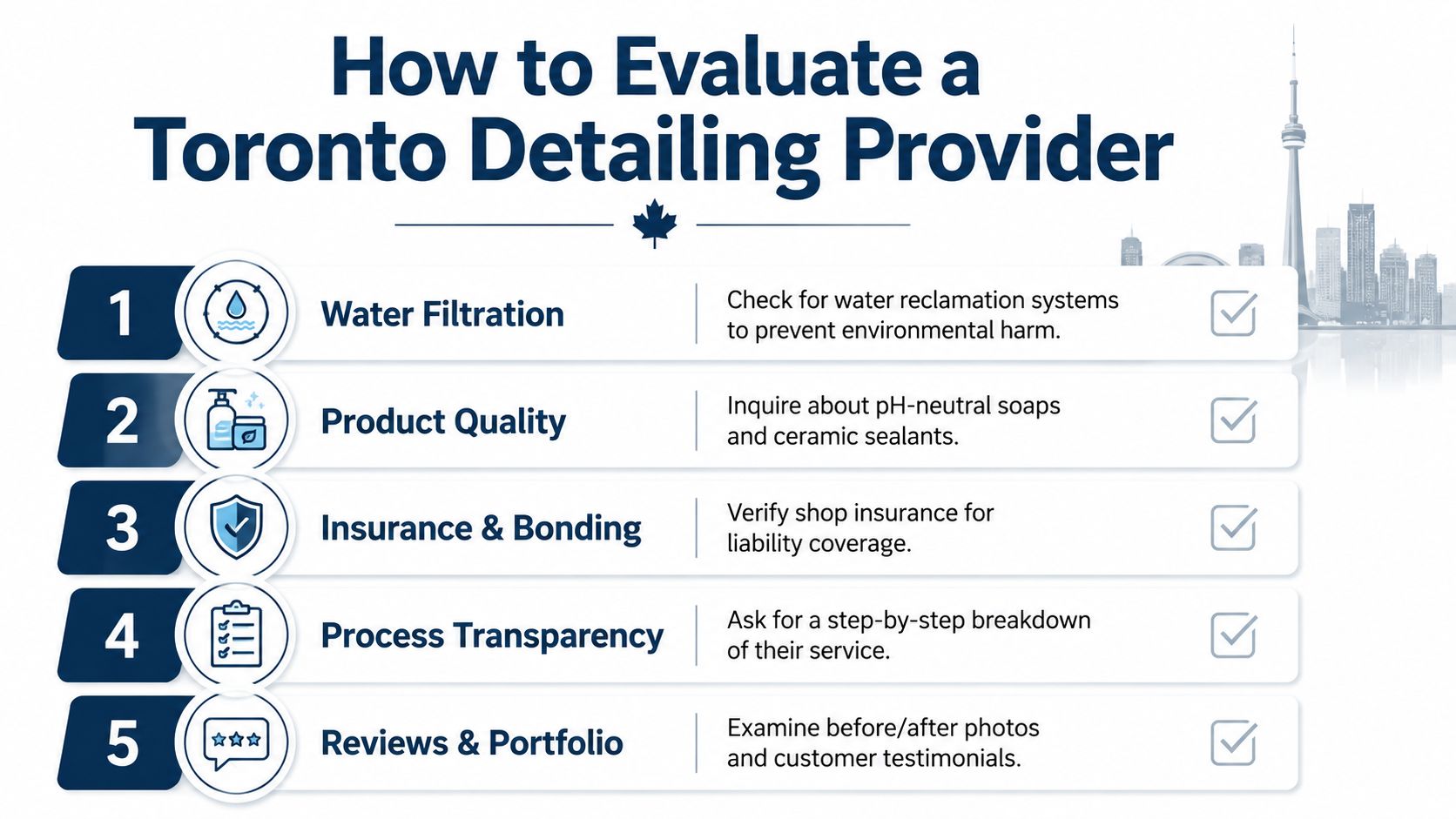
Ask how the shop manages water quality, filtration, drainage, and reclamation. Poorly controlled water can leave mineral spotting on the finish. Winter service also requires temperature control, since water left around door seals, latches, and mirrors can freeze.
Identify every product used
A reputable technician should name the soap, degreaser, sealant, and rust-proofing compound used at each stage. pH-neutral soap suits routine maintenance, while stronger chemicals can remove heavy road film and salt contamination. The technician should explain the choice clearly rather than relying on vague claims about “premium products.”
Check these details before approving the work:
- Process transparency: The quote states what will be washed, rinsed, dried, vacuumed, shampooed, polished, or protected.
- Insurance coverage: Confirm liability coverage for accidental damage to paint, trim, glass, or interior surfaces.
- Trained technicians: Staff should distinguish paint correction, polishing, sealant application, and rust proofing.
- Condition assessment: The provider inspects the paint, trim, wheels, and underbody before suggesting add-ons.
- Clear exclusions: The quote identifies extra charges or limits for pet hair, oversized vehicles, severe stains, and heavy contamination.
A low-priced “full detail” that promises every result deserves scrutiny. If the technician cannot explain the chemicals, equipment, drying method, or underbody work, choose a different provider. For Toronto drivers, a shop that documents salt removal and corrosion protection is worth more than one that only delivers temporary gloss.
Building a Year-Round Vehicle Protection Routine
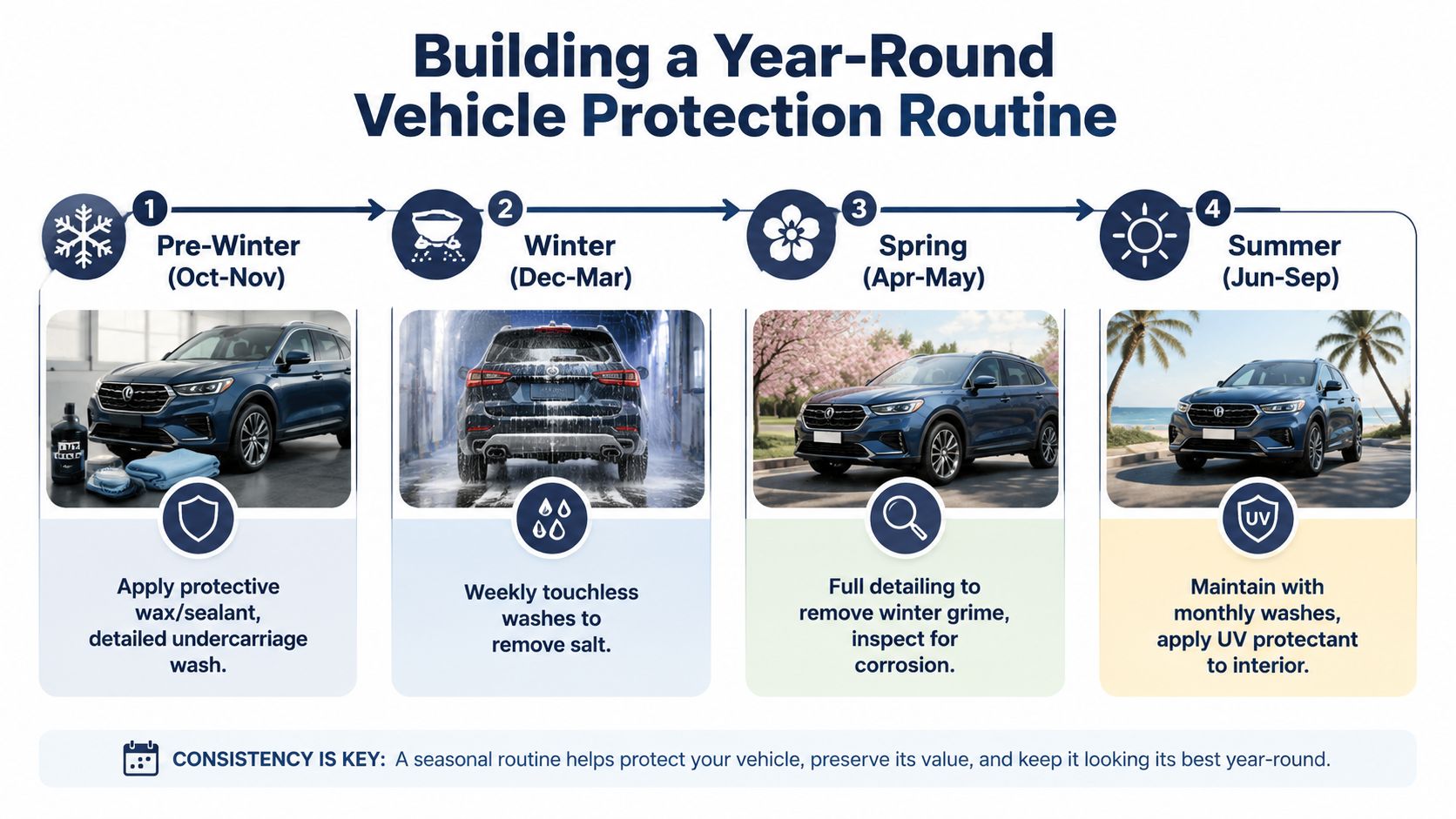
Toronto vehicle care works best as a repeating cycle, not a single spring clean. Prepare the paint and underside before salt season, remove contamination during winter, then inspect what the roads left behind.
A practical calendar
- October and November: Book rust proofing, wash the underbody thoroughly, and apply a paint sealant or other suitable protection.
- December through March: Use recurring washes with underbody rinsing. Add a visit after significant thaw events when liquid brine can spread into seams and recesses.
- April and May: Schedule a full decontamination detail, interior salt removal, paint inspection, and undercarriage check.
- June through September: Maintain regular washing, remove tree sap and road film promptly, and refresh paint protection when needed.
Nanak Car Wash offers express and full-service washes, interior and exterior detailing, and automotive rust proofing across its GTA locations, with one-time services, prepaid options, and monthly memberships. Its detailing services include salt and stain removal, shampooing, vent and crevice cleaning, leather cleaning, and machine buffing, so drivers can combine routine cleaning with seasonal protection.
Book your pre-winter underbody wash and rust proofing before the first salt trucks reach the Gardiner. Visit Nanak Car Wash to review wash, detailing, and rust-protection options, then choose a recurring plan that keeps salt off your vehicle instead of waiting for corrosion to reveal the bill.

 6600 Finch Ave W, Etobicoke, ON M9V 3Z6
 647-703-8515
 MON – SUN 8 AM to 7 PM