
You're standing beside a salt-caked car in February, brushing slush off the doors and wondering whether a wash is even worth it. In Toronto, that question is never really about shine, it's about whether you're going to let winter grime sit on the paint, the wheel wells, and the underbody for another week.
That's why touchless car wash Toronto searches keep climbing among commuters, condo residents, and anyone who hates the idea of gritty brushes grinding winter residue into a finish that already takes a beating. The right answer in this city usually isn't “wash less”, it's “wash smarter, in the right part of the GTA, with the right add-ons.”
Table of Contents
- Why Toronto Drivers Are Searching for Touchless Washes Right Now
- How a Touchless Car Wash Actually Works
- Touchless vs Soft-Touch vs Hand Wash in a Toronto Winter
- Why Ontario Winters Make Wash Choice a Corrosion Decision
- What a Touchless Wash Costs in the GTA
- Which Toronto Drivers Benefit Most from Going Touchless
- Where Nanak Car Wash Fits Across the GTA
- Your Toronto Touchless Wash Game Plan and Quick Answers
Why Toronto Drivers Are Searching for Touchless Washes Right Now
A Toronto driver doesn't start Googling touchless washes on a sunny Sunday in July. They start after a miserable week of commuting through slush, salt, and slop, when the car looks grey no matter how often they rinse it. If you've ever parked in a condo lot, scraped ice off the windshield, then stared at the lower doors and thought, “I'm not letting a brush hit this,” you already understand the market.
The Toronto problem is geography, not just preference
Touchless in the GTA is often a convenience decision first and a finish-protection decision second. The format works well for people who want a quick, repeatable clean without physical contact, especially when the car is being hit by winter salt and city grime every day. Toronto's challenge is that the nearest option isn't always in the core, which is why local drivers keep asking where the wash is, not just what type it is.
That search behaviour shows up in advice about being discoverable in local, “near me” queries, which is exactly why practical local content matters for businesses serving drivers who want fast results and simple routing, as discussed in rank for near me searches. In plain English, Toronto drivers are not shopping for a philosophy. They're shopping for the nearest clean exit off their route.
Practical rule: if the car is covered in road film, don't wait for a perfect day. Wash the salt off while it's still loose enough to leave.
Why the question keeps repeating in Toronto
The two questions are always the same. Where's one near me? and is touchless good enough for winter? The first is a geography problem, the second is a winter-maintenance problem. Toronto makes both harder because distance, traffic, and parking all get in the way of a quick decision.
That's why touchless has become the default search for condo dwellers, rideshare drivers, and commuters who need speed more than a showroom-level detail. They don't want a long appointment or a fuss. They want the car to stop feeling gritty, fast.
How a Touchless Car Wash Actually Works
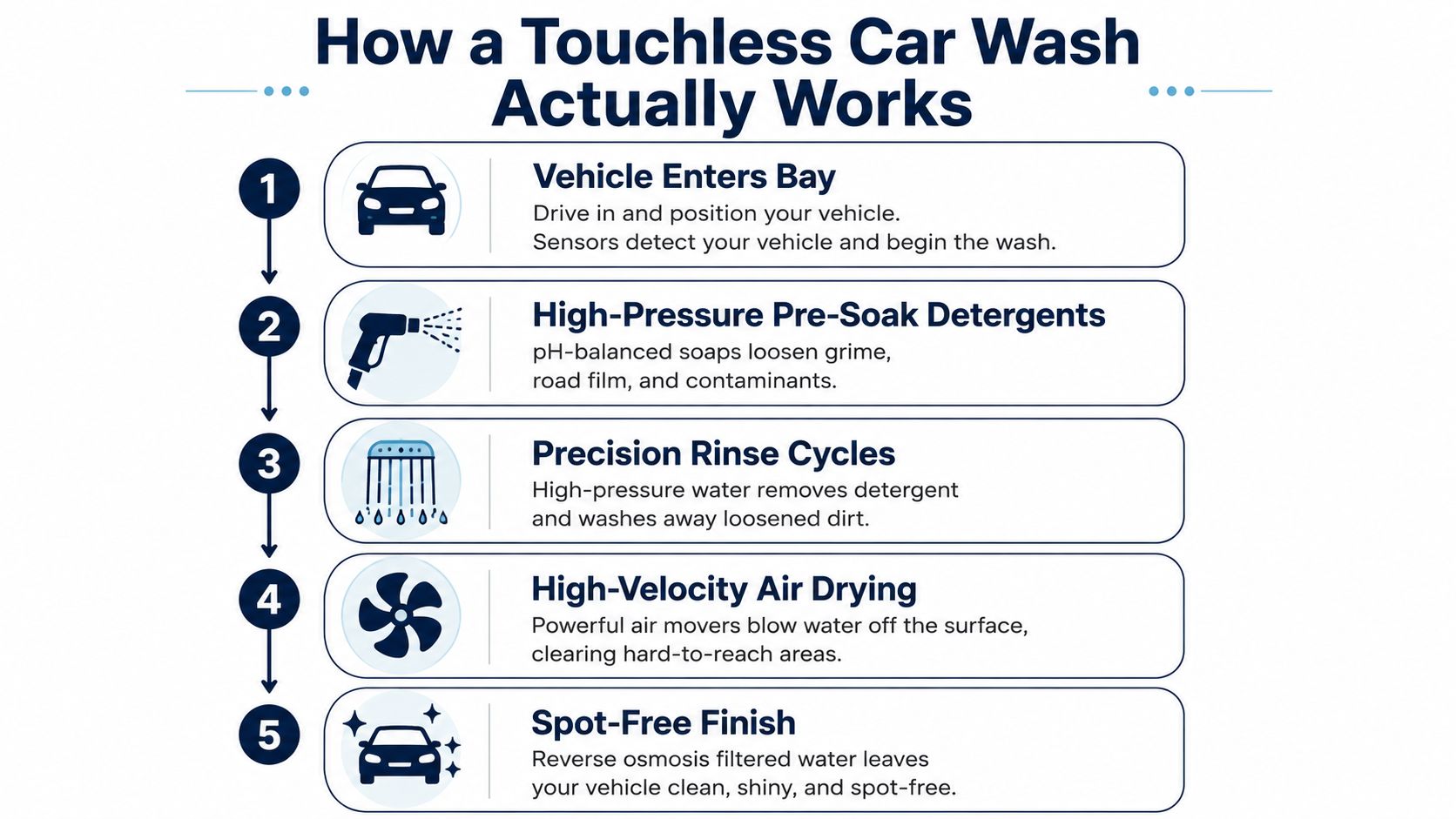
Think of a touchless bay as a controlled rainstorm with a chemistry lab attached. Nothing scrubs your paint, nothing brushes across the panels, and the system leans on pressure, dwell time, and detergents to lift grime before rinsing it away. That's why touchless works best when the wash chemistry and spray geometry are dialled in properly.
The wash sequence matters more than the label
The first step is the pre-soak detergent, which starts loosening road film before the high-pressure rinse begins. In Ontario-style touchless systems, the sequence is built around a high-pressure, low-contact wash that can include an undercarriage treatment for salt and grit, then a rinse, foam or wax stage, and air drying at the end, as described in the Canadian touchless wash guide. That underbody step isn't a luxury in Toronto, it's the part that helps with winter contamination.
The chemistry does the lifting, the water jets do the stripping, and the air finish reduces the clingy wet mess that cars drag out of the bay. The tradeoff is simple. Because there's no cloth or brush agitation, the system has to work harder with soap and spray patterns.
What is actually touching your car
In a true touchless system, the only things contacting the vehicle are water, detergent, foam, and air. That's the appeal. In trackless or railless setups, the vehicle may still move through a guided system, but the wash action itself stays non-contact. Some operators use the word “touchless” loosely, so it pays to read the equipment description instead of assuming every sign means the same thing.
If a site mixes in brushes or contact rails, that's not the same thing. A Toronto driver with soft clear coat, a dark colour, or a freshly corrected finish should treat that difference seriously.
Touchless vs Soft-Touch vs Hand Wash in a Toronto Winter
Touchless wins one argument right away, it avoids rubbing winter grit across the paint. That matters in Toronto because the car isn't just dirty, it's contaminated with the kind of road film, sand, and slush that acts like fine abrasive if it gets dragged around. Soft-touch and brush washes can clean more aggressively, but they also introduce the risk of trapped debris being dragged over panels.
The winter tradeoff is paint safety versus cleaning aggression
Touchless is the safer default for paint. It reduces abrasion risk and is the format I'd pick for a car that still looks decent but needs a salt rinse fast. Soft-touch can remove heavier dirt through physical agitation, but that agitation is exactly where the risk lives, especially if the brushes are dirty or holding grit from earlier cars.
Hand washing still has a place, but in Toronto winter it's usually a better choice for periodic deep cleaning, not as the only answer for every slushy week. If you've got the time, the setup, and the right supplies, it's the most controlled method. If you don't, it becomes one more thing to rush, and rushed car care is how paint gets hurt.
Wash formats compared for Toronto winter driving
| Format | Paint Abrasion Risk | Salt and Grit Removal | Best Toronto Use Case |
|---|---|---|---|
| Touchless | Low | Good for loose winter grime | Fast weekly maintenance for commuters and condo drivers |
| Soft-Touch | Medium to high | Strong on heavier grime | Drivers who prioritise stronger cleaning over finish caution |
| Brush Wash | High | Strong, but rough on paint | Older vehicles, neglected exteriors, situations where finish risk matters less |
| Hand Wash | Low when done properly | Strong with manual attention | Seasonal deep clean, enthusiast cars, careful owners |
The honest take is this. Toronto winters make touchless the practical default, not because it cleans perfectly, but because it removes enough grime without adding unnecessary wear. That's the balance most drivers need.
My take: if your car is a daily driver and not a weekend toy, choose the method that saves the paint from extra damage first, then chase perfect cleanliness later.
Why Ontario Winters Make Wash Choice a Corrosion Decision
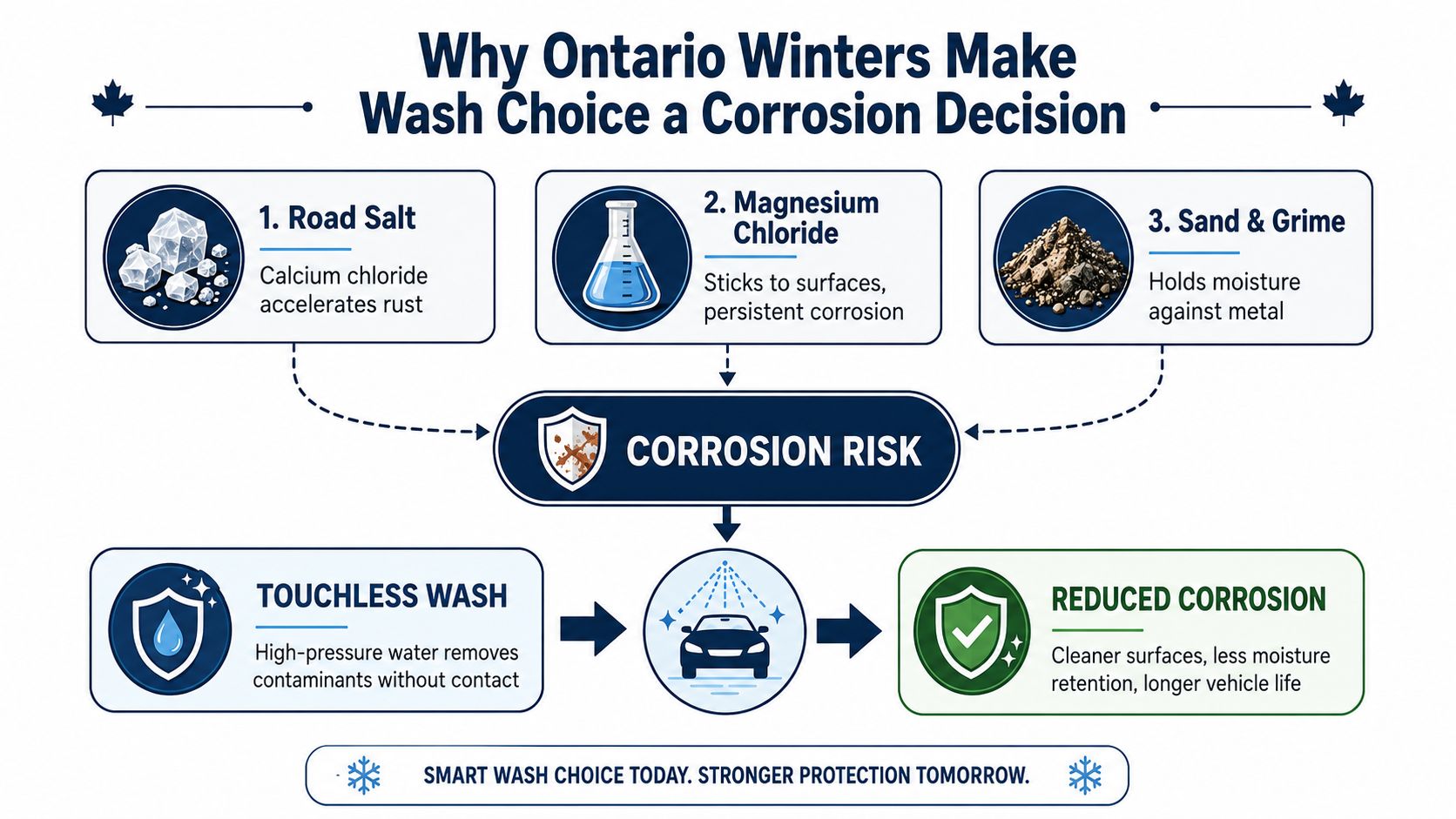
In Toronto, the bigger issue isn't whether the car looks glossy. It's whether salt and slush keep sitting in places you can't see. Once that stuff gets into the wheel wells, seams, and underbody, the wash choice stops being cosmetic and starts being mechanical.
The underbody is where the real fight happens
Touchless systems make sense in Ontario because they can be set up to target the undercarriage with high-pressure rinse energy and chemical separation, which matters more in winter than a fancy foam show. The verified historical source notes that commercial car washes can use up to 50% less water than washing at home, and that's relevant in a province where drivers are already balancing practical maintenance with water-conscious habits, especially in urban service models like those across the GTA. Car wash history and efficiency facts also place touchless systems as a later evolution, not the original automated format.
That history matters because Toronto's modern wash behaviour is about adaptation. Drivers don't just want a clean panel. They want winter residue removed before it settles into hard-to-reach places.
Chemistry and dwell time are doing the heavy lifting
A touchless wash succeeds when the detergent has enough time to break down bonded soil before the rinse. If the chemistry is weak or the dwell time is rushed, the surface may look better while the underside still carries salt and film. That's why underbody flush and rust protection are essential companions to a touchless routine in Ontario, not optional extras for fussy owners.
The right setup doesn't promise immortality. It gives the car a better chance of staying cleaner, drier, and less exposed to the daily corrosion cycle that Toronto winters create.
What a Touchless Wash Costs in the GTA
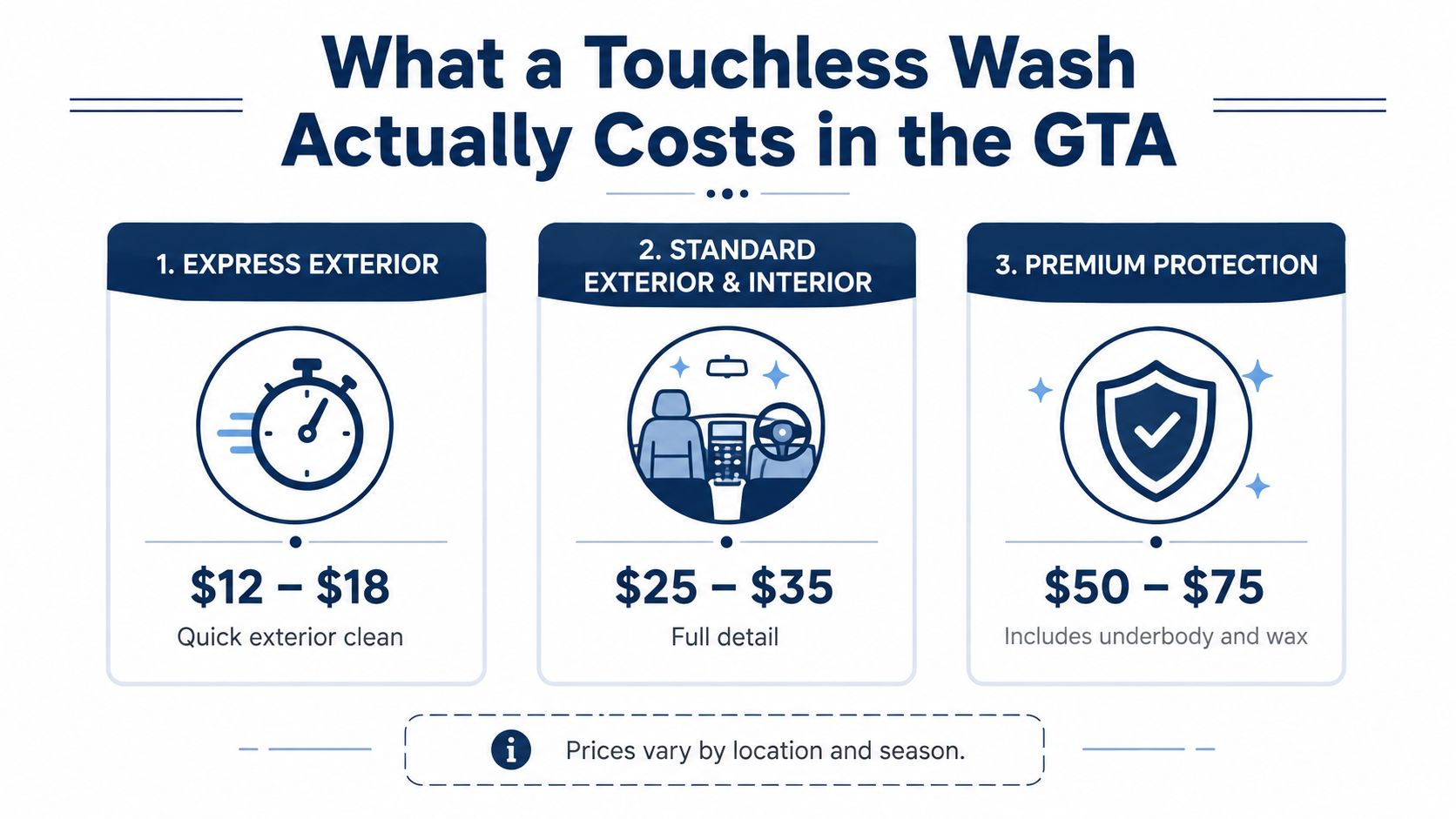
Toronto pricing shifts by location, package depth, and how much winter protection gets bundled in. The smart way to judge the cost is by three buckets, single exterior wash, add-on protection, and membership value. That's where GTA drivers either keep costs under control or pay for features they do not need.
Memberships make sense for repeat commuters
The touchless automatic car wash system market was valued at $1.38 billion in 2024 and is projected to reach $2.95 billion by 2033, with a 9% CAGR over that forecast period, according to the verified brief's global market data. That same data says 51% of touchless car washes operate 24 hours a day, 41% offer free vacuum stations, and 35% provide unlimited wash memberships or subscriptions. The direction is clear, these operators are building around convenience and repeat use, not one-off luxury.
For Toronto drivers, that lines up with winter reality. If you are washing often because of salt, slush, ride-hailing miles, or delivery work, a monthly pass stops looking like a perk and starts looking like the sensible choice. If you only drive now and then, a single wash is enough.
What to watch beyond the sticker price
The receipt climbs once you add underbody treatment, wax, or a higher protection tier. Larger vehicles can also push you into a different price bracket, especially for rust proofing or detailing. Base price alone tells you very little if winter is the main reason you are washing.
Pay for the protection that matches the season, not the mood. Toronto winter justifies the extra rinse work. July usually does not.
Which Toronto Drivers Benefit Most from Going Touchless
The drivers who get the most value out of touchless in Toronto aren't the ones chasing a perfect shine. They're the ones who need repeatable cleaning with minimal disruption. That usually means people who drive a lot, park outside, or can't spend half a day on car care.
The highest-value users are the people on the road all day
Rideshare and delivery drivers benefit first because their cars collect grime fast and downtime costs money. They need a wash they can fit between shifts, not after a calendar invitation. A touchless pass works well here, especially if the station is on their route instead of across town.
Fleet managers and contractors are the same story, just multiplied across vans and trucks. The goal isn't perfection. It's keeping the vehicle presentable, reducing salt buildup, and not burning time on long cleaning appointments. SUVs and pickups also make sense for touchless because their larger panels and exposed lower sections pick up more road film.
Downtown condo residents have the hardest access problem
People living in the core usually run into the same obstacle, there may be plenty of car wash talk online, but the actual convenient touchless option is often not in the heart of downtown. The practical answer is route planning. Use the wash when you're already leaving the city, commuting to the suburbs, or passing a station that won't add a separate trip.
- Rideshare drivers: Use touchless often, stick to express exterior, and add underbody rinse in winter.
- Fleet operators: Prioritise speed, memberships, and predictable cleanup intervals.
- SUV and pickup owners: Choose underbody coverage and protection add-ons first.
- Downtown condo residents: Plan around errands and commuter corridors, not detached from your route.
That's the Toronto reality. Touchless works best when it fits the geography of your week, not just the condition of your paint.
Where Nanak Car Wash Fits Across the GTA
Nanak Car Wash has locations across Etobicoke, Brampton, Concord, North York, Oshawa, Burlington, Cambridge, and Guelph, which gives it a footprint that matters more than a single flagship address. For Toronto drivers, that spread is useful because it puts wash access closer to the commuting edges where many touchless-friendly stops live. The mix of express exterior washes, full-service options, detailing, and rust proofing also means you can match the service to the season instead of treating every visit the same.
The practical fit depends on what you need that day
If you only need a quick exterior rinse, the express side of the menu makes sense. If the interior has also turned into a winter mess, the full-service option is the smarter call. Drivers dealing with deeper salt residue, stains, or a neglected cabin can move up to detailing, while rust proofing is the add-on that makes the winter argument more serious than a glossy finish.
Memberships matter here too. The site promotes unlimited monthly passes, first-month-free offers, no activation or cancellation fees, and discounted interior cleaning for members, which lines up with the repeat-use model Toronto commuters need. The point is simple. A local wash becomes more useful when it combines convenience, repeat access, and winter protection in one place.

Your Toronto Touchless Wash Game Plan and Quick Answers
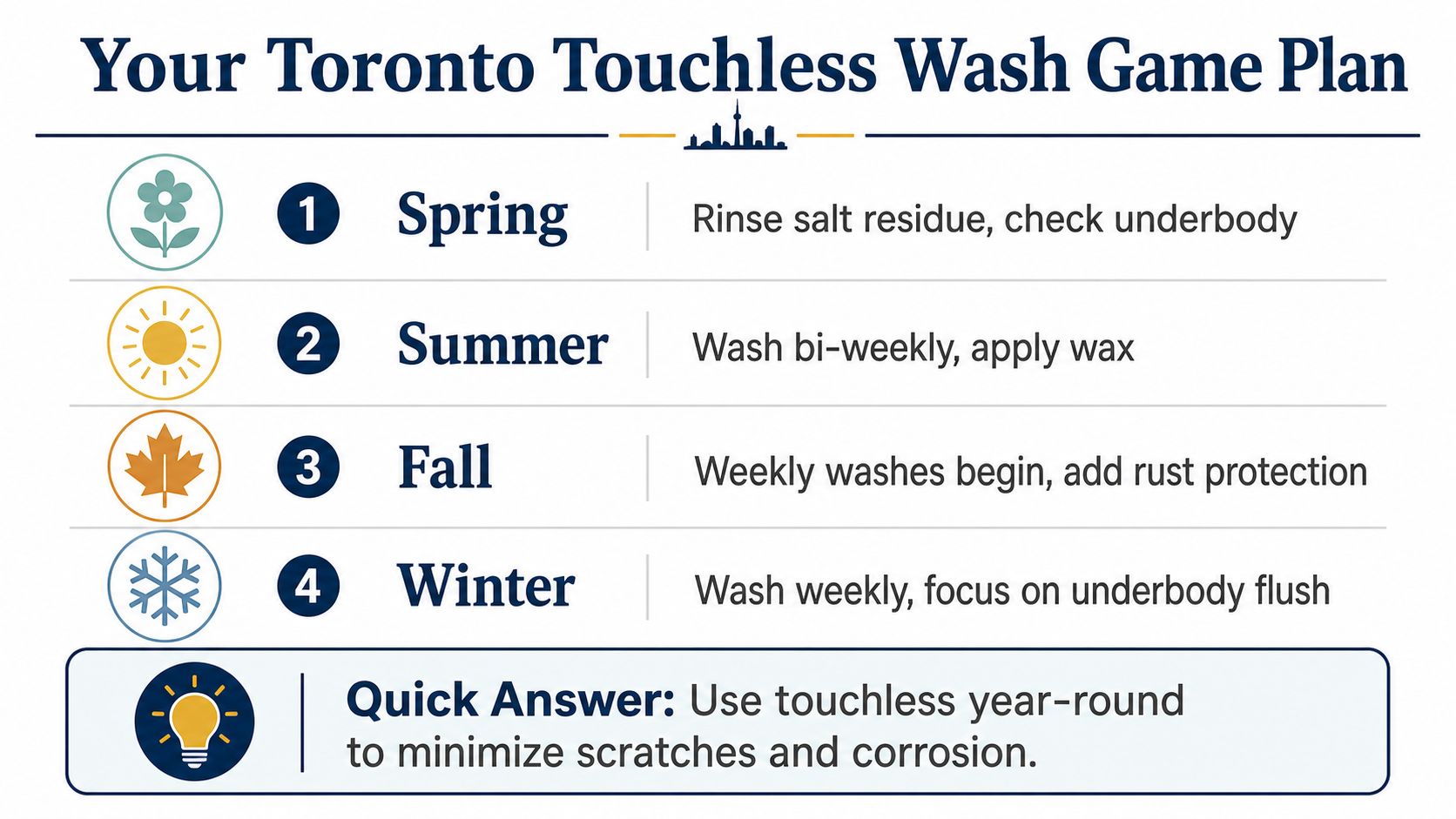
Here's the routine I'd use if I drove year-round in the GTA. In winter, wash often enough to keep salt from sitting around. In spring, get the residue off the underbody. In summer, you can stretch the gap a bit, but don't let road film build up. In fall, start thinking like winter is already here and add rust protection before the first serious slush.
A good backup habit helps too. If your wash visits are tied to reminders, route planning, or automated texts, a resource like YipSMS's text message playbook can help you build a simple reminder system without overcomplicating it. The point isn't tech for its own sake. It's making sure winter maintenance happens.
Quick answers for Toronto drivers
Is touchless safe on ceramic coatings? Usually yes for contact, but the chemistry can still affect performance over time, so keep an eye on how the coating behaves.
How often should I wash in peak salt season? Often enough that salt doesn't get a chance to sit and dry into the finish or underbody.
What if a station calls itself touchless but uses a guide rail? Treat that as a non-true touchless setup and check the equipment description before you commit.
If you want a Toronto wash routine that actually matches winter driving, use a location with express exterior cleaning, underbody options, and rust protection in the same visit. Nanak Car Wash offers that kind of setup across several GTA locations, which makes it easier to clean off salt without turning every wash into a project. Check the nearest site, compare the current offers, and pick the package that fits your route before the next storm turns your car into a white crusty mess.

 6600 Finch Ave W, Etobicoke, ON M9V 3Z6
 647-703-8515
 MON – SUN 8 AM to 7 PM