
A February commute through the GTA leaves more than a dirty exterior. In Brampton, a driver brushes slush from her boots, climbs into the car, and notices the familiar brown mark spreading across the salt-stained driver's seat. The stain has survived quick wipes, a damp cloth, and perhaps a hopeful squirt of household cleaner. Now the question is simple: does the seat need a shampoo, an extraction, leather care, or something more cautious?
The answer depends on what the seat is made from, how far the soil has travelled, and whether moisture can safely reach the material beneath the surface. Fabric, leather, and perforated upholstery need different treatment, especially after an Ontario winter. A professional upholstery cleaning service should identify those differences before applying a product or machine.
Table of Contents
- What an Upholstery Cleaning Service Actually Covers
- How Professional Upholstery Cleaning Works Step by Step
- Fabric vs Leather vs Perforated Seats and Why Method Matters
- Typical Pricing in the GTA and What Drives the Cost
- What to Expect at Nanak Car Wash Locations
- Why Ontario Winters Make Routine Upholstery Cleaning Worth It
- Choosing the Right Service Level for Your Vehicle
What an Upholstery Cleaning Service Actually Covers
An upholstery cleaning service is a focused process for cleaning textile or leather seating, rather than a vague promise to “freshen the interior.” In Canada, upholstery cleaning sits within NAICS 56174 / 561740, a formal industry classification for establishments primarily engaged in cleaning and dyeing rugs, carpets, and upholstery, as described by Statistics Canada's industry classification. The classification has appeared in Canadian statistical materials for decades, giving the service a clear place in federal business data.
That matters to a GTA driver because upholstery cleaning is an established service category with its own tools, chemical decisions, inspection process, and material risks. It is more than an optional extra attached to a general wash. Federal industry data also describes carpet and upholstery cleaning as an operationally viable service line, with average revenue of $252.9 thousand per firm and a profitability rate of 80.7% based on 2024 averages, as reported in the referenced federal industry profile linked through the Canadian upholstery-cleaning classification.
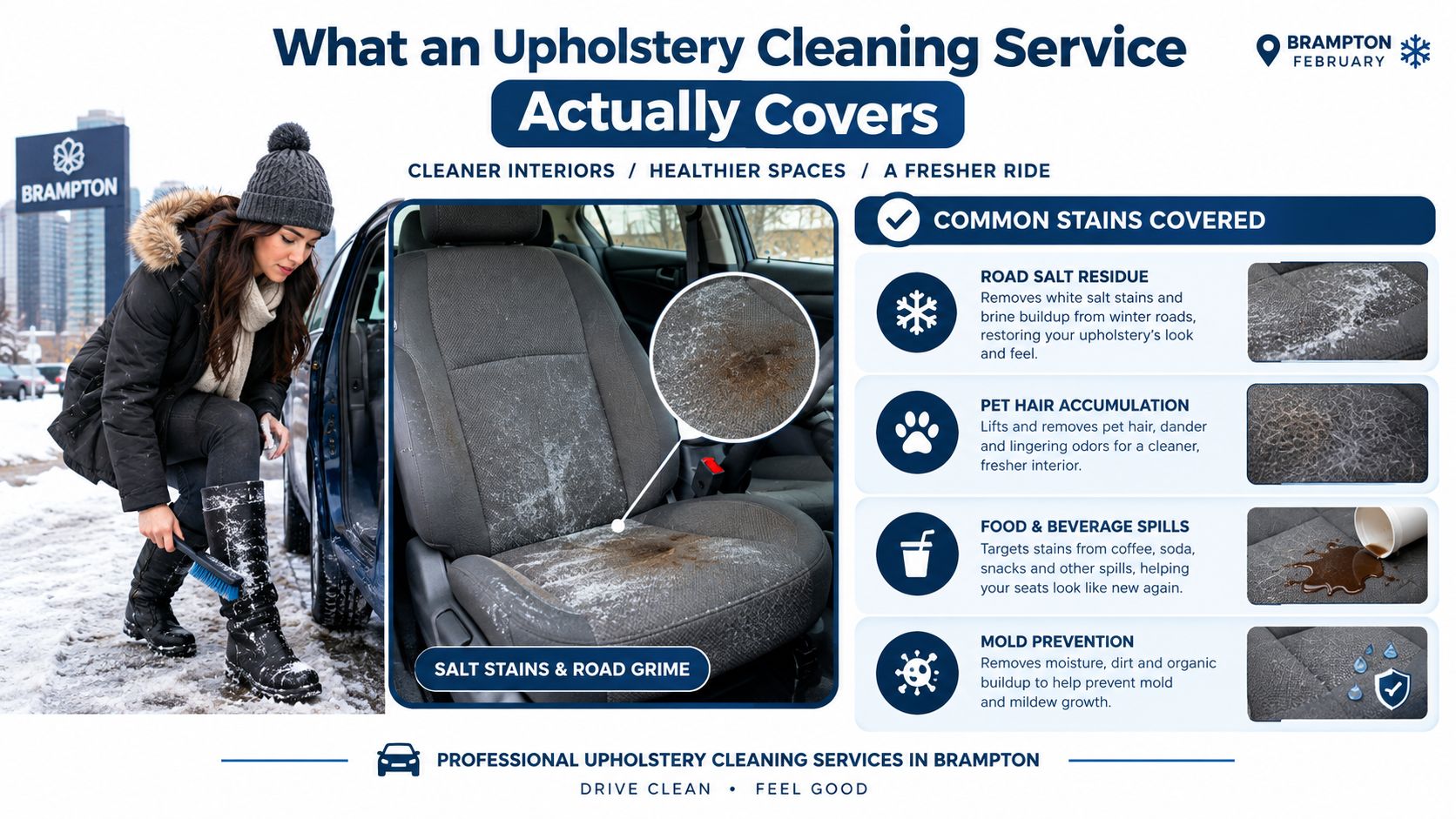
The usual service components
A proper vehicle upholstery appointment commonly starts with dry soil removal. The technician vacuums seat seams, piping, crevices, and the gap beside the centre console before adding moisture. This lifts loose grit, pet hair, crumbs, and dried salt instead of turning them into a muddy paste.
The next stages may include:
- Stain inspection: Salt lines, coffee marks, food spills, and darkened bolsters are assessed individually.
- Pre-treatment: A suitable solution loosens oily or organic soil before agitation.
- Shampooing or extraction: Fabric may receive controlled hot water extraction, while leather is treated with a separate cleaner.
- Leather conditioning: Appropriate for leather surfaces after cleaning, but not a substitute for cleaning fabric.
- Odour treatment: The operator addresses the source where possible instead of masking it with fragrance.
- Fabric protection: An optional treatment can help future spills sit on the surface longer.
A seat-only job isn't automatically a full interior detail. A full detail may also include dashboards, door panels, cup holders, vents, carpets, cargo areas, and other hard surfaces. Ask whether headliners, third-row seats, child-seat areas, and cargo compartments are included, because two quotes can sound identical while covering very different parts of the vehicle.
For a broader pre-purchase check, drivers can also review spot salvage vehicle red flags. Upholstery condition won't reveal every safety issue, but unusual seat damage, unexplained staining, or poorly repaired interior components can justify a closer inspection before buying.
How Professional Upholstery Cleaning Works Step by Step
Professional cleaning is less like spraying a seat and more like washing a winter jacket without damaging its lining. The operator removes loose contamination first, selects chemistry for the material, loosens bonded soil, and then recovers the moisture. Hot water extraction is widely referenced in Canadian upholstery-cleaning guidance because it combines pre-treatment, agitation, and vacuum recovery, as described by Canadian hot water extraction guidance for carpets and upholstery.
The six-stage workflow
1. Vacuum before water enters the picture. A crevice tool reaches the seam beside the seatback and the narrow channel near the buckle. This step matters because dry grit can behave like fine sandpaper when a brush moves it across a fabric weave.
2. Apply a material-appropriate pre-treatment. The technician targets high-contact areas, such as the driver's bolster, steering-side cushion, and headrest. The solution needs time to loosen soil, but the exact dwell time depends on the product and upholstery, so a careful operator follows the product instructions rather than using a fixed timer for every vehicle.
3. Agitate gently. A soft brush works the solution into the weave and helps separate oily residue from fibres. The goal isn't aggressive scrubbing. Excessive force can fuzz fabric, disturb a delicate finish, or spread a stain into a larger wet edge.
Practical rule: The machine does not replace inspection. It only makes the chosen cleaning method more powerful.
4. Extract the loosened soil. Hot water extraction injects a controlled cleaning solution and immediately vacuums it back out. A useful analogy is a pressure washer paired with a powerful wet vacuum, but with much tighter control over pressure, temperature, and moisture. The recovered liquid carries away detached soil rather than just moving it around.
5. Make additional dry passes. The wand travels over the seat again without adding more solution. These passes remove remaining moisture from the surface and padding, which helps the vehicle return to use sooner.
6. Inspect and protect. The technician checks for missed marks, uneven colour, damp areas, and odour. Fabric protector or leather conditioner may be offered when it suits the material and the driver's needs.
Mobile and in-bay services can follow the same sequence. The important difference isn't the building. It's whether the operator has identified the material, controlled moisture, and completed recovery properly. Drivers comparing household equipment can learn how different devices work through this guide to compare steam cleaners for home, but a home steam cleaner isn't automatically appropriate for a vehicle seat.
Fabric vs Leather vs Perforated Seats and Why Method Matters
A grey cloth seat, a smooth leather bolster, and a perforated leather cushion may sit in the same cabin, but they don't respond to cleaning in the same way. Treating them as one material is how a quick refresh becomes a watermark, a dark ring, or a damaged finish.
Ontario consumer guidance emphasises that material and care code should determine the method. Its consumer guide to fabric-specific and leather-specific cleaning distinguishes durable synthetic fabric, delicate or water-sensitive textiles, and leather care rather than placing every interior into one workflow.
| Interior Type | Best Method | Moisture Tolerance | Key Risk |
|---|---|---|---|
| Woven or synthetic fabric | Pre-treatment followed by controlled hot water extraction when the care code permits it | Moderate to high, depending on construction and backing | Dye transfer, over-wetting, or remaining residue |
| Smooth leather or synthetic leather | pH-balanced leather cleaner, gentle agitation, microfiber wipe-down, and suitable conditioner | Low | Finish damage, excessive saturation, or later cracking |
| Perforated leather | Low-moisture foam or carefully controlled cleaning around the perforations | Low | Moisture trapped in holes can wick back and leave dark rings |
| Delicate or water-sensitive fabric | Low-moisture or solvent-based process selected after testing | Low | Shrinkage, browning, distortion, or colour bleed |
Fabric seats
Durable fabric usually gives an operator the broadest cleaning options. Hot water extraction can reach soil held within the weave, while pre-treatment helps with oily marks and winter grime. The technician should still test a hidden area first, particularly if the fabric is brightly dyed, aged, or already showing fading.
Fabric also hides problems well. A seat may look merely grey while holding salt residue, food particles, hair, and body oils below the visible surface. That's why vacuuming and recovery matter more than repeatedly wiping the top.
Leather seats
Leather needs a separate routine. A pH-balanced cleaner lifts surface soil, and a microfiber cloth removes the loosened residue without flooding the seat. Conditioning may help maintain the finish, but over-applying product can leave a greasy surface that attracts more dirt.
Perforated seats
Perforations make moisture control especially important. Liquid can enter the small holes, remain beneath the visible surface, and later wick upward as a dark circle. A cautious operator uses less moisture, avoids forcing solution into the openings, and checks the seat carefully during drying.
The more delicate or perforated the material, the less moisture it should receive and the more important the technician's chemical knowledge becomes.
Typical Pricing in the GTA and What Drives the Cost
A quote for upholstery cleaning is usually a formula, not a universal price tag. The operator is accounting for the amount of seating, the material, the soil condition, the access, and the amount of handwork required.
The first tier is an express refresh. This suits a vehicle with loose dust, light surface marks, and no serious odour. It may focus on vacuuming and a limited surface clean. The second tier is a fabric shampoo and extraction service, designed for embedded winter residue, visible stains, and seats that need more than a wipe. The third is a full interior detail, which may include seats, carpets, door panels, vents, crevices, odour work, and leather treatment.
| Service Level | Sedan Range | SUV / Van Surcharge | Common Add-Ons |
|---|---|---|---|
| Express refresh | Ask for the shop's current starting quote | May apply when extra rows or cargo space are involved | Targeted stain work |
| Seat shampoo and extraction | Quoted after vehicle and soil inspection | Added labour for larger cabins | Pet hair removal, child-seat area cleaning |
| Full interior detail | Quoted according to scope and condition | More surfaces and seat rows increase labour | Odour treatment, leather care, fabric protection |
Three questions that change the quote
Vehicle size affects time because a compact sedan has fewer seats and less carpet than a minivan or three-row crossover. Larger cabins also create more drying and inspection work.
Soil level matters just as much. A few splash marks are different from ground-in salt, pet hair woven into the seat, or a spill that has soaked into padding. Ask whether heavy soil is priced separately rather than assuming the advertised starting rate covers it.
Add-ons can change the scope. Pet hair removal, child-seat extraction, stain-specific treatment, and odour work each require additional attention. A clear quote should identify which treatments are included and which are optional.
Before booking, send the operator the vehicle type, interior material, number of affected seats, photos of the worst areas, and any history of do-it-yourself products. That information won't guarantee a final price, but it can make the estimate more honest.
What to Expect at Nanak Car Wash Locations
The practical experience should begin before a machine touches the seat. At a GTA location, the driver should be able to point out salt lines, stained bolsters, pet-hair zones, coffee marks, and any seat with perforations. That quick conversation helps separate a routine refresh from a job that needs deeper treatment.
Arrival and inspection
After the vehicle is checked in, ask which surfaces the selected service covers. Upholstery may mean fabric seats only, while an interior detailing package can extend to carpets, door panels, consoles, vents, and crevices. Confirm whether the cargo area, third row, headliner, and child-seat area are included if those spaces matter to you.
The cleaning sequence should then follow the material. Fabric seats can receive vacuuming, stain treatment, and hot water extraction when suitable. Leather or vinyl should receive a targeted wipe-down with compatible chemistry rather than the same wet process used on cloth.
Cleaning and handoff
During the work, loose debris is removed first. The operator then treats visible stains, cleans the seating surfaces, extracts or wipes according to material, and checks for remaining moisture and odour. Before accepting the keys, look at the driver's bolster, seat seams, belt-side edges, and any area you identified at arrival.
Appointments can be useful when the vehicle needs a larger interior service, while a walk-in may suit a simpler visit during a quieter period. Memberships and prepaid bundles can also make sense for drivers who want regular exterior washing and occasional interior upkeep, but ask exactly what interior services receive member pricing and whether appointments are required.
The most useful handoff question is not “Does it look clean?” Ask, “What should I avoid doing until the seats are fully dry, and which marks may need another treatment?” That answer gives you a realistic expectation instead of a generic promise.
Why Ontario Winters Make Routine Upholstery Cleaning Worth It
Ontario winter soil has a particular talent for getting everywhere. Road salt mixes with melted slush, rides in on boots, and settles along seat edges, floor mats, carpet fibres, and the lower door area. A driver may notice the white residue first, but the more persistent problem is the damp mixture that gets pushed deeper by shoes, bags, and repeated commuting.
Closed windows add another complication. Wet coats, boots, and floor coverings release moisture into a cabin that isn't always aired out immediately. During thaws, that dampness can contribute to stale odours and a musty feeling, especially when spills, crumbs, pet dander, and dirty mats are already present.

Why waiting for a dramatic stain backfires
A seat rarely becomes unpleasant in one event. The cabin accumulates small deposits from school lunches, takeaway coffee, work boots, commuting clothes, and pets. By the time the driver notices a persistent odour or a darkened cushion, surface wiping may no longer reach the material holding the soil.
A late-winter or early-spring clean gives the vehicle a useful reset. The operator can remove winter residue while the driver can identify damp mats, leaking containers, or recurring spills before they create another cycle of staining.
- Remove loose salt early: Vacuum dry crystals before wiping, so they don't turn into a paste across the weave.
- Blot fresh spills: Rubbing pushes liquid outward and deeper into the seat.
- Air the cabin when conditions allow: Better airflow supports drying after wet clothing and floor mats enter the vehicle.
- Watch for recurring odours: A fragrance can cover a smell temporarily without addressing the contaminated area.
- Check the material first: Leather and perforated seating need lower-moisture treatment than durable fabric.
Routine cleaning also supports presentation when a vehicle is being traded, sold, or returned at lease end. It can't reverse torn upholstery or structural wear, but it can prevent avoidable grime from becoming the first thing a prospective buyer notices.
Choosing the Right Service Level for Your Vehicle
The right service level depends on condition, use, and timing, not just the cheapest line on a menu. A commuter sedan with a few surface marks doesn't need the same intervention as a family SUV carrying pets, sports equipment, wet boots, and snack containers through every season.
Choose an express refresh when
The seats have visible dust and light surface dirt, but no embedded salt lines, strong odour, or set-in spill. This level fits a driver preparing for a spring tidy-up who mainly needs vacuuming and a limited shampoo or surface clean.
Before booking, check the seams and the area beside the seatbelt buckle. If those spots are clean and the fabric still looks even after vacuuming, a lighter service may be sufficient.
Choose shampoo and extraction when
The vehicle has visible winter stains, darkened driver contact areas, or fabric that feels dull despite regular vacuuming. This is the practical middle choice for daily GTA commuters and families whose vehicles collect food debris, pet hair, and slush residue.
Ask whether the operator will pre-treat stains and complete a dry pass after extraction. For fabric seats, those steps matter because the goal is to remove suspended soil, not just make the surface look wet and darker for a short time.
Choose a full detail when
The cabin has persistent odours, widespread discolouration, neglected carpets, dirty door panels, or a trade-in and lease-end inspection approaching. A full detail makes sense when several interior surfaces need coordinated attention rather than when one seat needs a quick clean.
The decision prompts are straightforward:
- Usage: Does the vehicle handle daily commuting, children, pets, or deliveries?
- Material: Are the seats fabric, smooth leather, synthetic leather, or perforated?
- History: How long has it been since a deep interior clean?
- Condition: Is the problem loose dirt, embedded salt, or a persistent odour?
- Timing: Is a sale, trade-in, or lease return coming soon?
For ongoing upkeep, review the available Nanak Car Wash locations and membership options, then match the service to the vehicle's condition rather than automatically choosing the largest package.
If winter has left your seats marked by salt, spills, pet hair, or lingering odours, book an interior assessment with Nanak Car Wash and ask which treatment fits your specific material. Visit Nanak Car Wash to review locations and arrange a practical upholstery cleaning service for your GTA vehicle.


 6600 Finch Ave W, Etobicoke, ON M9V 3Z6
 647-703-8515
 MON – SUN 8 AM to 7 PM