
You scrape the ice from the windshield before work and still can't see clearly. A foggy film sits on the inside of the glass, salt crusts the rocker panels, and small rust bubbles have appeared on an SUV that isn't even old enough to feel “old.” That's a familiar GTA winter morning, and it's why a vehicle detailing service should be viewed as maintenance, not pampering.
A tunnel wash can remove loose dirt. It usually can't reach every seam, lift bonded salt from the underbody, restore a stained cabin, correct paint damage, or identify corrosion before it spreads. Ontario's road-salt exposure makes those omissions expensive over time. The province uses roughly 1.5 to 3 million tonnes of road salt each winter, and exposed metal can begin corroding within 48 to 72 hours after salt contact, depending on temperature and moisture, as explained in this Ontario road-salt corrosion guide.
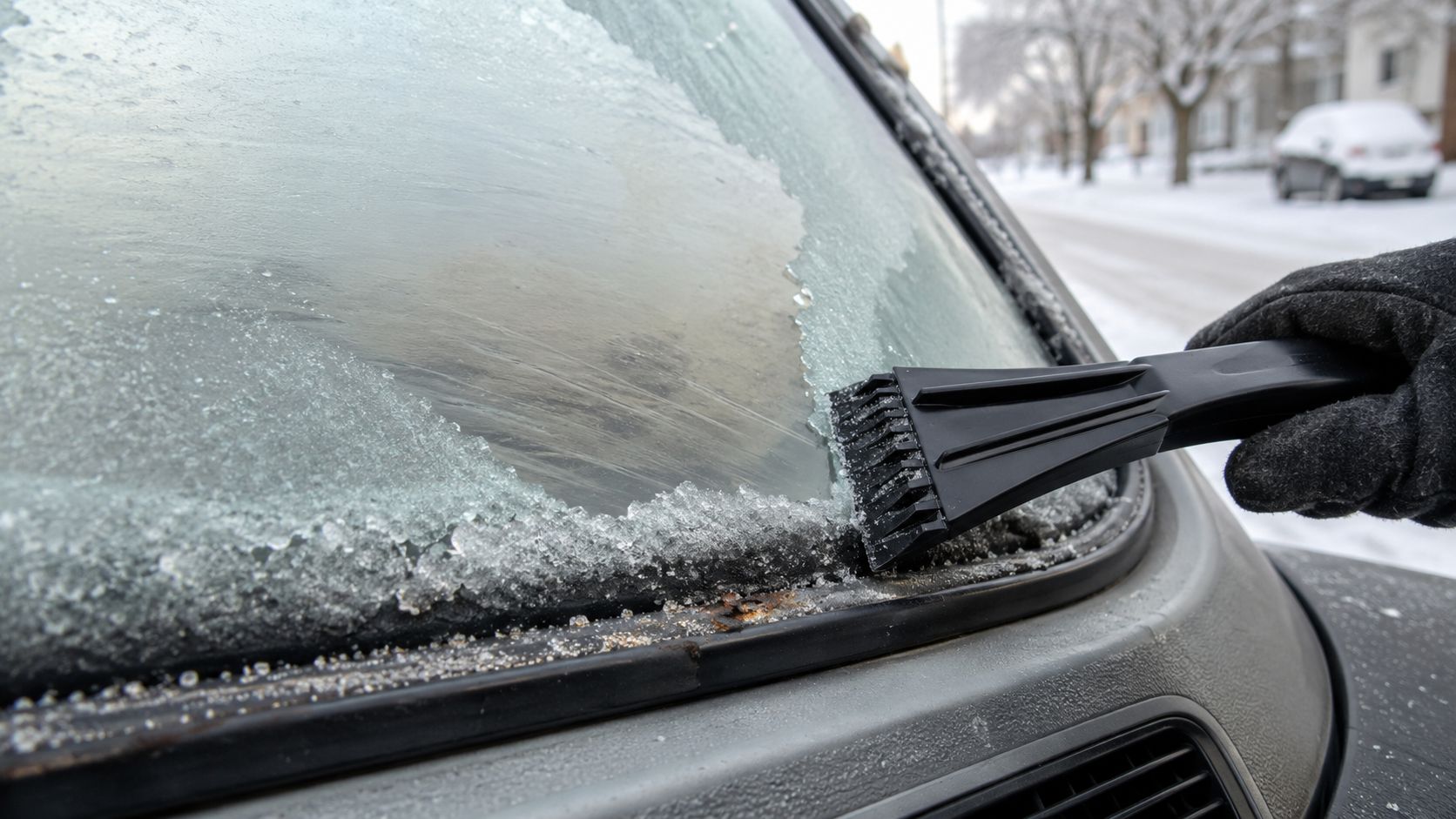
Table of Contents
- Why GTA Drivers Care About Detailing
- What Professional Vehicle Detailing Actually Includes
- Express Wash vs Full Service vs True Detailing Packages
- Ontario Road Salt and the Case for Rust Protection
- Pricing Expectations and Membership Math
- How to Choose the Right Detailing Provider in the GTA
- Common Detailing Myths You Should Stop Believing
Why GTA Drivers Care About Detailing
A winter-driven GTA vehicle can look fine while salt slurry works into wheel wells, rocker seams, and underbody joints. Freeze-thaw cycles widen small paint and undercoating weaknesses, while summer UV exposure dries and fades unprotected surfaces. By spring, visible dirt may be the least serious problem. Residue left underneath can continue attacking metal after the roads appear clean.
That is why cleaning and protective maintenance deserve different budgets. An express wash removes loose grime. Detailing addresses bonded contamination on paint, residue around trim, embedded fabric dirt, and areas ordinary wash equipment cannot flush properly. It also gives a technician a chance to identify bubbling paint, failed weather seals, stained upholstery, and early corrosion before correction becomes expensive.
The GTA has an established service market behind this work. An Ontario car wash and auto detailing market estimate projects a 2026 market of $617.2 million, with 1,478 businesses and 8,146 employees. The source reports average annual market growth of 3.5% from 2021 to 2026, while businesses grew by 3.3% per year during that period. Its category covers automotive detailing, washing and polishing, mobile washing, self-service facilities, and truck and bus washes. Detailing therefore operates within a broad vehicle-maintenance market, not as a purely cosmetic luxury.
What the quick wash misses
- Undercarriage residue: Salt slurry clings to frame areas, brake components, rocker panels, and wheel wells.
- Paint contamination: Road film and metallic particles can remain after a basic rinse.
- Interior wear: Grit in seat tracks and carpet fibres acts like sandpaper as occupants get in and out.
- Early warning signs: A trained technician can flag peeling clear coat, seam rust, or damaged trim before resale preparation turns into a repair project.
My rule for GTA owners is simple: winter driving puts detailing in the maintenance budget. Schedule it around actual salt exposure and vehicle condition, rather than buying frequent cosmetic visits. Ignoring the underside until spring gives corrosion months to develop unseen.
A good vehicle detailing service cannot preserve paint or underbody metal forever. It can remove contaminants, add surface protection, improve visibility and cabin hygiene, and delay deterioration that eventually raises ownership costs.
What Professional Vehicle Detailing Actually Includes
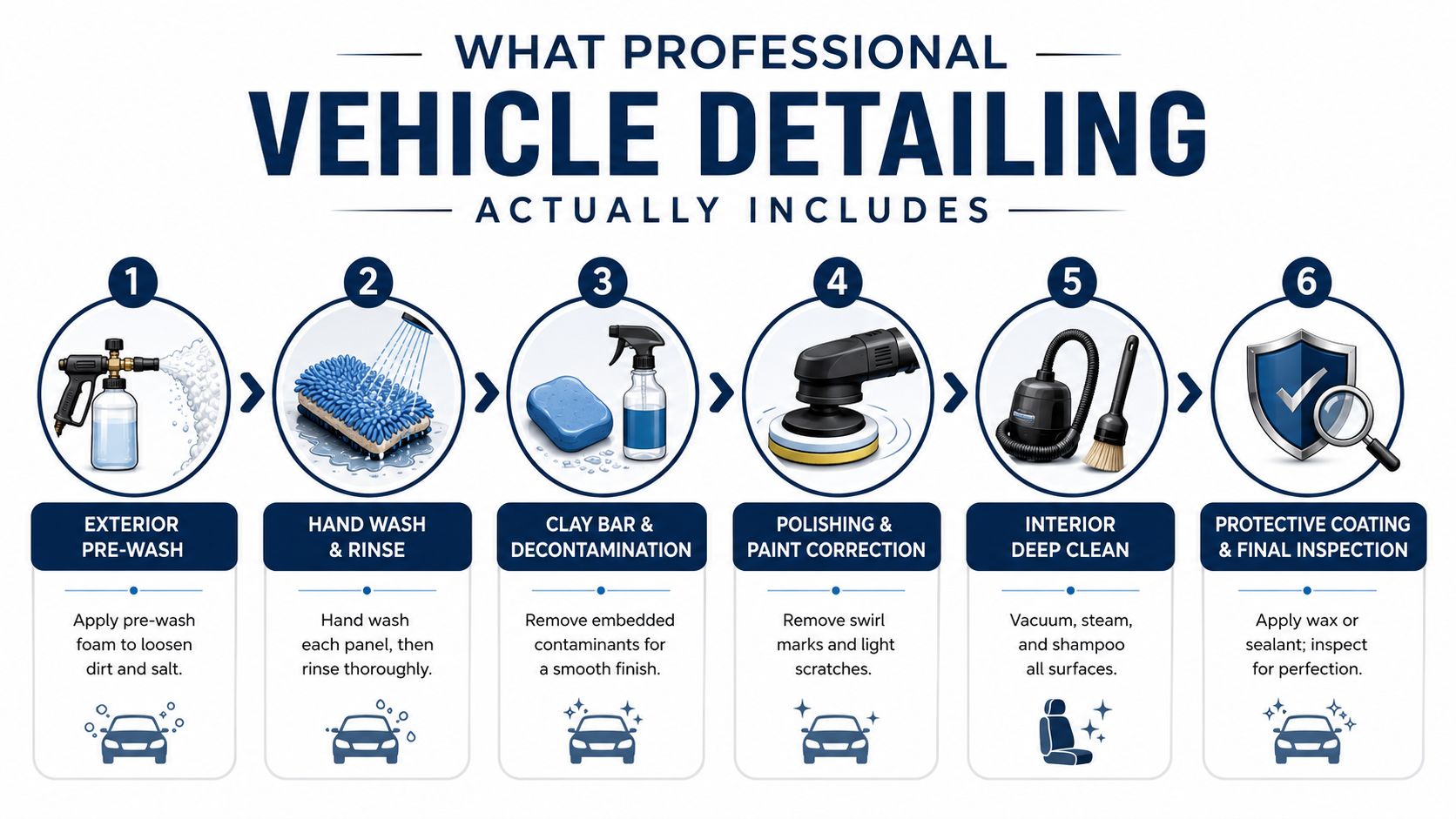
A real detail follows a sequence. The technician first removes what can scratch the surface, then cleans what remains, corrects visible defects, and protects the finished vehicle. A quick wash mostly handles the first part.
Exterior work starts before the mitt touches paint
A proper exterior process typically looks like this:
- Pre-wash foam and rinse: Thick foam loosens salt, sand, and road film before contact washing. This reduces the chance of dragging abrasive grit across the clear coat.
- Hand wash: A pH-balanced automotive shampoo, dedicated wash mitts, and controlled rinsing clean each panel without treating the vehicle like a conveyor-belt object.
- Decontamination: A clay bar removes bonded particles that shampoo leaves behind. The paint should feel smooth rather than gritty when the process is complete.
- Machine polishing: A dual-action polisher can reduce swirl marks, oxidation, and light scratches. This is paint correction, not just washing.
- Protection: A sealant, wax, or ceramic coating creates a more resistant surface and makes later maintenance easier. The product and preparation matter more than the word “premium” on a menu.
- Undercarriage rinse: High-pressure cleaning beneath the vehicle flushes winter residue from areas a standard exterior pass may barely touch.
Those stages answer different problems. Cleaning removes contamination. Correcting improves defects already visible in the finish. Protecting helps the cleaned and corrected surfaces resist future exposure. A shop that applies a coating over poorly prepared paint is skipping the part that makes the protection worthwhile.
Interior restoration is more than vacuuming
Technicians should vacuum seats, carpets, mats, vents, seat tracks, storage pockets, and crevices. Steam cleaning or hot-water extraction can address embedded soil in carpets and upholstery, while leather requires a suitable cleaner followed by conditioner rather than a shiny household dressing.
The dashboard and trim need controlled cleaning, not greasy product sprayed everywhere. Glass should be cleaned with a streak-free product, and the cabin air filter deserves inspection if the vehicle has persistent odours or weak airflow. Trunk areas and door jambs also matter, especially after winter driving.
A serious appointment may take four to eight hours, depending on vehicle size, condition, correction requirements, and the selected package. Nanak Car Wash lists some interior and exterior detailing appointments at one to four hours, with SUV, van, truck, and pet-hair surcharges applying, so ask for a condition-based estimate rather than assuming every “full detail” means the same thing.
The before-and-after difference should be functional as well as visual. You should see cleaner glass, less grit, more manageable paint, fresher fabric, and fewer hidden salt deposits. If the service only makes the vehicle glossy for a day, you paid for presentation, not protection.
Express Wash vs Full Service vs True Detailing Packages
These three services aren't interchangeable. Choosing the cheapest option is sensible when it matches the job. It's false economy when you expect a quick exterior wash to reverse months of embedded contamination.
| Factor | Express Wash | Full Service Wash | True Detailing |
|---|---|---|---|
| Main purpose | Fast exterior maintenance | Routine exterior and interior upkeep | Deep cleaning, correction, and protection |
| Typical process | Presoak, foam, rinse, drying | Exterior wash, hand dry, vacuum, glass and trim cleaning | Decontamination, polishing, extraction, detailed interior work, protective treatment |
| Best fit | Garage-kept vehicle washed regularly | Daily commuter needing consistent upkeep | High-use, salt-exposed, older, recently purchased, or pre-sale vehicle |
| Time commitment | Short visit | Moderate visit | Appointment-based service |
| Underbody focus | Select packages may include it | Often available as an upgrade or package feature | Should be discussed explicitly |
| Main limitation | Doesn't correct paint or deep-clean the cabin | Won't usually remove serious bonded contamination or correct paint | Costs more and requires vehicle downtime |
Express wash
An express wash is appropriate for a driver who maintains a clean vehicle and needs loose dirt, salt, and road film removed before they build up. Nanak Car Wash lists express exterior packages starting from $9.99 plus tax, with options such as presoak soap, foam bath, rinse, drying agent, and air blowers. Underbody washing, waxes, sealers, and foam upgrades may be included depending on the package selected.
Don't confuse a tunnel “premium wax” button with a detailer's sealant application. It may add a short-term surface treatment, but it doesn't replace paint preparation, controlled application, curing time, or a careful inspection.
Full-service wash
Full service makes sense for a working vehicle that needs more than a rinse but doesn't require correction or extraction. Nanak Car Wash lists full-service packages starting from $29.99 plus tax, combining an exterior wash and hand dry with interior vacuuming, dashboard cleaning, and window cleaning. Higher tiers can add door panels, consoles, cup holders, and tire dressing.
This is a sensible upkeep choice for commuters, leased vehicles, family cars, and drivers who prefer regular maintenance over occasional rescue jobs.
True detailing
True detailing is the right call for a vehicle with stained upholstery, neglected paint, visible swirl marks, pet hair, heavy salt contamination, or an upcoming sale. It can include machine polishing, carpet and seat shampooing, leather deep cleaning, vent and crevice blowout, trunk cleaning, and protective products.
Use this decision filter:
- Newer vehicle with light contamination: Choose express or full service, with underbody cleaning during winter.
- Older or high-mileage vehicle: Book a detail when grime, stains, odours, or paint defects resist routine washing.
- Long-term ownership: Prioritise underbody cleaning and rust protection over cosmetic add-ons.
- Selling soon: Pay for presentation, glass, interior extraction, paint refinement, and honest defect disclosure.
- Leased vehicle: Maintain it regularly, but don't automatically buy expensive correction or coating work unless it solves a real condition problem.
Ontario Road Salt and the Case for Rust Protection
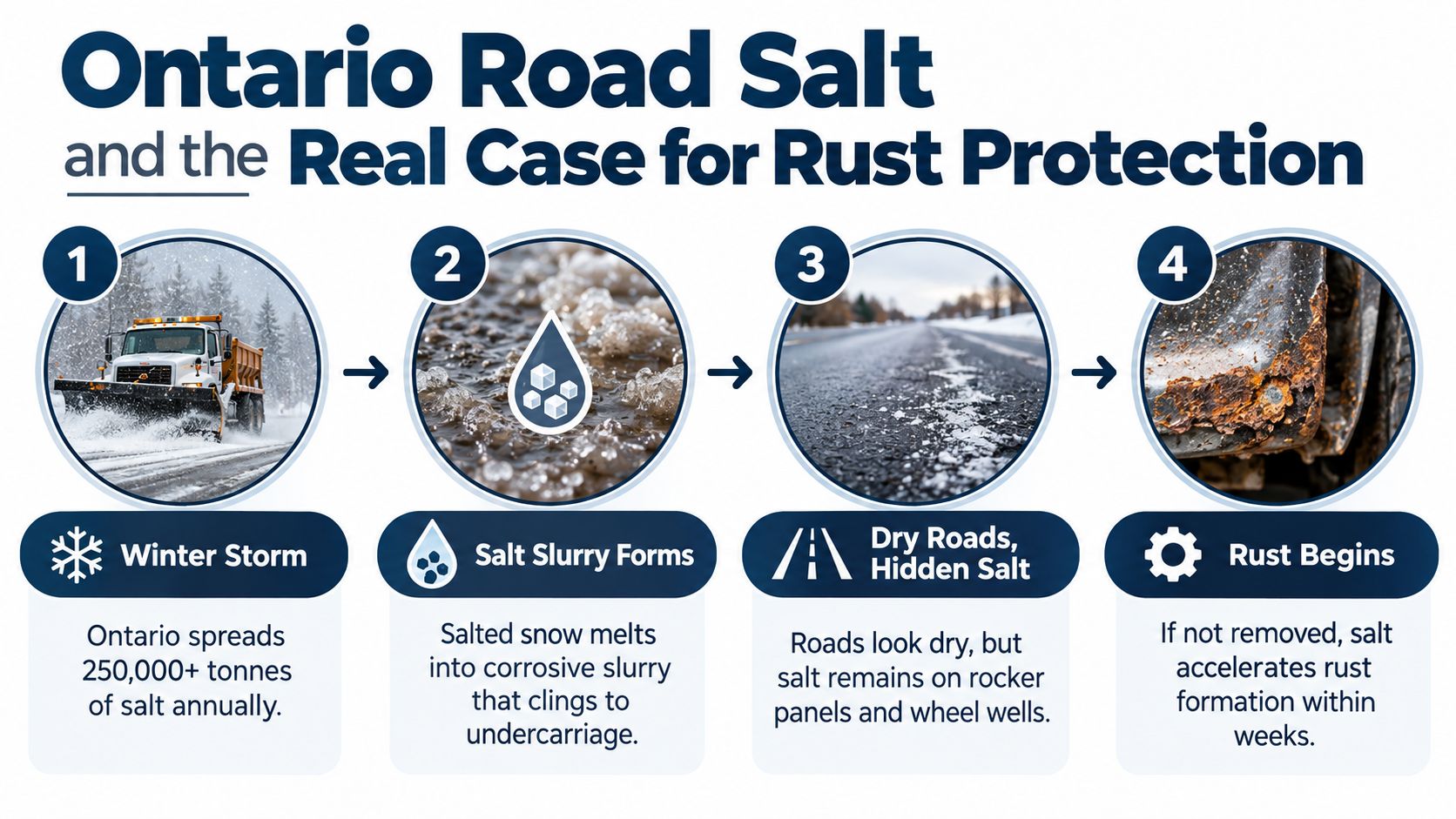
A vehicle can look clean while salt remains packed behind liners, around fasteners, and across the underbody. Once moisture reaches that residue, it supports electrochemical reactions between exposed metal and oxygen. Seams, crevices, brake lines, and underbody components then hold the mixture where a basic exterior wash cannot reach it.
The vehicle-washing wastewater guidance from the Capital Regional District lists detergents, sediment, oil, grease, metals, and extreme pH among the contaminants wash water can carry. It advises against outdoor discharge. For GTA drivers, that supports using a commercial wash with controlled drainage instead of sending salty wastewater into a driveway, street, or storm system.
Salt exposure has a timeline
Ontario reporting indicates that corrosion may begin within 48 to 72 hours of salt contact, depending on temperature and moisture. Year-round GTA driving can produce visible undercarriage rust within three to five years, while structural rust risk may emerge within eight to twelve years without protection, according to the Ontario road-salt maintenance timeline.
These ranges vary by vehicle, driving pattern, storage, and maintenance. They still give you a practical rule: do not wait for bubbling paint or flaking metal. Salt and moisture can keep working behind panels and under the vehicle long before corrosion becomes visible.
The NSERC corrosion project information identifies road salt as responsible for about 50% of vehicle corrosion in Canada. That puts underbody washing near the centre of an Ontario vehicle detailing service, rather than treating it as a cosmetic add-on.
Effective protection strategies
- High-pressure underbody washing: Flushes soluble salt and slurry from exposed areas. Schedule it during salt season, especially after repeated snowy or slushy drives.
- Paint sealants and coatings: Reduce contamination and moisture contact on painted panels. They do not repair bare metal or replace undercoating.
- Oil-based rust proofing: Reaches seams and cavities when applied correctly, separating vulnerable metal from moisture and salt.
- Inspection: Exposes stone chips, peeling coatings, damaged liners, and early corrosion before the problem becomes hidden or structural.
Detailing and rust proofing address different maintenance jobs. Detailing cleans accessible surfaces and adds protection. Rust proofing targets corrosion-prone cavities and components with a dedicated compound. Factory coatings and galvanized panels help, but they do not eliminate damage from stone chips, seams, fasteners, or Ontario winter exposure.
Book underbody washing throughout salt season, arrange an inspection before winter, and evaluate rust proofing separately from exterior shine. That routine delays corrosion and protects ownership costs far better than paying for a polished surface while salt remains underneath.
Pricing Expectations and Membership Math
The useful question isn't “What does a wash cost?” It's “What will each visit cost me over the period when my vehicle needs the most protection?”
You can calculate it without relying on sales language:
Annual cost = price per visit × expected visits
For a membership:
Annual cost = monthly fee × active months
For a prepaid bundle:
Effective visit cost = bundle price ÷ included washes
The answer changes with driving habits. A weekend vehicle may need occasional cleaning and seasonal detailing. A sales representative, delivery driver, rideshare operator, or service van sees more road film, cabin wear, and downtime pressure. Paying for unlimited access makes little sense if the vehicle rarely visits, while paying one-off rates for every winter wash can become inefficient for a high-use vehicle.
Nanak Car Wash offers monthly Unlimited Wash Club passes, prepaid multi-wash tickets, and combination deals. Its membership information states that there are no activation or cancellation fees and no long-term contracts stated on the site, but you should still confirm participating locations and the exact wash level before enrolling.
Compare plans by actual behaviour
| Driver Profile | Pay-Per-Visit Annual Cost | Monthly Membership Annual Cost | Prepaid Bundle Annual Cost | Best Value Option |
|---|---|---|---|---|
| Weekend-only driver | Depends on actual visits | Depends on selected monthly fee and months used | Depends on bundle terms | Pay per visit or a small prepaid bundle |
| Regular commuter | Rises with consistent winter visits | May win when visits are frequent | Can work if visits are predictable | Compare break-even visits |
| High-mileage sales, delivery, or fleet vehicle | Usually highest with frequent washing | Often the simplest predictable model | Strong if expiry and use terms fit | Membership or volume bundle |
Don't use a made-up break-even point. Get the displayed visit price, ask how many washes you realistically need, then divide the monthly fee by that visit price. If the result is fewer visits than you expect to make, the membership may be economical. If not, choose pay-per-visit or prepaid tickets.
Read the fine print before committing
Check location restrictions, vehicle-size rules, wash-tier limits, expiry dates, upgrade charges, and whether interior services are discounted or excluded. A low monthly price can become frustrating if your commute never passes a participating site or if your truck is treated as a different class.
For GTA winter driving, consistency matters more than buying the most expensive package. Put recurring washes toward salt removal and visibility first. Save deep extraction, machine polishing, and paint protection for a scheduled seasonal reset or a clear condition problem. That approach controls spending while still protecting the parts of the vehicle that suffer most.
How to Choose the Right Detailing Provider in the GTA
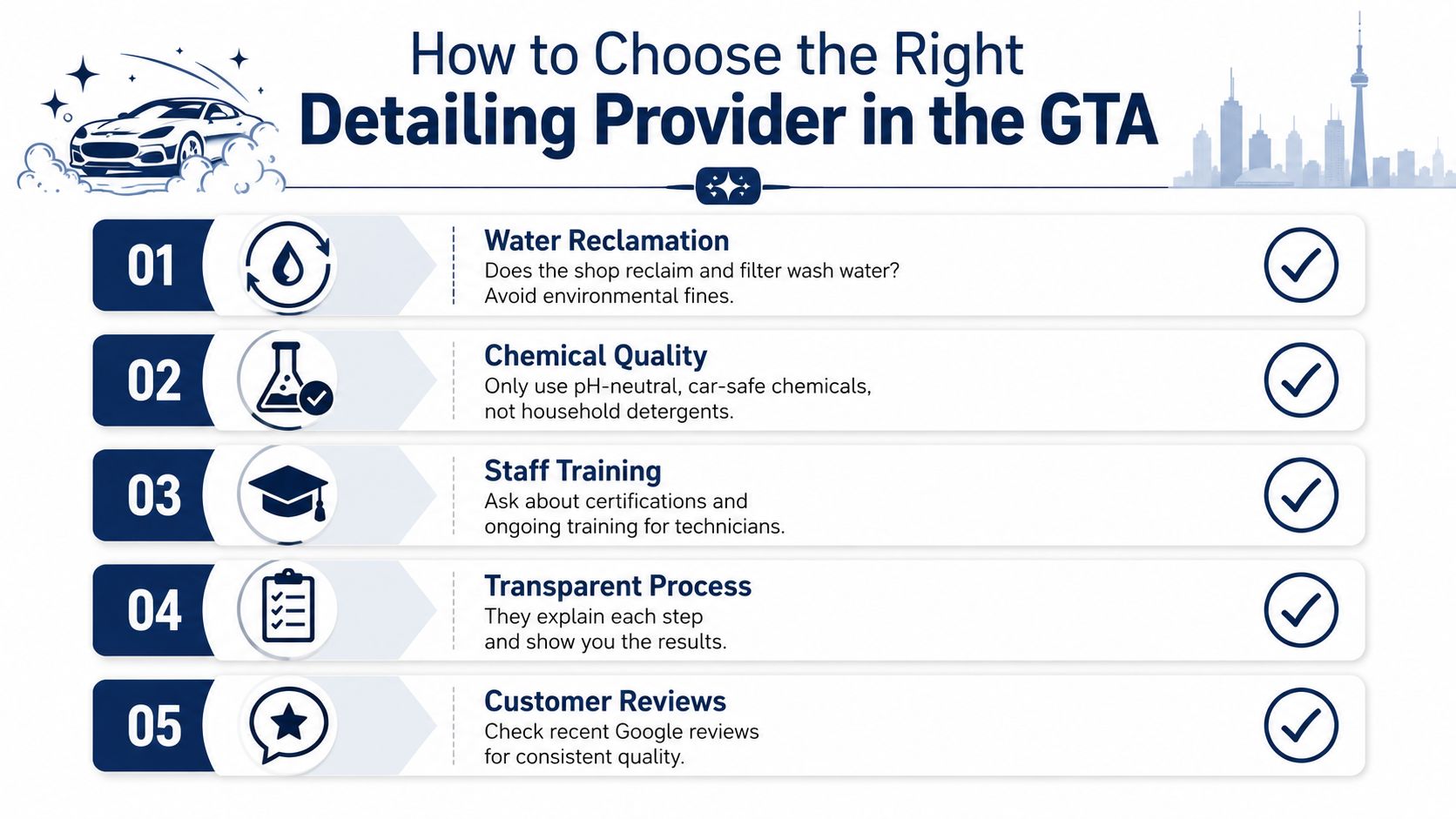
A good provider should explain what happens to your vehicle, what the package excludes, and why each recommended service has a purpose. If the salesperson can't describe the process beyond “premium protection,” keep looking.
Start with water and chemicals
Vehicle-wash wastewater can contain detergents, sediment, oil, grease, metals, and pH extremes, which is why Canadian environmental guidance treats it as a controlled stream. Ask whether the facility uses proper drainage and disposal procedures, rather than letting wash water run into a street or storm system.
You should also ask what products touch the paint and interior. A pH-balanced car shampoo, body-safe solvent, dedicated glass cleaner, and material-appropriate leather product are reassuring answers. Household detergents and aggressive degreasers may remove contamination, but they can also strip protection or dull sensitive surfaces.
Ask questions that expose shortcuts
- Process clarity: Is clay-bar decontamination included, or is it an upsell?
- Paint correction: Does machine polishing remove defects, or will the shop only apply a dressing?
- Underbody care: Does the package include an undercarriage rinse during winter?
- Interior method: Are carpets vacuumed only, or are they extracted or steam cleaned?
- Technician ability: What training or product-specific instruction do technicians receive?
- Pricing: Are size, pet-hair, heavy-soil, and oversized-vehicle charges listed before work begins?
- Evidence: Can the provider show real before-and-after results from comparable vehicles?
Mobile detailing can be convenient, but convenience doesn't excuse uncontrolled runoff or poor lighting. A provider working outdoors without containment may struggle to inspect paint properly and may create environmental problems. A fixed, controlled facility often offers better conditions for polishing, coating application, drying, and quality checks.
Automated brush systems also deserve scrutiny. They can be useful for basic maintenance, but dirty brushes and rushed contact can create swirl marks. If you want correction or a coating, ask who performs the hand work and how the shop prevents abrasive contamination from moving between vehicles.
Choose the provider that gives you a precise scope, a realistic result, and a clear price. A trustworthy operator won't promise to stop every rust problem or make deep scratches vanish without explaining the limitations.
Common Detailing Myths You Should Stop Believing
Myth one: detailing prevents rust completely. It doesn't. Washing and protection remove salt and reduce exposure, while rust proofing can help shield vulnerable areas, but existing corrosion and damaged metal still require inspection and repair.
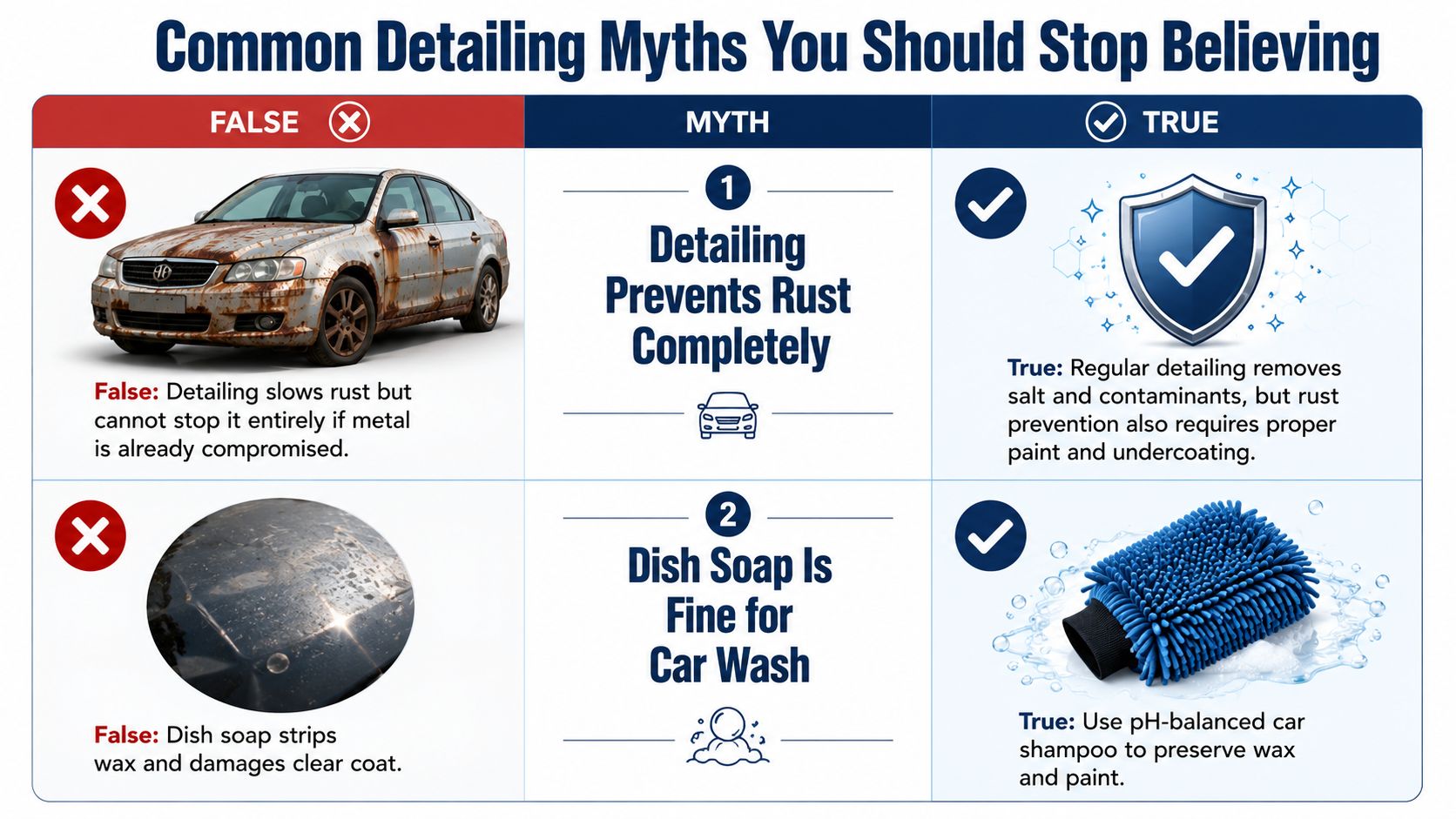
Myth two: driveway washing is always fine. It isn't a responsible default when contaminated water can carry detergents, sediment, oil, grease, metals, and pH extremes into outdoor drainage. Commercial facilities can control where wash water goes and can use equipment designed to reach the underbody.
Myth three: a new car doesn't need detailing. New paint still faces salt, road grit, UV exposure, and bird contamination from its first drive. Early maintenance is easier than trying to recover neglected surfaces later.
Myth four: every detailing shop uses the same products and technique. They don't. Clay-bar grades, solvents, polishing systems, extraction equipment, sealants, and ceramic coating formulations vary widely. The word “ceramic” on a menu tells you very little without preparation details and application standards.
The useful mindset is practical rather than sentimental. Book a vehicle detailing service when it solves a condition or protection problem, verify what you're buying, and spend first on salt removal, safe cleaning, and corrosion prevention. Gloss is nice. Preserved metal and a cleaner, better-maintained vehicle are the return.
Nanak Car Wash offers express and full-service washes, appointment-based interior and exterior detailing, monthly memberships, prepaid bundles, and automotive rust proofing across GTA-area locations. If your vehicle is carrying winter salt, stained upholstery, or early corrosion concerns, visit Nanak Car Wash and choose the service that matches its actual condition.

 6600 Finch Ave W, Etobicoke, ON M9V 3Z6
 647-703-8515
 MON – SUN 8 AM to 7 PM