
The first real winter wash of the season usually happens the same way in the GTA. You pull in with a car that looked fine from a distance, step out, and see the truth in the lower doors, wheel arches, and rocker panels. There's a white film of salt, slush stuck in seams, and that gritty edge on the paint that means the car has been through more than one bad commute already.
That's when the question changes from “Should I wash it?” to “How do I wash it without freezing the thing shut?” Toronto winters make that a fair question. The city gets heavy snowfall in a typical winter, uses huge volumes of road salt, and keeps applying it through freeze and thaw cycles, so a car can pick up contamination even when the road just looks damp or dirty rather than snow-covered (City of Toronto winter road operations).
Table of Contents
- Why Winter Washing Matters in the GTA
- The Right Wash Sequence for Salt and Slush
- When to Wash and When to Wait
- Matching the Wash Type to the Conditions
- Protecting Seals, Locks, and Wipers from Freeze-Damage
- Building a Winter Wash Routine That Pays Off
Why Winter Washing Matters in the GTA
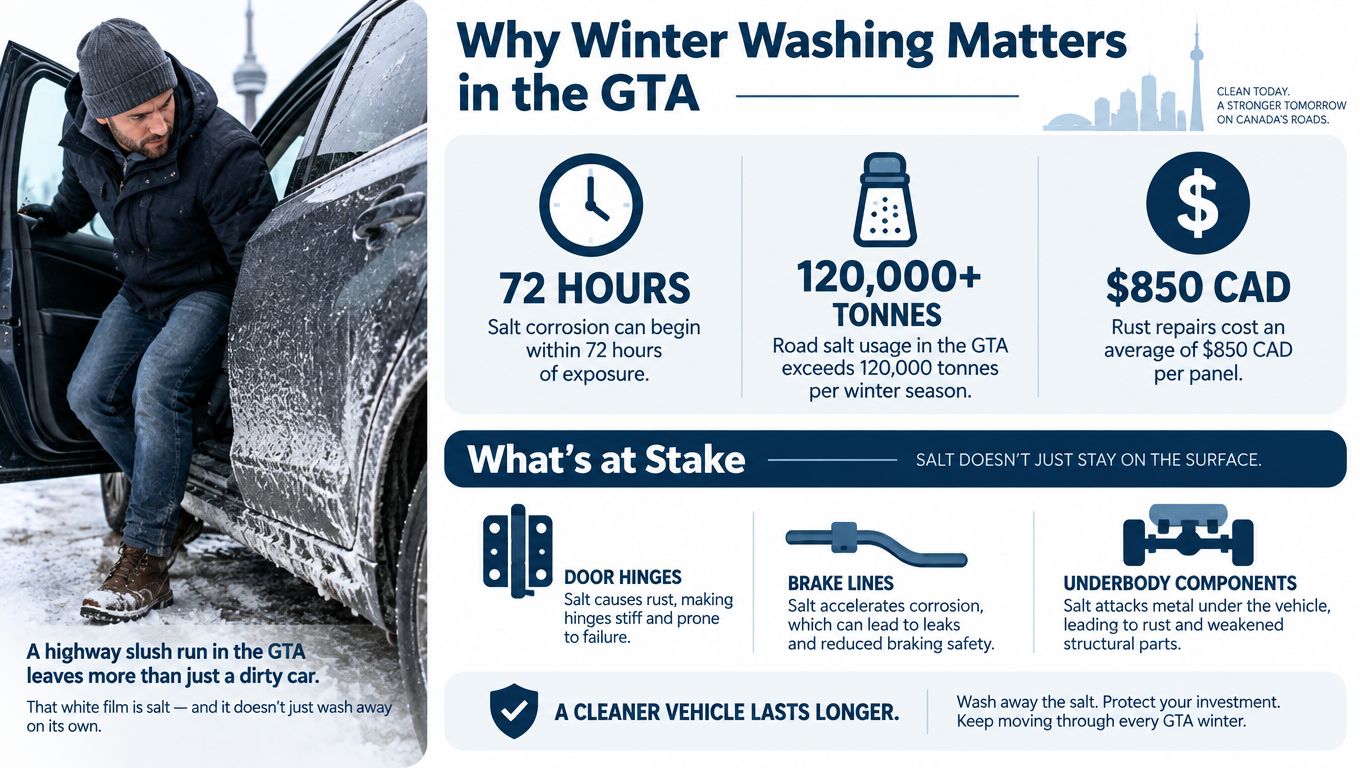
A GTA winter doesn't just leave a car dirty, it leaves it coated. Salt spray sticks to the lower body, gets flung into wheel wells, and settles where you can't see it easily, which is usually where corrosion starts first. Toronto's own winter maintenance reporting shows how variable the season can be, with 145 centimetres of snowfall in 2022–23 and only 51 centimetres in 2023–24 (City of Toronto winter road operations), but the wash problem doesn't disappear in the lighter year because salting and anti-icing still happen.
The mess is not just cosmetic
A clean-looking car can still be carrying salt in the places that matter most. Wheel arches, rocker panels, and underbody components hold onto road film after a normal commute, especially when the surface gets wet, dries, and gets wet again. That cycle leaves residue behind, and residue is exactly what keeps corrosion active.
Practical rule: if the lower half of the car is white, crusty, or gritty after a drive, the washing job is maintenance, not detailing.
The reason this matters in the GTA is scale. Ontario organizations covered by federal road-salt reporting used 1,679,395 tonnes of salt across 104,187 kilometres of salted roads in the 2023–24 winter season (Carleton summary of federal road-salt data). That means the car is not only driving through weather, it's driving through a managed chemical environment designed to stay on the pavement.
What the salt actually does
Salt doesn't need a dramatic snowstorm to do damage. It rides up on spray, lodges in joints and seams, and stays conductive while wet, which gives corrosion a better chance to keep going on steel surfaces and trapped moisture pockets (National Research Council of Canada summary in the road-salt briefing). The same goes for brake-area surroundings and other lower components that get repeated exposure.
For a side-by-side winter cleaning mindset, the Cultivate House Detailing winter window guide is a useful parallel, because the same cold-weather caution applies to more than just glass. The lesson is simple, winter cleaning only works when you remove contamination without creating a new freezing problem.
The Right Wash Sequence for Salt and Slush
The order matters more than you might expect. If you scrub first, you grind grit into the paint. If you skip the underbody, you leave the heaviest contamination where corrosion likes to hide. A proper winter wash sequence is about moving dirt off the car, not polishing it into place.
Start high, then go low
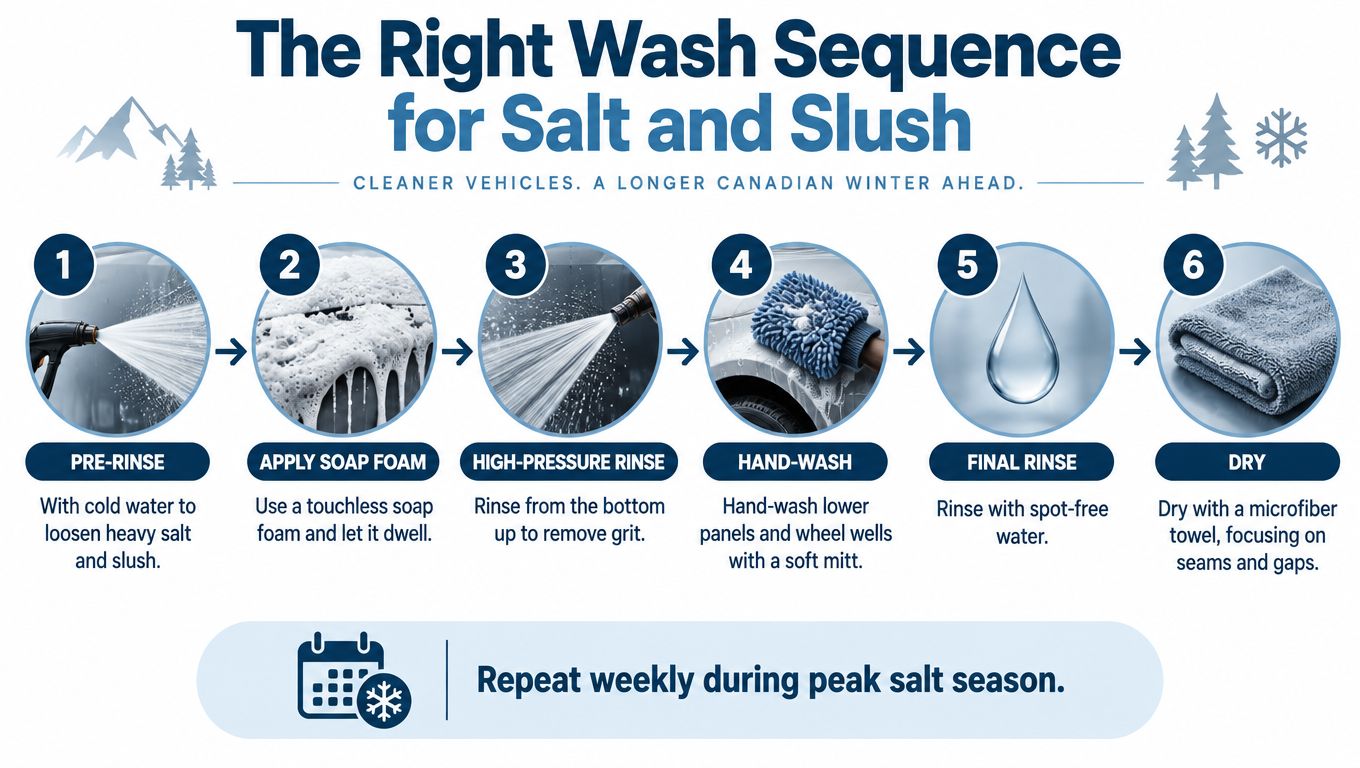
Begin with a rinse from the roof downward so loose snow, salt, and abrasive dirt leave the car instead of being dragged across the panels. Wheels and wheel wells need their own tools, because brake dust, winter grime, and trapped slush are a separate job from the bodywork. That separation keeps contaminated tools from being used where you want a clean finish.
Use automotive detergent with brief dwell time, then rinse it before it dries. If detergent sits too long on a cold panel, it doesn't help much and can leave streaking or residue that you'll fight later. The rinse after that should reach the rocker panels, wheel arches, panel gaps, and underbody areas where chloride brine tends to linger.
The best winter wash is fast removal, not aggressive scrubbing.
The strongest corrosion-control guidance supports that approach. An NHTSA-published service bulletin says road salt should be removed immediately, especially from underhood and underbody areas, because clear-water rinsing reduces the possibility of severe corrosion (NHTSA service bulletin). That lines up with what happens in a bay when a car comes in loaded with slush, the longer the residue sits, the more you're cleaning a chemical problem, not just a cosmetic one.
Finish with drying, not a hero rinse
A final clean-water rinse should leave the car free of soap film and heavy residue. Then dry it immediately, including door jambs, seals, mirrors, handles, and wiper mechanisms. The spots people forget are usually the ones that freeze first.
If you're doing this at a facility, ask for the underbody rinse up front. If you're at a self-serve bay, avoid the temptation to use dish soap or a grit-loaded mitt. Those shortcuts don't solve the salt problem, and they can add paint damage on top of it.
When to Wash and When to Wait
Winter washing gets awkward when the thermometer and the forecast are fighting each other. The car can be filthy enough to justify a wash, but the weather can still be cold enough to freeze door seals, locks, or wiper areas before you get home. That's the trade-off most guides gloss over, and it's the one that matters most after a slushy commute.
Use temperature and timing together
Aim for the warmest part of the day, not just the first free slot in your schedule. If the facility can't dry door jambs and seals, the wash becomes a gamble when temperatures are dropping fast. A good rule is to avoid washing when a refreeze is expected within a couple of hours and there's no drying support on site.
Here's the part people learn the hard way. A wash at 9 p.m. after a wet evening drive can leave locks, handles, and seals frozen by morning if temperatures drop hard overnight. That doesn't mean you skip the wash altogether, it means you choose a better window and a place that can finish the drying properly.
Cold-weather rule: salt removal should stay urgent, but the wash should happen when the car has time to dry before the next freeze.
What to ask the facility to do
Ask whether the bay can dry the door jambs, seals, mirrors, and lock areas. If it's a professional wash, confirm that the car will leave as dry as practical rather than shiny on top. That matters more in freezing weather than a glossy finish ever will.
It also helps to keep a lock de-icer in the car and a seal-safe spray for weatherstripping, because even a good wash doesn't make freezing risk vanish. If the forecast is turning nasty again, you want a backup plan, not a tug-of-war with a frozen door handle at 7 a.m.
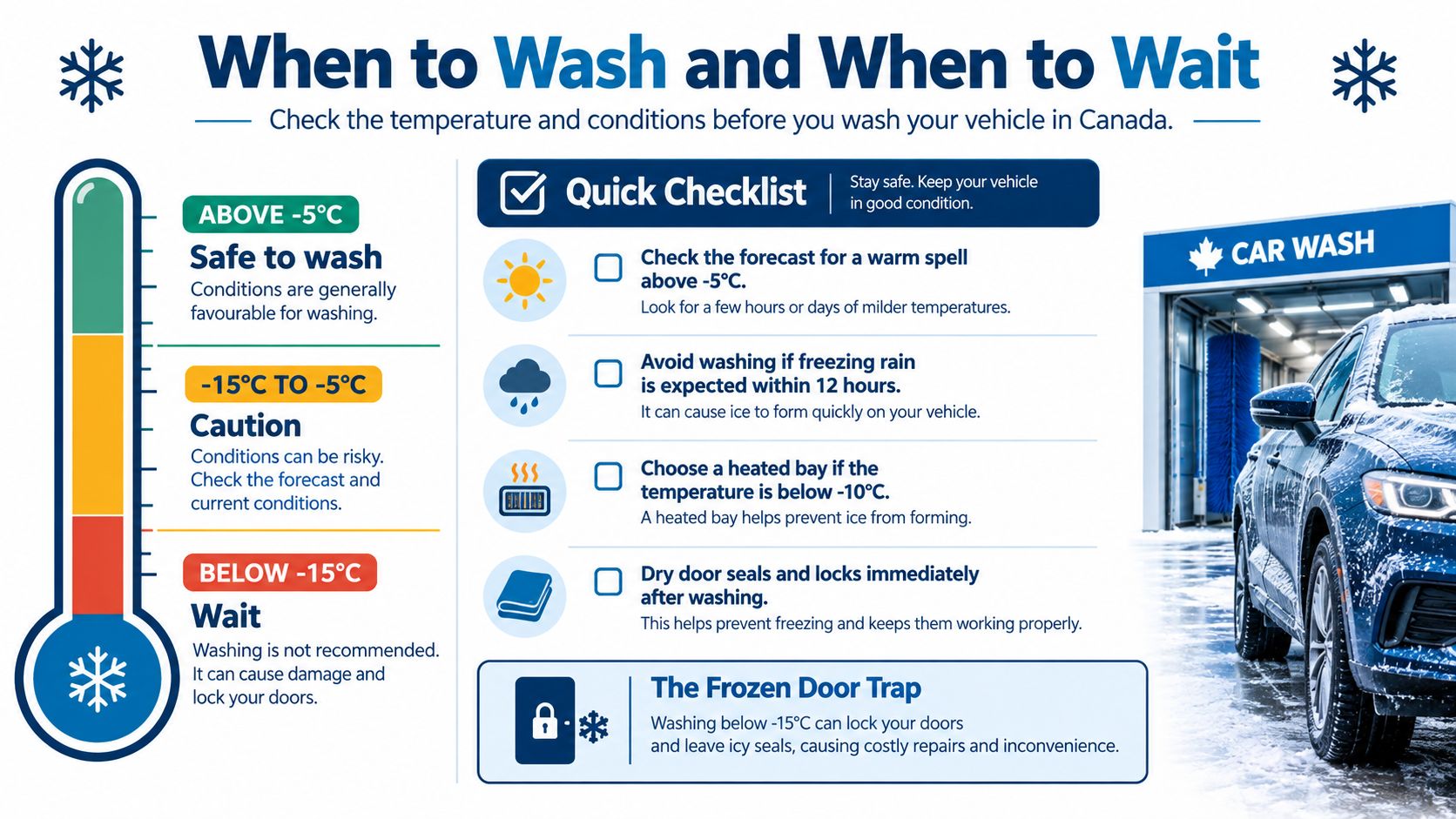
The simplest decision rule is this, wash when the road salt is there and the weather gives you a dry window. Wait when the wash would just turn into trapped water, especially around seals and moving parts.
Matching the Wash Type to the Conditions
Not every winter mess needs the same kind of service. A quick salt rinse after a light storm isn't the same job as a car that's been through a week of slush, brine, and slush again. The trick is matching the wash type to what the car picked up.
Choose for contamination, not pride
A tunnel or express exterior wash with an underbody flush works well for routine mid-week salt removal after lighter storms. A self-serve bay makes more sense when the car is only lightly filmed and you want tight control over the pressure and the tools. A hand wash is the better move when the vehicle is heavily soiled or the finish needs more careful handling. A detailing appointment is for the end-of-winter reset, neglected contamination, or a car that needs deeper attention than a drive-through can give.
Commercial facilities have an advantage during the saltier months because they can contain rinse water and use fresh water systems instead of driveway runoff. That matters for the car and for the pavement around it. Caltrans guidance says vehicle washing should happen at a facility because home wash water can carry metals and automotive fluids into storm drains and waterways, and it recommends approved wash areas with containment or pollution-prevention controls (Caltrans maintenance guidance).
Use the service that solves the problem
If the lower body is caked and the undercarriage has a salt smell to it, don't settle for an exterior shine. Ask for the underbody rinse. If the car has older paint or delicate trim, a self-serve bay or hand wash can be safer than a high-speed tunnel. If the season has been rough and you want protection, a wash provider that also offers rust proofing gives you a cleaner handoff from washing to prevention, and Nanak Car Wash is one example in the GTA that combines wash and rust protection services.
| Winter scenario | Recommended wash | What to ask for |
|---|---|---|
| Light salt after a short commute | Express exterior wash | Underbody flush, drying on seals and mirrors |
| Slush from mixed road conditions | Self-serve bay or express wash | Rinse lower panels and wheel wells thoroughly |
| Heavy road film after repeated storms | Hand wash | Careful lower-panel cleaning and full rinse |
| End-of-season cleanup | Detailing appointment | Salt removal, crevice cleaning, inspection of lower areas |
The point of the table is simple. Match the wash to the amount of contamination, then ask for the parts of the car that collect winter residue.
Protecting Seals, Locks, and Wipers from Freeze-Damage
The small parts are where a winter wash can go wrong. Door seals, lock cylinders, folding mirrors, fuel doors, wiper pivots, and charge ports all trap moisture differently, and they don't all freeze at the same speed. If the wash is rushed, these are the pieces that complain first.
Dry the trouble spots on purpose
After the rinse, hand-dry the door jambs, seals, handles, mirrors, and fuel door. Open and close each door once after drying so you know nothing is sticking before you leave. If the car has an EV charge port, treat it like a freeze-risk zone too, because any trapped water there becomes a nuisance later.
A short pass of silicone spray on the weatherstripping helps reduce sticking, and lock de-icer belongs in the door pocket, not at home in a drawer. Wiper blades should be checked before you pull away, and in sub-zero weather it's smart to lift them off the glass if the vehicle will sit outside. Those are small habits, but they save a lot of frozen morning frustration.
Don't force a frozen part. Warm it, dry it, or use the right de-icer first.
If you ever need backup because a lock or door does freeze, a mobile locksmith for lockouts is the kind of service people only appreciate after the problem starts. Better to carry de-icer and do the drying properly, but it's worth knowing what help exists when winter has other plans.
Keep a short after-wash checklist
- Dry seals and jambs: Wipe the rubber and the hidden edges where water sits after the rinse.
- Check the locks and handles: Open each door once before leaving the bay.
- Look at the wipers: Make sure they're free and not frozen to the glass.
- Inspect mirrors and the fuel door: These small moving parts freeze faster than the body panels.
- Keep de-icer handy: Don't wait until a lock is frozen solid to remember it.
That checklist fits in a glove box and prevents the most annoying part of winter washing, getting the car clean, then discovering a frozen door on the next stop.
Building a Winter Wash Routine That Pays Off
A winter wash routine only works if you can keep doing it. The goal isn't to chase a perfect finish every time, it's to keep salt from sitting on the vehicle long enough to do real damage. In practice, that means a regular underbody-focused wash during the saltier months, a deeper clean when the car has picked up heavy residue, and a more complete rust-protection or detailing visit once a year.
Keep the schedule simple
For most GTA drivers, a weekly rinse makes sense when the roads are repeatedly salted and the car sees steady commuting. That doesn't mean every visit has to be a full detail, it means the lower body and undercarriage get attention often enough that salt doesn't get a long head start. A deeper clean once a month helps reset the parts that collect grime slowly, like seams, wheels, and lower trim.
If the car gets heavy use, a membership can be easier than arguing with yourself every time the car comes home white and gritty. Unlimited wash passes also fit drivers who make repeated salt-exposed trips each week, because the decision is already made and the routine becomes simpler. That's the practical value, less hesitation when the roads are actively punishing the car.
Pair washing with protection
Washing clears away residue, but protection is what helps the clean last longer. Rust proofing belongs in the conversation for vehicles that see hard commuter use, especially when the same car keeps running through the same wet and salted corridors. A good wash provider can handle both, so you don't need one appointment for cleaning and another for corrosion prevention.
The timing still matters more than people realise. Washing in the warmest part of the day, drying vulnerable seals and locks, and avoiding a wash right before a hard refreeze all make the routine safer. That's the balance, remove the salt before it settles in, but don't create a frozen-door problem while trying to do it.
Keep this checklist handy
- Wash after salt-heavy driving: Don't let residue sit through several freeze-thaw cycles.
- Ask for the underbody rinse: The lower car needs more than a glossy exterior.
- Dry the freeze zones: Jambs, seals, mirrors, handles, and wiper areas need attention.
- Carry backup protection: Lock de-icer and seal care belong in the car.
- Use routine, not panic: Consistent winter washing protects components and resale value better than one heroic spring cleanup.
If you want the job done without guessing at the weather or the sequence, book a winter wash that includes the underbody and proper drying, then keep the routine going through the salt season. Nanak Car Wash offers wash, detailing, and rust proofing services in the GTA, so you can handle the cleanup and the protection in one place. Visit Nanak Car Wash to set up the winter care your car needs.

 6600 Finch Ave W, Etobicoke, ON M9V 3Z6

 647-703-8515
 MON – SUN 8 AM to 7 PM