

Auto detailing is a deep, top-to-bottom cleaning and restoration of a vehicle inside and out, not just a quick rinse. Unlike a regular car wash, it uses careful hand techniques and specialized products to remove contamination, restore surfaces, and add protection.
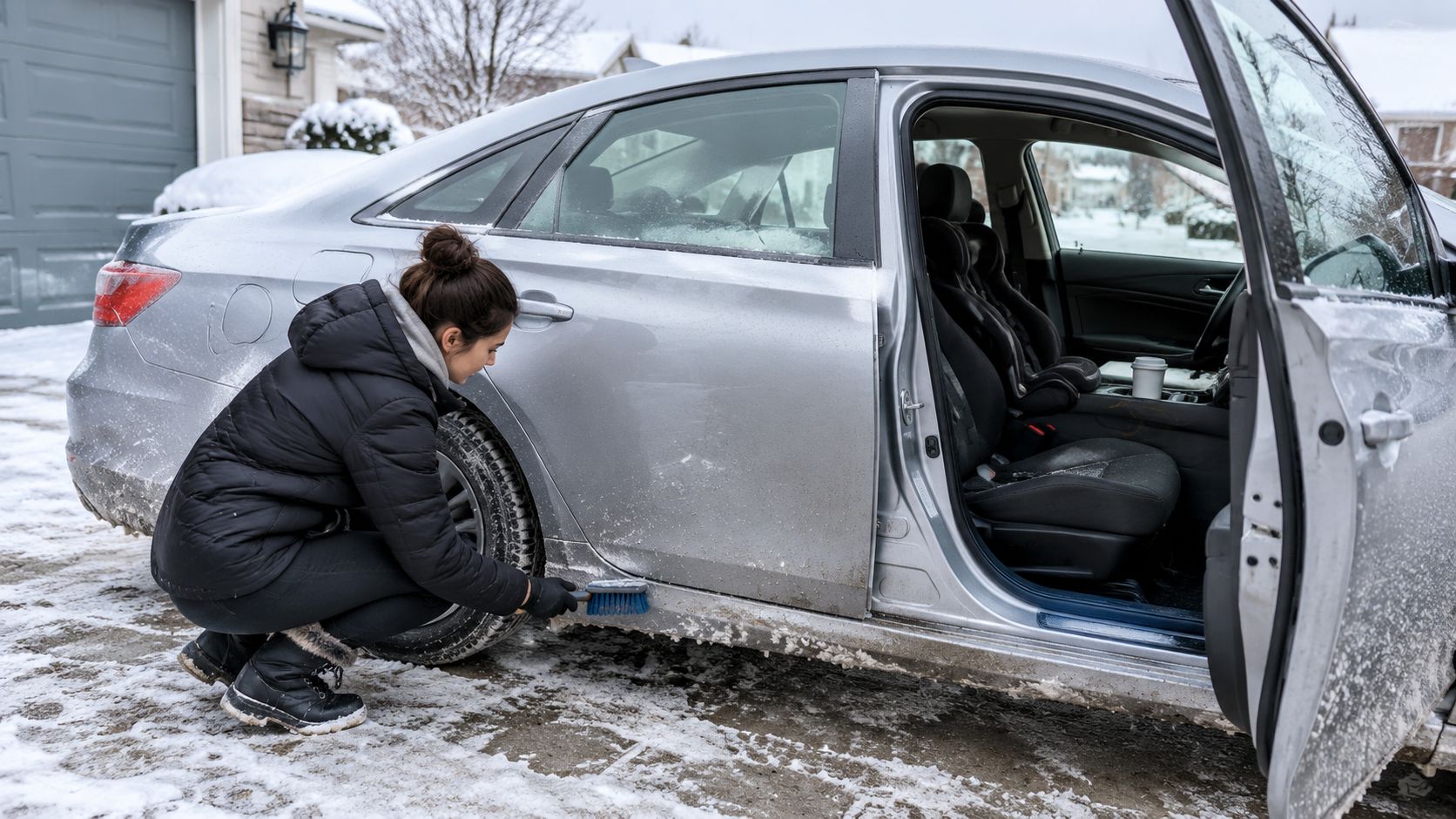
You notice the difference after a long week on the 401. Salt has dried into the wheel wells, the lower doors are grey instead of their original colour, and a coffee ring sits on the passenger seat. In the back, dust has settled into every child-seat crevice, where a normal vacuum rarely reaches.
That's the situation auto detailing is built to solve. A detailer doesn't make the car look cleaner for the drive home. They inspect the paint, upholstery, trim, glass, seams, carpets, and hidden gaps, then choose the right process for each surface.
Ontario drivers also have a practical reason to take the work seriously. Toronto uses about 130,000 to 150,000 tonnes of road salt annually, while Ontario uses roughly 1.5 to 3 million tonnes per winter, according to Ontario rust-prevention information. Detailing helps remove the residue that ordinary washing can leave behind, particularly around wheels, underbodies, door seams, and trim.
Table of Contents
- What Auto Detailing Really Means
- Detailing vs a Regular Car Wash
- The Exterior Detailing Process Step by Step
- Inside the Cabin What Interior Detailing Covers
- Packages Pricing and How Long Detailing Takes
- Why Detailing Pays You Back Over Time
- Choosing the Right Detailing Service in the GTA
What Auto Detailing Really Means
A regular wash cleans the most accessible dirt. Auto detailing cleans, restores, and protects the vehicle as a complete system. Think of a wash as rinsing mud from your boots, while detailing is cleaning the fabric, conditioning the leather, brushing the seams, and waterproofing the surface before the next storm.
A drive-through wash is designed for speed. Water, soap, brushes, and dryers move across the vehicle's outer shell, but the process usually doesn't address the inside of the cabin, bonded paint contamination, leather pores, wheel barrels, or salt hidden behind lower panels. It's useful for routine upkeep, but it isn't a substitute for a deep reset.
Detailing uses a more deliberate sequence. Technicians may combine pressure rinsing, foam pre-washing, microfiber mitts, pH-balanced cleaners, extraction machines, steam, detailing brushes, compressed air, clay bars, machine polishers, and paint protection products. The tool matters because each surface reacts differently. A carpet fibre needs a different treatment from a leather seat, and clear coat needs a different approach from textured exterior plastic.
Why the GTA climate changes the answer
Freeze-thaw weather gives salt and moisture repeated opportunities to sit in seams and cavities. Ontario-focused corrosion material cites a University of Windsor engineering study in which untreated vehicles had 6.8 times more visible body-panel corrosion than treated vehicles, while untreated underbody parts showed 3.6 times more corrosion than treated underbodies. You can read the supporting details in Ontario rustproofing and corrosion guidance.
That makes detailing preventive care, not a luxury service. A proper appointment can include underbody rinsing, salt removal, paint decontamination, interior moisture control, and a protective finish. The exterior process and cabin process differ, but both aim to slow the wear that accumulates between seasons.
Detail shops also manage the customer side of the work. If you run a busy operation, learning how detailers use an AI receptionist can help handle appointment requests while technicians stay focused on vehicles.
Detailing vs a Regular Car Wash
The easiest way to understand the difference is to compare the job each service is meant to do. A regular wash maintains a reasonably clean vehicle. Detailing tackles neglected, embedded, stained, dull, or vulnerable surfaces.
Ontario's car-wash-and-detailing sector is already an established service category. The provincial industry includes washing, waxing, self-service washing, truck and bus washing, and automotive detailing services such as cleaning and polishing. It employs 8,146 workers across 1,478 establishments, according to IBISWorld's Ontario car wash and auto detailing industry profile. At the Canadian level, the industry is estimated at $1.7 billion in 2026, with 3,929 businesses, and the source reports growth of 4.6% from 2025 and an average annual rate of 3.6% from 2021 to 2026.
Those figures describe the broader category, not a guarantee about any individual shop. They do show that professional vehicle care is a mature commercial service, which makes the distinction between maintenance washing and restorative detailing worth understanding.
| Factor | Regular Car Wash | Auto Detailing |
|---|---|---|
| Main purpose | Removes loose exterior dirt and road film | Cleans, restores, and protects interior and exterior surfaces |
| Time required | Short, repeatable visit | Longer appointment with inspection and surface-specific work |
| Tools | Wash equipment, detergents, rinsing and drying systems | Microfiber tools, brushes, extraction, steam, clay, polishers, and protectants |
| Paint attention | Surface rinse and wash | Decontamination, gloss improvement, paint correction, and protection |
| Interior attention | May include basic vacuuming or wiping | Includes deep vacuuming, shampooing, stain treatment, leather care, and crevice cleaning |
| Salt treatment | May include an underbody rinse, depending on package | Targets wheel wells, underbody areas, seams, and remaining residue more carefully |
| Expected result | Cleaner vehicle for routine driving | A more thorough reset, with protection matched to the vehicle's condition |
What a wash can't remove
Road film can contain oily residue, salt, dust, and fine particles that cling to lower panels. Brake dust can embed in wheel finishes, while iron particles can bond to paint even after the vehicle looks clean. A detailer uses chemical decontamination and mechanical techniques to remove those materials instead of asking a brush to do every job.
Interior dirt creates a similar problem. A quick vacuum may collect visible crumbs, but it won't necessarily lift stains from carpet backing, clear debris from seat rails, or clean dust from vents and console gaps. Detailing reaches those areas with smaller tools and controlled cleaning methods.
Practical rule: Use regular washes to control ongoing dirt, then book detailing when the vehicle needs restoration or seasonal protection.
Routine washing and detailing work best together. Washing reduces the amount of grime that builds between appointments, while detailing handles the deeper work a fast service isn't designed to perform.
The Exterior Detailing Process Step by Step
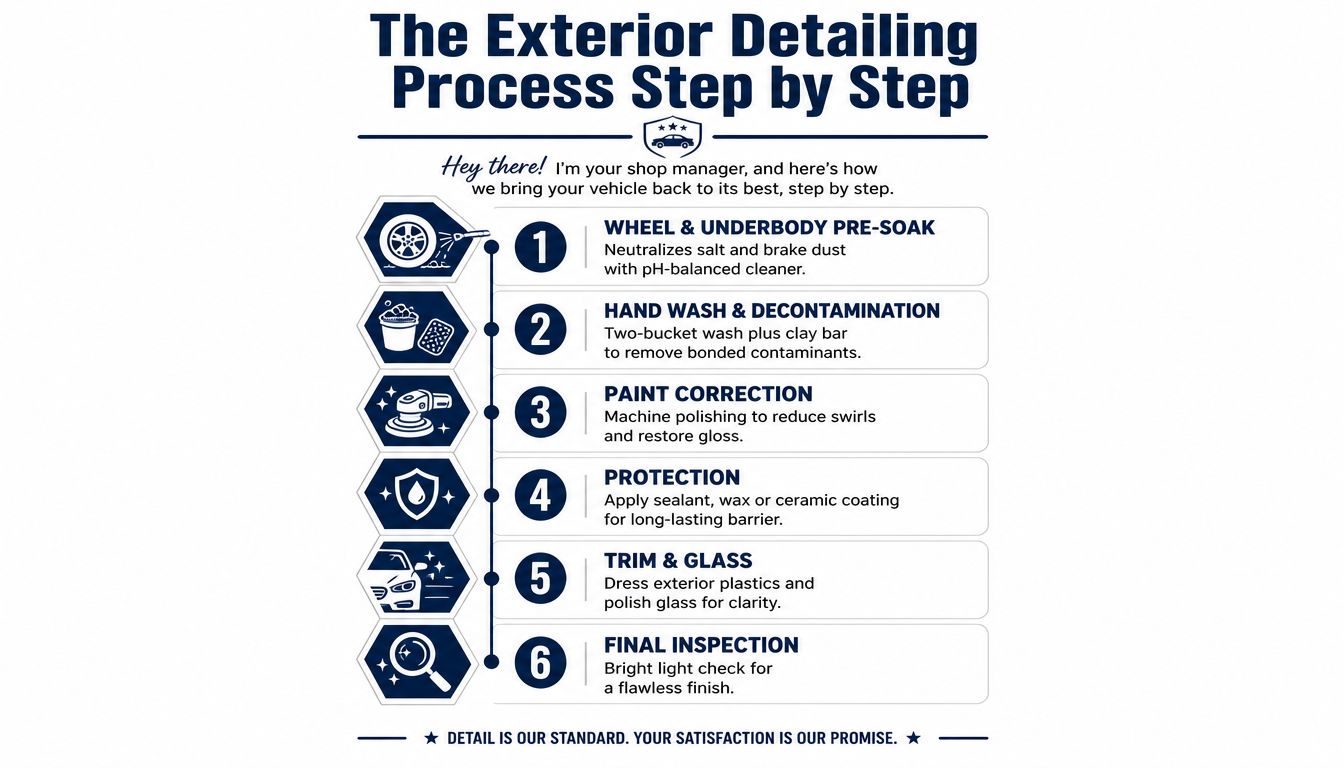
A professional exterior detail follows a deliberate sequence. Work starts with wheels and underbody areas, then moves upward through washing, decontamination, paint correction, and protection. Each stage removes a different type of contamination, so skipping one can leave the next stage working against leftover grit or residue.
1. Wheel and underbody pre-soak
The technician begins with the wheels, wheel barrels, wheel wells, and accessible underbody areas. A pH-balanced cleaner loosens brake dust and road film, while an underbody rinse flushes material collected during slushy driving.
That attention matters in the GTA, where winter salt reaches behind spokes, around suspension components, inside wheel wells, and along seams. The Transportation Association of Canada testing on road salt and steel recorded Toronto atmospheric corrosion of 5,108 mg/dm² over a 19-month exposure period. The same testing reports that treated sodium chloride in Ontario produced about 0.2117% average weight loss of steel rebar. Those findings help explain why exterior detailing can support preventive maintenance, not only a cleaner appearance.
2. Foam pre-wash and hand wash
A foam cannon pre-wash surrounds loose grit and softens road film before the mitt touches the paint. Rinsing removes the loosened material first, reducing the chance of dragging it across the panels.
The contact wash uses two buckets, a grit guard, and a clean microfiber mitt. One bucket contains wash solution, while the other rinses the mitt. The technician works from cleaner upper panels toward dirtier lower areas and rinses frequently, keeping lower-panel grit away from the hood and roof.
3. Chemical and clay decontamination
After washing, the technician examines the paint by sight and touch. Iron fallout remover reacts with metallic particles from brake dust. Once rinsed, a clay bar or synthetic clay media lifts bonded contamination, leaving the surface smooth enough for polishing or protection.
A clean plastic bag over the hand makes this change easy to detect. A decontaminated panel feels slick instead of gritty, even if it looked clean before treatment.
4. Paint correction and protection
Machine polishing depends on the paint's condition. A single-stage polish can improve gloss and reduce lighter swirl marks, while oxidation or heavier defects may need more correction. The technician should inspect the clear coat first and set realistic expectations about which scratches can be reduced or removed.
Protection follows correction. Wax provides a traditional finish, synthetic sealant forms a more durable barrier, and ceramic coating creates bonded protection that requires careful preparation and maintenance.
The final inspection covers exterior trim, glass, badges, door jambs, and drying seams. A sealed surface sheds road grime more easily, but regular washing remains necessary. Protection makes salt easier to manage, it does not make the vehicle immune to winter corrosion. This sequence also fits bundled services such as Nanak Car Wash's wash, detailing, and rustproofing approach, where cleaning and corrosion prevention address the same GTA winter conditions.
Inside the Cabin What Interior Detailing Covers
After a GTA winter, the cabin can hold salt residue in seat rails, coffee spills pressed into carpet fibres, and dust behind vent slats. Interior detailing addresses each area systematically, starting with removing floor mats, personal items, child-seat accessories, and loose rubbish. This gives the technician a clear view of the floor, seats, storage pockets, and cargo area.
A thorough vacuum follows. Crevice tools, soft brushes, and narrow attachments reach under seats, beside rails, around console edges, inside trunk seams, and near air vents. Compressed air loosens dust in tight gaps so the vacuum can collect it instead of driving it farther inside.
Cleaning fabric, carpet, and hard surfaces
Carpets and cloth seats may need hot-water extraction. The machine applies a controlled solution, agitates the fabric, and removes dirty moisture. This process can lift coffee, food, salt marks, and ground-in soil more effectively than wiping the surface.
Steam cleaning suits many hard surfaces, including selected plastics, door panels, and trim. Heat and controlled moisture loosen buildup, but the technician must avoid flooding electronics, displays, and areas where moisture could remain trapped.
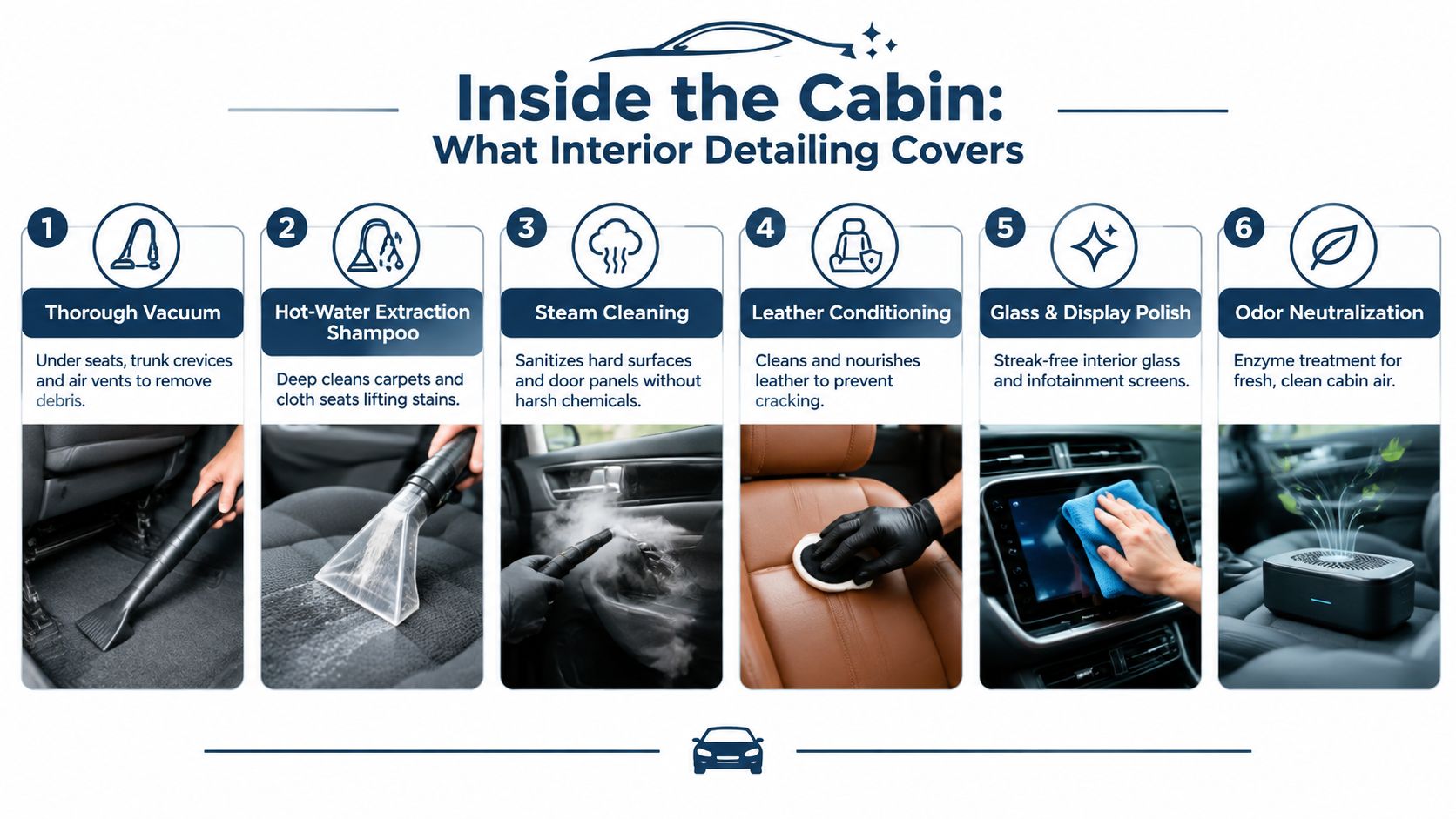
Leather follows its own sequence. Cleaner lifts body oils and dirt from the grain, then conditioner helps keep the material supple. The finished surface should not feel greasy or slippery. Vinyl and synthetic leather also need products suited to their finish, especially on high-contact areas.
The details people notice later
A technician brushes dust from vents, clears debris from seams, cleans cup holders, wipes switches, and polishes interior glass. Infotainment displays require a soft, clean cloth and a product that will not leave an oily film or harm an anti-glare surface.
Odour treatment must match the source. Enzyme products can address organic contamination. Ozone treatment may be considered for stubborn smells when the cabin is empty and the procedure follows safe operating practices. Fragrance only covers an odour if the material causing it remains.
Pet hair, heavy sand, child-seat residue, and severe staining can require extra labour. Mention these conditions before booking because they may change the process and final quote. A properly cleaned cabin feels calmer, smells fresher, and photographs better for resale. The result depends on removing the source of the dirt, not hiding it.
Packages Pricing and How Long Detailing Takes
Detailing packages usually follow a simple ladder. An express service refreshes selected areas, a full interior or exterior service gives one side of the vehicle deeper attention, and a full detail combines both.
Nanak Car Wash lists express exterior washes starting from $9.99 plus tax and full-service wash packages starting from $29.99 plus tax, based on the publisher's service information. Its detailing appointments cover interior and exterior work, with listed typical durations of 1 to 4 hours, while vehicle size and pet hair can affect the service.
Because prices depend on vehicle condition, size, location, and selected protection, treat the table below as a decision framework rather than a quote.
| Package Tier | What's Included | Time Required | Approximate Price CAD |
|---|---|---|---|
| Express interior | Basic vacuum, wipe-down, glass cleaning, and quick cabin refresh | Short appointment | Ask the shop for current pricing |
| Express exterior | Pre-soak, foam wash, rinse, dry, and selected wax or sealer upgrades | Short appointment | Starting from $9.99 plus tax for listed express exterior wash packages |
| Full interior | Deep vacuum, carpet and seat shampooing, salt and stain treatment, vents, crevices, and leather or vinyl care | Longer appointment | Vehicle-specific quote |
| Full exterior | Hand wash, decontamination, clay treatment, machine polish, and hand-applied protection | Longer appointment | Vehicle-specific quote |
| Full detail | Full interior and exterior service, with protection selected for the vehicle | Several hours | Vehicle-specific quote |
| Rustproofing add-on | Application of a dedicated protective compound to relevant vehicle areas | Scheduled service | Listed vehicle-size pricing is approximately $119.95 to $149.95 plus tax |
What changes the quote
An ordinary sedan with light seasonal dirt is easier to schedule than a three-row SUV filled with pet hair and ground-in salt. Technicians may need extra vacuuming, brushing, extraction passes, drying time, or stain treatment. Oversized vehicles also have more glass, carpet, seats, trim, and exterior surface to clean.
Paint correction is another important distinction. A light polish and a multi-stage correction are not interchangeable services. If a vehicle has oxidation, heavier swirls, scratches, or neglected paint, ask whether the quote includes correction or only cleaning and protection.
Regular upkeep can reduce the effort needed at the next appointment. A wash membership or prepaid wash bundle may suit drivers who frequently encounter road film, while seasonal detailing handles the deeper reset. Nanak Car Wash also lists an Unlimited Wash Club, discounted interior cleaning for members, prepaid multi-wash tickets, and bundled wash, detailing, and rustproofing options. Confirm current inclusions and pricing before booking.
Why Detailing Pays You Back Over Time
After a GTA winter drive, salt can sit in wheel wells, seams, carpets, and underbody areas long after the road looks dry. Detailing pays back by removing that residue, protecting surfaces, and exposing small problems before they become costly repairs. It is preventive maintenance with a visible result, not merely a cosmetic indulgence.
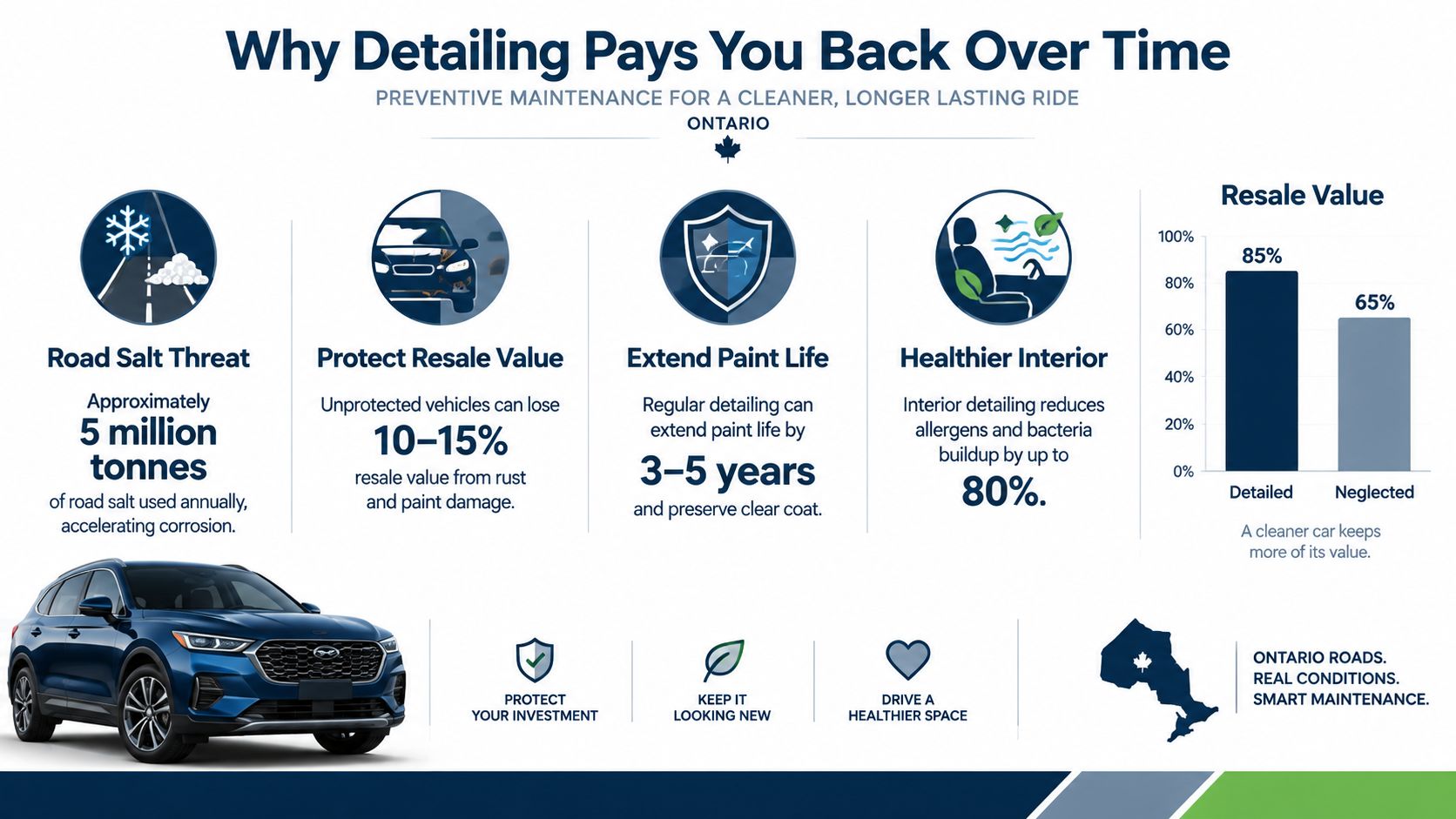
Ontario's salt exposure makes this especially relevant. The province uses roughly 1.5 to 3 million tonnes of road salt per winter, while Toronto uses about 130,000 to 150,000 tonnes annually, according to Ontario corrosion and rust-prevention material. That Ontario-focused material also notes that visible undercarriage rust can appear within 2 to 3 winters in the GTA on unprotected or older vehicles, with serious structural concerns often developing after 8 to 12 years of year-round driving without rustproofing.
These timelines are not a guarantee for every vehicle. They show why winter maintenance should include salt removal, underbody rinsing, attention to seams, and rustproofing where appropriate. Nanak Car Wash's bundled wash, detailing, and rustproofing model places those services in one maintenance routine, rather than treating them as unrelated appointments.
The value is practical
Clean paint makes scratches, chips, and rust spots easier to see. A protected finish releases dirt more readily during washing. Clean carpets, cared-for leather, and an odour-free cabin also create a better impression when you sell or trade the vehicle, although no detailer can promise a specific resale increase.
Corrosion has created financial concerns for vehicle owners for decades. The historical Transport Canada estimate of about $200 per vehicle owner per year in 1975 is not a current repair bill, but it helps explain why preventing rust can make more sense than waiting for visible failure.
Treat detailing like other preventive maintenance. Oil changes protect the engine, tire rotations support even wear, and detailing reduces the buildup that harms paint, trim, fabrics, and metal. A wash-and-protection routine, combined with seasonal interior and exterior detailing, is easier to maintain than leaving salt and grime untouched until the vehicle needs an overwhelming reset.
Choosing the Right Detailing Service in the GTA
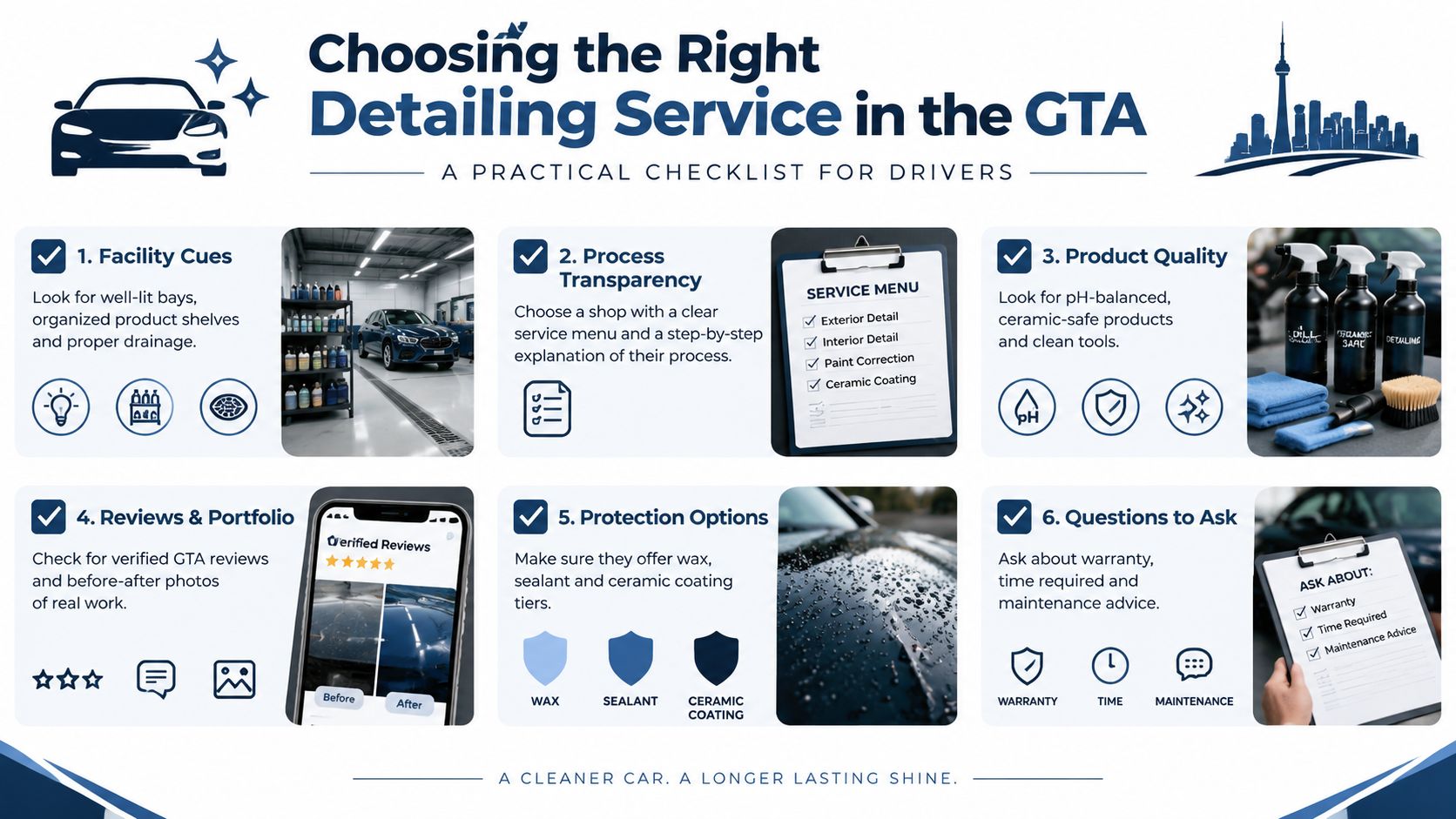
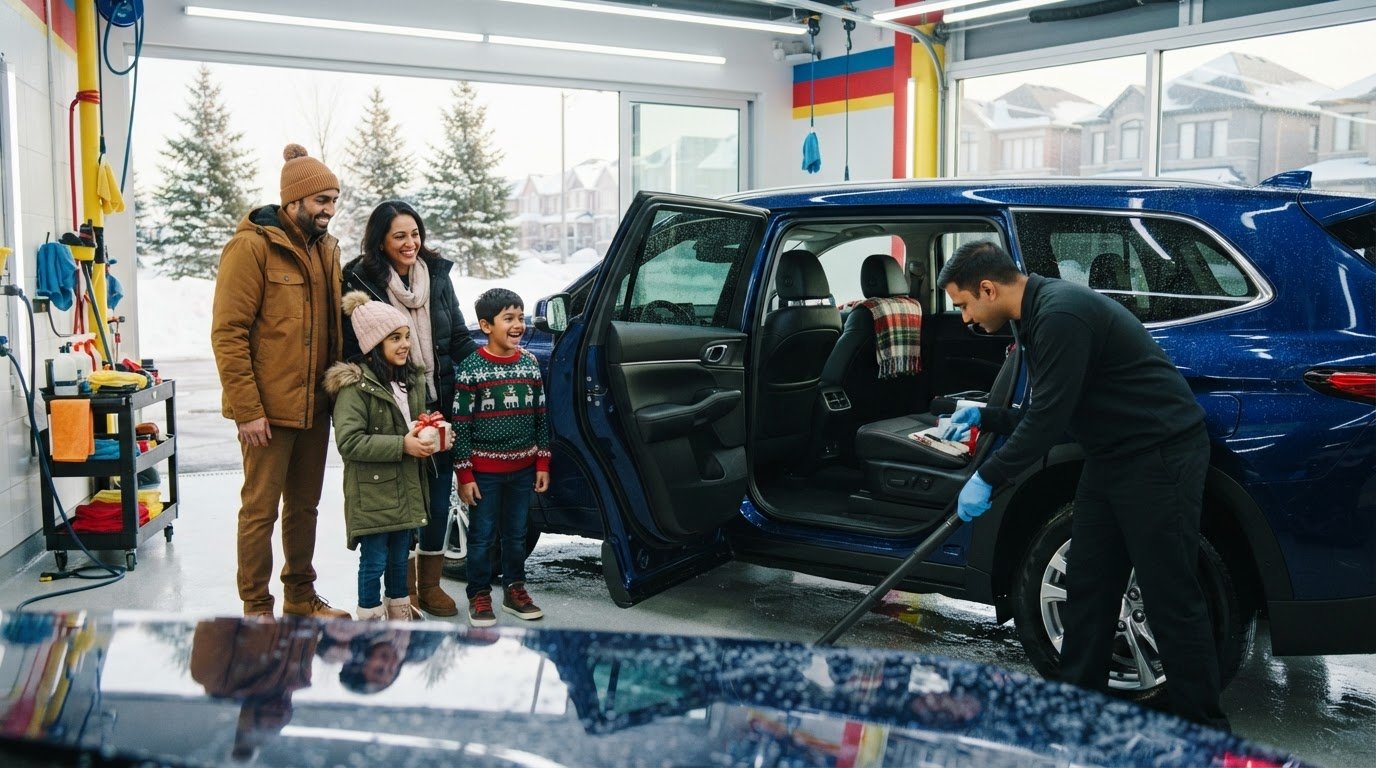
Start with the facility. Look for well-lit bays, organised product shelves, clean tools, safe water handling, and proper drainage. A tidy work area doesn't guarantee perfect workmanship, but it shows that the operator controls the process rather than improvising around each vehicle.
Ask what happens before you pay. A reputable detailer should explain the difference between cleaning, decontamination, polishing, wax, sealant, ceramic coating, extraction, and odour treatment. Get clarity on the expected time, vehicle-size pricing, pet-hair or heavy-stain surcharges, and what happens if a stain or scratch can't be fully removed.
A useful booking checklist
- Inspect the process: The shop should describe its wash, drying, interior, and protection steps clearly.
- Check the products: Ask whether cleaners suit leather, clear coat, ceramic coatings, screens, and delicate trim.
- Request condition notes: Before-and-after photographs and a written inspection reduce confusion about existing damage.
- Ask about protection: Find out whether the finish is wax, synthetic sealant, or ceramic coating, and how you'll maintain it.
- Confirm timing: A deep service needs more planning than a quick wash, especially for large vehicles or heavy contamination.
- Watch for red flags: Vague pricing, surprise upselling, rushed inspections, and no explanation of limitations should make you cautious.
A bundled provider can simplify winter maintenance by handling routine washing, detailing, and rustproofing in one place. Nanak Car Wash lists GTA-area locations and services that include express and full-service washes, interior and exterior detailing, rustproofing, prepaid options, and an Unlimited Wash Club. Confirm the nearest location, appointment availability, package inclusions, and current pricing before visiting.
Nanak Car Wash offers express and full-service washes, hand-applied interior and exterior detailing, and rustproofing options for GTA drivers managing salt-heavy winters. Visit Nanak Car Wash to review the available services, choose a location, and book the vehicle care your car needs before the next season takes hold.

 6600 Finch Ave W, Etobicoke, ON M9V 3Z6
 647-703-8515
 MON – SUN 8 AM to 7 PM