
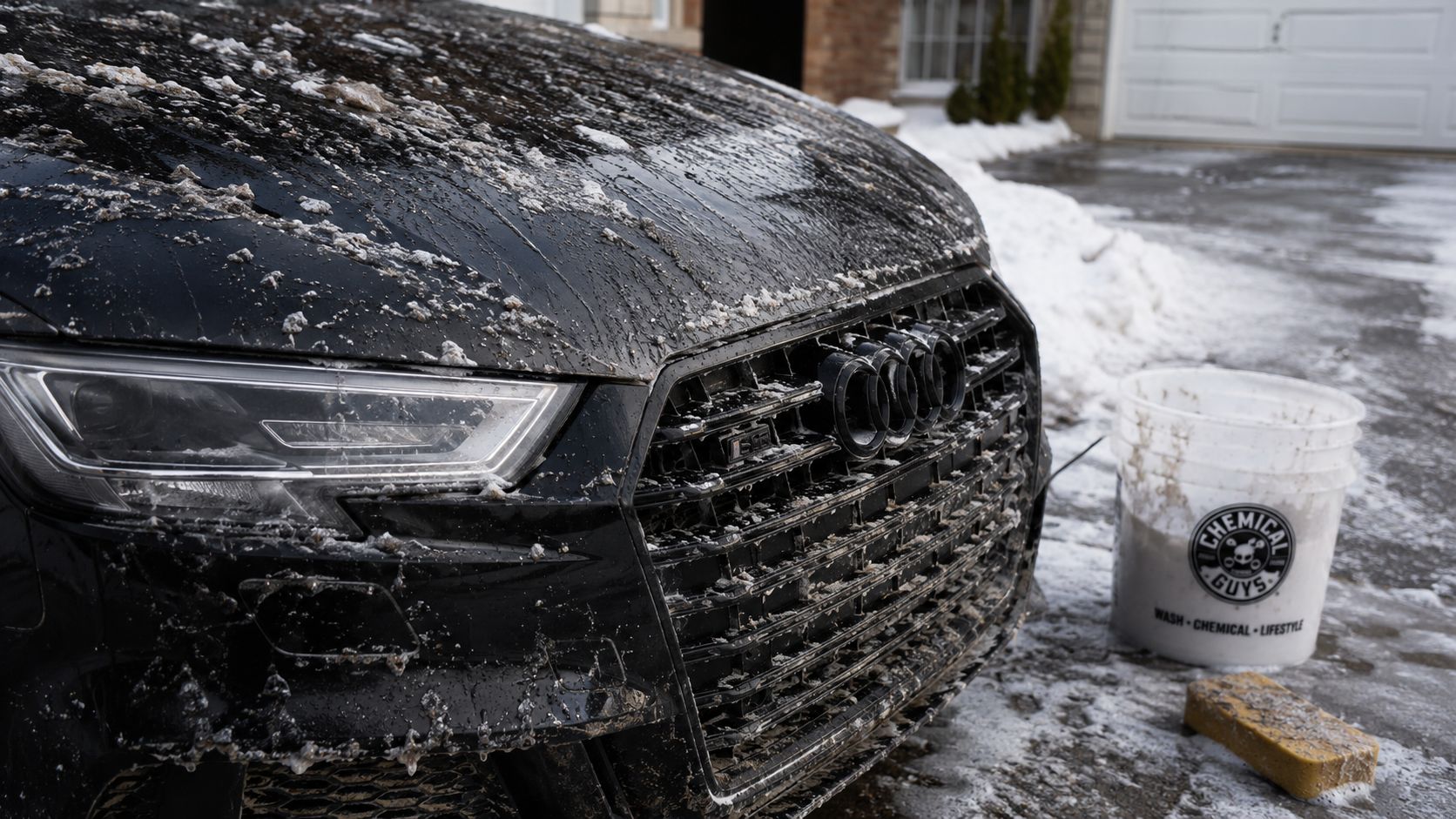
You pull into a GTA parking lot after a messy winter commute. The lower doors are grey with salt, the wheel arches hold a gritty line of slush, and the black paint looks less like a mirror and more like a chalkboard. By the time you've rinsed the car, another layer of road film is already waiting.
That's why many Ontario drivers start asking what is ceramic coating for cars, usually after a dealership suggestion, a detailing quote, or one especially stubborn salt stain. The short answer is that it's a liquid, silica-based protective layer that chemically bonds to the vehicle's clear coat. The useful answer takes more unpacking.
A coating can make water and grime easier to remove, resist certain forms of environmental wear, and reduce the need for repeated wax applications. It can't turn your paint into an invisible suit of armour, and it won't excuse a neglected wash routine.
This guide follows the practical question GTA drivers face: whether the protection earns its place on a daily commuter, a high-mileage ride-hailing vehicle, or a car you hope to resell looking sharp. You'll learn how the coating bonds, what hydrophobic performance means, why preparation controls the result, how Ontario pricing works, and how to maintain the surface once winter gets involved.
Table of Contents
- Introduction Why Your Car Paint Faces More Than You Think
- What Ceramic Coating Really Is and How It Bonds to Paint
- What Ceramic Coating Can and Cannot Do for Daily Driving
- Ceramic Coating Versus Wax and Paint Sealants Explained
- How Ceramic Coating Is Applied and Why Prep Is Everything
- How Much Ceramic Coating Costs and How Long It Really Lasts in Ontario
- Keeping Ceramic Coating Performing and Getting Help Around the GTA
Introduction Why Your Car Paint Faces More Than You Think
Your car's clear coat has a demanding job. It sits outside through ultraviolet exposure, rain, freezing temperatures, slush, road salt, calcium-chloride brine, dust, insects, bird droppings, and the repeated friction of washing. In the Greater Toronto Area, the paint also sees a steady cycle of contamination followed by rinsing, wiping, drying, and contamination again.
Wax can help, but it behaves more like a temporary jacket than a bonded outer layer. It sits over the surface and gradually loses performance as weather, detergents, friction, and frequent washes wear it away. A paint sealant offers a more engineered alternative, while ceramic coating takes the idea further by forming a chemical bond with the clear coat.
The honest promise: ceramic coating is mainly about easier decontamination and longer-lasting surface behaviour, not a maintenance-free car.
That distinction matters in Ontario. A coated vehicle may shed water and loose dirt more readily, but road salt still needs to be washed away. If winter grime remains on the paint, hydrophobic behaviour can look muted until the surface is cleaned properly. A driver who expects “never wash again” will be disappointed. A driver who wants less scrubbing and more consistent protection may find the coating useful.
The right decision depends on how you use the car. A garage-kept weekend vehicle has different needs from a daily commuter parked outdoors near a busy road. A ride-hailing driver accumulates more wash cycles, while a resale-focused owner may care more about preserving clarity and gloss than reducing weekly effort.
The useful question isn't just whether ceramic coating sounds impressive. It's whether its durability, cleaning advantage, and chemical resistance match your driving life.
What Ceramic Coating Really Is and How It Bonds to Paint
After a GTA commute through slush, salt, and spray, the clear coat is facing more than a dull appearance. The useful question is what ceramic coating becomes on that surface. It starts as a liquid polymer, with modern formulations generally based on silica. Applied to properly prepared paint, it reacts and cures into a hard, glass-like protective layer over the clear coat. Ceramic Pro Victoria's technical overview explains this chemical bond as a key difference from products that only sit on top of paint.
Wax works like a temporary jacket over the surface. Ceramic coating is closer to a liquid finish that grips the paint as it cures. Household varnish is an imperfect comparison because the chemistry differs, but the idea is useful: bonding creates a more persistent surface relationship than a temporary layer. That persistence is why a coating can suit an owner who wants more consistent surface behaviour through Ontario's changing weather, including the repeated exposure that comes with daily commuting.
From liquid to protective surface
The curing process follows a practical sequence:
- Liquid polymer and silica spread across the paint. The coating forms an even film over microscopic surface irregularities.
- The formulation reacts with the prepared clear coat. Clean, corrected paint gives the coating a sound foundation.
- The coating cures. Its chemistry cross-links into a dense, glass-like layer.
- The surface becomes more hydrophobic. Water gathers into droplets instead of spreading into a flat sheet.
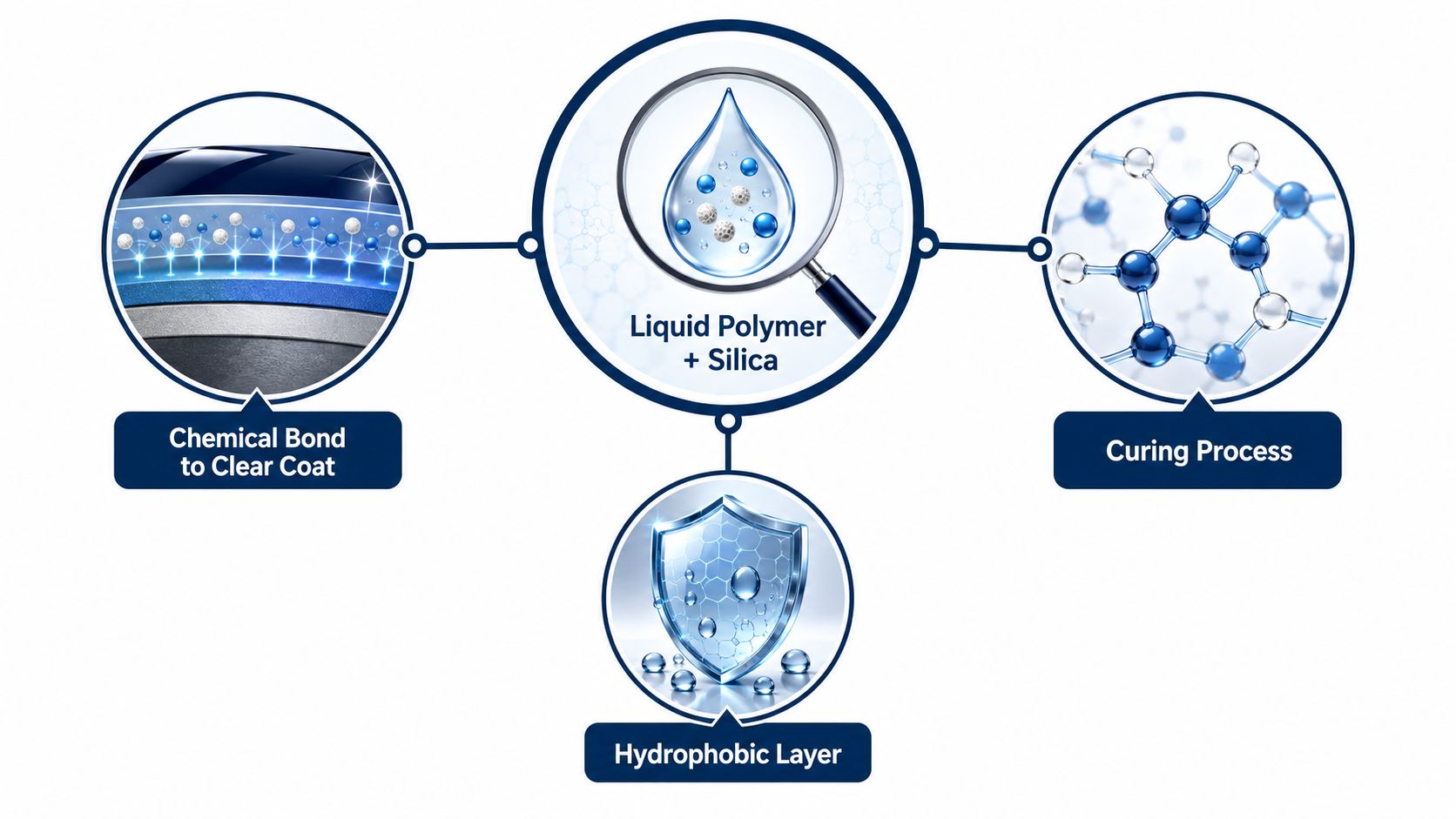
Hydrophobicity is easiest to understand through a raincoat. A raincoat does not remove the rain. It changes how water interacts with the fabric, encouraging droplets to roll away rather than soak in. Ceramic coating creates a similar surface effect, helping water bead and shed more readily. During a GTA winter, that behaviour can make rinsing salt and loose road film easier, although it does not replace washing.
Why water angles matter
The technical term for water behaviour is the contact angle. A low contact angle means a droplet spreads across the surface. A high contact angle means it sits more like a rounded marble on glass. An University of Toronto study on ceramic coatings reported a best-performing coating with a static water contact angle of about 163° and a roll-off angle of about 6°.
The roll-off angle indicates how far the surface must tilt before the droplet moves. A low angle suggests that gravity can help water leave quickly. Commercial coatings will not all behave identically, since chemistry, preparation, contamination, and surface texture affect the result.
Bonding also explains why coatings are discussed in years rather than weeks or months. The product cures into a durable protective film instead of waiting on the surface until a wash removes it. Its performance still depends on preparation, exposure, safe washing, and maintenance, especially for cars chasing long-term clarity and resale appeal.
What Ceramic Coating Can and Cannot Do for Daily Driving
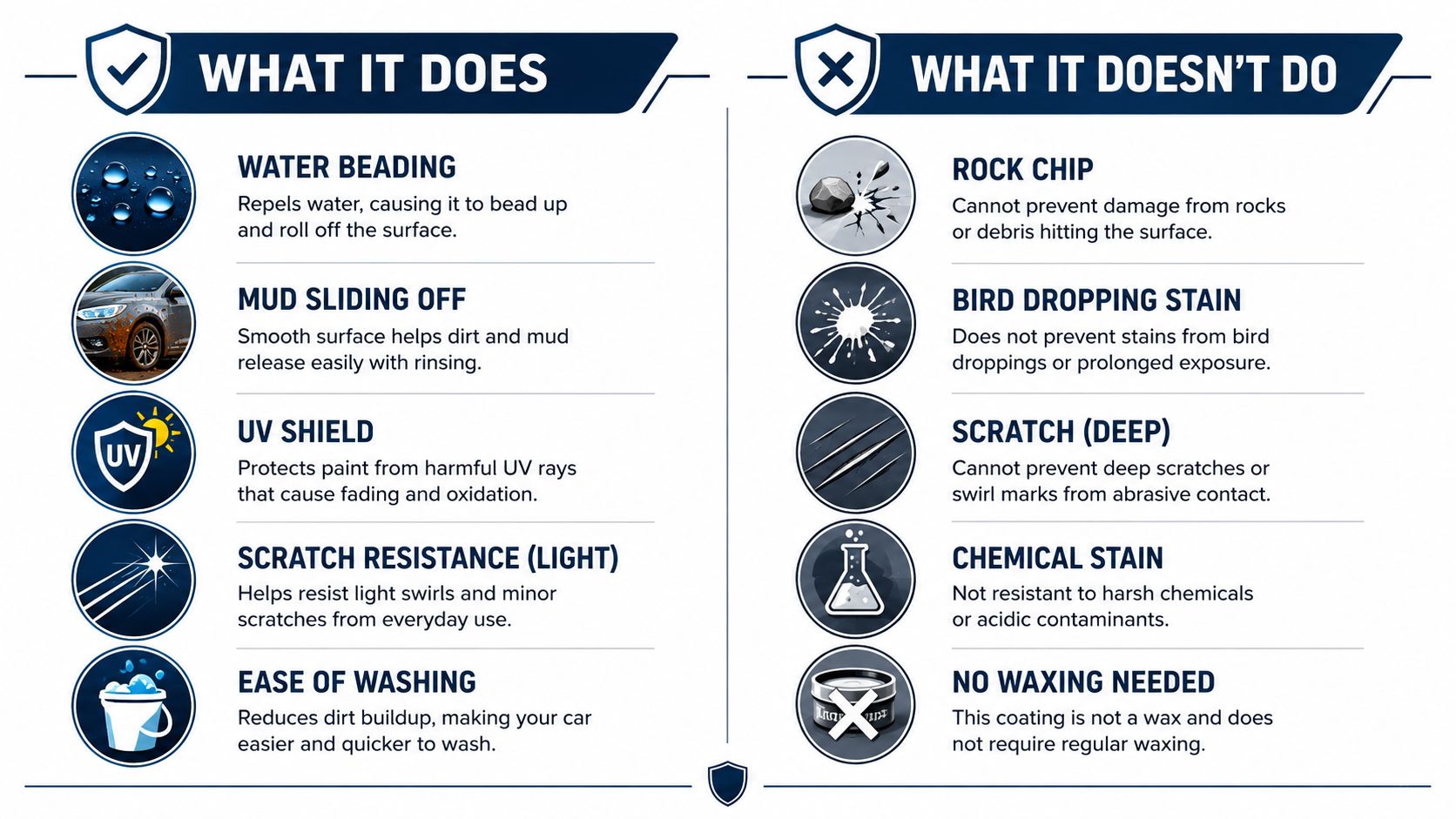
A GTA commuter can wash a car on Sunday, then meet salt spray, slush, and dirty runoff before the week is over. Ceramic coating earns its keep by changing how that contamination sits on the paint. Water forms tighter beads, loose dirt has less opportunity to cling, and a properly washed vehicle can rinse more cleanly.
The benefit is practical, not magical. Less road film sticking to lower panels can mean easier maintenance, especially through an Ontario winter. The coating still needs regular washing, and hydrophobic behaviour is easiest to notice after the salt and grime hiding it have been removed.
Ceramic coating can also add resistance against UV rays, oxidation, corrosion, solvents, and harsh weather. One Canadian product page claims a coating can increase factory clear-coat hardness by up to 50%, as outlined by Ceramic Pro Victoria. Treat that as a product claim, not a universal result for every coating, vehicle, or installation.
What it does in the real world
- Water sheds more readily. Rain and rinse water gather into droplets instead of spreading across the panel.
- Road film can release more easily. On a clean, maintained surface, salt residue and grime have less grip.
- Washing takes less effort. Soap, water, and safe contact are still required, but stubborn contamination may need less aggressive agitation.
- The clear coat gains an added barrier. UV exposure, oxidation, and some chemical contaminants meet another layer before reaching the finish.
- Light marring resistance improves. The coating can reduce some wash-related wear, but it cannot make paint immune to scratches.
What it doesn't do
Ceramic coating is not structural protection. A stone from a passing vehicle can still chip the paint. A deep scratch can still cut through the clear coat, and a dirty automatic brush can still leave swirl marks.
Bird droppings, water spots, and chemical marks can still stain the finish. The coating may improve resistance and give you more time to remove contamination, but acidic or salty material should not be left sitting on the vehicle.
Winter reality: hydrophobic performance helps most after you wash away the contamination that hides it.
Thickness alone does not determine durability. A separate study of superhydrophobic ceramic surfaces found strong water repellency after abrasion, with contact angles above 150° under load and initial values near 159° on the unabraded coating. For car owners, the useful lesson is simple. Chemistry and surface texture matter together, so a thicker application is not automatically a better one.
Paint protection film addresses rock chips on a front bumper. Ceramic coating fits the daily-driver problem of salt adhesion, difficult rinsing, and repeated protection applications. That distinction also matters for resale goals. A cleaner, better-maintained finish can support presentation, while the coating itself cannot repair neglected paint or prevent impact damage.
Ceramic Coating Versus Wax and Paint Sealants Explained
冬季通勤的車漆,面對的不只是雨水。每天在 GTA 道路上行駛,車身會接觸鹽分、泥濘和路面污垢。蠟、漆面密封劑與陶瓷鍍膜都能改善漆面外觀,減少污染物附著,但它們的工作方式、維護頻率與適用情境不同。
蠟是最熟悉的選擇,能帶來溫暖、飽滿的光澤,也適合喜歡週末親自打理車輛的車主。合成漆面密封劑形成較偏工程化的保護膜,通常比傳統蠟更方便,適合想減少重複施工的人。
陶瓷鍍膜則是投入較高的選擇。專業施工前需要仔細準備,初期費用也較高,但對長期使用、經常通勤,或希望減少清潔麻煩的車主更有意義。它不是單純追求亮度,而是讓鹽分和污垢較容易在沖洗時離開漆面。
Ceramic Coating vs Wax vs Sealant at a Glance
| Feature | Ceramic Coating | Car Wax | Paint Sealant |
|---|---|---|---|
| Surface relationship | Chemically bonds to prepared clear coat | Sits over the paint as a temporary protective film | Sits over the paint as a synthetic protective film |
| Typical role | Long-term protection and easier decontamination | Short-term gloss and water beading | Mid-range protection with practical application |
| Ontario wash tolerance | Designed for repeated care, though harsh washing still causes wear | Performance fades with exposure and washing | Generally more durable than wax, but still requires renewal |
| Appearance | Clear, glossy, often described as a wet look | Warm and deep | Clean, reflective finish |
| Application effort | High, because preparation and careful curing matter | Relatively accessible for home users | Usually simpler than a professional coating |
| Best fit | Daily drivers, high-mileage vehicles, and owners planning to keep paint protected | Owners who enjoy frequent detailing | Owners seeking a practical middle ground |
可以把三者想成不同層次的護膚。蠟像出門前塗保濕乳,表面感受明顯,但需要經常補上。密封劑像較耐用的護膚產品,維護間隔通常更長。陶瓷鍍膜則像需要先做好皮膚準備的黏合式護理,施工要求更高,完成後也必須按照正確方式清洗。
What it does in everyday driving
在安大略冬季,疏水效果的價值通常出現在洗車之後。當鹽膜和泥垢被沖走,水分較容易聚成水珠並離開表面,車主也較少需要反覆用力擦洗。蠟能提供短期光澤與潑水效果,密封劑適合想要實用折衷方案的人,陶瓷鍍膜則更適合每日駕駛、里程較高,且不想經常重新上蠟的車主。
若你喜歡頻繁施工,蠟的入門成本與使用方式較容易接受。若想提升日常保護,又不打算進行專業漆面修正,漆面密封劑可以是中間選擇。若車輛長期承受 GTA 路鹽和路 grime,並且你願意持續保養鍍膜,陶瓷鍍膜更符合長期使用與轉售前維持外觀的目標。
How Ceramic Coating Is Applied and Why Prep Is Everything
A professional ceramic-coating appointment is closer to paint preparation than to a quick spray-and-wipe service. The liquid is important, but the surface underneath determines whether the finished coating looks clear, bonds properly, and performs consistently.
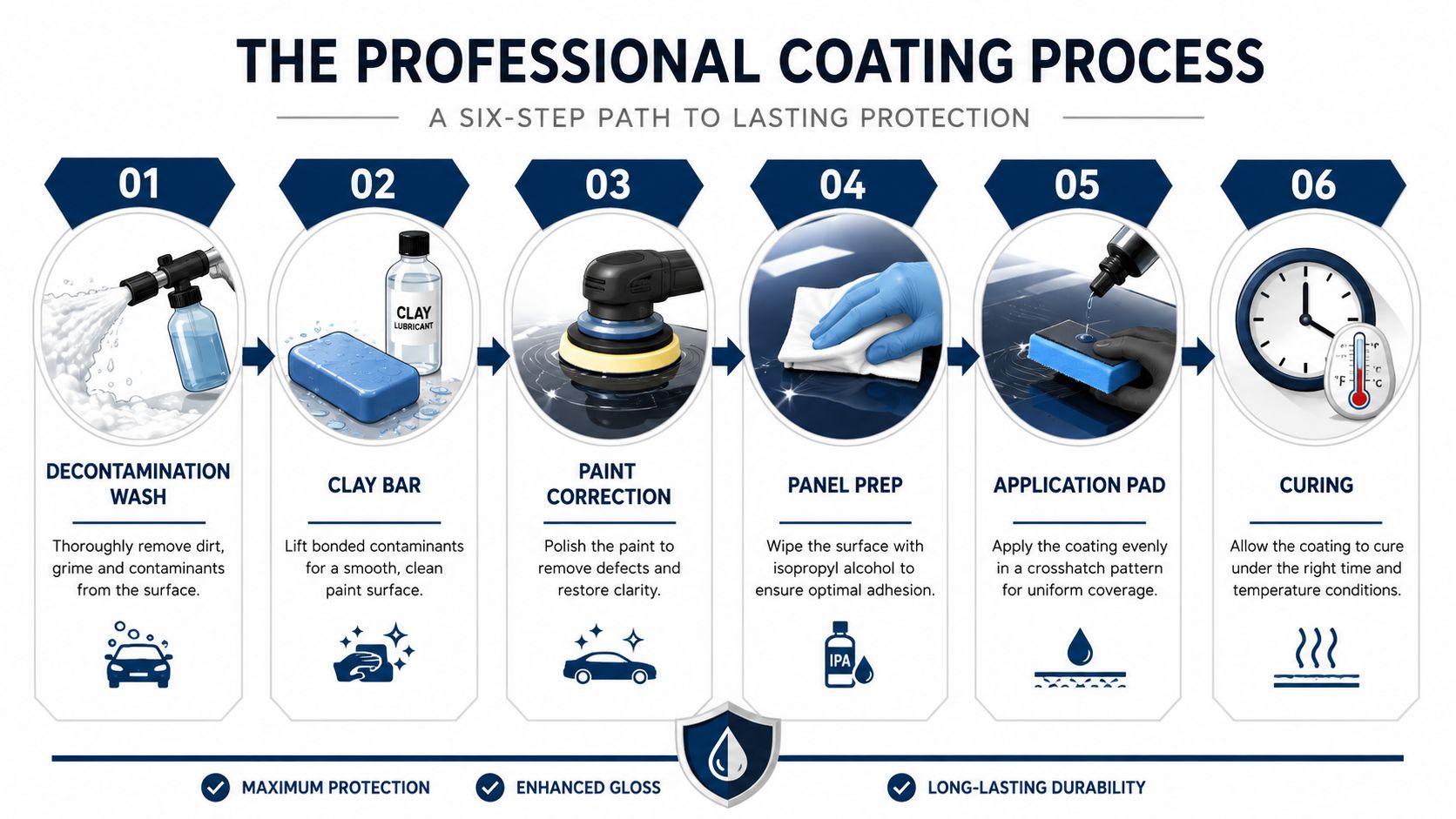
The work usually begins with a decontamination wash. A detailer removes loose dirt, road film, salt, and other material that would interfere with polishing or bonding. Clay treatment or another decontamination method can then lift bonded particles that ordinary washing leaves behind.
The preparation sequence
- Wash the vehicle carefully. Foam, pressure rinsing, and contact washing remove loose contamination without grinding grit across the paint.
- Decontaminate the surface. Clay and suitable lubricants help remove particles embedded in the clear coat.
- Correct the paint. A machine polisher and appropriate pad can reduce swirl marks, oxidation, and other defects. Much of the final gloss is created here.
- Prepare each panel. A panel-prep wipe removes polishing oils and residue, leaving a clean surface for the coating.
- Apply the coating in small sections. The installer spreads a controlled amount, watches the product's flash behaviour, and levels the film before it sets unevenly.
- Allow proper curing. Temperature, humidity, dust, and post-application handling all influence the early result.
Why correction changes the quote
Applying a coating over dull, scratched, or contaminated paint doesn't erase those defects. It can preserve them beneath a glossy layer, much like covering a scratch on a table with clear varnish. A detailer may therefore spend more time correcting the finish than applying the coating itself.
Toronto-area guides indicate that many packages take 6 to 10 hours, often including paint correction and preparation, as discussed in this GTA ceramic-coating cost guide. That time isn't a sign that the product is complicated for the sake of it. It reflects the controlled sequence needed to make the coating sit evenly on clean, corrected paint.
Ask what the quote includes. A credible estimate should identify the wash, decontamination, correction level, panel preparation, coating layers, curing instructions, and aftercare. Be cautious when a shop talks only about the bottle and says little about the surface.
Application rule: the coating protects the finish you hand to the installer, so decide how much correction you want before discussing product tiers.
How Much Ceramic Coating Costs and How Long It Really Lasts in Ontario
A GTA commuter can leave home with clean paint and return after a week of salt, brine, slush, and gritty spray. The coating's value is easiest to judge in that routine, not under showroom lights. Pricing reflects the labour needed to prepare the paint, apply the product, and support the result, not only the liquid in the bottle.
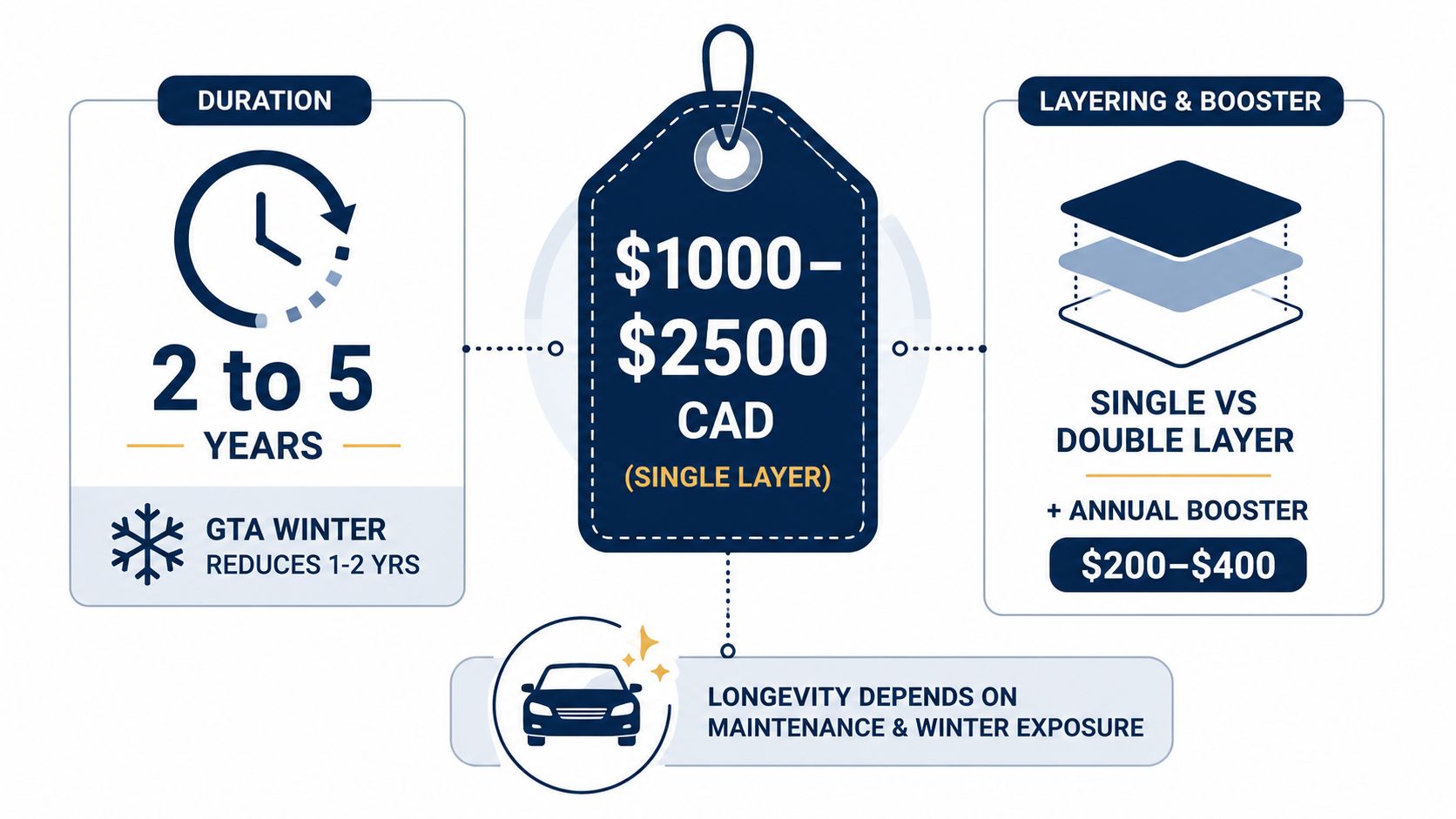
Local packages range from roughly $399 to $2,500 or more, depending on vehicle condition, paint correction, preparation, coating system, and service scope, according to Toronto-area ceramic-coating pricing information.
A cleaner vehicle with minor defects usually requires less labour than a neglected daily driver carrying swirls, bonded contamination, and winter residue. Size, access to the panels, desired finish, coating layers, and warranty terms can also change the quote. Ask for each item in writing so two prices can be compared fairly.
Longevity is a maintenance agreement
Supplier claims describe an upper limit, not a fixed appointment with the calendar. 3M markets one full layer as lasting up to 3 years, while a two-layer application package with annual maintenance is marketed as lasting up to 5 years, according to Ceramic Pro Victoria's Canadian product information. These terms should be read alongside the required maintenance and warranty conditions.
Winter exposure changes the lived result. Salt, brine, outdoor parking, wash technique, and neglected contamination can reduce water behaviour before the coating has physically disappeared. A surface clogged with mineral residue may need maintenance or decontamination, rather than immediate reapplication.
Calculate cost per protection period. Divide the quoted price by the years you reasonably expect to keep the coating performing, then compare that figure with repeated wax or sealant work, harder washing, and correction needs. The result depends on your driving pattern.
- Daily commuter: hydrophobic behaviour may repay the premium through easier rinsing after salty GTA travel.
- Ride-hailing driver: frequent contamination makes reduced cleaning effort more useful, although skipped maintenance still affects performance.
- Resale-focused owner: clear, well-presented paint can improve the handover impression, but a coating cannot guarantee a higher resale price.
- Short-term owner: wax or sealant may suit you better if you will sell the vehicle before a multi-year service period has value.
The payback question
Request the warranty in writing. Check its duration, maintenance schedule, exclusions, inspection rules, and whether missed services affect coverage. A lower quote may offer less correction or narrower support, while a higher quote may include more preparation and follow-up.
Keeping Ceramic Coating Performing and Getting Help Around the GTA
A January commute can cover a coated car in salt, slush, and road film before you reach work. The coating still helps, but only when grime is rinsed away before it dries into a rough layer. Regular, gentle washing keeps water behaviour and easier cleaning closer to what you paid for.
Use a pH-neutral automotive soap and clean wash media. A two-bucket method, careful rinsing, and a dedicated drying towel reduce the chance of dragging abrasive particles across the panels. Brush-heavy automatic washes add unnecessary friction. Touchless washing avoids brush contact, while hand washing gives you more control over pressure and contamination.
Drying deserves attention. GTA tap water and winter residue can leave mineral spots when droplets evaporate. Those spots can make a healthy coating look tired, even though the underlying protection has not suddenly disappeared.
A simple GTA care rhythm
- After heavy salting: rinse the exterior and underbody when practical, especially after long highway or expressway trips.
- During regular washing: use pH-neutral soap, clean microfiber tools, and light pressure.
- For stubborn contamination: avoid a harsh brush. Use an appropriate decontamination approach or ask a detailer.
- At inspection time: check water behaviour, spotting, high-contact areas, and visible damage.
- Before a refresh: confirm whether the coating needs a maintenance product, decontamination service, or full reapplication.
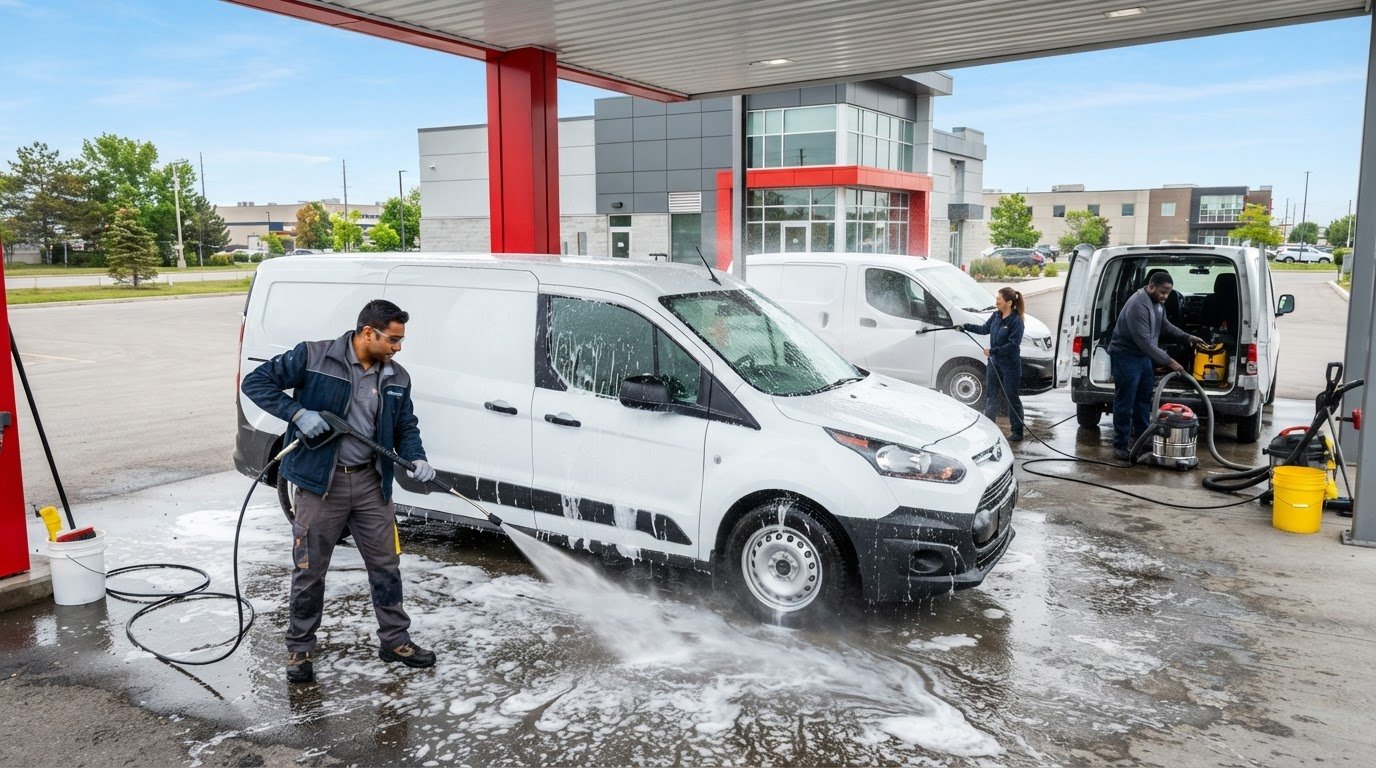
Nanak Car Wash offers express and full-service washes, appointment-based detailing, hand-applied steps, and wash options using 100% fresh water, with GTA locations listed on its Nanak Car Wash service page. These services can support routine cleaning around a ceramic coating. Paint correction, coating inspection, and heavier decontamination call for a detailer's more specialised process.
The practical test is simple. Choose ceramic coating for easier cleaning and longer-term surface protection, not rock-chip defence. Budget for preparation, ask how the shop handles correction, and keep washing through salt season. For a daily GTA commuter, that routine is where hydrophobic performance can repay its cost compared with repeated wax or sealant work. A coating helps most when you maintain it, rather than treating it as a glossy promise in a bottle.

 6600 Finch Ave W, Etobicoke, ON M9V 3Z6
 647-703-8515
 MON – SUN 8 AM to 7 PM