
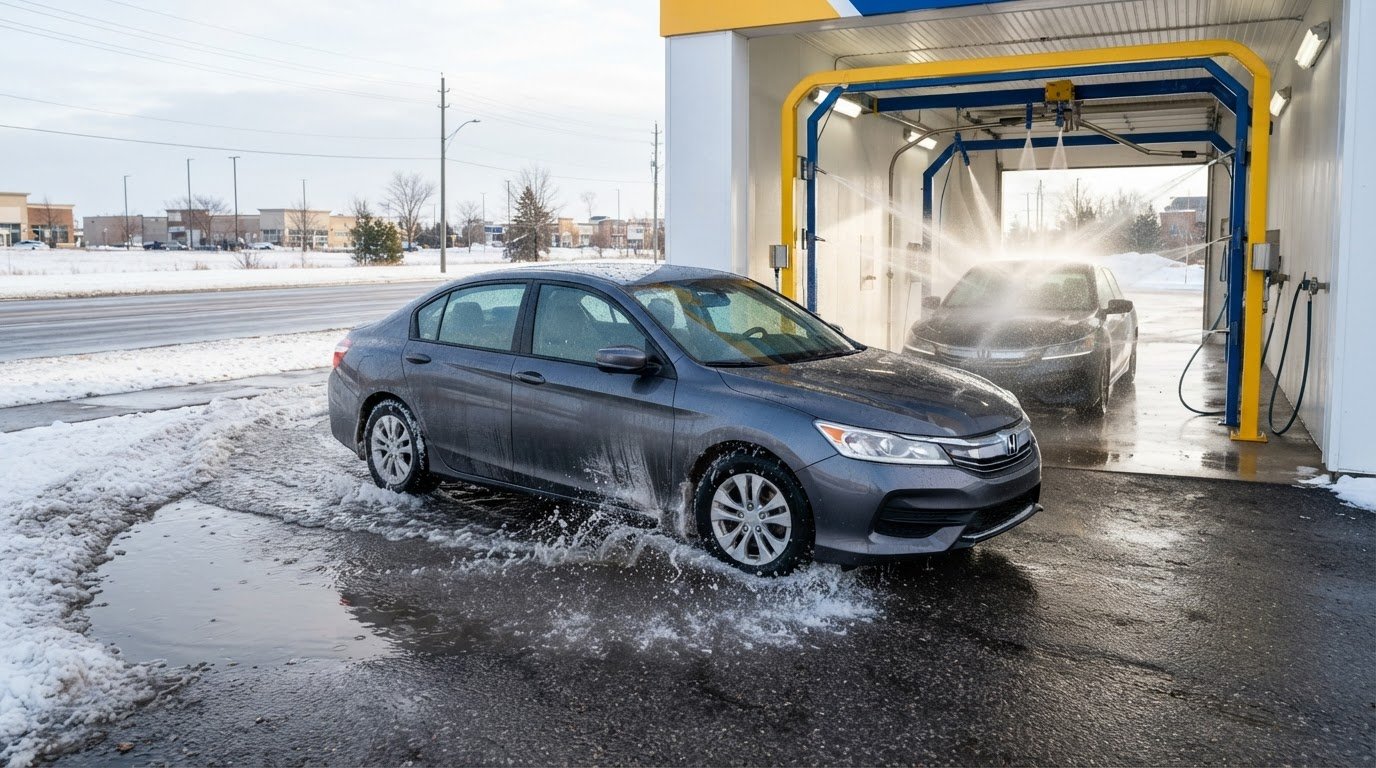
A salt-brine splash is a cleanup task, not automatically a vehicle emergency. If you’re wondering what to do after driving through a salt brine puddle, rinse the affected area as soon as it’s safe and practical. Avoid rubbing salty film or grit into the paint.
It’s reasonable to worry about residue you can’t see, especially underneath the vehicle. Brine can cling to hidden areas, but one splash doesn’t mean damage has occurred. A prompt, careful wash is a practical first step. A visual check afterward can help you spot residue that needs another rinse.
This guide explains what to rinse first, how to clean the exterior without scratching it, and when to pay closer attention to the undercarriage. If you’d prefer a professional wash, Nanak Car Wash in Brampton uses 100% fresh water. Some Express Car Wash packages include a low-pressure under-body wash. You’ll know what to do now and which signs may call for further attention.
Key Takeaways
- Learn what to do after driving through a salt brine puddle, starting with a safe rinse of exposed areas.
- Understand why dried residue can remain even after the visible splash disappears.
- Compare a brief splash with repeated slushy-road exposure or deeper water contact to choose a sensible next step.
- Know what to look for on lower panels and around the wheels after washing, and what a visual check can’t confirm.
- See how a fresh-water wash and, in some Express Car Wash packages, a low-pressure under-body wash can help remove accessible residue.
What a Salt Brine Puddle Leaves on Your Car, and What It Doesn’t Mean
A road-brine puddle is water mixed with salt used to help manage ice on roads. When a vehicle passes through it, liquid can splash onto the lower doors, rocker panels, wheel wells, tires, and underbody. The puddle may look like ordinary dirty water, but dissolved salt can remain as a pale film or specks after the water dries.
That residue is a reason to clean the vehicle, not proof that rust has started. Salt can contribute to corrosion when it remains on metal alongside moisture, but exposure alone doesn’t tell you whether damage has occurred. A brief splash is also different from being submerged in deep or prolonged water. Keep the response practical: note where the liquid reached, then plan a suitable rinse and wash.
How road brine differs from ordinary rainwater
Rainwater generally dries without leaving road-salt deposits. Brine can leave residue because dissolved salts remain after the water evaporates. Road treatments may use materials such as sodium chloride or calcium chloride, but the specific product varies. The Road Salt Composition and Usage overview explains common salt types and application methods, including brine.
Slush and spray often reach lower bodywork and wheel areas first. The visible splash may not show every spot the liquid touched, so rinse those areas even if the mark on the door looks small.
Why the size and depth of the splash matter
Exposure depends on the puddle’s depth, the vehicle’s speed, and where the liquid reaches. A shallow splash across the tires and lower panels is not the same as driving through water deep enough to reach higher parts of the vehicle or remaining in water for an extended period. Those situations call for different levels of attention, but appearance alone can’t establish what happened beneath the surface.
After a brief splash, don’t assume the vehicle needs emergency attention. Equally, don’t leave visible salty film in place longer than necessary. If you’re deciding what to do after driving through a salt brine puddle, treat it as a prompt for sensible cleaning, then consider the extent of the exposure. Repeated slushy-road driving can leave more residue than one isolated splash, while deeper water contact deserves a more cautious assessment.
Think of cleaning as routine prevention, not a guarantee against corrosion. Salt residue can be harder to spot once dry, especially around wheel areas and underneath the vehicle. A prompt wash helps remove accessible residue, but it doesn’t prove every hidden surface is clean or establish that no inspection is needed. Start with what you can observe and keep your response proportional to the depth and extent of the exposure.
What to Do Right After Driving Through a Salt Brine Puddle
Start with a safe, simple cleanup. You don’t need to panic after a brief splash, but rinsing away visible brine helps keep salty residue from sitting on the vehicle. If you’re deciding what to do after driving through a salt brine puddle, follow these steps when it’s safe and practical:
- Park safely. Pull over only where you can stop without creating a traffic hazard. Choose a suitable place to rinse the vehicle. Don’t stand in traffic or reach under a vehicle that isn’t safely positioned.
- Rinse the areas that got splashed. Use clean water on the lower body panels, wheel wells, wheels, and underside. Start with the areas showing the most slush or film.
- Wash away remaining residue. Use a suitable vehicle wash product and follow its directions. Rinse thoroughly. Don’t scrub dry salt or gritty road film across the paint.
Rinse the underside and wheel areas first
Road spray and salty slush tend to collect around the wheels, wheel wells, and lower parts of the vehicle. Give these areas a thorough rinse, including the underside you can reach safely. A rinse can remove accessible residue, but one pass can’t guarantee every trace is gone. Use a steady flow of water, not a forceful jet aimed at seals, openings, or electrical components.
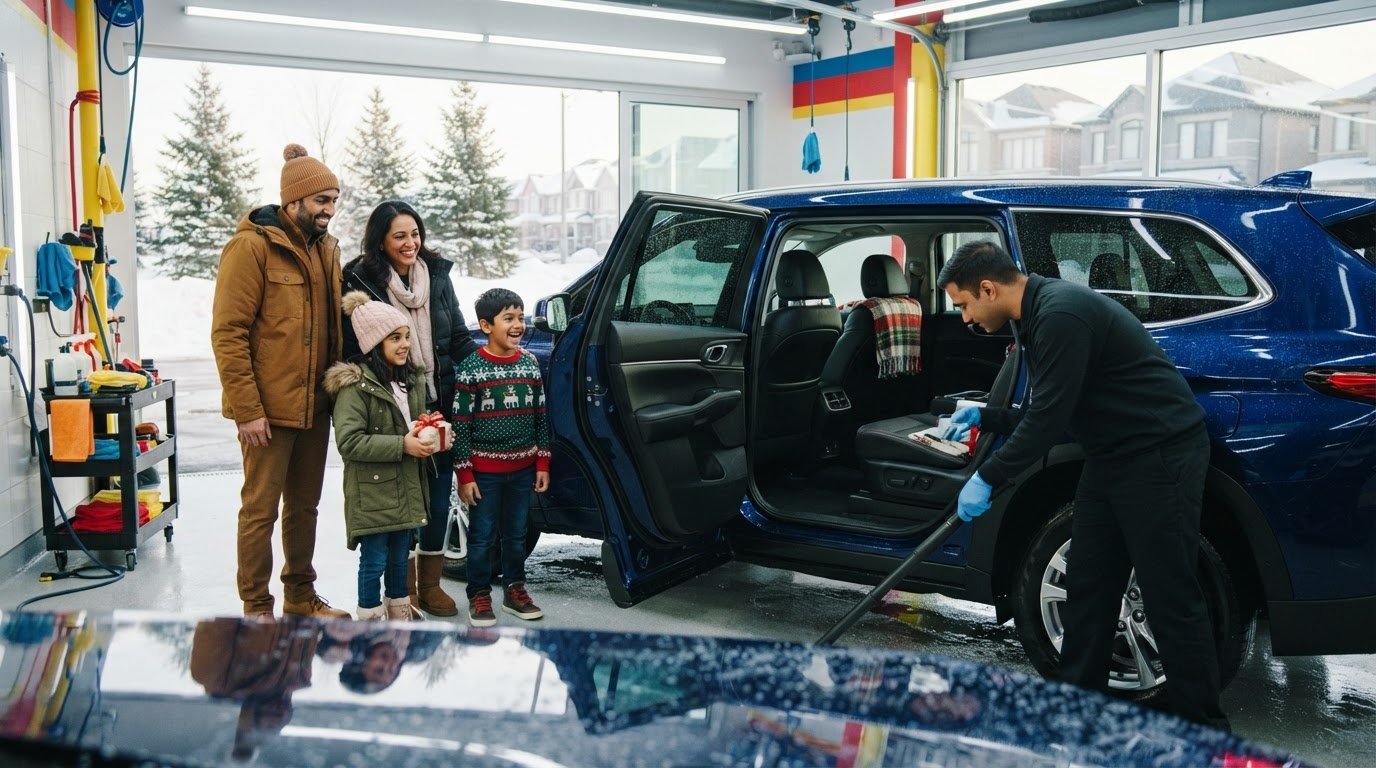
Don’t crawl beneath a vehicle to reach hidden areas. If you can’t safely rinse the underside at home, a professional wash is a practical option. Nanak Car Wash uses 100% fresh water, and some Express Car Wash packages include a low-pressure under-body wash. This can help rinse accessible areas, but it isn’t a guarantee that all brine has been removed.
Wash away residue from the rest of the vehicle
Once the lower areas are rinsed, clean other visibly splashed surfaces, such as lower doors and wheel faces, with a suitable vehicle wash. Wash as soon as practical, especially if a salty film is visible or you’ve had repeated slushy-road exposure. Don’t use household cleaners or improvised vinegar, baking soda, or other mixtures. They may not be suitable for your vehicle’s finishes.
Keep the cleanup focused on the exterior unless water or slush entered the cabin. If the splash reached unusual areas or the vehicle went through deeper water, follow the vehicle manufacturer’s guidance rather than assuming a regular exterior wash is enough. For a convenient wash in Brampton, Nanak Car Wash uses fresh water to clean the vehicle’s exterior. Rinse first, wash gently, and avoid directing water into openings or components that aren’t meant to be sprayed.
Road Brine Splash vs. Deeper Water Exposure: How to Judge the Difference
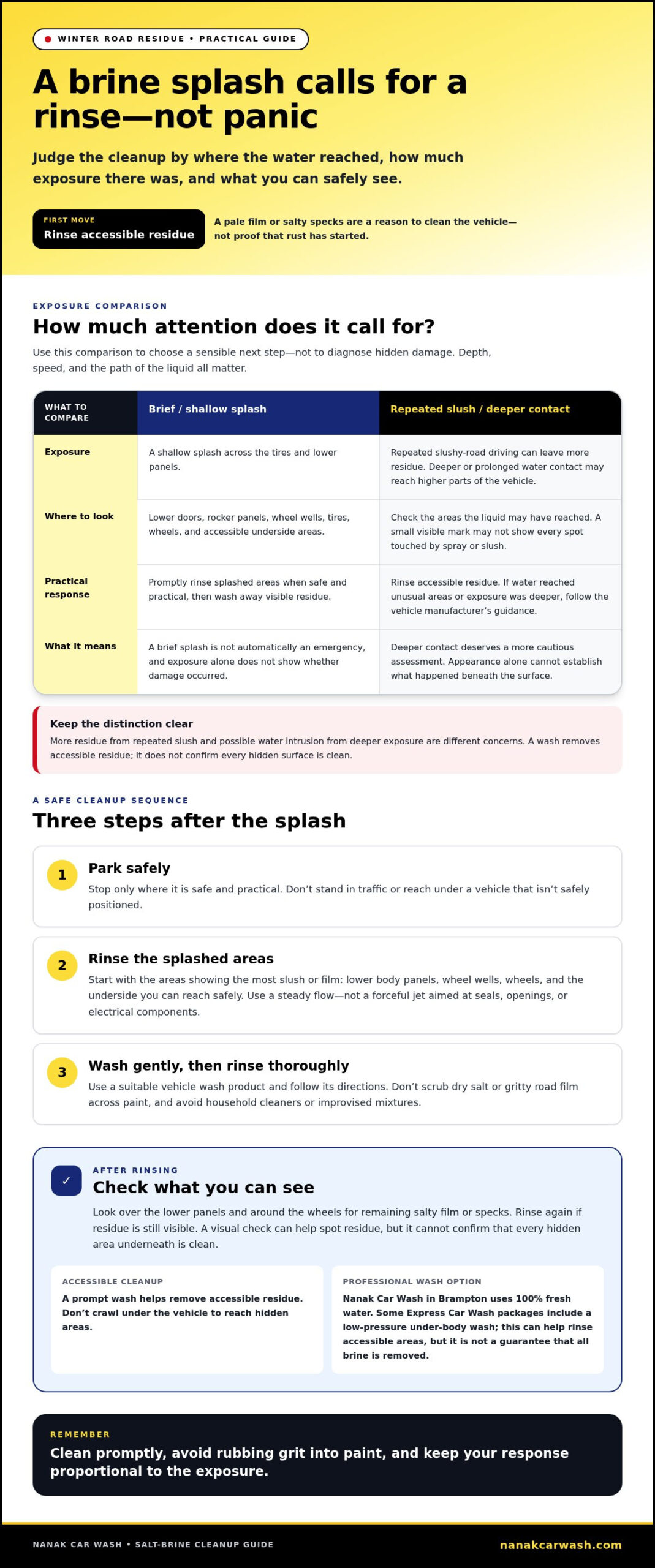
A shallow splash on a winter road usually calls for exterior cleaning and a calm check of the areas that got wet. Repeated slushy-road driving can leave more residue, while deeper water contact raises different questions about where water reached. Use the comparison below to choose a sensible next step, not to diagnose hidden damage. The depth, speed, and path of the liquid all matter.
| Exposure | What to do | What to observe |
|---|---|---|
| Brief splash | Rinse visible splashes from lower panels, wheels, and wheel wells, then wash as practical. | Look for remaining salt film or slush. Dried residue alone doesn’t confirm damage. |
| Repeated slushy-road exposure | Plan a thorough exterior rinse and wash, paying attention to areas repeatedly hit by road spray. | Check whether residue remains around wheel areas and lower bodywork after washing. |
| Deeper water contact | Consider where the water reached and follow the vehicle manufacturer’s guidance if unsure. | Notice whether water entered the cabin or whether unusual warning lights or vehicle behaviour appear. |
Signs that the vehicle had more than a surface splash
Think beyond the wet exterior: did water enter the cabin or reach areas above the lower bodywork? A normal brine splash doesn’t automatically cause warning lights or braking changes. But if you notice a warning light or a change in braking after deeper water contact, stop somewhere safe and seek qualified help before continuing. Don’t try to diagnose brakes or electrical systems by looking at the vehicle from outside.
What a comparison can, and cannot, tell you
These exposure categories help you decide whether routine cleaning is a reasonable next step or whether the event deserves closer attention. They can’t confirm whether a hidden area is clean or whether a component has been affected. A film of road grime is different from a warning light or altered vehicle behaviour. If you’re unsure how deep the water was or where it reached, follow the manufacturer’s guidance.
Keep the response proportional. For a brief splash, focus on washing away visible residue and observing the vehicle during normal use. Don’t treat an ordinary coating of winter grime as proof of a mechanical problem. On the other hand, don’t dismiss a change in how the vehicle operates as just salt on the exterior. Exposure descriptions offer context, not a diagnosis.
So, what to do after driving through a salt brine puddle depends on the exposure: clean accessible exterior surfaces after a brief splash, and pay closer attention when water reached beyond them or the vehicle behaves differently. If deeper contact is possible, the owner’s manual or manufacturer guidance is a better next reference than guessing from the puddle alone.
What to Check After Rinsing, and When to Get Further Help
Once the vehicle is rinsed, make a simple visual check in good light. You’re looking for obvious residue, not trying to inspect mechanical parts or prove that every hidden surface is clean. A pale film around a wheel or along a lower panel can mean the wash missed an accessible spot. It doesn’t, by itself, confirm rust or mechanical damage.
A simple post-wash visual check
Look along the lower body panels and at visible wheel areas for remaining salty film, dried slush, or road grime. Check only where you can see and reach safely. If residue appears again after driving through more treated-road slush, that may reflect fresh exposure, so plan another rinse when practical. Don’t scrape or probe vehicle components, crawl beneath an unsupported vehicle, or apply lubricant without manufacturer guidance.
- Lower panels: Look along the bottom edges of the doors and other visibly splashed exterior surfaces.
- Wheel areas: Check the visible wheel faces and accessible parts of the wheel wells.
- Underside: Use a safe view from outside the vehicle. Don’t lift or crawl under it to check hidden areas.
This quick check has limits. It can help you spot visible residue that needs another rinse, but it isn’t a mechanical inspection. Hidden seams and components may not be visible from outside, and a clean-looking surface doesn’t prove every area is free of salt. Keep the check visual and leave component handling to qualified help.
When the situation calls for more than a wash
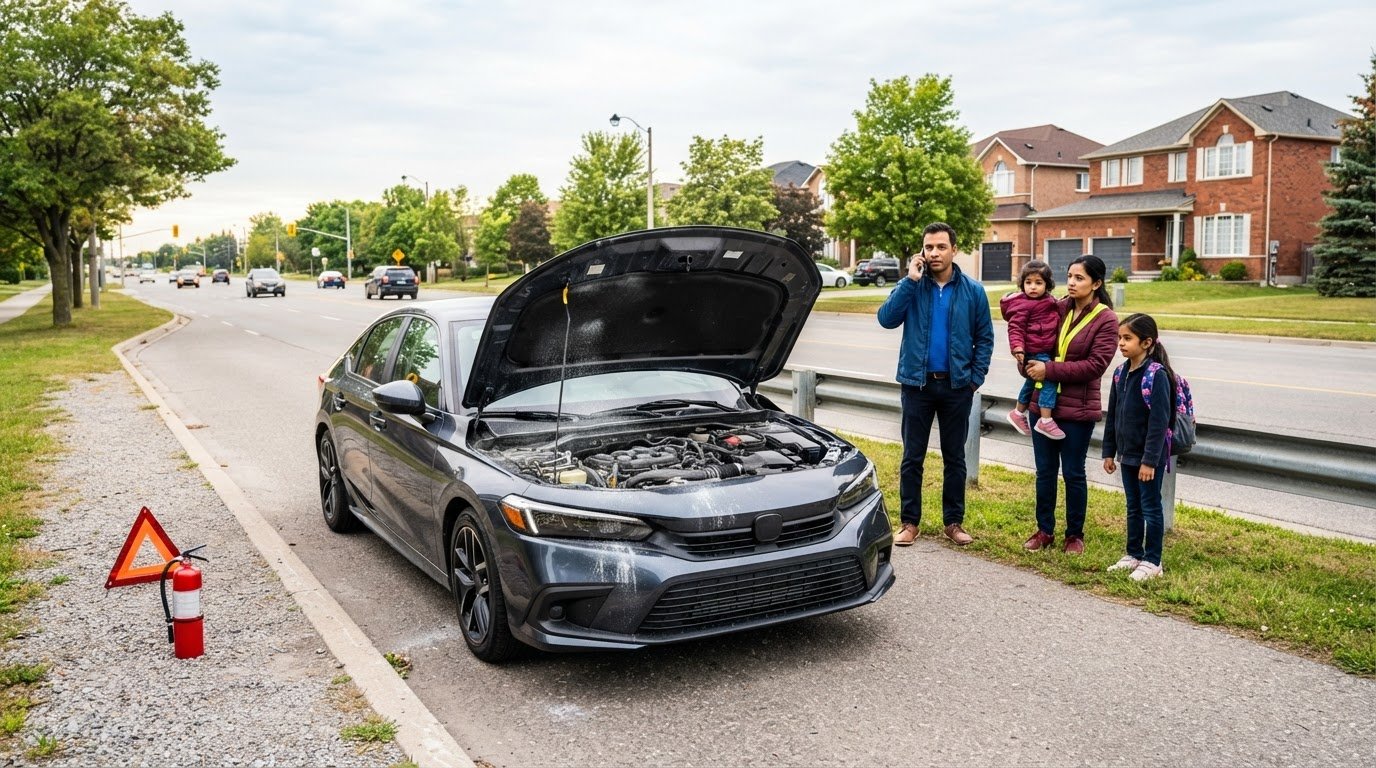
Ordinary winter grime is a cleaning issue. Unusual braking, a warning light, or water inside the vehicle is different and deserves attention beyond an exterior wash. If the vehicle doesn’t feel safe to drive, stop in a safe place and seek qualified automotive assistance. Don’t attempt mechanical or electrical repairs based on a visual check or a guess about where water reached.
If water entered the cabin or reached areas beyond the exterior, follow the vehicle manufacturer’s guidance. Do the same if you’re unsure how deep the exposure was. A wash can remove accessible exterior residue, but it can’t determine whether water has affected a hidden system. Describe what happened and any changes you noticed when seeking assistance.
For a salt-brine splash without unusual symptoms, keep the response simple: wash visible residue, check accessible areas, and pay attention to how the vehicle operates. Knowing what to do after driving through a salt brine puddle includes knowing when cleaning is enough and when it isn’t. For a fresh-water wash in Brampton, get your vehicle washed at Nanak Car Wash. Some Express Car Wash packages include a low-pressure under-body wash to rinse accessible areas, without guaranteeing that every hidden spot is clean.
Keep Salt Residue Under Control with a Practical Wash Routine
Winter roads can leave salt film on your vehicle after a single splash, and repeated driving through treated-road slush can add more. Washing helps remove visible exterior residue before it has more time to sit on the surface. It’s a useful cleaning habit, not a guarantee against rust or proof that every hidden area is salt-free. Let what you can see, and how often the vehicle is exposed, guide your next wash.
Choose a wash that addresses the areas you rinsed
If road spray reached the wheels and lower bodywork, choose a wash that gives those areas attention. Nanak Car Wash uses 100% fresh water, and some Express Car Wash packages include a low-pressure under-body wash. That option can rinse accessible lower areas, but it doesn’t promise complete brine removal or reach every hidden surface. Wash the exterior gently and follow your vehicle manufacturer’s guidance for areas that shouldn’t be sprayed.
A professional wash can be a convenient way to clean away visible film when a home rinse isn’t practical. Keep the goal clear: remove accessible road residue, not treat a wash as a mechanical inspection or a rust-proofing guarantee. If you still see salt after washing, focus on the visible spots rather than scraping or probing vehicle components.
Build a realistic winter cleaning habit
There’s no single schedule that suits every driver. Pay attention to visible buildup after repeated trips on slushy or heavily treated roads, and wash when residue is noticeable or practical to do so. If roads are wet and slushy for several drives, a rinse may be useful sooner than after one brief, isolated splash. Keep the routine flexible rather than tying it to an unsupported fixed interval.
Use a simple reminder: check the lower panels and wheel areas occasionally, especially after a stretch of salty-road driving. If they look coated, arrange a wash rather than letting visible film accumulate. A wash can remove what’s accessible, but it can’t confirm the condition of concealed seams or guarantee corrosion prevention. For deeper water exposure or unusual vehicle behaviour, cleaning isn’t a substitute for following manufacturer guidance or seeking qualified assistance.
For drivers in Brampton, Nanak’s fresh-water washes offer a practical option for regular exterior cleaning. Some Express Car Wash packages include a low-pressure under-body wash for accessible lower areas. Explore Nanak’s wash options and choose a wash that fits your vehicle’s visible salt buildup.
Make Your Next Winter Wash Count
Let visible salt buildup guide your next wash rather than treating every splash as an emergency. After you’ve handled what to do after driving through a salt brine puddle, make a simple habit of noticing when treated-road slush leaves residue behind. A practical wash can clear accessible exterior grime, while unusual vehicle behaviour still calls for qualified attention.
For Brampton drivers, Nanak Car Wash offers a convenient cleaning option using 100% fresh water. Some Express Car Wash packages include a low-pressure under-body wash, which can help rinse accessible lower areas without guaranteeing every hidden surface is clear. Choose a wash when visible buildup makes it worthwhile, and keep your vehicle looking cared for through winter.
Explore Nanak Car Wash services and take an easy next step toward a cleaner vehicle.
Frequently Asked Questions
How soon should I rinse my car after driving through a salt brine puddle?
Rinse it as soon as it’s practical and safe, particularly if you can see brine on the underside, wheel areas, or lower panels. If you’re deciding what to do after driving through a salt brine puddle, clean water is a sensible first step. Avoid forceful spray at seals or electrical openings. If you can’t wash right away, don’t panic. Wash when convenient and check for residue after the vehicle dries.
Can salt brine damage a car after one puddle?
A single brief splash doesn’t automatically mean your vehicle has been damaged. Consider how much liquid splashed, where it reached, and whether visible residue remains. For example, brine on a lower door is a different exposure from water reaching inside the cabin. Rinse away visible film, especially after repeated winter driving. If braking feels unusual or warning lights appear, treat that as a separate concern, not routine exterior cleanup.
Should I wash the undercarriage after driving through road brine?
Yes, rinsing the underside is a practical way to clear accessible salty slush, especially after repeated exposure. Include visible wheel areas and lower panels, but don’t crawl beneath a vehicle that isn’t safely supported. A wash removes accessible grime; it isn’t a mechanical inspection and can’t prove every concealed area is clean. If you can’t reach the underside safely, use a wash option that includes an under-body rinse.
Is a salt brine puddle the same as driving through floodwater?
No. A brief road-brine splash is different from deeper or prolonged water exposure. Think about whether the water stayed around the tires and lower bodywork or reached the cabin or areas beyond the exterior. If you’re unsure how deep it was, consult your vehicle guidance instead of relying on appearance alone. Warning lights or unusual behaviour afterward deserve attention beyond a routine wash.
What should I do if my brakes feel different after driving through brine?
Don’t assume washing will fix a change in braking. If the vehicle feels unsafe to drive, stop somewhere safe and arrange qualified automotive assistance. A puddle crossing alone doesn’t diagnose a brake problem, and exterior salt residue can’t explain a change in braking. Note what feels different, such as reduced response or an unfamiliar sensation, and share that observation with the qualified professional assessing the vehicle.
Does a car wash remove all salt from underneath a vehicle?
A car wash can rinse visible salt and road grime from accessible areas, but it can’t confirm that every hidden surface is completely clean. Check for visible residue after the vehicle dries, then consider another wash if salty slush builds up again. If deeper water reached the vehicle or unusual symptoms develop, don’t rely on washing alone. Follow the vehicle manufacturer’s guidance or seek qualified automotive assistance.

 6600 Finch Ave W, Etobicoke, ON M9V 3Z6

 647-703-8515
 MON – SUN 8 AM to 7 PM