
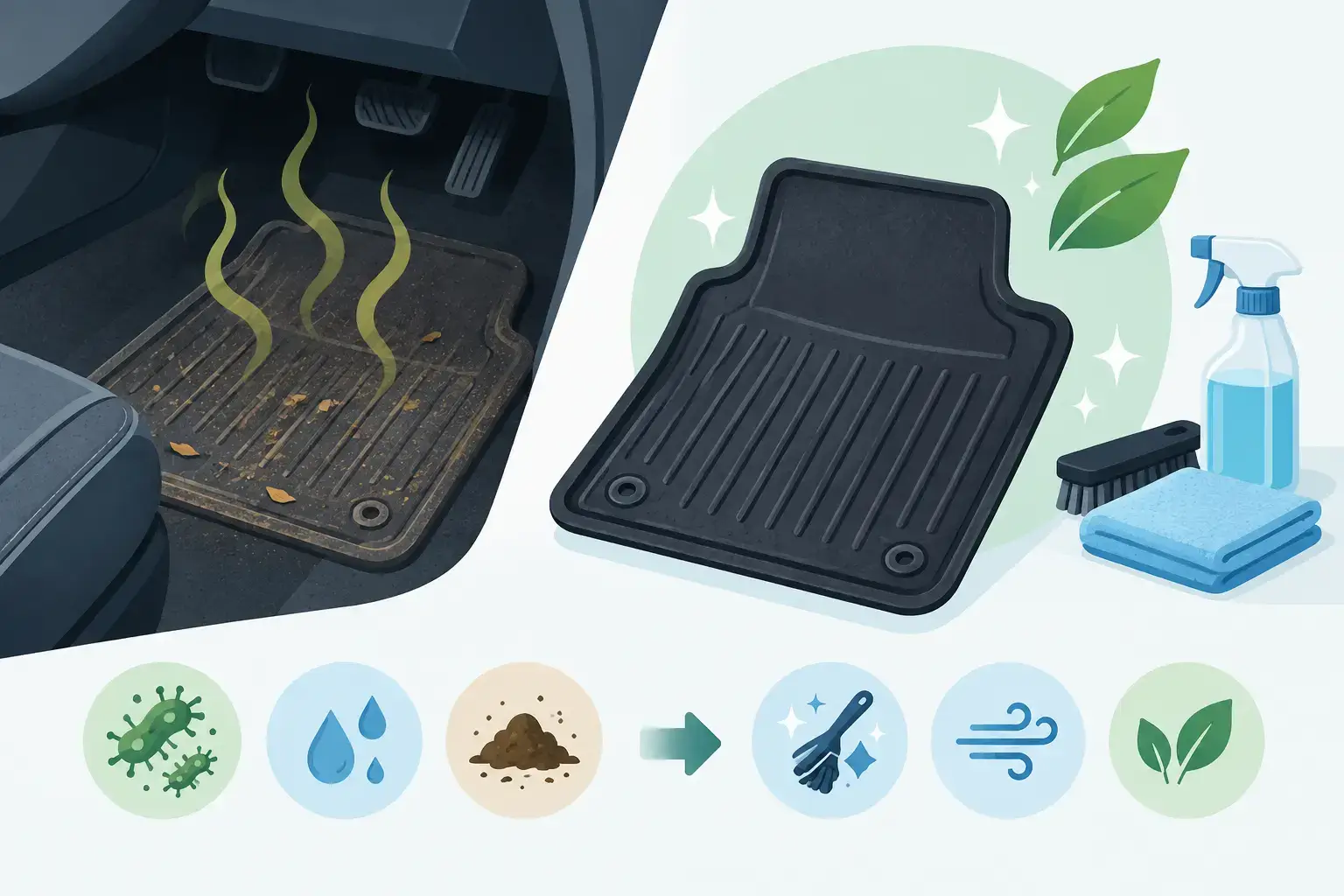
A car can look clean from the outside and still smell unpleasant the moment you open the door. If you are wondering why car floor mats smell, the answer is usually trapped moisture mixed with dirt, food, salt, and everyday grime. The odor is not just sitting on the surface. It often comes from deep in the mat fibers or the carpet underneath.
For commuters, families, rideshare drivers, and anyone dealing with wet weather, floor mats take more abuse than almost any other part of the interior. Shoes bring in rainwater, snow, mud, road salt, spilled coffee, pet hair, and bacteria. Let that buildup stay damp for long enough, and your mats can start making the whole vehicle smell stale, sour, or musty.
Why Car Floor Mats Smell Worse Than the Rest of the Interior
Floor mats are built to catch messes, which is useful until they are never properly cleaned or dried. Carpet mats have fibers that hold moisture and organic debris. Rubber mats do not absorb as much water, but grime can collect in the grooves, especially around the edges where it is easy to miss.
The main problem is moisture. Water by itself does not always smell, but it creates the right conditions for mildew, bacteria, and mold to grow. Add traces of food, soil, sweat, pet accidents, or spilled drinks, and there is plenty for odor-causing bacteria to feed on.
A mat can feel dry on top while the backing is still damp. The same is true of the carpet below it. That hidden moisture is why a quick spray of air freshener may cover the smell for a day but does not solve it.
Wet Shoes, Snow, and Road Salt
Wet weather is one of the biggest causes of bad mat odors. Rain and snow get pressed into the mat every time someone gets in the car. In colder climates, slush also carries salt, sand, and dirty road water into the cabin.
Road salt is especially tough on interiors. It leaves a chalky residue, keeps grime in the fabric, and can attract moisture again when conditions are humid. If your vehicle smells musty after winter, the mats and carpet are a good place to start.
Food and Drink Spills
A few drops of coffee may not seem serious, but sugary drinks, milk, juice, and food particles can create stubborn odors fast. A spill that reaches beneath a mat is more likely to smell because it stays out of sight and takes longer to dry.
This is common in family vehicles and busy commuter cars. Crumbs and spills fall near the seats, get stepped on, and work their way into the mat backing or carpet. By the time the smell is noticeable, a simple wipe-down usually is not enough.
Pets, Kids, and Everyday Bacteria
Dogs, sports gear, wet boots, gym bags, and small accidents all leave behind moisture and organic material. Even without a visible stain, bacteria can remain in the fibers. That is why the odor may return after you vacuum the car.
A sour or dirty-sock smell often points to bacteria growing in damp fabric. A strong mildew smell usually means moisture has been trapped for a while. If the odor is sharp and ammonia-like, check for a pet accident or another source that needs targeted treatment.
How to Tell Whether the Mat or the Carpet Is the Problem
Remove the mats and smell them outside the vehicle. Then smell the carpet directly underneath, especially near the pedals, under the front seats, and along the door-side edges. If the mat smells bad but the carpet does not, cleaning and drying the mat may be enough.
If the carpet below smells just as bad, the issue has likely soaked through. Feel for damp spots with the back of your hand. Do not forget the trunk mat, particularly if you carry sports equipment, groceries, work gear, or wet strollers.
Look for signs of a bigger moisture problem too. Foggy windows, damp seat belts, wet carpet that never seems to dry, or a recurring mildew smell can point to a leaking door seal, windshield leak, sunroof drain issue, or heater system problem. Cleaning the mats helps, but the smell will keep coming back until the water source is fixed.
How to Clean Smelly Car Floor Mats Properly
The right approach depends on whether you have rubber or carpet mats. In both cases, remove the mats first. Cleaning them outside the vehicle gives you better access and keeps dirty water out of the cabin.
For rubber mats, shake out loose debris and rinse thoroughly. Use a brush with car-safe cleaner or mild soap to scrub the grooves, corners, and underside. Rinse again until the water runs clear, then let the mats dry completely before reinstalling them. Do not put them back in while water is still trapped in the channels.
Carpet mats need more care because they hold liquid deep in the fibers. Vacuum both sides first. Treat stains or odor spots with an appropriate fabric cleaner, agitate gently with a brush, and extract as much moisture as possible. A wet-dry vacuum or carpet extractor does a far better job than soaking the mat and hoping it air-dries.
Avoid using too much product. Oversaturating a carpet mat can make the odor problem worse because the padding stays wet. Use enough cleaner to lift dirt, then remove as much moisture as you can. Dry the mat in a warm, well-ventilated place until it is completely dry on both the top and backing.
If you are cleaning the carpet underneath, use the same rule: clean thoroughly, but do not flood it. Keep the doors open or run fans to help it dry. On a warm day, parking in sunlight can help, but always check that the carpet is dry before laying the mats back down.
When a Quick Clean Will Not Remove the Smell
Some odors have been sitting too long for basic vacuuming and surface cleaning. Milk, pet urine, mold, old spills, and heavily salted winter mats may need deep shampooing and extraction. In those cases, professional interior detailing can save time and prevent the smell from spreading through the entire vehicle.
A proper detail is useful when the odor has reached the carpet underneath the mats, into the seat tracks, or under the seats. The goal is not to cover up the smell with fragrance. It is to remove the dirt and moisture causing it.
At Nanak Car Wash, mat washing, interior cleaning, vacuuming, and deeper detailing services can help bring a well-used interior back to a cleaner, fresher condition without turning car care into a costly project. It is a practical option when your schedule is full or the mats need more than a quick rinse.
Keep Floor Mat Odors From Coming Back
Regular cleaning is easier and cheaper than waiting for a strong odor. Shake out mats often, vacuum carpet mats before dirt gets packed in, and deal with spills right away. During rainy or snowy months, take an extra minute to check whether the carpet underneath is damp.
Rubber all-weather mats are often the better choice for drivers who deal with slush, muddy work boots, kids, or pets. They are easier to rinse and less likely to hold moisture than carpet mats. The trade-off is that water can pool in the grooves, so they still need to be emptied and dried regularly.
Carpet mats can look more finished and comfortable, but they need more frequent vacuuming and deeper cleaning. For many drivers, using rubber mats in wet seasons and carpet mats in dry weather is a simple way to protect the vehicle interior.
A fresh-smelling car starts at floor level. Pull the mats out, check what is hiding underneath, and make sure everything is truly dry before you drive away. That small bit of upkeep can make every trip feel cleaner, whether you are heading to work, picking up the kids, or giving passengers a ride.

 6600 Finch Ave W, Etobicoke, ON M9V 3Z6

 647-703-8515
 MON – SUN 8 AM to 7 PM