
You leave work after a wet GTA snowfall, scrape the windshield, and point the car toward home. By the time you arrive, the paint is wearing a grey coat of grit, the wheel wells are packed with slush, and salty water has found its way into door jambs, rocker panels, and the underbody. The forecast says a thaw is coming, but your calendar says you're due for a wash on Saturday. In Ontario, the forecast deserves the vote.
Winter car cleaning works best when it removes salt while that salt is wet and active, not when a convenient calendar interval finally arrives. The right routine targets the underbody first, deals with the cabin as well as the paint, and uses protection as a supporting layer rather than a magic force field.
Table of Contents
- Why GTA Winters Are Brutal on Your Car
- The Right Way to Wash Away Salt and Grime
- Wax Sealants and Rust Proofing That Last Through Winter
- Interior Salt Stains and Odor Control That Actually Works
- Express Wash Versus Full Detailing in Winter
- A Simple Winter Schedule That Saves Money and Your Paint
Why GTA Winters Are Brutal on Your Car
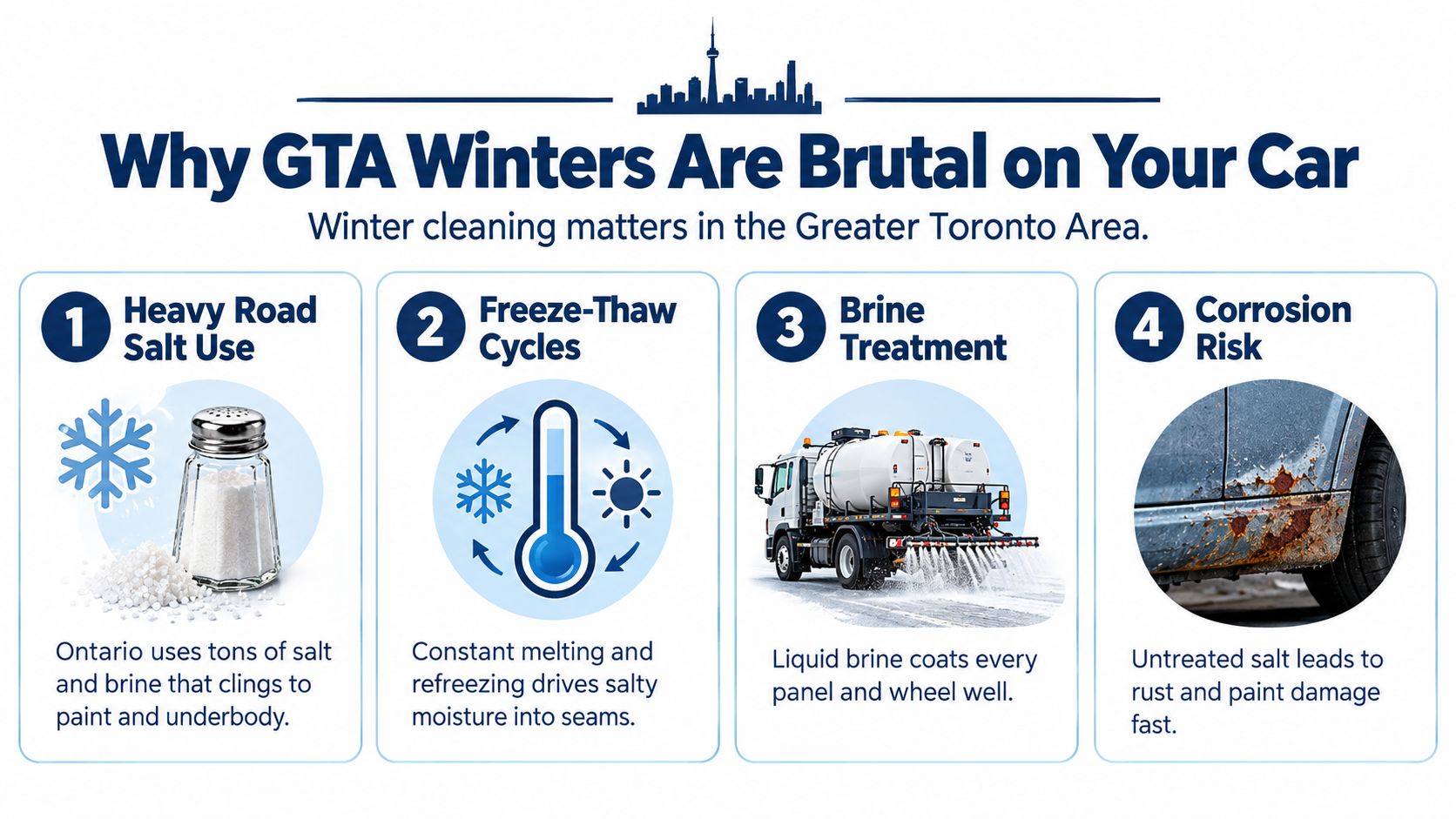
A typical GTA commute can involve freshly ploughed snow, dry road salt, liquid brine, and a temperature hovering around freezing, all in the same trip. Your car doesn't need to travel far for that mixture to reach suspension pockets, wheel wells, rocker panels, seams, and the lower edges of the doors.
Ontario is one of Canada's most salt-intensive winter-driving regions. Independent Ontario-focused summaries report roughly 1.5 to 3 million tonnes of road salt applied on provincial roads each winter, while the City of Toronto alone uses about 130,000 to 150,000 tonnes annually, according to this Ontario road salt and rust overview. That repeated exposure matters throughout the province's five- to six-month freeze-thaw season, particularly underneath the vehicle where salty water can sit unseen.
Exposure matters more than the odometer
Road salt damage is less about how many kilometres you drive than how long salty moisture remains on the vehicle. A short trip on a brine-treated road can leave a conductive film behind, and repeated melting lets that film move deeper into seams and crevices. A car parked in a heated garage can face an unpleasant twist, because wet salt stays active longer when warmth keeps the vehicle damp.
That's why an occasional heroic spring clean can't undo every winter habit. A quick underbody rinse during a useful thaw window often does more than waiting for a fixed weekly appointment while the salt remains frozen and tucked behind the wheels.
Bay-side rule: If the roads have turned wet after a thaw, your car is carrying active brine. Wash the salt off before it dries, refreezes, and settles in for another shift.
Toronto's atmospheric corrosion record also gives the problem some historical weight. A Transportation Research Board record measured 5,108 mg/dm² of Toronto atmospheric corrosion over a 19-month exposure period, placing the city among the highest-corrosion locations in that dataset, as documented in this Toronto atmospheric corrosion record. Your car may look merely dirty, but the lower panels and underbody are doing a much less decorative job.
The Right Way to Wash Away Salt and Grime
A thaw day changes the wash priority. Once brine turns liquid, it can move into seams, wheel wells, door hardware, and underbody pockets. Wash during that window, before the moisture dries or freezes again. The goal is to reduce exposure time, not chase a clean odometer reading.
Use this order: hidden, salty areas first, painted upper panels last. Otherwise, loosened grit can travel across clean doors and create scratches.
Start underneath
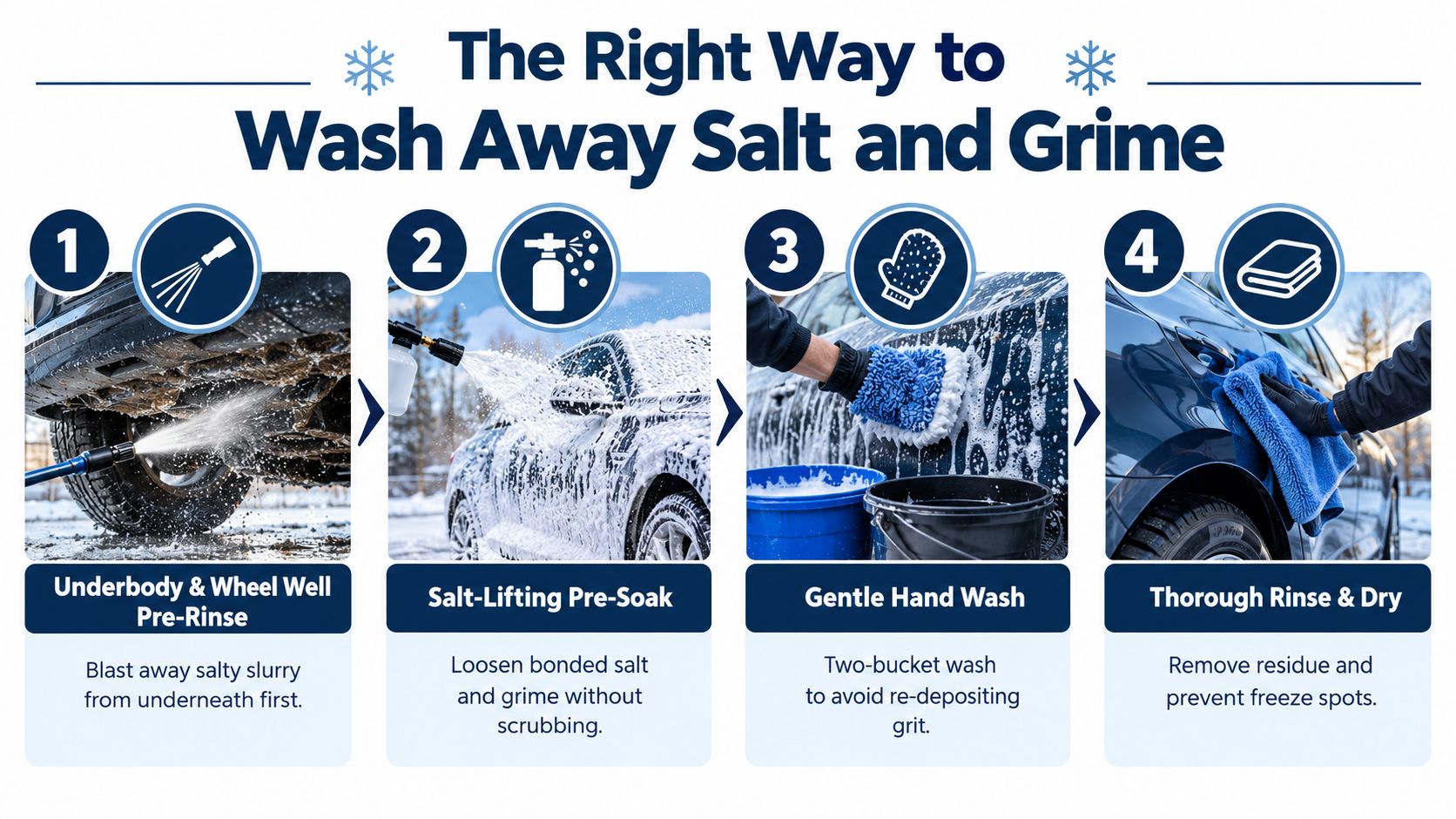
Pre-rinse the underbody and wheel wells. Use the wash bay's underbody option, or direct the wand into wheel arches, behind the tyres, along rocker panels, and across visible suspension pockets. The first pass should carry away salty slurry rather than spread it.
Apply a salt-lifting pre-soak. Foam or pre-soak softens bonded road film before contact washing. Cover the lower sections, wheel arches, sills, and rear bumper, where salt collects heavily. The softer the film, the less dragging your mitt or brush has to do.
Pressure-rinse the hiding places. Work around seams, suspension pockets, rocker panels, lower door edges, and the backs of wheel openings. Keep the wand controlled. Avoid forcing water into damaged seals or electrical connectors. Flush contamination out without trying to excavate the chassis.
Wash painted surfaces last. After the heavy salt has left the lower half, clean the roof, glass, bonnet, upper doors, and tailgate. A two-bucket method and dedicated wash mitt help keep loosened grit away from the paint.
Don't forget the openings
Open the doors, boot, and fuel flap when practical. Saltwater gathers in door jambs, sills, trunk openings, and drains, leaving gritty residue around hardware. Rinse carefully, wipe ledges with a clean microfibre cloth, and check that mud has not blocked the drains.
Canadian corrosion research found that de-icing salt damage depends more on exposure time than mileage. A wet, salted vehicle in a heated garage can corrode more severely because warmth keeps the salt active for longer, as documented in this Transportation Research Board corrosion study.
Dry the vehicle after rinsing. Use air blowers around mirrors, handles, locks, emblems, and door seals, then wipe jambs and lower edges. If temperatures are falling, trapped water can freeze in locks and rubber seals. A controlled rinse and dry removes more active salt than a fast blast that leaves salty droplets behind.
Wax Sealants and Rust Proofing That Last Through Winter
A thaw day is the right time to judge your protection. Saltwater becomes mobile, road spray reaches seams and wheel wells, and a vehicle left wet for hours gets more exposure than one rinsed and dried promptly. Wax and rust proofing address different surfaces, so choosing one depends on where your car spends its winter.
Choose protection you'll maintain
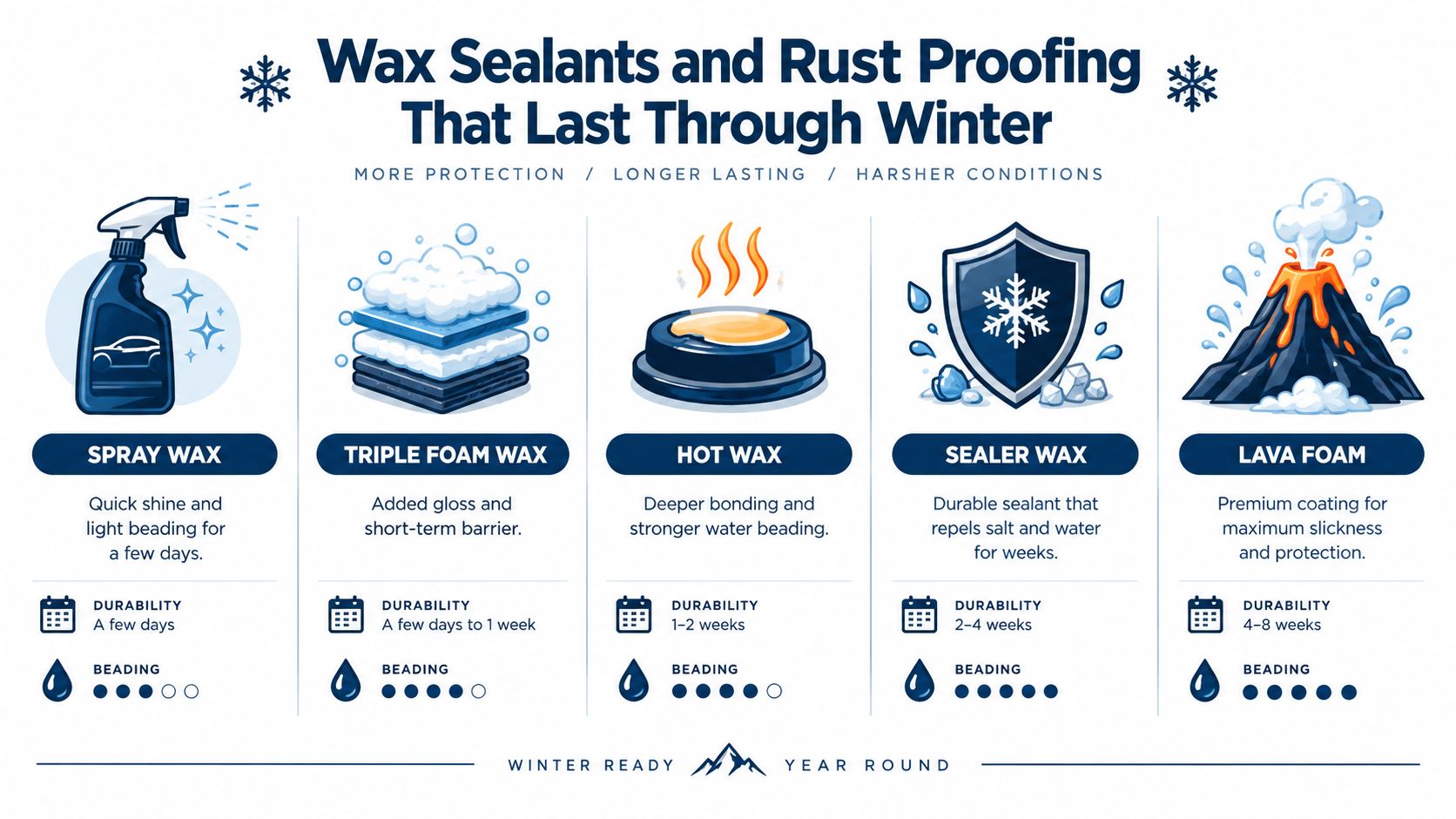
At the quick-wash end, spray wax gives a fast cosmetic boost and light water beading. Triple foam wax adds more visible gloss and a short-term barrier, while hot wax leaves a more substantial film after washing. A sealer wax suits drivers who want a longer-lasting layer that helps salt and water release between visits. Premium options such as lava foam focus on extra slickness and a more pronounced finish.
The label does not replace cleaning. Wax spread over salty paint holds contamination against the surface, while wheel wells, seams, and lower panels can remain dirty despite impressive beading. Apply it to clean, dry surfaces, then use the first thaw to check whether water still sheets or beads as expected.
Rust proofing is a separate decision
Rust proofing deserves more attention if you drive frequently on salted roads, plan to keep the vehicle for years, or park where wet contamination remains on the underbody. SUVs, vans, and pickups also expose more underside hardware to spray because of their size and working conditions.
A corrosion inhibitor can reduce corrosion in a treated area, but it cannot protect every surface or remove the salt that starts the reaction. Canadian research found that road salt contributes substantially to vehicle corrosion, which keeps the practical priority clear. Rinsing and drying remain part of the protection system. A coating is support, not a substitute for removing active salt.
Apply rust proofing after the vehicle has been properly cleaned and dried, preferably before sustained winter exposure. Recheck it on a thaw day, particularly around seams, fasteners, suspension components, and other exposed metal. Paint protection shields the visible shell. Rust proofing supports vulnerable metal underneath.
High-use GTA vehicles may justify both treatments. The trade-off is straightforward: wax improves cleaning and paint resistance between visits, while rust proofing addresses hardware that a wash cannot coat reliably. Neither works well when salt is allowed to sit wet for long periods.
Interior Salt Stains and Odor Control That Actually Works
Winter dirt doesn't stop at the doors. Every passenger, parcel, and boot brings in wet salt, slush, grit, and moisture. The familiar white crust on a floor mat is only the visible part. Residue also settles into seat rails, carpet edges, door sills, cup holders, and the gaps beside the centre console.
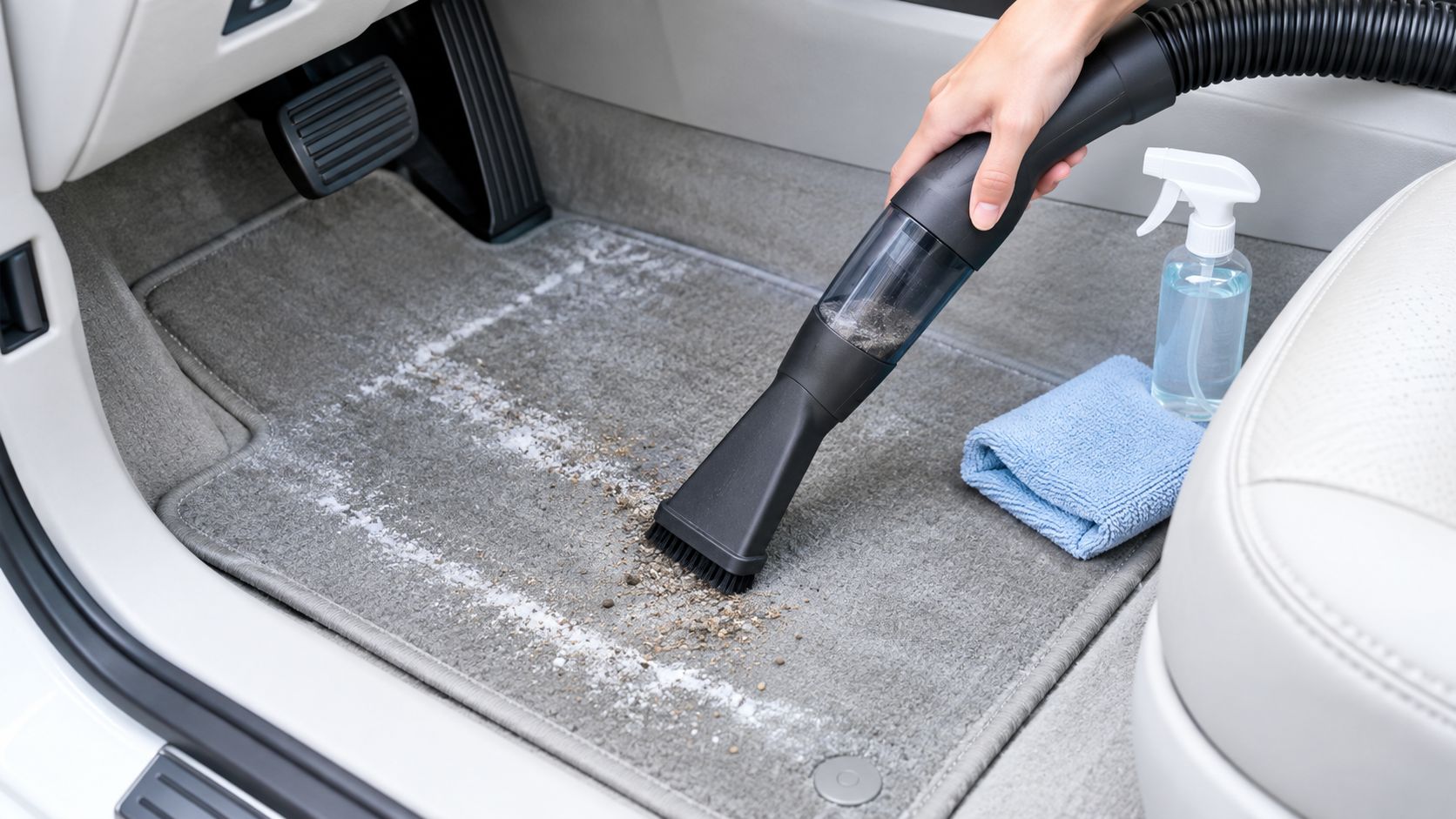
Use a dry-first routine
Start by removing rubber mats and shaking or vacuuming away loose grit. Vacuum the carpet before applying cleaner, because wetting loose salt turns it into a paste that spreads into fibres. For fabric mats and carpets, use a suitable cleaner sparingly, agitate the stained area, extract the moisture, and allow everything to dry fully.
Leather needs a lighter touch. Wipe away salt residue with a damp cloth, follow with a leather-safe cleaner, and avoid soaking seams or perforations. Excess moisture in a cold cabin can leave the vehicle smelling musty and can keep trim and carpet damp long after the surface appears clean.
Treat the cabin as a hardware zone
Wipe door jambs, sills, boot openings, and the lower edges of doors after the exterior wash. Those areas collect salty moisture and can affect drains, fasteners, seals, and hinges if ignored. Ontario guidance also cautions against parking a wet, salted vehicle in a heated garage overnight, because warmth can keep the contamination active, as noted in this Ontario road salt damage guidance.
High-use vehicles need a tighter rhythm. Rideshare and delivery drivers deal with repeated wet entries, while family SUVs often carry slushy boots and damp gear. Keep mats removable and dry them outside the vehicle when possible, wipe spills promptly, and leave the cabin aired out rather than sealing in moisture with soaked mats.
Book a deeper interior service when salt lines remain after careful cleaning, odours return quickly, carpet feels damp underneath, or debris has packed into vents and crevices. Professional interior and exterior detailing can combine vacuuming, shampooing, salt and stain removal, vent and crevice blowout, leather care, and machine polishing, with appointments commonly taking 1 to 4 hours according to the publisher's service information. That's a better use of time than repeatedly spraying fragrance over a damp carpet.
Express Wash Versus Full Detailing in Winter
A post-storm wash and a spring reset aren't the same job. The first needs fast salt removal, particularly underneath. The second may need stain extraction, odour control, paint decontamination, and protection. Paying for the wrong level either wastes money or leaves the problem half-treated.
| Service Level | Best For | Winter Benefit | Time and Cost Signal |
|---|---|---|---|
| Express wash | A commuter after snow or brine exposure | Fast exterior cleaning, with an underbody wash when included | Short visit, lower starting price, useful for maintenance |
| Full service | Drivers needing cabin and exterior attention | Adds hand drying, vacuuming, dashboard and window cleaning | More involved visit, suited to regular interior salt buildup |
| Detailing | Vehicles with embedded stains, odour, or neglected surfaces | Adds carpet and seat shampooing, crevice work, leather care, and paint polishing | Appointment-based service, typically 1 to 4 hours according to Nanak Car Wash service information |
An express wash wins when the vehicle is coated in fresh road film and you've got limited time. Choose an underbody rinse, then add a wax or sealant if the paint is already clean enough to benefit. Don't expect an express lane to extract a soaked carpet or restore salt-stained upholstery.
Full service is the sensible middle ground for a daily driver carrying slush inside. Hand drying helps clear water from openings, while vacuuming and surface cleaning remove the residue that a rinse can't touch. For rideshare, delivery, fleet, and family vehicles, that combined exterior and interior attention prevents a small winter mess from becoming a permanent cabin project.
Detailing earns its place when the vehicle has accumulated several problems at once. Stains remain after ordinary cleaning, the cabin smells damp, pet hair is woven into carpet, or paint feels rough after washing. In those cases, repeating basic washes is like mopping around a leaking boot. Fix the source and reset the surfaces properly.
A Simple Winter Schedule That Saves Money and Your Paint
Forget the automatic “every week” rule. In Ontario, the valuable wash is often the one that follows a thaw or a drive on brine-treated roads, because salt can remain active above freezing when it mixes with moisture and forms conductive brine. Recent CAA winter driving guidance supports timing extra washes around thaws instead of waiting for a rigid calendar interval.
Use the forecast as your wash reminder
Build the routine around conditions:
- Thaw-day wash: After snow melts and roads turn wet, rinse the underbody, wheel wells, rocker panels, and lower doors before the brine dries or refreezes.
- Brine-exposure rinse: If you've driven through visibly wet, treated roads, prioritise salt removal even when the calendar says you washed recently.
- Protection check: When water stops beading as it did, add a suitable wax or sealant after cleaning. Don't apply it over a dirty surface.
- Interior reset: Vacuum loose grit, wipe mats, clean door sills, and dry wet carpet before odours settle in.
- Spring deep clean: Once winter roads are behind you, schedule a more complete exterior and interior reset rather than carrying the residue into warmer weather.
A membership or prepaid multi-wash ticket can make this approach easier to follow because you're not treating every visit as a major expense. Nanak Car Wash lists unlimited wash options, prepaid multi-wash tickets, combo deals, and free vacuums at participating locations, giving frequent GTA drivers ways to organise routine cleaning around actual road conditions. Membership terms and available services can vary by location, so check the current details before choosing a plan.
The memorable version: Forecast first, underbody first, interior before odour, protection after cleaning.
A thaw-day strategy won't prevent every rust problem, and washing alone isn't a substitute for sensible rust proofing or repairs. It does put your effort where it counts, reducing the time salt spends sitting wet against the parts you can't see. Pick the next wash window from the forecast, not from habit.
If your car has just come through a GTA thaw, bring it to Nanak Car Wash for an exterior wash with underbody attention, interior cleaning, detailing, or rust proofing as needed. Choose a quick maintenance visit for fresh brine, or book a deeper reset when salt has settled into the cabin and hardware.


 6600 Finch Ave W, Etobicoke, ON M9V 3Z6
 647-703-8515
 MON – SUN 8 AM to 7 PM