
You leave work in the GTA after a wet snowfall, drive through slush on the Gardiner, and arrive home with a grey film covering the doors, wheels, and rear hatch. The outside looks dirty, but the more important mess is underneath. Brine has reached the wheel wells, brake-line clips, suspension hardware, and seams where moisture can stay trapped long after the road looks dry.
That's why winter car maintenance isn't a once-a-month cosmetic chore. It's a routine built around salt exposure, cold starts, traction, visibility, and the hidden areas that are hardest to inspect. The right approach depends on how you drive, where you park, and whether your vehicle spends its days on salted highways or mostly sits in a garage.
Table of Contents
- Why GTA Winters Destroy Vehicles Faster Than You Think
- Pre-Winter Preparation Before the First Snowfall
- How Often You Should Wash Your Car During Ontario Winters
- Protecting Your Exterior and Underbody From Salt Damage
- Keeping Your Interior Clean Against Salt and Moisture
- Choosing the Right Wash Membership or Package for Your Needs
Why GTA Winters Destroy Vehicles Faster Than You Think
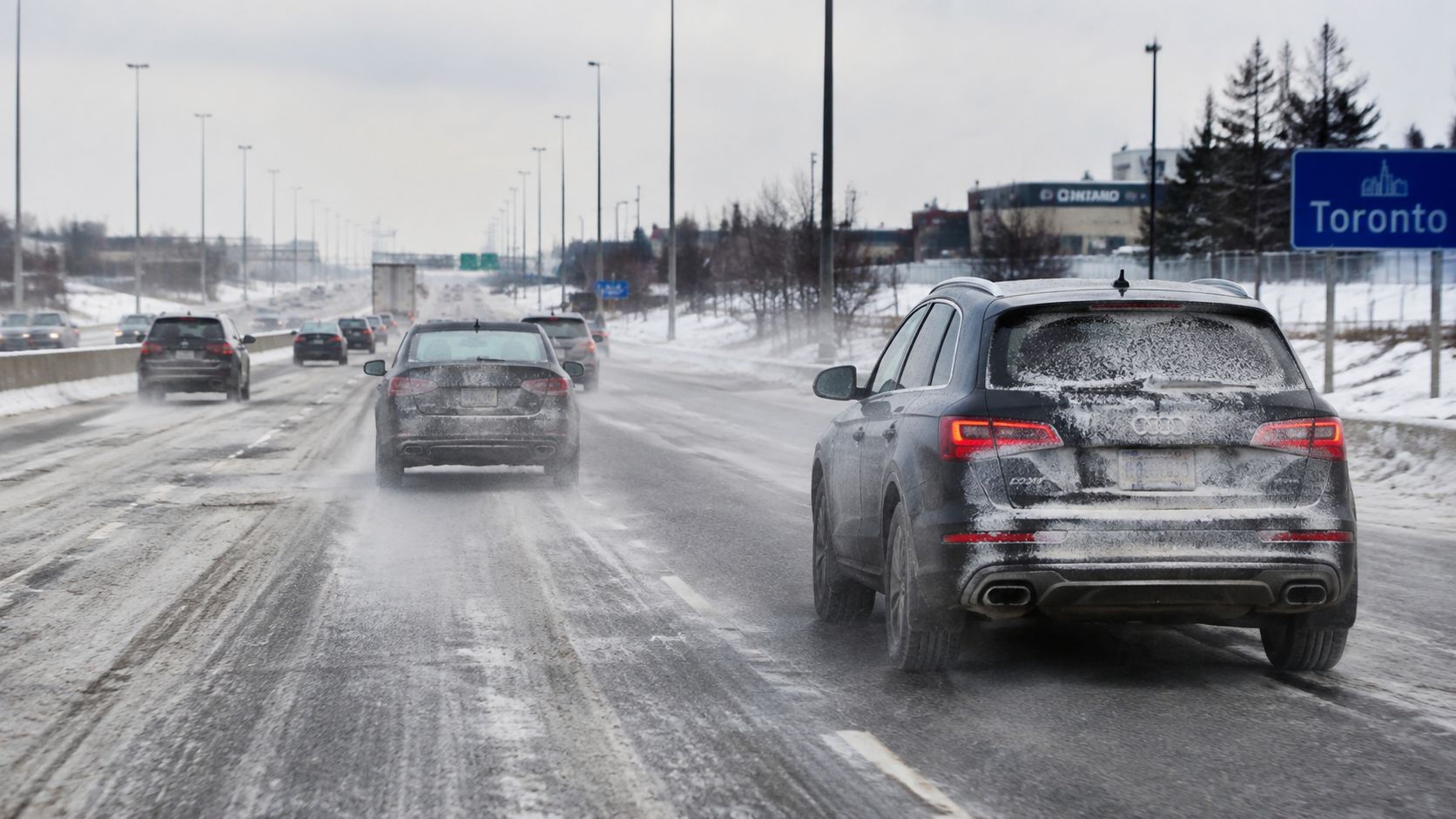
A GTA winter gives corrosion exactly what it needs. Your car picks up salt spray on the highway, collects wet slush in the wheel wells, then dries in a heated garage or during a milder afternoon. The vehicle gets wet again on the next trip, and the cycle continues through the season.
Canadian road authorities have been reported to use about 5 million tonnes of road salt annually, while a Transportation Association of Canada source has cited approximately $1 billion a year in nationwide winter road maintenance spending in documented winter road maintenance research. Ontario sources consistently place provincial salt use in the 3 to 5 million tonne range, so GTA vehicles operate in one of the most salt-intensive winter-driving environments in the country.
The first damage usually stays out of sight
Salt doesn't wait for visible brown bubbles on a fender. It works into seams, clips, brackets, and coated metal underneath the vehicle. Brake lines, exhaust components, subframes, wheel wells, and suspension fasteners all face repeated exposure, especially on vehicles that travel through brine spray every day.
Historical corrosion testing measured Toronto's atmospheric corrosion at 5,108 mg/dm² over a 19-month exposure period, one of the highest readings among the locations examined in the Transportation Research Board corrosion record. Separate Canadian research summarised by NSERC's corrosion project record attributes about 50% of vehicle corrosion to road salts.
Shop-floor rule: If you only wash the painted panels, you're cleaning the evidence while leaving the cause underneath.
The practical checklist is straightforward. Protect the car before the first sustained cold, rinse the underside after serious salt exposure, keep winter tires and fluids ready, manage moisture inside the cabin, and inspect the underside again when winter ends. That routine costs less attention than repairing neglected corrosion.
Pre-Winter Preparation Before the First Snowfall
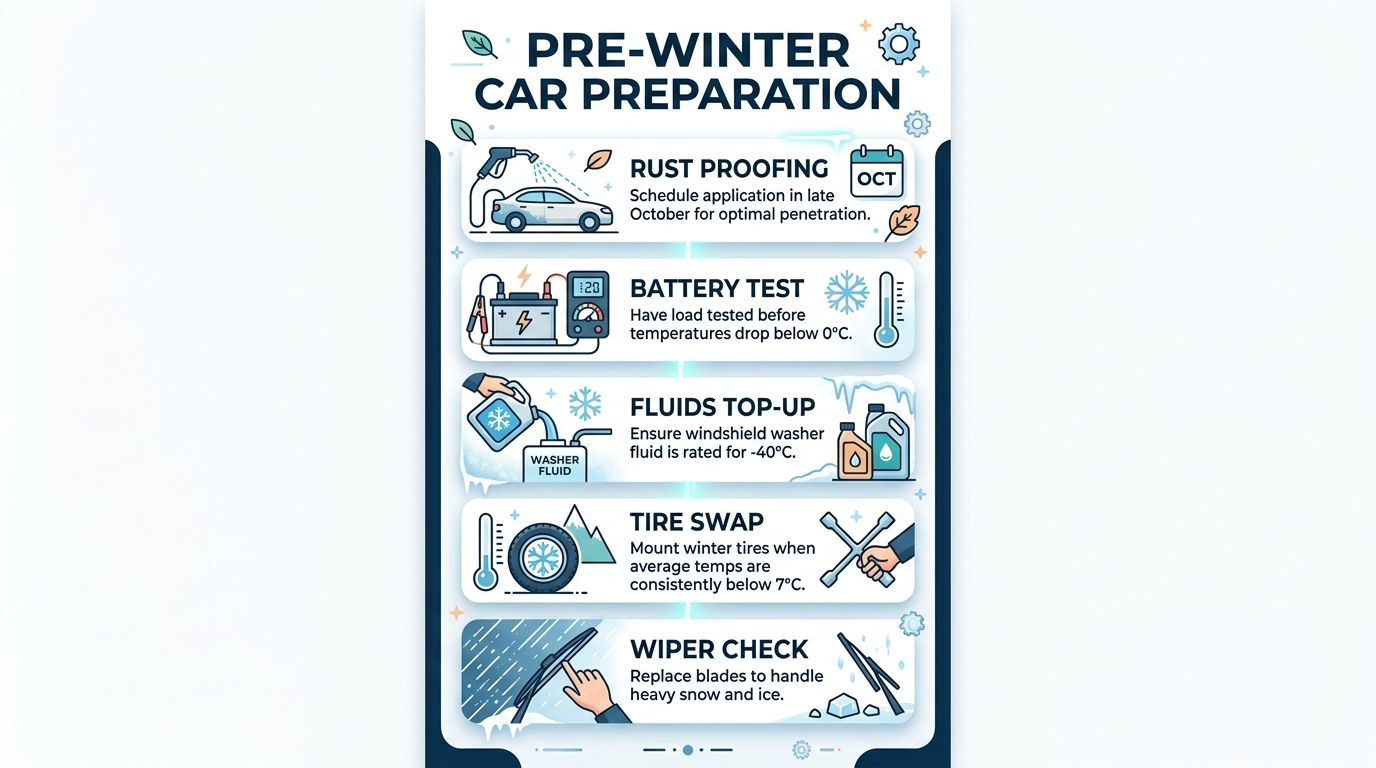
The best winter preparation happens while the weather is still cooperative. Rust proofing compounds need a reasonably clean, accessible underbody, and tire shops become crowded as soon as the forecast turns ugly. Book the work before the first storm, not while cars are already sliding into curbs.
Start with protection underneath
Have the underside inspected and cleaned before applying rust proofing. A technician should look for damaged factory coating, exposed seams, packed dirt, and previous treatment that has dried, cracked, or washed away from high-spray areas. Rust proofing works as a protective layer, but it can't reverse weakened brake lines or repair metal that's already failing.
Late October is a practical booking window for GTA drivers. The exact date matters less than completing the application before regular brine exposure begins and allowing the compound to reach seams, brackets, and cavities without a layer of wet salt in the way.
Prepare the contact points
Install a full set of four winter tires when average temperatures are consistently below 7°C, as reflected in the Transport Canada and TIRF winter tire report. Winter tires aren't just for deep snow. Their rubber compound stays more capable in cold conditions, and testing referenced in that report found that winter tires can reduce stopping distance on snowy roads by about 30%.
The same testing recorded a vehicle stopping in 35 m on winter tires versus 43 m on summer tires on snow, and 57 m versus 68 m on ice. Those figures are cited in the Canadian winter tire demonstration findings. Mount all four. Mixing winter and non-winter tires can create an uneven braking and handling balance.
Finish the readiness check
Use this order for a practical pre-season appointment or weekend inspection:
- Test the battery: Ask for a proper load test before cold weather exposes a weak starting system. Inspect terminals for looseness or corrosion.
- Fill the right washer fluid: Use fluid rated to -40°C, not summer fluid diluted with water. Test the front and rear washers.
- Replace tired wipers: Streaking, splitting, or a hardened edge will make freezing spray harder to clear.
- Check lights and defrosting: Confirm headlights, brake lights, turn signals, heated mirrors, and front and rear defrost systems work correctly.
- Inspect brakes and suspension: Pay attention to scraping, pulling, vibration, soft pedal feel, or uneven tire wear.
- Pack basic equipment: Keep an ice scraper, snow brush, gloves, booster cables, and a flashlight in the vehicle.
How Often You Should Wash Your Car During Ontario Winters
“Wash it every week” is easy advice, but it doesn't fit every GTA driver. A delivery van running salted highways needs a different routine from a weekend car that stays indoors. The useful trigger is exposure, not the calendar.
Road salt becomes more troublesome when it remains damp and gets worked into crevices. Heated storage can melt packed salt, while repeated wet-dry cycles leave concentrated residue behind. The underside can stay contaminated even when the painted surfaces look reasonably clean.
Match the cadence to the route
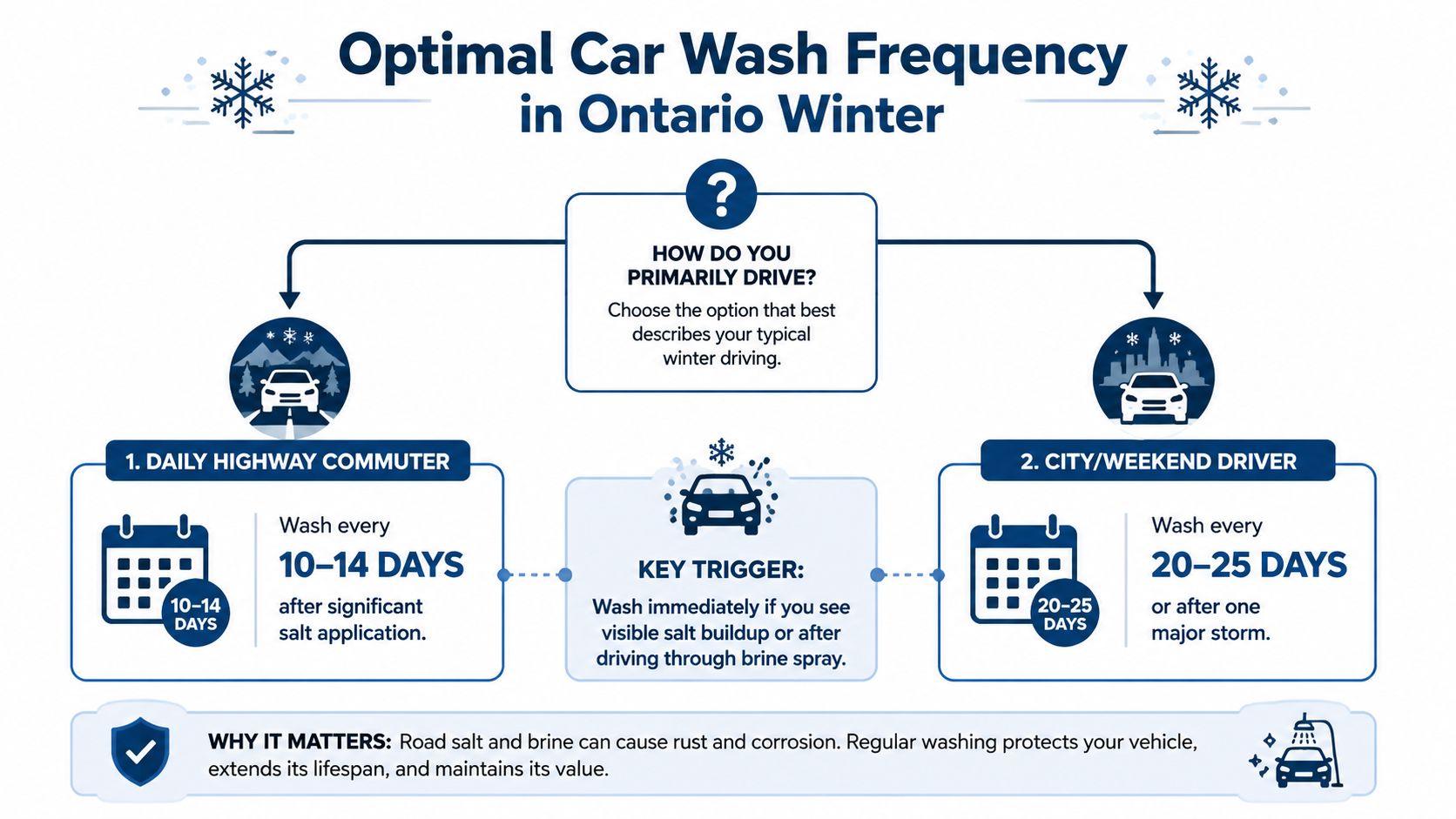
A daily highway commuter should prioritise the underbody after significant salt application. The supplied Ontario winter wash guidance places this profile at every 10 to 14 days, with an earlier visit when brine spray or visible buildup appears, as shown in the winter wash frequency guidance.
A city or weekend driver can usually stretch the interval to every 20 to 25 days, provided the vehicle hasn't been through a major storm. That same guidance recommends washing after one major storm, regardless of the normal schedule. Treat those intervals as starting points, then shorten them for heavy highway mileage, outdoor parking, or frequent travel behind salt trucks.
Rinse the parts that fail quietly
The most valuable winter wash feature is an effective underbody rinse. Ask whether the service reaches the floor pans, wheel wells, suspension areas, and visible seams. A quick exterior pass that leaves packed salt behind the wheels is mostly a shine service.
Prioritise a rinse after a highway drive in active brine spray, after a major storm, or whenever you can see pale salt crust around the wheel wells and rocker panels. Don't wait for a warm day if the underside is heavily coated. A proper wash can remove the residue before it gets repeatedly rewetted.
Key trigger: Wash immediately if you see visible salt buildup or you've driven through heavy brine spray.
Daily ride-hailing, delivery, and fleet vehicles deserve the shortest practical interval because they accumulate exposure through repeated routes. Weekend drivers should still inspect the underside after storms, particularly if the car is parked in a warm garage where trapped salt can stay wet. The paint is only one indicator. The core question is whether salt remains attached to the places you can't see from a standing position.
Protecting Your Exterior and Underbody From Salt Damage
Start with removal, then add protection. No wax, sealant, or rust-proofing compound makes a vehicle immune to salt, and an expensive exterior upgrade can't compensate for an underside that never gets rinsed.
Spend first on the underbody wash
An underbody rinse flushes salt and slush from areas that collect spray, including wheel wells, suspension components, brackets, and seams. It's the most sensible winter wash upgrade for a daily driver. Exterior foam and hand drying still matter, but they rank below getting contamination off the underside.
Foam wax and sealer wax create a sacrificial surface on painted panels. They can help water and grime release more easily, which makes future cleaning simpler, but they're primarily surface protection. Triple foam, lava foam, and similar visual upgrades may improve gloss and coverage, yet they shouldn't be sold as substitutes for rust proofing.
Know what rust proofing can and can't do
Professional rust proofing uses a dedicated chemical compound to protect vulnerable metal and seams. It makes the most sense when you plan to keep the vehicle through several winters, drive frequently on salted roads, or own an SUV, van, pickup, or work vehicle with a large underside exposed to spray.
Apply it to a clean, inspected vehicle. If the coating is already damaged or corrosion has advanced, ask for an honest assessment rather than layering product over a problem. Historical inhibitor research found corrosion reductions ranging from 10.5% to 77% under de-icing salt exposure, depending on the treatment and test conditions, in the Transportation Research Board corrosion study. That supports using a suitable protective treatment, but it doesn't justify paying for every add-on on the menu.
| Service Type | Protection Level | Best For |
|---|---|---|
| Exterior wash | Basic surface cleaning | Removing road film before it bonds to paint |
| Underbody wash | High winter value | Flushing salt from wheels, seams, and underside components |
| Foam wax or sealer | Moderate painted-surface protection | Owners who want easier cleaning and added surface coverage |
| Professional rust proofing | Long-term corrosion protection | Vehicles kept for multiple winters or driven heavily on salted roads |
| Interior and exterior detailing | Restoration and contamination removal | Salt staining, neglected vehicles, and end-of-season cleanup |
Nanak Car Wash offers express exterior washes with underbody wash upgrades, full-service cleaning, detailing, and rust proofing, so a driver can combine removal and protection in one location. The company states that its washes use 100% fresh water and include hand-applied steps alongside modern equipment, details available through Nanak Car Wash's winter car wash and rust-proofing services.
Brush-only washes aren't automatically useless, but they're incomplete if they don't rinse the underside. Ask what's included, whether fresh water is used, and whether staff can address packed contamination around wheel wells and lower seams. Pay for the service that reaches the dirt, not the option that only makes the vehicle look glossy under the lot lights.
Keeping Your Interior Clean Against Salt and Moisture
The cabin takes a beating in a different way. Snow melts from boots, salt water pools under mats, and wet carpet stays damp in a closed vehicle. Over time, that residue can stiffen fibres, mark upholstery, corrode seat hardware, and create musty odours.
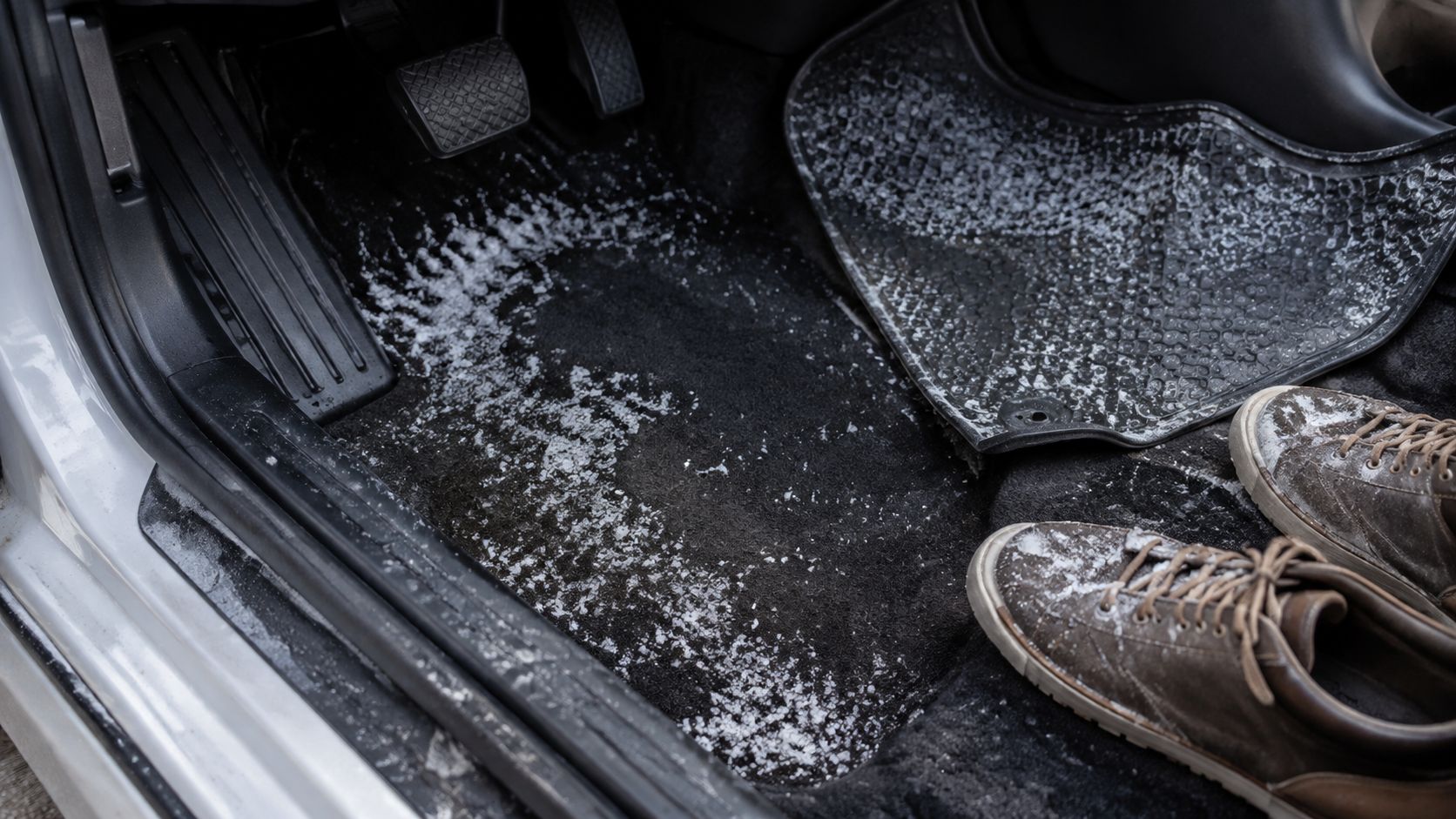
Control the wet zone
Use deep, properly fitted rubber or all-weather mats with raised edges. Remove them when they're heavily loaded with slush, empty the meltwater, and let them dry before putting them back. A mat that holds a puddle protects the carpet only until the water spills over its edge.
Vacuum salt residue rather than grinding it into carpet with a wet cloth. Use a crevice tool around seat rails, door sills, pedals, and the edges of the centre console. Wipe door panels and hard trim with a lightly damp microfibre towel, then dry the surfaces so moisture doesn't remain in seams.
A simple cabin routine
After a wet commute, shake out the mats and check the carpet underneath. If the carpet feels damp, remove the mats and allow air to circulate before the vehicle sits overnight. Don't seal wet mats in the trunk, and don't rely on fragrance products to cover a damp smell.
Ride-hailing and delivery drivers need a more disciplined version of the same process because passengers, parcels, and repeated stops bring in fresh moisture throughout the day. Keep a small vacuum, spare microfibre towels, and a mat-cleaning brush available if the vehicle is working daily.
Book professional interior detailing when salt has reached the carpet fibres, stains remain after vacuuming, or odours return quickly. A proper service should include carpet shampooing, salt and stain removal, vent and crevice blowout, and appropriate leather cleaning where applicable. The objective isn't just presentation. It's removing the moisture-holding residue that keeps the cabin damp.
Cabin habit: Dry the mats and the carpet below them. Cleaning only the visible top surface leaves the winter problem underneath.
Choosing the Right Wash Membership or Package for Your Needs
Choose a wash plan from your driving pattern, not from the biggest menu. Occasional drivers should pay per visit or buy a prepaid bundle if they wash after storms and before long trips. A regular commuter can compare the bundle price with the number of visits they realistically complete during a salt-heavy month.
The basic calculation is simple: divide the package price by the number of included washes, then compare that per-wash figure with the individual rate. Don't count visits you won't use. A cheap membership becomes wasteful if the car stays parked and you skip the service.
Match the plan to the driver
- Weekend owner: Pay per visit or use prepaid tickets. Prioritise underbody rinsing after major storms and an end-of-season interior clean.
- Daily commuter: Consider a monthly plan if you'll use it consistently. Confirm that underbody service is included or available as an upgrade.
- Ride-hailing or delivery driver: Compare unlimited access with prepaid bundles, then choose the option that supports frequent salt removal without slowing your workday.
- Small fleet operator: Ask for predictable volume pricing and a process that keeps exterior, underside, and interior maintenance organised across vehicles.
Before signing up, check activation fees, cancellation rules, included services, vehicle-size charges, and whether interior cleaning is discounted or separate. Consolidating washing, detailing, and rust proofing at one provider can also reduce scheduling hassle, but only if the package includes the areas your vehicle needs.
Nanak Car Wash offers express and full-service washes, underbody wash upgrades, interior detailing, rust proofing, prepaid bundles, and monthly membership options for GTA drivers. Visit Nanak Car Wash before the next salt-heavy route to set up the right winter maintenance routine for your vehicle.

 6600 Finch Ave W, Etobicoke, ON M9V 3Z6
 647-703-8515
 MON – SUN 8 AM to 7 PM