
$119.95 to $149.95 plus tax is the current published rust proofing band for standard vehicles at Nanak Car Wash, with SUVs and pickups priced higher by size. Reapplication is typically every 18 months, which is the kind of cadence that makes rust proofing a maintenance habit, not a one-off rescue.
That matters if you've just driven home on a slushy Toronto night and watched the driveway turn white with salt residue. The car looks fine from five feet away, but the underbody is still wet, the wheel wells are packed with brine, and the same grime that splashed up on the 401 is now sitting in seams, rocker panels, and frame rails. car rust proofing toronto starts making sense once you stop thinking about paint and start thinking about hidden metal.
Table of Contents
- Why Toronto Cars Rust Faster Than You Think
- How Rust Actually Forms on a Vehicle
- The Four Main Rust Proofing Methods Explained
- What Rust Proofing Costs in Toronto Right Now
- What Actually Happens During a Rust Proofing Appointment
- Where Rust Proofing Should and Should Not Be Applied
- Coordinating Rust Proofing With Washes and Detailing
- Toronto Rust Proofing Questions Drivers Actually Ask
Why Toronto Cars Rust Faster Than You Think
By late winter, a Toronto car can look clean at the gas station and still be chewing itself apart underneath. You rinse off the top layer, pull into the driveway, and the slush under the wheel wells keeps working on the same seams that were wet this morning. That's why so many drivers only notice the problem when a door bottom bubbles or a rocker panel starts to flake.
The salt is doing more than sticking
Ontario winter chemicals don't just sit there as dust. They get into the trapped pockets that are hardest to dry, then stay active every time the temperature swings and moisture moves back in. The result is a car that can go from “looks okay” to “needs body work” without any drama you'd notice from the driver's seat.
A University of Windsor engineering study of hundreds of Ontario vehicles found that untreated cars had 6.8 times more visible body corrosion than vehicles protected with Krown Rust Control treatments, while untreated underbodies had 3.6 times more corrosion than treated ones. The same research found no statistically significant difference in visible rust up to 6 years, but the gap widened sharply from 7 to 15 years. That pattern matches what many GTA drivers see in real life, the first few years look manageable, then age and salt start to pull apart the same weak spots year after year. University of Windsor research on Ontario vehicle corrosion
The damage is usually hidden first
Practical rule: if the underside still feels wet after your drive, the corrosion clock hasn't stopped just because the paint looks dry.
Outside parking, daily commuting, and repeated winter spray all make the hidden zones suffer first. That means the body panels you can see are often lagging indicators, not the true starting point. By the time rust shows up around the edge of a fender, the seam behind it has usually had more time with salt than the owner realises.
For drivers who want a visual reminder of how corrosion and water damage can trace through a vehicle's structure, viewing water flood damage listings can be a useful reference point for how hidden moisture problems tend to present.
How Rust Actually Forms on a Vehicle
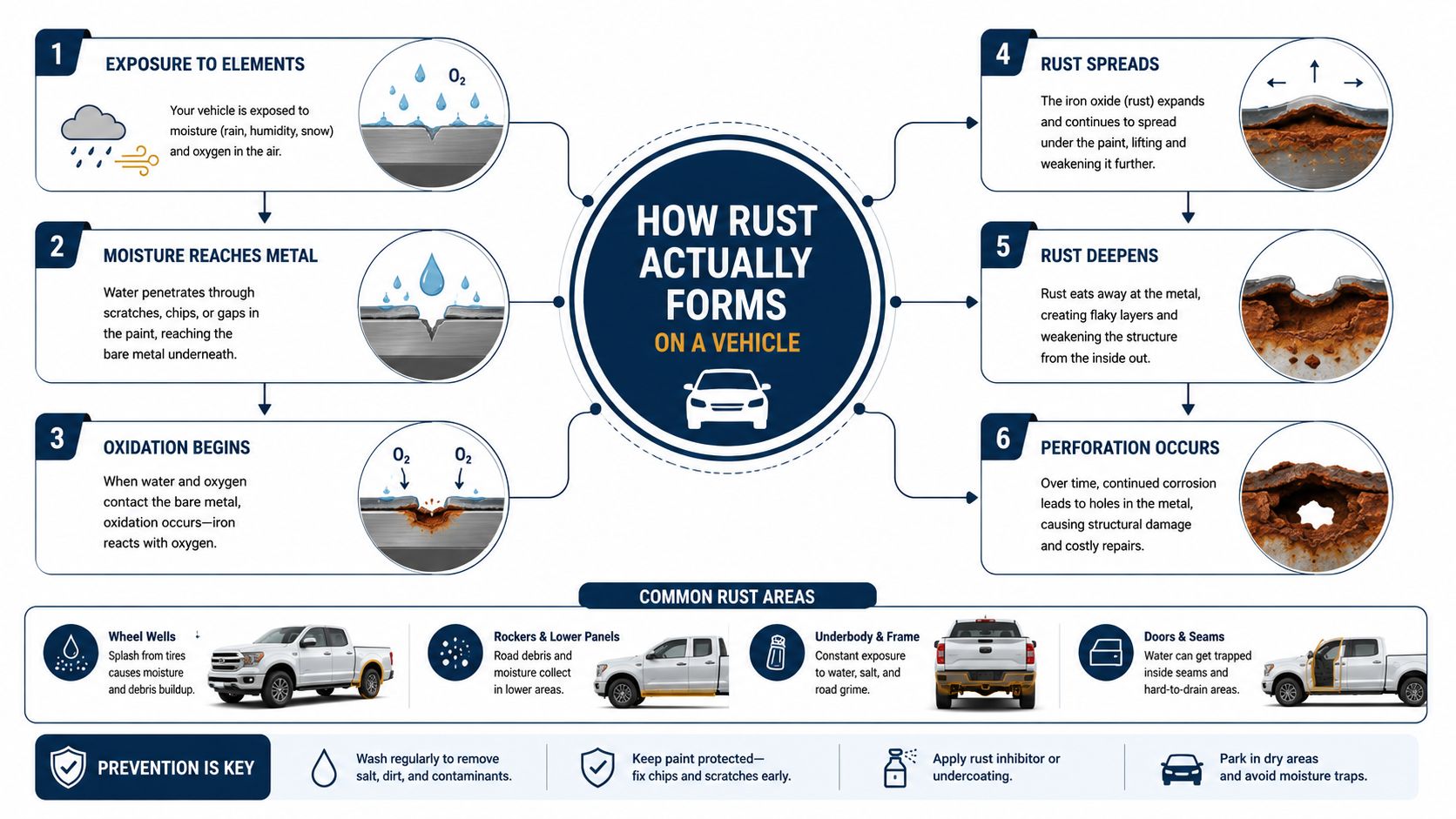
Rust is what happens when steel starts moving back toward a more natural, ore-like state. The metal itself isn't “failing” in one dramatic moment, it's reacting slowly, and Toronto gives that reaction all the helpers it needs, moisture, oxygen, and road salt.
Salt is the accelerator, moisture is the messenger
Think of salt as the thing that makes water better at carrying the problem. Water alone can sit on metal for a while, but salt water is much more aggressive because it spreads into tiny gaps, stays wet longer, and keeps the corrosion process active. Toronto's freeze-thaw cycle makes that worse, because water gets pulled into seams during the day and trapped again when temperatures fall.
The trouble spots are rarely random. Corrosion likes underbody panels, frame rails, wheel wells, door seams, brake-line ends, and hidden cavities because those are the places where dirt, moisture, and chloride residue collect. Surface rust on a fender is often just the visible announcement of what's already happening behind the skin.
Why one rust spot can mean a bigger problem
A little orange edge on a wheel arch usually isn't isolated. It often means the coating has already been breached and moisture has found a path into the metal layer or seam behind it. Once that starts, spot repairs can make the outside look better without fully addressing the trapped corrosion deeper inside.
The reason Toronto is so hard on vehicles is simple. The car gets wet, the salt gets sticky, and the vehicle sits in that cycle all winter. Summer doesn't necessarily reset the risk either, because humidity and trapped residue can keep the same vulnerable areas damp long after the snow has melted.
The smart way to think about rust proofing is not “how do I cover the visible bodywork,” but “how do I stop water from staying in the places I can't easily dry.” That's the question modern rust protection has to answer for GTA driving.
The Four Main Rust Proofing Methods Explained
Not every rust protection method solves the same problem. Some coatings work well on visible metal, some are designed to creep into seams, and some are more about surface film than deep protection. If you're comparing car rust proofing Toronto options, the useful question is where the product reaches.
Four methods, four different jobs
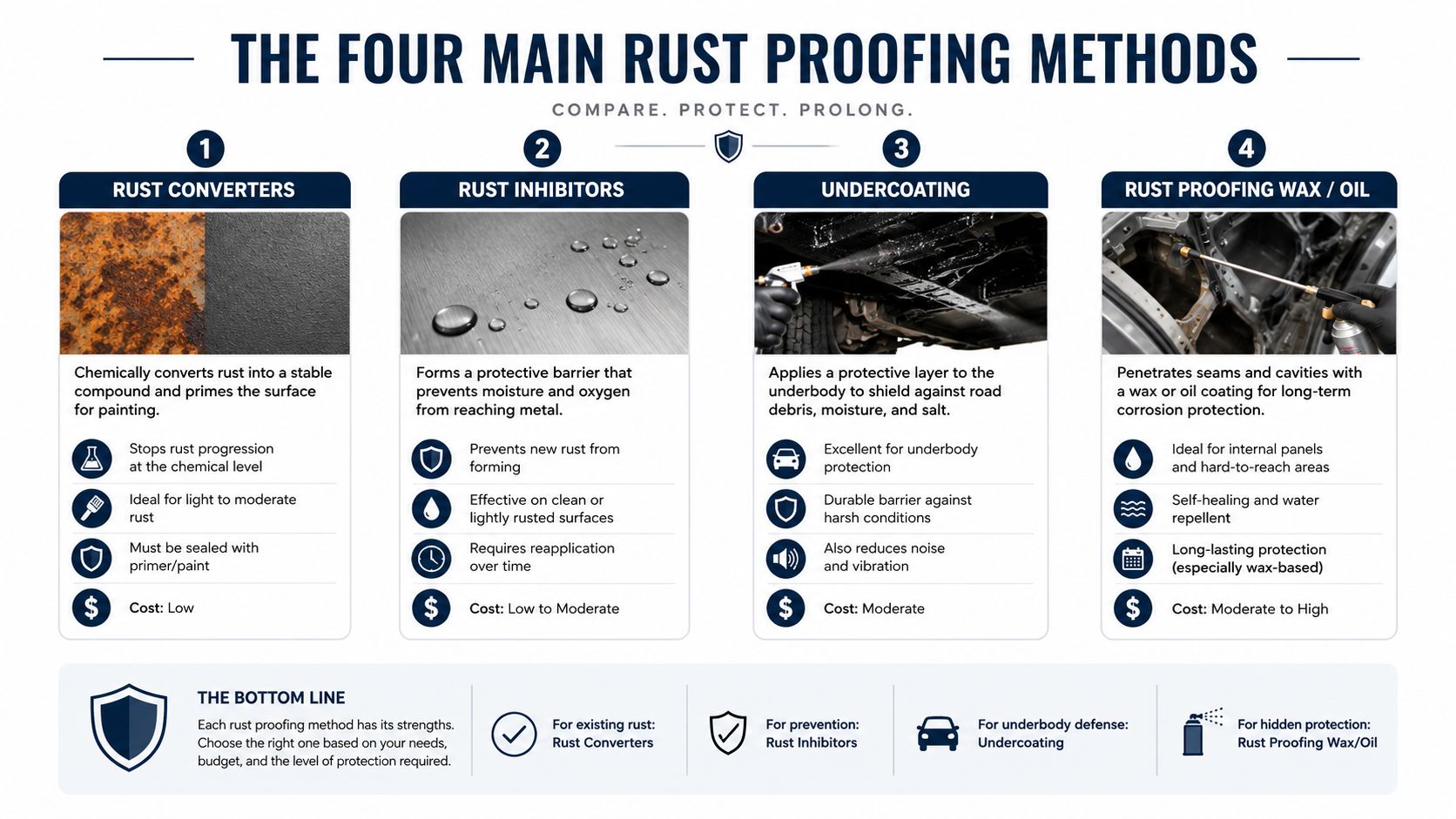
Underbody coating creates a barrier on exposed surfaces underneath the vehicle. It can help with direct splash and road debris, but it's mainly a surface defence, so it works best when the metal is clean and the coating can bond properly.
Cavity wax injection is different. It's made for doors, rocker panels, pillars, and other hidden cavities where salt water settles and dry-out is slow. For GTA use, this is the method that lines up best with how corrosion starts, inside seams and frame rails rather than on the paint you can see.
Electronic or modular inhibitors are often discussed in general terms, but they don't alter the fact that corrosion risk in Ontario is primarily due to moisture, salt, and exposure to metal. They are not equivalent to physically coating hidden steel.
Sealants or paint-applied barriers can help where the metal is already exposed, but they don't reach the blind areas that trap winter grime.
How to choose without getting lost in jargon
Here's the cleanest way to think about it, like weatherproofing a house.
| Method | What it protects best | Main limitation |
|---|---|---|
| Underbody coating | Lower exposed surfaces | Doesn't reach hidden seams well |
| Cavity wax injection | Seams, cavities, rocker panels | Needs proper access and technique |
| Electronic or modular inhibitors | Fits a “systems” sales pitch | Doesn't physically block salt and moisture |
| Sealants or paint barriers | Visible or repaired surfaces | Can miss the places rust starts |
The strongest method for salt-heavy Toronto driving is usually the one that gets into the hidden structure, not the one that just makes the underside look coated.
That's why cavity-wand injection matters so much in the GTA. The underbody still matters, but hidden metal is where the long-term battle is usually won or lost.
What Rust Proofing Costs in Toronto Right Now
The cost question is usually the first one people ask, and for good reason. Nobody wants a maintenance bill that feels bigger than the problem it's preventing. The useful comparison isn't just the service price, it's the gap between a routine treatment and a later repair.
The number that usually makes the decision easier
Toronto-area consumer guidance puts professional rustproofing in Ontario at about $130 to $170, with reapplication every 18 months Ontario rustproofing cost guide. Another GTA-focused guide estimates annual oil-spray rustproofing at about $140 to $175 for standard vehicles and $160 to $200 for SUVs and light-duty pickups, while Nanak's published pricing sits at $119.95 to $149.95 plus tax depending on vehicle size GTA rust-proofing pricing guide.
The repair side is a different world. A Canadian rust-damage article says rust repairs can cost $1,500 to $6,000, and resale value can drop by 15% to 30% depending on severity Canadian rust repair and resale impact guide. That's the kind of spread that turns prevention from a nice-to-have into a practical operating cost.
A simple way to compare options
| Vehicle Type | Typical GTA Price Range | Reapplication Cycle | Nanak Car Wash Indicative Pricing |
|---|---|---|---|
| Standard Sedan / Hatchback | $130 to $170 | Every 18 months | $119.95 + tax |
| SUV / Crossover | $160 to $200 | Every 18 months | $139.95 + tax |
| Pickup / Van | $160 to $200 | Every 18 months | $149.95 + tax |
If you're price-sensitive, the important thing is transparency. Published, size-based pricing makes it easier to compare apples to apples than vague package names that hide what the shop does. For a broader budgeting lens, this corrosion protection cost guide is useful context for how preventive work is usually priced relative to later repair.
What Actually Happens During a Rust Proofing Appointment
A good rust proofing appointment is less dramatic than many expect. You drop off the vehicle, the technician checks what's already there, and the work starts with cleaning, because product won't behave properly on salt and grime.
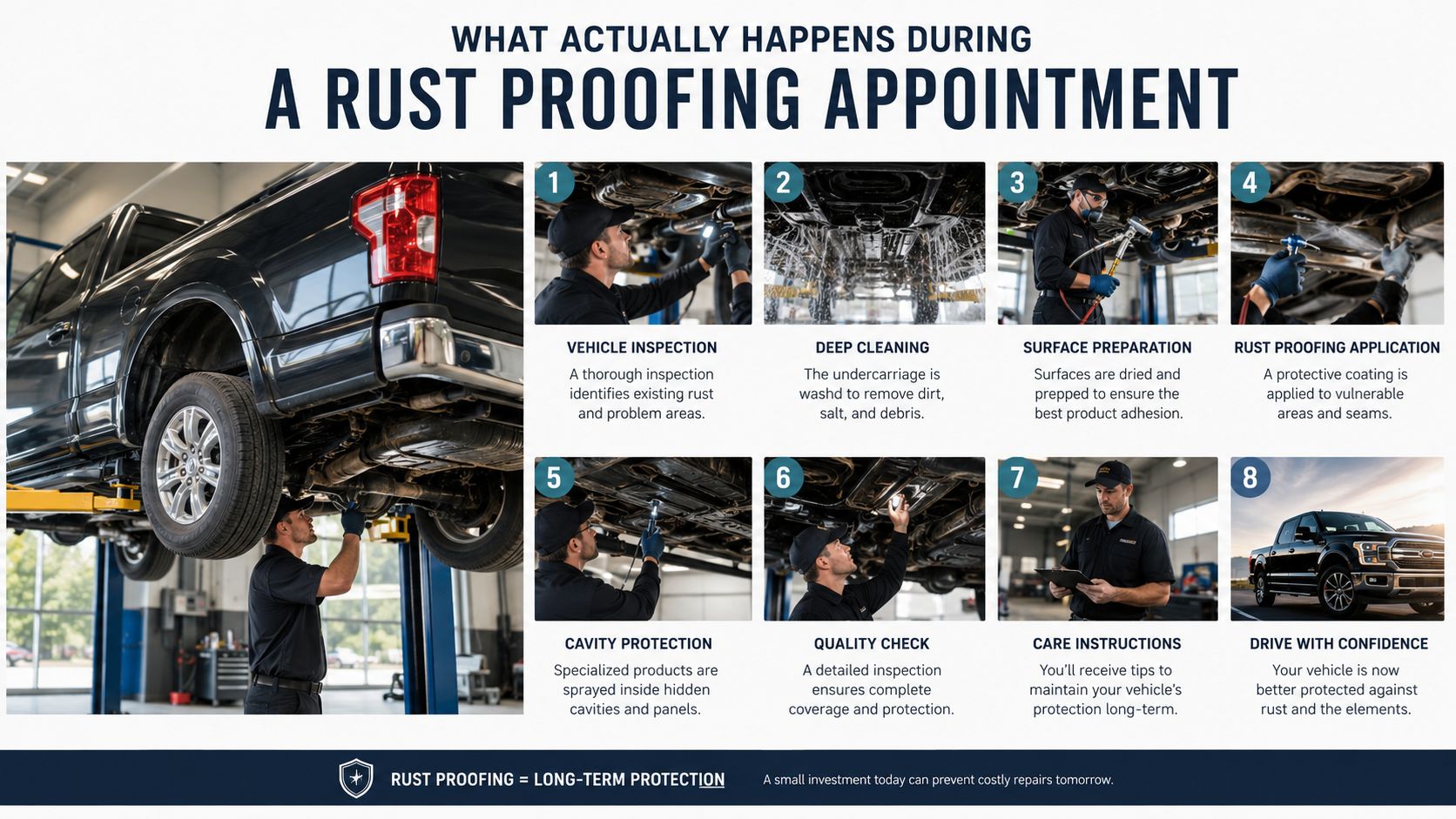
The appointment usually follows a simple sequence
First comes the inspection. The tech looks for existing corrosion, damaged coatings, and the spots that need the most attention. Then the underbody gets high-pressure washed to remove salt, mud, and grime before application, which is basic but essential in Ontario conditions Canadian rust-prep guidance.
After that, the technician masks or avoids the components that shouldn't be coated and focuses on the hidden metal. Product-specific guidance for cavity and underbody treatments says the coating should be applied into seams and cavities, then given a 4-hour no-wet/no-drive cure window for at least some oil-based systems Rust-proofing application guidance. That cure time is why scheduling matters, especially if you were planning to race straight into a tunnel wash or a wet commute.
What to ask before you leave the bay
Practical rule: if the shop can't explain what gets sprayed, what gets protected, and how long it needs to cure, keep asking until it's clear.
Ask whether they're using cavity access tools, whether they'll touch hidden seams, and whether your car should stay dry for part of the day. You don't need shop jargon, you need a straight answer about coverage and cure time. If the appointment feels rushed, the product usually won't live up to its promise.
The best appointments feel methodical rather than flashy. They're built around access, cleanliness, and time to set, not just a quick mist and a handshake.
Where Rust Proofing Should and Should Not Be Applied
A lot of drivers assume more product means more protection. That's not how modern vehicles work, especially when hybrids and EVs are in the mix. Good rust proofing is selective.
Protect the steel, not everything in sight
The useful targets are the places salt and moisture sit. That means exposed steel, wheel-well edges, drain areas, brake-line ends, seams, and frame rails. These are the spots that benefit from a barrier or cavity treatment because they either trap moisture or get hit constantly by spray.
The mistake is coating indiscriminately. A Toronto-area DIY guide specifically warns hybrid owners not to spray orange high-voltage cables directly, and to protect exposed wiring with tape or tarp instead of soaking everything around it EV and hybrid rust-proofing safety guidance. That advice matters because modern cars carry more electronics, sensors, and cable routing than older vehicles did.
Modern cars need modern judgment
Battery packs, wiring runs, and certain sensor areas should be treated with care, not treated like old-school steel frames. The goal is to keep water off the vulnerable metal without turning the underside into a blanket of product that's hard to inspect later. In other words, the right application is targeted, not theatrical.
More spray isn't automatically more protection. On newer vehicles, selective coverage is often the safer and smarter move.
That's the essential reset for Toronto drivers in 2026. Rust proofing isn't just about spraying the underside once a year and hoping for the best. It's about protecting the parts that rust first while respecting the parts that shouldn't be drenched.
Coordinating Rust Proofing With Washes and Detailing
Rust proofing works better when it's part of a winter routine instead of a standalone event. Salt doesn't wait for your appointment slot, and it keeps working every time the car goes through slush, slop, and slush again. The fastest win is reducing how long contaminants sit on the vehicle.
Washes are part of the rust strategy
An underbody rinse matters because salt gets trapped where the eye doesn't go. Wheel arches, rocker edges, seams, and door bottoms hold onto grime long after the paint looks clean. If you can remove that film regularly, you lower the amount of active residue the rust barrier has to fight.
The practical timing question is simple. If you've had a heavy salt event, get the underbody rinsed within the first week rather than waiting for a nicer forecast. Then keep it going through winter, because the road surface keeps reintroducing the same contamination. A wash club or monthly pass makes that easier, especially when you're trying to keep a family car, commuter car, or work SUV on a predictable schedule.
Seasonal rhythm works better than random good intentions
A Toronto driver usually gets the best value by preparing before winter, staying on top of salt during winter, and giving the car a proper clean-up in spring. That rhythm keeps the protective layer from getting buried under grime, and it makes the next rust proofing appointment more effective because the car starts cleaner.
Detailing fits into the same calendar, just with a different job. Interior salt stains, vent dust, and carpet grime don't rust metal, but they do tell you how hard the car has been working. A clean cabin and a clean underbody usually travel together in the same owner's habits.
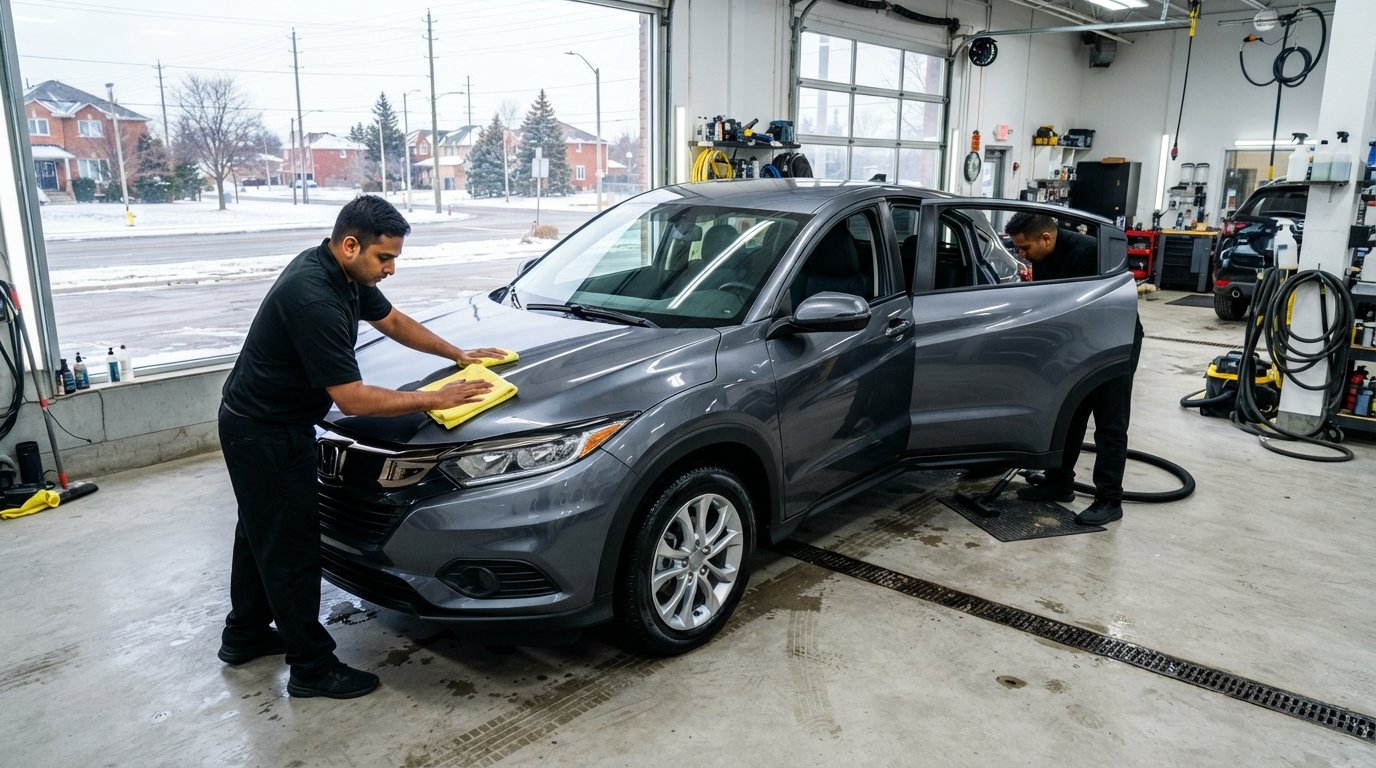
A useful shop also makes the schedule easier. Nanak Car Wash combines wash, detailing, and rust protection at multiple GTA locations, which cuts down on the friction of booking separate stops for the same vehicle. For drivers who split time between suburbs and city routes, that kind of consolidation is practical, not decorative.
What to look for when you're choosing a shop
- Published pricing: Look for clear size-based prices so you know what you're paying before you call.
- Cavity-wand capability: Ask whether they can reach doors, rocker panels, and frame cavities.
- Wash plus protection: A shop that can wash, detail, and rust proof in one routine makes winter maintenance easier.
- Location convenience: If your week moves between work and home, nearby locations matter more than glossy claims.
Toronto Rust Proofing Questions Drivers Actually Ask
Do brand-new cars still need rust proofing
Yes, because factory coatings don't cover every hidden joint and cavity perfectly. A new car is the easiest time to protect the metal before winter salt gets into seams and sits there for years. Waiting for visible rust usually means the hidden part has already started.
Can rust proofing be done in summer
Yes. Summer is often a sensible time because the car can dry properly and the technician can work on a cleaner surface. The key is not the season alone, it's whether the vehicle is clean enough for the product to bond and whether you'll keep up with winter washing later.
Is it too late if the car already has surface rust
Not necessarily. Surface rust doesn't mean the car is done for, but it does mean the treatment has to be chosen and applied carefully. The priority shifts from pure prevention to slowing the spread and protecting the steel that's still sound.
Does rust proofing affect a leased vehicle
It can matter at return time because visible corrosion and damaged panels are the things a lease inspector notices. A clean, protected underside is easier to defend than a car that's been left to collect winter damage. If you lease in the GTA, rust prevention is often cheaper to manage than arguing over wear charges later.
The bigger decision for Toronto drivers in 2026 is no longer whether salt is a problem. It's whether you want to fight it with a yearly spray alone, or with a smarter routine that combines cavity protection, seasonal washes, and selective treatment for modern vehicles. For most GTA drivers, that means keeping the underbody clean through winter, scheduling rust protection on a sensible cadence, and paying attention to the hidden areas where corrosion starts.
If you want one stop that covers washing, detailing, and rust protection without turning maintenance into a weekend project, visit Nanak Car Wash and look at the service options by vehicle size. It's a practical way to keep salt off the body, protect the hidden cavities, and fit rust prevention into the same routine you already use for cleaning.


 6600 Finch Ave W, Etobicoke, ON M9V 3Z6
 647-703-8515
 MON – SUN 8 AM to 7 PM