

You scrape the white crust from the wheel wells after a February thaw, rinse the doors, and call the car clean. Salt brine can still sit around rocker panels, brake lines, frame rails, and seams. In Toronto, car detailing is corrosion control first and cosmetic improvement second.
Ontario spreads roughly 1.5 to 3 million tonnes of road salt on public roads each winter, and Toronto uses about 130,000 to 150,000 tonnes annually, according to this Canadian overview of Ontario road salt and vehicle rust. Those conditions make package selection a maintenance decision, not a shine contest. Choose the service that flushes contamination from wheel wells, seams, and underbody areas a tunnel wash misses, then applies protection before the next freeze-thaw cycle.
A glossy finish is a bonus. Removing salt from hidden metal is the work that protects the vehicle.
Table of Contents
- Why Toronto Drivers Think About Detailing Differently
- What Detailing Actually Means Beyond a Regular Car Wash
- Package Breakdown and Typical Prices in the GTA
- Rust Protection and Why It Matters in Ontario Winters
- What Happens During a Detailing Appointment
- Who Benefits Most from Regular Detailing
- Memberships, Prepaid Bundles and One-Time Visits
- Booking, Locations and Pre-Appointment Checklist
Why Toronto Drivers Think About Detailing Differently
You leave work after a February thaw, drive through brown slush, and park for the night. The paint may look clean by morning, but salt-laden moisture can remain around wheel wells, rocker panels, seams, and the underside. Toronto detailing should therefore start as corrosion control first and cosmetic improvement second. The Ontario road-salt damage guidance recommends frequent washing during salt season, with attention to the undercarriage and wheel wells.
That standard changes how you should judge a package. Ask the detail shop how it removes salt underneath the vehicle and what protection follows. A polished bonnet improves appearance. Clean wheel wells, lower doors, drain holes, and exposed underbody areas do more for the vehicle's long-term condition.
The GTA problem sits below eye level
A regular exterior wash handles the panels visible from the pavement. It can leave slush residue around wheel arches, suspension areas, underbody edges, and seams where road spray collects. Corrosion can continue in those hidden spaces while the paint still looks presentable.
Year-round GTA driving increases that exposure, especially through repeated freeze-thaw cycles and wet salt. A Toronto rust explainer links Ontario's winter road conditions with faster rust development, including undercarriage and structural concerns. The practical lesson is straightforward: underside cleaning belongs in your winter maintenance plan, not only in a premium cosmetic package.
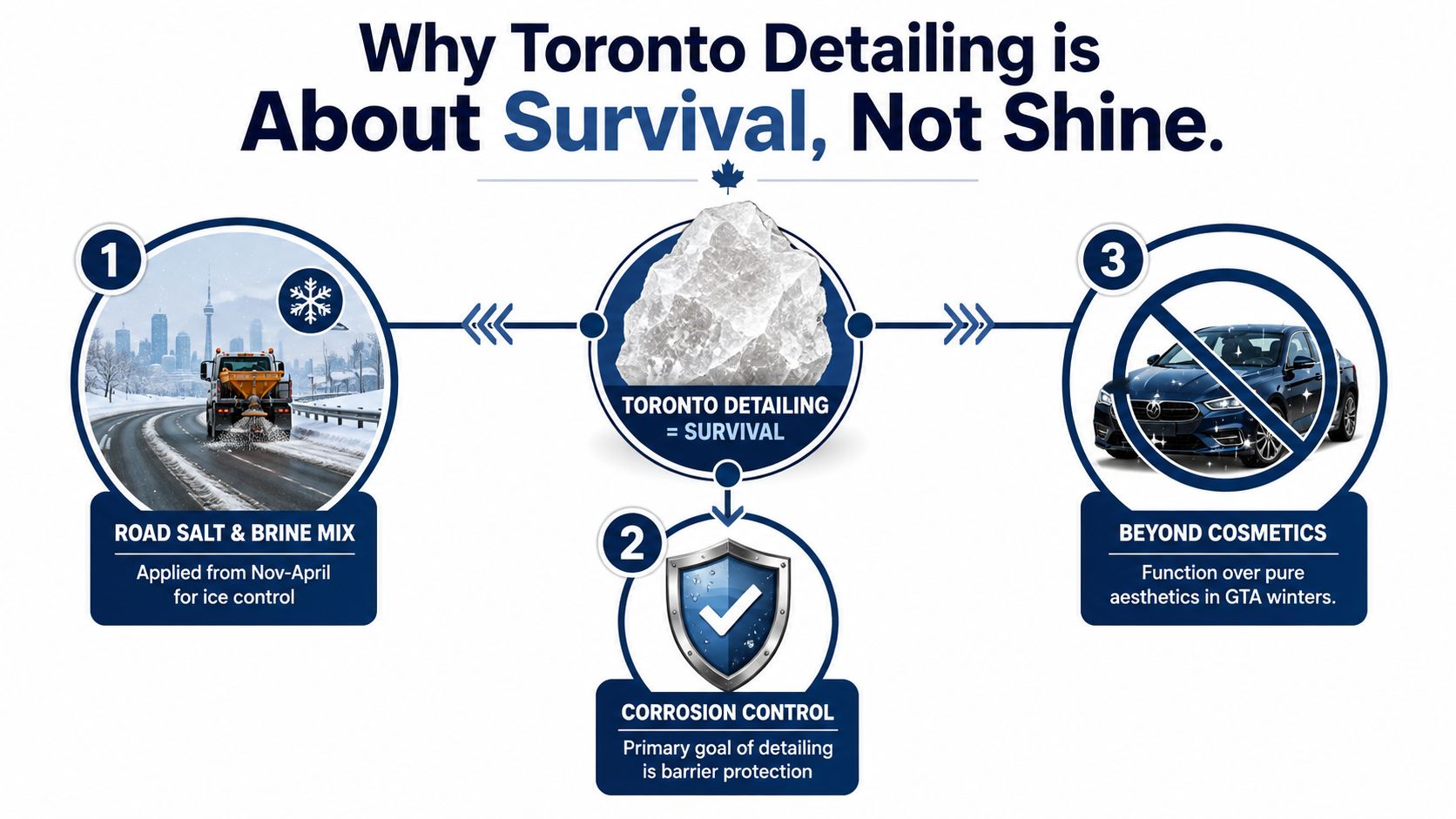
My Toronto rule: If a package only cleans the visible paint, it's a wash with better presentation, not winter-focused detailing.
Choose the service in the right order. Start with an underbody rinse, clean the wheel wells and lower doors, then address the interior and paint protection. That sequence matches the way GTA roads attack vehicles, rather than the order used on many detailing menus.
What Detailing Actually Means Beyond a Regular Car Wash
A tunnel wash is like a quick vacuum before guests arrive. Professional detailing is closer to preparing a condo for sale, where someone cleans the corners, treats the surfaces, and checks the areas a casual visitor won't notice.
A standard wash generally covers an exterior rinse, soap application, rinse, drying, and sometimes a basic vacuum or dashboard wipe. It's useful for removing loose road film and keeping a car presentable. It isn't designed to correct paint defects, deep-clean upholstery, remove embedded contamination, or work carefully through every interior crevice.
Full detailing takes more time and uses more controlled techniques. A proper session may include a two-bucket hand wash, dedicated wheel and barrel brushes, careful microfiber drying, carpet and seat shampooing or extraction, leather or fabric conditioning, trim dressing, interior and exterior glass cleaning, and undercarriage attention. The point isn't to attach an impressive name to a simple wash. The point is to complete work that a drive-through system can't perform.
The practical difference
| Service Element | Standard Car Wash | Full Detailing |
|---|---|---|
| Exterior cleaning | Automated or quick hand wash | Detailed hand wash with controlled drying |
| Wheels and tyres | Surface cleaning | Wheel faces, barrels, tyres, and wheel wells |
| Interior | Light vacuum and wipe-down | Vacuuming, crevice cleaning, shampooing, extraction, and conditioning |
| Door jambs | Often limited or omitted | Cleaned as part of the service |
| Glass | Exterior or basic cleaning | Interior and exterior glass treatment |
| Paint condition | Loose dirt removed | Decontamination, polishing, wax, or sealant may be added |
| Undercarriage | May be a basic upgrade | Targeted rinse or salt-removal service when included |
| Outcome | Cleaner appearance | Deeper cleaning plus surface and corrosion protection |
That distinction matters when you compare quotes. If a shop offers a low-priced “full detail” but can't explain whether it includes shampooing, extraction, clay-bar work, or an underbody rinse, ask for the exact inclusions. You're buying labour and process, not just a label.
Package Breakdown and Typical Prices in the GTA
Toronto detailing packages should be chosen by vehicle condition, driving habits, and winter exposure. A sedan used daily on salted GTA roads needs more than a lightly driven car kept in a garage. Package names vary, but these three tiers cover the usual service levels.
| Package | Starting Price for a Sedan | Core Inclusions |
|---|---|---|
| Express | $60 to $90 | Hand wash, wheel cleaning, vacuum, and quick interior wipe-down |
| Standard | $150 to $250 | Interior shampoo, door jamb cleaning, trim and tyre dressing, and basic glass work |
| Premium | $300 and up | Machine polishing, wax or sealant, leather conditioning, and deeper stain extraction |
These are practical starting prices for a sedan, not final quotes. SUV, van, and pickup owners should expect more labour and product. Pet hair, heavy salt buildup, severe stains, and poor paint condition also increase the work required.
Express is maintenance, not restoration
Book Express while the vehicle is still in decent shape. It suits regular upkeep after a salty commute, especially when the priority is removing fresh road film before it sits on the paint and lower body. It will not reverse neglected upholstery, persistent odours, embedded brake dust, or heavily neglected paint.
For Toronto winters, ask whether the wash reaches the wheel wells and lower exterior. A quick surface clean leaves the areas most exposed to slush with limited attention.
Standard is the sensible first appointment
Standard is my recommendation for most first-time customers. Interior shampoo, door jamb cleaning, trim dressing, and glass work deliver a noticeable reset without moving into paint-correction pricing. Ask whether an undercarriage flush is included or billed separately. If the car has spent weeks on salted roads, that detail affects the package's practical value.
Premium is for correction and protection
Choose Premium when paint clarity has declined, swirls are visible, the interior has serious staining, or you want longer-lasting surface protection. Machine polishing can improve the finish, but it will not erase every deep scratch. Rust repair belongs to a body shop, not a detailing appointment.
Common add-ons include pet hair removal, headlight restoration, engine-bay cleaning, clay-bar decontamination, underbody flushing, rust protection, and ceramic-style sealants. Have each add-on written on the estimate, along with its price and expected completion time, before approving the work.
Rust Protection and Why It Matters in Ontario Winters
A shiny hood will not protect a car from Toronto's salt. If your vehicle spends winter in GTA traffic, prioritize removing chloride residue and slush from the underside before paying for extra gloss. Corrosion starts in the road environment and continues when moisture stays trapped in areas you cannot inspect easily.
Salt and brine collect in wheel wells, rocker panels, door seams, brake-line areas, and underbody components. Freeze-thaw cycles push moisture through those spaces repeatedly. The Toronto detailing guidance on winter salt protection describes Ontario's road-salt exposure as a demanding condition for vehicle care, including atmospheric corrosion recorded at 5,108 mg/dm² over 19 months in cited Toronto testing.
Build the service around contamination removal
A winter-focused appointment should use this order:
- Flush the underside first. Direct high-pressure water at the undercarriage, wheel wells, rocker panels, and exposed structural areas.
- Clean the lower body and seams. Door jambs, trunk openings, drain holes, and lower doors hold residue that a quick exterior wash can miss.
- Wash the paint carefully. A controlled hand wash removes road film without dragging loose grit across the clear coat.
- Decontaminate where needed. Clay-bar treatment can lift bonded contaminants left after washing.
- Apply protection. Wax, sealant, or a suitable rust-inhibitor treatment reduces direct exposure to moisture and contaminants.
The useful winter upgrade is access to salt-prone areas, not simply more gloss.
A polish and wax package still protects the clear coat, but it does not address trapped salt by itself. Rust-proofing or an underbody coating can suit vehicles that regularly use salted highways. The surface must be cleaned and prepared first. Coating over existing corrosion only hides the problem and can complicate later inspection.
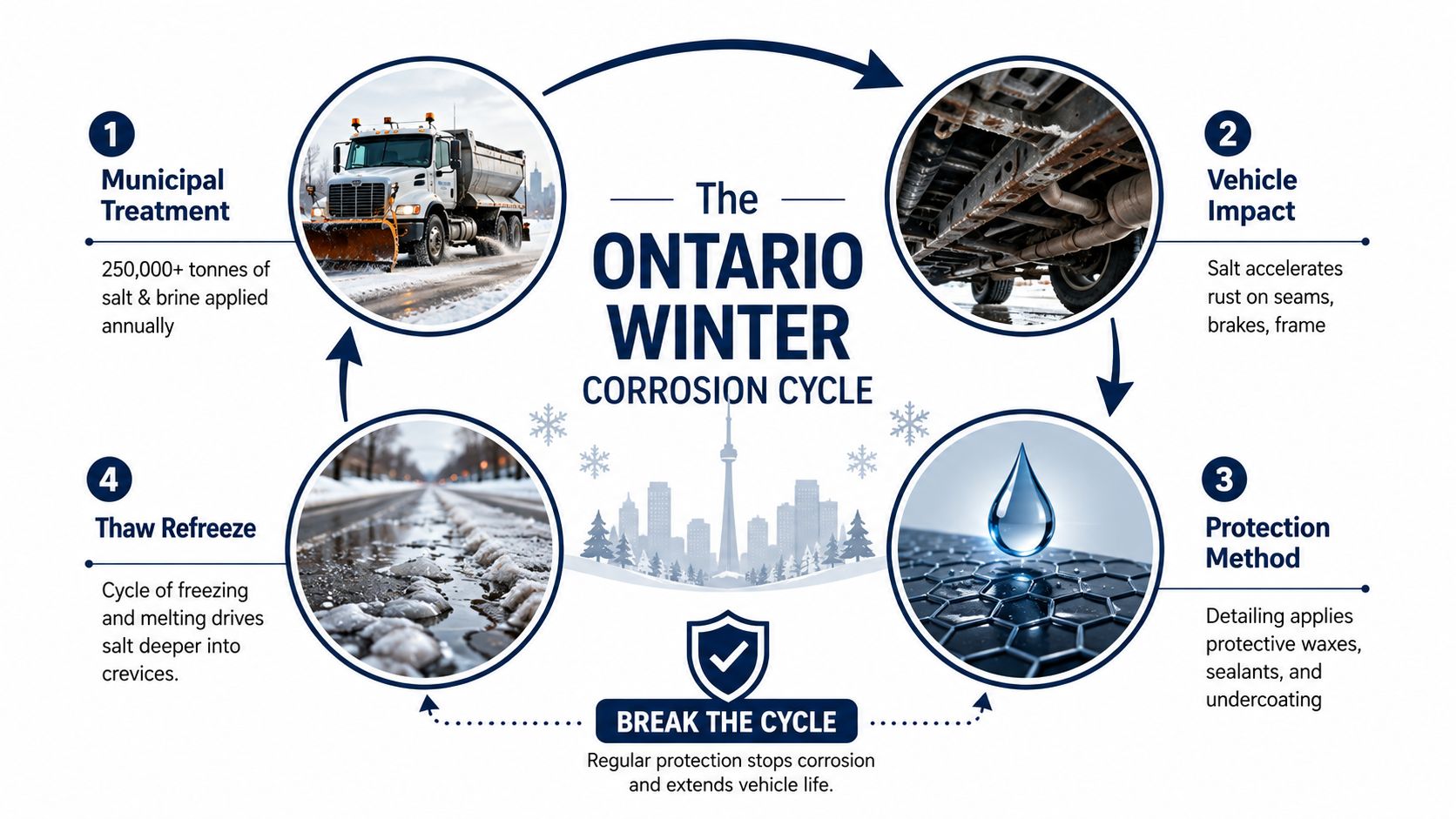
During salt season, wash the vehicle every 1 to 2 weeks, then book another rinse after a major thaw or snow event. You do not need a full Premium detail for every visit. A targeted underbody flush often provides more winter protection than another quick polish, especially when the paint is already in acceptable condition. Ask the shop whether the service reaches the wheel wells, rocker panels, and underbody, and whether that work is included in the quoted package.
What Happens During a Detailing Appointment
A Toronto detail appointment starts with inspection, not a pressure washer. At drop-off, the technician walks around the vehicle with you, records existing scratches and stains, checks the cabin, and confirms the package and add-ons. Ask what will be cleaned, what winter protection is included, and how long the work should take before handing over the keys.
Wheels, tyres, and wheel wells usually receive attention first because they hold salt, grit, and brake dust. The vehicle is then pre-rinsed, hand-washed, and dried with clean microfiber towels. This order helps keep dirty runoff away from freshly cleaned paint and limits new swirl marks.
A typical workflow
- Exterior preparation: Salt, loose dirt, and road film are rinsed away before contact washing.
- Wheel and tyre work: Brushes and suitable cleaners reach the wheel faces, barrels, tyres, and surrounding wells.
- Interior removal: Mats come out, rubbish is removed, and the cabin is vacuumed through seats, carpets, storage areas, and crevices.
- Deep interior cleaning: Shampoo, steam, or extraction treats carpets and upholstery. Leather receives a compatible cleaner and conditioner.
- Surface finishing: Dashboards, consoles, door panels, vents, trim, and glass are cleaned and dressed appropriately.
- Paint treatment: Depending on the booking, the technician may clay-bar the paint, machine polish it, and apply wax or sealant.
- Winter protection: An undercarriage rinse, rust inhibitor, or underbody treatment is completed if included.
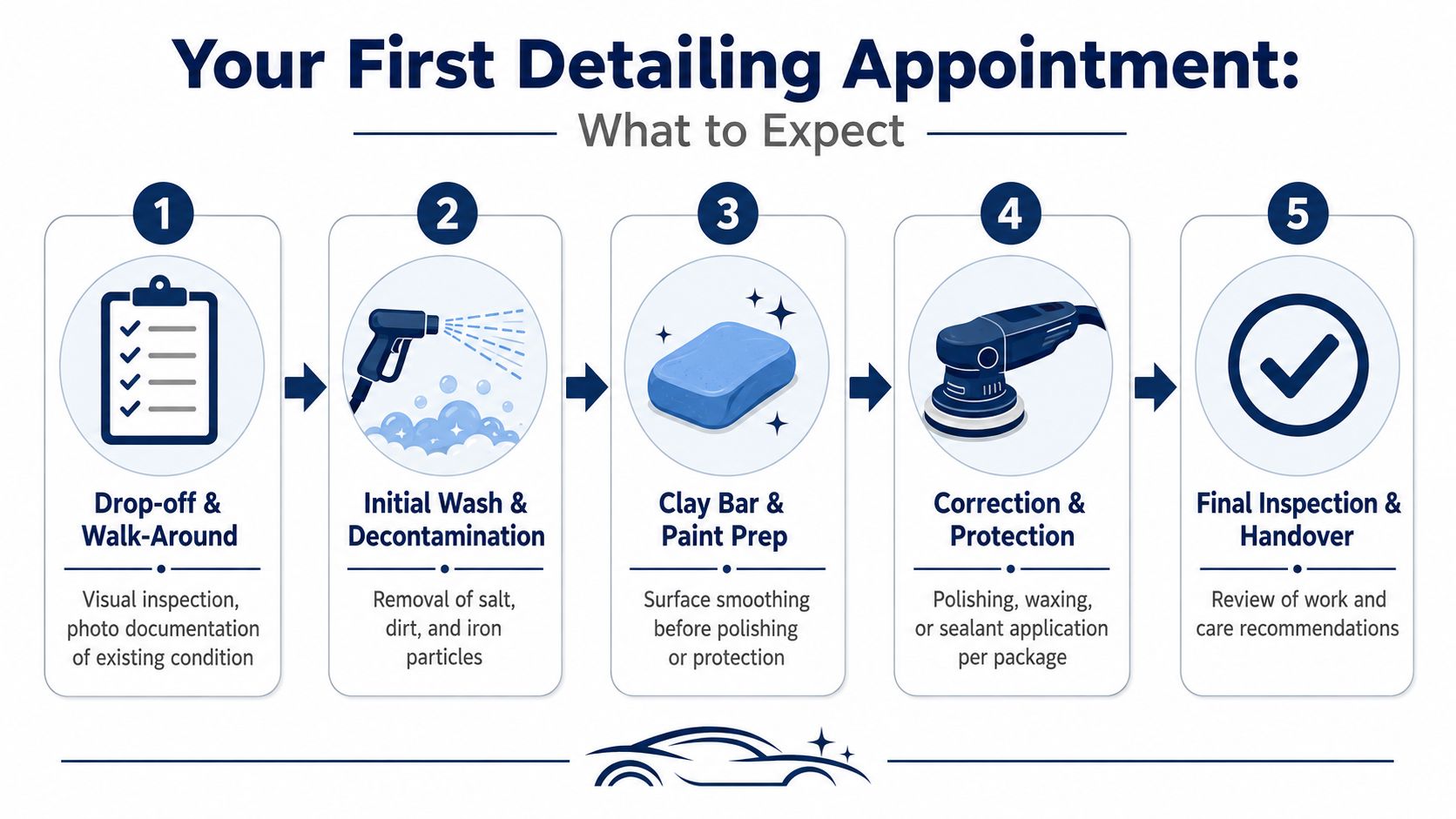
At handover, inspect the vehicle in good light. The technician should identify corrected areas, remaining stains, scratches, odours, or rust spots that require separate work. Confirm when the car can get wet after a sealant or coating. Shampooed seats and carpets may also need extra drying time, so ask before driving away. In Toronto, that final check confirms whether the appointment dealt with salt exposure as well as appearance.
Who Benefits Most from Regular Detailing
A car that runs daily on the 401 faces a different detailing workload from a garage-kept vehicle. In Toronto, choose service frequency around salt, slush, mileage, and cabin use, not the badge on the bonnet.
| Driver Profile | Recommended Cadence | Priority Focus |
|---|---|---|
| Daily highway commuter | Seasonal undercarriage flush, plus maintenance washes during salt season | Salt removal from underside, wheel wells, and lower panels |
| Ride-hailing or delivery driver | Monthly interior refresh, with deeper cleaning as needed | Odours, food debris, pet hair, seat wear, and fast turnaround |
| Small fleet or contractor vehicle | Organised seasonal inspections and repeat cleaning | Corrosion control, cabin hygiene, and professional presentation |
| Family SUV or minivan owner | Quarterly full detail | Carpet, seat, cup-holder, door-panel, and odour treatment |
| Luxury or enthusiast owner | Periodic paint correction and protection appointments | Clear-coat condition, decontamination, and finish maintenance |
High-mileage commuters
Long hours on wet highways send more salty spray beneath the vehicle and onto lower panels. Book an underbody rinse and lower-panel decontamination after heavily salted road conditions. A full interior service can wait when the cabin is already clean. Salt sitting underneath should not.
Ride-hailing and delivery drivers
For revenue vehicles, detailing is an uptime and presentation service. Toronto publishes private transportation company vehicle operating data through its open-data resource for for-hire vehicle activity. Drivers carrying passengers or deliveries need a repeatable cleaning routine that fits around paid work.
A monthly interior refresh usually delivers more value than occasional premium paint correction. Prioritise high-touch surfaces, odours, mats, seat seams, pet hair, and visible stains. A membership is practical when it lowers booking effort and keeps the vehicle ready for the next passenger or delivery.
Families and fleets
SUVs and minivans trap food, salt, and debris in carpet edges, cup holders, door pockets, and seat gaps. Quarterly deep cleaning keeps those deposits manageable and prevents a neglected cabin from requiring restoration-level work.
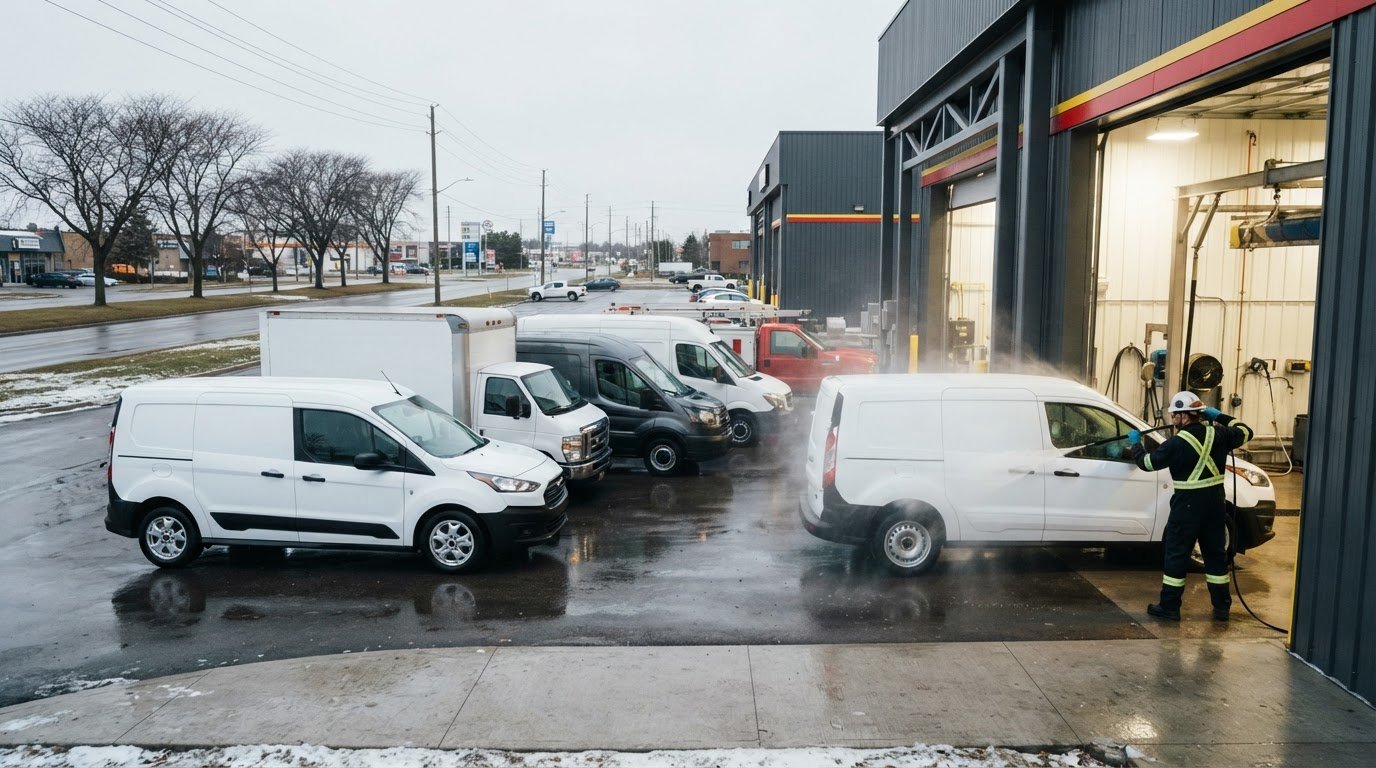
Fleet operators should standardise inspection notes, approved services, and handover expectations. That gives every vehicle the same corrosion-control checks and cabin treatment, instead of leaving drivers to dispute what “clean” includes. For contractors, a repeat schedule also protects professional presentation without taking a work vehicle out of service longer than necessary.
Memberships, Prepaid Bundles and One-Time Visits
Toronto's salt and slush make detailing a corrosion-control decision before it becomes a cosmetic one. Choose the payment model around how often the vehicle meets winter contamination, not around the cheapest advertised rate.
| Option | Typical Cost Per Detail | Visit Frequency | Best For |
|---|---|---|---|
| Monthly membership | Lower per-visit rate when used regularly | Frequent, often monthly or more often | Ride-hailing drivers, delivery drivers, and high-mileage commuters |
| Prepaid bundle | Reduced effective rate compared with separate bookings | Planned repeat visits | Families, SUVs, vans, and small fleets |
| One-time visit | Full quoted rate for the selected package | Seasonal or occasional | Before winter, after winter, before a sale, or before a long trip |
A membership pays only when you use it consistently. Review the included services, visit limits, vehicle-size rules, and any charges for interior work, pet hair, or heavy contamination before committing.
Choose the membership for routine exposure
High-mileage drivers face repeated salt, wet footwear, food debris, and passenger wear. A monthly plan makes sense when the vehicle needs regular washes and interior refreshes, while consistent cleaning gives salt less time to sit in carpets, seams, door sills, and lower trim.
Nanak Car Wash offers express and full-service washes, detailing by appointment, rust proofing, monthly wash memberships, and prepaid options. Confirm whether the membership includes interior detailing or only reduces its price. Ask how the plan handles SUVs, vans, pet hair, extraction, and undercarriage treatment.
Use bundles when your schedule is stable
A prepaid bundle fits a family vehicle or small fleet with predictable seasonal needs. Assign visits to spring cleanup, autumn preparation, and interior maintenance rather than waiting until salt and grime require heavier labour.
Before paying upfront, ask about expiry rules, transferable tickets, vehicle-size surcharges, and included services. Confirm that the bundle covers the corrosion-control work you need, especially underbody rinsing or salt removal. A discount is useless if the package excludes the service that protects the vehicle.
Book one visit when the trigger is specific
One-time detailing is the right choice for a clear event, such as preparing for winter, removing post-winter salt, selling the vehicle, or returning from a long trip. Match the service to the problem instead of buying a larger package by default.
If the underside carries salt and slush residue, choose the undercarriage flush. If the cabin is dirty, pay for extraction and odour treatment. If the paint feels rough or looks dull, ask for decontamination before approving polishing. That approach puts the budget where it reduces contamination or restores the finish.
Booking, Locations and Pre-Appointment Checklist
A good booking starts with an accurate description of the car. Tell the shop whether it's a sedan, SUV, van, pickup, or work vehicle, and mention pet hair, child-seat marks, food spills, odours, heavy salt, or scratches before the appointment. Those details affect labour and may change the recommended package.
Nanak Car Wash provides wash and detailing services through GTA locations that include Etobicoke, Brampton, Concord, North York, Burlington, Cambridge, and Guelph, based on the locations and service information. Book online or call the selected location, then confirm the exact drop-off process, pickup window, and whether the chosen branch performs the add-ons you want.
Prepare the vehicle properly
- Remove valuables: Take out loose cash, electronics, documents, sunglasses, and anything you'd be unhappy to lose.
- Clear the cabin: Remove large rubbish, sports equipment, work tools, and personal storage bins.
- Handle child seats: Remove child seats where possible, or tell the technician which areas must remain untouched.
- Bring the keys: Provide the correct key, fob, and any instructions needed to move or lock the vehicle.
- Mark problem areas: Point out pet hair, salt-stained lower doors, spilled drinks, sticky consoles, or odours during the walk-around.
- Confirm contact details: Make sure the shop has the right phone number for approval questions and pickup notification.
Don't spend time trying to make the car spotless before a detail. A light rinse can remove caked salt and make inspection easier, but don't scrub contaminated panels with a dry towel. Leave the actual cleaning to the technician.
Questions to ask before you hand over the keys
How long will it take? The answer depends on package, vehicle size, contamination, and add-ons. Shampoo, heavy pet hair, severe stains, and salt buildup can extend the appointment.
What happens if the weather changes? Ask whether the shop works indoors, whether exterior protection needs a dry curing period, and what happens if your pickup is delayed.
Should I choose ceramic protection or wax? Wax is a straightforward short-term protection step. Ceramic-style protection requires more careful preparation and aftercare. Choose based on how much maintenance you're willing to follow, not because the word “ceramic” sounds premium.
Is mobile detailing better? Mobile service is convenient for light maintenance and interior work. An in-shop appointment is usually the stronger choice when you need controlled lighting, extraction, machine polishing, rust proofing, or a proper underbody rinse.
How often should I detail in Toronto? Match the schedule to exposure. Highway commuters and revenue drivers need more frequent maintenance than vehicles that stay parked. During salt season, a targeted wash every 1 to 2 weeks, plus an extra wash after a thaw or major snow event, is practical guidance from Canadian winter detailing advice.
Before approving the package: Get the underbody work, stain treatment, vehicle-size pricing, drying requirements, and add-ons written into the booking.
A sensible first appointment for most GTA drivers is a Standard interior and exterior detail with explicit undercarriage attention. After that, use regular maintenance washes for salt control and reserve premium paint correction for a genuine paint-condition problem.
Nanak Car Wash offers express and full-service washes, interior and exterior detailing, rust proofing, monthly memberships, and prepaid options across the GTA. Visit Nanak Car Wash to choose a location, confirm the service that matches your vehicle's winter exposure, and book the protection your car needs.

 6600 Finch Ave W, Etobicoke, ON M9V 3Z6
 647-703-8515
 MON – SUN 8 AM to 7 PM