
You hang a fresh tree from the mirror, clip another scent behind the steering wheel, and spray the carpets before a test drive. Ten minutes later, the cabin smells like artificial pine arguing with old smoke, damp fabric, or something sour beneath the floor. You can't detect the original odour anymore, but the passenger can. That isn't bad luck. It means the source is still in the vehicle.
A proper car odor removal service doesn't try to make the cabin smell louder. It identifies what produced the odour, reaches the material holding it, removes or neutralises that material, and dries the interior properly. In the Greater Toronto Area, that process also has to account for winter salt, trapped moisture, HVAC contamination, and wildfire smoke. The chemistry matters more than the perfume.
Table of Contents
- Why Your Car Still Smells After Three Air Fresheners
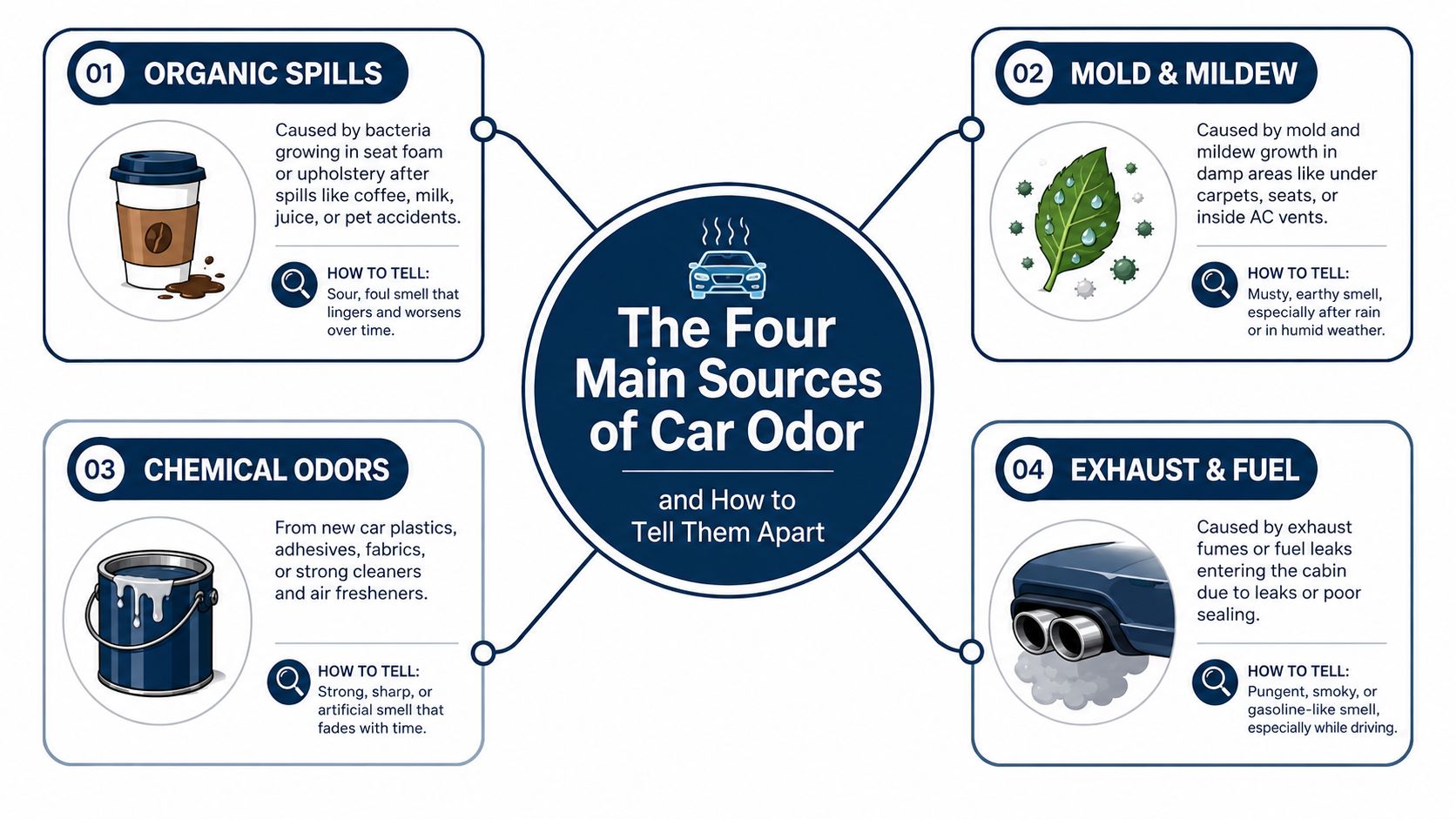
- The Four Main Sources of Car Odor and How to Tell Them Apart
- Professional Methods Compared and When Each One Wins
- What Happens During a Professional Odor Removal Appointment
- When Booking a Pro Beats Doing It Yourself
- Why Odors Keep Coming Back in GTA Vehicles
- A Practical Checklist Before You Book and What to Expect
Why Your Car Still Smells After Three Air Fresheners
A driver once arrived at a detailing bay with three air fresheners hanging from the mirror and a vent clip aimed at the driver's seat. The car looked tidy. The owner insisted the smell was gone. When the doors opened, the technician could still detect stale smoke in the headliner and a sour note rising from the carpet near the rear footwell.
That mismatch is common because the nose adapts to familiar smells. After sitting in the same cabin every day, you stop noticing a constant background odour. A new passenger hasn't adapted, so they detect the buried smell immediately. The owner isn't pretending. Their senses have become less sensitive to the problem.
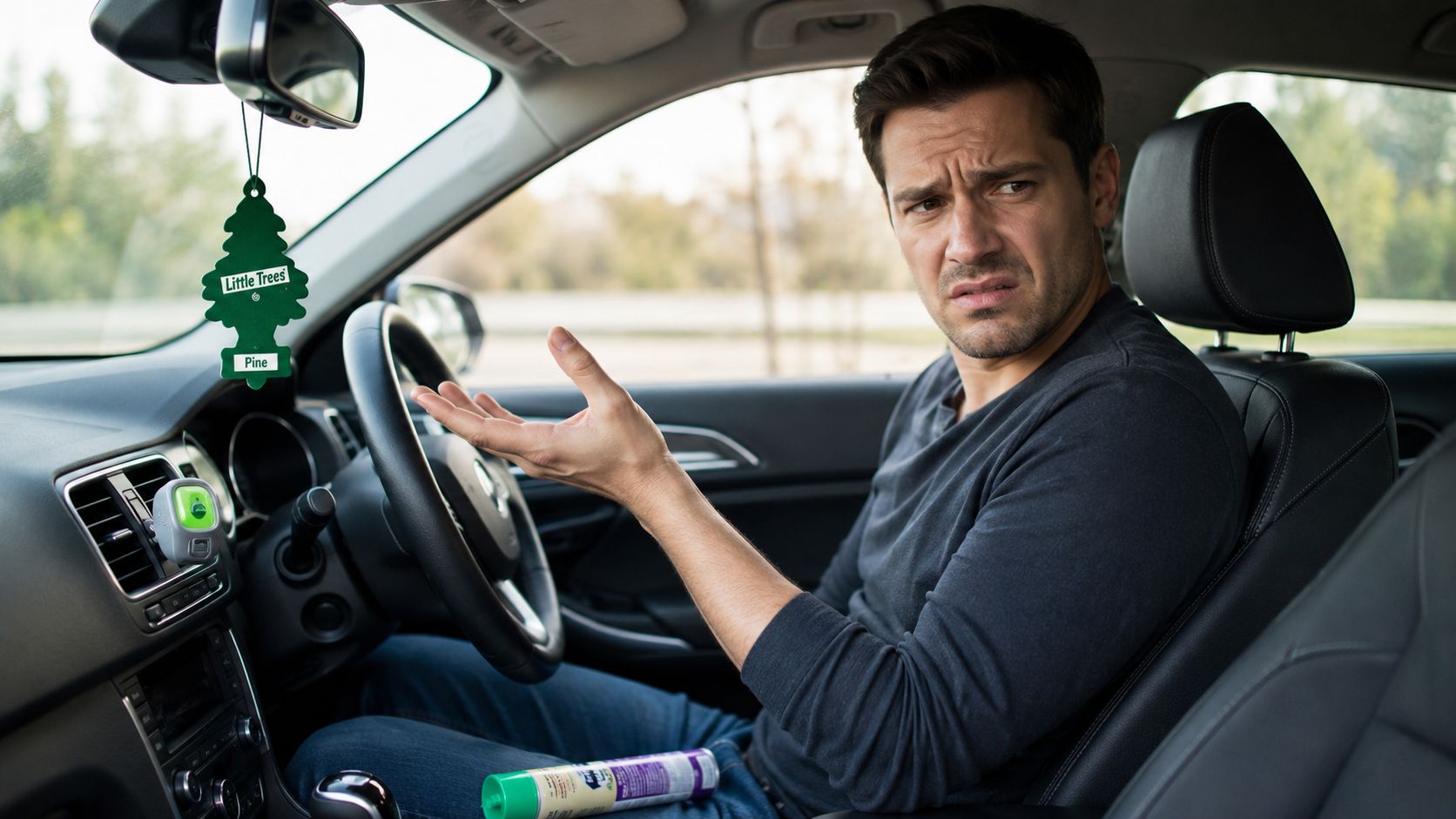
Perfume changes the message, not the source
Odour molecules can settle into carpet fibres, seat foam, fabric stitching, plastic trim, and HVAC components. A fragrance adds new volatile compounds to the cabin, but it doesn't automatically remove the compounds already attached to those surfaces. That's why a vehicle can smell like vanilla, citrus, and old coffee at the same time.
Vehicle interiors contain measurable volatile organic compounds, or VOCs. Research on vehicle cabins found that interiors can emit between 30 and 250 distinct VOCs, while identified new-car odour compounds appeared at concentrations ranging from 0.05 to 219 ng/L in air (IQAir's overview of car interior off-gassing). Plastics, adhesives, foams, and textiles can continue releasing compounds after the visible surface looks clean.
Shop-floor rule: If the smell returns when the cabin warms up or the fan starts, the source hasn't been removed.
The four broad families are organic contamination, mould and mildew, smoke and airborne particles, and chemical or mechanical odours. Each behaves differently. A protein-based spill may need an enzyme treatment. Smoke may require cleaning across the headliner, trim, upholstery, and ventilation path. A fuel or burnt-oil smell may need a mechanic, not a detailer.
The right question isn't “Which freshener works?” It's “What material is holding the odour, and what keeps feeding it?”
The Four Main Sources of Car Odor and How to Tell Them Apart
Odour diagnosis begins with three clues: location, timing, and character. Check where the smell is strongest, whether it changes when the fan or heater runs, and whether it appears after rain, hard driving, or a warm afternoon. These details help distinguish a dirty surface from moisture, residue, or a source hidden beneath it.
Organic spills
Coffee, milk, food, sweat, and pet accidents can soak below the visible fabric. Liquid may remain in seat foam, carpet backing, or underfloor padding, where bacteria break down the residue and create new odour compounds.
A sweet, sour, or rancid smell near a seat or footwell usually suggests a spill. Press a clean towel into the area to check for hidden moisture, but avoid adding water during the test. A visible stain and a persistent smell may be the same contamination at different depths.
Mould and mildew
Musty odour usually points to moisture, rather than surface dirt alone. Wet mats, winter slush, leaks, blocked drainage, and damp seat foam can support microbial growth. Cleaning the carpet surface without addressing pooled water underneath is like scrubbing the rim of a tank that is overflowing from the bottom. The visible area may look better while the source remains active.
Odour that grows stronger after rain, in humid weather, or when the climate system starts deserves closer inspection. The evaporator housing, drain area, cabin filter, and carpet padding can all hold moisture out of sight. GTA winters make this pattern common because road salt and slush bring water deep into the cabin.
Smoke and airborne particles
Cigarette smoke, wildfire smoke, road dust, and other airborne contaminants can settle across the interior. Headliners hold particles but cannot always tolerate aggressive wet cleaning. HVAC fins and ducts may also carry odour back into the cabin whenever the fan runs.
Smoke often smells stale or ashy, and the odour can become more noticeable after the vehicle sits closed in the sun. Wildfire smoke creates a particulate problem that perfume cannot solve. During smoke events, Ontario guidance recommends closed windows and recirculation. Health Canada advises using the highest-quality cabin filter the vehicle can handle and replacing clogged filters regularly (Health Canada's wildfire smoke guidance).
Chemical and mechanical odours
Some smells require mechanical diagnosis before detailing. A sweet coolant-like odour, raw gasoline, exhaust, or burning oil can indicate a leak or vehicle fault. A sharp burnt smell after highway driving may involve the brakes, oil, or another mechanical component.
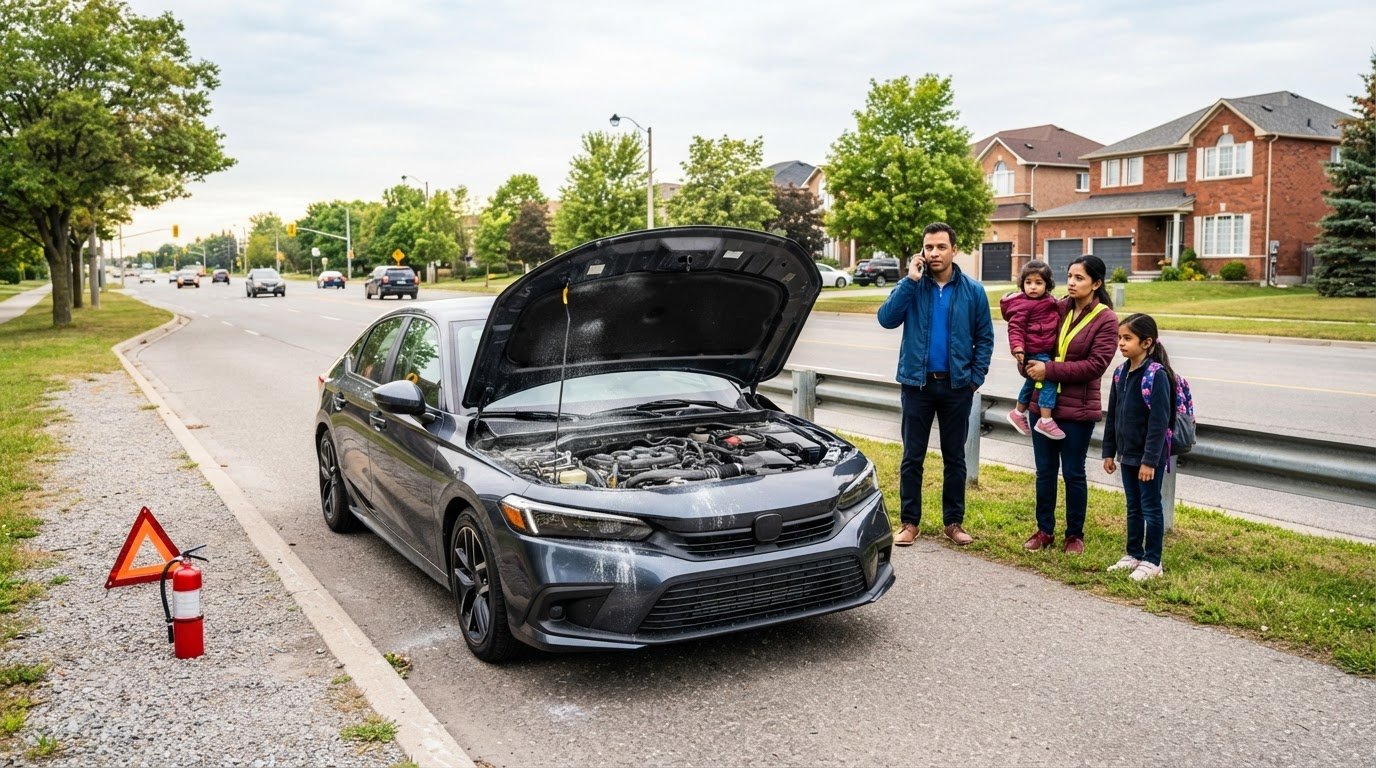
Handle these odours as a safety issue first. Spraying deodoriser over a mechanical smell only covers evidence of the problem. Stop safely, inspect the vehicle when appropriate, and have a qualified technician identify the cause before arranging interior treatment. The source determines the cleaning plan, while fragrance only changes what reaches your nose.
Professional Methods Compared and When Each One Wins
Professional tools solve different parts of the problem. Steam cleaning and extraction remove contamination from materials. Enzymes break down suitable organic residues. Ozone reacts with compounds throughout an enclosed cabin, but it isn't a substitute for source removal. HVAC cleaning addresses smells that reappear when air moves through the system.
| Method | Best For | Limitations | Typical Time | Ideal Odor Match |
|---|---|---|---|---|
| Hot-water extraction | Saturated carpets, cloth seats, and organic spills | Won't repair a leak or reach every HVAC component | Depends on vehicle condition and drying needs | Milk, coffee, food, and pet contamination |
| Foaming shampoo and brush agitation | Surface grime on carpets and cloth upholstery | Can leave deeper contamination untouched if used alone | Depends on the interior size and soil level | Light to moderate fabric odour |
| Enzyme or bacterial digester | Protein-based residues such as urine or vomit | Needs the correct product and source access, and won't fix smoke or a mechanical smell | Depends on dwell time and follow-up cleaning | Biological odours |
| Ozone treatment | Residual smoke and some persistent cabin odours | Unsafe to breathe while running, and it won't remove a milk stain or wet padding | Requires treatment and a complete airing-out cycle | Smoke and residual organic odour |
| HVAC vent and evaporator cleaning | Musty air that appears when the fan or climate system runs | Won't clean contaminated seats or carpet by itself | Depends on access and system condition | Damp, stale, or vent-specific odour |
Hot-water extraction works like rinsing a dirty sponge while pulling the dirty liquid away. A technician applies suitable cleaning solution, agitates where needed, and extracts the loosened contamination before it migrates deeper. Shampooing helps with surface soil, but over-wetting can create another moisture problem if the interior isn't dried.
Enzyme products make sense when bacteria have a food source. They don't magically digest every smell, and they need contact with the residue. Ozone is a different tool. Canadian guidance recommends heavy ventilation after treatment and states that ozonators, when used, should run only 8 to 12 hours, with windows opened 1 to 2 inches, followed by airing-out, hard-surface washing, and vacuuming (Health Canada's VOC guidance).
Thermal fogging is another specialised approach. For a technical explanation of how that process distributes deodorising treatment, this guide to the odor removal thermal fogging process is useful background. It still shouldn't distract from the central rule: a treatment cannot permanently solve an active leak, damp padding, or an uncleaned spill.
Use one method when the diagnosis is narrow. Combine methods when the source has spread. A biological spill may need extraction plus enzymes. Smoke may need surface cleaning, HVAC attention, and a carefully controlled treatment. Musty air may require drying and evaporator work before any deodorising step.
What Happens During a Professional Odor Removal Appointment
A reputable appointment starts with an inspection, not a spray bottle. The technician should ask what caused the smell, when it appears, whether the vehicle had a leak or spill, and what products you've already used. They'll inspect carpets, mats, seat seams, the headliner, trunk wells, vents, and areas where moisture can hide.
Pre-existing stains, damaged trim, loose headliner fabric, and delicate materials should be identified before work begins. That protects both sides from confusion later. Odour work is investigative because the strongest smell isn't always located at the original source.
Preparation and source cleaning
Loose rubbish, grit, pet hair, and dry debris come out first. A technician then vacuums seams, seat rails, carpet edges, and crevices before cleaning hard surfaces such as the dashboard, doors, console, and cup holders. Removing dry debris first keeps it from turning into muddy residue during wet cleaning.
The next pass depends on the diagnosis. Seats and carpets may receive foam shampoo, brush agitation, or hot-water extraction. A biological residue may receive a targeted enzyme product. A smoky headliner needs controlled cleaning because excessive moisture can loosen its adhesive.
For broader interior work, the difference between a quick wipe and a genuine extraction matters. Readers comparing equipment and technique can review steam cleaning services in Toronto to understand why heat, agitation, and recovery of dirty moisture are separate parts of the process.
HVAC treatment and final verification
If the odour changes when the blower runs, the vents and evaporator area deserve attention. The cabin filter may need inspection or replacement, and the technician may clean accessible ventilation pathways. Otherwise, the fan can redistribute the source after the seats and carpet look fresh.
Ozone treatment is considered only when the diagnosis supports it and the vehicle can be kept unoccupied during the process. The cabin must then be ventilated thoroughly, because ozone is unsafe to breathe while the machine operates. A final wipe, dry vacuum pass, and walk-around should follow, with attention to damp areas and any smell that appears only when the climate system runs.
Appointment time varies with vehicle size, contamination, drying requirements, access to the HVAC system, and whether one or several methods are needed. A small surface issue may be straightforward. Smoke, hidden moisture, or a contaminated underlay takes more care because rushing can leave the source behind.
When Booking a Pro Beats Doing It Yourself
DIY cleaning is reasonable when you catch a small spill immediately. Blot the liquid, remove the mat, apply an automotive-safe cleaner as directed, and dry the material completely. The decision changes once odour reaches foam, padding, the headliner, or the ventilation system. Surface treatment may improve the cabin briefly while contamination remains below.
The cost is more than the product label. Repeated sprays, replacement cleaners, rental equipment, lost time, and a soaked carpet can turn a minor problem into a larger one. Harsh household cleaners may leave residue or change upholstery. Too much moisture can drive contamination farther into the layers. Ozone also requires an empty vehicle and thorough ventilation, since the atmosphere is hazardous while treatment is running.
| Scenario | DIY Approach | Pro Service | Better Choice |
|---|---|---|---|
| Fresh drink spill | Blot, clean with a suitable interior product, and dry | Extract and treat if liquid reached foam | DIY if caught immediately |
| Persistent pet or biological odour | Repeated surface sprays | Source inspection, extraction, and targeted enzyme treatment | Professional service |
| Smoke in fabrics and vents | Fresheners and basic vacuuming | Broad interior cleaning with HVAC attention and suitable deodorising | Professional service |
| Musty smell after rain | Dry mats and inspect obvious moisture | Moisture-source investigation, extraction, drying, and ventilation treatment | Professional service if it returns |
| Chemical, fuel, coolant, or burnt-oil smell | Deodoriser or masking spray | Mechanical diagnosis before interior cleaning | Mechanic first |
Use the source as the decision point. If the smell returns when the cabin warms, the fan starts, or the next damp day arrives, the material holding the odour still needs attention. Several failed products are another warning. Each application can add residue and make the technician's diagnosis less clear.
A clean-looking interior can still contain a dirty source.
Professional service earns its place through diagnosis, controlled moisture, extraction, drying, and access to areas a household vacuum cannot reach. A technician can separate a fabric problem from a ventilation issue, then choose treatment for the contamination rather than applying stronger perfume. That matters particularly after smoke, biological contamination, or moisture has moved into hidden layers.
For a fresh, contained spill, careful DIY work may be enough. For a returning odour or an unknown source, booking a pro usually protects the interior and prevents repeated trial and error.
Why Odors Keep Coming Back in GTA Vehicles
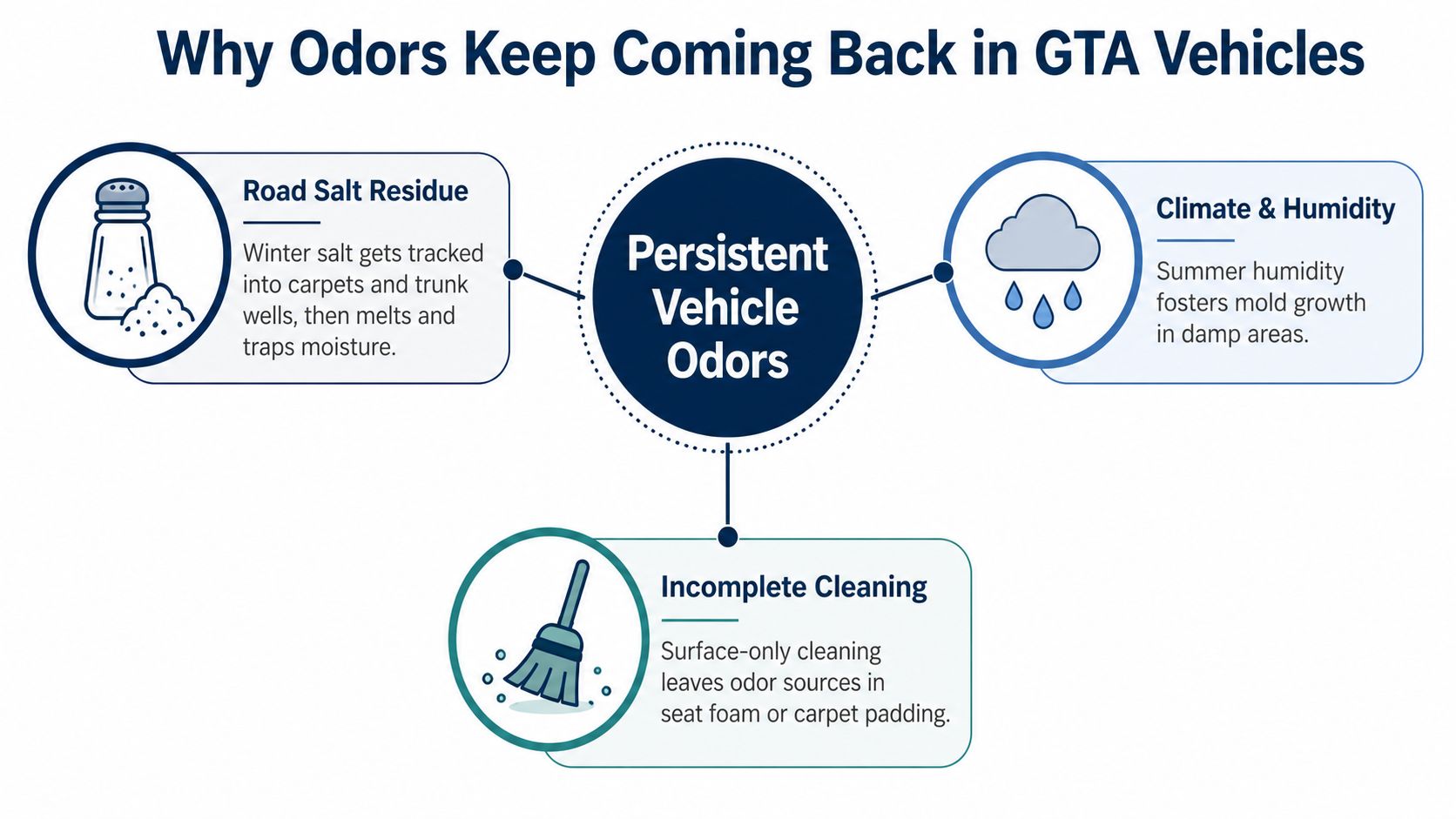
A quick interior detail can improve the cabin without permanently correcting the conditions that created the odour. GTA vehicles face a particularly demanding cycle. Ontario uses about 3 to 5 million tonnes of road salt each winter, and repeated slush exposure carries chloride contamination into carpets, mats, trim, and underbody areas (Nanak Car Wash's Toronto detailing overview).
Salt itself isn't the whole odour story. Wet salt residue attracts and holds moisture, while meltwater can collect beneath mats, in carpet backing, and in trunk wells. When spring thaw and humid summer air arrive, a residue that seemed dormant can begin producing a musty smell again.
Road contamination changes the interior
Toronto-area transportation research measured atmospheric corrosion at 5,108 mg/dm² over a 19-month exposure period, one of the highest values in that study, and linked local deicing salt exposure to roughly double the corrosion seen without salt (the transportation research PDF). That evidence concerns corrosion rather than cabin odour, but it helps explain why GTA vehicle care has to treat winter contamination as an ongoing environmental load.
Tracked-in slush also reaches places drivers rarely inspect. Carpet edges, seat rails, removable mats, and trunk seams can retain moisture after the visible surface dries. Cleaning only the top fabric is like wiping the outside of a wet boot while leaving the sock inside.
Smoke and recirculated cabin air
Wildfire smoke creates another recurrence pathway. Ontario guidance tells drivers to keep windows closed and use recirculation during smoke events. That protects the cabin from incoming air, but it also means the same interior air repeatedly passes through the cabin filter and HVAC system.
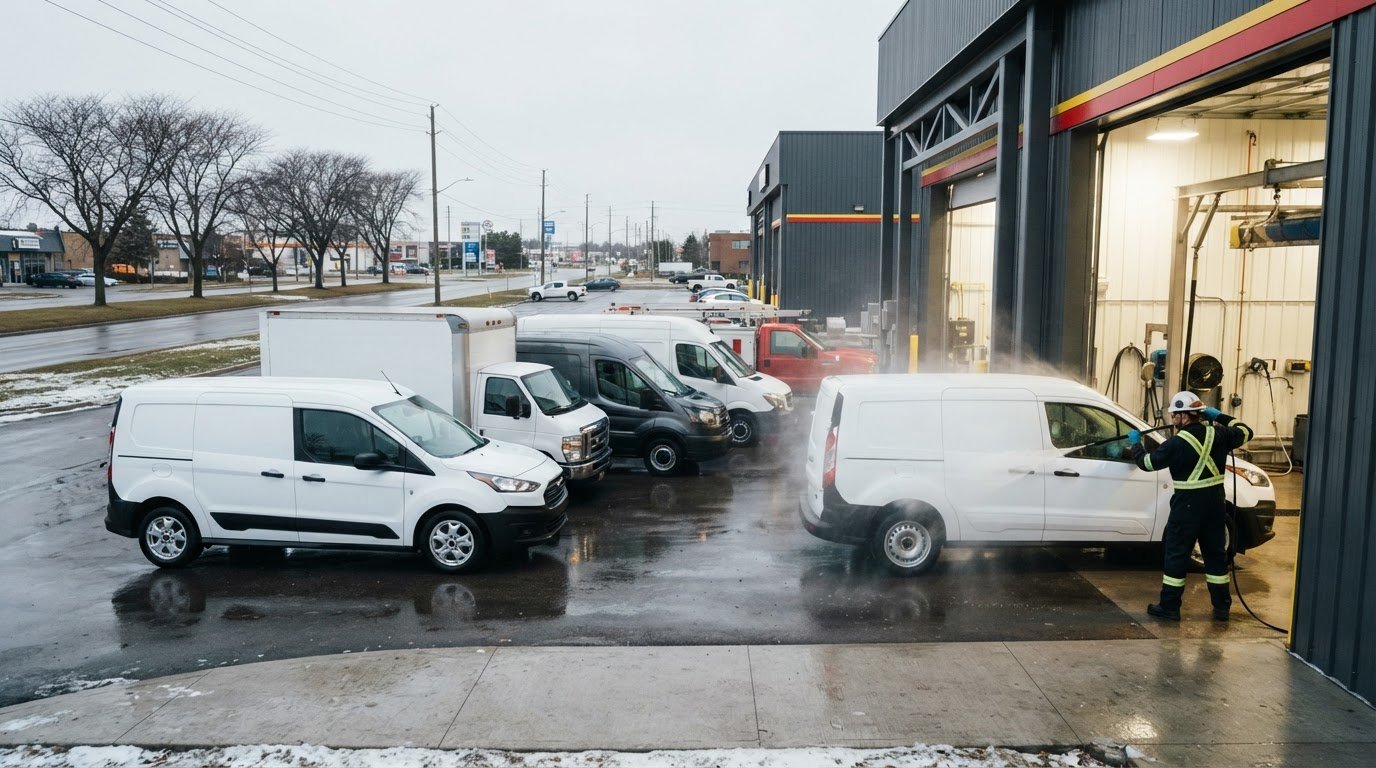
A clogged or contaminated filter can become part of the odour problem. Fine particles can settle in upholstery and ventilation components, so a fragrance treatment may fade while the source remains. Fleet, rideshare, and delivery vehicles face more frequent exposure because their cabins operate for long periods and carry many passengers, foods, fabrics, and outdoor contaminants.
The durable fix combines source removal with prevention. Dry wet mats quickly, check for leaks, keep the cabin filter maintained, and ask for HVAC attention when the smell returns with the blower. Some vehicles need a follow-up inspection because a single cleaning cannot remove contamination that continues to enter or develop.
A Practical Checklist Before You Book and What to Expect
The night before booking, describe the pattern rather than calling it a “bad smell.” Note where it is strongest, what it resembles, and whether rain, heat, highway driving, the fan, or recirculation changes it. That information helps a technician trace the source instead of covering the symptom.
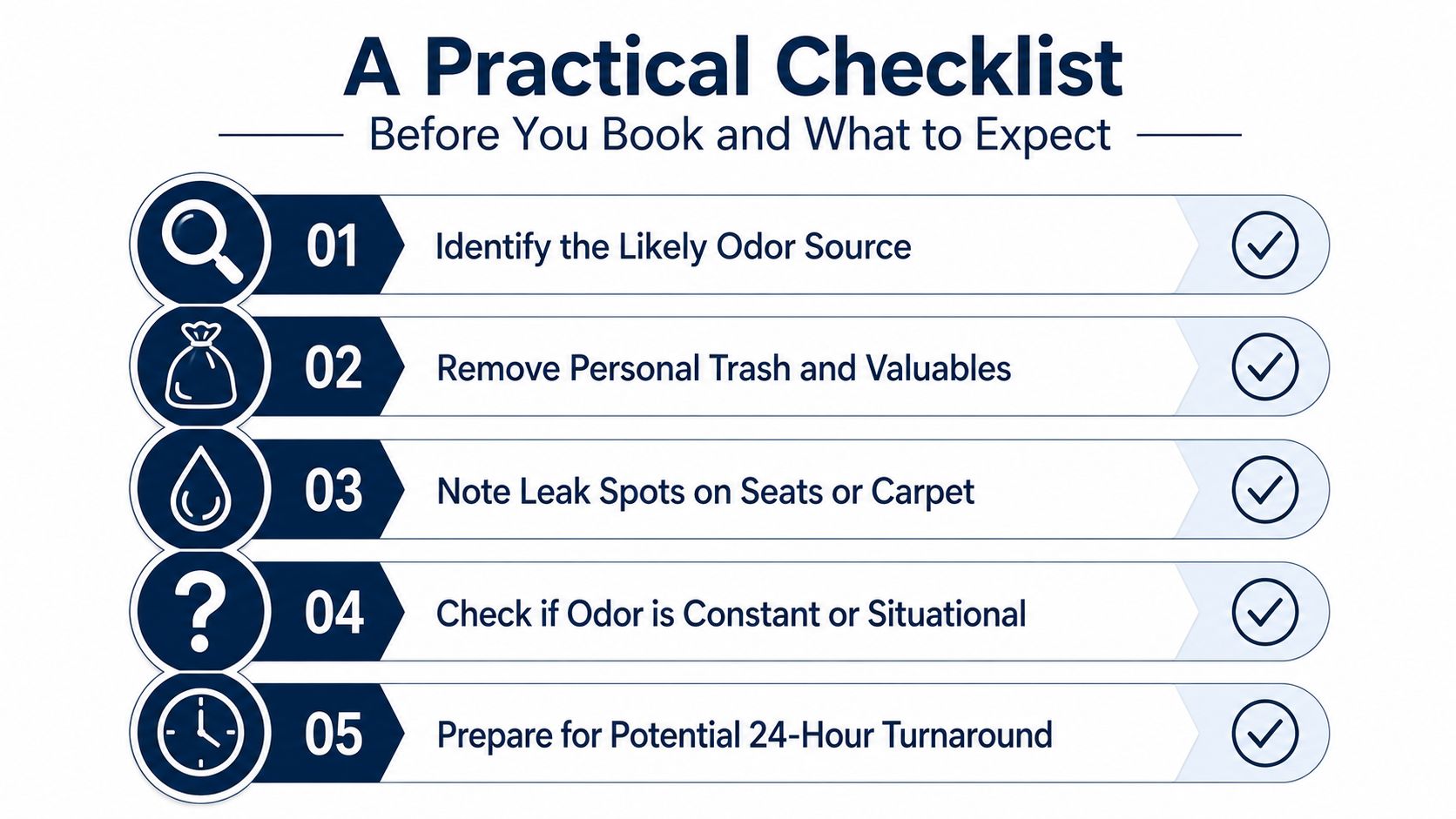
Your pre-booking checklist
- Check likely source areas: Inspect mats, seat seams, footwells, the trunk, and vents.
- Clear the cabin: Remove rubbish, valuables, child items, and anything that could conceal contamination.
- Document moisture: Photograph damp carpet, water marks, or areas that feel unusually cool or wet.
- Record the timing: Tell the technician whether the odour is constant or appears with the fan, rain, heat, or recirculation.
- List earlier treatments: Mention air fresheners, sprays, shampoo, ozone, or household cleaners already used.
Match the service to the evidence. A full interior detail suits dirt, salt residue, stains, and broad fabric contamination. A targeted enzyme treatment fits a known biological spill. Odour from the vents calls for HVAC inspection or cleaning. Ozone requires an unoccupied cabin and proper airing afterward, and it cannot replace removal of the material causing the smell.
Nanak Car Wash lists interior and exterior detailing that includes vacuuming, carpet and seat shampooing, salt and stain removal, vent and crevice cleaning, and leather care. Its published detailing information states that appointments can range from 1 to 4 hours, depending on the vehicle and service scope (Nanak Car Wash's detailing service information). More involved odour work may need extra drying or airing time.
Before handing over the vehicle, ask what will be cleaned, how damp areas will be dried, and whether the HVAC system will be checked. A professional result should leave the cabin neutral or naturally clean, rather than strongly perfumed. If the smell returns when the blower runs or after the next wet day, report that exact trigger. It suggests a remaining source and may require another treatment, not another fragrance.

 6600 Finch Ave W, Etobicoke, ON M9V 3Z6
 647-703-8515
 MON – SUN 8 AM to 7 PM